The viburnum-leaved physocarpus diablo is a plant noted for its beauty and ornamental qualities, yet it is extremely low-maintenance. It is native to East Asia and North America.
It only became widely used in Russia in the 21st century, but thanks to its attractive appearance, it has already won many fans among amateur gardeners and designers, and is widely used in landscaping. If you follow the growing recommendations, the bladder senna will be a long-lasting delight in your garden or dacha.
Content
- 1 Description of the Diablo Physocarpus
- 2 Planting Physocarpus
- 3 Various types of bladder senna seedlings and their planting characteristics
- 4 Proper care of the bladderwort, rules and nuances
- 5 Correct pruning of bladder senna
- 6 How to propagate Diablo Physocarpus
- 7 Top.tomathouse.com informs: Physocarpus Diablo – use in landscape design
Description of the Diablo Physocarpus
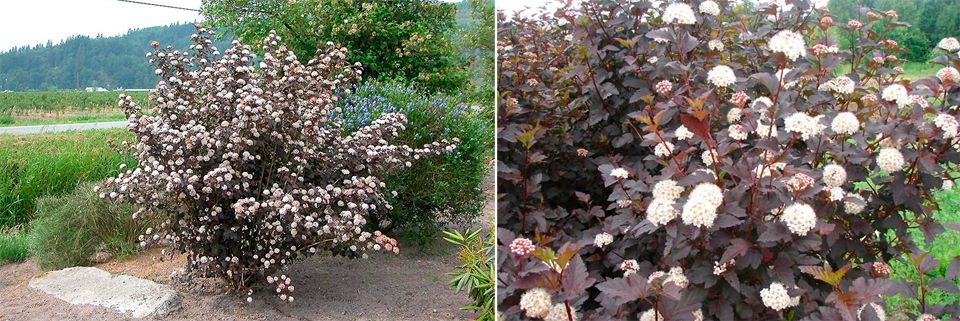
The Diablo Physocarpus bush reaches 3 meters in height. It has large, dark purple foliage when grown in full sun, turning greener with a reddish tint in shade. In autumn, the foliage remains unchanged. The closely spaced branches result in a compact, dense crown.
The shrub's flowering period begins in June. The snow-white inflorescences are spherical. The flowers have fairly long pink stamens, giving them a fluffier appearance. This flowering period lasts about 14 days. Then, bubble-like berries appear. Initially, they are green, but as they ripen, they turn red with a purple tint. It is these fruits that give this plant its name.
Another variety of Physocarpus, Diablo Dora, is somewhat smaller than the variety described above. This bush grows to a maximum height of 1.5 meters. The leaves are copper-colored, gradually darkening to purple as they grow, but are slightly lighter than those of Diablo. Its flowers are also white with long pink stamens.
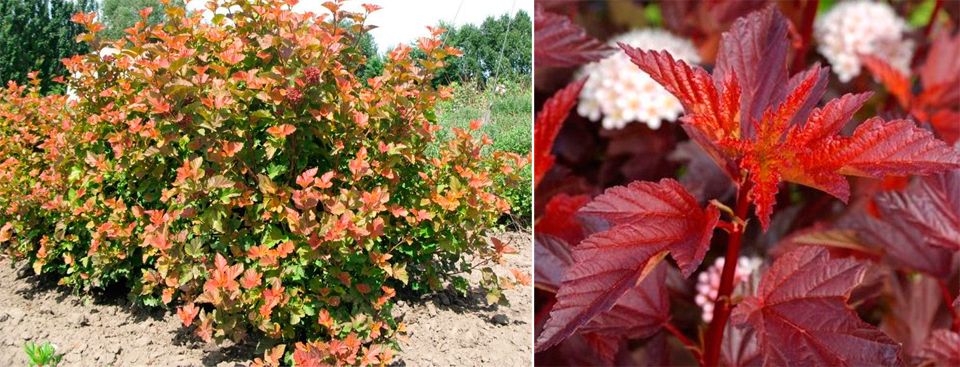
Both subspecies have a beautiful decorative crown even with minimal care, which is widely used in landscape design.
Planting Physocarpus
Before planting, it's important to choose the right location and prepare it. Keep in mind that in shaded areas, the leaves will appear greener, while in sunny areas, they will develop a vibrant purple hue.
The groundwater level should also be taken into account. If it's too high, the shrub will grow poorly or even die.
The plant has no particular preferences regarding soil composition. Both Diablo varieties also thrive in polluted and dusty air, making them ideal for planting along roadsides and around the perimeter of a garden plot.
Planting is done in the simplest way. First, prepare a hole that accommodates the size of the bush's roots (its diameter should be larger). The depth is chosen so that it is level with the crown of the trunk. Drainage and fertile soil, along with a mixture of well-rotted manure and complex mineral fertilizer, are placed at the bottom.
Before planting, soak the plant from the nursery in water for 2-3 hours. Then, carefully arrange the roots of the seedling in the prepared spot and fill it with soil. Lightly tamp down the soil around the trunk and water thoroughly. Since young plants require deep and frequent watering, it's best to water them every 2-4 days, depending on how dry the top layer of soil is.
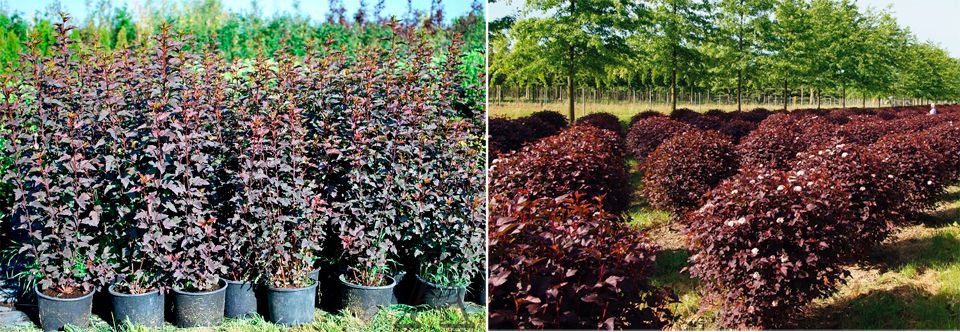
It's important to mulch the area around the tree trunk with sawdust or dry grass. This improves air circulation for the roots and prevents them from drying out too quickly, which can negatively impact the Diablo's health.
When using bladder senna as a decorative hedge, the bushes are planted in a checkerboard pattern with intervals of at least 50 cm from each other.
Various types of bladder senna seedlings and their planting characteristics
Physocarpus seedlings come in two varieties, which also determine their planting method and survival rate.
- Containerized root system. In this case, the plant is grown in a special container and transplanted using the transshipment method throughout the growing season. This is the most optimal option, as it guarantees a nearly 100% survival rate.
- Bare-rooted plants. The bush is grown in the ground, then dug up and sold. This leaves a minimum of soil on the roots. These plants can only be planted in early spring or fall. Their survival rate is much lower than that of the bare-root variety.
Proper care of the bladderwort, rules and nuances
This type of ornamental shrub is extremely easy to care for.
But in acidic loamy soil with good drainage, it takes root faster and grows better.
Once the plant has grown and established, water it as needed, depending on weather conditions. For example, if the summer is rainy and cool, the moisture it draws from the soil will be sufficient.
You can use composted manure sprinkled around the trunk as fertilizer. This procedure should be done once per growing season.
In the spring, it is worth watering the plant with a solution of saltpeter or urea, prepared at the rate of 20 grams of dry matter diluted in 1 bucket of water.
Nitrogen fertilizers enhance the growth of Diablo, and the bush will become more voluminous with a dense crown.
In the fall, it's best to use mineral fertilizers containing potassium and phosphorus. For example, nitroammophoska, diluted in the same proportions as the spring fertilizer. This fertilizer is essential for the health of the plant.
Correct pruning of bladder senna
Regular pruning of the shrub is important to ensure a healthy and beautiful crown. Branch pruning begins when the tree is one year old and in its permanent location. This procedure is quite simple: using a garden knife or special pruning shears, remove the outer branches, stimulating lateral growth.
In the spring, before the growing season begins, use the same tool to clear the bush of dried and damaged shoots. This will rejuvenate the bush and stimulate the growth of new branches.
There are several popular methods for shaping the crown:
- The shoots are pruned 50 cm from the trunk. This method creates a voluminous and lush appearance.
- A select few (5-8) of the strongest branches are cut at a height of 1.5 meters. This creates a fountain-shaped crown, adding an extra unique touch to the plant.
- Sometimes, even when growing in a sunny spot, Diablo will begin to sprout shoots with completely green leaves. These must be removed as close to the trunk as possible. Otherwise, the bush will lose its unique character and appeal.
How to propagate Diablo Physocarpus
Any variety of red-leaved bladder senna can be grown in several ways. These include:
Growing from seeds
This is the least popular propagation method. This is because seedlings often don't inherit the mother plant's best characteristics, and the resulting bush may be very different from what you'd expect. It's important to stratify them before planting. This means creating an environment for their germination that closely resembles their natural environment.
Cuttings
It's best to root cuttings in late summer. For this, use cut branches with 2-3 or more nodes. The best time for planting is early morning or evening, when the heat is cooler. Cut the lower part of the shoot at a 45° angle, and the upper part horizontally. Remove all leaves. Beforehand, soak the prepared cuttings in a special rooting solution.
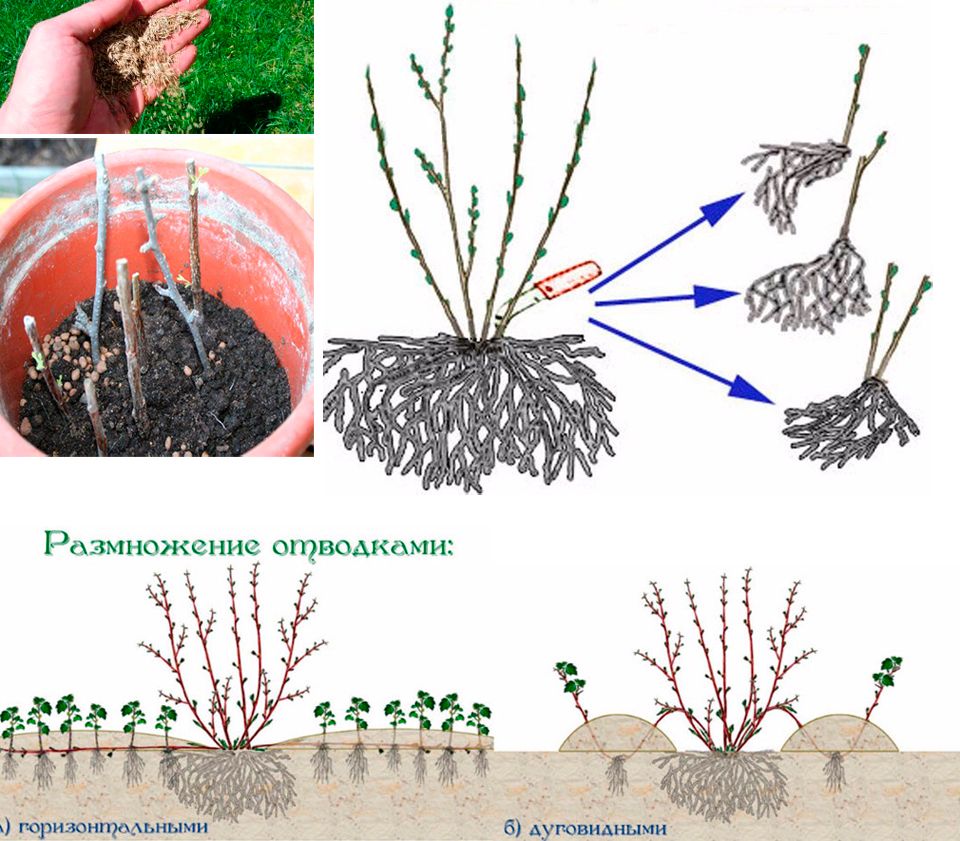
Then they are planted in containers filled with sand and covered with plastic film. When new leaves appear, the insulation is removed, and the seedlings are transplanted into the soil at the chosen location on the plot.
Before the cold weather sets in, it's a good idea to insulate your plantings. Use spruce branches or sawdust to protect young plants from freezing.
Layers
This is the simplest method for propagating bladderwort. It's done as follows: in the spring, select several shoots growing outward from the main trunk. Remove all the leaves from them, then place them in a prepared trench and cover with soil. To secure them, secure them to the ground with wooden or metal staples.
Ordinary pins are ideal for this purpose. Pay close attention to watering. It's important to water sufficiently, but not too much, otherwise the newly forming root system will rot and the cuttings will die. By early autumn, you can carefully separate the new plant from the mother plant and replant it in a different location, observing all the necessary instructions.
Dividing the bush
The selected plant is dug up, divided into several parts with a sharp knife or shovel, each of which is then planted in a different place.
This procedure is carried out in the spring before the leaves begin to emerge. After dividing, rinse each individual bush in a weak solution of potassium permanganate. It's also important to prune all branches on the plant by half to ensure all the energy is directed toward root development, rather than shoots with foliage. Water the plants whenever the top layer of soil dries out.
Top.tomathouse.com informs: Physocarpus Diablo – use in landscape design
Thanks to its beautiful decorative appearance and relatively rapid growth, the bladder senna has earned a well-deserved place among plants used by landscape designers and amateur gardeners when landscaping their plots.
If planted in the center of a lawn and shaped to create a beautiful crown, it will be a highlight of the garden. Combining several varieties of Physocarpus in a hedge can also create a unique look.
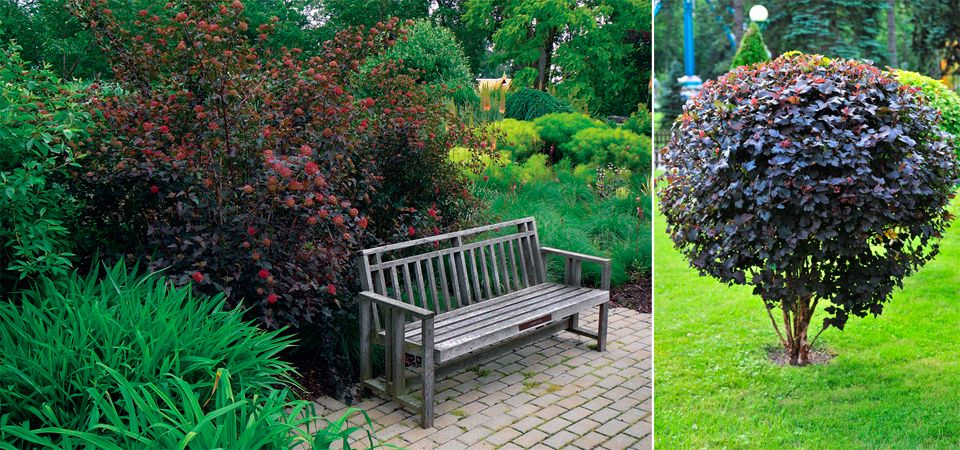
It earned its place in gardens and flowerbeds thanks to another of its characteristics: it is practically unaffected by pests and fungal diseases that most other plants are susceptible to.
With proper care, it will delight its owners for a long time with its unusual and attractive appearance.