Lady in Red is a variety of Physocarpus viburnifolia, otherwise known as a deciduous shrub. It attracts gardeners with its graceful foliage, which makes it a beautiful addition to any garden.
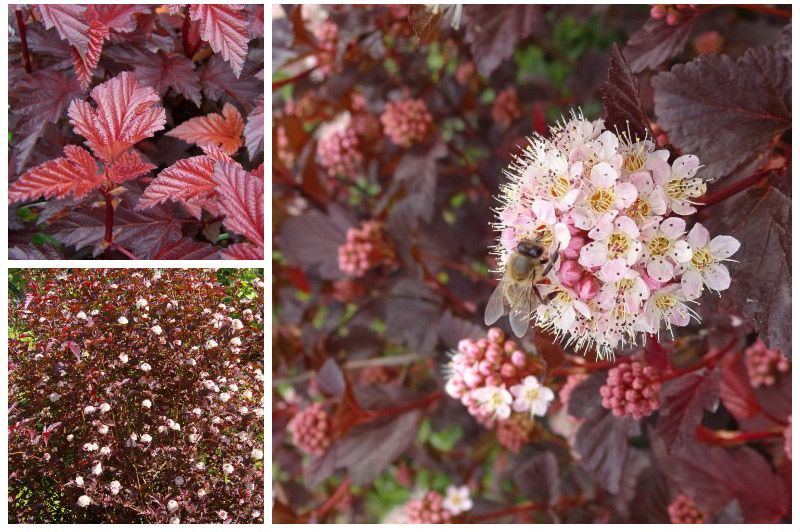
Description and advantages of the Lady in Red variety
Due to its low maintenance and decorative qualities, the plant is popular among gardeners. They are drawn to the unique and vibrant foliage. It is its red color that gives it its name, which translates from English as "lady in red."
It loves sunlight, and the color of its leaves depends on its amount. With plenty of sunlight, it will produce a bright burgundy hue. Its height varies from 1 to 1.5 m. The bush's robustness is determined by the type of pruning.
The foliage is oval and oblong, with a serrated base and a cherry-colored hue. Young leaflets are burgundy-red, darkening as they mature. The leaflets are shaped like 3-5 interlocking lobes, resembling a maple leaf.
In early summer, the shrub displays small pink flowers, forming a cluster 2.5 cm in radius. The fruit ripens in late August and continues throughout September. The fruit is brownish-red, firmly attached to the bush, and remains attached for a long time.
The viburnum-leaved bladderwort has thin, upright stems, no more than 1 cm in radius. Because its roots grow shallowly in the soil, it requires ample watering.
The advantages include:
- easy to care for;
- undemanding to soil;
- frost resistance.
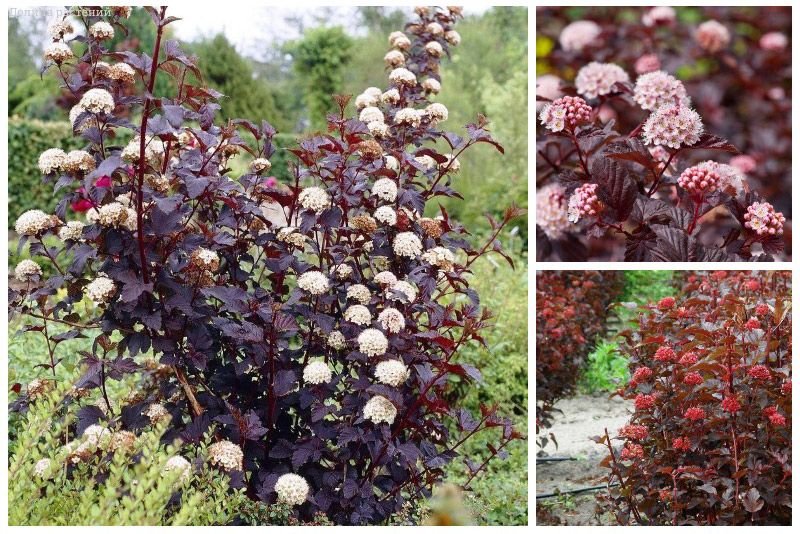
Physocarpus Lady in red: planting
The plant can be planted in either spring or fall. In fall, consider the timing of the first frost and plant at least 1-1.5 months in advance. Ensure the plant is well established and has absorbed all the necessary nutrients.
It is best to plant in a well-lit area, avoiding tall trees and fruit crops as neighbors, as they can cause harm by taking away all the moisture and microelements.
The first step is to prepare a substrate of a specific composition (preferably loamy with a pH of 4<7), which should be placed in the hole 14-21 days in advance. After this, place the seedling in the hole, cover with soil, and water thoroughly.
You can reduce the frequency of watering by adding mulch around the stems. The ideal soil composition is equal parts turf, sand, garden soil, and peat.
Caring for the Physocarpus Lady in Red
There are no special care requirements for this variety, but some recommendations should be followed to give the shrub a refined and unique look. These include the following:
- Apply nitrogen-containing fertilizers. Be sure to do so in spring and fall.
- Water regularly, especially young plants. But don't overdo it, as stagnant water can cause powdery mildew.
- Trim periodically to give it a variety of shapes.
- In case of a dry winter (without snow, but with frosts) the plant should be insulated.
- Loosen the soil, removing weeds.
Reproduction
The most common method of propagation is by cuttings. This process should be carried out between mid-July and the end of August. Young shoots are pruned and then immediately rooted in prepared greenhouses in a shaded area. They are kept covered during the winter and then transferred to their growing site in the spring.
Physocarpus can also be propagated vegetatively by dividing the bush. Using seeds is considered ineffective.
Top.tomathouse.com recommends: use in landscape design
Red Lady feels great in any climate zone and soil substrate.
It easily tolerates air pollution and maintains its elegant appearance even in less-than-sustainable areas. This is why the shrub is so popular in city parks and squares, and it also makes an ideal curbstone along roadsides.
It makes a wonderful decorative addition to your dacha. Just make sure to place it near arbors, close to the entrance. It makes a wonderful fence; just trim it regularly to give it a distinctive look. It pairs well with conifers or other ornamental plants.