One of the popular, low-maintenance plants used in modern garden design is the ornamental Physocarpus opulifolius Luteus. It looks great when used as a hedge, as the varied shades of its leaves during the warm season create whimsical, beautiful compositions. This shrub is rarely found in old parks and public gardens, as it has only been cultivated in Russia for a few years. It can be found in modern private gardens.
Description of Physocarpus luteus
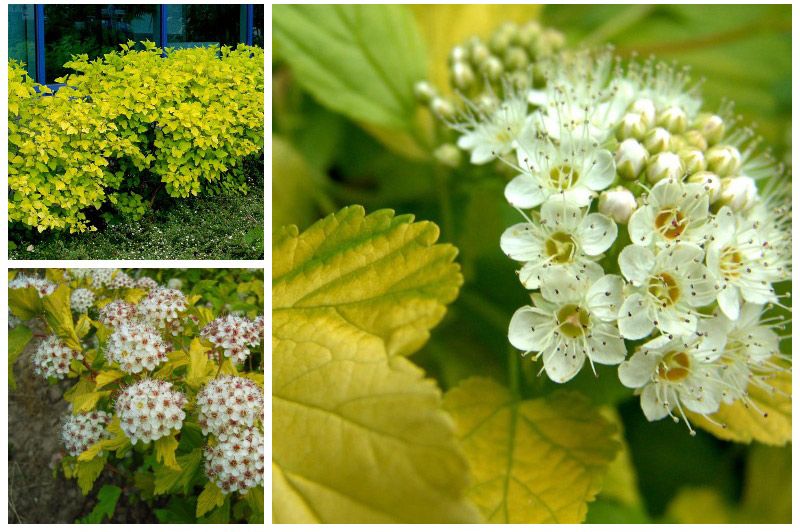
Physocarpus leaves resemble those of viburnums in appearance and structure, hence the name. Depending on the plant variety, there are three to five pointed foliage peaks, which take on a variety of colors at different times of the year. When they first bloom in spring, the color is orange, turning light green in summer, and turning a bright red or copper in autumn.
The bladder senna grows up to 3 meters in height and width. Its dome-shaped crown is formed by spreading, drooping branches.
Luteus's lush inflorescences, with numerous small, blue-white or pinkish five-petaled buds bearing numerous stamens, open in early summer and, within a month, produce tulip-shaped fruits. These fruits gradually turn from reddish to brown, contrasting sharply with the background color of the bush.
The leaves and fruits will be brighter and more saturated, the more sun is available to the bush in the growing area.
Physocarpus luteus: planting and care
For lush and beautiful flowering, the bush requires acidic and fertile soil with drainage.
Planting a Luteus shrub consists of the following steps:
- in a well-lit area, dig holes 50 cm deep, at a distance of 100 cm from each other for a hedge, 200 cm in a group composition;
- peat or humus is placed at the bottom of the hole;
- the seedling with a lump of soil is placed in a hole and covered with a fertile layer of soil;
- water generously, which will speed up the rooting process of the bush.
Caring for the bladder senna is optimally simple: regular watering, loosening the soil and clearing the root area of weeds.
In winter, during severe frosts, the branches may freeze, but in the spring you can simply cut off the dead parts; the bush itself will not be harmed.
Timing and features of planting bladder senna
The closed root system of bladderwort seedlings allows them to establish themselves at any time of year except winter. In late fall, shoots with exposed but not dry roots are planted. Early spring, before the shrub's buds appear, is also suitable for the initial or repeated planting of this perennial.
A site with partial shade or full sun and good drainage will be ideal for the light-loving Luteus.
Stagnant water and limestone soil are the main reasons why the shrub may fail to thrive. Other planting conditions are not particularly important for this frost-hardy and undemanding plant. Diseases and pests are virtually uncommon on the leaves and stems of the bladder senna, so it thrives in any environment.
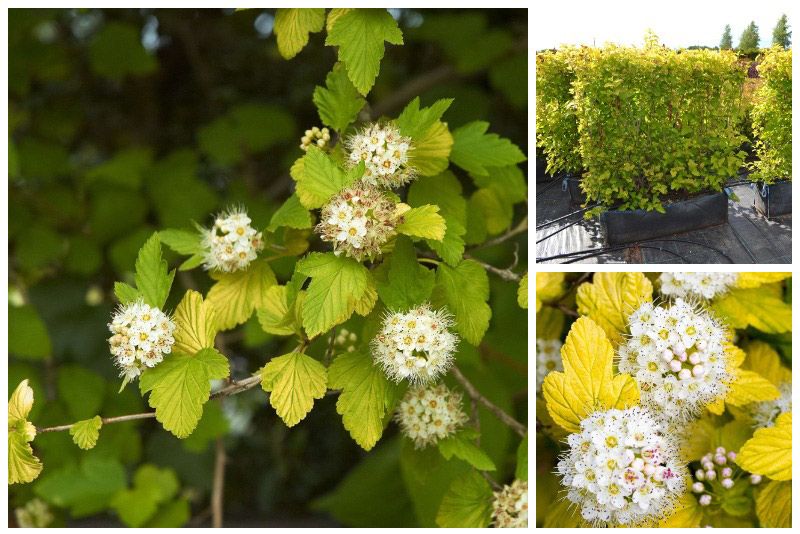
The following are some of the planting features:
- dig holes and fill them with a fertile layer of turf, peat and sand, 14 days before planting;
- leave the root collar above the soil surface;
- do not use additional fertilizers;
- add soil to the hole after the soil has settled and ensure that the soil remains moist;
- Mulch the area around the seedling with peat once a month.
Watering and fertilizing
Maintaining soil moisture is a key component of plant care, essential for lush flowering and rapid growth.
The bladder senna should be watered once a week, and twice in hot summer, with 40 liters of water.
The plant doesn't require regular fertilizing, but it does improve the lushness of its blooms and the vibrancy of its foliage. One recipe for watering fertilizer is as follows: mix 0.5 liters of mullein with 10 liters of water. Add 0.15 liters of urea and the same amount of ammonium nitrate.
Nitrogen-containing fertilizers also influence foliage density. Mineral supplements such as nitroammophoska are important in the fall to strengthen the root system for the winter.
Pruning bushes
Pruning isn't scary, and is even important for Physocarpus. In the spring, remove frozen and dead branches. This should be done before the leaves begin to unfurl. Shaping the bush is essential for a beautiful and aesthetically pleasing appearance. Pruning is especially necessary after flowering, in midsummer, when active branch growth begins. Fresh shoots are pruned to no more than half their length.
The bush's natural shape resembles a round fountain. To change its shape and create a wide cut, branches are pruned to a height of 0.5 m. Young shoots are removed, leaving 5-7 of the strongest. For vigorous growth, they are pruned to a height of 1.5 meters.
Rules for transplanting Physocarpus
The decision to replant a Physocarpus viburnifolia usually comes when it's blooming poorly, wilting, or needs to be relocated for a more suitable flower arrangement in the garden. Then, the mature bush is moved to a new location, along with the original soil, in early spring or late fall. To avoid straining the rhizome system, healthy branches are pruned back to 30 cm from the stem, and dead branches are removed completely.
Further care for the transplanted bushes follows the usual guidelines for caring for young seedlings. Fertilizers in this case can include a one-time watering with Kornevin immediately after transplanting and treating the pruned crown with Epin.
Features of reproduction
The propagation methods for Luteus are the same as for most garden shrubs.
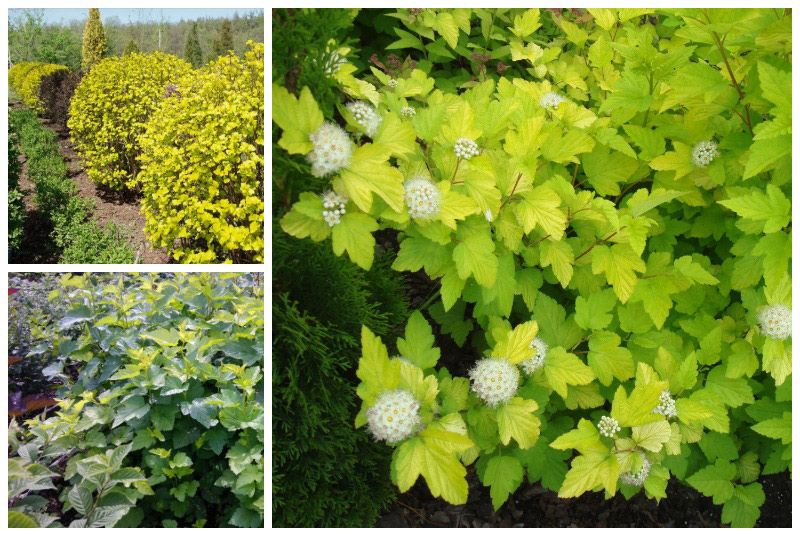
Cuttings and division are carried out in early spring or autumn in the following order:
- woody branches are cut and rooted in a mixture of peat and sand;
- cut the roots of the bush and quickly replant, not allowing it to dry out;
- water the planting site generously and cover it with film, periodically lifting and ventilating the cutting;
- protect from frost by insulating with covering material.
Layering is done during the growth and flowering period. Select a healthy branch, press it to the ground, and secure it by removing the foliage and covering it with soil. Frequent watering and weed control around the branch will create favorable conditions for rooting. In the fall, the young bush is replanted.
Plant growers rarely resort to seed propagation of Physocarpus. This is due to the unpredictability of varieties and their subtypes, as well as the mixed colors of the blooms.
The seed germination rate is quite high, so creative growers can experiment with different varieties.
Top.tomathouse.com recommends: Physocarpus luteus in landscape design
Today, landscape designers are attracted to Physocarpus luteus due to the range of colors of its leaves and the possibility of painless pruning to give the bushes unusual shapes.
The plant is distinguished by the following qualities:
- undemanding to soil;
- frost-resistant;
- easy to propagate;
- changes foliage color during the warm growing season;
- the hedge made from it is dense and fluffy.
Anyone who enjoys modern gardening techniques can grow Physocarpus luteus without the need for special care or sophisticated fertilizers. Unfazed by pruning, this shrub looks equally beautiful in a rock garden or edging a lawn or flowerbed.
The various shades of foliage – from dark green to lemon yellow and reddish – will give the garden an unusual color picture that will change throughout the summer and delight the eye.