It would seem that propagating garden strawberries using runners couldn't be more difficult. Don't think I'm mistaken in calling them garden strawberries. What we grow in our gardens is indeed strawberries, garden strawberries, or, as they're also called, pineapple strawberries, while strawberries are a completely different plant, rarely grown. But we'll continue to call them strawberries. So, about propagating using runners? It's not that simple. I'll share my personal experience and tell you about my mistakes.
Correct selection of children and regulation of shoots
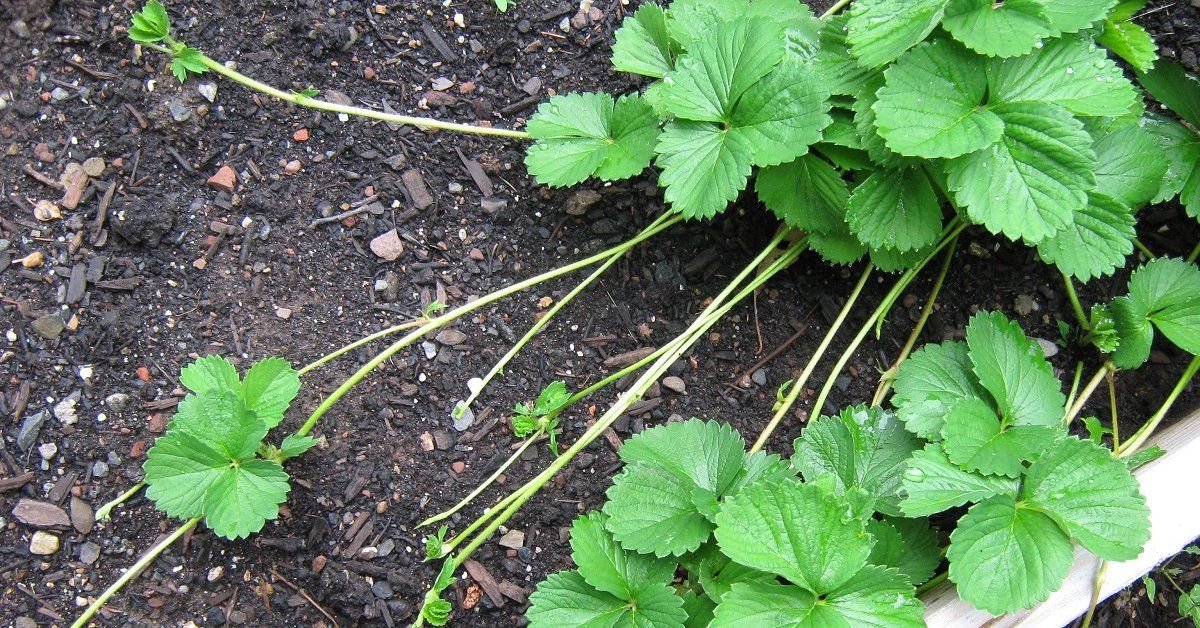
I remember how I waited for each tendril to emerge from the large festival strawberries. A mature plant can produce up to 15 tendrils, each with three to 12 rosettes.
I planted everything and was very surprised when the “babies” produced small buds a year later, and then the same berries.
My mistake was that I only needed the first few shoots for planting. The rest would produce a worse harvest. The more shoots on the plant, the smaller the resulting shoots.
The second important rule is to select two-year-old, fully grown mother plants for seedlings. The older the strawberry plant, the smaller the offspring will be.
Although I've read advice in literature about plucking flowers from bushes used for layering, I've always been reluctant to remove the berries and never had the heart to remove the flower stalks. I don't think two or three double-flowered runners will significantly affect the yield. If you're determined enough, remove the flower stalks. This will direct all the nutrients to the layering.
To prevent the tendril from forming new horns, I leave a 2 cm gap from the plant being transplanted. I remove second- and third-order shoots.
Pruning on time
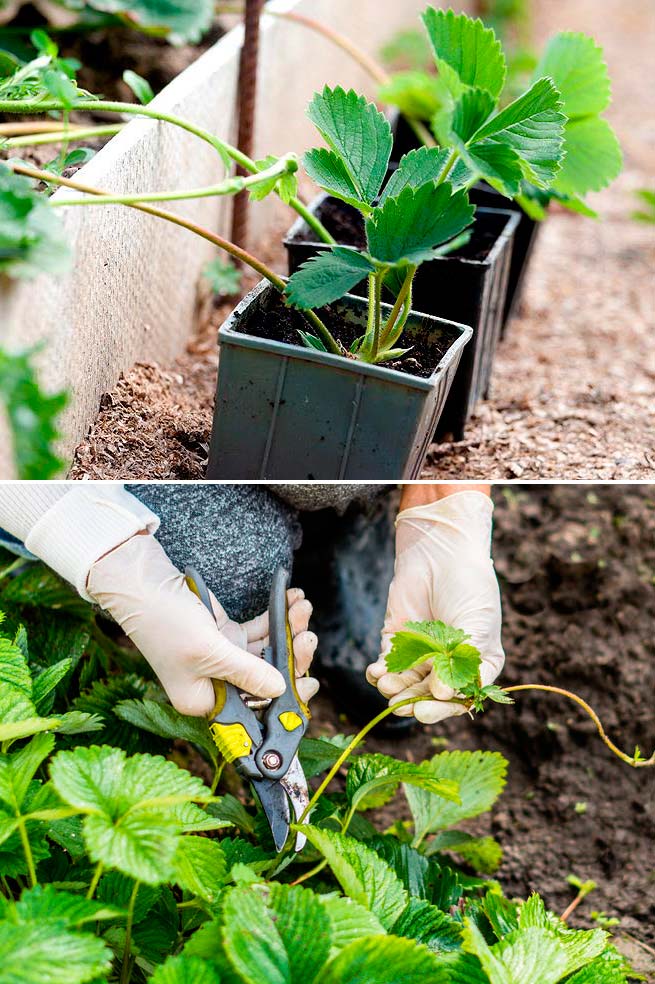
For propagating garden strawberries, I select only July runners. According to the growing season, shoot formation begins in late May or early June, depending on the weather. I carefully inspect the first row of runners from full-grown mother plants, root a few shoots, and even plant them in separate pots. I ruthlessly trim the rest with pruning shears or scissors. Pulling out runners by hand is dangerous; it damages the bush, and young buds are pulled out along with the runners.
Rosettes require up to 2.5 months to develop. If they are cut from the mother plant too early, rooting will be painful and development will be slow. By winter, the layering should have developed a strong root system and set numerous flower buds for next year's harvest. When young, immature rosettes are transplanted to a new location, the bush will develop a frail appearance and begin bearing fruit fully only in the third year.
Runner cuttings separated from the mother plant too early don't survive the winter well and can freeze during thaws. I allow the rosettes to root well near the mother plant, avoiding unnecessary disturbance. I separate the adult plants after 60-70 days.
Choosing a location
Strawberries prefer sunny locations. In shady areas, the berries become small, sour, and unattractive. The crop is fairly winter-hardy, but will freeze in snow-free areas where the soil freezes deeply. The recommended winter temperature is no lower than -12°C, meaning that at -40°C temperatures, there should be at least 30 cm of loose snow above the plant. If the areas are exposed to wind, snow retention should be considered immediately.
Spring frosts can damage the first buds, which produce the largest berries. Protecting the plantings on the north side with berry bushes, a fence, or buildings is advisable. Strawberries are demanding of moisture, but in areas prone to flooding and high groundwater tables, the bushes bulge in the spring, rising above the ground on their root ball, and dry out in the summer. They need to be replenished and compacted annually.
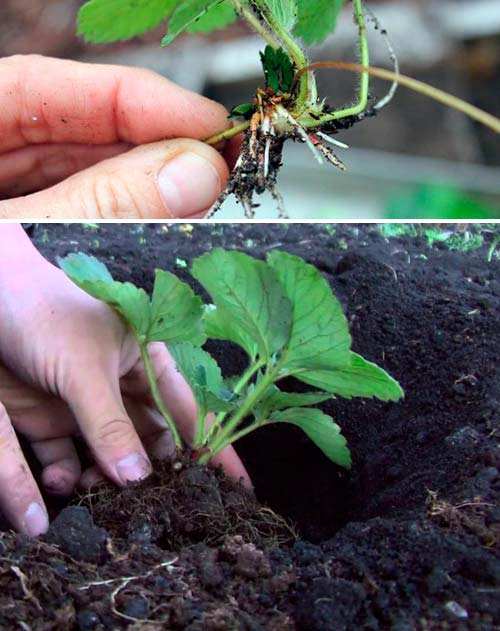
The soil should be loose and light, free of couch grass, goutweed, and spurge weeds. I always sift the soil before planting to remove even the smallest roots of harmful plants. I add rotted manure or composted soil. Strawberries grow poorly after all melons and gourds, but thrive after legumes, green manure crops (rye, oats), onions, and garlic.
Planting dates
It's recommended to replant garden strawberries in August. I usually select rosettes during pruning, removing old leaves, and after fruiting. I've noticed that when I prune the leaves later, the bushes overwinter less well. If you don't prune, there's a high risk of gray mold developing the following year.
I place the rosettes in a basin and pour a little water into the bottom. I know they'll survive in this state for a few days if I can't immediately plant the seedlings in a new planting.
I sprinkle the prepared holes with wood ash, add a pinch of complex fertilizer to each, then fill them 1/3 full with the prepared soil mixture.
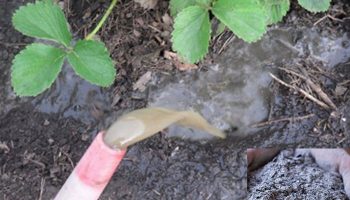
Before planting, I always dip the rosette roots in a "mash": a thick mixture of clay and chalk. After this "makeover," the bushes quickly take root and establish themselves before winter. They will delight us with berries next year.