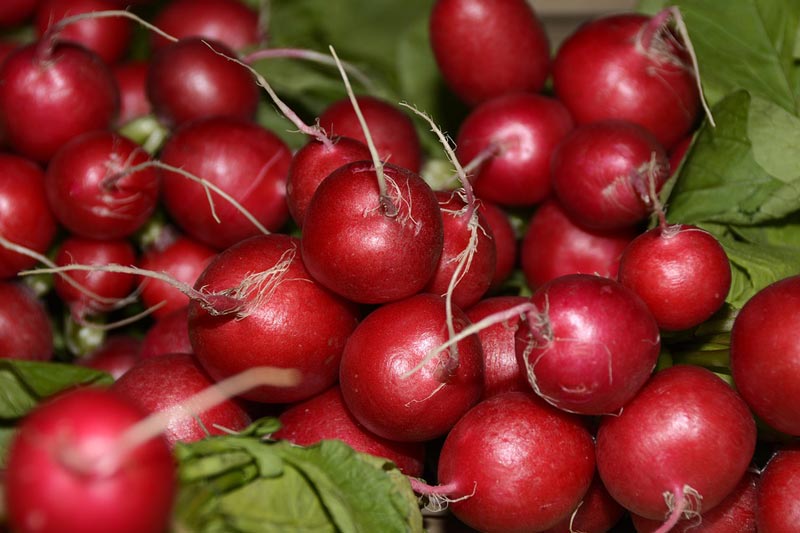
Radishes are a widely used vegetable containing high amounts of P, Ca, and Fe. Eating them has a positive effect on the cardiovascular system and gastrointestinal tract, and helps combat certain diseases.
Content
- 1 The best radish varieties for sowing
- 2 How to plant radishes in open ground
- 3 Lunar planting dates for 2023 by region
- 4 Pre-sowing preparation and seed treatment
- 5 Choosing a location for planting radishes and preparing the beds
- 6 Crop rotation and crop neighborhood rules
- 7 Different methods of planting radishes
- 8 Further care for radishes: rules for growing in open ground
- 9 Diseases and pests of radishes
- 10 Top.tomathouse.com recommends: Secrets to growing radishes
- 11 Harvesting and storing radishes
The best radish varieties for sowing
Radishes are a root vegetable that's one of the first to be harvested in the spring. Early harvests are achieved by planting short-ripening or elongated varieties to simplify planting (no need to plant singly). Conversely, late-ripening varieties are used for summer planting.
How to plant radishes in open ground
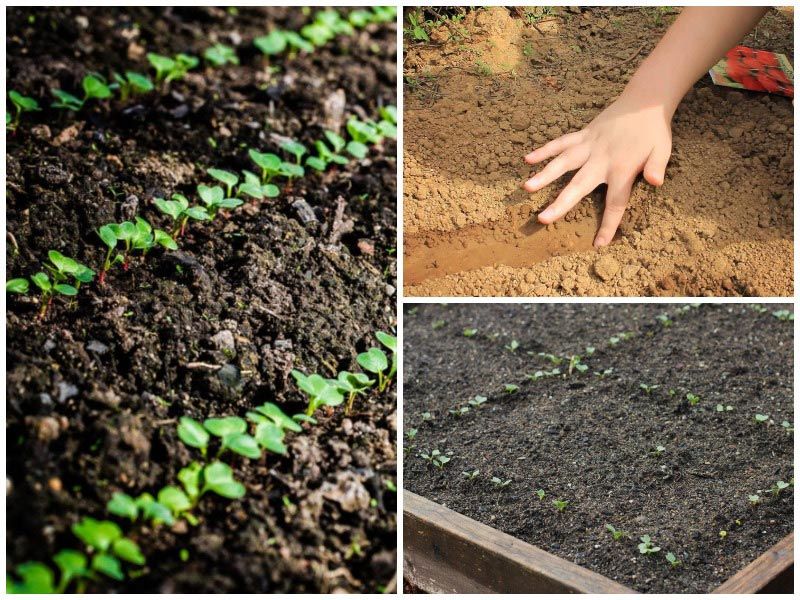
Radishes are a cold-hardy plant. They are not affected by spring night frosts. There's no need to use a separate bed; you can plant radishes first, harvest them, and then use the space for other crops. Short spring days (10-12 hours) are sufficient for radishes to ripen. Longer days (13-14 hours) and a temperature rise to 25°C will trigger the emergence of stalks and flowering, marking the beginning of the propagation phase. This is taken into account when sowing radishes in summer.
Compliance with all necessary conditions allows you to collect a good harvest:
- select a site;
- plant correctly;
- water regularly;
- protect from pests;
- harvest formed root crops in a timely manner.
Lunar planting dates for 2023 by region
Any gardener can grow radishes. When determining the sowing time, consider the following:
- sprouts will appear in 1-2 weeks at a temperature of +0…+10 °C;
- during the week at +10…+15 °C;
- seedlings will be visible in 3-4 days at +15…+20 °C - the best option;
- a drop to -4 °C is not scary;
- More than +15…+20 °C is not desirable, since leaves will grow, not root crops.
If you want to extend the harvest, sow every 2 weeks from the start of planting.
The earliest harvest is obtained by growing radishes in greenhouses. Planting in open soil occurs after the snow has melted and the soil has warmed slightly. These timings depend on the climate of the specific region. Summer planting is carried out using a dark covering material, which protects the plants from the sun and prevents bolting. Without this, there is no point in planting.
Choose varieties that bolt poorly and thrive in long daylight hours. Specific planting dates are determined based on the lunar calendar.
|
Region |
Spring sowing | Summer sowing | ||
| Favorable days | Unfavorable | Favorable days |
Unfavorable |
|
| Southern Russia (Krasnodar Krai) | March: 8 (from 17:43 pm)-10, 13 (from 10:21 pm)-17 (until 17:24 pm), 19 (from 18:12 pm)-20 (until 20:21 pm), 23 (from 21:41 pm)-25 | March: 7, 21, 22 | August: 3-4, 7 (from 09:24)-9 (until 16:05)., 12-14 (until 13:35), 22-24 (until 11:08 a.m.), 26 (from 14:04 pm)-28 (until 17:31 pm) | August: 1, 2, 15, 16, 17, 30, 31 |
| Central European part of Russia (Moscow region) | March: 19 (from 18:12)-20 (until 20:21), 23 (from 21:41)-25 April: 7 (from 09:29)-13, 16-17 |
March: 7, 21, 22
April: 5, 6, 7, 19, 20 |
July: 1-2 (up to 14:38), 6 (from 20:32)-13 (until 10:25 a.m.), 15 (from 8:12 p.m.)-16 (until 9:31 p.m.), 25 (from 7:55 p.m.)-31 | July: 2, 3, 4, 17, 18 |
| Ural region, Western and Eastern Siberia, Northwest | April: 7 (from 09:29)-13, 16-17 | April: 5, 6, 7, 19, 20 | June: 5 (from 06:40) - 7 (until 11:41), 9 (from 13:14)-11 (until 16:19), 13 (from 9:30 p.m.)-15, 19 (from 07:37)-20, 26-30 | June: 3, 4, 17, 18 |
| May: 1-4 (until 20:34), 7-10, 17 (from 15:26)-18 (until 18:52), 22-24 (until 17:34) | May: 5, 6, 19, 20 | July: 1-2 (up to 14:38), 6 (from 20:32)-13 (until 10:25 a.m.), 15 (from 8:12 p.m.)-16 (until 9:31 p.m.), 25 (from 7:55 p.m.)-31 | July: 2, 3, 4, 17, 18 | |
Prohibited days for planting: new moon and full moon.
Pre-sowing preparation and seed treatment
It's recommended to purchase seeds from a store, sort them by size, and store them at least 3 cm in size. These seeds produce good germination and large roots. You can soak the seeds in a salt solution (10 g per 200 ml); discard any that float to the surface. Before planting, treat any remaining seeds with:
- keep it in water or on a damp cloth for 24 hours;
- put it in hot water for 20 minutes - this will protect against diseases;
- use growth stimulant solutions - this will provide enrichment with microelements;
- Dry thoroughly.
Choosing a location for planting radishes and preparing the beds
The planting site should receive full sunlight for 4-5 hours (before or after lunch) and be protected from wind. Radishes prefer light soil with a pH of 6.5-8. Site preparation should be done in the fall.
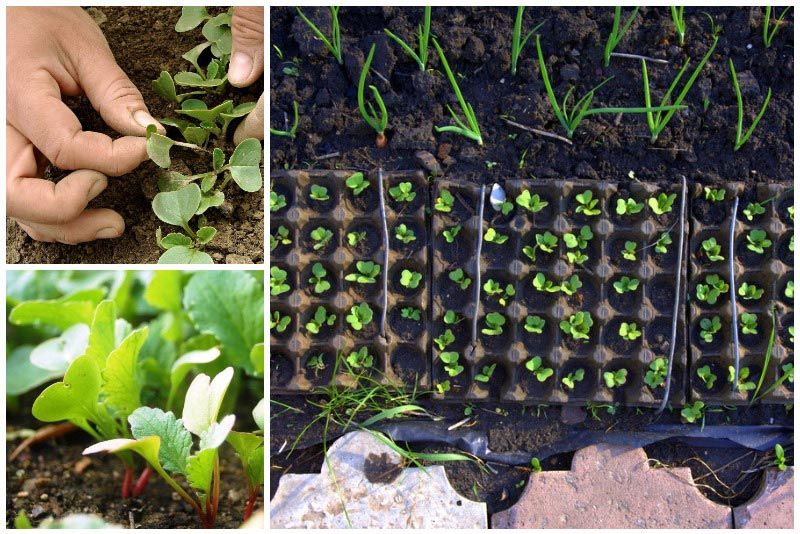
Before digging, add a bucket of decomposed compost (don't use fresh compost) per square meter to the depth of a shovel. Add inorganic fertilizers: 30-40 g of phosphate and 20-30 g of potassium sulfide. If the plot is being dug in the spring, add 10-15 g of urea. Sand is added to clay soil. About two weeks before sowing, the soil is loosened to ensure air circulation. The surface is leveled and covered with white plastic to warm it up.
Crop rotation and crop neighborhood rules
Radishes are a cruciferous plant, so they are planted after any crops except those of the same family (all types of cabbage, lettuce, radishes, etc.). These plants share the same diseases and pests.
It grows well in mixed beds with greens (parsley, lettuce). It can be planted next to onions, nightshades, legumes, and cucurbits (tomatoes, pumpkins, cucumbers). Growing near lettuce is beneficial for protection against flea beetles. Bush beans improve flavor.
Different methods of planting radishes
There are several ways to plant radishes. Everyone chooses the best option based on their plot, available resources, and personal preferences.
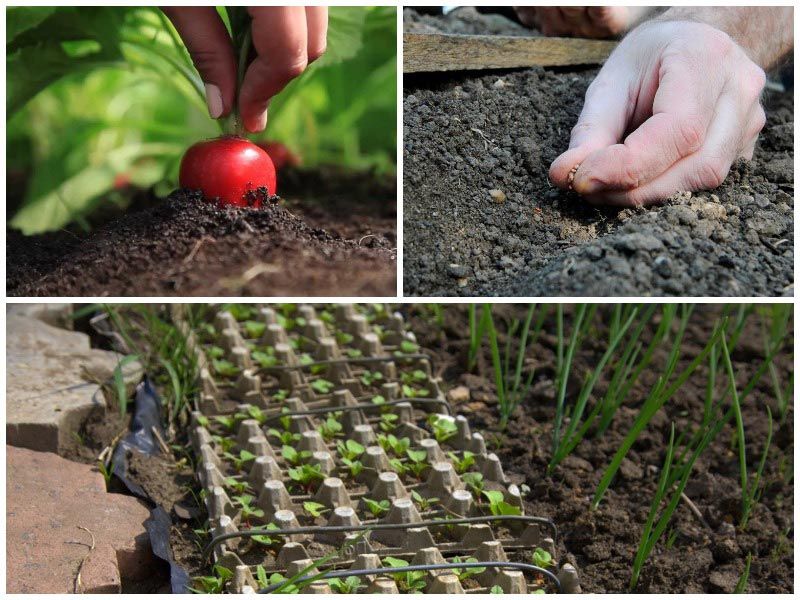
A particularly common method is to plant rows in furrows 1-3 cm deep, leaving 10-15 cm between them. You can create the furrows with a special flat cutter, which is then used to hill up the plants. The bottom is watered generously, and after the water has been absorbed, the prepared seeds are spread out 4-5 cm apart. If they haven't been treated, they can be spread more densely. The furrows are filled in and lightly compacted. The bed is covered with plastic film to retain heat and allow a crust to form on the surface.
The second method is suitable for those with limited planting space. Sow in a continuous layer using egg trays or by making indentations with a stake. Before sowing, carefully remove all weeds from the area; this will be difficult to do later. The rest follows the same procedure:
- watered;
- Place the seeds in the holes of the cassette cells or in prepared holes;
- covered with earth;
- compact the soil.
Seedlings are grown by experienced gardeners and quite rarely.
Further care for radishes: rules for growing in open ground
Caring for the vegetable is not difficult if you follow these rules:
- Maintain soil moisture to promote active growth and development. Water the soil daily to prevent the surface from drying out. Morning or evening is best.
- Thin out on the 5th day after the seedlings emerge, leaving 5 cm between them and removing the weakest ones.
- Loosen the soil carefully, without damaging the root system, after each watering to allow moisture to be absorbed and prevent the development of diseases.
- Add organic fertilizers and mulch the soil to ensure all nutrients are absorbed, weeds do not grow, and moisture is retained.
- Take preventative measures against diseases and pests. Inspect plants to identify any affected ones. If any are present, administer the necessary treatment.
Diseases and pests of radishes
To preserve the harvest, it is necessary to promptly identify the disease and take all necessary measures to eliminate it.
| Problem | Manifestations | Elimination measures |
| Kila | The leaves turn yellow and wither. Blisters and growths form on the root crop. | Diseased plants are removed. Slaked lime is sprinkled on the area. Radishes are not planted there for four years. |
| Powdery mildew | A white coating is visible on the surface of the tops, which later turns brown. | They are treated with special agents. Then, they are planted with plants resistant to this disease. |
| Bacteriosis | The leaves are turning yellow. The fruits are covered in slime and smell rotting. | Spray with a mixture of copper sulfate and slaked lime solution. |
| Cruciferous flea beetle | A small beetle that feeds on leafy greens. It lays eggs, which hatch into very voracious larvae. | They are treated with insecticides. Folk remedies can also be used. |
| White butterfly | The caterpillar makes continuous holes in the leaves. |
Top.tomathouse.com recommends: Secrets to growing radishes
Every gardener should know a few rules. They should be followed to avoid losing a harvest:
- Do not plant seeds too densely.
- Do not allow the soil to dry out.
- A severe drop in temperature (below -5°C) is undesirable, as it will kill the seeds. A rise in temperature (above 30°C) is also undesirable, as this will trigger the emergence of a stalk and the onset of flowering, but the root crop will not form.
- Don't feed them with fresh manure, only rotted organic matter. The radishes become hollow inside.
- Don't thin out the plants to avoid damaging the roots. Plant the seeds at a distance from each other.
- They don't use chemicals. They can get into the root crop. They use folk remedies.
Harvesting and storing radishes
The harvest is done gradually, in 2-3 stages. Large root vegetables are harvested first, followed by those that have grown a week later, and finally after two weeks. This method ensures proper fruit formation. Water the soil first, making it easier to pull the radishes out. Remove the leaves from the roots and trim off the tips. They can be stored for several days in a plastic bag in the refrigerator's vegetable drawer.