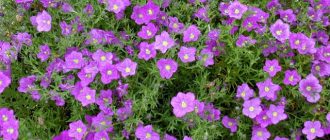
The word "rhododendron" translates from Greek as "rose tree." It received this name because of its rose-like flower.
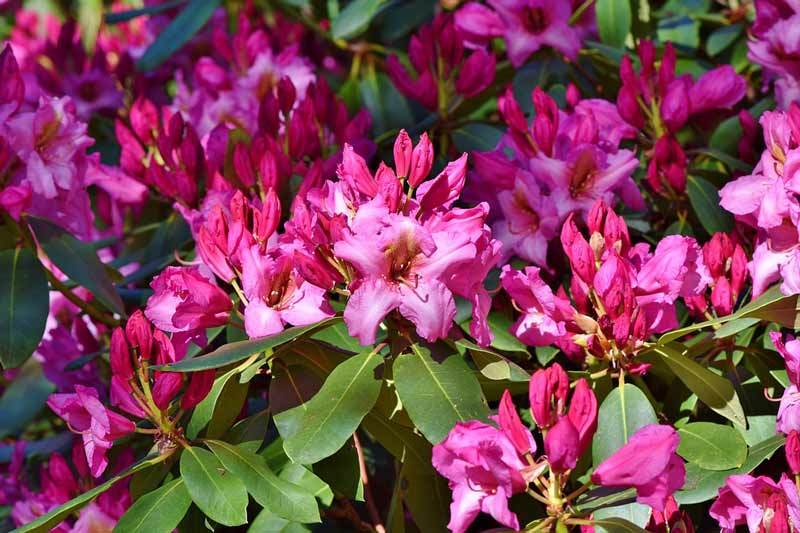
Description of rhododendron
Rhododendron belongs to the Ericaceae family, which includes evergreen shrubs and trees that shed their leaves, either partially or completely, at certain times of the year. The most well-known and widespread are azaleas, grown indoors, in greenhouses, and conservatories.
It grows in the subtropics and temperate zones of the Northern Hemisphere, although it is also found in the Southern Hemisphere. Eighteen species are known in Russia, distributed throughout the Caucasus, Siberia, and the Far East. They grow singly or in groups, forming dense thickets, in the mountains or under trees in forests, marshy areas, or tundra. The location should be shaded and moist, but the soil should not be waterlogged. The air should be damp.
Rhododendron species vary in height (from 10-20 cm to 30 m) and flower size (a few mm to over 20 cm). Simple and compound leaves with distinct margins. Bisexual flowers with corollas of various colors: lemon, pink, or purple-violet. They form simple and compound inflorescences, and are extremely rare as single flowers. The fruit is a five-valved capsule that opens downward. The seed resembles a rod 0.5-2 mm in diameter. Numerous small roots are located on the surface. Rhododendrons are characterized by slow growth. They can be propagated by various methods.
Rhododendron is a poisonous plant containing andromedotoxin. This substance initially has a stimulating effect, then a depressing effect, leading to death. The bark and leaves contain tannins.
Types and varieties of rhododendron
In gardening, shrub varieties are usually grown.
|
View |
Description of the shrub | Sheet | Flower |
|
Deciduous |
|||
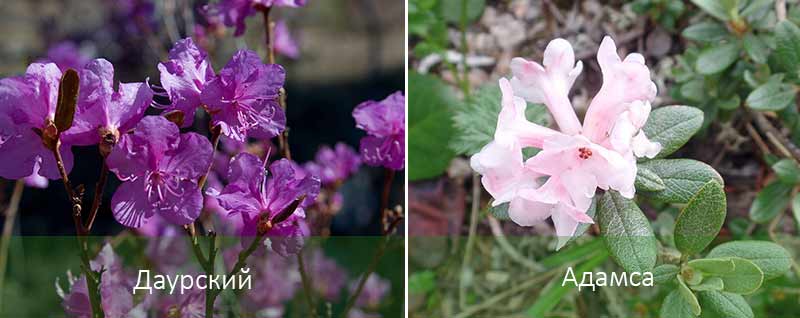
| Daurian | Medium-sized, highly branched, early flowering, steel-colored bark, thin, reddish-brown shoots with light pubescence. | Elongated, green, lemon-colored in autumn. 5 cm. | Lilac-pink in the form of a funnel. |
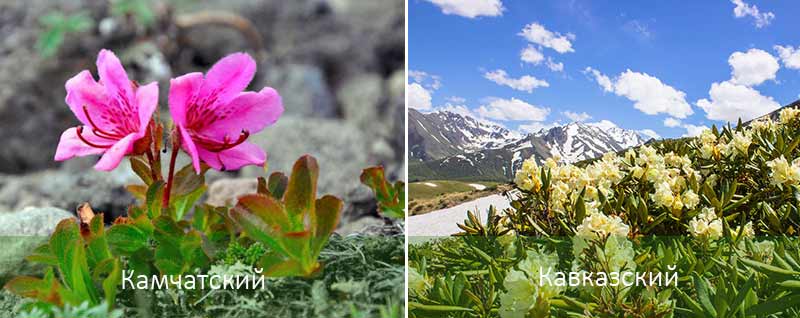
| Kamchatka | Miniature, hemispherical in shape. Dwarf. | Large, ovoid. 5 cm. | Bright crimson. A cluster of 3 flowers with a velvety surface. |
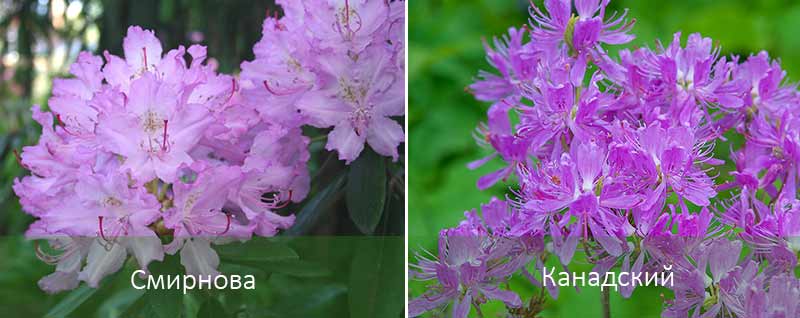
| Canadian | Low, compact, up to 1 m. Winding, thin, strong branches. | Elliptical, bluish-green. | Pinkish-lilac. The heavily serrated petals resemble a butterfly. |
|
Evergreens |
|||
| Caucasian | Creeping shoots up to 1.5 m. Dark brown bark. | Dark green, smooth on top and hairy underneath. | Fragrant, yellow with green speckles or white. Bell-shaped. Raceme of 8-12 flowers. |
| Smirnova | Young branches with a little white pubescence, old ones have grey bark. Up to 1-2 m. | Oblong-elliptical 8-10 cm. | Purple bell-shaped. |
| Adams | Branched 0.5 m. Shoots covered with glandular hairs. | An elongated ellipse, bare above, scales below. Red. | Various shades of pink. Corymbose inflorescences of 7-15 flowers. |
| Small-leaved | Beautiful, compact. Young branches are rusty in color, older ones are steel-gray. Upright or creeping. 0.5-0.6 m. | Oblong-lanceolate. | Golden 3 cm. |
Planting a rhododendron
To grow a rhododendron in your garden, you need to choose a suitable location, prepare the soil, and properly plant and care for it. Deciduous species require plenty of light, while evergreens thrive in shade. They all require shelter from the wind and, in winter, from snow, so it's best to plant them near buildings, fences, or other tall trees. Trees with similar root systems, such as birch, spruce, maple, and others, are unsuitable neighbors. They can grow near oak, pine, and fruit trees, such as apple, pear, and cherry.
Rhododendrons prefer loose, acidic soil (4.5-5.5 pH) that provides free access to air and water (not retained). Sandstone and loam soils are deacidified by adding peat, compost, pine needles, and bark.
Two- to three-year-old bushes are replanted into a 30x30 cm hole, while older plants are replanted into a 60x40 cm hole. A drainage layer of broken brick or coarse gravel is placed on the bottom, followed by a special mixture of soil, peat, rotted pine needles, sand, and compost (humus). The mixture is thoroughly moistened to allow it to settle. The plant roots are placed in water and soaked until air bubbles disappear. The depth of the soil is 3-4 cm above the root ball. After planting, the soil is moistened and mulched with a mixture of peat, sand, and shredded pine bark.
Rhododendron care
Care for the plant according to the rules:
- Water according to the weather and soil drying. During early development, adequate moisture with soft water is required: 1-1.5 buckets per mature plant 4 times per month in summer, more frequently in hot weather. When it gets cooler, reduce the frequency to every 1.5 weeks. Water with acidified water (10-15 g oxalic or citric acid per 10 liters).
- Fertilize with mineral fertilizers. In the spring, to revive the plant and initiate flowering. In the summer, to accelerate shoot growth and bud formation for next year. In the fall (without nitrogen), to prepare for winter.
- Prune in the spring, removing dead and diseased shoots. Branches that disrupt the bush's shape can be shortened. Wilted flowers are removed, otherwise the plant looks untidy. This is necessary to focus the plant's energy on the growth of new branches and flowers.
- Repotting can be done at any age. It's best to do this before the sap starts to flow—in spring—or later—after flowering or at the very beginning of fall, so the plant has time to strengthen before winter sets in.
- It is a winter-hardy plant, but it is better to cover it during the cold period.
Reproduction
There are several methods of propagation: by seeds, division of the bush, layering and cuttings.
Sow seeds shallowly in a container filled with a moist mixture of peat (heather) soil and sand in a 3:1 ratio. For a greenhouse effect, cover the container with glass or cellophane and expose it to light. Aerate, water, and remove condensation daily. Seedlings will appear in 30 days. Transplant the seedlings into another container after two leaves appear (2x3 cm pattern). They are then transferred to the garden in the second year; until then, they are grown in a greenhouse. Flowers will appear at 6-8 years of age.
A cutting is prepared from a 5-8 cm section of the stem containing immature wood and leaves. The lower leaves are plucked and dipped in a stimulant solution for half a day. The cutting is then inserted into soil (a 3:1 ratio of peat and sand), with a jar or bag placed on top for root growth (1.5-4 months). After this, a container with soil (a 2:1 ratio of peat and pine needles) is added. During the winter, the cutting is placed in a brightly lit room with a temperature of 8 to 12 °C. In the spring and summer, the cutting is transferred to the garden, and to its final location after two years.
The easiest way to propagate is by layering: bend a flexible branch into a 15 cm groove, secure it with wire, and cover with soil. Tie the top to a pole. Care is as usual. In the fall or spring, it can be separated from the main plant and replanted.
The bush is divided into sections, which are planted individually. Within a year, new branches will appear, and flowering will begin.
Preparing for winter
If there's no rain in the fall, the rhododendron needs additional watering. This isn't necessary during rainy weather. Before December, the plant needs to be prepared for winter: cover the roots with a layer of peat moss. In areas with cold winters, use burlap and tie it with rope, or you can create a frame with covering material. Remove the covering after the snow melts, on a cloudy day.
Diseases and pests
Rhododendron is susceptible to attack by some pests and a number of diseases.
|
Pest |
Symptoms (on foliage) |
Elimination measures (spraying) |
| Rhododendron bug | Small white markings. Below are insect eggs (brown). | Diazinon. |
| Asian garden beetle | Irregularly shaped holes or only veins remain. | |
| Mealybug | Incorrect shape. Death. | Karbofos. Several times. |
| Grooved weevil (ribbed vine weevil) | The edges are damaged, the bark near the root is eaten away. | 0.3% malathion emulsion, 0.2-0.3% for irrigation. At the end of summer, 0.1-0.15% liquid bazudin or diazinon and furadan are used. |
| Spider mite | Below is a thin web. The color is brown-steel. They fly away. | Agravertin, diazinon. |
| Plowed slug | Through holes appear very quickly. | 0.8% TMTD. Collection of adult specimens. |
| Black thrips | Gray holes on top, dark ones on the bottom. Steel-colored, shedding. Inflorescence is misshapen. Development is slowing. | 0.2-0.3% nicotine. 0.2% malathion emulsion. |
| Narrow-winged miner moth | The surface is stained. They curl into tubes, dry out, crumble, and fall off. | Spraying or fumigating with sulfur. |
In addition to pests, rhododendrons are susceptible to some diseases.
|
Leaf manifestations / Symptoms |
Disease / Causes |
Elimination measures |
| Yellowing. Curling, drying out. Weak flowering. | Mixed chlorosis. Nutrient deficiency. Stagnant water, compacted soil around the root system, or alkaline soil. | Foliar feeding with iron salt of sulfuric acid 7.5 g/l, magnesium 6.5 g/l. |
| Red spots, curling, drying out. | Sulfuric acid salt or ammonium nitrate. Potassium nitrate. | |
| Brownish on top. | Necrosis. Decreased environmental temperature. | Cover. |
Each case of disease requires the establishment of causes and their elimination.
The benefits and harms of rhododendron
Rhododendron is used for decorative purposes, but it also has beneficial properties that have found application in traditional and folk medicine. The presence of vitamin C, andromedotoxin, ericolin, arbutin, and rhododendrin have led to its use in:
- will help reduce fever and pain;
- will have a calming and bactericidal effect;
- will relieve swelling;
- will remove excess fluid from the body;
- will lower the pressure.
Contraindications: pregnancy, breastfeeding, kidney disease and tissue necrosis.
It's best to consult a doctor before treatment. This will help prevent unwanted side effects or death, which is possible because many species are poisonous.
Top.tomathouse.com informs: how to grow rhododendron in the temperate zone
Many gardeners in the Central European part of Russia (Moscow and Leningrad regions) want to grow rhododendrons. This is possible if you choose the right species. Frost-resistant species and varieties are most suitable:
- Deciduous species: Japanese, yellow, Schlippenbach, Canadian, Kamchatka.
- Semi-evergreen ledebour.
- Evergreen catechumen and its hybrids, short-fruited, golden, Smirnov.
- Winter-hardy varieties: Elvira, Hague, Mikkeli.
- Hybrids of the Pink Lights, Spicy Light, Northern Light Rosie Lights group and others.
Having chosen the variety, plant it according to the rules:
- the place is located 50 cm from other plants;
- special soil with complex mineral fertilizer;
- the size of the hole is 2 times larger than the root;
- drainage layer 15 cm;
- the trunk is not lowered into the soil below 4-5 cm;
- moistening after planting.
Care has some peculiarities:
- the soil does not contain substances that alkalize the soil;
- mulching is essential;
- sun protection (mesh, gauze, fabric);
- balanced watering;
- growth is not allowed if it is warm and humid in the fall (spraying with a 1% solution of potassium sulfate or potassium-phosphorus);
- Winter shelter - a hut-shaped frame wrapped in non-woven material.
If the gardener meets all these requirements, the rhododendron will grow in the area and delight with its flowering.