Sansevieria is an evergreen plant belonging to the Asparagus family. This perennial stemless succulent grows in subtropical deserts on all continents. The main reason for its popularity in Russia is its low maintenance and unusual appearance, which has earned it the nickname "pike tail."
Content
Description
Many species lack stems: the leaves grow from rhizomes and form a rosette. Each has a unique shape: long or short, elliptical or round, sword-shaped, pencil-shaped, and even spoon-shaped. The leaves grow vertically upward, but some varieties grow horizontally. Color shades range from dark green to light brown, and light stripes may be present. The apex is crowned with a point, which is not recommended for breaking off. Growth rates also vary among subspecies: some grow rapidly, while others produce no more than three shoots per year.
Types of Sansevieria
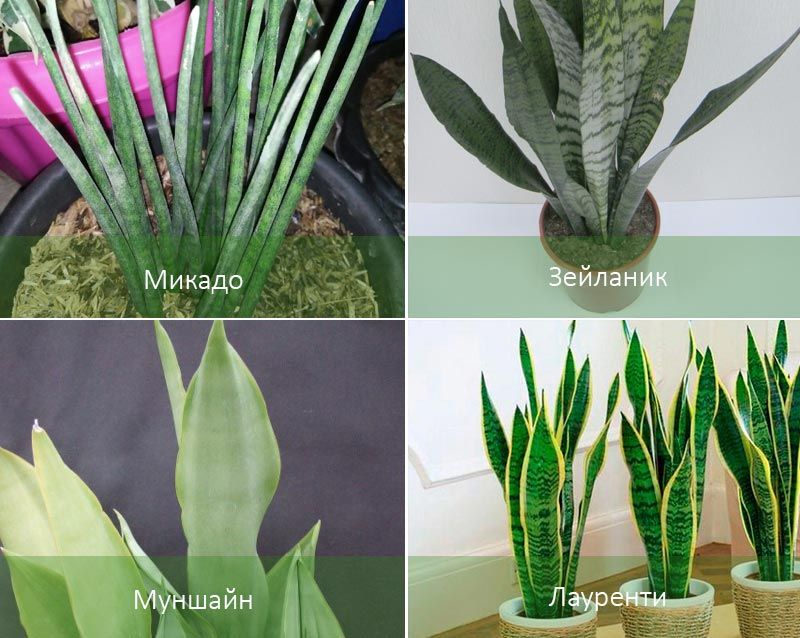
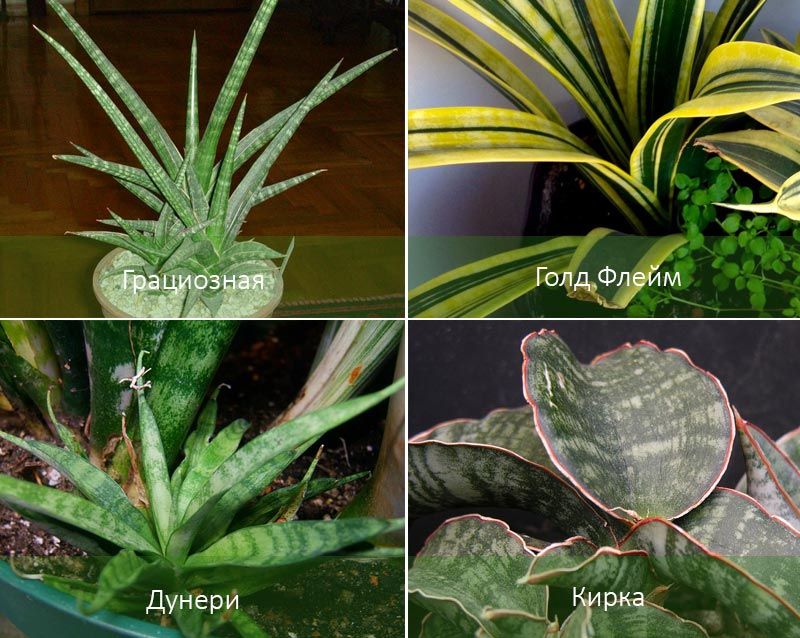
The table shows the main types of plants.
| Variety | Description of leaves | Peculiarity |
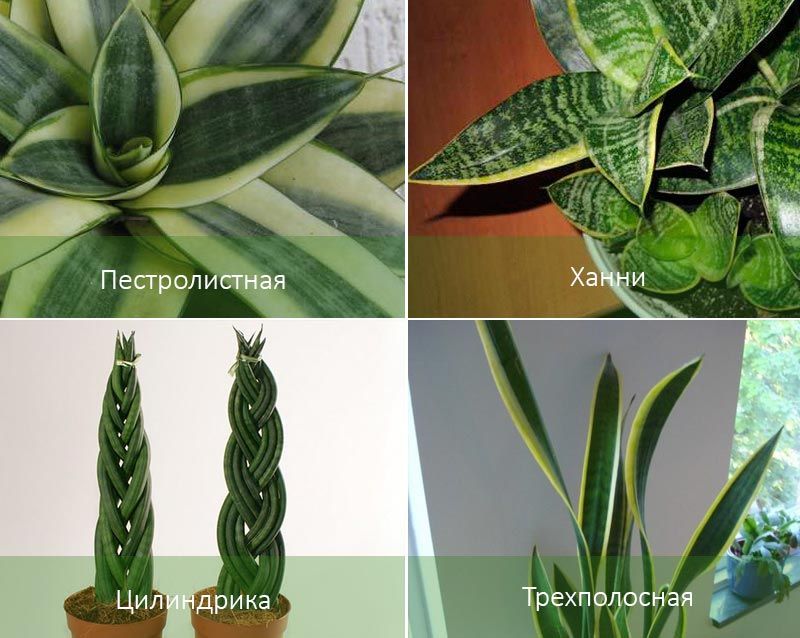
| Three-lane | Erect, sword-shaped, vertically growing foliage. Rich green color. Tall, reaching over one meter. | The most common. Blooms in spring, inflorescence is a panicle, small, light green. |
| Hanny | A small, vase-shaped rosette. Light yellow, with a green longitudinal stripe in the center. | It is distinguished by a variety of sub-varieties. |
| Cylindrical | They have a tubular shape with a prominent groove. The base is broad and juicy, while the top is dry and pointed. | Delicate cream flowers, sometimes with a pink tint. |
| Pick | There are no more than five flowers in a rosette, soft green in color with grayish spots. | Unusual "ruffled" shape. Red border. The brown color of the pickaxe is called "Brown". |
| Laurenti | Long, green with a yellow border. | The most unpretentious. |
| Variegated (Variegated) |
Bright, saturated, with a characteristic pattern. | The design will fade if frequently exposed to direct sunlight. |
| Zeylanik | Wide, dotted with silver dots. Typical length: up to half a meter. | Pinkish edging, sharp scent of flowers. |
| Graceful | Pale green, growing to 30 cm. | They curl into a tube towards the top. |
| Duneri | A rosette of more than ten small sword-shaped leaves. | The scent of the flowers is reminiscent of lilac. |
| Moonshine | Light, with dark green edging and silver pattern. | The pattern fades when exposed to light. |
| Mikado | Cylindrical, fleshy, dark green in color. | New variety. |
| Bali | Low-growing, round, in a small rosette, silvery pattern. | |
| Gold Flame | Its bright yellow color resembles a fire. | Translated it means "golden flame". |
| Bakularis | Rich green, cylindrical. | Solid color without a pattern. |
| Bonselensis | Short (up to 30 cm), cylindrical. | Fan-shaped arrangement. |
| Grandis | Wide and massive, in a large rosette. | Translated it means "big". |
Every day, more and more varieties of “mother-in-law’s language” appear: Arusha, Velvet, Masoniana, Francizi, Manolin and many others.
Care
Sansevieria requires proper care.
Light
Sansevieria thrives in sunny savannas and deserts. A windowsill is ideal for this plant. Without adequate light, it won't wilt, but it will lose its unique appearance and vibrancy.
The exception is a window facing south: too much direct sunlight will also affect the health of the succulent.
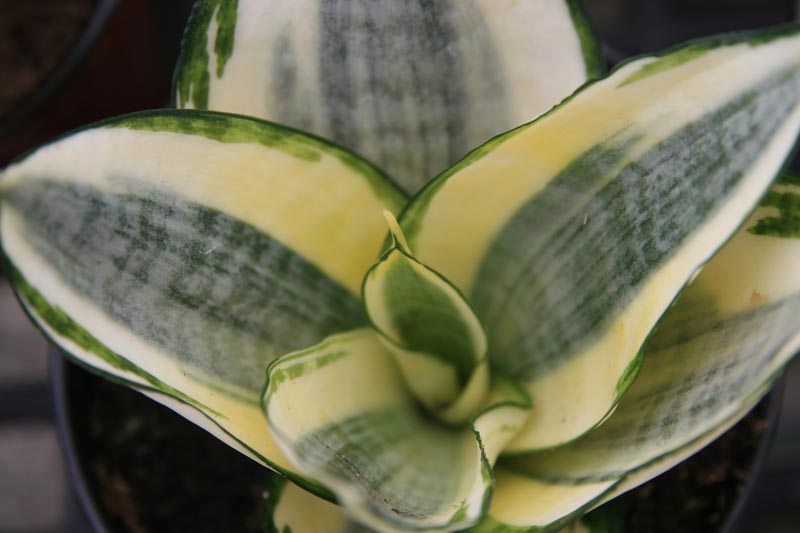
Variegated plants have specific light requirements, which depend on the predominance of a particular color: the more yellow, the less light the plant needs; it will turn green. This doesn't mean it needs to be completely cut off from sunlight. It's best to place the plant in a border zone to prevent sunburn and color changes.
Temperature
Sansevieria is unpretentious, the most preferred conditions are from +20 to +30°C during the day and from +16°C at night.
It is not recommended to keep the plant in rooms where the temperature drops below +10°C, or near windows that open for ventilation - the flower will get sick and die.
Watering
Sansevieria is a succulent, meaning it stores water in its leaves and can survive for long periods without it. Excessive watering can cause root rot, so it should be watered infrequently, only when the soil in the pot is completely dry. Water with clean, not too cold water.
The lower the ambient temperature, the less water the plant requires.
Particular attention should be paid to keeping the center of the rosette clear of water, as it is particularly sensitive to humidity and will rot if it gets too wet. Spraying is not necessary, but wiping with a damp cloth is recommended to prevent dust accumulation.
Top dressing
During seasonal transitions (spring/fall), it's recommended to use mineral-based fertilizers specifically designed for succulents. When choosing a fertilizer, pay attention to its nitrogen content: high levels of this element are harmful to the plant.
The recommended feeding concentration is halved, and if stripes or patterns are present, the concentration is reduced by a third. Failure to do this will result in the leaves becoming a uniform color.
In summer, fertilize the pike tail once a month, but this is unnecessary in winter. It will survive without any problems without feeding, but frequent feeding is detrimental to the succulent's health and beauty.
Selecting a pot and replanting
Sansevieria isn't picky about soil, but its best choice is a substrate made up of seven equal parts: four parts turf, two parts leaf mold, and one part sand. Special soil for succulents and cacti is also suitable. They are often grown hydroponically. A drainage layer, such as pebbles, should occupy a quarter of the pot.
A normal pot is a bit cramped for the plant. The time to repot is determined by the condition of the roots: if they start growing upward or bursting the pot, it's time. This usually happens every couple of years.
Transfer algorithm:
- A flowerpot is selected: the new one is a few centimeters larger than the old one.
- Drainage and moist substrate are added, leaving space for the plant.
- Watered in an old pot.
- When the soil is soaked, the pike tail is removed from the old pot.
- The roots are carefully cleared of old soil.
- Sansevieria is placed in a container, soil is added until the roots are covered.
- Place in the shade for a couple of days without watering or access to sunlight.
When replanting, you should install a support to prevent the plant, which has not yet taken root, from falling over due to the excess weight of large leaves.
Reproduction of Sansevieria
Sansevieria is propagated by vegetative parts and seeds. The most commonly used method is propagation of lateral shoots.
The algorithm consists of the following steps:
- Selecting an ideal young shoot that is located at a sufficient distance from the rosette.
- Removing the entire bush from the pot.
- Separating the shoot from the bush with a sterile instrument.
- Transplanting the shoot into a separate pot.
- Strengthening with support.
- Spraying.
The next method is propagation by cuttings. To ensure both plants are healthy, you need to:
- Select a medium-sized shoot.
- Cut off one third of the leaf.
- Divide the cut out part into pieces five centimeters in size.
- Stick these pieces into the ground two centimeters deep.
- Spray once every couple of days.
If the leaf taken for transplantation had stripes, then the cuttings are placed in the ground with the light stripe towards the ground, otherwise it will grow a solid shade.
Mistakes in care
The main reasons for the wilting and death of sansevieria are the following:
| Error | Consequence | How to fix |
| Lots of water. | Root rot progressing upwards. Death of the plant. | Removing damaged parts of the plant, replanting, limiting water. |
| Hypothermia. | Lethargy. | Circumcision, moving to a warm room. |
| High humidity. | The appearance of brown spots. | Removal of affected organs, exposure to sunlight. |
Diseases, pests and their control
"Mother-in-law's tongue" is strong and resilient, however, there are threats to its growth: The most common disease is rot
| Rot | Manifestation | Routes of infection |
| Soft | Softening of the socket base, smell of rotten fish. | Buying an already diseased flower, high air humidity. |
| Root | Multi-colored spots that take on irregular shapes. | Water getting on the base of the socket, diseased soil. |
| Sheet | Dark circles with spores. | Over-hydration. |
The plant is also susceptible to parasites:
| Pest | Manifestation | Struggle |
| Spider mite | Yellowing, leaves fade and die. | Spray with a decoction of orange peels or Fitoverm. |
| Thrips | Loss of natural color, brown coloration and metallic sheen. | Treat with insecticides. |
| Mealybug | Leaf fall, wilting, change in color and shape. | Worms settle at the base. They should be removed and disposed of. For severe infestations, treatment with malathion is recommended. |
Top.tomathouse.com recommends: the pros and cons of keeping sansevieria indoors
Sansevieria is known as a natural ozonizer, as it holds the record for the highest amount of oxygen produced. Furthermore, the plant's beneficial properties include:
- Active absorption of carbon dioxide from the air.
- The release of phytoncides – volatile “antibiotics” that suppress the growth of harmful bacteria and infections in the home.
- A paste made from the plant's leaves can help with certain skin diseases.
- In China, it is believed that the "tail of a fire orchid" brings peace and good luck to the home and absorbs harmful energy.
Despite all its advantages, the “pike tail” has several disadvantages:
- High content of saponin, a poisonous substance that causes vomiting when consumed.
- Some have sharp edges, and small children or curious animals may injure themselves.
- Flowers cause allergies.