The small sanvitalia sunflower is native to Central and North America. It was named after the renowned Italian botanist Sanvitali. It was recently introduced to Russia and quickly adapted to the cool, temperate climate. It is easy to care for, and even a novice gardener can handle it.
Description and characteristics of Sanvitalia
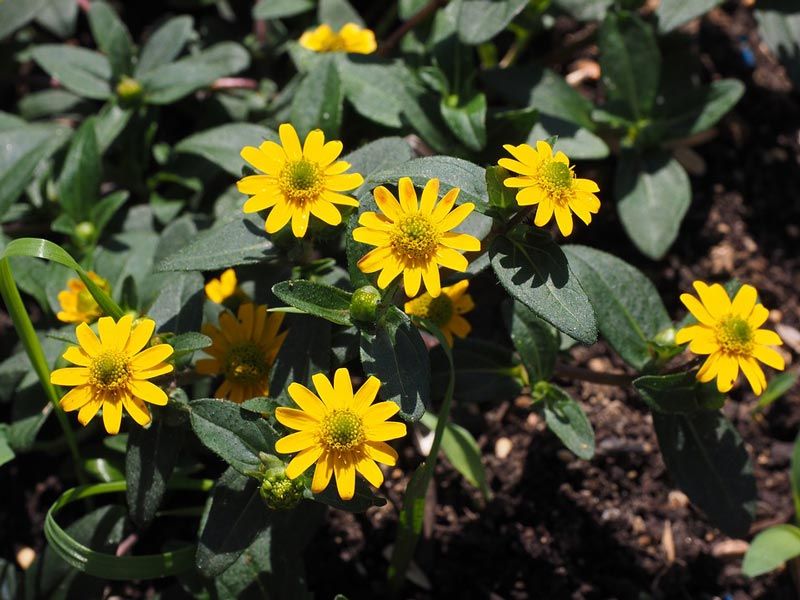
An annual or perennial plant of the genus Asteraceae. Flowers, depending on the variety, are either solitary or form clusters, 1.5-2.5 cm in diameter. Coloration includes white, yellow, and orange. They are small, resembling sunflowers. Large, double-flowered varieties are rare. Blooms from July to October. By the end of the growing season, they form seed pods.
The bush is short, reaching 25 cm. The shoots quickly spread out and can reach 50 cm, so thinning is necessary. The leaves are oval, large, and bright green.
Types and varieties of Sanvitalia used in cultivation
There are many varieties of Sanvitalia in the wild, but not all are grown by gardeners. Only one species, Sanvitalia procumbens, is widely cultivated. It reaches a height of 15 cm and a width of 45-55 cm. The flowers are bright yellow with a brown center. The foliage is rich and green. There are trailing varieties and varieties that form a spherical bush.
The most popular:
|
Variety |
Description |
| Sprity Orange | The color is orange, the petals are velvety. The leaves are dark. |
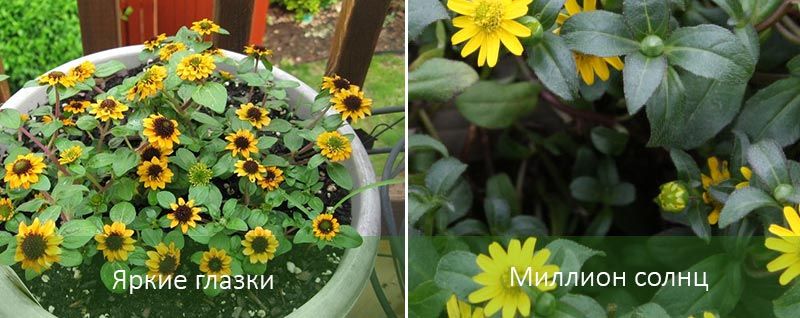
| A Million Suns | Yellow with a black center, they resemble daisies. They are grown as hanging plants in pots, and are low-growing. |
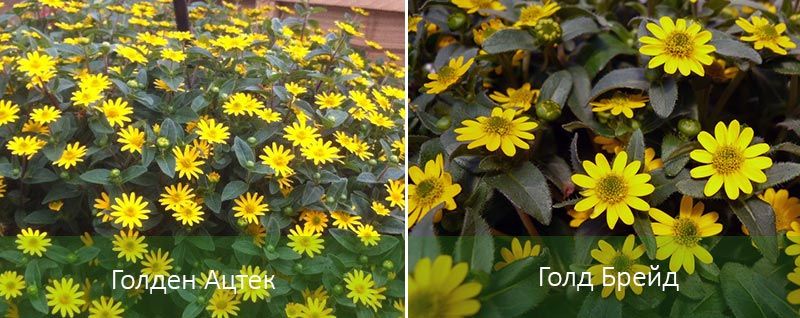
| Golden Aztec | Sunny, with a greenish center and dense, bright foliage. |
| Bright eyes | Golden petals with a black-grey core, ampelous. |
| Honey Savior | Flowers are honey-colored with a chocolate center, expanding in width to form a blanket. |
| Gold Braid | An annual plant up to 20 cm tall, with bright lemon-colored flowers and a black center. It spreads vigorously, carpeting the soil. |
Growing Sanvitalia from Seeds at Home
Sanvitalia is propagated and grown from seeds. They are collected in late autumn and planted in early March. For planting, you'll need:
- capacity;
- a soil mixture of clay or fertile soil and coarse sand (3:1);
- drainage;
- material for creating a greenhouse;
- sprayer for spraying.
Place a layer of drainage material on the bottom of a prepared container, then add soil on top. Sanvitalia seeds are very small. They are planted 10 mm deep in the soil and covered with a thin layer of soil. The planting is then sprayed, covered with glass or plastic, and ventilated regularly. Overwatering can damage the small seedlings, and overwatering can lead to fungus (blackleg).
After two weeks, the first shoots appear. Then the greenhouse is removed and the seedlings are sprayed. After the first two or three leaves appear, they are transplanted into containers, one or more at a time.
The shoots are planted in open ground after mid-April, otherwise the plant will grow too much and die.
In warm climates, seeds are sown directly into the soil in May-June. This will delay flowering and cause it to begin later.
Planting Sanvitalia in a permanent location
Preparation for planting begins 14 days in advance with a hardening-off procedure. The seedlings are taken outside daily, or to an open balcony at home, to allow them to acclimate.
Choose a bright, sunny spot in the garden. Sanvitalia will stretch in the shade but will not bloom. Make a small 10 cm depression in the flowerbed and add drainage (broken brick or expanded clay). This is necessary to protect the root system from excessive waterlogging and rot. Leave 20-25 cm between flowers. When the plants reach 10 cm in height, thin them out.
Caring for Sanvitalia in the Garden
Sanvitalia is easy to care for, even for beginners. In open ground, water moderately; no watering is required on rainy days. Loosen the soil immediately after watering to improve air circulation and remove weeds. Overwatering can lead to root rot and death of the plant.
Choose a sunny, windless location. If winds do blow, use supports to maintain the integrity of the stems. Annual plants prefer warmth, while mature flowers can withstand temperatures down to -5°C.
To form beautiful, well-groomed bushes, shoots are pinched and the density is thinned out before flowering.
Fertilize only if the soil is not rich in nutrients. Use complex mineral fertilizers twice a month. In fertile soil, sanvitalia does not need fertilizing.
Repotting can be done at any time. The plant will thrive in its new location even during flowering.
Problems with Sanvitalia
Diseases can be caused by either too much or too little moisture. It's important to inspect your flowers regularly to prevent them from dying.
If the stems have darkened at the base, you've overwatered. The root system has begun to rot. Loosening the soil to provide oxygen and allow it to dry out will help.
Pale, curled leaves will indicate a lack of moisture. In this case, increase watering. If the Sanvitalia is growing in pots, they can be placed in water for 60-90 minutes. After this, allow the excess moisture to drain and return the plant to its original location.
Top.tomathouse.com informs: the place of sanvitalia in the garden landscape
In a flowerbed, sanvitalia is grown together with:
- ageratum;
- alyssum;
- sweet peas;
- forget-me-nots;
- purslane.
In hanging planters it is combined with:
- petunias;
- nasturtiums;
- verbenas.
The bushes are often given a trailing shape and combined with other plants. Sanvitalia thrives in rocky areas and decorates garden paths, arbors, and terraces. The bright yellow and orange flowers are planted separately, creating a sunny flowerbed to fill a vacant space.
In the fall, with the onset of cold weather, the plant is brought into the house, where it will decorate the windowsill with its bright, lush greenery all winter.