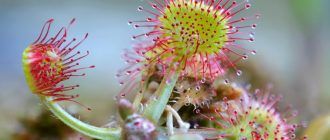
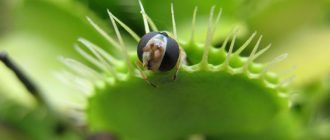
Sarracenia is a perennial carnivorous plant of the Sarraceniaceae family. It is native to North and South America.
Content
Description of Sarracenia
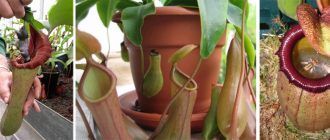
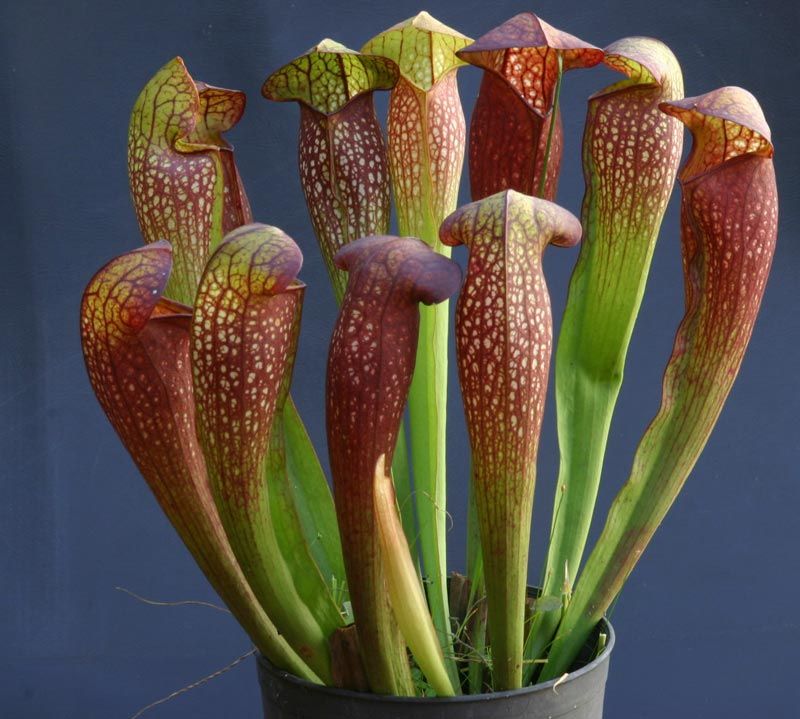
The flower grows in marshy areas and thrives in moisture. The soil where it grows is poor, so it feeds on insects. The flower's structure reflects its predatory nature. Rolled leaves grow upward from the root system. In the center of the leaf is a trapdoor—a thickened area that collects water, a secretion used for digestion.
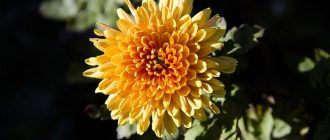
The top resembles a funnel covered by a leaf. The cup-shaped flowers, up to 10 cm in diameter, with lobed petals and stamens all around, are borne on an elongated, leafless peduncle. They are covered at the top by an umbrella-shaped pistil, onto which pollen falls. They exude a delicate, pleasant aroma. The color ranges from deep scarlet to amber.
Types of Sarracenia
Sarracenia is a heat-loving plant. Most species bloom in the summer, producing single flowers in shades of red, yellow, and lilac. With the arrival of autumn, Sarracenia prepares for a dormant period.
| View | Leaves | Flower color | Peculiarity |
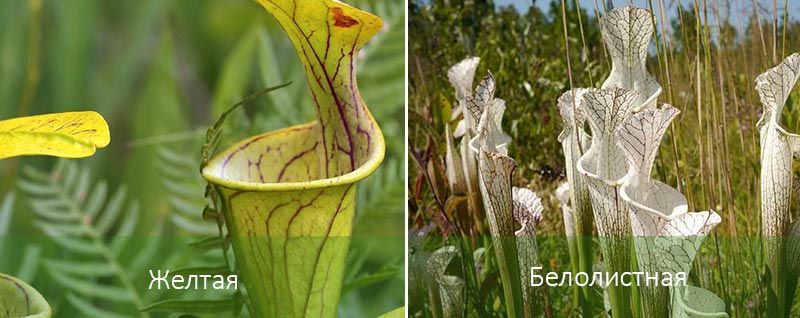
| White-leaved | White water lilies are covered with a green or lilac mesh. | Purple. | Native to the Gulf of Mexico. Protected since 2000, endangered species. |
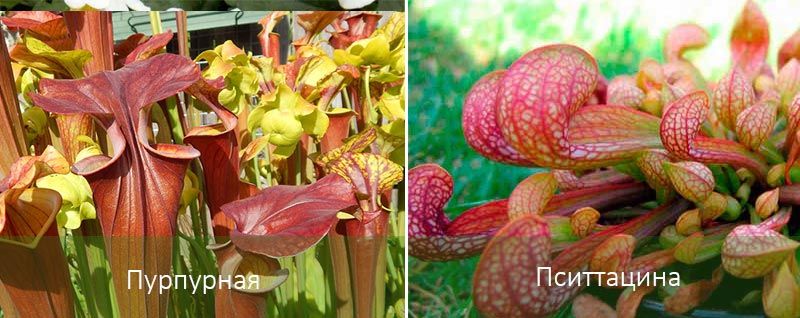
| Psittacina (parrot) | They resemble claws. At the end is an oval-shaped cap. It looks like a parrot's beak, hence the name "parrot flower." It covers the pipe, preventing water from entering. | Bright scarlet. | USA, southern Mississippi. Suitable for indoor growing. |
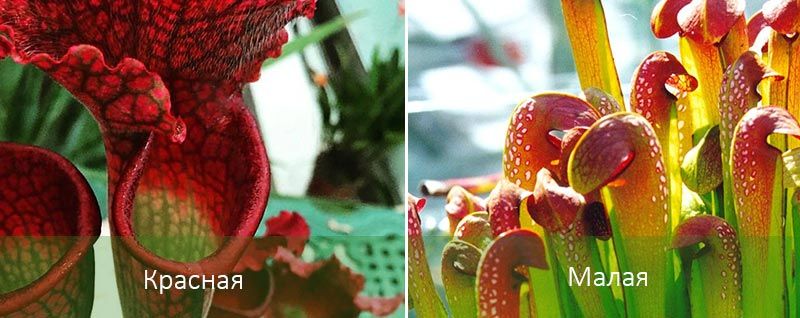
| Red | The length reaches 20-60 cm. The top is covered with a lip that attracts insects. | Scarlet. | A rare species found in the southeastern United States. |
| Purple | They nest in moss or well-moistened soil, allowing crawling insects to fall into the flytrap. | Purple, sometimes with a hint of green. | Eastern America, Canada, central Ireland. Suitable for indoor cultivation. Does not secrete. Feeds on the larvae of the Metriocnemus spp. mosquito, Wyomaia. |
| Yellow | The water lilies are bright green with scarlet veins. The horizontal lid protects against water ingress. | Yellow. Flowers are borne on a drooping peduncle. | USA. A popular indoor plant. It has a pungent, unpleasant odor. It blooms early, in early spring. |
| Small | The color is green with a pale scarlet top. The cap resembles a hood and covers the trap. | Yellow. | USA. The plant grows small, 20-25 cm. It flowers in early spring. It is not fragrant. Popular with ants. |
Tips for caring for Sarracenia at home
The plant doesn't require complex care. It needs plenty of light and frequent watering when grown indoors.
Lighting
Sarracenia is a sun-loving plant. During the flowering period, daylight hours should be at least 10 hours. Indoor care recommendations:
- choose southern windowsills as the place to live indoors;
- in summer, place it outdoors, take it out into the garden, onto the balcony;
- If there is insufficient light, arrange for additional lighting (phytolamps).
Sarracenia does not tolerate changes in its location well, so it is strictly forbidden to turn the plant differently towards the light or change its location. The plant is planted immediately in its permanent location.
Watering
Sarracenia marsh is a moisture-loving plant. It requires consistently moist soil. To maintain moisture levels:
- Fill the tray with water regularly;
- add moss to retain moisture;
- Do not spray the flower from above, as this may leave spots on the leaves.
To water the plants, use natural (melted snow, rain), distilled or filtered water.
Sarracenia gets sick if watered with chlorinated water.
During the dormant period, they are reduced. The soil is moistened as needed, but no more than once a week.
When transplanting into new soil, it is recommended to water once a day.
Temperature
The flower tolerates temperature fluctuations well. During the flowering period, the optimal temperature is +25°C, with 50% humidity. In extreme heat, it will require additional moisture and increased watering. During the winter, the temperature drops to +10°C.
Top dressing
The plant is unpretentious and thrives in poor soil, lacking minerals and vitamins. It is recommended to feed Sarracenia indoors only with small insects (such as ants) placed in a fly trap. If the plant is kept on a balcony during the summer, the food will naturally fall into the trap. In this case, no additional fertilization is necessary.
Don't over-fertilize. Even a small amount can kill the plant.
Repotting, choosing soil and pot
The plant is repotted once every two years in the spring, before the flowering period begins. Choose a larger pot. When moving the Sarracenia to a new pot, remove any remaining old soil from the roots and soak them in water. Add fresh soil to the container and water once a day to maintain moisture.
To plant Sarracenia indoors, choose loose, breathable soil with a pH of 5 or higher. The substrate composition should be in a 2:4:1 ratio:
- peat;
- perlite (pre-soak in water);
- construction sand.
Containers are made of plastic or glass. These materials have higher moisture permeability. Broken brick or foam are placed on the bottom for drainage. Some gardeners recommend using two pots of different sizes or replacing the larger one with a cachepot. During flowering, the plant requires ample watering. The water level in the outer container should reach 3 cm.
Bloom
The flowering period begins in June. Growing conditions:
- frequent watering;
- moist soil;
- air temperature +23…+25 ºС;
- abundance of light.
During the flowering period, a lot of light is required to acquire a bright and rich color.
Rest period
Summer flowering follows a dormant period. It begins in late autumn. The plant is placed in a cool room. Watering is reduced to once a week. Daylight hours are reduced.
The temperature in the room may vary:
- during the first wintering the air temperature is +5…+7 ºC;
- for an adult flower 0…+10 ºC, sometimes up to -10 ºC.
During this period, the sarracenia enters a dormant state, which lasts 3-4 months.
Reproduction
The plant is propagated by seed. Stratification is performed before sowing. The seeds are soaked in cold water for 24 hours. They are then planted in small cups filled with peat or growing medium. The finished seedlings are covered with plastic and placed in a cool place for 1-1.5 months. The soil is moistened as needed. The cold period is replaced by warmth. The cups with the plant, covered with protective film, are placed under artificial lighting. Here, the flower germinates within a month and produces a shoot. After a year, the gardener transplants the grown seedling into a separate pot.
The second method of propagation, using root cuttings, is used only for the yellow sarracenia. A section of the root system is removed from a mature plant.
The gardener must remember that frequent divisions can lead to weakening and death of the flower.
Diseases and pests of Sarracenia
The most common pests that sarracenia is susceptible to are spider mites, aphids, and mold.
| Manifestation | Cause | Elimination measures |
| Pests | ||
|
Spider mites are brightly colored: green, orange, red. It leaves light spots on the plant's leaves, the undersides of which are covered with a fine web. It appears in summer. |
Ticks can be brought into the home on clothing, household items, or in planting media. In some cases, they can enter through open transoms, cracks in windows, or walls. | Folk remedies:
Chemicals:
When treating with chemicals, the gardener takes the plant outdoors and puts on a protective suit. |
|
Aphids are green, but some are yellow and black. Leaves curl and turn yellow. The buds are falling. The period of propagation is summer. |
They enter the home through open vents, cracks in windows, and walls. There's a risk of catching the insect in the fresh air. They can also reproduce if aphids are already present in the house on other flowers. Female aphids lay 100-150 eggs per clutch, producing two clutches per month. | An effective way to combat the pest is to use contact insecticides: Actellic, Fitoverm, Neoron, Intavir. If the insect hasn't disappeared after two treatments, it's time to switch to a different product. In this case, synthetic pyrethroids are used:
|
| Botrytis fungus is a type of gray mold. It spreads during winter. The plant becomes covered with a gray, powdery coating. Dirty white, red, and brown spots appear on the leaves. The flower wilts. | By air, in damp weather, high humidity or sudden temperature changes. | Ways to prevent the spread of botrytis fungus:
|
The flower is not susceptible to serious diseases. The main cause of illness is improper care.
| Manifestation | Cause | Elimination measures |
| Diseases | ||
| Dried leaf tips. |
|
|
| Yellowing of leaves. | Presence of potassium in the soil. | Change the substrate, thoroughly wash the root system. |
| Rotting of roots and leaves. | Overwatering during cold weather, poor soil permeability. | Sufficient watering, replacing soil, choosing suitable containers. |