Sorrel contains a large number of biologically active substances, micro- and macroelements, beneficial for human health. Growing it isn't particularly difficult, but it does require some knowledge of certain subtleties.
Selecting a sorrel variety
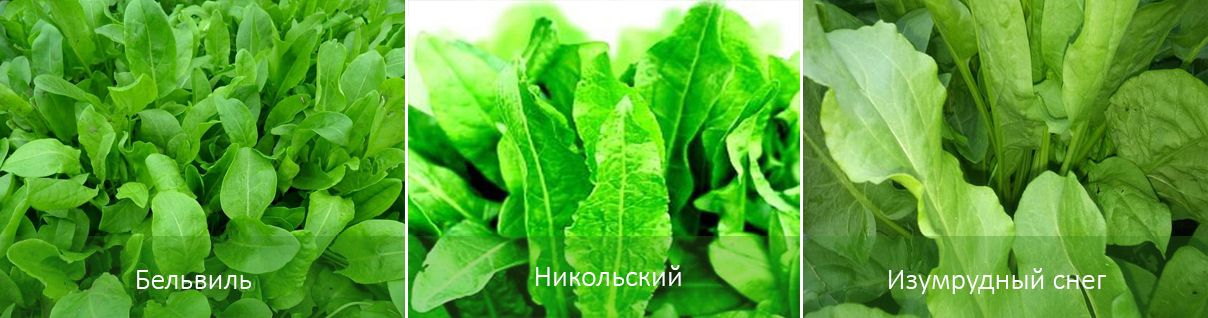
The first thing to consider is the plant variety. The most popular early-ripening varieties include:
- Belleville is frost-resistant and does not produce stems. The foliage is juicy and has a moderately acidic flavor.
- Nikolsky is a large-leaved bush, distinguished by its high productivity;
- Sanguine will also delight you with an abundance of greenery, but the variety has a specific leaf color, with the inclusion of reddish veins;
- Emerald Snow is a high-yielding, high-tasting bush that produces rich green, medium-bubble foliage.
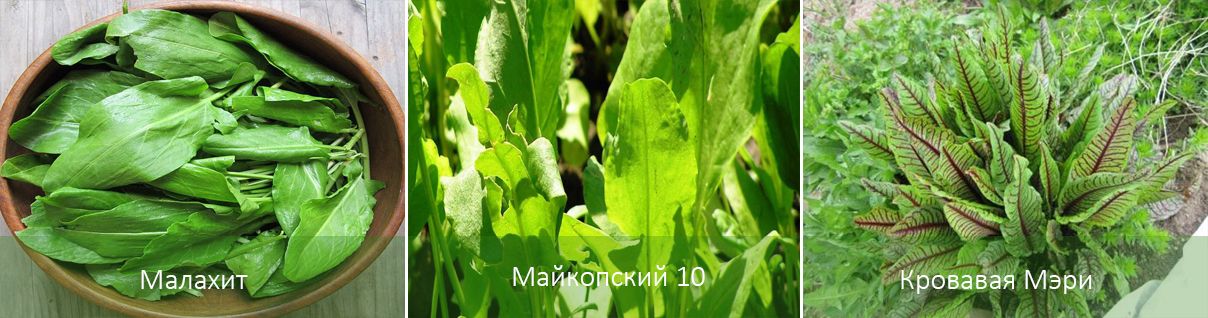
Varieties with a mild taste and not very pronounced acidity:
- Malachite;
- Maykop 10;
- Altaic;
- Bloody Mary - this variety, in addition to its mild taste, also has a specific leaf coloring, including reddish spots and veins, the bush is broad-leaved.
Timing of sorrel planting
Sowing sorrel in open ground is quite simple, but the following timing should be observed:
- In early spring, you'll be able to enjoy the first new greens in just 30-40 days. This sorrel planting option is suitable for southern and temperate regions.
- At the end of June, when the first early vegetable crops have been harvested, the vacated area can be sown with sorrel. This will give the plant ample time to establish roots and build strength for the winter. In regions where the first severe frosts don't occur in early autumn, a fairly abundant harvest can be achieved later in the season. Planting sorrel in June is not recommended in southern regions, as it is too hot there, making it difficult to root.
- The third option is planting in the fall. Here, it's important to consider the region's climate. The seeds should be sown when the first hard frosts arrive. The key is to prevent the seed from sprouting before winter, so that the sorrel will begin growing in the spring as soon as the weather warms up.
So, to get early, succulent greens in spring, sorrel should be planted in summer in regions with harsh climates. And in southern and central regions, in autumn.
When planting outdoors during the summer months, it's important to provide ample watering so the plant has time to develop green vegetative mass.
Another key point is planting the seeds in the soil. Many people make the mistake of digging furrows too deep. As a result, half the seeds fail to reach the surface. To properly grow sorrel in your garden, simply make a shallow furrow to mark the direction of the bed. This means sowing the seeds at a depth of no more than 1 cm. After placing them in the furrow, lightly cover them with soil.
Selecting a location
The following features of sorrel must be taken into account:
- does not tolerate open sunny places, so it is better to plant it in shaded areas;
- tolerates cold quite well and is capable of producing green mass even at temperatures of +2…+4 °C;
- sensitive to hot climates - it stops producing new green leaves and stops growing, very quickly releasing a flower stalk;
- loves shaded areas - in such conditions it is less susceptible to diseases, the greens are juicy and have better taste;
- requires moist soil, but without stagnant water;
- undemanding in terms of soil selection, but grows better in fertile soils that tend to be slightly acidic;
- for more intensive vegetation requires fertilization with humus;
- It grows in one place without any problems for up to 5 years, after which it needs to be replanted so that the harvest continues to be abundant;
- The optimal groundwater level is no higher than 1 m.
The plant produces flowers the following year after planting. However, in hot climates, given that sowing was done in winter, sorrel may produce flowers even in the year of sowing.
As can be seen from the description, sorrel is quite unpretentious in growing and caring for, if you provide it with suitable conditions.
Planting sorrel in open ground
When planting sorrel, keep in mind its small seeds. If the soil is heavily infested with ants and insects, they can disperse the seeds during summer sowing, significantly reducing germination. Therefore, it's best to sow sorrel outdoors as early as possible. Before planting, check the seed production date on the packaging. Seeds will have the best germination and yield if they're no more than two years old.
To choose the right time, you can use the lunar calendar. Choose the right day for planting accordingly. Favorable days: June 4, 5, 6; September 3, 4, 8, 9, 18. Unfavorable days: June 3, 11, 25; September 27, 28.
First, prepare the soil by digging it over thoroughly and loosening it. If the soil is poor, add 6 kg of compost or humus per square meter. You can also add up to 20 g of potassium per square meter and about 25 g of superphosphate.
To make caring for the bushes easier, sow sorrel in rows. It's best to keep a distance of 20 cm between rows. If you want to harvest a week earlier, cover the seedlings with plastic wrap—they'll emerge in 3 or 4 days. Otherwise, they'll sprout in 5 to 8 days.
Sorrel is relatively easy to grow and care for outdoors; it only requires weeding. Fertilizing is best done after each intensive leaf cutting. A complex fertilizer with a high nitrogen content is recommended.
It's important to provide sorrel with ample water, especially during dry and hot periods. To maintain the plant's productivity, the flowering stalk must be pruned.
Before planting, the seeds should be soaked briefly in water or the soil should be watered generously.
Sorrel seedlings are generally not used, as the seeds germinate quite well.
Secrets of caring for sorrel
Despite the fact that sorrel is quite unpretentious, it does require certain care:
- periodically loosen the soil between the rows;
- Summer sorrel plantings should be watered as the soil dries out, otherwise the plant will produce very little green mass (especially in hot and dry climates);
- After watering or precipitation, as soon as the soil has dried out a little, loosen it;
- apply fertilizer twice per season;
- As a fertilizer, use mullein infusion diluted with water in a ratio of 1:10.
Diseases and pests of sorrel
Sorrel bushes can be affected by the following types of diseases.
| Problems | Manifestations | Elimination measures |
| Powdery mildew | It most often appears on young bushes less than a year old. The leaf edges curl downward, and the leaf becomes brittle, dry, and dense. | To prevent powdery mildew, remove all weeds from the garden. At the first sign of trouble, be sure to treat the bush with Bordeaux mixture. Dilute according to the instructions on the package. |
| Rust | This disease most often appears in temperate climates. It is easily identified by yellow-brown, blister-like lesions on the leaf blade. | To prevent rust, the garden should be cleared of fallen leaves and dug over thoroughly for the winter. In the spring, it's a good idea to mulch the exposed soil surface. If any spots of the corresponding color appear on the plant, be sure to remove and burn those parts of the shoots. |
| Aphid | The insect sucks all the juices from the plant, causing it to die. | You can get rid of aphids using traditional methods, such as treating the bush with an infusion of garlic or tomato tops. For a more effective solution, you can add a little liquid soap to the infusion. |
| Sawfly | The larvae of this insect gnaw off the green part of the leaf blade, leaving only the veins. | To prevent sawflies, simply remove weeds and keep the soil clear of dead wood. If nibbled parts appear on the sorrel, treat the bushes with chamomile infusion, adding a small amount of liquid soap. |
| Wireworm is the larva of the click beetle. | If the plant has gnawed parts, especially on the stem located close to the root, then it is worth taking care to remove the wireworm. | It's important to dig the soil to the depth of a shovel blade during the winter. But only do this once—this brings the beetle eggs to the surface, where they won't survive frost. |
Review of folk remedies for elimination
Almost any type of sorrel disease can be easily cured using folk remedies.
| Means | Receipt | What problem does it help with? |
| Wood ash | Tincture of wood ash and water in a ratio of 1:30. | Irrigate bushes affected by cutworms, aphids, mites, and caterpillars. |
| Tobacco ash | The leaves are dusted with tobacco ash. | This remedy is effective against thrips, sawflies, and aphids. |
| Onion peel | 250 g of onion peel, infuse in 10 liters of water during the day. | Helps effectively get rid of sawflies, bugs and aphids. |
| Garlic | Grind it into a paste and dilute it with water in a 1:1 ratio. Let it steep for 8 days. For processing, take 20 g of the paste and dilute it in 10 liters of water. Use it for irrigation. | Helps against damage by mites, caterpillars, aphids, thrips, and sawflies. |
Top.tomathouse.com informs: how to get sorrel seeds
To obtain your own seeds, you need to let two bushes bloom, which will happen around May. Then wait until the panicles darken and only then cut them off. Peel them off, blow off the dust, and leave the seeds.
Germination will remain viable for 3-4 years. However, avoid collecting seeds from sorrel varieties labeled F1; this is a hybrid variety and will not produce offspring.