Humans began cultivating lettuce as early as the 18th century. The French were the first to use it in cooking. This herb not only imparts a distinctive flavor to dishes but also helps with various medical conditions:
- fights blood leukemia;
- increases resistance to breast cancer;
- prevents the death of brain cells, and therefore prevents the development of Alzheimer's disease;
- lowers the level of bad cholesterol;
- has a bactericidal and antifungal effect.
Lettuce is beneficial for facial skin, improving its tone and accelerating cell regeneration. The herb's extract nourishes hair, promoting healthy growth, preventing hair loss, and adding shine. This beneficial herb can be planted in your garden or even on your windowsill.
Content
The best varieties of lettuce
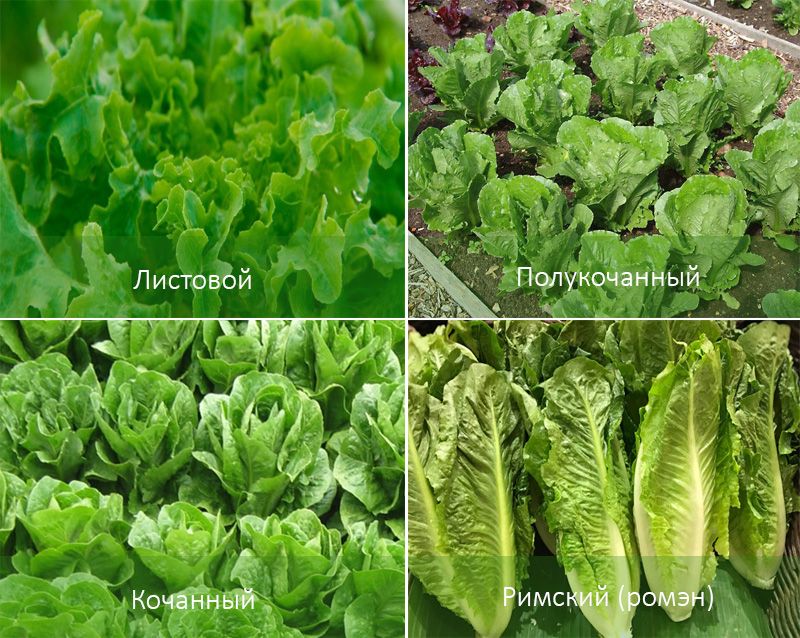
There are only 4 types of lettuce grown, which have many varieties:
| Name | Description | Popular varieties | Leaves/weight (g) |
| Sheet | The plates are large, solid, dissected or similar to oak. | Kricet ripens quickly and tolerates heat well. |
Pale light green with a golden tint. 250. |
| Emerald is a mid-season variety. The rhizome doesn't age quickly. |
Obovate, finely vesicular. 60. |
||
| Ballet is grown in a greenhouse or indoors during cooler months, and outdoors in summer. It does not flower and is tolerant of low light. |
Large, dark emerald, fan-shaped with scalloped edges, crispy. 300-600. |
||
| Zabava is a mid-season variety that is rarely affected by infections. |
Reddish, large, oily. 200. |
||
| Buttersandwich - ripens early. Perfect for sandwiches. |
They crunch in the mouth, light malachite. 180. |
||
| Moscow Greenhouse is an early-ripening variety, suitable for home or greenhouse cultivation. It matures in 1-1.5 months. The leaves retain their freshness for a long time and do not acquire bitterness. |
Large, sweet, juicy, light green in color. 100-200. |
||
| Half-headed | Similar to the previous variety, but its leaves form small, not fully closed heads. | Odessa curly-haired man - does not let the shooters go. |
They form a loose rosette. They are tasty, crisp, and have a grassy hue with corrugated edges, fan-shaped. 200. |
| Eurydice is a mid-season, tasty variety. |
Large, dark emerald, bubbly, wavy around the perimeter. 300. |
||
| Festivalny - matures within 2.5 months. |
Juicy, delicate light green. 150. |
||
| Berlin Yellow is a mid-season variety. |
Yellowish, form a round rosette. 200. |
||
| Kucheryavets Gribovsky is resistant to infections. |
Rich malachite, fan-shaped with slight waves at the edges. 250-470. |
||
| Cabbage | The leaves are gathered in rosettes, resembling dense heads of cabbage. The leaves are very crisp. This variety was developed in California in the 1920s. | Iceberg is a high-yielding variety that is not prone to bolting. |
They stay fresh for a long time. They are bubbly and wavy around the perimeter. 300-600. |
| Great Lakes – does not fade in the sun. Ripens in 85 days. |
Dark green, similar to oak. 500. |
||
| Attraction - mid-season, with a high rosette. |
Large, light green, wavy at the edges, triangular, with a buttery texture. 230-260. |
||
| Four seasons - grown in the garden or at home. | The outer ones are bronze-scarlet, the inner ones are greenish-lemon. | ||
| Design - mid-late, does not produce flower stalks. |
Rounded and flat, malachite-colored. Bubbling, wavy, with small cuts on the top. 500-650. |
||
| Roman (Romaine) | An elongated head, similar to Chinese cabbage. The rhizome is a rod with numerous branches. The outer leaves are green, the inner ones are yellowish. | Parisian Green is a mid-season variety that easily tolerates heat and cold. |
Dark malachite with a bluish tint, sweet. 200-300. |
| Legend - resistant to downy mildew, marginal burns, and bolting. |
A little bubbly. 400. |
||
| Remus is a late-ripening variety. |
Dense, dark emerald, elliptical, bubbly. 430. |
||
| Balloon - up to 25 cm. |
Pale light green. 300-350. |
||
| Roman is a mid-season variety, resistant to bacterial blight and septoria. |
Elongated, obovate. Slightly jagged and serrated around the perimeter. 290-350. |
Growing lettuce from seedlings
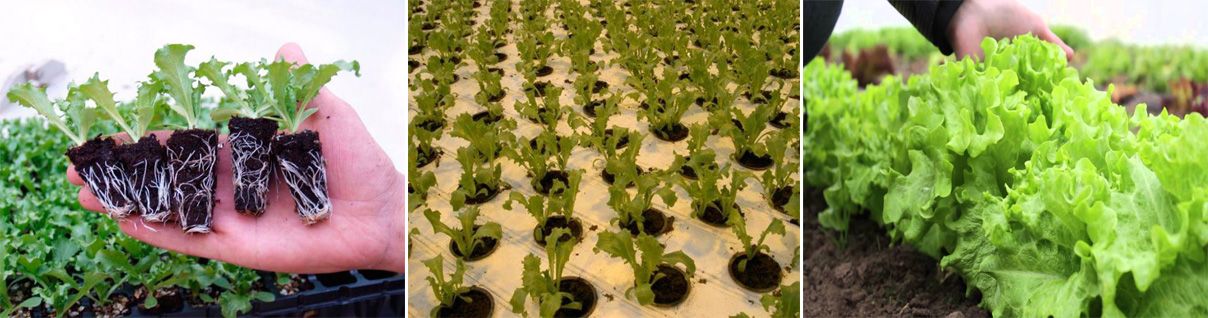
This method is used in the northern regions of Russia to produce a harvest in cold and late spring conditions. Sowing should be done 30-35 days before planting in the garden.
For planting, it's best to purchase granulated seeds. They're easy to sow and have a high germination rate. When using regular seed, mix it with sand to facilitate the process.
Step-by-step sowing:
- Prepare boxes, containers or peat tablets.
- Pour sand, peat, humus (1:1:2) or purchased substrate into containers.
- Place the seeds in a gauze bag and soak them in potassium permanganate for a couple of hours.
- Spread the seed material over the soil surface without covering it.
- When using boxes or containers, sow in furrows 1 cm deep, leaving a distance of 5 cm (if picking will be done later) or 10 cm (without replanting).
- Pour and cover with film.
- Place in a bright place at a temperature of +18…+21 ºC.
- After the sprouts have emerged (on the 3rd-4th day), lower the temperature to +15…+18 ºC to prevent the bushes from stretching out.
- If necessary, pick after the formation of 1-2 pairs of true leaves.
- Plant outdoors after 3-4 cotyledon primordia have emerged. Before planting, harden off the plants: Two weeks before transplanting, place them outside daily, starting with 10 minutes and gradually increasing the time.
Growing lettuce at home
Lettuce is grown indoors all year round:
- Fill 1-2 liter pots with the same substrate used for seedlings. You can also mix vermicompost and coconut fiber (1:2).
- Distribute the seeds soaked in potassium permanganate over the moist soil, deepening them to a depth of 5-10 mm.
- Water well, cover with plastic and place in a darkened area.
- After the seedlings emerge (in 3-5 days), remove the cover and place the pot in a bright location. If growing in winter, supplemental lighting with phytolamps is necessary.
- The salad is ready to eat when it has 5-20 leaves.
Care features:
| Factor | Description |
| Temperature conditions | The optimal temperature is +16…+20 °C. On the balcony, lettuce grows at +6…+7 °C. |
| Watering/spraying | Every 2-3 days. Make sure the top layer of soil doesn't dry out, especially in hot weather. This can lead to the appearance of flower stalks, which impart a bitter taste to the leaves. Apply daily from a spray bottle with warm, settled water. |
| Top dressing | Use liquid complex fertilizer weekly. However, lettuce tends to accumulate nitrates, so be careful about applying nitrogen. Organic fertilizers are also an option. |
Growing lettuce outdoors
Lettuce doesn't grow well in shade and should be planted in sunny areas. However, direct UV rays can stunt the growth of lettuce plants, so they should be shaded by other crops.
Seeds germinate at a temperature of +5 ºC. At warmer temperatures (from +20 ºC), sprouting is less successful.
Soil requirements
Lettuce grows best in loose, nutritious soil rich in organic matter and micronutrients. It requires a neutral or slightly alkaline pH, ranging from 6 to 7.2.
Lettuce can be planted in sandy, loamy, and calcareous soils, as well as in black soil. The herb will not grow in acidic, saline, or heavy clay soils.
The soil for planting must be prepared in advance (in the fall). It is recommended to use beds that have been fertilized. These should be dug over and supplemented with manure or compost (7-10 kg per square meter). Leave them as is until spring.
Technology of planting lettuce in the ground
Early-ripening varieties are sown from April to May, while mid-season and late-ripening varieties are sown from mid-spring to the second ten days of June. To ensure a fresh harvest all summer long, lettuce can be planted several times every 7-10 days until the 20th of August.
Step-by-step landing:
- Loosen the soil by adding 1 tbsp. of superphosphate, 1 tsp. of potassium sulfate, 1-2 tbsp. of solution (per 1 sq.m.).
- In damp soil, dig furrows 5-10 mm deep, keeping a distance of 15-20 cm.
- Mix the seeds with sand (1:1/2) and pour into the trenches.
- After the seedlings have emerged en masse, thin the beds to leave 6-8 cm (leafy) and 10-15 cm (headed) between plants. It is recommended to thin them out in two stages.
When planting seedlings in the garden, use a 25x25 spacing pattern for miniature early-ripening varieties and a 35x35 spacing pattern for larger specimens. Plant in moist soil.
The shoots need to be watered once every 7 days at dawn or after sunset. In extreme heat, it's best to do this at night. For leafy varieties, sprinkling is recommended, while for cabbage varieties, watering along the rows is recommended. Once the lettuce begins to form rosettes, water less to prevent rot.
When sowing in a nutrient-rich substrate, no additional feeding is necessary. If the soil is poor, a single application of mineral mixtures or organic matter immediately after planting is necessary. Head lettuce takes longer to ripen, so it should be fertilized twice, two weeks apart.
Growing lettuce in a greenhouse
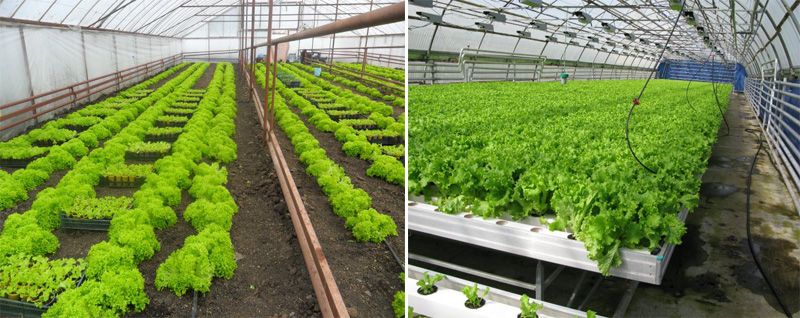
Lettuce is resistant to mild cold (down to -2 ºC), so it can be planted in a greenhouse as early as early spring. If the greenhouse is heated, lettuce can be grown even in winter.
The soil must be prepared in the fall:
- Add organic matter (this will create the necessary soil acidity).
- If the substrate is very acidic, add lime to it.
- Enrich the soil with sodium chloride (15 g per sq.m).
- Dig up the area, level it and leave it until planting the crop.
Plant lettuce when the temperature in the greenhouse no longer drops below zero even at night:
- Loosen the soil, dig trenches, leaving a distance of 10 cm.
- Mix the seeds with sand and press into the furrows.
- If frost returns unexpectedly, mulch the bushes with fine humus.
Necessary conditions for further maintenance:
| Criterion | Recommendations |
| Watering | Apply generously, 1-2 times a week. Use cool water. Avoid contact with foliage. |
| Top dressing | Apply a mixture of ammonium nitrate and potassium chloride twice during the growing season. |
| Loosening | Apply regularly between rows to avoid moisture retention, which leads to the development of fungal infections. |
| Weeding | Combine with loosening. |
With proper care, the harvest can be collected in as little as 4 weeks.
Growing lettuce hydroponically
This method involves growing lettuce in an artificial environment without soil. Plants receive all the necessary nutrients from a special nutrient solution surrounding the rhizomes. This method also preserves the plant's flavor. Hydroponics is often used commercially when growing lettuce for sale.
Pests and diseases of lettuce
Lettuce is susceptible to many infections and pests. These are quite difficult to control, as the plant accumulates not only nitrates but also fungicides. Therefore, toxic products should not be used.
| Disease/insect | Description | Methods of protection |
| Gray mold | Dark necrotic spots on leaves and stems. They appear from the bottom up. |
|
| White rot |
|
|
| Marginal burn | The bushes rot and die. | |
| Peronosporosis |
|
|
| Powdery mildew |
|
|
| Salad fly | 7-8 mm in size. Females are ash-gray with wide-set red eyes. Males have a black velvety back. The insects lay eggs in the inflorescences, and the larvae eat the seeds. Affected rosettes darken and fail to open. |
|
| Salad stem aphid | Wingless specimens reach 1-2.5 mm in size. Winged specimens reach 2 mm. These are gray-grass and dark-gray insects that suck the sap from stems, leaves, and inflorescences. Affected areas become deformed, and photosynthesis is disrupted. The lower foliage takes on a mosaic-like coloration. Bushes stop growing normally. | Process:
|
| White-striped or slender filly | Belongs to the genus Locust. It comes in green, gray-yellow, and brown colors. It grows from 1 to 2 cm in length. It chews on stems and leaves. |
|
| Naked slugs | At night and in the evening, insects can be seen on lettuce. They make large holes in the greens. During the day, they prefer to rest in a cool, damp place. | Bury beer cans in the garden. The necks should be level with the ground. Slugs will crawl into them to drink and won't be able to get out. This is the easiest way to control pests. |
Top.tomathouse.com advises: how to store lettuce
The harvested crop should be stored in the refrigerator, preferably in the crisper drawer. Before storing, the leaves should be dried slightly, as wet greens wilt quickly.