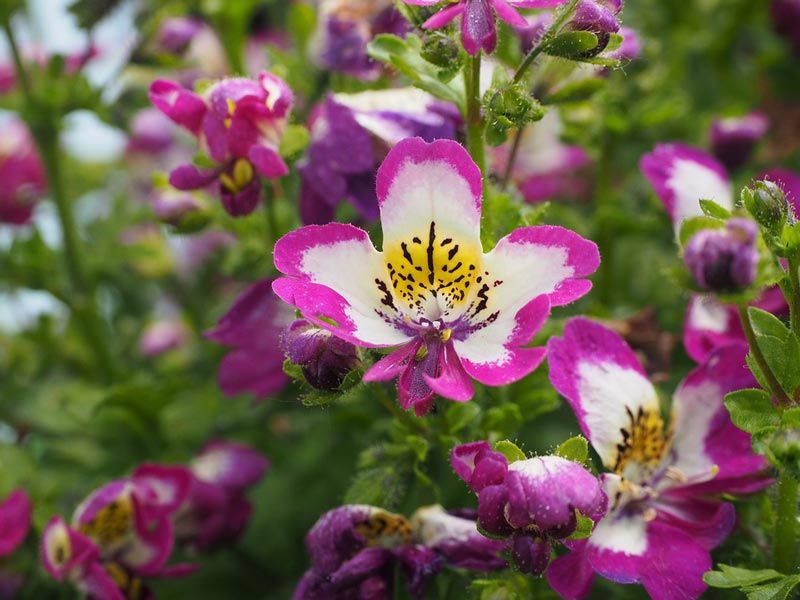
Schizanthus (or schizanthus) belongs to the Solanaceae family. It is native to South America and southern Africa. The plant is beautiful and has a long blooming period. It resembles an orchid in appearance, but is less demanding and unpretentious. This is why it has acquired the common name "poor man's orchid" or "butterfly flower." It is easy for any gardener to grow.
Content
Features of schizanthus
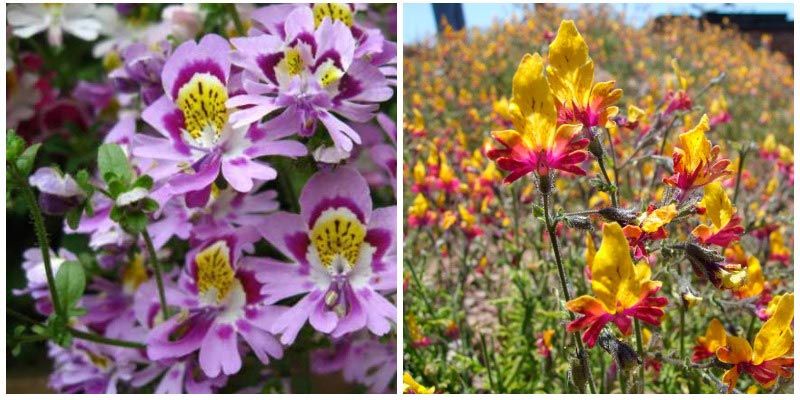
This fascinating, beautiful plant blooms long and profusely until the first frost. It is a perennial or biennial, but in temperate climates it is also grown as an annual. The bushes vary in height, and the flowers vary in spectacular color. The plant height ranges from 30 cm to a meter. The stem and leaves are covered in fluff. The petals, shaped like butterfly wings, come in red, purple, violet, white, and even yellow, and are striped, bicolored, and spotted.
Schizanthus will be a worthy decoration of any garden or plot.
Types and varieties of schizanthus
The culture comprises approximately 12 different varieties. The table below lists the most popular ones.
| View | Description | Flowers / Height | Varieties |
| Graham | Cultivated since 1831, it has a wide range of flower colors. It is a branched annual shrub native to the Andes Mountains of Chile. It reaches a height of approximately 50-60 cm. The petals of the inflorescences can be spotted, striped or with inclusions. |
Purple. | Var. lilacinus. |
| Purple. | Var. aibus. | ||
| White, scarlet. | Var. carmineus. | ||
| Pinnate | Bred in 1822, this annual plant offers a wide selection of varieties and flower shapes. Native to South America, it grows to a height of 45 cm. | Petals are small, striped, lilac, white, and scarlet. The inflorescences are composed of small, fluffy, racemose flowers. Blooms from May to September. | Piccolo. |
| Visetonian | It has been in existence since 1900. A popular hybrid, a cross between two previous species, it is an annual plant. It has large, colorful, and interestingly shaped flowers. | Scarlet.
Reaches 40 cm. |
Diamond. |
|
Large, carmine color. Height approximately 30-40 cm. |
Roter Gerold. | ||
| Scarlet, carmine. Dwarf, no more than 25 cm in height. |
ZwergBukett. | ||
|
White petals of an interesting shape, visually reminiscent of angel wings. About 40 cm high. |
Angel Wings. | ||
|
Flowers up to 2 cm in diameter. Red, single, cream color. Height up to 40 cm. |
Monarch. | ||
| Striped or spotted. Pink, crimson, lilac. Tubular shape. Does not exceed 20 cm. |
Fiji. | ||
|
Blooms from July to September. Petals are cream, pink, and crimson. Reaches 55 cm. |
Hybrid mixture. |
Growing from seeds
Growing a plant in open ground, with or without seedlings, is easy; to do this, you need to familiarize yourself with the basic principles.
Sowing for seedlings
Flowering can be accelerated by first growing seedlings from seeds. The best time of year is autumn, as the first blooms can be seen closer to summer.
To achieve the most continuous flowering, it is best to sow once a month, from September to April.
Scatter the seeds over loose soil, cover with a couple of millimeters of sand, and cover with plastic wrap or clear glass to create a greenhouse effect. Store the container in a dark place, maintaining a temperature of 15 to 23°C. The seeds ripen in about three weeks; gardeners have observed that the first shoots appear at night. When the first leaves appear, transplant the seedlings into separate containers, keeping a maximum of three per pot. When the shoots reach a height of 8 cm, and then 16 cm, pinch them back.
Before planting outdoors, allow the seedlings to acclimate to sunlight. Don't rush to remove weakened seedlings, as they may later bloom spectacularly and profusely.
Selecting a location and preparing the soil
Schizanthus should be planted in a well-lit location. In dry areas, partial shade is preferable. Insufficient sunlight will cause the flowers to bloom poorly, and the plant will lose its striking ornamental appearance and become elongated. This plant requires a well-drained soil, which should be adequately moist and rich in nutrients. To achieve this, the soil should be pre-fertilized with compost, humus, or well-rotted manure. Proper drainage is essential.
Sowing in open ground
Sow in late April or early May, when the nighttime air has warmed up sufficiently. The soil should be acidic and well-drained. Add sand or peat to the soil. Many gardeners plant the plant in pots so they can move it to a more sheltered location during dry weather or heavy rainfall, such as a terrace or balcony.
Planting seedlings in open ground
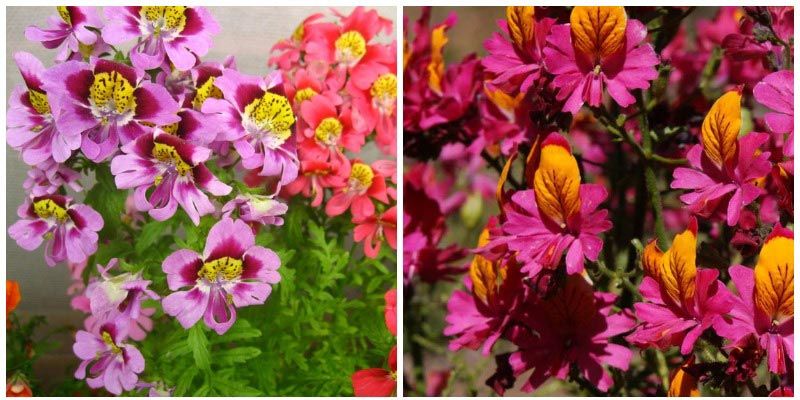
Transplanting should only be done after warm weather sets in, when frost is unlikely. Prepare holes with a light layer of humus. Plant the seedlings in the designated hole, complete with a ball of soil. Bury the seedlings to a depth of approximately 10 cm. When digging holes, maintain the distance between them, paying attention to the height of the plant: short plants should be approximately 25 cm, medium plants should be approximately 40 cm, and tall plants should be at least 70 cm. If necessary, use support for tall plants. It's advisable to plant a few days apart to observe their development.
Caring for Schizanthus
The flower requires significant attention and compliance with certain conditions for its care.
Watering
Careful watering is essential, as the plant dislikes both overwatering and drying out. Water should be applied as the soil surface dries out, carefully aiming the stream at the roots, avoiding the leaves and flowers. The water should be warm.
Settled rainwater, heated naturally by the sun, is ideal.
Fertilizers
Schizanthus appreciates regular fertilizing. For this purpose, use a mineral fertilizer complex, including phosphorus-based fertilizers before flowering. Fertilize monthly from planting until the first bloom, then weekly thereafter, but reduce the fertilizer concentration by half. This will ensure abundant, beautiful, and vibrant blooms.
When growing the plant indoors, add garden soil to the pot, along with some peat and sand. Proper drainage is essential. Water indoor schizanthus with water and a complete fertilizer. Afterward, care is required as for other houseplants.
Possible diseases and pests
The most common diseases of schizanthus:
- Late blight is a brown coating and spots on the leaves. Causes include acidic soil, phosphorus and potassium deficiency, and excessively humid air.
- Pythium is a root rot that occurs as a result of overfeeding or excessive watering.
- Anthracnose is the formation of brown spots, a common fungal disease.
Affected parts of the plant are removed and treated with a fungicide.
To prevent diseases, the same measures should be taken as for potatoes and tomatoes, since the plant belongs to the same family.
The main pests are whiteflies, aphids, and thrips. An insecticide is used for treatment. It is important to carefully monitor insect populations, as they can transmit various diseases.
Top.tomathouse.com recommends using schizanthus in landscape design.
Thanks to the impressive beauty of its flowers, the plant is actively used in landscape design for visual decoration of the garden:
- used in the formation of flower beds;
- planted singly or in mass;
- used in the creation of beautiful alpine slides;
- decorate balconies, terraces, verandas;
- planted in flowerpots and hanging pots;
- decorate the sides of paths and walkways;
- brought indoors during cold weather.
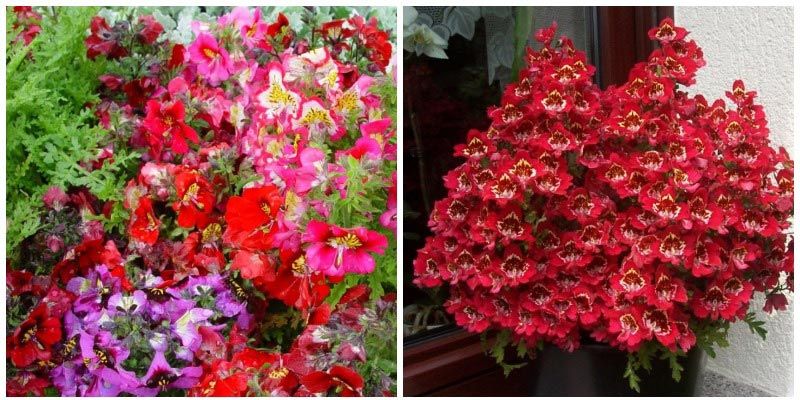
They combine harmoniously with petunias, lobelias, alyssum, chamomile, pelargoniums, phloxes, and foxgloves.