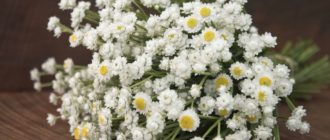
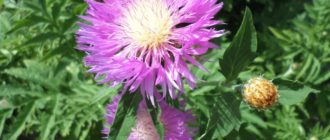
Crepis, also known as skerda, is a herbaceous plant used as an annual in temperate climates. It belongs to the Asteraceae family and grows wild in Europe and the Americas, as well as in Russia's Far East and Siberia.
Content
- 1 Description of the skerda + photo
- 2 14 types of skerda with photos and descriptions
- 2.1 Alpine skerda (Crepis alpestris)
- 2.2 Crepis asadbarensis
- 2.3 Golden celandine (Crepis augea)
- 2.4 Crepis jacquinii
- 2.5 Crepis mcana
- 2.6 Marsh celandine (Crepis paludosa)
- 2.7 Rough skerda (Crepis aspera)
- 2.8 Siberian scaly-leaved celandine (Crepis sibirica)
- 2.9 Crepis biennis
- 2.10 Roofing skerda (Crepis tectorum)
- 2.11 Saffron-red skerda (Crepis bocconii)
- 2.12 Hairy scurf (Crepis capillaris)
- 2.13 Crepis conyzifolia
- 3 Red scaly (Crepis rubra) + 3 varieties for growing in your garden
- 4 Growing a skerda from seeds
- 5 Table of planting and care of skerda
- 6 Using a bin in landscape design
- 7 Medicinal properties of skerda
- 8 Recipes from the skerda
- 9 Contraindications for the use of skerda
- 10 Collection and preparation of raw materials
- 11 Reviews of growing skerda
Description of the skerda + photo
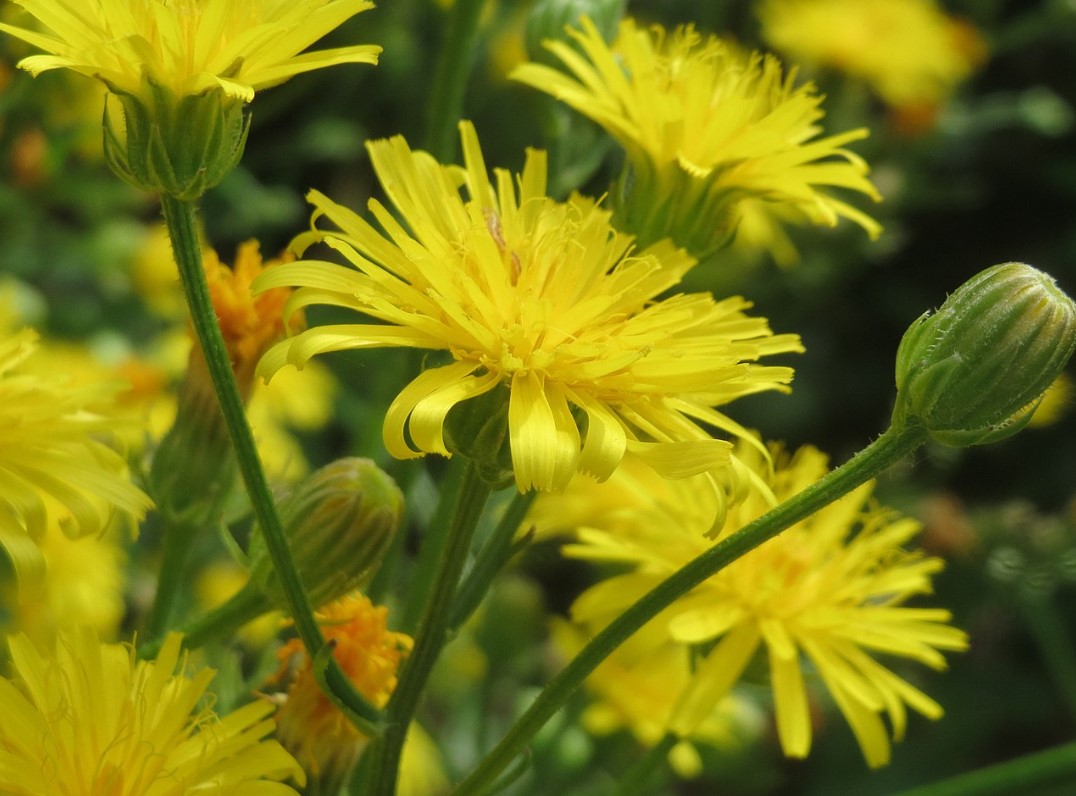
The skerda is a small shrub that can grow up to 70 cm in height. It has very strong and flexible shoots that form a beautiful rosette of leaves at the base of the stem. The skerda's flower stalks are tall and straight, adorned with clusters of beautiful flowers in a variety of shades, reminiscent of dandelion blossoms.
14 types of skerda with photos and descriptions
The genus Skerda includes over 200 species, but only a few are used as cultivated plants. The rest are weeds.
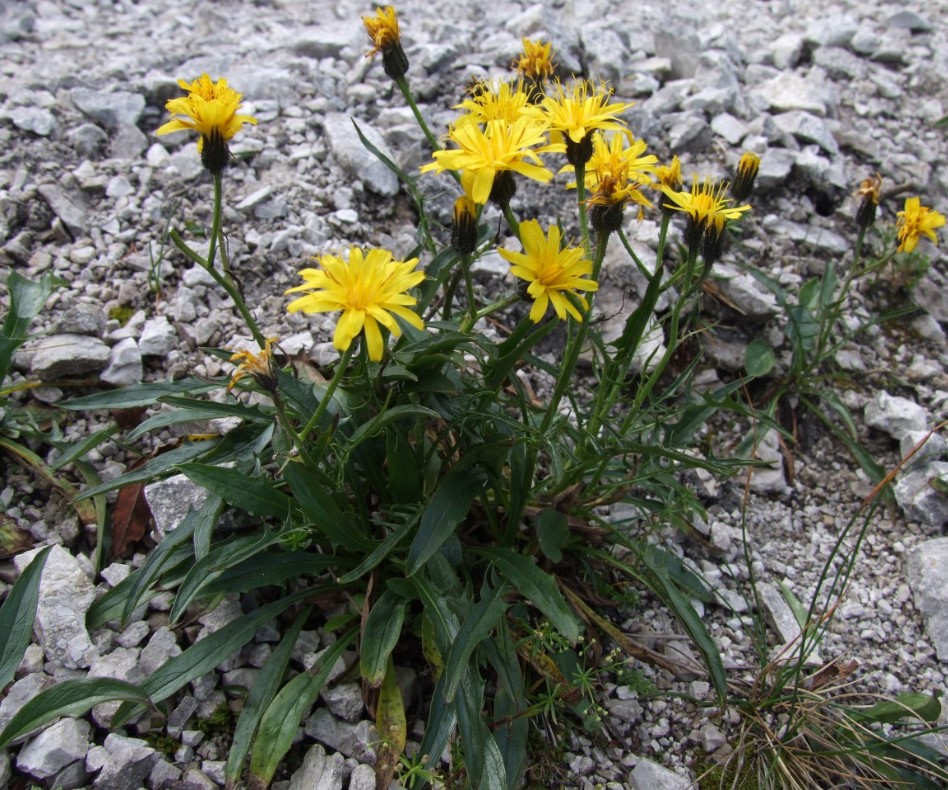
Alpine skerda (Crepis alpestris)
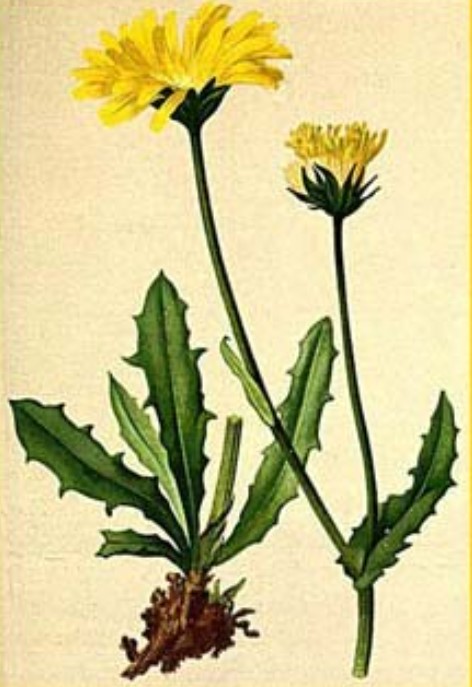
A perennial plant growing 5-30 cm tall, with lanceolate and coarsely toothed lower leaves and entire upper leaves that encircle the stem. The flowers are yellow, and the fruits are 1.1 cm long.
Crepis asadbarensis
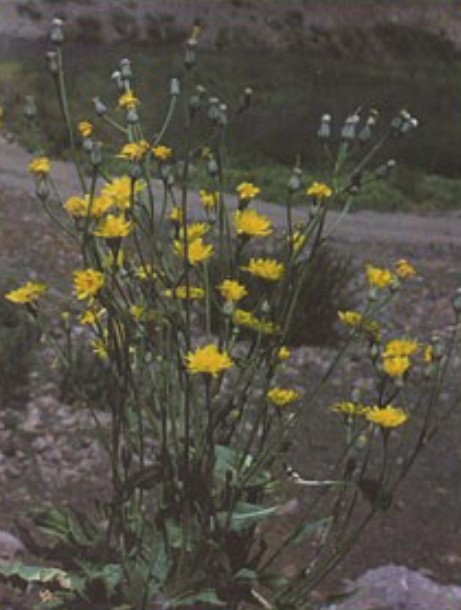
A herbaceous plant with straight stems, oblong-ovate leaves and yellow flower heads arranged in several rows.
Golden celandine (Crepis augea)
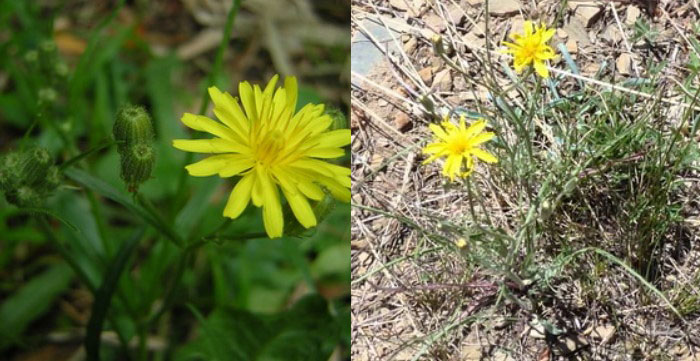
It bears copper-orange or bright yellow inflorescences, 3 cm in diameter, that appear on slender stems from midsummer to early fall. The perennial's light green leaves resemble dandelion leaves, gathered in a loose rosette at the base. The plant is approximately 30 x 30 cm tall and in diameter.
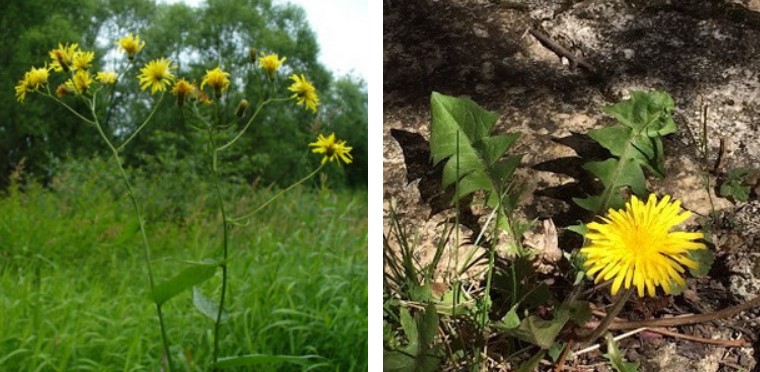
Crepis jacquinii
This perennial plant can reach a height of up to 50 cm and has a short black rhizome. Jaqueni's scaerda has an erect stem that branches in the upper half. Its leaves are lance-shaped and can be glabrous or sparsely pubescent above. The basal leaves are gathered in a rosette; they are entire or serrate-crenate, tapering into a petiole. The upper leaves are pinnately divided, with linear-lanceolate lobes. The flowers are represented by heads 2 cm in diameter, the involucre of which is two-rowed, composed of linear bracts with a membranous border. The inner flowers are ligulate and light yellow, longer than the outer ones. Jaqueni's scaerda blooms from July to August. The fruits are achenes with a dirty-white pappus.
Crepis mcana
This perennial plant grows to a height of no more than 20 cm. Its leaves are lanceolate, coarsely toothed, and covered with hairs. They are a glaucous-green color. Its inflorescences consist of flower heads that can be light pink or purple. The diameter of these heads is approximately 3 cm. The scaly-leaved ...
Marsh celandine (Crepis paludosa)
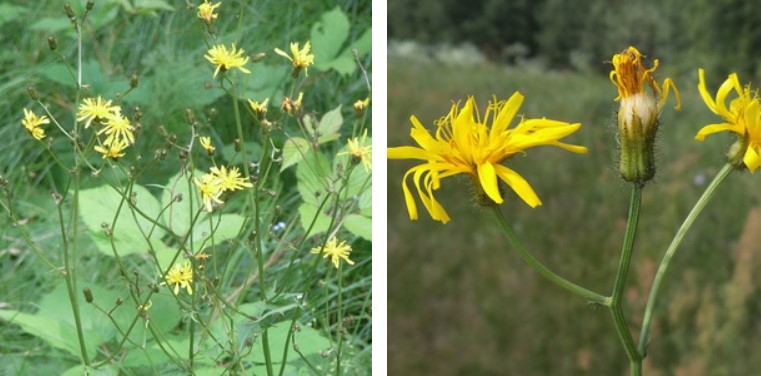
An upright plant with lanceolate leaves and small yellow flowers arranged in corymbose inflorescences. Its ribbed yellow fruits with a white or cream-colored tuft ripen in August, and flowering occurs in June-July.
Rough skerda (Crepis aspera)
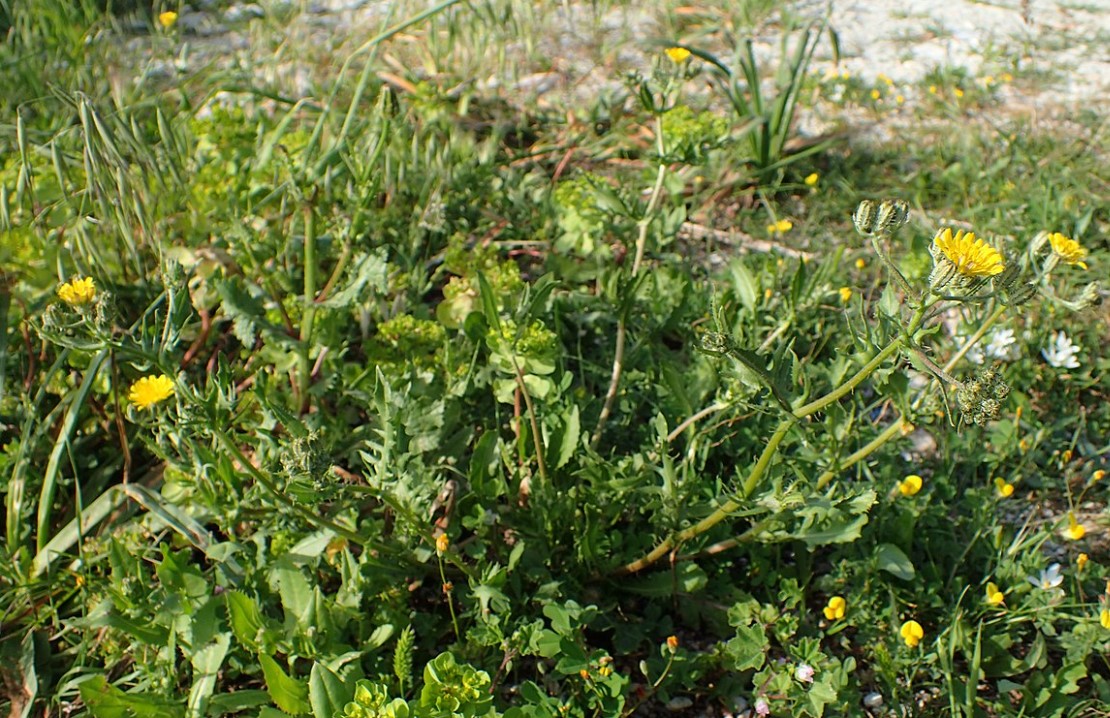
An annual plant growing 15-50 cm tall, with yellow ray flowers and yellow disc flowers. The stems are glabrous or stiffly pubescent, and the leaves are narrowly ovate, toothed, and pinnately incised. Flower heads contain 50 to 100 flowers, and the fruits are dimorphic or homomorphic achenes.
Siberian scaly-leaved celandine (Crepis sibirica)
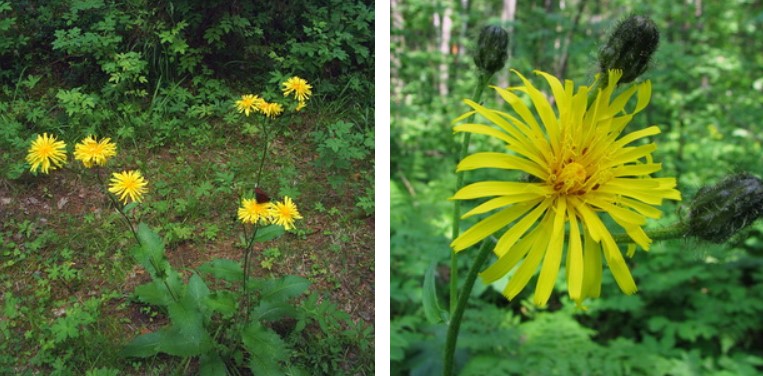
It has branching stems up to 1.5 meters tall and large, pubescent leaves. Yellow flowers are collected in a corymbose inflorescence, and the fruits are brown, ribbed seeds with a yellow pappus. Flowering continues from June to August, and the fruits ripen from July to September.
Crepis biennis
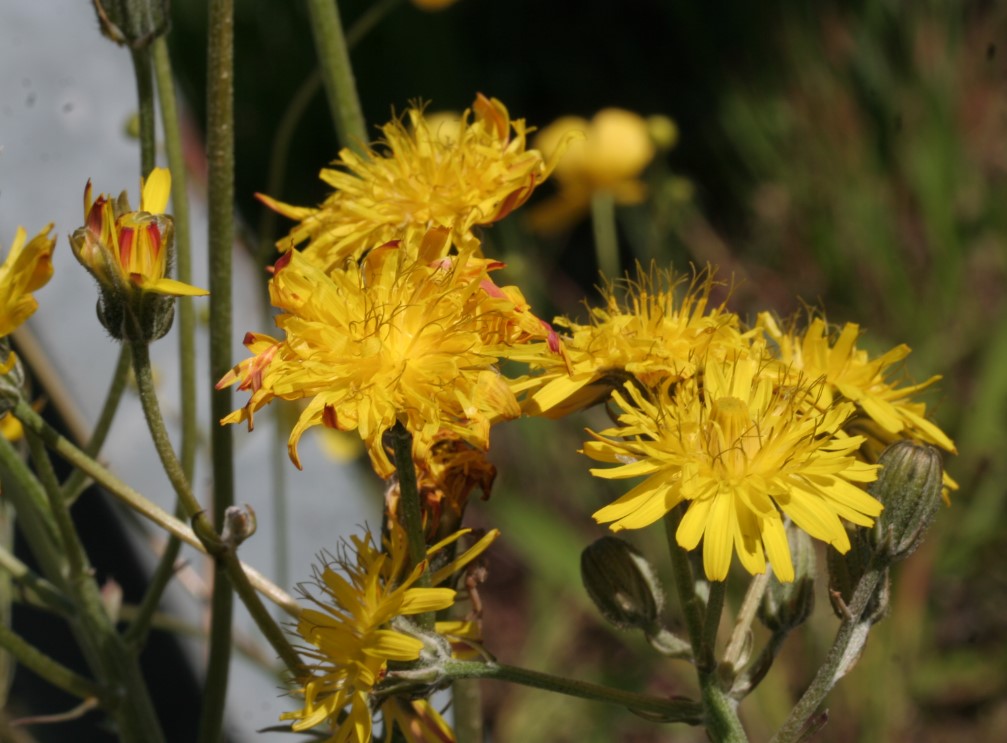
Crepis biennis, also known as Crepis biennis, is a herbaceous plant that can reach heights of 30 to 120 cm. It has an erect, furrowed stem, sparsely pubescent and branched, with a reddish base. The basal rosette bears elongated, wedge-shaped lower leaves, tapering into a winged petiole. The upper leaves are longitudinal and lance-shaped, serrated, spatulate, and dissected, sitting with an arrow-shaped or auricular base.
The flower heads of this plant range from 25 to 35 mm in diameter, and the involucre is cylindrical-bell-shaped. The bracts are linear-lanceolate, blackish-green, glandular, and pubescent with stellate hairs along the margins. The flowers are ligulate, golden-yellow, with yellow stigmas. The fruit is an achene with a snow-white pappus. The plant blooms from May to September.
Roofing skerda (Crepis tectorum)
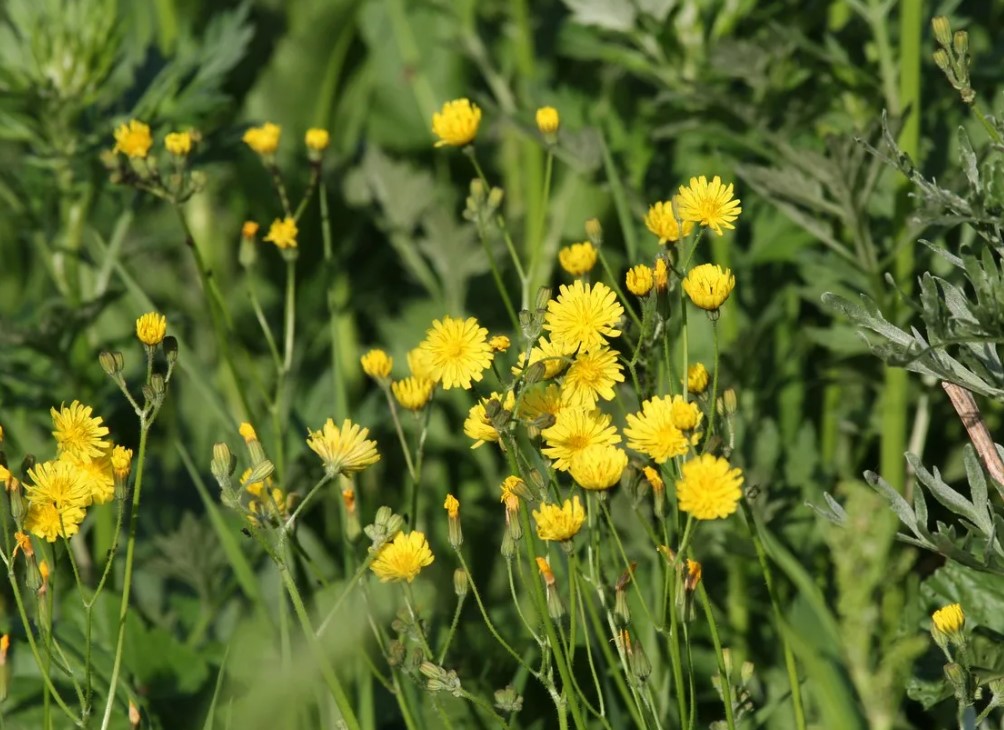
Height: 30-70 cm. Taproot, straight, grooved, and branched stem. Fruits are cylindrical, tufted, ribbed, and slightly curved. Leaves are oblong, pubescent, and petiolate. Flowers, like those of many other species, are yellow and borne in flower heads. Flowering lasts from June to October, with the first fruits appearing in July.
Saffron-red skerda (Crepis bocconii)
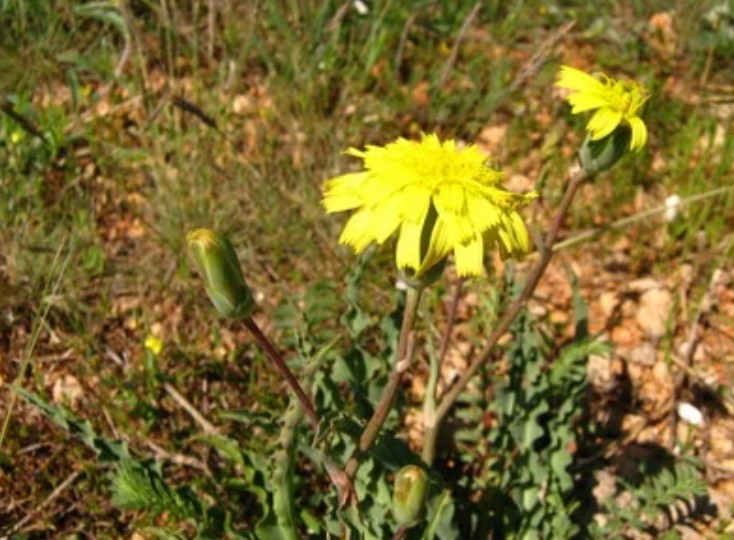
A perennial plant growing from 15 to 60 cm tall. Its basal leaves are oblanceolate-spatulate and sharply toothed, while the stem leaves are elliptical and pointed. The flower head is yellow and 3-5 cm wide.
Hairy scurf (Crepis capillaris)
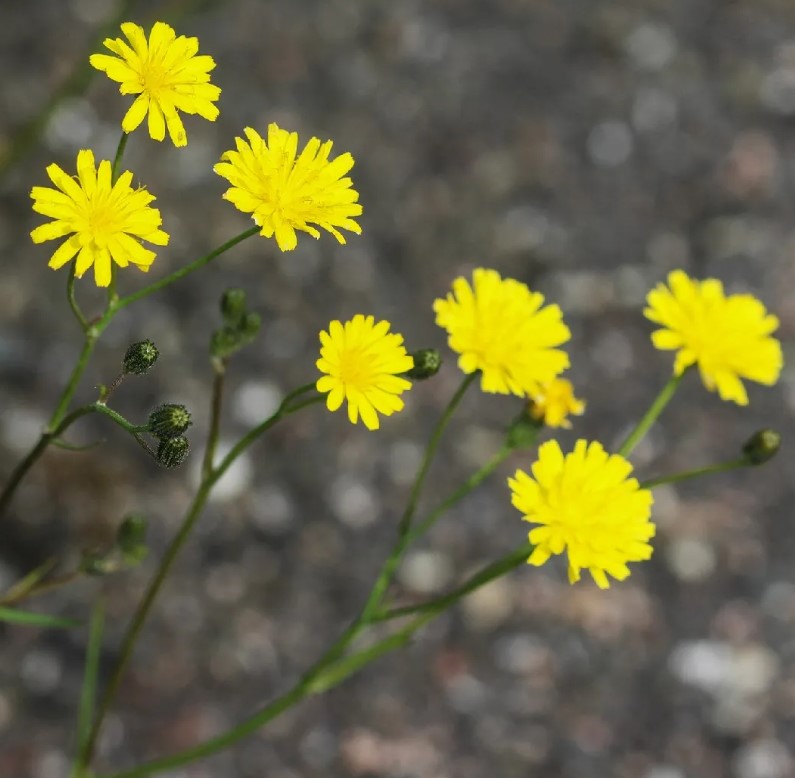
An annual plant, 20 to 70 cm tall. Its stem is erect, round in cross-section, ribbed and furrowed, and spreadingly branched. The basal and lower stem leaves are oblanceolate or oblong-oblanceolate, acute or obtuse at the apex, and notched-toothed at the margins. The middle and upper stem leaves are lanceolate or linear, sessile, sagittate-clasping, with acute auricles at the base. The flowers are yellow, on slender peduncles up to 4 cm long. The achenes are yellowish or brownish, cylindrical, 2 to 2.5 mm long and up to 0.5 mm thick.
Crepis conyzifolia
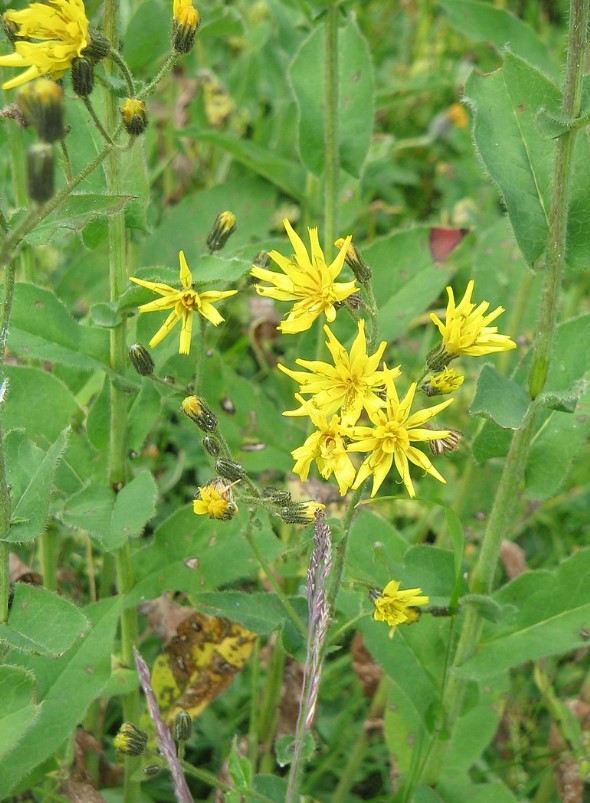
A perennial plant, it can reach a height of 20 to 60 cm. It has a thickened rhizome and a straight, grooved, simple or branched stem. The basal leaves are gathered in a rosette, longitudinally lanceolate, obtuse and wedge-shaped, tapering into winged petioles. The leaves are covered with soft, glandular hairs. The flower heads are quite large, 4 cm in diameter, with golden-yellow and orange ray florets. Flowering occurs from July to September.
Red scaly (Crepis rubra) + 3 varieties for growing in your garden
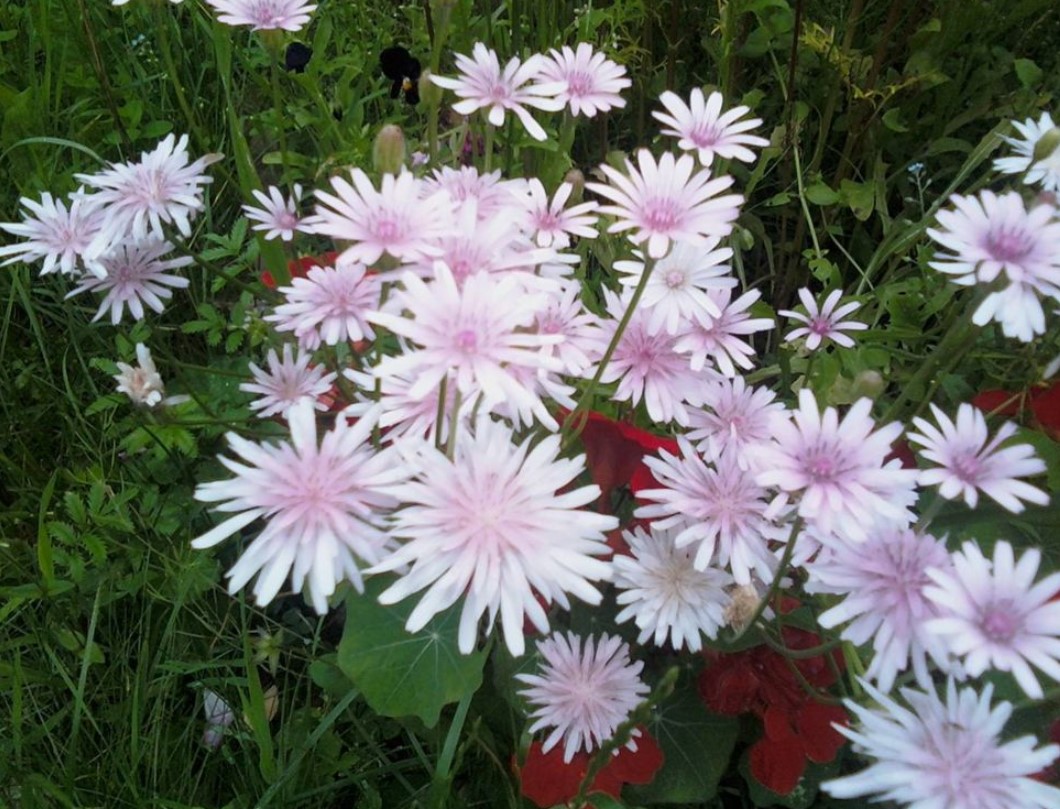
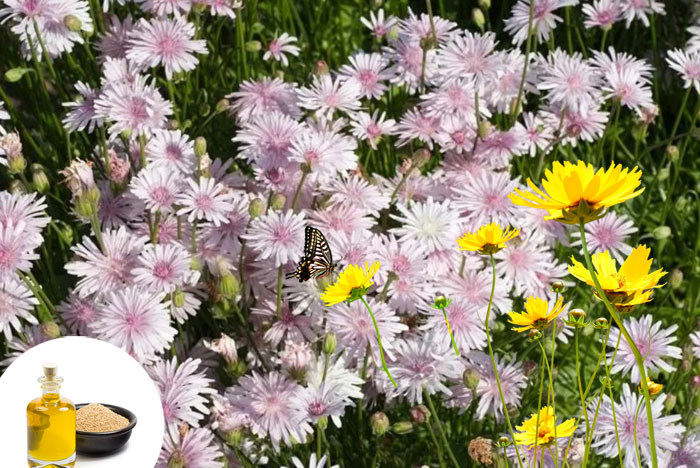
Red scaber lily is an annual plant growing 30 cm tall with serrated leaves in a basal rosette. It bears beautiful pink inflorescences reminiscent of dandelion flowers, but larger—up to 4 cm in diameter. Flowering begins in July and continues for a month, followed by the appearance of silvery tufts that make the plant attractive even after the flowers have faded.
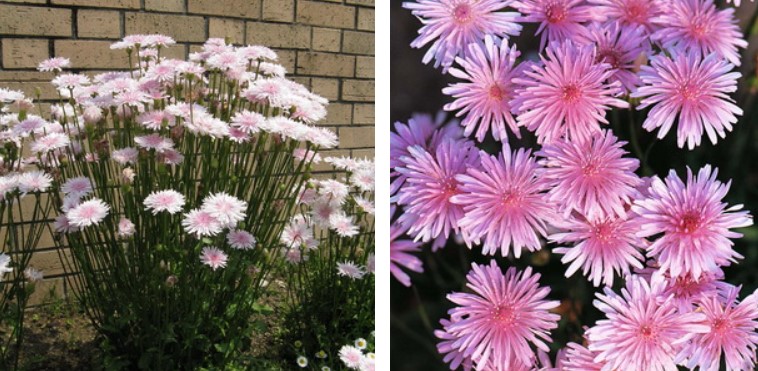
Red skerda is an undemanding plant that grows in sun and partial shade in light soils and doesn't like overwatering. It can be used to decorate mixed borders, flower beds, and rock gardens; it can be sown directly into open ground in May.
Table of three varieties of red skerda: Nezhnost, Zorka, Lyubava
| Variety | Description | Flowering period |
Tenderness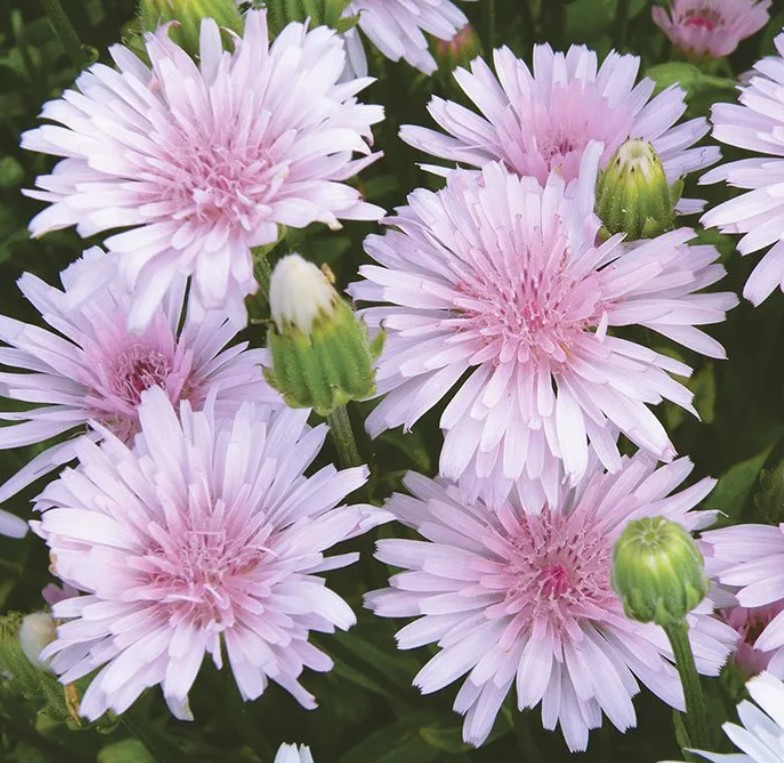 |
30-40 cm tall, with lanceolate, pinnately dissected leaves gathered in a basal rosette. The inflorescences are 3-4 cm in diameter, light lilac in color. Grown as an annual. | July-August. |
Dawn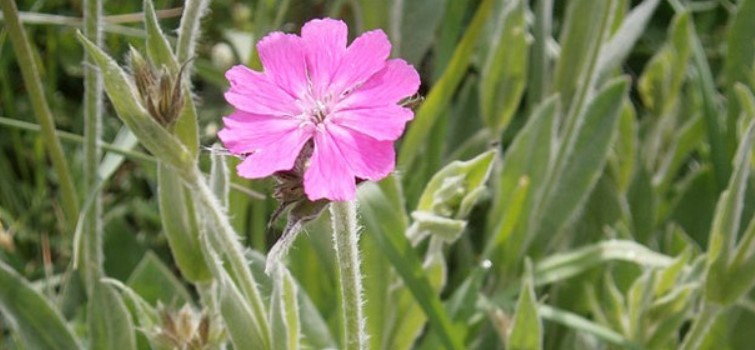 |
20-40 cm tall. Erect, slightly branching, ribbed stems. Lanceolate leaves with serrated edges, gathered in a basal rosette. Flower heads are 4 cm in diameter and bright pink. | July-August. |
Lyubava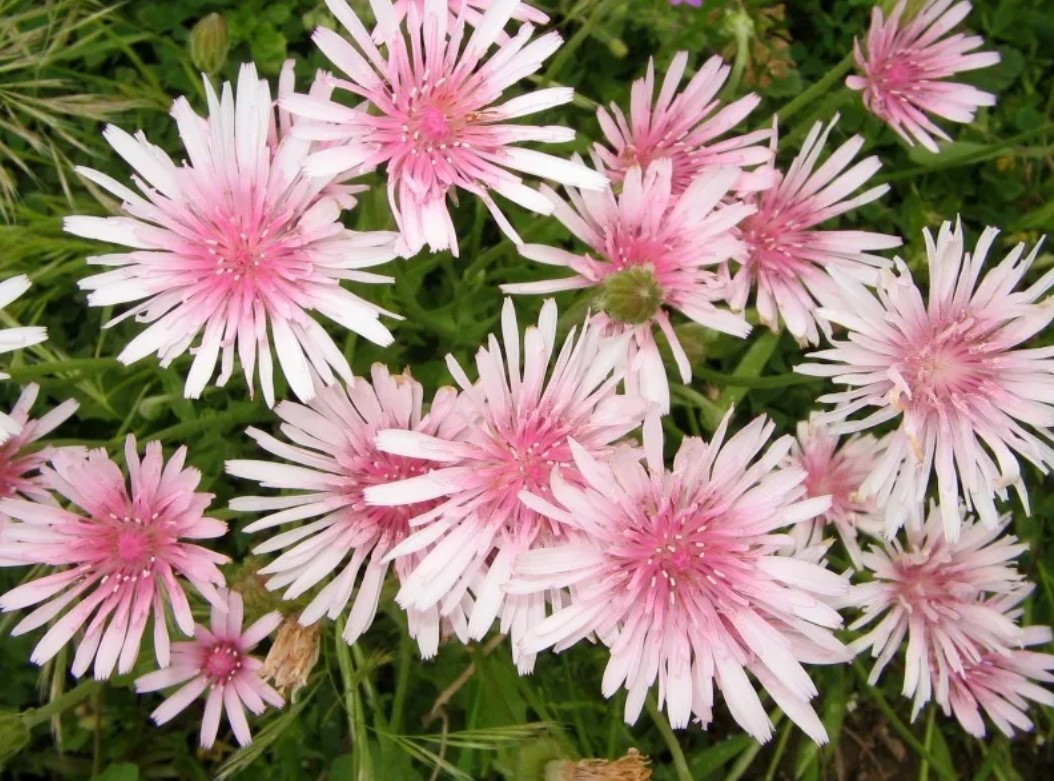 |
20-30 cm tall. It has pinnately dissected foliage, gathered in a lush rosette at the base of the stem. The flowers are pink, 4 cm in diameter, heads. | Mid-June to early August |
Growing a skerda from seeds
The beauty of the skerda is that it can be sown directly into the ground, without the need for seedlings.
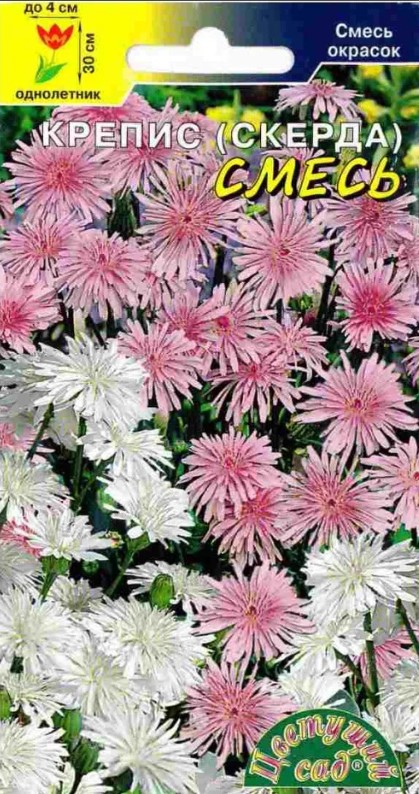
Crepis should be planted at the end of April. Step-by-step instructions:
- Make holes with a distance of 15 cm between them.
- Place 3-4 seeds.
- Cover with thick material.
Sprouts will appear in 1-1.5 weeks. Flowering can be expected as early as June.
Of course, you can plant the silo for seedlings. But this needs to be done in March.
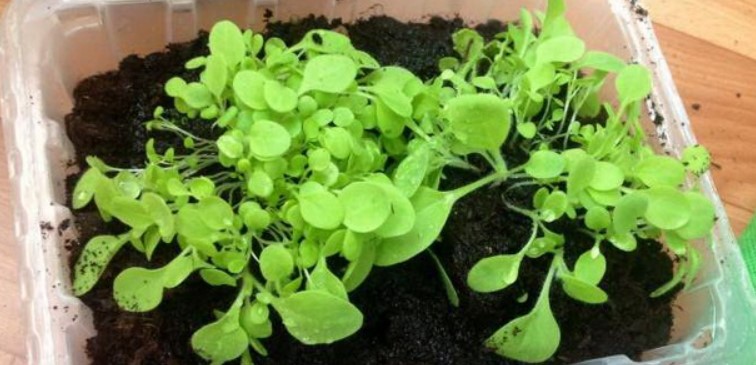
Step-by-step instructions:
- Place the seeds in the substrate and put them in a lighted and warm place.
- Don't forget to water the crops.
- When 2-3 leaves appear, transplant into separate containers.
- Once the weather becomes warm and there is no risk of frost, transplant into the ground.
Table of planting and care of skerda
| Place | Priming | Watering | Top dressing |
| It loves sunny spots and can even be planted in direct sunlight in an open area, which is a big plus. The more light the garland receives, the more beautiful its blooms will be, and the more abundant they will be. | Neutral, nutritious, loose soil. Sand can be added. Excess fertilizer is not necessary. Does not grow in acidic, loamy, or peaty soils. | Practically no watering is required if there is natural precipitation. If the days are dry, watering is worth it. | Mineral fertilizers during flowering, no more than once a month. |
Using a bin in landscape design
The beauty of red scabra lies not in its vibrant and lavish blooms, like petunias or begonias semperflorens, but in its delicacy and modesty. This plant is ideal for sunny locations and grows well in gravel or rock gardens.
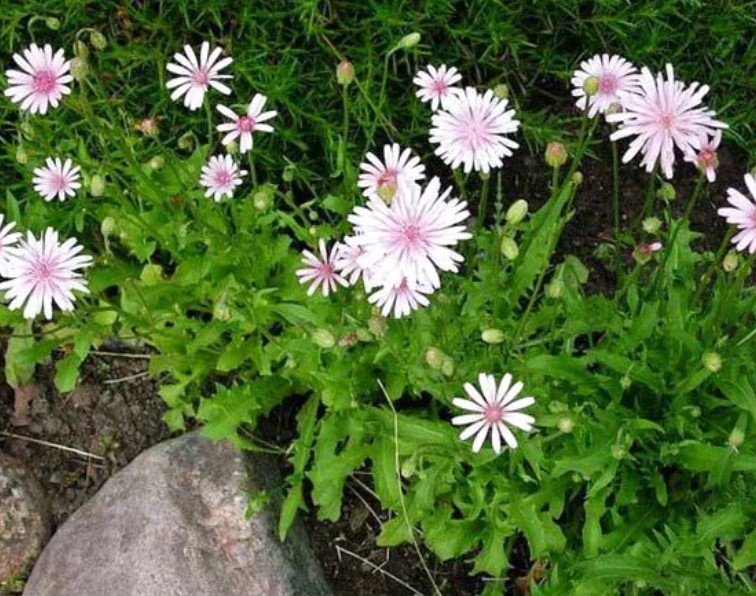
Although native to the Mediterranean, red scalope looks beautiful in naturalistic flowerbeds. It pairs well with blue cornflower, poppy, cosmos, large-flowered purslane, and annual grasses. In monochrome white flowerbeds, red scalope will highlight the beauty of other flowers and complement them as they fade.
Red skerda can become a focal point in borders and edgings. In early summer, it will be adorned with pink flowers, later developing silvery heads.
This plant is also well-suited for container arrangements, adding a soft and airy feel. However, the red scaber lily is not as attractive on its own after flowering.
Red scaber lilies flowers are excellent for cutting and can be used to create summer bouquets. If you appreciate the charm of meadow flowers, red scaber lilies are the perfect choice!
Medicinal properties of skerda
In folk medicine, two types of sackweed, described above, are used: roofing sackweed and Siberian sackweed. They strengthen the immune system, normalize sleep, improve cardiovascular function, and help with respiratory and stomach ailments, stop bleeding, and heal wounds. Roofing sackweed is also used as an antiemetic and for joint ailments. Siberian sackweed has antibacterial properties and is helpful for ulcers and wounds.
Recipes from the skerda
You can make an infusion or gruel from the skerda; let's look at it in more detail.
Infusion
Instructions for making the infusion:
- Take one tablespoon of dried skerda.
- Grind.
- Pour into a thermos and add a glass of boiling water.
- Close the thermos with a lid and let it steep for two hours.
- Strain the infusion through cheesecloth to separate it from the sediment.
- Take the remedy as prescribed, usually 30-50 ml up to four times daily.
Gruel
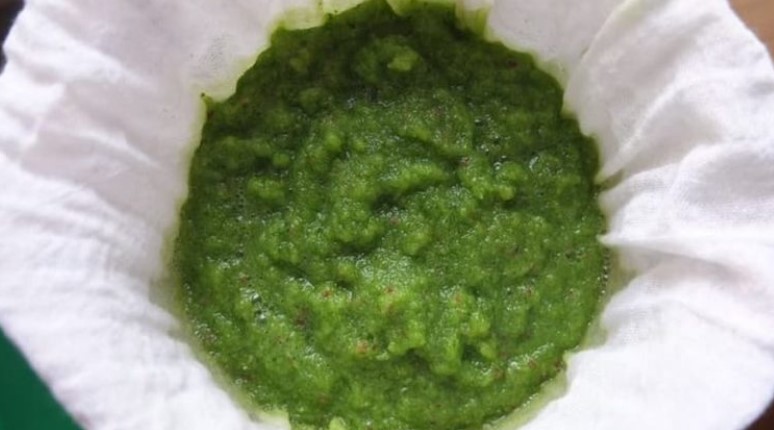
Instructions for making the gruel:
- Rinse fresh leaves with cool water.
- Grind by hand or in a blender until smooth.
- Apply the resulting green mass to the damaged area of skin and cover with a bandage for 30-40 minutes.
- If fresh leaves are unavailable, use dried leaves. Grind them into a powder, dilute them with a small amount of water, and apply to the affected area.
Follow the directions for use of skerda and consult your doctor before using it as a medicine.
For abscesses and carbuncles
Measure out a large spoonful of dried herb and grind it into a powder. Pour 250 ml of hot water into a thermos or teapot, seal tightly, and place in a dark place for two hours. When ready, strain to remove any remaining leaves and pour into a clean glass container. Soak gauze or a bandage in the infusion and apply the compress to the abscesses several times a day.
For atherosclerosis
Grind 15 g of dried herb with a mortar and pestle until smooth. Pour 500 ml of freshly boiled water over it, cover with a lid, and wrap it in a towel. Let it steep at room temperature for an hour. Strain afterward. Take one tablespoon three times daily, preferably on an empty stomach shortly before meals.
For gastritis
Grind a large spoonful of dried herb and pour 200 ml of hot water over it. Place in a warm, dark place for 3-4 hours. Strain the infusion through cheesecloth. Take 1/3 cup three times daily on an empty stomach shortly before meals.
For constipation
Fresh roofing sack juice has laxative properties. It can be used for constipation to improve intestinal motility and speed digestion.
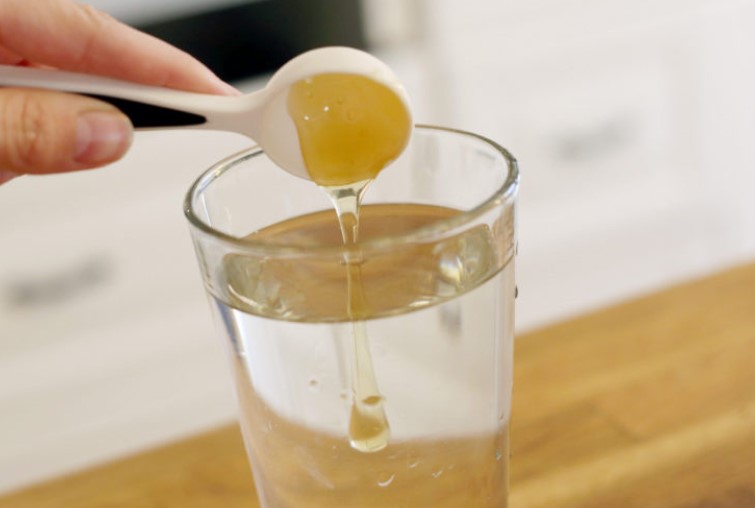
To prepare the mixture, rinse several fresh roofing husks in cold water. Grind them into a paste using a blender or a mortar. Wrap them in folded cheesecloth and squeeze the clear plant juice into a glass container using your hands. Add a large spoonful of apple cider vinegar and 5 grams of natural honey. Mix until smooth.
This remedy must be taken on an empty stomach, preferably in the morning.
Important! To prepare a natural laxative, use 9% vinegar. Concentrated essence should not be used.
Contraindications for the use of skerda
- Individual intolerance to the herb
- Pregnancy and breastfeeding
- Exacerbation of pancreatitis
- Tendency to diarrhea
- Not recommended for children under 12 years of age.
Collection and preparation of raw materials
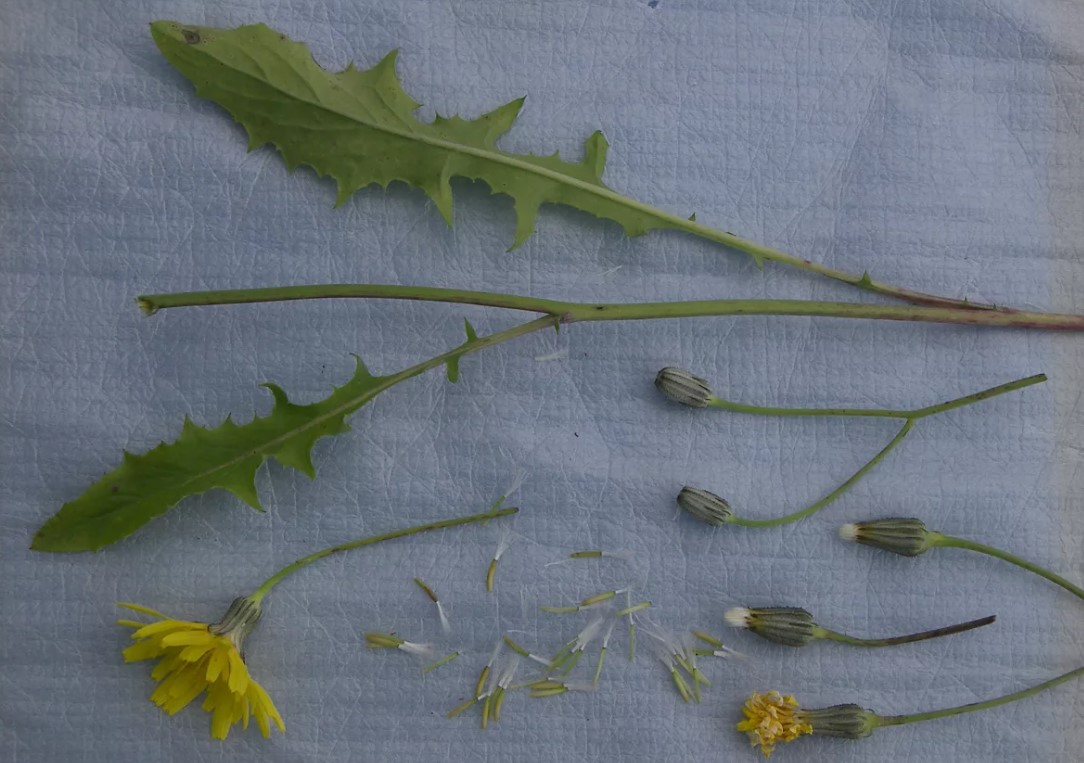
The above-ground portion of the sack is harvested in June-July on a dry, warm day. The stems and leaves are cut with a sharp knife at a distance from the ground. After rinsing in cool running water, the raw material is spread out under a canopy or dried in a well-ventilated area.
Reviews of growing skerda
Red skerda:
Want to plant something unique and unusual in your flowerbed, yet something that doesn't require much maintenance? Skerda is perfect for this!
This elegant plant with graceful inflorescences 3–4 cm in diameter is a welcome addition to any garden. Unpretentious and long-blooming, it looks stunning in borders, flower beds, and rocky areas. It can also be used for miniature bouquets.
The plant is unpretentious and annual.
Blooms in July – August.
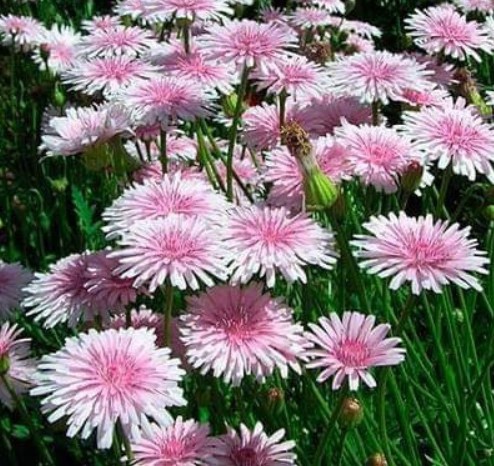
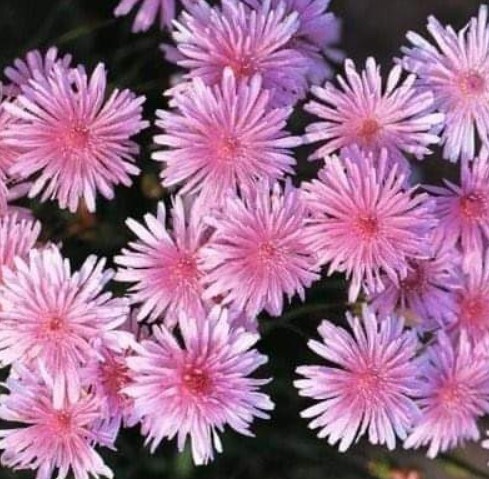
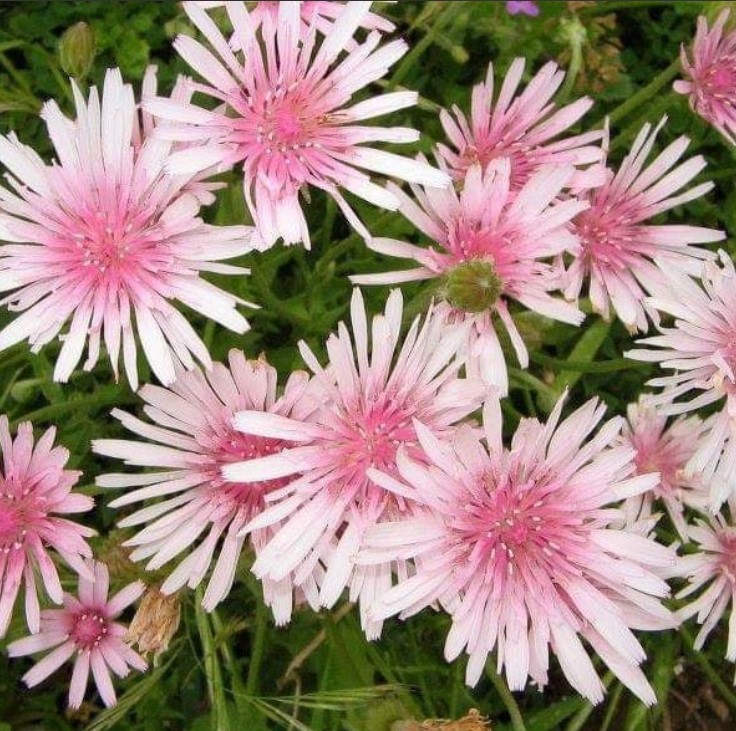
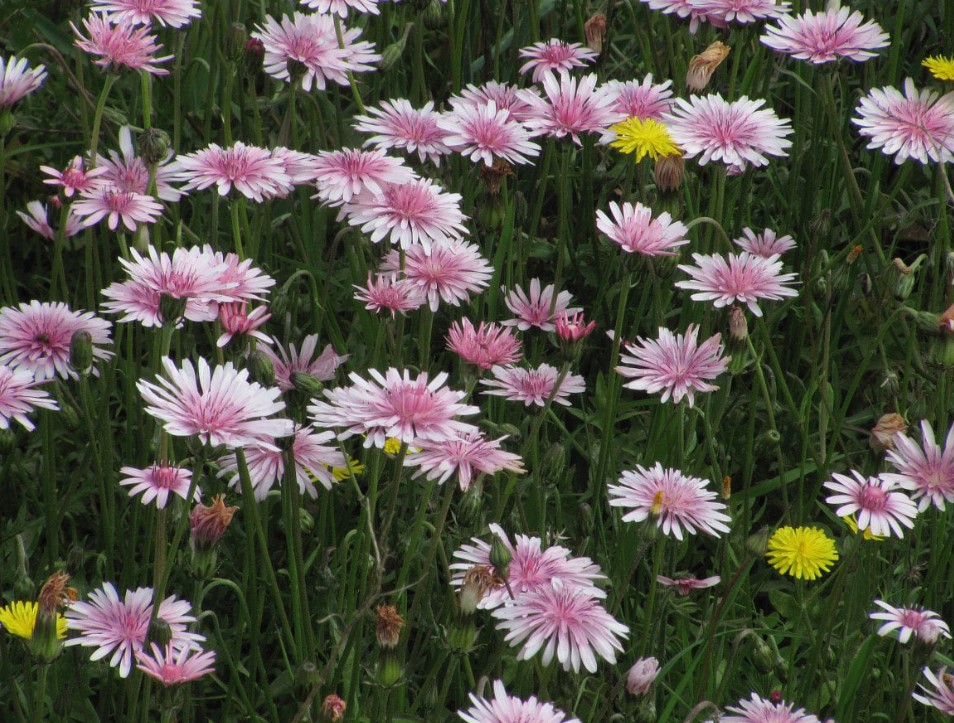
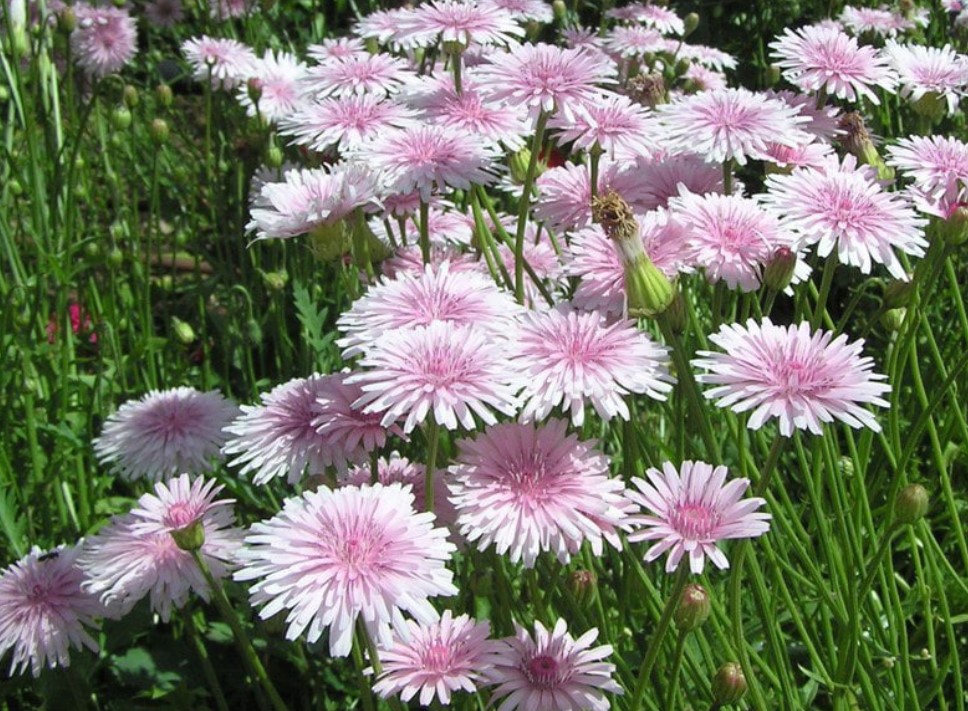
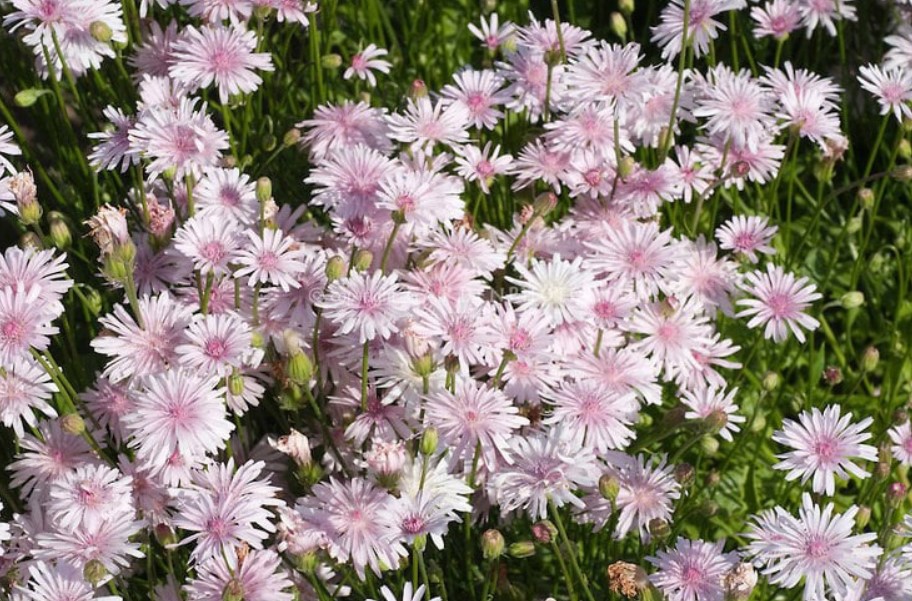
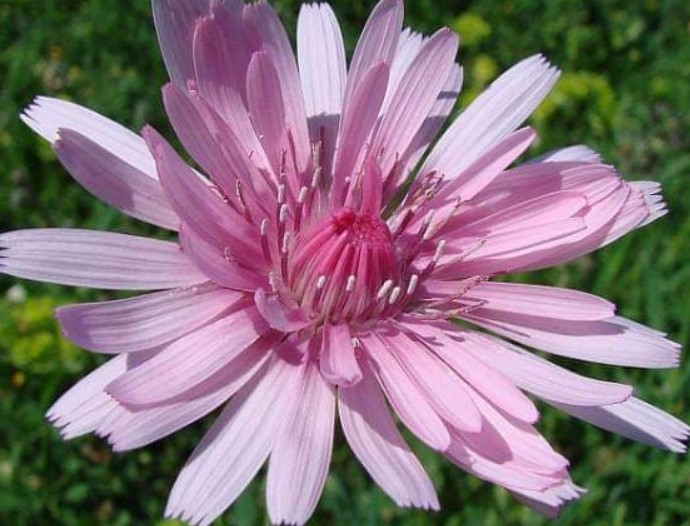
There is a flower that I really love. It is a skerda or crepis.
I first planted them a few years ago from discounted seeds from Johnson's and have been growing them every year since. I love them because they're a very graceful, easy-to-grow flower. I plant them directly in the ground in early May. They grow to about 25 cm tall. They don't require any special care. I water them in the heat and feed them twice a summer. The seeds ripen. If you see them for sale, I recommend planting them in your garden.