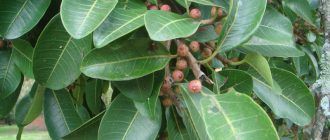
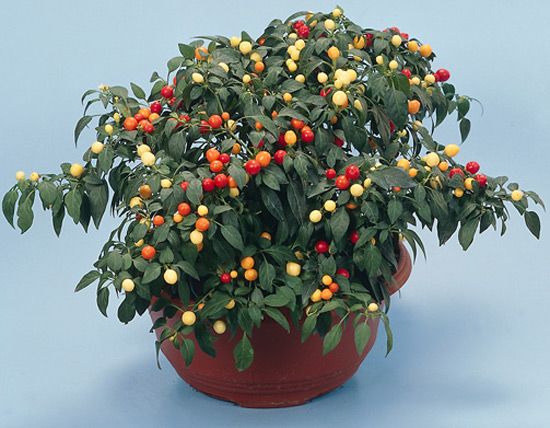
Indoor nightshade (Solanum) belongs to a large genus of plants in the Solanaceae family, comprising approximately 1,200 different species. These include well-known vegetable crops such as tomatoes and potatoes, as well as ornamental plants such as curly nightshade and jasmine nightshade, and indoor plants such as false pepper and pepper-leaved nightshade.
Solanum insipidum, or nightshade, grows in warm climates, in temperate zones. This is due to its origin. Its native land is considered to be the tropics and subtropics of Central and South America, and South Asia.
Content
Description
Different species of nightshade grow as grass, trees, and shrubs.
The green part of the plant depends on the position of the stems. The bush can be upright or prostrate and creeping.
Single flowers are arranged in various ways: in racemes, corollas, panicles, and corymbs. But most importantly, each species produces berries. Besides its fame as an agricultural crop, the plant is renowned for its ornamental qualities.
Species for indoor growing
There are many varieties of solanum, all ideal for growing in greenhouses, windowsills, or conservatories. They differ in their flowers, fruits, size of the green part, and vine length:
| Types | Peculiarity |
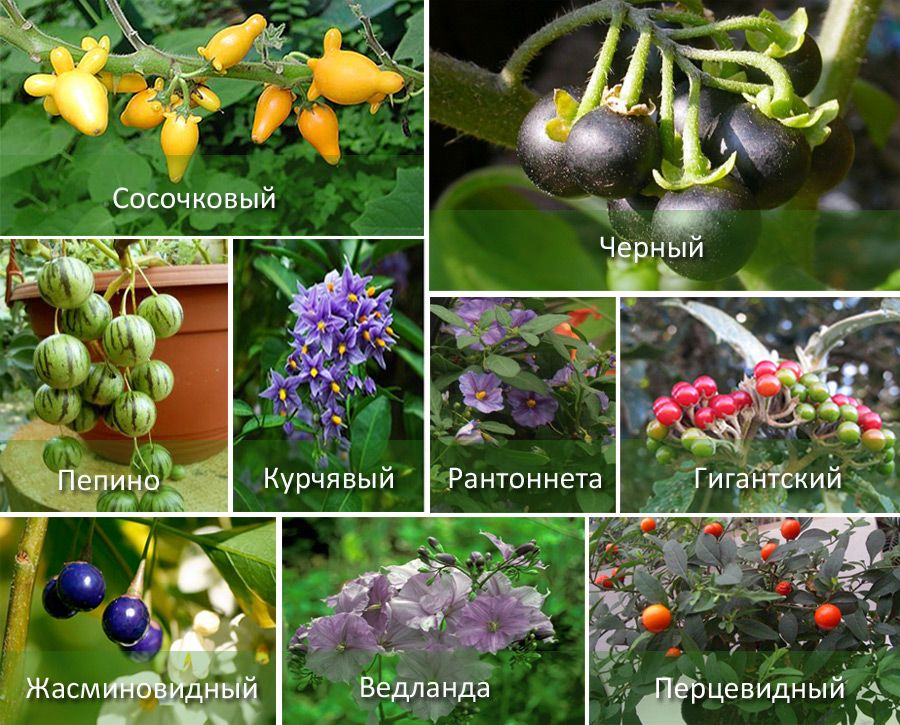
| False pepper (pseudocapsicum) | Solanum pseudo-capsicum is a shrub with shoots up to 1 m long. The leaves grow on short petioles, attached to bare stems. They are lanceolate in shape, tapering to a point at the apex. The color is light green with a sheen. The flowers are small, white, and unattractive. The berries are 1.2-1.8 cm in size, round, and bright red, although yellow ones are also available. |
| Pepper-shaped | Height: 60-100 cm. Shoots are grayish in color and lightly pubescent. Leaves are lanceolate or oblong, grayish-bluish in color, up to 7 cm long. Fruit size: 1.5-2 cm. Berries are poisonous. |
| Jasmine | An evergreen plant. It is a creeping vine with branches up to 2 meters tall. The leaves vary in shape: the lower and middle ones are trifoliate, while the upper ones are elongated. The flowers are light blue, sometimes white, and 1.5-2.0 cm in size. It blooms in March and continues to bloom until October-November. The berries are coral red and 1.5 cm in size. |
| Giant | A 6-meter-tall shrub with branches covered in subtle thorns. This evergreen shrub has leaves reaching 25 cm. Flowers of various colors—white, purple, and blue—appear in July and August, up to 1.5 cm in size. The berries are small, purple-red, and remain on the bush for several months after ripening. The flowers, bright red berries, and delicate fragrance add to the decorative appeal. |
| Seaforta (Brazilian) | An evergreen vine with stems up to 6 meters long. Leaves 1.3 cm long grow on sticky stems. The leaves are lanceolate or ovate with a slight wavy edge. The flowers are star-shaped and soft purple. Since flowering lasts for several months, from March to November, the plant makes a wonderful decorative addition to any room. |
| Curly | Another name for this plant is Chilean nightshade, referring to its origin. It is a 6-meter-tall climbing plant. The leaves are oval and up to 12 cm long. The flowers are small, 2.5 cm, lilac-colored, and star-shaped. In the fall, green or yellow-orange berries emerge from the flowers. They are small, measuring only 0.6 cm. The plant's ornamental value stems from the beauty of its flowers and fruits, and its flowering period, which extends from midsummer to October. The fruits are poisonous. |
| Wendland | This nightshade is used as an ornamental plant due to its year-round green color and climbing habit. It grows up to 6 m tall, clinging to support with its small spines. The leaves are up to 10 cm long at the top and 25 cm below the midpoint of the shoot. The flower panicles are 20 cm in diameter, composed of single purple, blue, and white flowers. It blooms continuously throughout the summer. |
| Rantonnetta | A shrub resembling a small tree. The shoots reach 2 m, and the leaves are elongated to 10 cm. The flowers are 2.5 cm long, dark blue or purple, scentless, with a light center and 5 yellow anthers. The fruits are red and heart-shaped. |
| Papillary | A perennial plant with distinctively shaped yellow berries with nipple-like projections. The shape of the berries led to the name "Lady Nightshade" or "Nipple Fruit." The stems are thick and thorny. The flowers are pinkish-purple and star-shaped. The berries are poisonous, waxy, and 3-7 cm in size. |
| Indian | A small shrub, ripe red berries resemble small tomatoes. When unripe, the berries contain poison, hence the name "poison berry." |
| Pepino (melon pear) | It is an evergreen perennial shrub. The bush grows up to 1.5 meters tall. The stem is smooth. The leaves are lanceolate and resemble peppers. The plant's main value lies in its aromatic berries, which taste similar to melon or cucumber. The fruit is bright yellow and very juicy due to its 92% moisture content. The flesh is yellow or colorless, with a sweet and sour taste. |
| Black (Solanum nigrum) | It grows in the southern regions of our country as an annual weed. It is known for its sweet black fruits, about the size of a blackcurrant. The fruits and leaves are poisonous when unripe. Once ripe, the berries can be eaten or used as a pie filling. |
Home care
Proper care of the plant is the key to its health and beauty. Solanum doesn't require elaborate home care. It's important to follow a few rules to ensure beautiful flowering and abundant fruiting.
Location/Lighting
Nightshades originate from sunny climates, so they thrive in bright light. Indoors, they thrive on western and eastern windowsills. In summer, it's important to bring them out onto the balcony, but it's important to protect them. Bright, scorching sunlight is harmful to nightshades.
It is important to spray the plant at the same time so that it does not dry out and water it 1-2 times a day.
Temperature
In summer, nightshades should be grown at a temperature of +18-+25°C; in autumn, winter and spring, they should be kept in a cool room with a temperature of +12 to +15°C and do not forget to ventilate.
Humidity/Watering - Seasonal Chart
It is important to remember that nightshades love moisture.
Drying out of plants can lead to their death.
Seasonal watering looks like this:
| Season | Watering |
| Spring/Summer | Every day, twice a day in hot weather. Spray daily. |
| Winter/Autumn | Water sparingly, place the pot on a tray filled with expanded clay. Mist regularly. |
Do not allow the soil to dry out during the autumn-winter-spring period.
If there is insufficient watering, the solanum may become infected with a virus.
The appearance of the damaged plant changes, the leaves become deformed, the leaf blades become dissected, and a mosaic coloring appears on the fruits.
Pot, soil, pruning, replanting
During winter, place the pot on a 2-3 cm layer of wet expanded clay to ensure the necessary moisture. It is recommended to replace the expanded clay and soil annually. This is important to prevent the lower portion of the roots from becoming soggy.
In the fall, all shoots on the plants that did not have flowers or fruits are pinched off.
Those that bore fruit in the summer should be removed and replaced with new ones. In winter, it's important to remove any shoots that have emerged with flower stalks.
Repotting is necessary in February. The mother plant is pruned by approximately 30%, then a new container is selected and planted in prepared soil, to which peat, humus, compost, and sand have been added.
Top dressing
To ensure a mature plant delights with flowers and berries, it needs to be fertilized from spring until late fall. A mineral fertilizer applied twice a month is ideal. With proper care, a solanum will delight its owner with beautiful flowers and colorful fruits.
Reproduction
Can be propagated from ripe berries:
- The seeds are removed and washed in a potassium permanganate solution. They are then scattered over the soil, covered with a thin layer of sand, and stored in a container at 22°C.
- 2-3 weeks after the sprouts appear, begin to water regularly and loosen the soil a little.
- The grown seedlings are planted in flower pots.
Propagation by cuttings is used:
- Cut off the tops of the shoots or stem cuttings. Plant them in a container with a 1:1 mixture of peat and sand and keep them warm.
- Repotting is done after roots appear. The nutrient mixture is made from sand, soil, humus, and turf.
- Don't forget to pinch the cuttings to stimulate growth.
Difficulties in care: diseases, pests
- In hot and damp weather, leaves fall off rapidly.
- In a dry room, whitefly and spider mite infestations may occur.
- In low light conditions, the growth rate slows down, the plant flowers sparingly and produces few fruits.
Top.tomathouse.com informs: Is nightshade a medicine or a poison?
Both the fruits and leaves of nightshade are used for treatment.
Helps with lung conditions (bronchitis), throat conditions (tonsillitis), and whooping cough. It has a calming effect, relieves spasms, and lowers blood pressure.
Its medicinal properties are attributed to the vitamins, alkaloids, pectins, and saponin acids it contains. External use has proven effective in treating wounds, boils, and ulcers.
Medicinal tinctures
Infusions made from nightshade are effective against worms and have a diuretic effect. The therapeutic effect of an infusion of solanum flowers includes expectorant and antirheumatic properties.
The recipe is simple: pour 250 ml of boiling water over one teaspoon of flowers and let steep for two hours. Then drink one tablespoon four times a day.
Vodka tincture: Prepared from the flowers. Take 20 g of young shoots, crush them, and mix with 200 ml of vodka. Infuse for two weeks, away from light, shaking occasionally. Then strain the tincture, squeeze it, and take 10-30 drops. Dilute the drops in 50 ml of water and take morning, afternoon, and evening. Helps relieve hemorrhoids and abscesses.
Many species are poisonous when immature.
Sometimes, a small dose is enough to cause stomach upset or toxic damage to the entire body. In some cases, medical attention is necessary for poisoning.