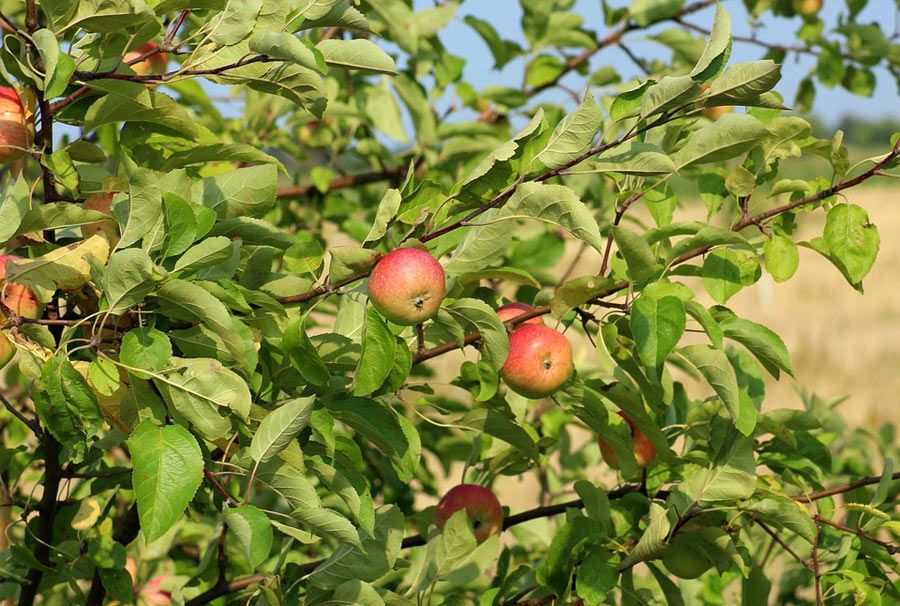
The apple tree has a number of advantages: High yield, undemanding soil conditions, frost resistance, and ease of care. This makes it one of the most sought-after fruit trees, especially in central Russia. Sometimes its lifespan exceeds a century. Such a long-lived specimen is certainly rare. Typically, the life cycle of an apple tree is 50-60 years. However, this shouldn't be confused with active fruiting, which lasts much shorter. Of course, with the right seedling selection, planting, and care, the tree can produce fruit for 20-30 years or more.
Content
Periods of the apple tree life cycle
An apple tree's lifespan is divided into three distinct periods. These successive periods reflect the changes that occur with age.
First
The cycle includes initial development, when the tree develops its root system and vegetative parts and enters fruiting. This typically occurs between the first and 15th years.
During this period, it is very important to follow all care instructions.
Second
This cycle includes a period of active fruiting and a gradual decline in growth. It occurs between 15 and 50 years. However, if the crown is improperly formed and the tree is not properly cared for, the dense growth will hinder the growth of young shoots, the fruit will become smaller, and the apple tree itself will be susceptible to various diseases. Without renewed care, it will become wild and degenerate. However, timely sanitary and formative pruning can restore the tree.
Rejuvenating pruning
This procedure greatly affects the lifespan of the tree and its productivity.
This is usually done in the fall. Mature apple trees are rejuvenated after 20 years if they are not bearing fruit. Large, dry, broken branches are removed, as are those that grow toward the crown and interfere with young shoots. The center of the crown is opened, leaving only the upward-reaching branches, which are where young fruit-bearing branches will form.
Third
This is the final cycle. The tree gradually stops growing, and the branches that make up the crown dry up and die. At this point, the apple tree may suddenly stop bearing fruit, or it may stop gradually. An old tree is no longer regenerable, and it's best to uproot such trees.
Advice on uprooting old apple trees
Properly removing an old tree to make room for a young one is a very difficult task.
To do this:
- The trunk of the apple tree is dug into a trench so that the large, thick roots of the old tree can be cut off.
- After this, the trunk is swung and overturned.
- Then the remaining roots are cut off and removed, and the trunk is sawed.
If it is not possible to fell the tree, another passive method is used:
- The apple tree is being cut down.
- Holes are made in the stump with a drill.
- Nitrogen fertilizer (urea, ammonium nitrate) is added to them.
- Add some water several times during the summer (this will speed up the process of root rot).
After two years, the stump's root system is so destroyed that it can be easily removed from the ground by digging.
All these periods are rather arbitrary, as they depend on a number of factors.
Factors Affecting Life Expectancy
There are several factors that influence the longevity of an apple tree:
- place of growth;
- varietal affiliation;
- tree care.
Region
An apple tree's lifespan depends on where it's grown. In more southern regions, it can live much longer, up to 100 years or more. In the central zone, it can live less than 70 years. In the northern regions, where conditions are harsh, it can live as little as 40 years.
Variety
The life cycle duration is influenced by varietal differences.
For example: early-bearing apple trees, that is, those that begin to bear fruit at a very early age, live less than late-bearing varieties.
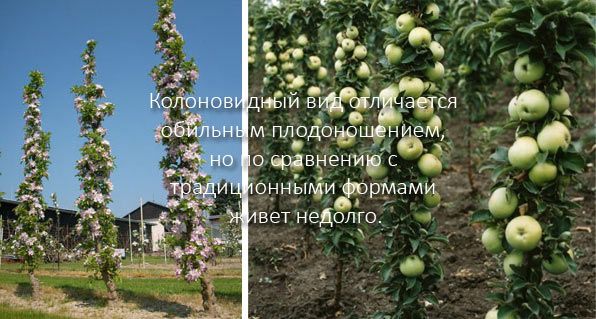
The columnar tree begins to bear fruit early and abundantly, but lives no more than 20 years.
Care
Caring for a tree is crucial. Starting with planting, it needs to be properly shaped, fertilized, and protected from pests and diseases every year.
The influence of selection on age characteristics of apple trees
In the old days, when apple trees were grown from seeds without grafting, they were more resilient and lived up to 200 years. Seed-grown specimens have important characteristics:
- disease resistance;
- winter hardiness;
- undemanding to soil.
But despite having a number of positive properties in terms of endurance, although they subsequently produce good harvests, they begin to bear fruit only at the age of 10-15 years, when the root system and crown have fully developed.
Hybrid varieties produce a bountiful harvest as early as 5 years old, but their lifespan does not exceed 20 years, as the still-undeveloped apple tree expends a lot of energy and strength on fruit formation, quickly becoming depleted and worn out.
During the breeding process, different apple varieties are adapted to climates different from their native ones. This results in early-ripening varieties that are smaller in size and have a lifespan that is halved.
It turns out that selection that doesn't take into account the tree's biological characteristics significantly reduces its age component. Knowing all the factors that influence a tree's yield and lifespan allows us to choose which is more important.