Dear readers, in this article, you'll learn how to grow statice from seeds, and do it correctly and easily. We'll cover all the details, but first, let's take a look at what this plant is.
Statice (Lemon Lily) is a popular garden plant. Interest in it has increased significantly in recent years. It is actively used by landscape designers and gardeners, and is used to decorate flowerbeds in private gardens. It is widely grown in Europe as a perennial. It is also known as sea lavender.
In the central part of the country, it is sown annually. The correct name is statice. However, the common name statice is often heard. This name is also often used for other Limonium species: Tatar Limonium, Peres' Limonium, Chinese Limonium, Gmelin's Limonium, Common Limonium, and Broadleaf Limonium.
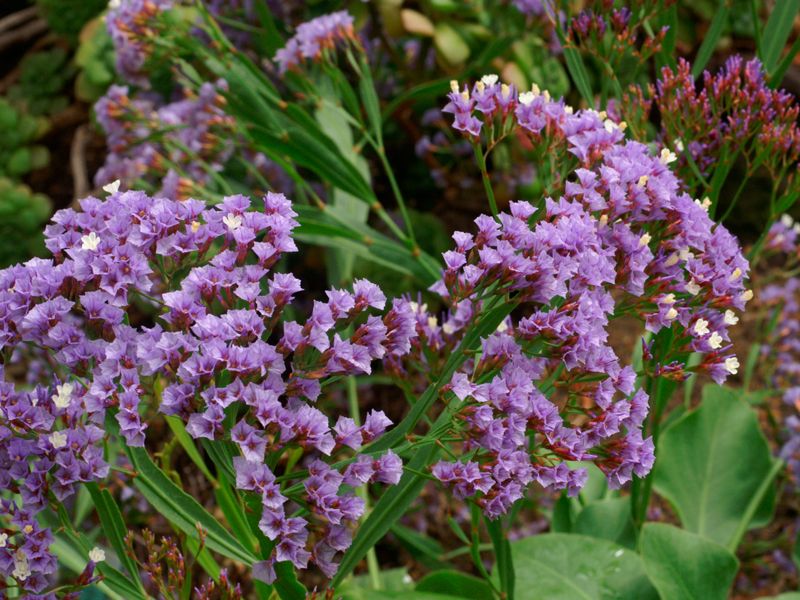
The flowers are membranous and funnel-shaped, blooming in June and July. Their color varies depending on the species. Broadleaf varieties have bright blue flowers. Sinuate varieties can be bright or subtle, ranging from lemon, pink, raspberry, light blue, and purple.
Statice has a strong, taproot. The height of the bush can also vary, from 40 cm (Tatar) to 80 cm (broadleaf).
Growing statice from seeds
The most popular method of propagating statice is by seed. It can also be propagated by division, but this method is challenging. The root system is sensitive to repotting. Broadleaf statice is recommended to be repotted only in the third year.
For growing from seed, you can collect the planting material yourself. However, in temperate climates, the fruits ripen poorly, and only in very dry, long, and stable summers. Even then, their germination rate will be low—30%. It's better to use store-bought seeds, which have a germination rate of 94-95%.
Preparing seeds for planting
The flower's seeds are small, elongated, and enclosed in a dense, leathery shell. Light scarification by sanding the seeds is recommended. Then, soak them in Epin (1-2 drops per 100 ml of water) and leave them in the resulting solution at 20°C for 4-6 hours. Alternatively, soak them in wet sawdust for 2 days.
Preparing the soil for statice
Soil: Any store-bought or homemade soil, sandy or peaty, light soil. Good drainage is essential.
Treat the soil and planting containers with a hot, light pink solution of potassium permanganate (1%). The soil can be heated in the oven: a layer no thicker than 5 cm, heated at 70-90°C for 30 minutes. Other methods of pre-planting soil disinfection:
- Pouring small portions of boiling water, Aktara solution, Fundazol, and other fungicides.
- Heating in a frying pan, in a baking sleeve, in foil.
- Mixing soil with phytosporin.
- Repeated freezing and thawing.
Preparing a container for planting statice seeds
Sowing containers: disposable or peat cups – if you plan to plant the seedlings outdoors. For indoor or balcony growing, you can choose tall, large containers or seedling boxes – from these, the resulting seedlings are transplanted to their permanent location.
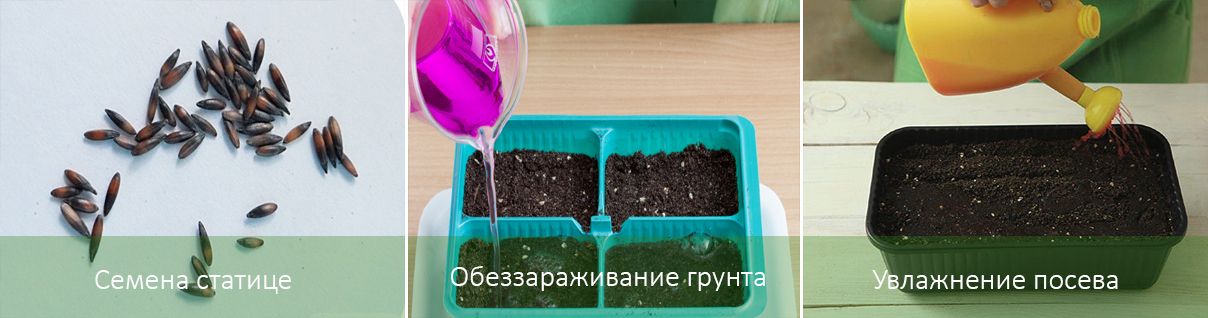
It is advisable to sow the seeds immediately in separate cups so as not to disturb the young seedlings.
Sowing statice for seedlings
For growing in Siberian conditions, sowing seeds for seedlings is done in late February or early March. In other regions, sowing can begin later. The deadline is mid-March.
Spread the seeds over the soil surface. Lightly press them down, sprinkle with sand, and cover with glass. Ensure the seedlings have ample space on the windowsill.
Air the plants daily. If mold appears, water them with a weak solution of potassium permanganate and move them to a sunnier location.
Seedlings will appear indoors, at temperatures between 18 and 20°C, in 1.5 to 2 weeks. In less favorable conditions, seeds may take up to 3 weeks to germinate. This can be caused by soil that is too cold and insufficient light. Seedling containers can be supplemented with a 60W fluorescent lamp for 4 to 5 hours daily.
Once the sprouts emerge, gradually acclimate the seedlings to fresh air by removing the film or glass daily. The time is gradually increased.
Pricking out is done when the first true leaves appear. Ideally, this should be the only transplant.
Caring for and planting statice seedlings in the ground
Two additional fertilizations are carried out with complex mineral fertilizer:
- 1 week after picking.
- Then – once a month.
Water sparingly in dry weather, only at the roots to avoid water getting on the plant. Plant outdoors in the second half of May, or in late May in Siberia. Space seedlings 30-40 cm apart.
Don't delay transplanting to a permanent location. Despite the fragility of the root system, it is active and grows quickly.
Statice should be grown in a sunny location. It tolerates even direct sunlight. Shade or partial shade are unsuitable; the plant will grow poorly, produce few flowers, and its root system will suffer from rot. The soil should be loose, breathable, and permeable. Statice is not picky about soil composition and can grow anywhere, but stagnant water should be avoided. Like most ornamental plants, statice does not respond well to acidic soils; areas with such soil should be limed.
When choosing a planting location, be sure to consider statice's strong, sometimes pungent, aroma. Gazebos, flowerbeds near the entrance to the house, benches, and other recreational areas where people are often present may not be a good choice.
Sowing statice seeds directly into open ground
Seeds can be sown directly into the permanent location. This will avoid transplanting, which can be traumatic for the limonium. The plant is heat-loving and does not tolerate low temperatures—this should be taken into account when planning the planting dates.
Planting instructions:
- In April-May, when the soil has warmed up well and the threat of frost has passed, prepare the soil. This includes digging, removing weed roots, loosening the soil, liming, and fertilizing with minerals. Sand is added if necessary.
- It is important to choose an open, sunny location for planting, with good drainage of excess moisture.
- The surface of the prepared soil is loosened and leveled. Using the back of a board, make 2-cm-deep furrows every 30 cm.
- Place seeds 10-15 cm apart and sprinkle with a mixture of peat (sand) and soil (in a 1:1 ratio).
- Water from a shallow watering can so as not to wash away the soil and so that the seeds remain in place.
- When seedlings emerge, thin out the plantings, leaving the strongest specimens. Space them 30 cm apart.
Random planting is possible. In this case, the soil is compacted thoroughly, then the top layer is loosened to a depth of no more than 2 cm. The seeds are scattered over the surface. The top layer is loosened again. Then, they are carefully compacted by hand or with a board, and watered with a hose.
With good care (plenty of sun, loose soil, careful and infrequent watering), statice will bloom in early July and will delight with bouquets of bright flowers until the frost.
Top.tomathouse.com recommends: statice on the balcony
The plant is too large for indoor use, but looks great on balconies and terraces. Large floor pots, containers, and vases are ideal. Clay is preferred, but plastic, wood, stone, and concrete will also work. Good drainage is essential; fill the container up to 1/3 full with gravel, expanded clay, or broken pottery.
Then, fill the pot halfway with substrate, sprinkle a layer of mineral fertilizer over it, mix it with the soil, place the plant, and add soil, gently shaking the seedling to fill the spaces between the roots. Firm the soil with your fingers as you add it. After planting, water thoroughly. Place the seedling in the desired location.
Water for watering indoor plants should always be +5°C higher than the ambient temperature.