Stephanotis is a tropical flower first discovered in the "paradise" of Madagascar. It is also found in China, the Land of the Rising Sun, and the Malay Islands.
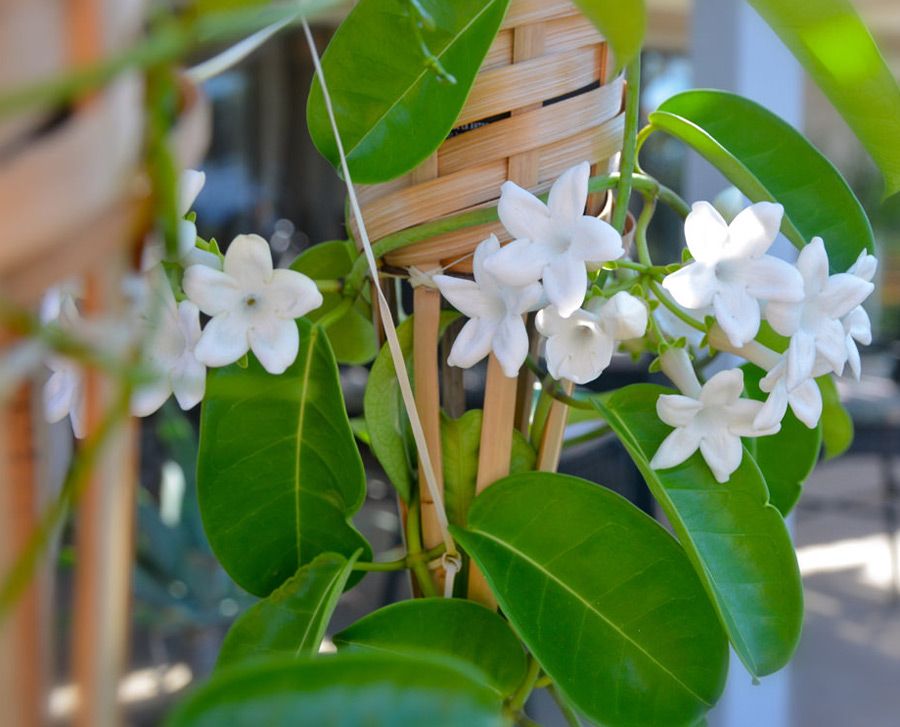
Due to the shape and aroma of its buds, it received the nickname "Madagascar jasmine".
Content
Description
The perennial climbing vine Stephantis belongs to the Lastoneceae family and grows up to 6 m.
Characteristic features of the flower:
- The stem is flexible and elastic in a young plant, but becomes woody over time.
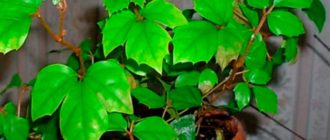
- The leaves are large, up to 12 cm, oval-shaped, with a pointed tip and a bright central vein. Smooth, leathery, emerald-colored or variegated, the leaves are very attractive, with long petioles.
- The flowers have five petals, resemble stars, and are gathered in clusters. White, purple, or yellow, they exude a delightful fragrance.
- The fruits appear infrequently, even in nature, and resemble a two-part seed capsule that opens up after ripening, and the seeds fly out like miniature parachutes.
Types in the table
The most popular species for indoor growing:
| Name | Peculiarities |
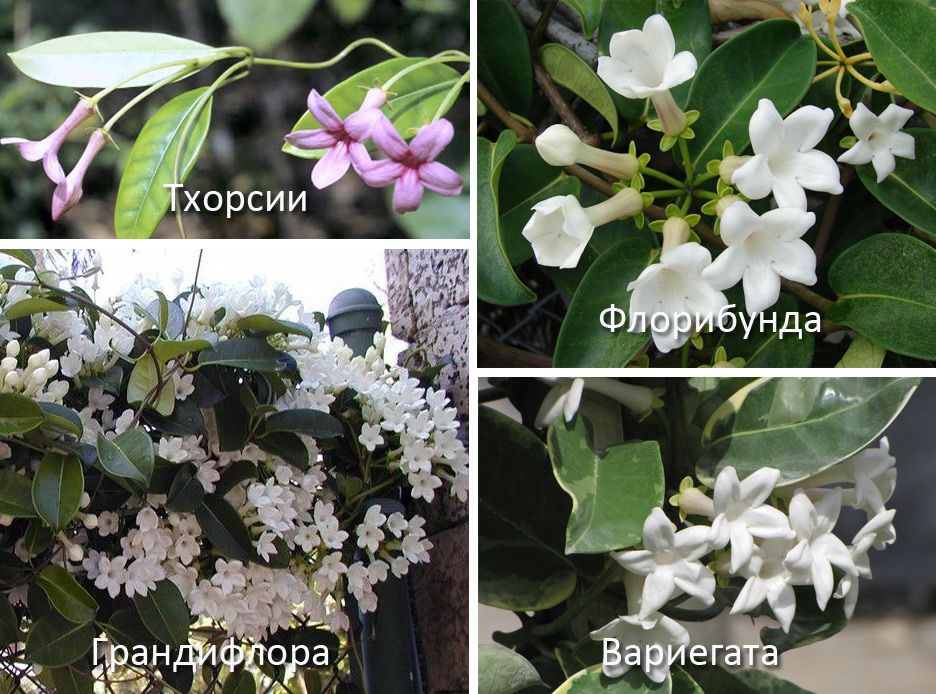
| Floribunda (profusely flowering). | White flowers, up to 6 cm in diameter, resemble stars in shape. |
| Variegata or variegated. | It has distinctive leaf coloring—stripes and white, yellow, or green spots. The leaves are slightly rounded. |
| Acuminata. | It has cream-colored flowers. |
| Grandiflora. | It has a larger inflorescence of 30 flowers than other species. |
| Thorsii. | It has a larger inflorescence than other species, consisting of 30 flowers of a pinkish hue. |
Basic care rules - tables
Caring for this tropical plant in an apartment isn't easy; it requires a lot of time and attention. To ensure the plant feels comfortable year-round and thrives, it needs conditions similar to its native tropics.
| Parameters | Requirements |
| Location and lighting | Any direction. Shading is required on the southern side. Artificial lighting is needed on the northern side. |
| Temperature | In summer - from +18 to +24 C, in winter - from +14 to +16 C. |
| Watering | In winter, once every 7 days; in summer, once every 3 days. Avoid stagnant water and over-watering of the soil. |
| Humidity | Humid air is preferred, or a humidifier should be used. |
| Soil | Preferably, clay-turf and leafy soil, sand, and humus. The optimal pH level is from 5.5 to 6.5. |
| Transfer | Once every 2 years is enough. |
| Top dressing | Fertilizers containing potassium. |
| Reproduction | Possibly by cuttings or seeds. |
Lighting, temperature, watering and humidity - according to seasons
To make the flower comfortable, you need to create the following conditions:
| Time of year | Lighting | Humidity | Temperature |
| Spring/summer | Provide diffused light. Place in a southwest or southeast window. | The plant requires moisture. Misting should be done daily, avoiding dripping. Additionally, use a humidifier or place damp litter on the tray. | The ideal temperature is between 18°C and 24°C, without sudden fluctuations. The room where the plant is growing should be ventilated daily. |
| Autumn/Winter | Can be placed on a south-facing window without shading. Use supplemental lighting to provide 12 hours or more of light. | During the heating season, mist with warm water. The hotter the room, the more often. Wiping the leaves with a damp cloth is recommended. Do not use polish. | The ideal room temperature is between 14°C and 16°C, but not below 13°C. Cool conditions promote flower bud formation. |
Pot, soil, transplant, support
To plant and transplant a plant, you must adhere to the following recommendations:
Pot
For mature vines, the container must be selected in a special way.
Ceramic pots with drainage holes, capable of holding a massive tropical flower, or possibly vases, are preferred.
The size should be slightly larger than the volume of the root system.
Soil
The container where Stephanotis grows needs a drainage layer of at least 3 cm.
Soil composition:
- peat or humus (3/7);
- sand (2/7); leaf soil (1/7);
- clay-turf soil (1/7).
This mixture must be disinfected before use.
Transfer
A young, fast-growing vine should be repotted twice a year. A mature plant should be repotted no more than twice every three years. A signal to repot is when roots emerge from the drainage hole or the substrate begins to dry out faster than before. Repotting is best done from February until the beginning of the growing season.
The flower is transplanted using the transshipment method to preserve the integrity of the roots that absorb moisture.
The main stages of the process:
- Place drainage at the bottom of the container and fill it with soil mixture.
- Carefully transfer the vine to a new container. If the roots are damaged, add a root growth stimulant to the water.
- Add soil to the plant pot and water. Allow the excess water to drain into the tray, then discard.
Important: Do not replant the vine during its flowering period.
Support
Stephanotis, a fast-growing, climbing vine, requires support. In its natural habitat, this vine twines around a nearby object or plant.
To support the stem, an arch-shaped structure is most often used, which can be made from strong wire. The wire should be bent into an arc and placed in the pot. Other structures can also be constructed or purchased ready-made ones made of plastic.
Top dressing
Stephanotis should be fed once every two weeks, especially during bud formation (April to May). A complex fertilizer with a high potassium content is recommended.
Fertilizers containing nitrogen have a negative effect on flowering.
Flower and fruit
The indoor Stephanotis blooms in summer or early fall. Flowers form clusters of approximately 10. Madagascar jasmine is monoecious. Artificial pollination should be done with a fine artist's brush, transferring pollen from the stamens of some flowers to the pistils of others.
Important: Do not place the flowering vine in a bedroom or child's room, as prolonged inhalation of its aroma can cause migraines and discomfort.
Stephanotis fruits take nine months to ripen. The berries can reach 10 cm in size, initially green, then turning yellow and shriveling. After the seeds ripen, the fruit bursts open, releasing the seeds. Each fruit contains an average of 100 seeds. Each seed has a fluffy parachute, which allows it to float on the wind over long distances. To preserve the seeds before ripening, place a nylon bag over the fruit.
Reproduction
Stephanotis can be propagated in several ways:
- seeds;
- cuttings.
Seeds
- Soak the seeds for two days.
- Prepare a container and soil for planting. A sterilized mixture of peat and sand (50/50) is suitable as soil.
- Fill the container with soil and moisten it before sowing.
- Press the seeds into the prepared substrate.
- Cover the container with a glass jar and place it in a light environment. The temperature should average 26°C.
- After drying, moisten the soil with a spray bottle, being careful not to over-water. Remove any accumulated condensation from the glass with a napkin.
The seeds will germinate in approximately two months. Once new foliage appears, transplant the cuttings into small containers filled with potting mix.
Important: When daylight hours are short, young shoots require illumination.
cuttings
It's very difficult to root the flower without the use of phytohormones. Rooting is best done in the spring and summer. The main stages of the process are:
- Prepare cuttings—slightly woody ones with two leaves. The cut should be made 2 cm below the node and treated with Kornevin.
- Place the prepared cuttings into a container with sand, deepening them by 1.5 cm, and cover with glass.
- Rooting occurs with bottom heating and timely moistening; this takes approximately 3 weeks.
- Once the cuttings have rooted and leaves and new shoots have emerged, the seedlings should be replanted into containers up to 9 cm tall. Place them in a bright location where the average temperature is 18°C (64°F). The acceptable nighttime temperature is up to 14°C (55°F).
- Grown rooted plants need to be replanted into more spacious pots.
Care errors, diseases, and pests - table
Due to improper care, Stephanotis loses its attractiveness and stops blooming.
| Error | Manifestation | How to fix, prevention |
| — Drafts, a sharp drop in temperature. | The leaves are falling. | Place the flower away from drafts at an optimal temperature. |
| — Not enough light. — Hard irrigation water. — High air temperature. |
The leaves turn yellow and fall off. | — Put the flower in the light. — Water with water that has been standing for at least 24 hours. — If it’s hot, increase the humidity. |
| — Too much nitrogen. — There is not enough light. — The plant is resting. |
Does not bloom. | - Do not overfeed with nitrogen. — Use phytolamps. — During the dormant period, place in a cool place. |
| Lack of nutrition. | Growth has slowed or stopped. | Fertilizing the flower, especially during the growing season. |
| — Drafts. — Lack of watering. — Change of place. |
The buds are falling off. | — Avoid drafts and dry soil, maintain moderate humidity. — Do not twist or move during the flowering period. |
Improper care weakens the flower, making it more susceptible to diseases and pests.
| Pests and diseases | Manifestation | Treatment | Prevention |
| The root and base of the stem rot. | The roots and stems darken and decompose. | The disease can be cured at an early stage by replanting the flower in a completely replaced substrate, removing rotten roots, and treating with Fundazol. | — Compliance with watering regimes. — Soil disinfection. — Preventing drafts and temperature changes. |
| Powdery mildew | In the early stages, a white, powdery coating appears on the leaves. Gradually, the leaves become covered in spots on all sides, interfering with normal photosynthesis. As a result, they dry out. Then, the flower dies. | Remove affected leaves. Treat the plant with a specialized preparation, such as Fundazol. Do not spray the leaves during treatment. For prevention or at the onset of the disease, you can treat the plant with a solution of potassium permanganate: 2.5 g per 10 liters of water. A total of 3 sprays should be applied every few days. | — Observe the watering regime. — Place the flower in a sunny place. |
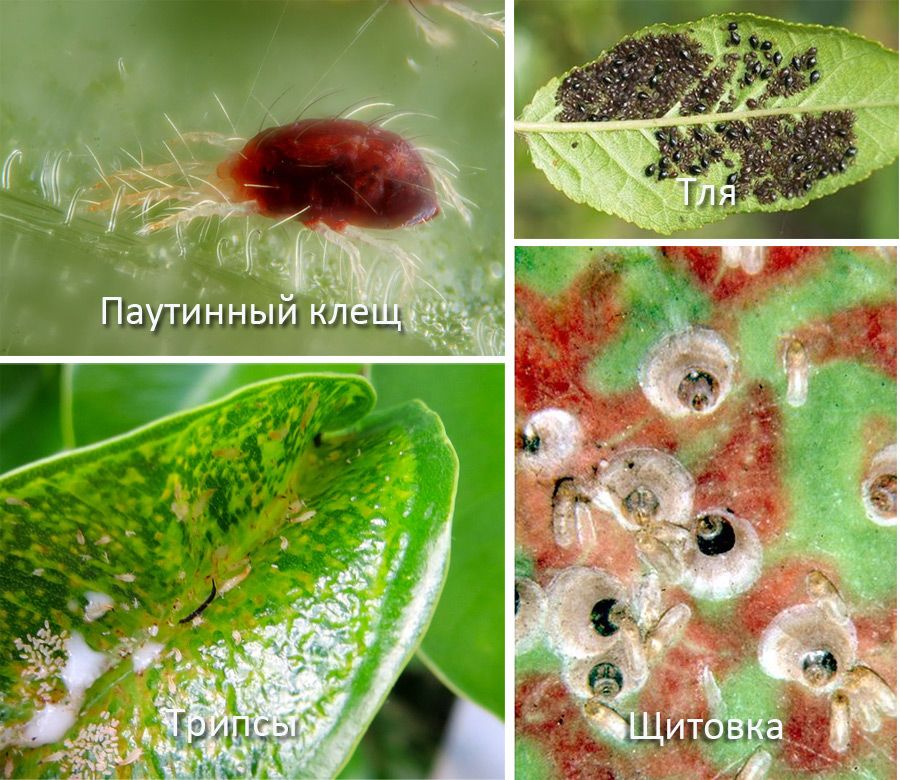
| Fungus gnat | The danger comes from insect larvae that feed on young flower roots. | You can control the pest by spraying Raptor near the flower. Use Mukhoed against mosquito larvae. To ensure the product has time to take effect, avoid watering the soil for 5 days. | — Do not allow the soil to become acidic, follow the rules and watering schedule.
— Catch insects with sticky traps or repel them with the smell of citrus. |
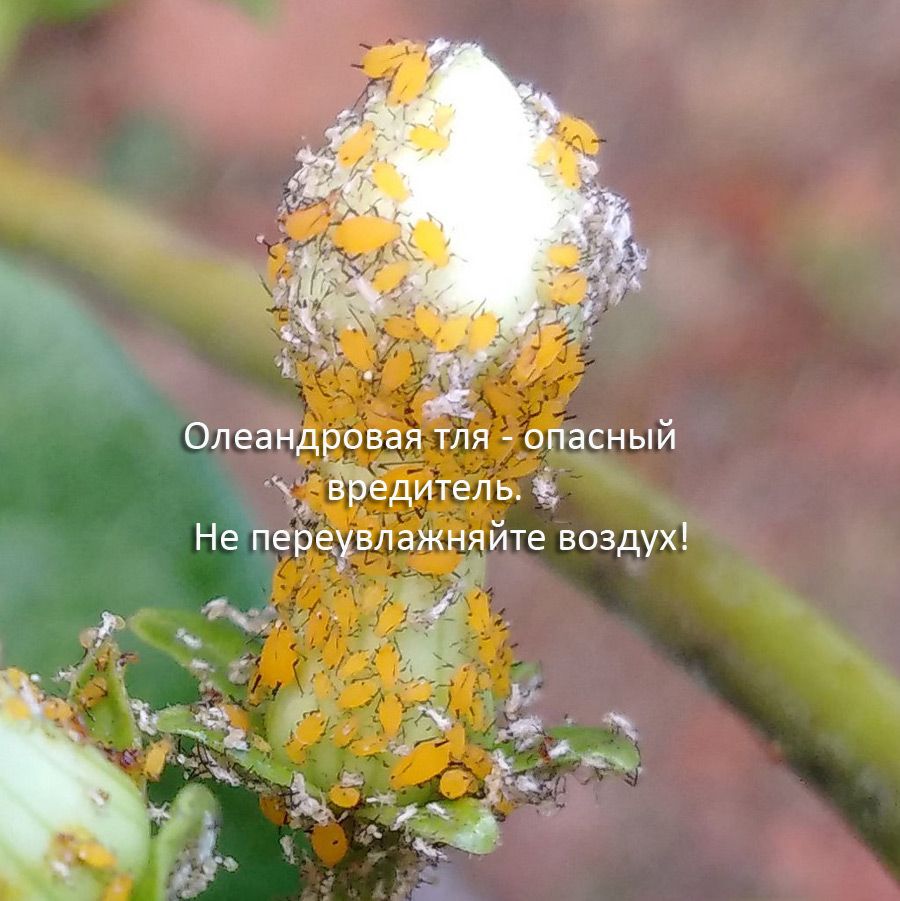
| Aphid | A sugary coating appears on the leaves, which then become deformed and die. | Special products are used against these insects: Aktara, Actellic, and Decis. Treat the flower with the product and repeat after 7 days. It is recommended to alternate between different products. For severe infestations, repeat the treatment three times. At the first sign of infection, simply wash the leaves with warm water. Treatment with a soap solution gives excellent results. | Maintain an optimal level of humidity in the air where the flower grows, since aphids are present in over-humidified air. |
| Scale insect | It feeds on the flower's sap. As a result, the leaves turn yellow and fall off, and the flower itself dies. | Treat the plant with pesticides, such as Fitoverm, several times. Repeat treatment once a week until the pest is completely eradicated. Immediately separate any plant infested with scale insects from other plants. Wipe the leaves with a solution of laundry soap or a weak solution of vinegar essence. | After getting rid of the insect, check the plant from time to time for its presence, as it may appear again. |
Signs
Almost every houseplant is associated with certain omens, superstitions, and myths. It's generally believed that when brought into the home, it spreads its energy. There are also beliefs about the Stephanotis flower. According to one, this plant protects a woman's home from men (for example, protecting a bride). Another, on the contrary, says that if properly cared for, it will attract a soulmate or harmonize an existing relationship. And its blooming, which happens extremely rarely, is a good omen. It's not for nothing that it's called the "bride's flower."
Don't pay too much attention to the myths and superstitions surrounding this flower, especially those so contradictory. Just remember that this plant, with its stunning aroma and exotic appearance, has poisonous sap. This has no effect on household members, as long as the poison doesn't enter the body.
Stephanotis must be kept out of the reach of children and animals and handled with gloves.