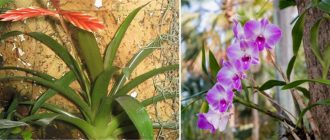
Strelitzia, or Strelitzia (from Latin Strelitzia), is a genus of evergreen herbaceous plants. It belongs to the Strelitziaceae family. It is native to South Africa. The genus and one of its species were named in the 18th century in honor of the English queen Charlotte of Mecklenburg-Strelitz, a lover of flowers.
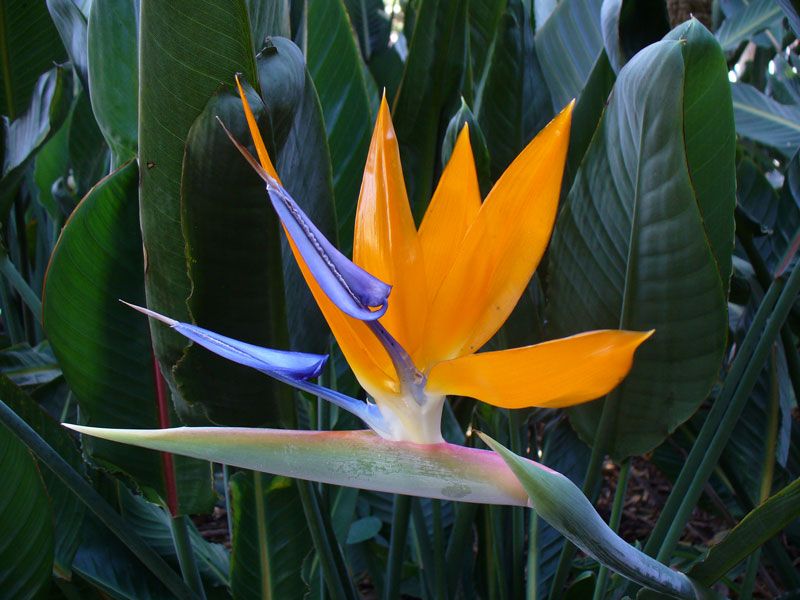
Description of Strelitzia
In the wild, it grows from 2 to 10 meters in height. The leaves are oval, similar to banana leaves, but have long petioles that fan out from the rhizome. In tall species, the petioles form a pseudo-trunk, similar to a palm tree. Leaf length can range from 30 cm to 2 m.
Flowers on a long, straight peduncle are gathered in horizontal inflorescences. Their unusual shape resembles bright, whimsical crested birds. South African tribes call the plant "crane." The flowers have bracts in the form of large boat-shaped wrappers from which the petals emerge.
There are six petals in total: three outer and three inner. Their coloring can be white or a combination of orange, purple, and blue, depending on the species. Flowering typically occurs in spring and summer.
The rosette of leaves has 5-7 peduncles. Up to 7 flowers can open sequentially on the last one. The flowers produce abundant sweet nectar, which attracts sunbirds, which pollinate the flower in the wild.
Types of Strelitzia
There are 5 types:
| View | Description | Leaves | Flowers Flowering period |
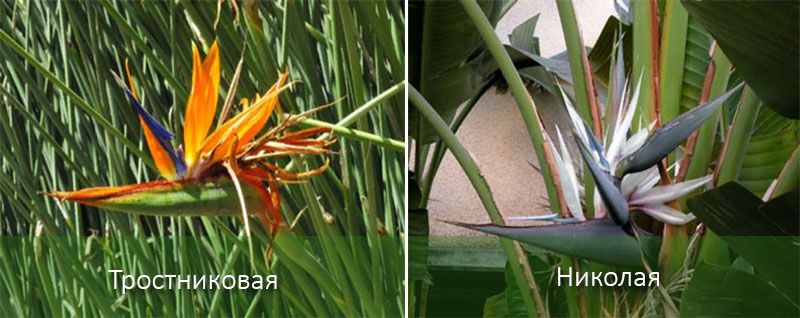
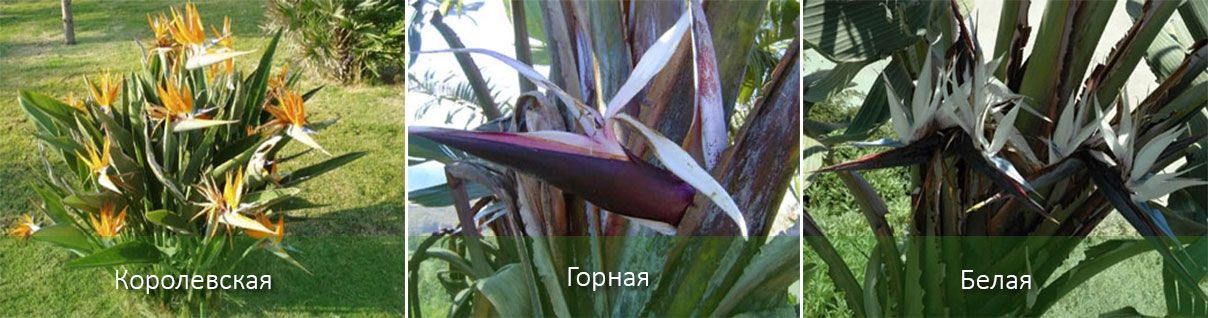
| Royal (Strelitzia reginae) or bird of paradise. | The ancestor. Described in the late 18th century. In the wild, it grows up to 3.5 m. It is the best known. Cultivated indoors. | Oval shape, length 15-40 cm, width 10-30 cm, petiole 50-70 cm. | Orange, purple, and blue. 15 cm in size. A single stem can bear up to seven flowers. Starts in winter, ends in summer. |
| Strelitzia nicolai. | It bears the name of the Grand Duke of the Russian Empire, Nikolai Nikolaevich. In the wild, it grows up to 10-12 meters tall and has a tree-like pseudo-trunk. The unripe seeds are eaten, and the dried petioles are used to make rope. | They reach 2 m, on long petioles. | White and blue. Up to 50 cm in size.
Spring-summer. |
| Reed (Strelitzia juncea) | Its blooms are similar to those of the regal variety. It was classified as a separate species in 1975. South African botanist R.A. Dyer demonstrated the genetic differences between these species. It is cold- and drought-resistant. | The narrow ones resemble needles or reeds forming a fan. | Bright orange and blue. Blooms 4 years after planting. Blooming constantly. |
| White (Strelitzia alba) | It can grow up to 10 m in height. It is grown indoors, provided there is sufficient space for both the root system and the above-ground part. | Grayish-green, up to 1.5-2 m. | White.
Spring-summer |
| Mountain (Strelitzia caudate) | Described in 2016, it is rare and grows in South Africa. It can grow up to 8 m. | Smooth with clearly defined veins. | Size up to 45 cm, white.
Spring-summer |
Caring for Strelitzia at Home
Strelitzia is an easy-to-care-for plant. To ensure good flowering, follow these home care guidelines:
| Factor | Spring/summer | Autumn/Winter |
| Location/lighting | An east or south-facing window with bright light. Shade from the hot sun during the day, place on a balcony or in the garden. Protect from drafts. | South, west or east side, use additional lighting if necessary. |
| Temperature | +22…+27 °С | +14…+15 °С. Temperature fluctuations during the day are recommended. |
| Humidity | 70%. They use a warm shower and a tray with wet pebbles. | No more than 60%. Spray the crown periodically. |
| Watering | Drink plenty of boiled or filtered water. | They are cut back, allowing the soil to dry out to about 1 cm from the top. |
| Top dressing | Fertilizers for flowering plants are recommended. Mineral fertilizers are applied twice a week, and organic fertilizers are applied several times a year. | No need. |
Transfer
Young plants are repotted annually in the spring into a container 3-5 cm larger than the original. Mature plants are repotted after 3-4 years. Large plants may require a tub. Repotting is done by transshipment.
Place a drainage layer in the prepared container, then add a layer of new soil and the plant with its root ball. Any damaged, bruised, or rotted roots are removed, and the pruned areas are sprinkled with crushed activated charcoal.
After this treatment, repot the plant. Add fresh soil to the empty spaces in the container, shaking it gently. Water the plant and leave it in the shade for a while to acclimate.
Reproduction
Strelitzia reproduces in two ways:
- seed;
- vegetative.
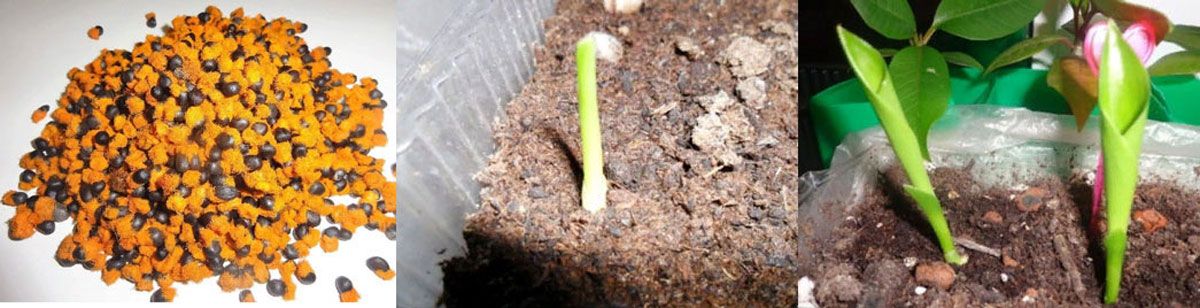
Seeds can quickly lose their germination capacity, so use fresh ones, preferably no older than a year.
- They are soaked for 2 to 24 hours in hot water (40 °C), you can use a thermos.
- A small pot with drainage holes is filled with prepared soil to ⅔ of its volume.
- Add sand to the moistened soil and plant the seeds no deeper than 2 cm without sprinkling them on top.
- Cover the container with film and leave in a warm place.
- Water regularly with warm boiled water.
- The seeds take a long time to germinate, from 1.5 months to 0.5 years.
- Small greenhouses with sprouts are ventilated.
- After rooting and the appearance of 2-3 leaves, the seedlings are carefully transplanted into a new pot without damaging the delicate root and fertilized.
- The plant gains strength slowly. It will bloom after four to eight years.
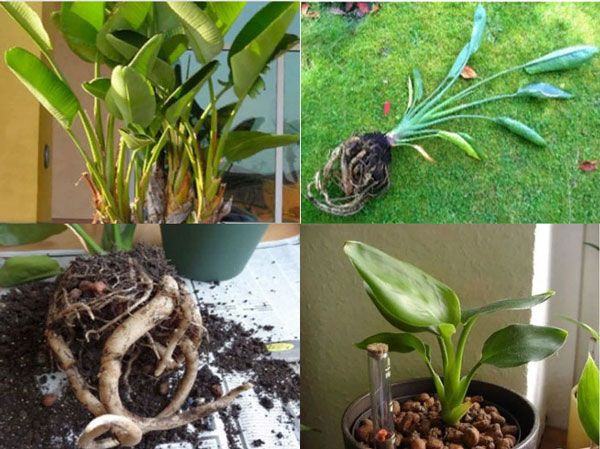
Vegetative propagation involves replanting young shoots from an adult plant. This can be done on a seven-year-old plant after flowering. This must be done very carefully, as the roots are very delicate. Injury can cause the plant to become diseased or even die.
- Use containers with a diameter of 20 cm and fill them with prepared soil.
- Using a sharp knife, separate young shoots from the mother rhizome.
- The cuts are sprinkled with activated carbon powder.
- Avoid compacting the soil to avoid damaging the roots. Shake the pot gently to distribute the soil evenly.
- The container is changed as the flower grows. In about two years, the plant will gain strength and be ready to bloom.
Difficulties in caring for Strelitzia, pests and diseases
Strelitzia rarely gets sick, but you need to know what problems can arise:
| Leaf manifestations, other symptoms | Cause | Measures |
| Darkening and rotting of petioles. | Excessive moisture or low temperature, or fungus. | It's recommended to adjust watering: the colder it is, the less watering. Infected areas of the rhizomes are removed, treated with a fungicide, and the cut ends are dusted with activated charcoal powder. |
| Yellowing. | Lack of nutrients or low temperature. | Feed regularly and place in a warm and well-lit place. |
| Drying at the edges. | Dry air in hot weather. | Spray the foliage. |
| Deformation, twisting. | Lack of light and nutrients. | Provides bright lighting and additional nutrition. |
| Death of buds. | Movement during flower bud formation. | It is recommended not to move it during flowering. |
| White spots and wilting. | Thrips. | Remove diseased leaves, wash healthy ones frequently and treat with insecticide. |
| Yellow and brown spots, change in hardness, sticky discharge that turns into a white coating. | Scale insect. | Remove the insect with a sponge, treat with a solution of laundry soap and Confidor and Aktara, repeat after 3 weeks. |
| Small white spots and web-like formations. | Spider mite. | A warm shower and treatment with Actellic are used. |
| The flower does not grow. | Tight capacity. | Transplant into a larger container with fresh soil. |
Strelitzia flowers delight the eye with their vibrant and unique appearance. They bloom for several months to six months. They are used in bouquets and last for two weeks or more.