
Tamarix is a plant belonging to the Tamarix family, which includes approximately 70 species. This garden crop prefers hot, arid climates.
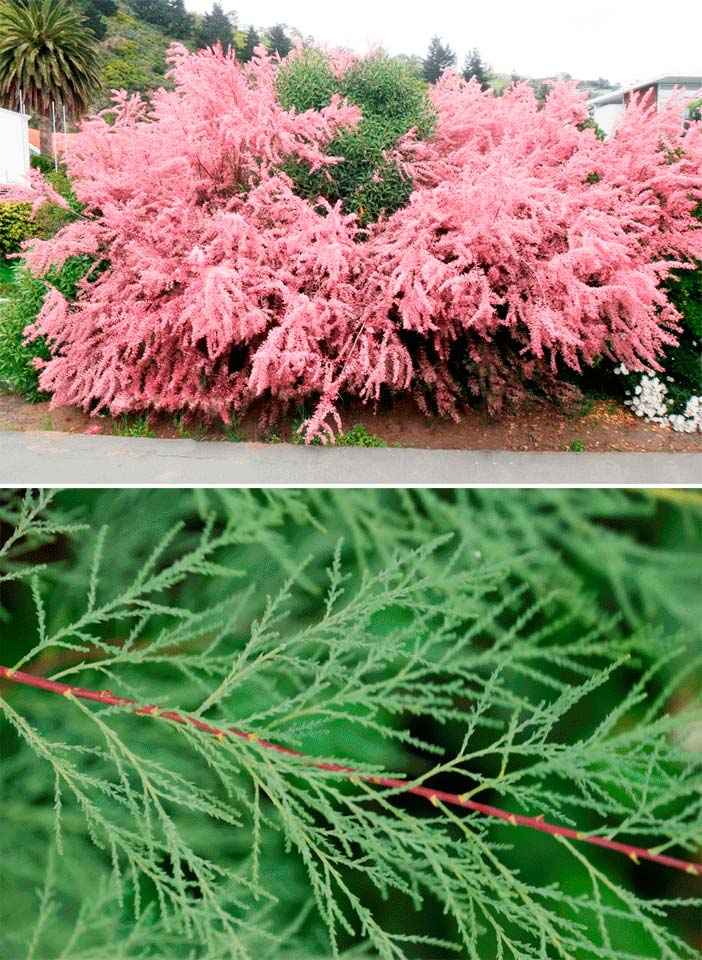
In the wild, tamarisk grows in salt marshes, deserts, and mountainous areas, as well as on rocky and sandy shores. Its distribution includes the Caucasus, Southern Europe, Africa, and Central Asia.
Content
Description of tamarisk
Tamarix is an easy-to-grow perennial plant with a highly decorative appearance. Shrubs and trees are formed from orange or red branches. Mature plants range in height from 1.5 to 12 meters. The dense, evergreen crown is formed by flexible shoots. Flowering begins in May and lasts until the end of August. This results in the formation of a complex fruit. This is a pentagonal-pyramidal capsule containing small seeds adorned with a tuft.
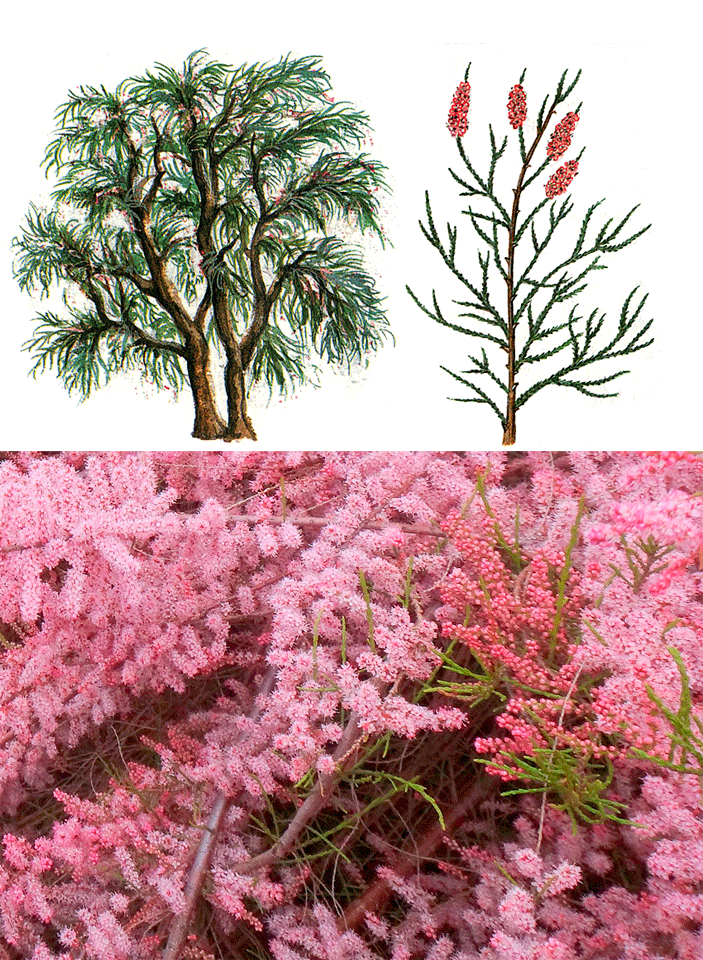
The scale-like leaves are sessile and small in size. They can be emerald, dark green, or glaucous in color.
Distinguishing features also include rapid adaptation, drought resistance, and a strong aroma. Because of the latter, tamarisk is considered a honey plant.
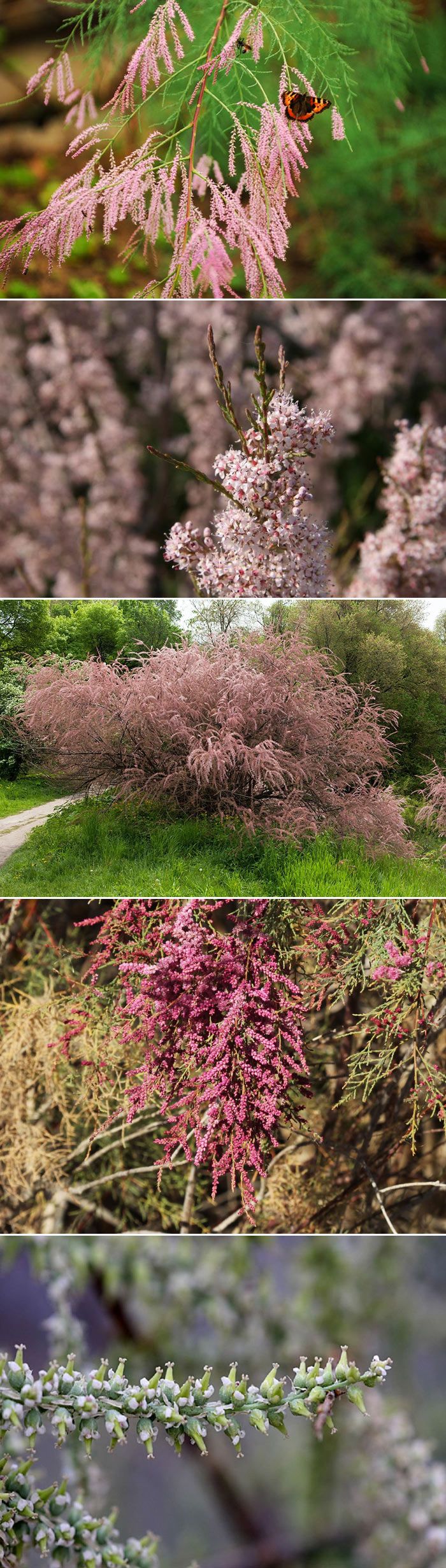
During flowering, the bushes are covered with brightly colored, spreading panicles or racemes. These are composed of small corollas that resemble small spheres. They are often used to prepare remedies with a tonic and laxative effect. Many gardeners plant this perennial to strengthen sandy soil. Planting is not particularly difficult. Pollution from city streets will not negatively affect the growth of this plant.
Varieties of tamarisk
Winter-hardy varieties are especially popular and are often planted in temperate climates.
| View | Description Height (m) |
Peculiarities |
| Branched (most branched) | The crown is vertical. At the ends of the branches are green shoots with awl-shaped leaves 1.5 cm long. Up to 2. |
Pink, racemose inflorescences. Blooms from June to September. |
| Loose | It has a spreading crown. The leaf blades are ovate. The branches can be green or glaucous. Flowering lasts for two months. It is undemanding regarding soil conditions. Up to 5. |
Pink corollas are collected in lush brushes. |
| tetrastaminate | The arching branches have a red tint. The emerald leaves are lanceolate. Flowering occurs in April-May. It is long-lived and highly drought-resistant.
Reaches 10. |
The inflorescences can be colored in various shades. The petals are rounded. |
| Elegant | It is formed from leathery shoots, colored chestnut or brown. The axils are speckled, and the leaves are pointed. The blooming corollas decorate the garden throughout the warm season.
Not higher than 4. |
The coral-colored flowers are collected in panicles. |
| Meyer | Lush bushes can be damaged by a sudden drop in temperature. The bark has a reddish tint, and the leaf blades are bluish-green.
Up to 3. |
The inflorescences are colored soft pink. |
Planting tamarisk in open ground
Tamarix is a beautiful, resilient, and undemanding plant. To achieve maximum decorative effect, you should:
- Find a suitable planting location. The area should be well-lit. This is because tamarisks love sunlight. If planted in the shade, they will wither.
- Prepare the soil. Garden plants do not grow well in heavy, overly waterlogged soils. To make the soil lighter, add peat or sand. If the soil is highly acidic, use lime.
- Choose a planting time. Tamarix can be planted in the fall or spring. The latter is preferable due to the plant's faster establishment.
It is placed in pre-prepared holes, each 60 cm in diameter. A mixture of humus and wood ash is placed at the bottom.
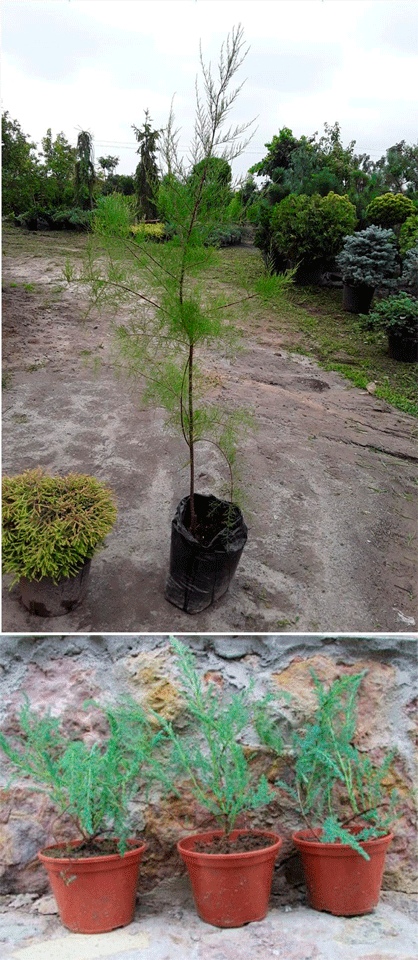
Then the hole is filled with a mixture of soil, peat, and sand. All components are used in equal proportions. After planting, the soil is compacted, and the seedlings are watered with warm, settled water.
Caring for tamarisk in the garden
For the first 3-4 weeks, protect the tamarisk from direct sunlight. The cover is removed once true leaves appear on the shoots. Watering frequency depends on the age of the seedling.
To prevent liquid evaporation, the soil around the plant is covered with a layer of mulch.
Watering frequency is determined based on weather conditions. If the summer is excessively rainy, the gardener should not water the tamarisk tree themselves.
After moistening, the soil around the tree trunk must be loosened. Weeding is another important agricultural practice. Timely weed removal ensures the garden plant receives sufficient nutrients.
Organic fertilizers are applied to the soil in the spring. In the summer, tamarisk is sprayed with solutions containing potassium and phosphorus.
By choosing winter-hardy varieties, gardeners don't have to worry about covering them until temperatures drop to -28°C. To protect the shrub from hypothermia, the roots are covered with spruce branches and sawdust. The trunks of woody varieties are wrapped in plastic film and thick fabric. If everything is done correctly, the plants will survive even severe frosts.
Formation
Tamarix is pruned in early spring. If pruning is for sanitary purposes, only old and damaged branches are removed. These can be damaged by mechanical stress and sudden drops in temperature. Frost-bitten parts must be removed.
Pruning is often done to create a properly symmetrical shape. In any case, stems should only be shortened before the buds swell. If all recommendations are followed, the length and number of inflorescences will remain unchanged, and the bush will become more luxuriant.
Tamarix can be pruned in the fall. This is most often done to maintain a well-groomed and attractive appearance. In these circumstances, wilting inflorescences and excessively elongated stems are pruned.
The procedure results in a more stable plant position, eliminating the need for supports. Systematic pruning prevents the crown from becoming too dense and accelerates the rejuvenation of mature bushes. In this case, branches are removed at the root.
Reproduction
Tamarix is propagated in two ways.
Seeds
Growing a seedling using this method is quite difficult. This is because the seed loses its viability too quickly. Therefore, the sooner it is planted in the ground, the higher the chance of viable seedlings. First, the seeds are planted in containers filled with prepared soil. For the next two years, the plant must be kept in a warm room. Planting in the ground takes place in the third year;
Vegetative method
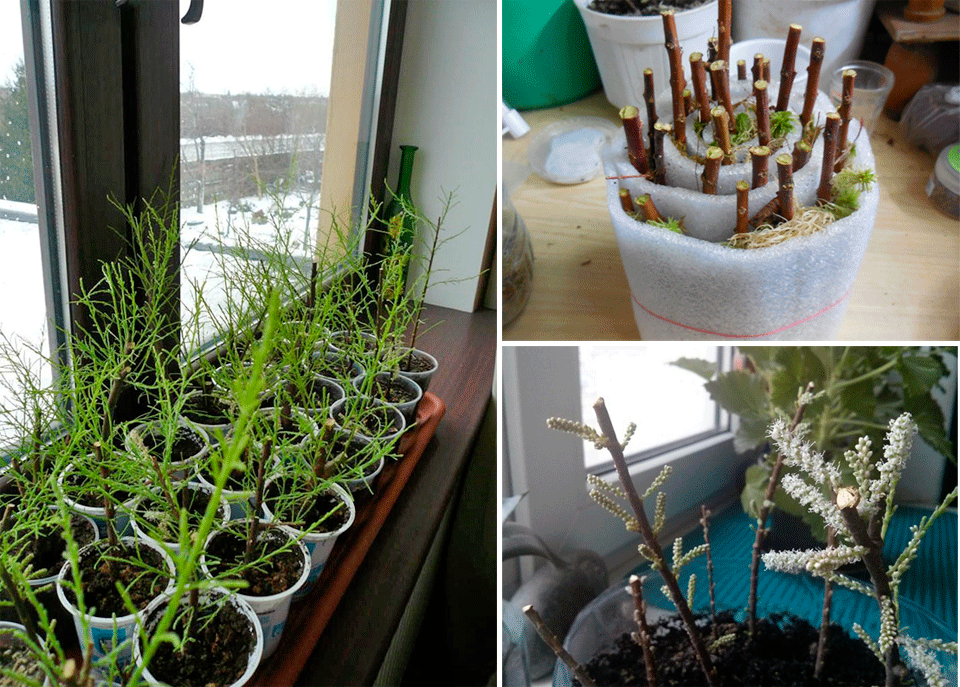
This method is the most popular. In this case, young branches separated from a mature tamarisk are used for propagation. They should be at least 20 cm long. The cuttings are taken in the fall. Immediately after separation, the cuttings should be placed in a container filled with warm water. After the first roots appear, the branches are planted in a container filled with a mixture of sand and peat. The cuttings are kept indoors until late spring. They require good light.
In addition to cuttings, layering can be used. These are also taken in the spring. The branch, which has already developed bark, is dug into the soil, paying particular attention to anchoring it. The cut is pre-treated with a growth stimulant. In this case, root formation will be complete in August.
Diseases and pests
Tamarix is resistant to most pests. If there are plants susceptible to them nearby, the bushes should be treated with insecticides as a preventative measure. Fungal diseases most often develop during rainy periods. In this case, the soil must be treated with fungicides. Affected branches should be destroyed.
Top.tomathouse.com recommends: tamarisk in landscape design
This garden plant can be used to enhance any garden plot. The bushes are used to create hedges and group arrangements. In the latter, the plant typically occupies the centerpiece. Bushy beaded tamarisks (another name for tamarisk) add volume and originality to mixed plantings.
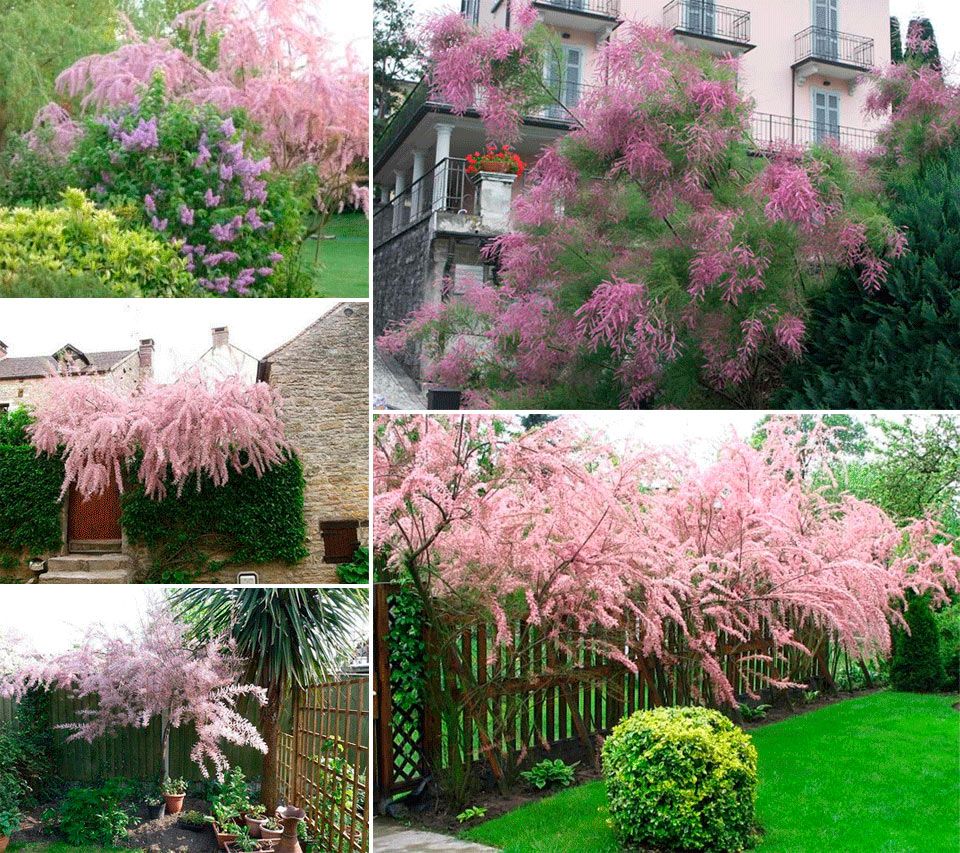
Tamarix can also be planted as a solitary specimen. Experienced gardeners recommend selecting several different varieties to ensure maximum ornamental value. It is often planted next to dwarf spruce, arborvitaes, and junipers. Kerrias, jasmine, barberry, spirea, and lilacs are also included in this list.
This evergreen and deciduous plant is successfully cultivated in garden plots. Various species and varieties are planted to stabilize banks and sandy soils. Some can be grown indoors. Tamarix looks harmonious in mixed borders and in regular pots. Elements such as decorative streams and natural stones are often placed near shrub- and tree-like plants.




I received a poor-looking seedling, with completely bare, hard branches—a dried-out tamarisk. I trimmed a few branches, dug in, watered it, and forgot about it. After a while, I was amazed to see young shoots of green branches! A beautiful tamarisk!