Yew (Latin Taxus) is an ornamental garden plant in the Yew family. It can be a tree or a shrub, depending on its membership in one of eight species. Several varieties of conifers, also known as yews, are found in Europe and Asia, and one in North Africa. The most frost-hardy yews grow in the Far East and Norway. Wild yew species are gradually disappearing, and their cultivation by gardeners is increasing, as they require minimal care and blend well into the landscape.
Content
Description of the yew tree
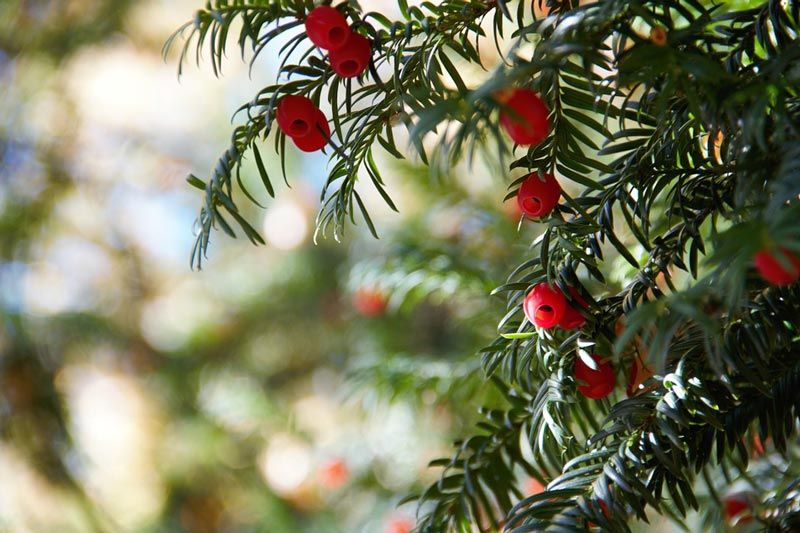
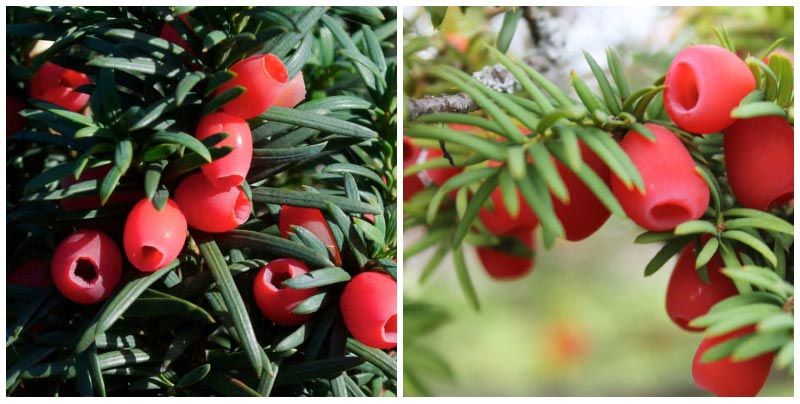
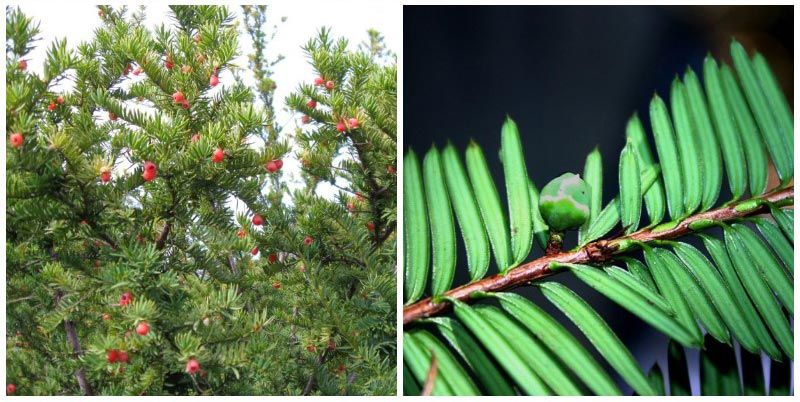
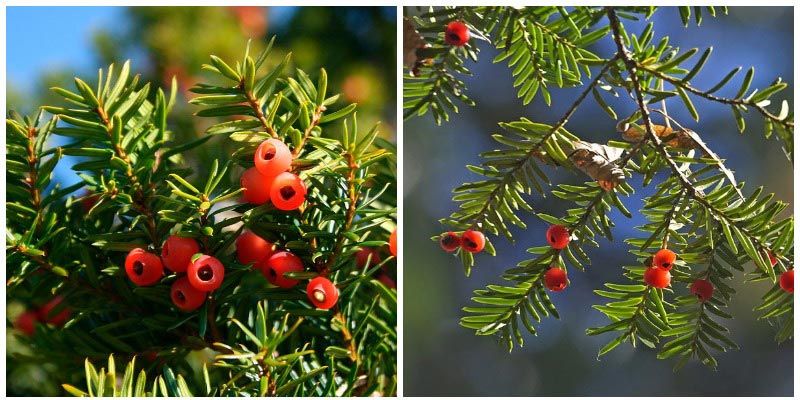
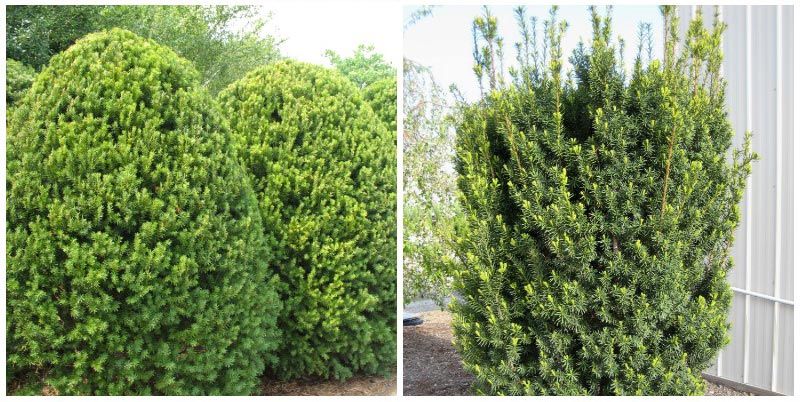
The yew tree has dense branches with dark green, soft needles, forming a rounded or cylindrical crown with multiple points. Shrub species grow no more than 10 meters in height, while trees reach 20 meters or more. The tree's reddish-brown trunk, approximately 4 meters thick, is covered with small scales. Female yew trees produce scarlet berries 5-8 mm in diameter, which beautifully break up the dense foliage, making male bushes with their single, round cones less popular.
Any part of the perennial contains toxic substances that are widely used for medicinal purposes, which is why yew is protected by government environmental protection agencies.
The slow-growing yew has strong, pest-resistant wood. Its density and resistance to rot make it unpretentious in growing conditions and tolerant of prolonged periods of sun exposure. Yew was once used to make furniture and build log houses.
Types and varieties of yew
| View | Crown | Features / Variety | Height, m |
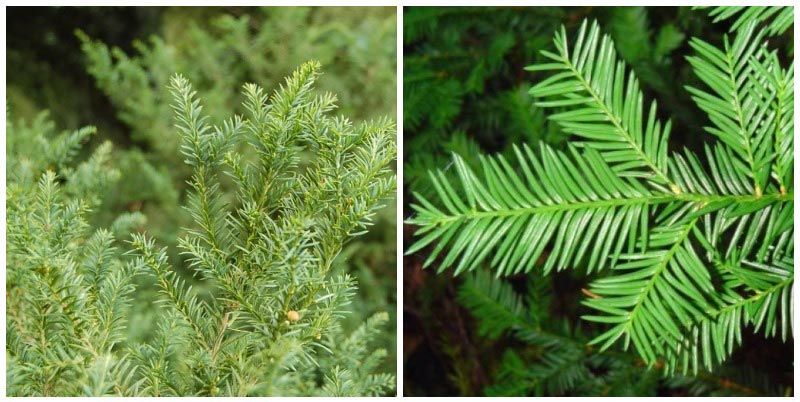
| Berry | Cylindrical, ovoid, sometimes multi-apexed. | Found in mountainous forests in the Caucasus, Asia, and Europe. Dense needles are distichous on the lateral branches and spiral on the upper branches. They are deep green, glossy on the upper side and velvety with a yellowish tint on the underside. The tree's red trunk is layered, uneven, and mottled with grayish spots.
|
1.7-2.7 |
| Canadian | Pyramidal. | A frost-hardy, prostrate shrub native to northern America. Its upward-growing branches are covered with dense, pale, curved needles.
|
1-2 |
| Pointed | Oval, wide, loose. | It grows in the Far East and Japan. The sickle-shaped, sparse needles are dark green and pale green underneath. The stems are yellow at the top and turn brown below. The tree bears pink-hued berries. It is a shrubby species up to 1.5 m tall.
|
0.7-2 |
| Short-leaved | Wide, cone-shaped. | A tree species native to North America with drooping branches growing perpendicular to the trunk. The two-rowed, yellowish needles are 20 mm long. The fruits are bright red. This shrub-like form grows up to 5 m tall. | 1.5-2.5 |
| Average | Rounded, lush. | The needles are two-rowed, 28 mm long, with a distinct midrib. The ascending branches are olive-green, with reddish tips. Frost-hardy.
|
5 |
Planting yew in open ground
In warm southern and southwestern regions, yew seedlings are transplanted into open ground from early autumn to late October. Plants with closed roots are planted for a week in late August. The same time period is recommended for planting perennials in cooler climates. Generally, the entire period from August 15th until the last days of autumn is considered favorable for planting shrubs or trees.
When choosing a location for your yew, consider several factors to ensure a strong and healthy root system. Yew does not like excessive moisture or highly acidic soil. For the initial planting, it's best to purchase a potting mix enriched with minerals and nutrients for ornamental garden plants. You can also make your own mixture using peat, turf, and coarse sand in a 2:3:2 ratio. Mineral fertilizer can be added.
A 70-75 cm deep hole for planting a young plant should contain a 20 cm drainage layer and enriched soil mixture. Coarse river sand or crushed stone with a particle size of 0.5-50 mm can be used for drainage.
After placing the plant in the hole, fill it with prepared soil and compact it so that the root collar remains above the surface. Then, immediately water thoroughly. It is recommended to cover the soil around the trunk with a layer of compost mulch.
When using yew rows or hedges in a garden landscape, trenches of the same depth are dug in the ground, and the bushes are planted at a distance of 150-200 cm or 50-70 cm, respectively.
During the first couple of years, the planted plant should be protected from frequent gusts of wind, or a location without constant drafts should be chosen for planting.
Caring for yew in the garden
Caring for a perennial is not a difficult task, but for healthy growth it is still necessary to carry out preventative measures to protect the bush from pests and possible maximum and minimum temperatures.
Watering
Young bushes need to be watered monthly, while mature plants (over 3 years old) don't require additional moisture. Their spreading root system can draw nutrients from deep soil layers.
Soil
It's advisable to loosen and weed the area around the tree more frequently, especially for newly planted trees. The moist soil around the tree should be loosened to a depth of 10-15 cm. A 10-cm layer of sawdust or peat moss can be applied. This will reduce the risk of yew disease.
Top dressing
A year after applying the first fertilizer during yew planting, the hole should be fertilized again. Agrochemicals containing the necessary components for the bush—potassium, nitrogen, and phosphorus—are well suited for annual autumn feeding. For example, 70 grams of nitroammophoska per 1 m² is recommended, while 100 grams of Kemira, which also contains selenium, is recommended per 1 m².
Trimming
For several years after planting, pruning a bush or tree is not required. Only frost-damaged, dead, or diseased branches need to be removed. Once the yew has grown tall and leafed out, to form a beautiful crown, shorten the branches by no more than one-third of their total length. Trees older than seven years are unpretentious and will tolerate even the shortest branch lengths, continuing to grow luxuriantly. Yew should be pruned in early spring, before the first buds appear.
Transfer
Replanting a perennial plant in a favorable and thriving location is easy. This should be done in the spring. The process is the same as for planting a bush. Dig a hole 15-20 cm deeper than the root ball containing the plant, line it with a 20 cm drainage layer, and fill it with nutritious soil mixture. The root collar remains above ground and is covered with mulch. Then, water thoroughly with mineral fertilizer.
Wintering
Yew is frost-hardy and rarely suffers from hypothermia in winter, especially with heavy snow cover. If winter snowfall is light, the tree needs to be protected from freezing. To do this, build a frame around the trunk and cover it with a breathable material, such as spunbond. Avoid using roofing felt or burlap, as this will worsen the damage caused by excess moisture in the spring. Once the ground has warmed sufficiently, the covering material can be removed.
Since the aggressive spring sun rays can damage the delicate needles and young shoots of the yew, it is better to protect the tree from their effects.
Diseases and pests
Even such an easy-to-grow plant as the yew can become ill in unfavorable growing conditions, such as excessive moisture and shade. The plant is also susceptible to common garden pests.
| Problem | Reasons | Elimination measures |
| Branches and needles turn yellow, fall off, and dry out. | Invasion of pine-eating pests: yew scale insects, spruce leaf rollers, pine cutworms. | Every spring, spray the trunk and branches with a Nitrafen solution. If re-infestation occurs, treat the area around the trunk with an insecticide such as Rogor, repeating the treatment after 12 days. |
| A brown coating appears on the needles, the tips turn yellow, and the needles fall off. The branches rot and fall off. | Diseases: fusarium, necrosis, brown shoot wilt. These occur when the trunk bark is damaged and infected by various types of fungi. | Remove excess water from the tree's trunk by inserting several plastic tubes 30 cm into the soil. Spray the bush with a copper-rich biofungicide twice a year—at the beginning and end of the growing season. |
Propagation of yew
Vegetative propagation is considered the best method for propagating yew. This is due to the long time it takes for the seeds to germinate—the hard seed coat prevents the seed from germinating.
Seed propagation
Yew seeds should be planted immediately after the fall harvest, as they are no longer usable after a year. They are removed from the reddened fruits, washed, and dried. Since the hard shell delays germination, they need to be chemically treated. To do this, soak the seeds in a sulfuric acid solution for 30 minutes, then rinse and sow them outdoors.
To speed up germination, yew seeds require alternating warm and cold conditions, so the following method is more effective. After washing with acid, the seeds are mixed with sand and sawdust and packed in plastic bags for six months at a temperature of +5°C. In the spring, they are washed and sown in boxes, allowing them to germinate in light at +20°C. In late spring, the boxes are taken out into the garden, hardened off, and transplanted into the soil for further growth.
Vegetative propagation
For shrub and creeping yew varieties, horizontal layering is considered the most convenient. After 3-6 months, the branch will take root. By gradually trimming the connection, it can be separated from the mother tree by autumn.
Cuttings are the preferred method of propagation, especially in the spring before the plant emerges. Cuttings are taken from side branches with a heel, extending from the main trunk. They are then planted for germination in a loose substrate consisting of sand, pine bark, peat, and perlite. It is important to maintain the original orientation of the branches and not turn them over.
Cuttings root successfully at an optimal temperature of +18…+23 °C, moderate lighting and soil moisture.
Top.tomathouse.com informs: the use of yew and its beneficial properties
Many centuries ago, yew groves were felled to produce various household items and furniture from their dense and durable wood, comparable in strength to cedar. Furthermore, the bactericidal properties of yew items in the home were prized. For example, ceiling beams never grew moldy. Because of this, the yew was almost completely exterminated; it is now protected in nature reserves.
The poisonous yew tree can live for 400-500 years. Even with cavities inside its trunk, aerial roots create new shoots and, intertwining with old branches, renew the tree's life. An extract from the needles is considered highly toxic, containing the alkaloid taxine, which can kill humans and animals. Tinctures from the needles are used in the production of homeopathic remedies.
The yew is suitable for landscape design thanks to its contrasting appearance with its vibrant, dark-green, fluffy needles and large, red fruits. The ability to trim its branches short allows gardeners to grow a beautiful hedge, shaping it into any shape. Shrub varieties with trailing branches are considered the most frost-resistant, as they overwinter under snow.