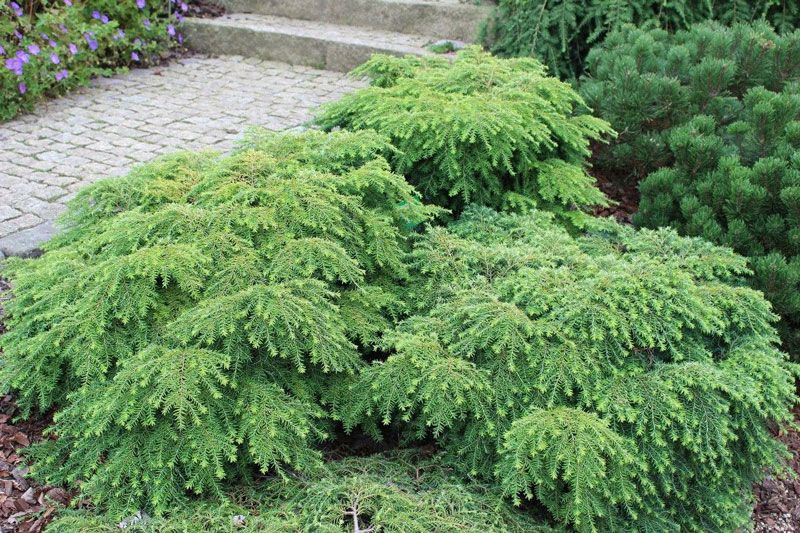
Hemlock is a coniferous evergreen tree of the Pinaceae family (distinguished from the common hemlock). It is native to North America and East Asia. Tree heights range from 5-6 m to 25-30 m. The highest recorded height is 75 m (248 ft).
The plant plays a significant role in maintaining the planet's ecosystem. It's an excellent choice for gardeners. Its varieties are used for ornamental purposes and in the timber industry.
Content
Characteristics
The plant's needles can vary in length even on a single branch. The ends of the shoots are adorned with small ovoid cones. Hemlock grows slowly. Its growth is negatively affected by air pollution and dryness. Seasonal growth ceases in June.
The price of hemlock seedlings ranges from 800 to 1,200 rubles. Larger trees are more expensive than seedlings.
Types of Hemlock
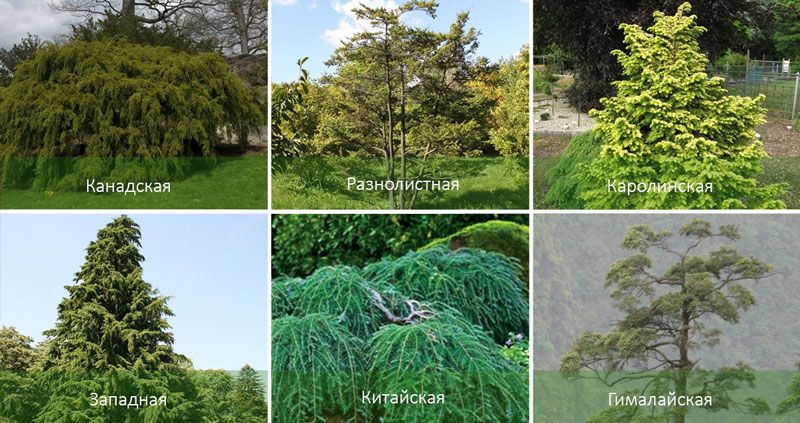
Between 14 and 18 species of this plant are known today. The most common are the hemlocks:
| View | Description |
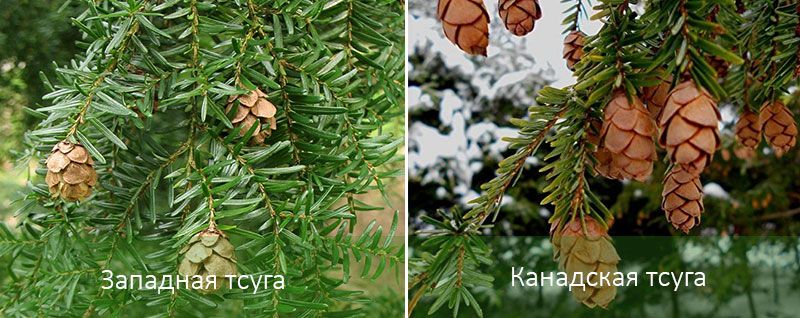
| Canadian | It is distinguished by its colorfulness and diversity. This is the most widespread species, found throughout the temperate zone. Its homeland is the eastern regions of the North American continent. It is cold-resistant, undemanding to soil and moisture. Often it divides into several trunks at the base. The height can reach 25 ± 5 m, and the trunk width is 1 ± 0.5 m. The bark is initially brown and smooth. Over time, it becomes wrinkled and begins to peel. It has an elegant crown in the form of a pyramid with horizontal branches. Young branches hang in an arched manner. The needles are shiny, flat, 9-15 cm long and up to 2 mm thick, blunt at the apex and rounded at the base. They are dark green above, with two white stripes below. The cones are light brown, ovoid, 2-2.5 cm long and 1-1.5 cm wide, slightly drooping. The bracts are somewhat shorter than the seed scales. The seeds are light brown and ripen in October. Each seed is approximately 4 mm long. Ornamental varieties differ in habit and needle color. |
| Heterogeneous | Reaches 20 m. Its native land is Japan. It grows at 800-2100 m above sea level. It has glossy needles and does not tolerate calcareous soils. The buds are small and rounded. The needles have a characteristic linear-oblong shape, approximately 1±0.5 cm long and about 3-4 mm wide. The cones are ovoid, tightly seated, up to 2 cm long. Frost-resistant. |
| Caroline | Found in the eastern North American continent in mountains, gorges, and along rocky riverbanks, it is distinguished by a broad, conical, dense crown and brown bark topped with slender, densely pubescent shoots. It can reach a height of over 15 m. The shoots are a combination of light, yellow, and brown colors. The needles are dark green underneath with two greenish-white stripes. The needles average 11-14 mm in length. The cones are light brown, up to 3.5 cm long. It is characterized by low winter hardiness, especially in temperate climates. It is shade-tolerant. It prefers moderate watering and fertile soil. |
| Western | Native to northern America, this species is more ornamental. Trees are characterized by rapid growth and low frost resistance. They reach heights of up to 60 meters. The bark is thick and reddish-brown. The buds are small, fluffy, and round. The cones are sessile, oblong, and up to 2.5 cm long. In temperate climates, dwarf varieties are usually grown, which must be covered for the winter. |
| Chinese | Originating from China, it boasts decorative qualities, an attractive pyramid-shaped crown, and vibrant needles. It thrives in warm, humid climates. |
| Himalayan | It grows in the Himalayan mountain range at an altitude of 2,500-3,500 m above sea level. The tree is relatively tall, with spreading branches and pendulous limbs. The shoots are light brown, and the buds are rounded. The needles are dense, 20-25 mm long. The cones are sessile, ovoid, 20-25 mm long. |
Popular hemlock varieties for growing in Russia
The Canadian hemlock thrives in temperate climates. There are over 60 known varieties, but the following are the most common in Russia:
| Variety | Peculiarity |
| Variegata | A distinctive feature of this variety is its beautiful silvery needles. |
| Aurea | Characterized by golden-colored tips on the shoots, it can reach a height of 9 m. |
| Globosa | A decorative form with a crown resembling a ball and arched, curved, often drooping branches. |
| Jeddeloh (eddeloh) | A miniature form with a dense crown and short, dense, spiral branches. The bark of the shoots is purple-gray, and the needles are dark green. |
| Pendula | A multi-stemmed tree up to 3.8 m tall with a weeping crown. The skeletal branches droop. The needles are glossy, dark green with a bluish tint. It can be grown as a stand-alone plant or grafted onto a standard tree. |
| Nana | Reaches a height of 1-2 m. It has an elegant, dense, rounded crown. The needles are smooth and shiny. The needles are dark green, while young shoots are bright green and are arranged horizontally. The branches are short, spreading, and point downward. The plant is frost-hardy, shade-loving, and prefers moist sandy or clay soil. The needles are up to 2 cm long and approximately 1 mm wide. This variety is propagated by seeds and cuttings. It is recommended for decorating rocky areas. |
| Bennett | Up to 1.5 m in height, topped with a fan-shaped crown with dense needles up to 1 cm in length. |
| Minute | A form with a crown height and width of less than 50 cm. The length of annual shoots does not exceed 1 cm. The needles are 8±2 mm long and 1-1.5 mm wide. They are dark green above and have white stomatal canals below. |
| Iceberg | Reaching up to 1 m in height, it has a pyramidal, openwork crown and drooping branches. The needles are dark bluish-green and spiky. This shade-tolerant variety prefers moist, fertile, and loose soil. |
| Gracilis | Dark needles. Can reach 2.5 m in height. |
| Prostrata | A creeping variety, up to 1 m wide. |
| Minima | An exceptionally low-growing plant, up to 30 cm in height, with shortened branches and small needles. |
| Fontana | A low-growing variety, up to 1.5 m. Its distinctive feature is the fan-like appearance of the crown. |
| Summer snow | An unusual species of hemlock, up to 1.5 m tall, with young shoots covered with whitish needles. |
| Albospicata | Low-growing trees up to 3 m tall. The tips of the shoots are yellowish-white. The needles are yellowish when they emerge, turning a bright green with age. |
| Sargenti | A variety of hemlock growing up to 4.5 m tall. |
| New Gold | The variety's description resembles that of the Aurea variety. Young needles have a golden-yellowish hue. |
| Macrophile | A widespread variety. Trees with a broad crown and large needles reach heights of 24 m. |
| Microphila | A graceful and delicate plant. The needles are 5 mm long and 1 mm wide. The stomatal canals are bluish-green. |
| Ammerland | Bright green needles and branch tips against a background of dark green foliage create a stunning landscape. The tree rarely exceeds 1 m in height. Its crown resembles a mushroom: young branches grow horizontally, while mature branches typically droop downward. |
| Dwarf Whitetip | A dwarf plant with a cone-shaped form. The needles are white in late spring and early summer, gradually turning green. |
| Parviflora | An elegant dwarf form. The shoots are brown. The needles are up to 4-5 mm long. The stomatal canals are not clearly visible. |
Landing requirements
For planting, select container-grown seedlings. They should be up to 50 cm tall, up to 8 years old, and have green branches. It's important to ensure the root system appears healthy, with sprouted, unclumped roots, as it spreads along the soil surface.
The landing process
Semi-shaded, wind-free, ecologically clean locations are suitable for growing. Fresh, moist, acidic, well-drained, fertile soil is ideal. The best time for planting is considered to be the first two weeks of May and August. The planting hole should be at least twice the depth of the seedling's roots. Ideally, at least 70 cm deep.
The landing scheme looks like this:
- To ensure good drainage, the bottom of the pit is covered with a 15 cm thick layer of sand. The sand is pre-washed and calcined.
- The hole is filled with a soil mixture of turf, leaf mold, and sand in a 2:1:2 ratio. Sometimes a mixture of compost and garden soil in a 1:1 ratio is used.
- A seedling with a lump of earth is lowered into the hole.
- The root system is covered with soil, without touching the area where the roots transition into the trunk.
- The seedling is watered generously (about 10 liters of water for each hole) and the soil is mulched with gravel, bark or wood chips.
When planting in groups, consider the distance between holes. Ideally, it should be 1.5-2.0 m.
During the first 24 months, seedlings are protected from the wind; they are unstable due to their weak root system. Young plants are more sensitive to frost than their more established counterparts.
Care
To grow and thrive, hemlock requires regular watering at a rate of approximately 10 liters of water per square meter per week. Spraying the crown once a month is beneficial. Fertilize the plant in the fall and spring, using no more than 200 g of compost per 10 liters of water.
Tsuga loves phosphorus and potassium fertilizers, but does not tolerate nitrogen ones.
To prevent rot, it's recommended to trim branches that touch the ground. Loosening is best done when the soil is heavily compacted, no deeper than 10 cm.
Caring for hemlock in the Moscow region has its own unique challenges. Before the onset of cold weather, the plant should be covered with spruce branches or peat. Snow should be brushed off the branches to prevent them from breaking.
Seed and vegetative propagation of hemlock
Plant propagation is carried out:
- By seeds. They germinate 3-4 months after being placed in the soil at a temperature of +3…+5 °C.
- Cuttings. Propagation is done in early spring and summer, using side shoots. Rooting is possible in high humidity and moderate soil.
- Layering. Shoots lying on the ground are used. With good soil contact and regular watering, they will root within two years. When propagated by layering, hemlock does not always retain its characteristic crown shape.
Diseases and pests affecting hemlock
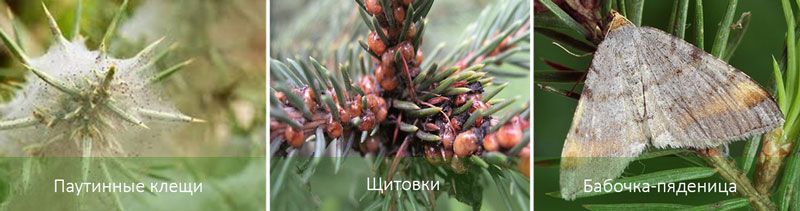
Spider mites are the main enemy of the Canadian hemlock. Infested shoots should be pruned and the entire tree should be washed. Acaricides can be used if necessary.
Tiny scale insects and moths can also pose a danger.
Top.tomathouse.com recommends: Hemlock in landscape design
In landscape design, hemlock looks beautiful when paired with deciduous trees and shrubs with lighter foliage. It can be used for symmetrical layouts, as well as in group plantings (alleys) and solitary plantings. Tall trees are often used as hedges.
Hemlock tolerates pruning well. Dwarf, trailing forms, suitable for rock gardens, are particularly popular. Its moderate moisture requirements make it suitable for use in ponds. Its dense crown protects the delicate plants from heat, allowing them to be grown in comfortable conditions, and its slow growth rate is a significant advantage in landscape design.