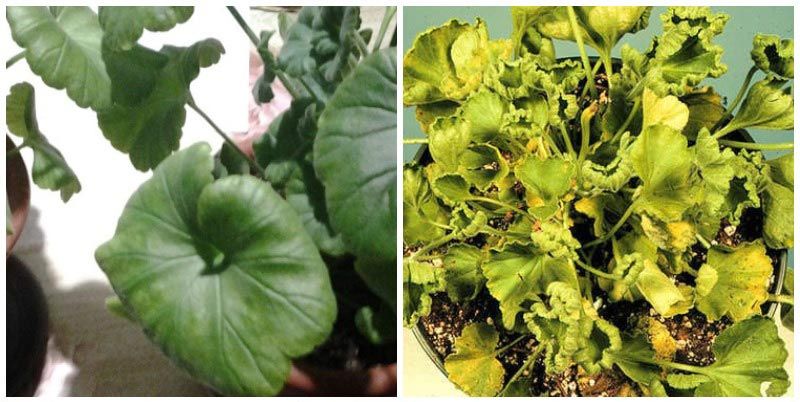
Pelargonium (house geranium) is a plant in the Geraniaceae family. It's very common and graces many windowsills. It's easy to care for and suitable for beginning gardeners. However, failure to follow certain guidelines can immediately affect its appearance. A very serious sign is yellowing or curling of the leaves.
Content
Reasons why geranium leaves curl
First, the flower is examined to understand the cause of this phenomenon and to begin eliminating it as soon as possible.
An error can occur at any stage of plant care:
- Incorrect choice of soil.
- Insufficient or excessive watering.
- Incorrect temperature and air humidity.
- Lack or, conversely, excess of fertilizers.
- Damage by pests and viruses.
Incorrect watering
The condition of geranium leaves directly depends on the amount of moisture they receive. In an effort to conserve moisture, the plant reduces the size of its leaves. On average, watering should be done every 3-4 days in summer, during which time the top layer of soil becomes dry.
Water with clean, room-temperature water that has been settled for 1-2 days. To soften it, add lemon juice or acid. Use 2-3 drops or 1 gram per liter.
Hard water causes excess calcium to accumulate in the soil, causing yellowing.
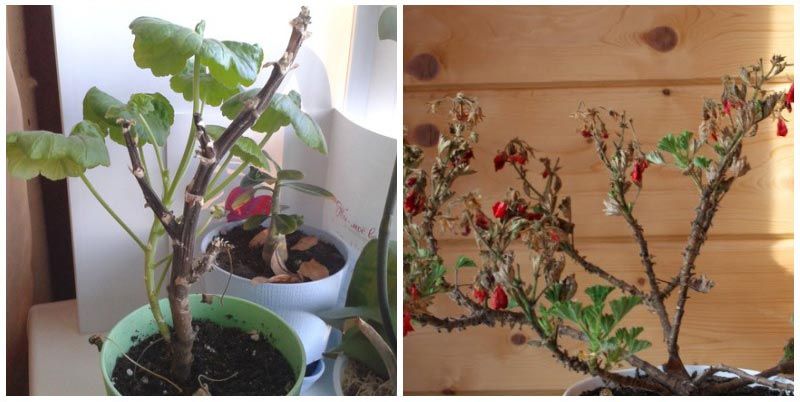
Excessive water also negatively impacts the health of plants. Leaves discolor, their edges dry out, and the plant rots or becomes limp. To prevent this, ensure drainage at the bottom of the pot when planting. Loosening the soil at least once a month will help the roots obtain oxygen more easily. Water will also better penetrate the lower layers of soil and drain through the holes in the bottom without stagnation.
During the fall and winter, geraniums go dormant, so they need to be watered less frequently, 2-3 times a month. If the plant does start to shed leaves and the roots rot, the solution is to remove the damaged roots and completely replace the soil in the pot.
Selecting soil and fertilizing errors
For planting, you can buy special or universal soil at the store. Or you can make your own.
The main requirement is that the soil should not be hard or heavy, and the flora should be neutral or slightly acidic. Sand and peat are essential components.
As the soil becomes depleted, mineral fertilizers are added. Particular attention is paid to nitrogen, which is responsible for the formation of foliage and abundant flowering. A deficiency will be first indicated by leaves becoming thin, yellow, and pale.
Also, color change may be caused by:
- Lack of boron.
- Calcium deficiency.
- Large amounts of potassium.
Overfertilizing is also harmful, so it's important to choose the right fertilizer and carefully measure the dosages specified in the instructions. The optimal schedule is once every two weeks.
If the plant has been recently transplanted, it needs to be fed after two months.
Some gardeners plant geraniums outdoors in the summer. In the fall, when transferring them to a pot, it's best not to take soil from the garden bed to avoid fungal or pest infestations. It's best to purchase ready-mixed soil from a store.
Incorrect conditions of detention
Due to incorrect humidity and temperature readings, short daylight hours, or a cramped or too loose container, the leaf blade changes its shape or color.
Lighting
Pelargoniums prefer well-lit windowsills. However, they should be shaded from direct sunlight, which will burn the leaves. During the winter and spring, the plant should be placed in the sunniest spot.
Temperature
In autumn and spring, pelargoniums are best kept on a glassed-in balcony. The key is to keep the air temperature from being too cold (10…12°C).
Optimal indicators:
|
Time of year |
Temperature |
| Summer | +20…+25 °C |
| Winter | No more than +14 °C |
Humidity
Geraniums don't tolerate air dry from heating appliances well. To prevent leaf drop, it's best to purchase a humidifier or use a spray bottle. However, spray the liquid not directly on the plant, but at a distance. Placing a container of water or wet expanded clay nearby will also solve the problem.
It's best to place the pots away from radiators and ventilate the room once a day. However, this must be done carefully, as the plant dislikes drafts. It also loses moisture from the surface of its leaves, causing them to curl.
Tight pots
The container in which the pelargonium grows shouldn't be too small. If the roots become cramped, this will affect the appearance of the foliage. It will begin to dry out and lose its color. If the pot is too large, the plant's energy will be focused on root growth, but flowers will appear later.
A plant planted in an oversized container needs to be repotted. This must be done carefully, as yellowing foliage can be caused by root damage.
If the pot is changed during the flowering period, the flower stalks are removed.
Pests and diseases
Geraniums are rarely attacked by pests due to the bitterness of their sap, but some do infest the stems and foliage. For example, spider mites can be seen with a magnifying glass on the undersides of the leaves, which become covered in a transparent web, dry out, and curl inward.
Two other dangerous pests are whiteflies and aphids, which feed on sap. They can be controlled with Marathon or folk remedies (onion, tomato, or potato tops). You can prepare an infusion of a head of garlic and a liter of boiling water, let it steep for a week, dilute with water at a ratio of 50 grams per 10 liters, and spray the leaves.
To control these pests, treat the plant with an insecticide, such as Akarin, Fitoverm, Molniya, or Vertimek. It's best to do this several times, spaced 5-7 days apart.
They are also susceptible to viral diseases, such as bacterial leaf spot. Characteristic signs include not only curled leaves but also brown spots resembling a mosaic. Wilting can even affect the stems. This infection cannot be cured, so it's best to dispose of the plant to preserve the health of surrounding plants.
If the root system is damaged by rot, treat the plants with a medium-concentration, pink potassium permanganate solution for 15-20 minutes when repotting. Apply once every six months for disease prevention and no more than once every 14 days as a top dressing. When pouring crystals into water, it's difficult to calculate the grams; it's better to rely on the resulting color of the solution.
Top.tomathouse.com advises: how to prevent geranium leaves from curling
It's much easier to prevent a dangerous illness than to treat it. Therefore, prevention is the main advice.
Measures to prevent leaf curling and yellowing:
- Regular but not intensive watering.
- Mandatory inspection of the plant and pest control.
- Optimal air temperature and humidity levels.
- Comfortable and cool wintering. Regular ventilation of the room.
- Timely feeding. Strictly follow the instructions and dosages indicated on the product labels.
- Selecting a suitable pot and a light windowsill without direct sunlight.
- In warm weather, take it out into the fresh air.
By following the recommendations and creating optimal growing conditions, even a novice can grow a healthy pelargonium at home, delighting you with abundant blooms and dense foliage. After all, a strong plant is much less susceptible to viruses and pest attacks.