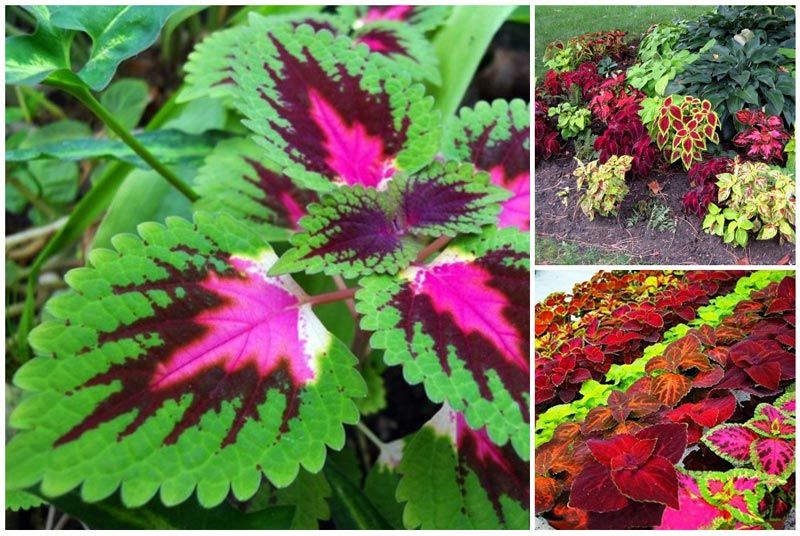
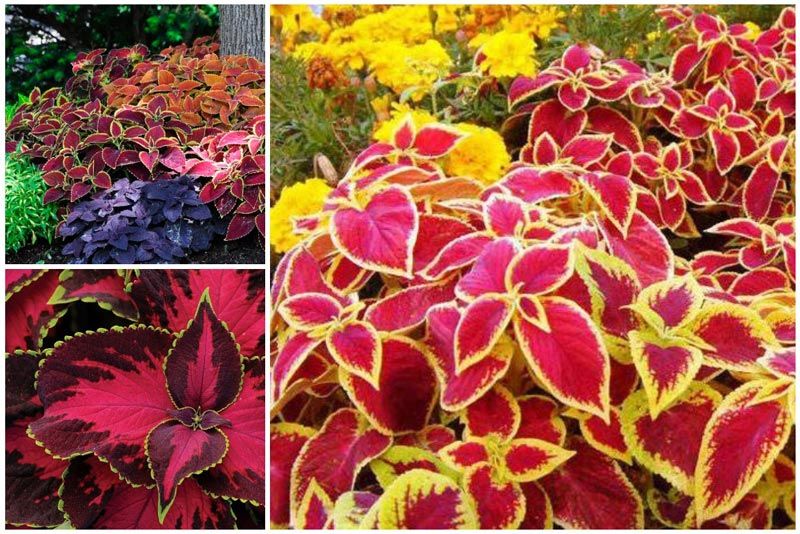
Coleus is a plant in the mint family, commonly known as "nettle" due to its resemblance. Its heart-shaped leaves come in a variety of colors, including green, burgundy, yellow, and red. There are many varieties (over 1,000), the most common of which are Blume, Black Dragon, Hybrid, and Wizard. When purchasing a coleus, be sure to check for more than one shoot and the absence of a flower, otherwise, problems with its maintenance may arise.
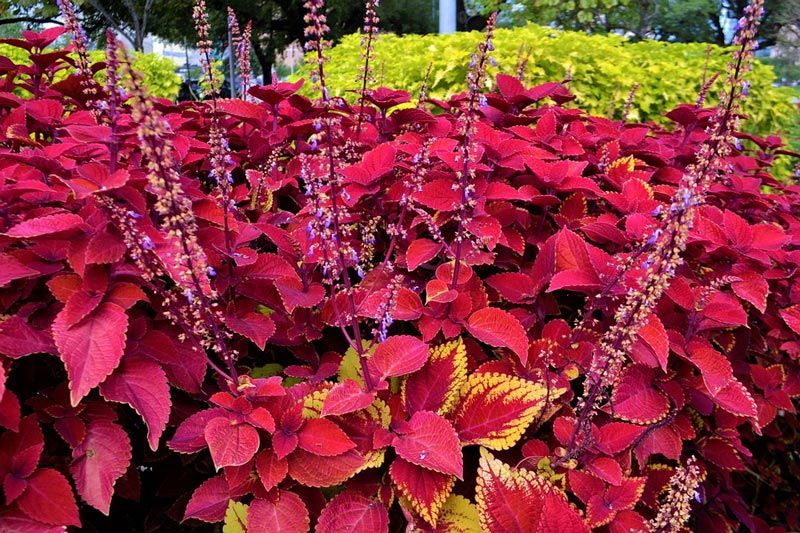
Features of growing coleus
Coleus is considered an excellent ornamental plant; it's easy to keep indoors. It's also a good choice for beginners. Because of its easy propagation and the similarity of its variegated leaves, it's also known as "poor man's croton."
Conditions for growing coleus at home
The table shows the basic requirements for flower growth.
| Indicators | Description |
| Lighting | Avoid exposure to direct sunlight; in summer, it is better to take it outside (balcony). |
| Optimal temperature | In summer +18 °C, in winter +12 °C. |
| Watering | Spring-autumn – abundant, warm water, but it is necessary to monitor the dryness of the top layer in the pot. In winter – moderate, do not allow the soil to dry out. |
| Humidity | It's tall and requires constant foliar misting. In winter, the ideal location for the plant is the kitchen, where conditions are optimal during this period. |
| Priming | Unpretentious, any soil mixture will do, add minerals if necessary. |
If the plant doesn't get enough light, it will begin to grow rapidly and lose foliage, while too much light will cause stunted growth and loss of color saturation. Therefore, it's crucial to ensure proper light supply. Temperature is also crucial, as the plant is very sensitive to changes in temperature. Nitrogen in the soil promotes richer colors.
You can increase humidity by placing a container filled with wet expanded clay next to the pot.
Top dressing
During periods of vigorous growth and flowering (spring-summer), add fertilizer to the soil; potassium is best, applying it once a week is sufficient. This will make the foliage color noticeably brighter and more attractive. In winter, reduce the amount of fertilizer to once a month, using half the amount.
Coleus replanting
This process occurs in the spring after pinching. The prepared soil should be between 6-7 pH. However, it doesn't need to be repotted frequently because its root system is underdeveloped.
The plant is considered an annual, but under certain conditions it can grow for years. However, the soil will need to be changed periodically, and if the pot becomes too small, it will need to be repotted. It's important to carefully inspect the roots for any bad ones (rotted or dead) and remove as much of the old soil as possible.
Pruning coleus
The flower should be subjected to this procedure regularly. The following reasons can be identified for doing so:
- better formation of branches, which subsequently leads to the creation of a large bush (this is done two weeks after picking);
- planting by cuttings (cut off older shoots);
- growth reduction (the top is cut off, thereby forcing it to grow in width rather than in height, giving the plant a lush appearance);
- planned pruning (done on flowers older than a year, cutting off all shoots, leaving only 2-3 shoots);
- shaping, decorating (cutting from a formed bush).
Propagation of coleus
This process is very easy, with a 100% germination rate. To avoid losing the delicate appearance of the leaves, it is propagated by seeds (pricking out) and cuttings (vegetatively).
Small seeds are sown in the spring in small clay cups (pots), lined with a pre-prepared peat substrate and a small layer of sand on top. The first sprouts will appear only after two weeks, after which they are transplanted into small boxes spaced 2x2 cm apart, using a combination of leaf mold, peat, turf, and sand.
It is advisable to include a drainage layer (you can use fine expanded clay or small pieces of broken brick) to avoid water stagnation.
After 1-2 leaves have formed, the plant is transplanted individually into 7-cm-tall pots, keeping the soil composition unchanged. Then, after a month, it is moved to larger pots (9-11 cm). To increase the number of branches on the coleus, pinch off the apical shoots. After just six months, the grown shoots can be used to decorate a room or flowerbed.
Propagation by cuttings begins in late winter (February) and ends in May. A specially cut section, approximately 10 cm long, is planted in propagation trays. Roots begin to appear within 8-12 days. After this, the cutting is transferred to a 9 cm tall pot. This method is the easiest and most reliable, but planting from seeds will yield more seedlings.
The plant requires timely watering and high-quality lighting.
Coleus flowers
It blooms from early spring until fall. Its small white flowers can be tinted blue. The main stem axis is lined with partial inflorescences, which are often compared to compound ears of grain. Because flowering drains the plant of its nutrients, its flowers are usually cut off to preserve the decorative foliage.
Problems with growing coleus
When maintaining the plant, some minor difficulties may arise, which are listed in the table.
| Problems | Reasons |
| Slow growth. | Lack of useful fertilizers. |
| Loss of foliage. | Low temperature, draft. |
| Faded leaves. | Lack of light. |
| Stem rot from below. | Lack of drainage layer in the soil. |
| The tips of the leaves turn brown. | Insufficient air humidity, weak watering. |
| Spots appeared. | Exposure to direct sunlight. |
| Leaf curling. | Parasite infestation. |
The plant is not considered poisonous and is safe even if ingested. Damage can be caused by insects such as aphids, whiteflies, spider mites, and scale insects. These insects appear in very dry indoor air. If pests are detected, the affected areas are cut off and the plant itself is treated with an insecticide.
Top.tomathouse.com recommends: helpful tips for growing coleus
By following a few simple recommendations, the plant will not cause any difficulties in care:
- The best place for it is a windowsill on the east or west side.
- It's important to protect the plant from direct sunlight. The following pattern is observed: the more light it receives, the more leaves it develops.
- The ideal water for watering is settled and at room temperature.
- In winter, it's best to place the plant away from radiators; moving it to the kitchen is a good idea. If the room temperature is high, increase the frequency of watering.
- If the pot is left without water for a long time, the coleus will dry out, but it can be quickly brought back to life by generously watering and spraying.
- It will look great in a circle of single-color plants.
- When planting it, you need to be guided by its ripening time - it takes approximately 5 months to obtain a flower of a bright, saturated color.
- It is very sensitive to overwatering, so it is necessary to be especially careful when watering it.
Coleus is an unpretentious houseplant, which makes its care at home extremely convenient and does not cause any particular difficulties.