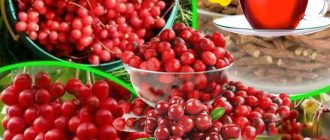
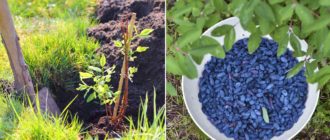
Gooseberries are berries of the Currant genus, a member of the Gooseberry family. Native to Africa, they grow in the Americas, Asia, Southern Europe, and the Caucasus. They were discovered in the 16th century, and by the 18th century, breeders had developed nearly one hundred varieties. The bushes reach a height of up to 1.2 m, and some varieties yield up to 25 kg per bush.
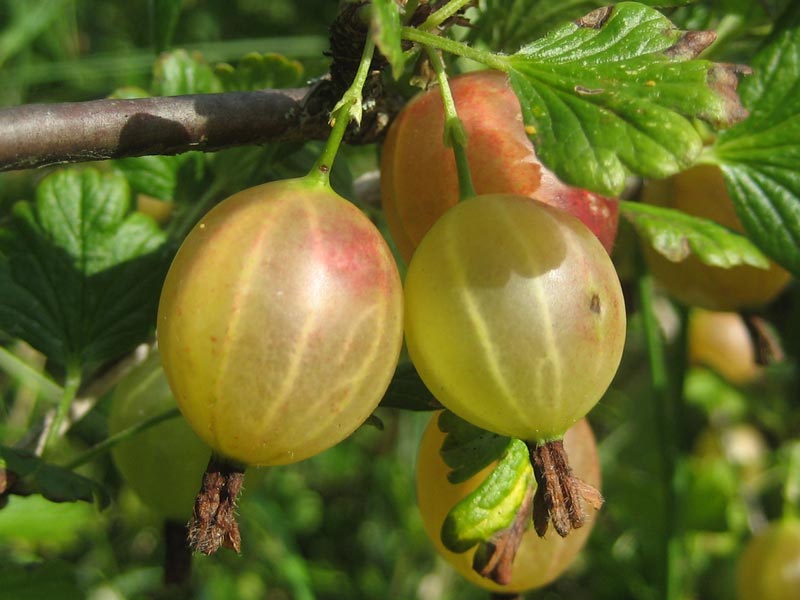
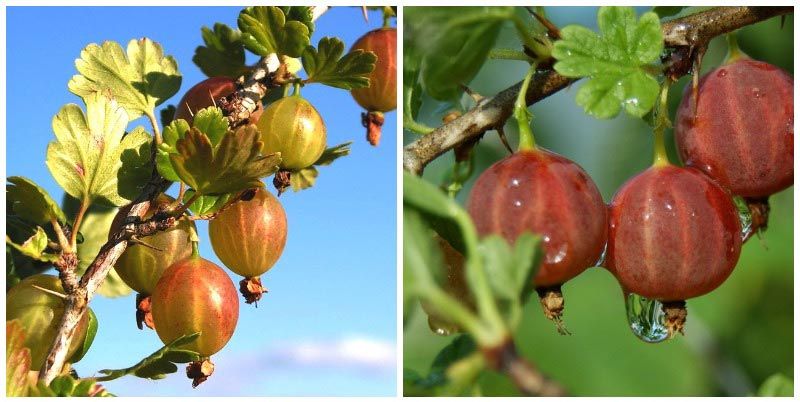
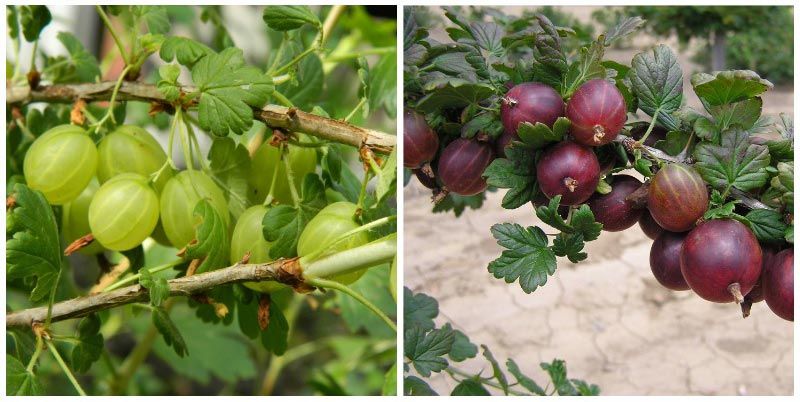
The bark is brown and peeling, with thin spines on the shoots. The leaves are oval, rounded, serrated, and bright green. The plant is frost-hardy, withstanding temperatures down to -30°C. The berries are green and red, with black and purple varieties also available.
Gooseberry Care Tips
Gooseberries, like currants, require timely care in open ground. They are most often planted in the fall, but can also be planted in the spring.
He prefers:
- Sunny places, highlands, where there are no northern and eastern winds.
- Neutral or low acidity soil.
- The distance between bushes is not less than a meter, in rows – up to three meters.
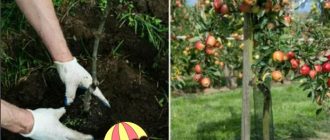
To avoid fungal diseases, it's not recommended to plant gooseberry bushes in low-lying areas. For planting, select one- or two-year-old seedlings with roots up to 30 cm deep. Soak them in a growth stimulant. In the fall, plant them a month to a month and a half before the first frost. This will allow the plant to establish itself and develop new roots.
Add 10 kg of humus, 150 g of superphosphate, and 60 g of potassium salt to the planting hole. Plant the seedling 6 cm deep, trimming the above-ground portion beforehand, leaving 3-4 buds.
The plant propagates by layering, cuttings, and division. The gooseberry's growing season begins in early spring. It blooms in May, and the berries appear in July or August, depending on the growing zone.
Recommendations for spring work:
- Pruning is done annually to ensure a bountiful harvest and prevent the bush from becoming overgrown. Drastic pruning should not be done all at once, to avoid damaging the bush. Pruning is done in spring and fall; if new leaves have already appeared, it should be postponed until fall.
- The bushes are not watered from above; drip irrigation is provided (this is necessary to avoid rot) or watered in grooves and furrows up to 15 cm deep.
- They loosen the soil with a hoe and a rake.
- During the first few years, no additional fertilizer is needed if the bushes were sufficiently fertilized at planting. Then, every three years, the plant should be fertilized without mixing organic and inorganic fertilizers. Depleted soil requires annual nitrogen fertilizers, while fertile soil requires annual fertilizers every two or three years.
- The cover is removed in time, otherwise the bushes will rot due to overheating.
When grown correctly, the plant bears fruit for about 20 years.
Caring for gooseberries in spring
Timely spring care for fruit and berry trees will lead to a bountiful harvest. Experienced gardeners recommend doing this before the first buds form. To do this:
- Remove winter cover—the timing varies by region, beginning in early March in central and southern regions and later in northern regions. Then remove mulch, debris from last year's vegetation, and branches. Afterward, burn all debris, as it harbors fungal spores and insect larvae. If the bushes aren't covered, but simply bent toward the ground, they need to be raised.
- When the snow melts, cover the ground with a thick material for several weeks to prevent pests from laying eggs.
- To treat pests and diseases, pour boiling water over the plant and surrounding soil, but only until buds appear. Use a metal watering can for this. Spray with copper sulfate, Bordeaux mixture, and fungicides such as Fitosporin and Actofit. This treatment should be carried out at temperatures no lower than 14°C.
- Water at the roots or using a drip system during flowering. Moisten the top 30-40 cm of soil, but avoid using cold water. This weakens the plant's immune system and increases the risk of fungal diseases.
- Sanitary pruning is performed in early March. This involves removing dried, frozen, damaged, diseased, weak, crooked, and crossing shoots that are too close to the ground. The cut is made above a bud, 6 mm from the bud, at a 50° angle.
- In early May, the soil around the bush is loosened to a depth of 8 cm. Then, it is mulched with straw, hay, peat, or sawdust. This will reduce evaporation and prevent weeds. Dig the soil between rows to a depth of 10-15 cm.
- Fertilize starting in the second year of planting. At the beginning of the growing season, apply urea or ammonium nitrate. Spread it under the bushes, work it into the soil to a depth of 5 cm, and water. For mature bushes, apply 40-60 grams; for young bushes, apply 30-40 grams. Potato peelings are also used: one kilogram per 10 liters of boiling water. After cooling, add 200 grams of wood ash or bird droppings at a ratio of 1:20. Pour a bucket of fertilizer under each bush. Add manure and humus. Before flowering, apply potassium sulfate at a rate of 40-50 grams per bush. This is provided the plants weren't fertilized in the fall.
Caring for gooseberries in summer
During the summer, work in the garden continues:
- Regularly loosen the top 6 cm of soil and remove weeds. During hot and dry summers, mulch the soil to retain moisture longer.
- Water with warm water after sunset.
- If the bush is tall, tie it to a support so that the branches do not break from the weight of the berries.
- Fertilize with organic matter during fruiting (equal amounts of compost and peat, manure with soil, chicken manure with water 1:15), mineral fertilizers after harvesting, in August with potassium and phosphorus (25 g per bush).
Caring for gooseberries in autumn
To ensure the plant survives the winter properly, care for the bushes is necessary in the fall. Several measures are taken.
- The root zone is treated, clearing it of leaves, debris, and rotten or crushed berries. Weeds and couch grass are removed. Then, the area is burned.
- Disease and pest prevention is carried out by spraying the plants and soil with Bordeaux mixture and copper sulfate after harvesting. Topaz and Fundazol are also used. If the plant is affected by disease, it is destroyed or all damaged parts are removed.
- Pruning is done from mid-October until frost. Use sharp, disinfected pruning shears. Remove weak, broken, non-fruiting, and branches located too close to the ground. Shorten long branches by 1/3. Then thin out the bushes and seal the cuts with garden pitch. If the bush is mature, over five years old, prune out old stems. Leave strong shoots, up to six, evenly spaced throughout the crown.
- Fertilize - for autumn fertilizing you need: phosphate and potassium fertilizers.
- Watering is done in dry, warm weather from late September to mid-October. A trench dug around the plant is filled with water. Once the water has soaked in, it is covered with soil.
Gooseberry pest control
To prevent diseases and pests from affecting gooseberry bushes, take preventative measures in the spring according to all the rules. The following diseases appear when preventative measures are ignored:
- Currant mite – buds fail to open and die. Spray with garlic infusion during flowering and ten days after. Use 50-100 grams per bucket of water.
- Spider mites. Leaves turn yellow and die. Spray with onion peels, tobacco infusion, wormwood, garlic, and Metaphos.
- Blackcurrant aphids – red swellings appear on the plant, and shoots become deformed. Spray with a 3% nitrofen solution before bud break. Treat with garlic infusion at bud break and then 10 days later. Alternatively, use Vofatox or Metaphos.
- The glasswing moth cuts into shoots, creating tunnels. Damaged branches are removed. Spray with 10% malathion.
- Gooseberry sawfly – eats leaves down to the veins. During bud break and after flowering, spray with Karbofos and Actellic.
- The moth is a butterfly. The berries turn yellow, rot, and fall off. Destroy the affected parts, dig up the soil, and spray with mustard infusion and Etaphos.
- Powdery mildew is a white coating on shoots, berries, and leaves. Use products such as Hom and Topaz.
- Verticillium wilt – foliage turns pale and wilts. Spray and apply a 2% Fundazol solution to the roots.
- The moth causes the leaves to curl and fall off. Actellic and Fufanol are used.
- Anthracnose, spotting, and rust are fungal diseases of gooseberries. Treatments include copper sulfate, Kuprozan, Ftalon, and Nitrofen.
- Mosaic disease is not treatable. The bushes are destroyed.
Preparing gooseberries for winter
After autumn work, depending on the climate zone, gooseberries need to be covered. To prepare for winter, the bushes are tied with twine, bent to the ground, covered with dry leaves and peat, and covered with non-woven material.