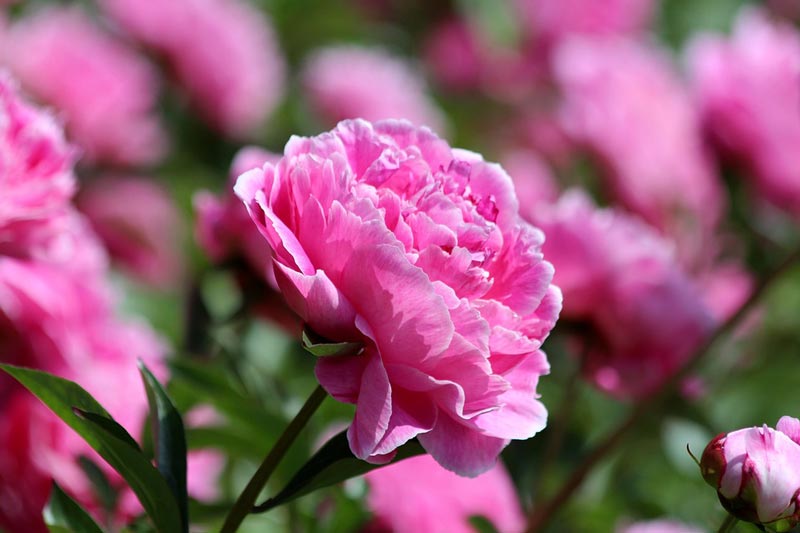
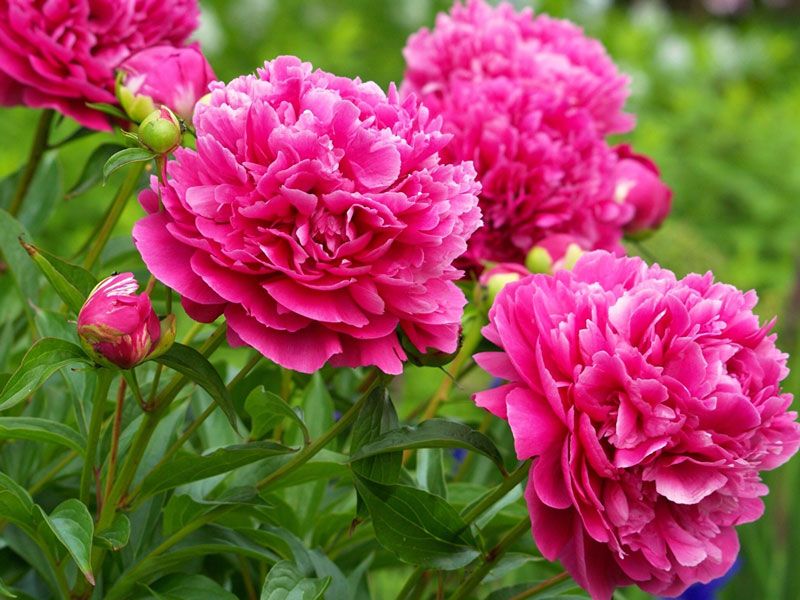
Peonies are herbaceous perennials of the Paeoniaceae family. These ornamental shrubs adorn gardens and flowerbeds. Their flowers have a pleasant fragrance and are grown for bouquets. The bushes can grow for 10-15 years without replanting.
Peony care in autumn
Growing peonies in spring and fall varies. After flowering, the bushes need to be prepared for winter. This includes:
- pruning at the onset of the first frosts;
- plant feeding;
- dividing and replanting overgrown flowers;
- treatment procedures when diseases or pests are detected;
- abundant watering of each bush during a dry summer;
- covering with dry leaves, peat, aged sawdust, spruce branches.
Autumn care by region
Outdoor care varies depending on the season and climate zone. The timing of preparing plants for winter varies because frosts arrive at different times in different regions.
If there is little snow and it has not covered the plant bushes, you should do it yourself.
|
Region |
Deadlines |
Care Features |
|
Moscow Region/Middle Belt |
From October 10th. | Mulching, additional measures are possible (use of spruce branches) |
| Urals / Siberia | From mid-September to early October. | In dry weather, mulch and cover from wind and frost with non-woven material or burlap. |
| Volga region | In November. | Hilling, mulching 10-15 cm. |
Top dressing
From mid-September to mid-October is the time to feed peonies. This is one to one and a half days before frost and pruning. This allows the plants to accumulate minerals for active growth in the spring and the formation of large inflorescences. This will ensure lush blooms in the spring.
Phosphorus-potassium mixtures are applied in the fall starting in the third year of planting. Liquid fertilizer is required if the summer and fall were dry. Dissolve one phosphorus and potassium tablet in water and water each bush with one liter.
When it rains, scatter granules around the plant (15 grams of potassium and 20 grams of phosphorus per bush), avoiding contact with the root collar. Bird droppings and cow manure are also used.
Autumn pruning
The most important step in preparing for winter is pruning. Uncut shoots provide a wintering ground for pests, their larvae, and pathogens. It's crucial to do this promptly. Rainy and cold weather increases the risk of wilted leaves and roots rotting, so don't delay pruning. Frozen shoots become soft, making it impossible to make a neat cut. Removing above-ground parts early is also not recommended.
The first time after flowering, trim off the faded flowers. It's recommended not to touch the leaves, as they continue to undergo photosynthesis, which nourishes the roots.
After the first frost, when all the leaves turn red and fall to the ground, shorten the bushes:
- Prepare sharp tools and disinfect them (pruning shears, garden shears, knife), for example, with alcohol.
- The shoots are removed, leaving 2-3 cm and all the leaves.
- They loosen the soil around the bush and scatter fertilizer.
If it is not possible to prune on time and the shoots have to be removed earlier, then it is recommended to leave 3-4 stems in the center with leaves.
Tree-like species are pruned to enhance their appearance. Stems are shortened by 70-90 cm, and dead and damaged shoots are removed. Rejuvenation pruning is required every ten years, with old shoots being cut back.
All parts are removed from the area and burned, the cut sites and soil are treated with ash.
Transplanting peonies
Choose a site with adequate sunlight, free of drafts and frequent winds. Dig holes six weeks in advance; the size depends on the root system. Typically, they are 60-70 cm deep and 50-70 cm in diameter. Leave 80-100 cm between each bush. Fertilize the holes with equal parts of humus, peat, and compost. Bone meal and superphosphate are also recommended. If the soil is clayey, add 150 grams of slaked lime. In areas with stagnant water, create drainage by adding fine gravel and sand to a 15-20 cm layer, mixed with the soil.
Keep in mind that you shouldn’t expect flowering in the first year.
The thin-leaved peony prefers a slightly shaded location with filtered light. It should be planted at a depth of 5-10 cm. Keep in mind that the plant's blooms are short-lived.
Deadlines
Repotting is recommended in early fall or late summer, but no later than 1.5 months before the onset of frost. This allows time for the bushes to strengthen and new roots to form.
Step by step
Once the holes are prepared and the allotted time has passed, a day is chosen for transplanting the bushes, preferably a sunny one:
- The above-ground part is cut off, leaving 10-15 cm.
- Using a pitchfork (not a shovel), dig up the bush, remove the root along with the soil, clean and wash it.
- After inspection, damaged and rotten parts are removed with a sharp and disinfected instrument.
- Treat the bush with a solution of potassium permanganate, leaving it there for 15 minutes.
- After the plant has dried, it is placed in a hole.
- Pour a bucket of water (to straighten the roots).
- Cover with soil and compost when the moisture has been absorbed.
- The root collar is located at soil level.
- Water at a rate of 5 liters per bush.
A layer of mulch made from sawdust, peat, and grass is placed on top.
Errors
Beginner gardeners sometimes make mistakes when caring for their plants:
- Pruning too early, before the first frost, disrupts the formation of new buds.
- Don't remove old, yellowed leaves and cut shoots. The plant becomes susceptible to fungal diseases in the spring.
- The bushes are left without fertilizer and few buds form in the spring.
- Excess nitrogen in autumn leads to the growth of above-ground parts, which will die during frosts.
- Incorrect division of the bush – each part should have 3-5 buds.
- Frequent replanting means the plant does not bloom.
- Not enough moisture.
- Deficiency of nutrients in the soil.
- Planting too deep or in the shade of trees, near their roots.
- Planting where groundwater is near the bushes.
For the winter, it is important to properly cover the bushes and mulch them.
Caring for peonies in spring
In spring, when temperatures rise above -5°C and the snow melts, carefully remove the covering, preferably on a cloudy day. In March, feed with nitrogen (20-30 grams of ammonium nitrate per plant).
When the soil dries out, clear it of weeds, loosen it to a depth of 3-5 cm, disinfect it with a solution of potassium permanganate, and cover it with straw and humus.
When the first shoots appear, treat the plants with Bordeaux mixture. Spray with colloidal sulfur during leaf growth to prevent rust. Insecticides are used to control insect pests. In May, during budding, apply nitrogen, potassium, and phosphorus. Pinch off side buds to produce large cut flowers.