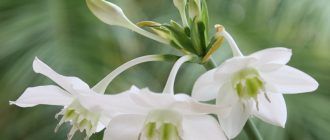
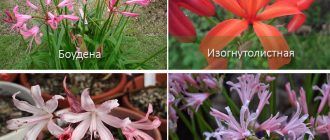
Vallota (cyrtanus) is a flower of the Amaryllis family, also known as the "fire lily." Native to the subtropics of southern Africa, it is named after the botanist Pierre Vallot. It has been cultivated as a houseplant since the 17th century. There are approximately 60 species.
Description of the Vallota
It is classified as a bulbous plant. Its leaves are long, dark green, and narrow, up to 65 cm long, fan-shaped, and rounded at the tip, matte or glossy. The leaf base is purple. It grows from an ovoid, pinkish bulb, which, as it matures, takes on a pear-shaped shape, 4-8 cm in diameter, covered with scales on the outside.
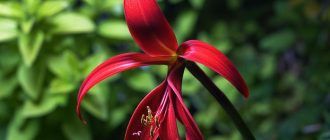
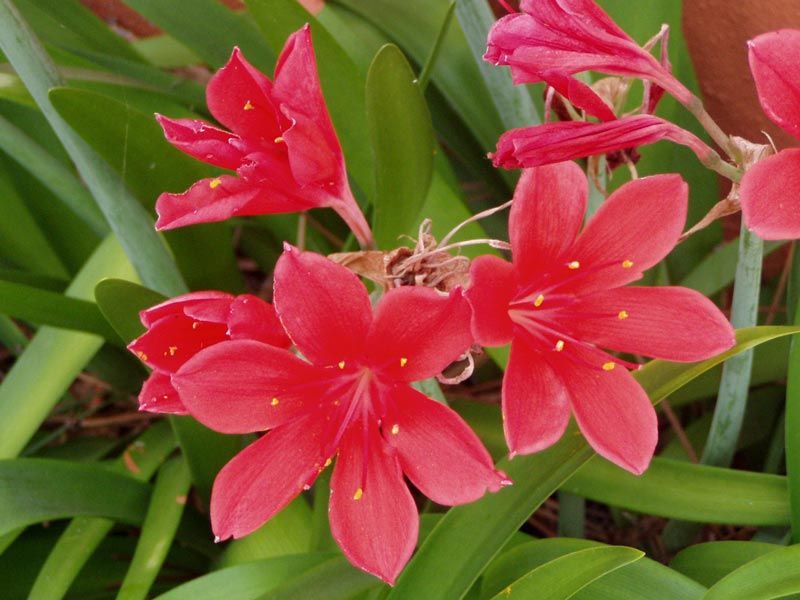
The beautiful flowers of the vallota, with pointed scarlet petals, bloom twice a year. The peduncle contains 6-8 umbels of inflorescences. The stamens are yellow, and the petals vary in color depending on the variety.
The plant is distinguished by the way its offspring form: they emerge not from the base of the mother bulb, but higher up. If the offspring are at the roots, they penetrate deeper into the soil.
Varieties of Vallota
Previously, the genus Vallota included only three species, all descended from the genus Cyrtanthus, including Vallota purpurea and Amaryllis magnifica. Therefore, the cultivar Vallota magnifica is now often referred to by its synonyms, namely Cyrtanthus or Amaryllis exalta. These have given rise to numerous cultivars successfully grown indoors.
- Purple – with olive-hued leaves up to 30 cm long. The inflorescences are 6 cm in diameter, arranged in clusters of 8 per stalk. The bell-shaped flowers have red, pointed petals.
- Beautiful – it has long, narrow dark olive leaves up to 45 cm long and 3 cm wide. The color palette includes white, red, and pink. The flower stalk reaches 60 cm in length and blooms in late summer.
Varieties:
- White – distinguished by its beautiful beige petals, it is called the autumn lily.
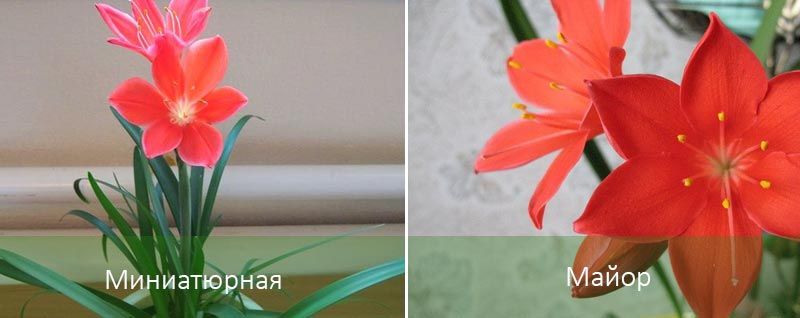
- Miniature – with linear leaves and delicate pink flowers.
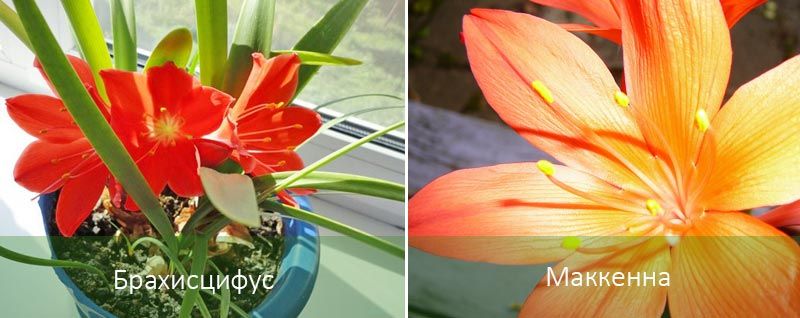
- Brachyscyphus – narrow, long stems, leaves and flowers.
- McKenna is an evergreen plant that grows near bodies of water. It prefers high humidity and shade.
- Alba – white with a yellow-cream core.
- Major - dark cream or pink with white stripes.
- Minor – small bright pink flowers and narrow leaves.
- Magnifica – red petals with a white eye.
Some varieties form inflorescences twice per season.
Peculiarities of caring for Vallota at home
Vallota is not easy to care for; growing it at home requires extra attention.
| Parameters | Growing period until the end of flowering (April – September) | Dormant period (October – April) |
| Lighting | Provide access to sunlight in the morning and evening, and shade during the day. Place on the east, southwest, or south side. | |
| Temperature | Moderate – +20…+25 °С. | Cool up to +9…+12 °С. |
| Watering | Be careful, twice a week at the root, avoiding contact with flowers and foliage. | Twice a month. |
| Humidity | Spray in summer, in hot weather, at temperatures above +23…+25 °C. Avoid contact with petals; wipe them with a damp cloth. | Not needed. |
| Top dressing | Twice every 14 or 20 days with liquid fertilizer for bulbous plants (according to the instructions). | |
Adviсe:
- Use rainwater or filtered water, be sure to drain it from the tray.
- In summer, feed with phosphorus-containing substances to stimulate flowering.
- Avoid overwatering and drought, otherwise the flower will shed its leaves.
Rules for planting and transplanting
The plant is repotted after three years, when the dormant period is over. Choose a container no more than 10 cm in diameter. Use a loose potting soil (equal parts humus, turf, and sand). Small pieces of brick or pebbles are suitable for drainage. The bulb should be planted 1/3 of the way up, 3-4 cm from the sides of the container. After repotting, it needs time to develop roots. Place the flowerpot away from direct sunlight.
Reproduction
Vallota reproduces by seeds and small bulbs (babies).
Seeds collected in the fall are soaked in a growth stimulant (Kornevin, Potassium Humate) and then sown. The soil is mixed in a 2:2:1:1 ratio of peat, sand, turf, and leaf mold. Cover with plastic wrap and ventilate. The temperature is 18°C. Seedlings appear after a month. The seedlings are transplanted after six months. Water sparingly and provide good lighting. In winter, maintain a temperature of 16°C. Transplant after two years.
Propagation by young bulbs: separate them from the mother bulb and plant them separately, shallowly. Water sparingly; flowering will occur in two years.
Features of flowering
If flowering does not occur at the end of summer, it means that the pot chosen is too large, the plant has not been repotted for a long time, or the dormant period has been interrupted.
Pests and diseases
Vallota rarely gets sick and is resistant to microorganisms. If care is not followed, it is susceptible to fungal diseases and pests.
| Disease/Pest | Manifestations | Control measures |
| Gray mold | Brown coating on leaves. | If damaged, separate the flower from other plants and treat with fungicides Vitaros, Maxim, Topsin-M. |
| Fusarium | Slime appears on the bulbs, the flowers wither and wrinkle. | Remove damaged parts, treat the cuts with activated charcoal, then with Fundazol, and repot in a new pot and soil. If the plant is in advanced stages, discard it. |
| Root rot | Leaves wither, shoots die. | Clean off any damage, use fungicides Alirin, Gliocladin, replant. |
| Spider mite | Yellow spots appear on the leaves, they wither and become covered in a white web. | Spray with a solution of laundry soap, Fitoverm, Derris, Akalin. |
| Scale insect | Brown spots on leaves. | Treat with insecticides (Fitoverm, Karbofos, Aktara) |
| Aphid | Green insects are visible. | Use Actellic, Fitoverm. |
| mealybug | There is sticky fluff on the stems. | Wipe with alcohol diluted with water, tobacco infusion, garlic. |
As a preventative measure before planting, disinfect the soil in the oven or pour boiling water over it, and observe the watering conditions and temperature regime.
Top.tomathouse.com explains: signs and superstitions about Vallote
Vallota promotes relaxation and a positive mood. Its red color creates an atmosphere of comfort and warmth. In its presence, people relax, nervous tension and negative thoughts dissipate, and a healthy energy is created. While doing their daily work, their owners gain strength.
Vallota is a poisonous plant
The Vallota flower is poisonous; it contains the alkaloid ligroin, which affects the gastrointestinal tract and causes redness and itching of the skin. Caution is advised. Place the pot higher if there are small children in the home. The leaves, flowers, and bulbs contain many toxic substances; wash your hands immediately after handling them. Repotting should always be done wearing gloves.