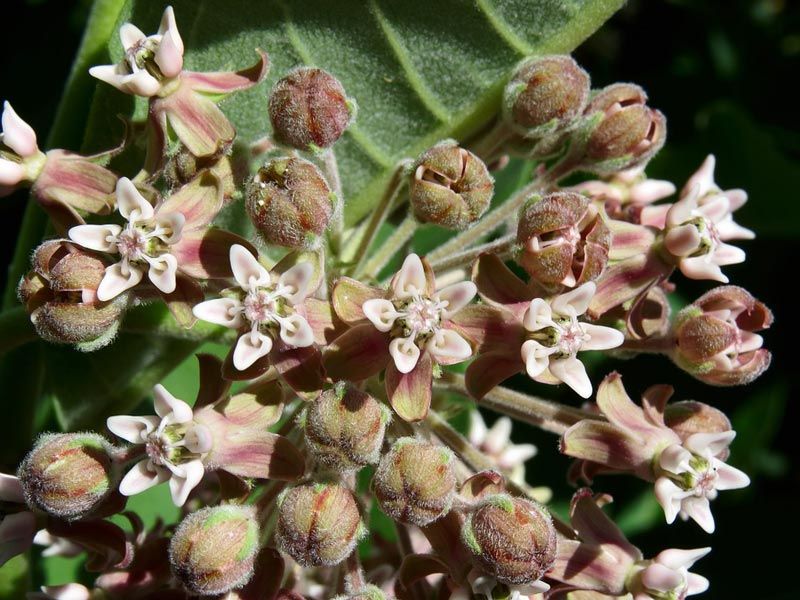
Beautiful herbaceous plants of the Apocynaceae family have the amusing name of milkweed or asclepias. Native to North and South America, over 200 species have spread worldwide from there. Both evergreen and deciduous varieties are widely used in ornamental gardening.
Origin and description of milkweed
Milkweed was introduced to Europe in the 18th century as an industrial crop. Its shoots and leaves were used as stuffing for toys and furniture, and later became a raw material for film, rope, and various life-saving equipment. When rubber became available in the early 19th century, the plant began to be cultivated solely for landscaping purposes.
Depending on the variety, asclepsis can grow up to a meter tall. Its roots spread far beneath the soil surface, and its stems are thick with large, ovate, oblong, or elliptical leaves. It blooms in summer or fall with an umbrella of red or burgundy hues.
The fruit of the shrub is filled with fluffy seeds, which is where the name "milkweed" comes from. Only residents of southern regions can see the fully formed fruit; in colder climates, they do not ripen.
The sap is poisonous, especially when exposed to sunlight. It causes severe irritation and redness on the skin. It is used as a folk remedy for warts.
The plant is a honey plant; during the pollination period, it is surrounded not only by bees, but also by one of the most beautiful butterflies – monarchs.
Types and varieties of milkweed
There are four most common varieties of this shrub. Three of them are grown as perennials, and one is an annual.
|
Species, description, flowering period |
Flowers | Varieties |
Height, m |
|
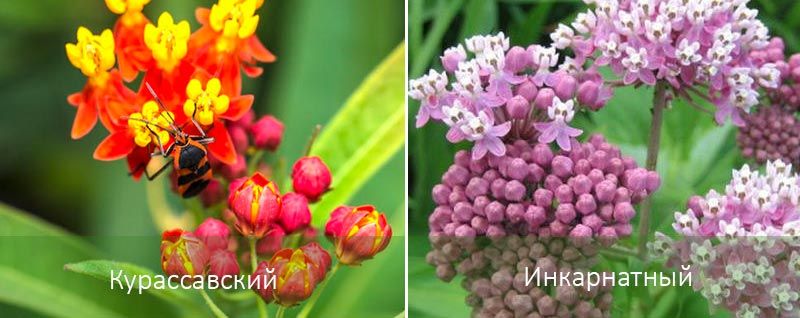
Incarnate (meat-red). The leaf blades are pubescent, located opposite each other, elongated. July-August. |
Fragrant red or pink umbels of inflorescence. | Ice Abeli - height up to a meter, white flowers. | 1.2 |
|
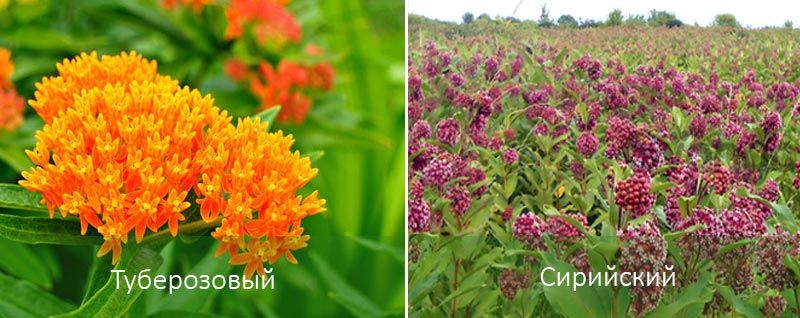
Tuberose or tuberous. Dark green foliage, narrow elongated blades. Winter-hardy. From mid-summer until frost. |
Yellow-red. | Gay Butterfly - blooms in shades of yellow, red, and orange. | 0.7 |
| Maharajah - orange-colored inflorescences. | 0.5 | ||
|
Syrian. Tall, straight stem with large, wide leaves. July. |
Delicate lilac umbrellas with a strong vanilla-chocolate aroma. | — | 1.5 |
| Kurassavsky. An annual plant with elongated leaves of a classic green hue. |
Red or orange flowers are attractive to butterflies.
Pollen causes skin irritation. |
— | 1 |
Planting milkweed in open ground
Asclepsias can be propagated using either seedlings or direct-seeding methods, depending on the gardener's preference. When preparing seedlings, sowing occurs in March-April. For open ground, sowing should occur immediately after the snow melts, in a sunny area with good soil, preferably slightly acidic loam.
After digging the flowerbed and removing weeds, the soil is loosened and leveled. Furrows are made 3 cm deep, the seeds are planted, and the surface is thoroughly moistened after leveling. To improve germination, the area is covered with plastic film.
Given the extensive root system, experienced gardeners recommend using restrictions or growing milkweed in pots with good drainage. Perennials grow well in one location for up to 15 years. The first flowering after sowing can be expected no earlier than three years later.
Top.tomathouse.com recommends: Caring for milkweed in the garden
This low-maintenance shrub is easy to plant and care for, making it easy for even the beginning gardener. To thrive, it requires regular watering, occasional fertilization, and loosening of the soil. Pest control can be applied as needed.
Prolonging the flowering period will be helped by promptly removing faded inflorescences. This is done if you don't plan to collect seeds. Keep in mind that in northern climates, it's not possible to wait for the fruit to ripen, so you'll need to buy seeds from specialty stores.
Watering asclepsis is only necessary during the development stage; later, when the root system has developed well, the plant is able to find moisture on its own. However, during particularly dry periods, it should be watered, preferably with rainwater or settled water warmed by the sun. Watering should be done in the evening.
Growing milkweed in fertile soil requires no additional feeding. For poor soil, it's recommended to fertilize the soil immediately before planting, adding potassium sulfate, urea, manure, and compost. Some people apply additional fertilizer immediately after emergence with a complex mineral fertilizer.
The shrub tolerates transplanting well. It can be propagated by dividing the rhizome. This procedure is best done in early spring or after flowering. The seedlings take root easily and bloom as early as the second year.
Pests and diseases
The shrub has good immunity and is resistant to diseases. Insect pests cause discomfort and discomfort.
|
Problem |
Elimination |
| The whitefly, an insect similar in appearance to a moth, feeds on plant sap. | They are treated with Actellic, Fufanon, and Rovikurt (an aqueous solution is prepared for spraying). |
| Spider mites, a small arachnid, feed on sap. Treatment is prescribed when fine webbing appears on branches, as well as leaf deformation and wilting of shoots. | The bush is treated with acaricides, for example, Actellic, Aktara. |
During particularly hot periods, it's recommended to spray with warm water in the evening to prevent the leaves from drying out and insect attacks. Heat is what triggers pest attacks, especially spider mites.