Red Prince is a popular variety of weigela shrub. It is grown in Russian gardens as an ornamental and to create beautiful landscape designs. Although this variety was bred in America, it adapts well to our climate.
Content
Botanical description of Weigela Red Prince
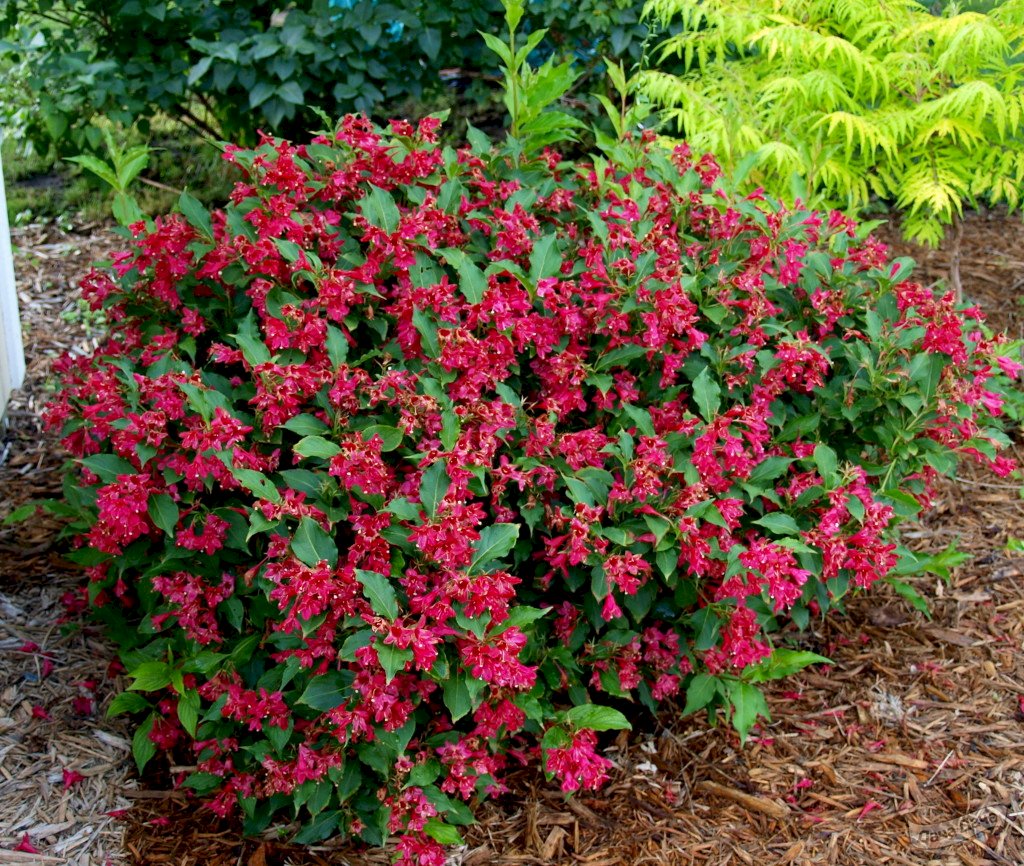
Weigela hybrida 'Red Prince' is a medium-sized shrub, reaching 1.5 m in height. It has a dense, spreading crown. The shoots are erect, with drooping tips. Mature stems are dark brown. This year's shoots are greenish with a gray tint.
The shrub has dense foliage. The leaves are sessile, meaning they lack long petioles. The blades are light green with a prominent, sunny-toned central vein and a smooth, matte surface. The foliage turns yellow in autumn but remains on the bushes until frost.
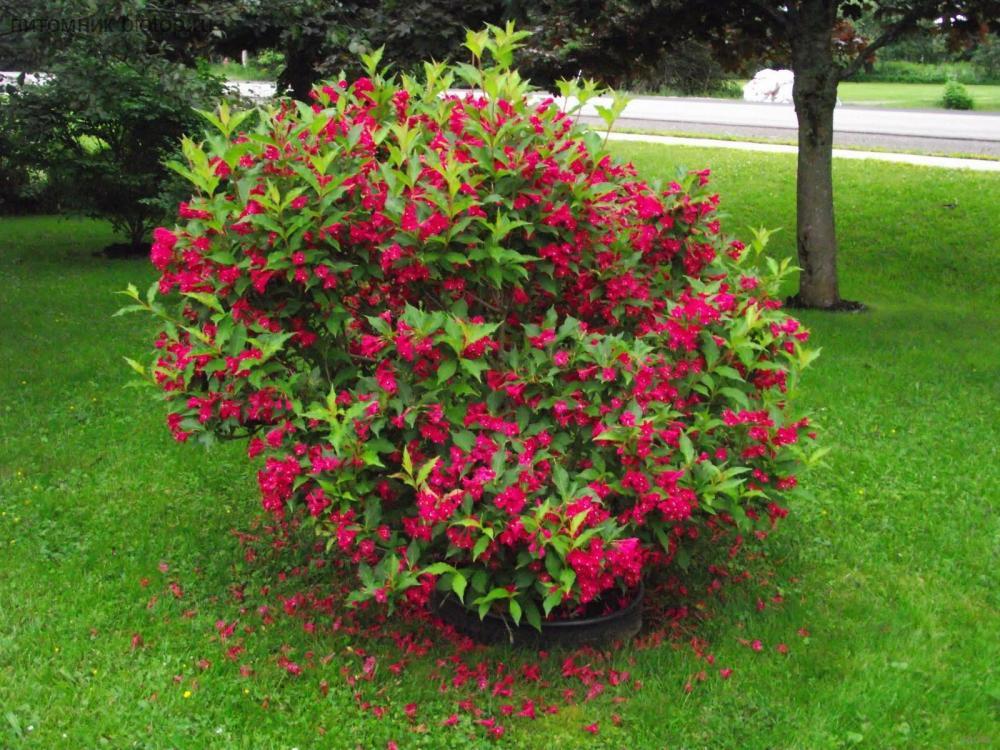
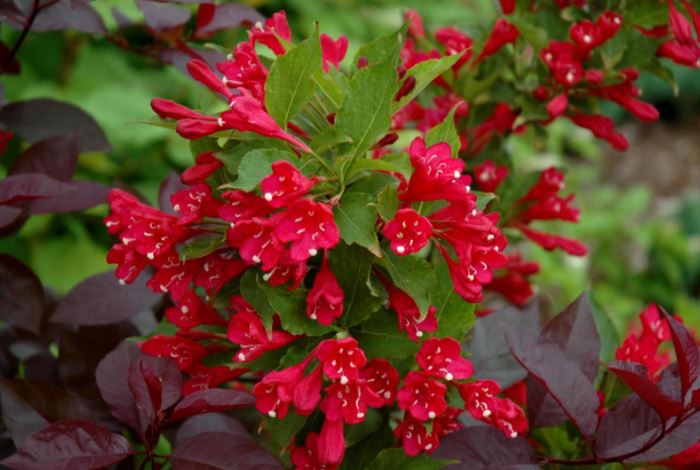
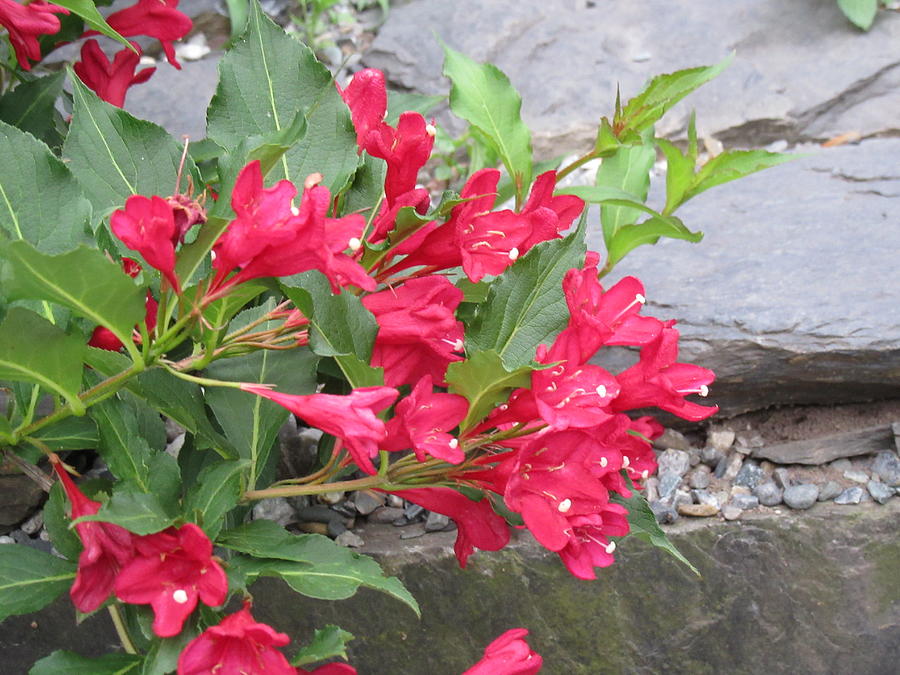
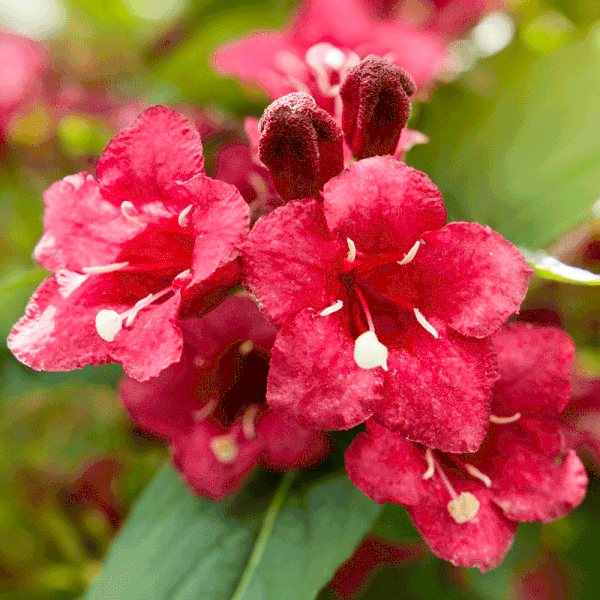
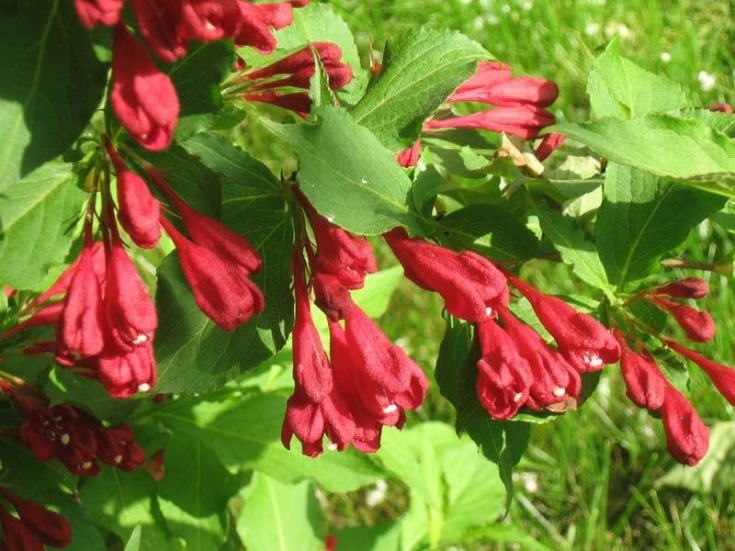
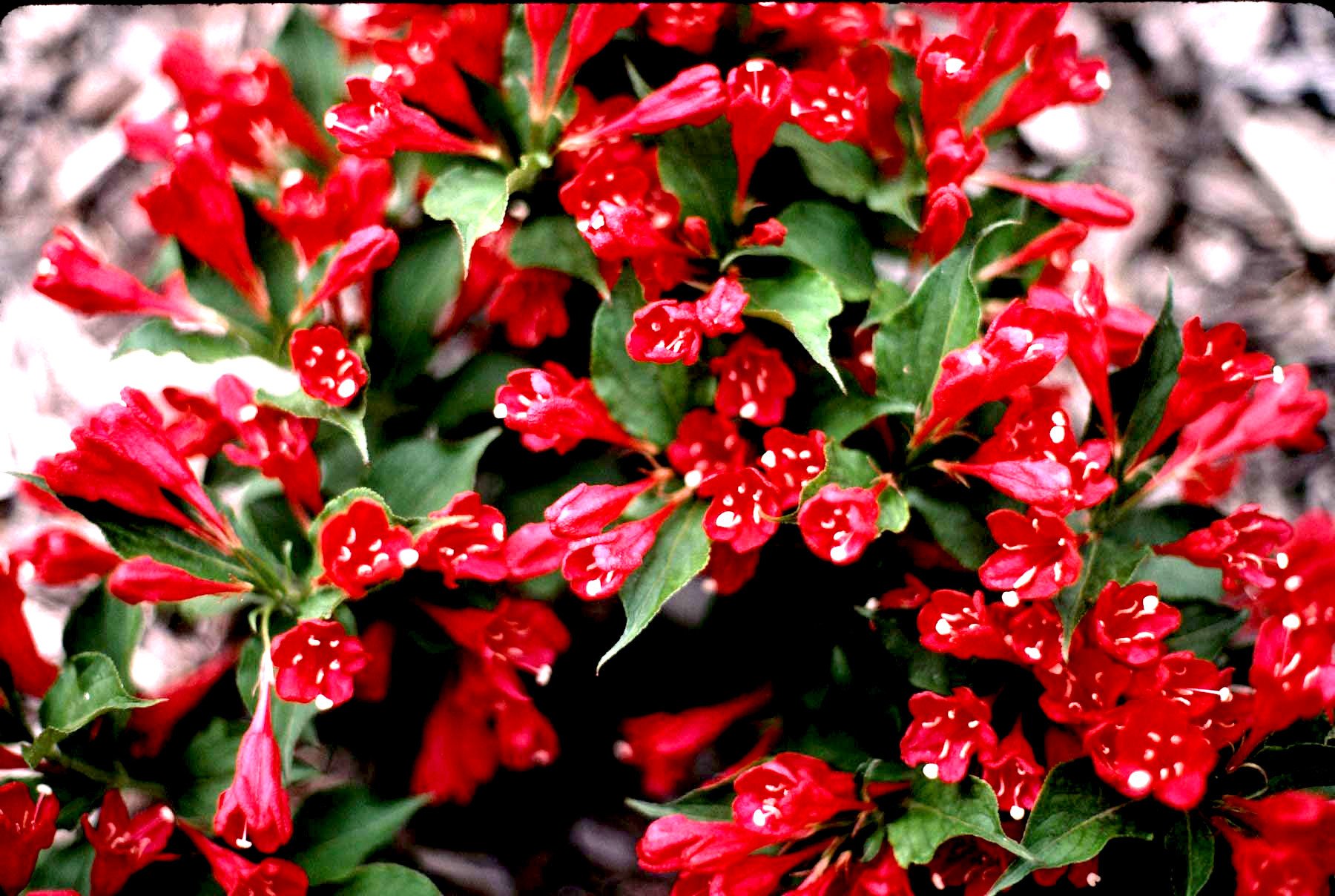
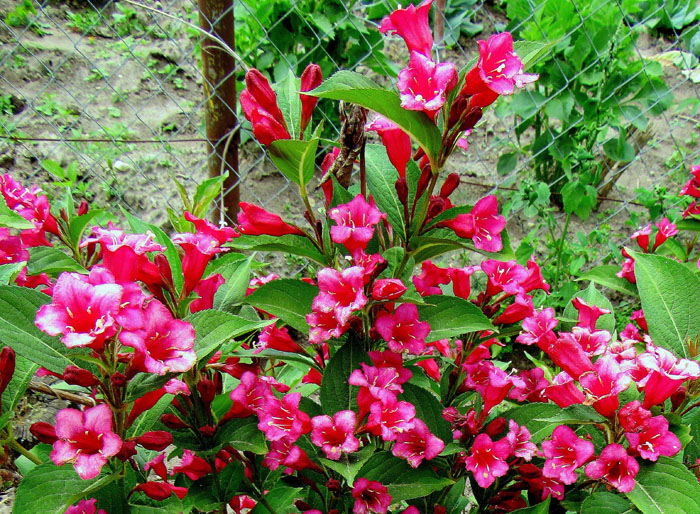
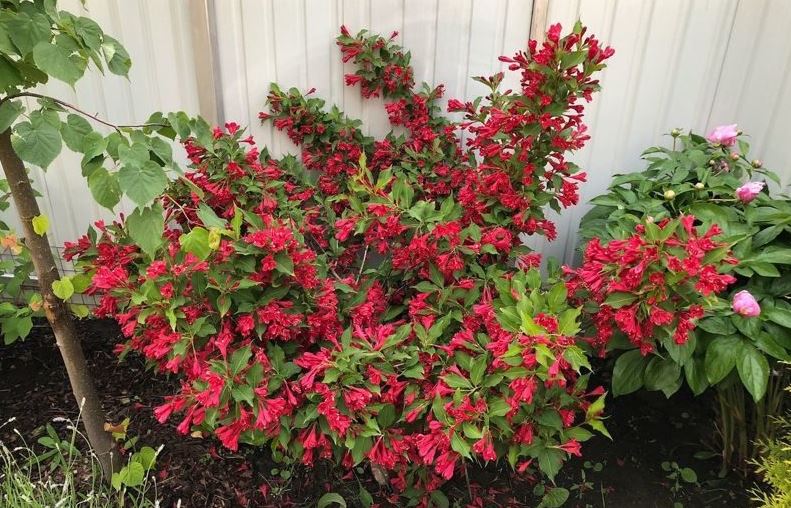
During flowering, this hybrid shrub produces large, 6-cm-long buds, gathered in clusters of 4-6. These bell-shaped flowers consist of five crimson petals. They have snow-white anthers, which rest on elongated, delicate pinkish filaments.
The Weigela Red Prince blooms twice per season. The first time occurs in mid-May and lasts for 1-1.5 months. The buds then open in August, but the petals fall by September.
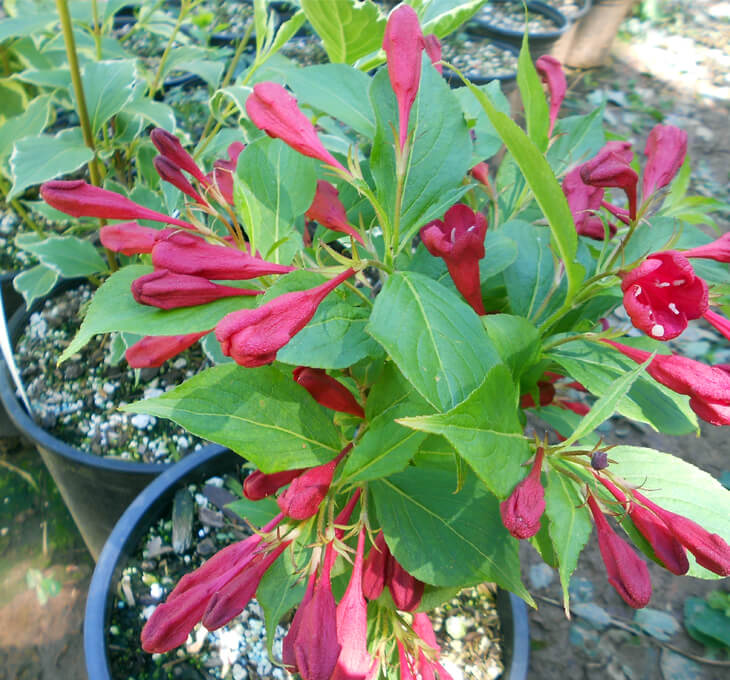
You can see what the bush looks like during flowering in the photo:
Rules for planting weigela Red Prince
Weigela is very easy to plant in your garden, the most important thing is to know the timing and choose the right location.
Planting dates
Shrub planting usually occurs in late April or May. The most important thing is to allow the soil to warm up to 6°C.
In the south, planting can be done in the fall. In central Russia, this will be difficult, as the bush doesn't have time to take root before the first frost. If there's no other option, the cuttings should be placed at an angle, covered with non-woven material, and mulched with straw or spruce branches.
Choosing a location
The planting site should be well-lit, with only a few hours of shade per day. It's important to protect the bush from drafts. To achieve this, plant it near taller shrubs and trees.
What should the soil be like?
The soil should be light, nutritious, and loose. Loam is ideal. The shrub will not grow in heavy, marshy soil, as it does not tolerate high humidity.
Important! The soil should be neutral or slightly acidic. To achieve this, lime can be added during autumn tilling.
Landing rules
Step by step actions:
- Treat the seedling with a solution of potassium permanganate and soak it in Kornevin, following the instructions.
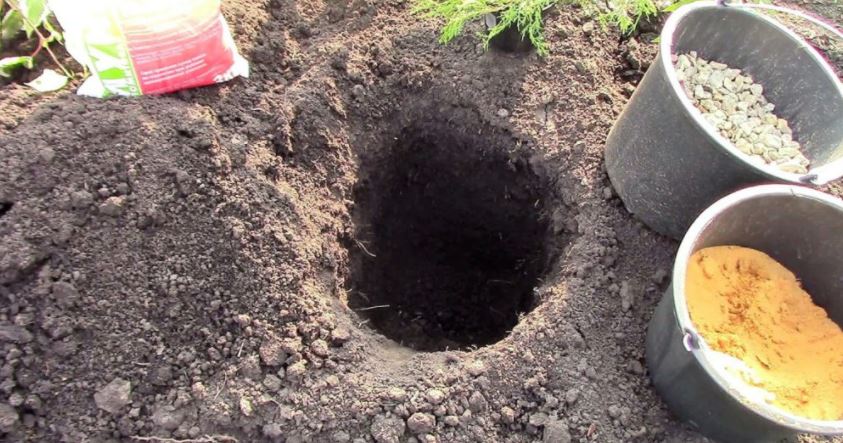
- Dig a hole 50 x 60 cm in the area. The depth is determined individually based on the root system. Add 20 cm for drainage and 15 cm for soil. This will be the required hole depth.
- Make a 20 cm drainage layer at the bottom. You can use broken brick or expanded clay for this.
- Add 15 cm of nutrient soil.
- Place the seedling in the center and straighten the roots.
- Fill the hole with soil.
- Compact the soil, water and mulch to better retain moisture.
For reference! If planting several seedlings to create a hedge, they should be spaced 1.5 meters apart.
Weigela Red Prince Care Guide
Caring for an ornamental shrub is not difficult.
Watering
Moderate watering is necessary throughout the growing season. If precipitation is low, water at least three times a week. Each bush will require 7-8 liters of water. Watering is not necessary during rainy seasons.
Top dressing
There is no need to fertilize young bushes up to 3 years old if they are planted in fertile soil.
Adult specimens need to be fed according to the following scheme:
- the first time nutrient mixtures are added in mid-March (Epin 30 g for each specimen);
- during flowering (potassium nitrate 40 g per 1 bush);
- after 2 weeks (superphosphate 50 g per specimen).
Additionally, in mid-October, it is recommended to add wood ash to the tree trunk circle.

Trimming
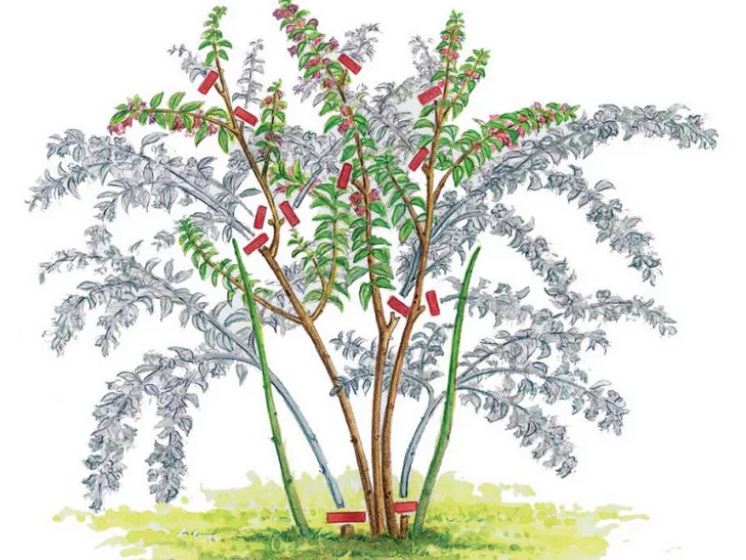
Formative pruning is not necessary, as the shrub's crown maintains its shape and branches do not spread. After flowering, only shorten the previous year's shoots by 15 cm.
Sanitary pruning is done in the fall. At this time, diseased and damaged shoots should be completely removed. Rejuvenation pruning is also necessary every two years. This involves cutting back old branches to the roots. This is done in the spring before the sap begins to flow.
Mulching and loosening
Only young shrubs require loosening. This is necessary to improve the penetration of nutrients and oxygen to the roots. Loosening is done to a depth of 8 cm 2-3 days after watering or fertilizing.
Mulching helps retain moisture in the soil and protect the bush from overheating. Spruce branches, sawdust, or fallen leaves can be used for this purpose. The mulch should be 12-15 cm high.
Preparing for winter
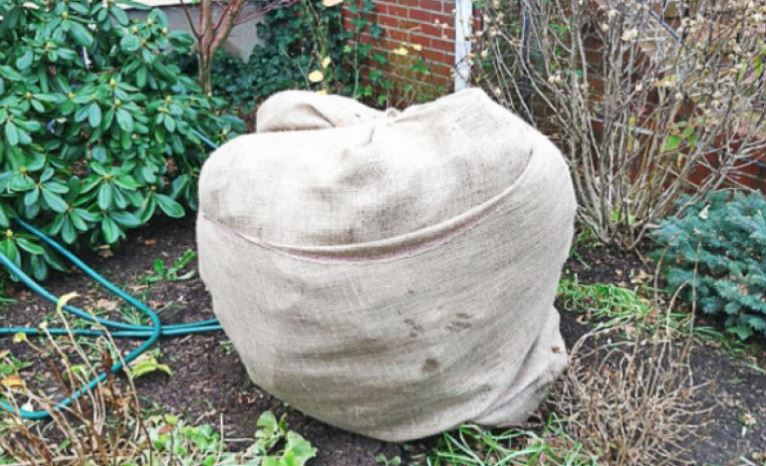
Preparation for winter consists of several stages:
- Pre-winter watering.
- Hilling and mulching.
- Tying the shoots with twine so that the branches do not stick out and are kept in a bundle.
- Cover with non-woven material. You can also wrap the bush in plastic.
Please note! Removing the shelter is permitted when the outside temperature no longer drops below 4°C, including at night.
How to propagate Weigela Red Prince
There are 3 methods that can be used to propagate the shrub.
By dividing the bush
Step by step actions:
- Dig up the mother bush and divide it into parts so that each one has a fertile bud.
- Plant the cuttings next to the mother bush and cover with plastic film.
- Remove the cover daily for 1 hour to allow air to air out. Water twice a week.
- In spring, transplant the young bush to a permanent location.
Bushes that are at least 5 years old are suitable for division.
By cuttings
Step by step actions:
- On last year's shoots, cut off the central part of the stem so that the cutting is 20 cm long.
- Prepare a soil mixture of sand, humus, garden soil, peat (1:1:2:1).
- Water generously once a week.
- In the fall, when the cutting has taken root, insulate it before wintering or transfer it to a warm room in a pot.
- Plant in the area in spring.
Please note! Propagation by cuttings can be done after the bush has finished flowering.
Layering
Step by step actions:
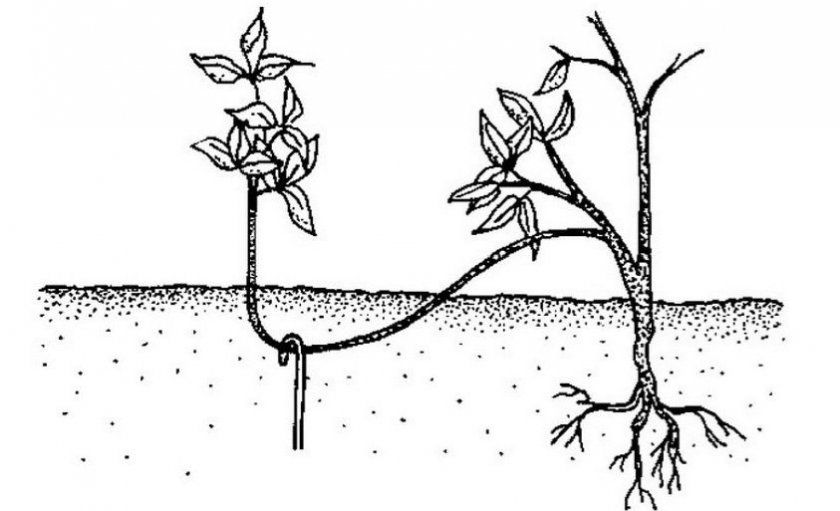
- Bend last year's shoots to the ground and secure with metal staples.
- Sprinkle with nutritious soil.
- Water 3 times a week throughout the growing season. Cover with non-woven material for the winter.
Young shoots will appear next year in April. They can be transplanted to their permanent location in June.
Diseases and pests of Weigela Red Prince
The shrub is resistant to infections; however, root rot can develop. To prevent this, maintain moisture levels. The soil shouldn't be too wet.
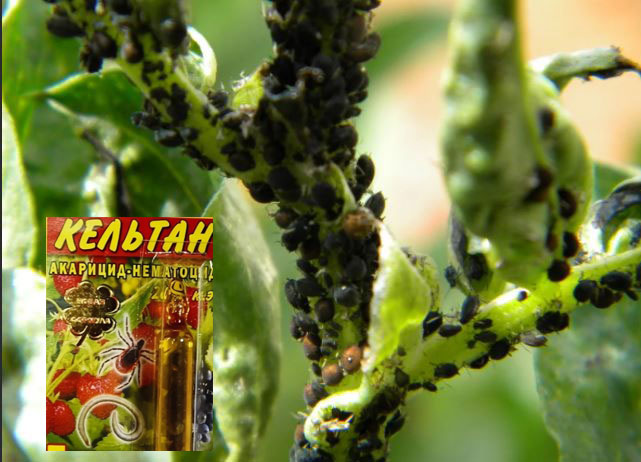
Aphids may occasionally appear on bushes. Kelthane is recommended for their control.
Weigela Red Prince in landscape design + 10 photos
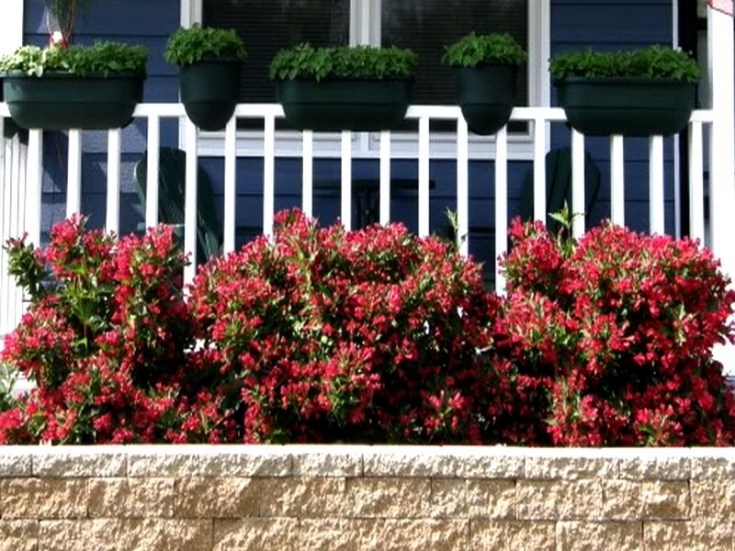
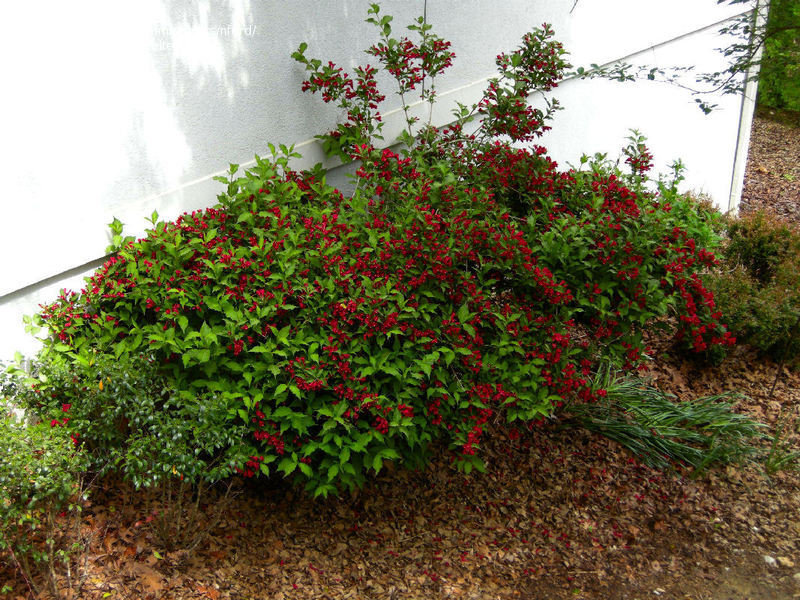
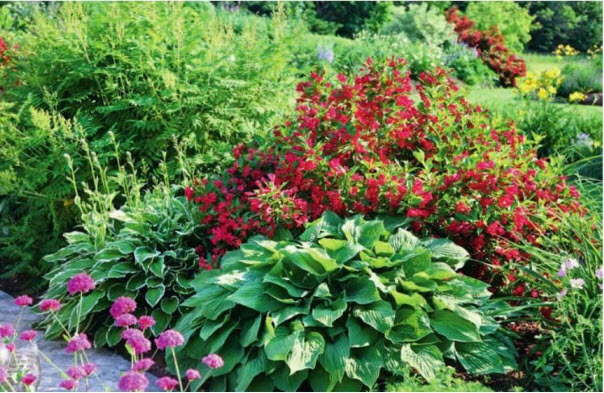
Red Prince is a versatile plant that can be used in garden design in a variety of ways:
- a solitaire in the central part of the flowerbed;
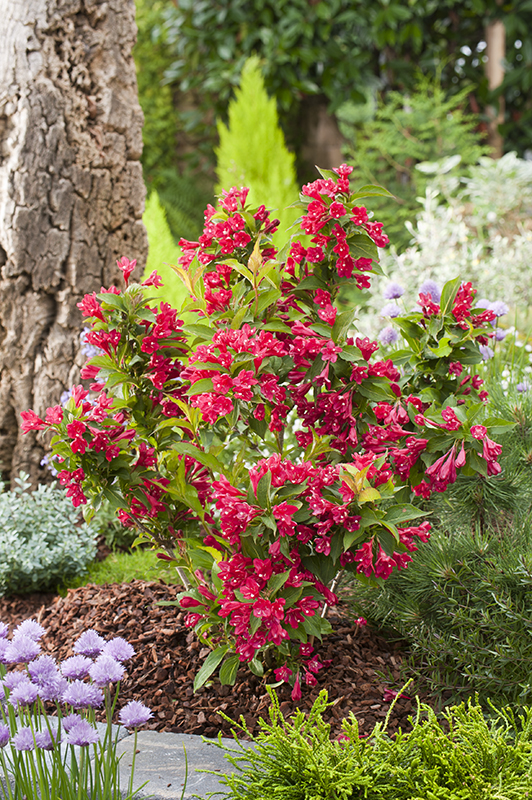
- component in compositions with dwarf and coniferous shrubs in mixborders;
- decoration of the park edge;
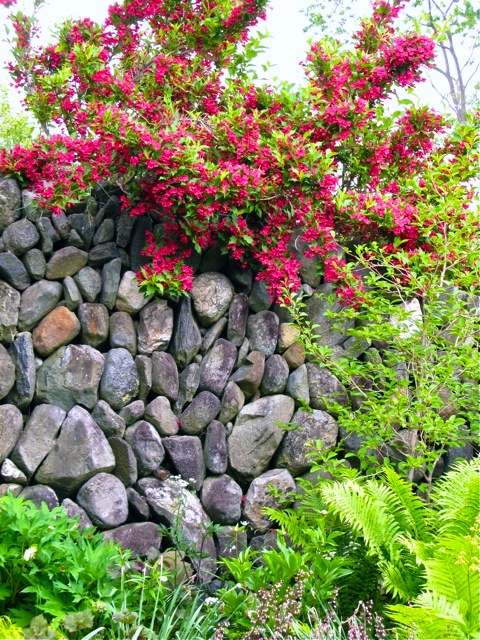
- color accent in a rock garden;
- element in a hedge;
- for decorative lawn design.
This shrub not only blends beautifully with other plants visually, but also thrives alongside them. This is because it is virtually immune to diseases and pests, meaning it doesn't pose a source of infection to neighboring plants.
Photo gallery of examples of the use of the Red Prince Weigela variety in landscape design (10 photos):
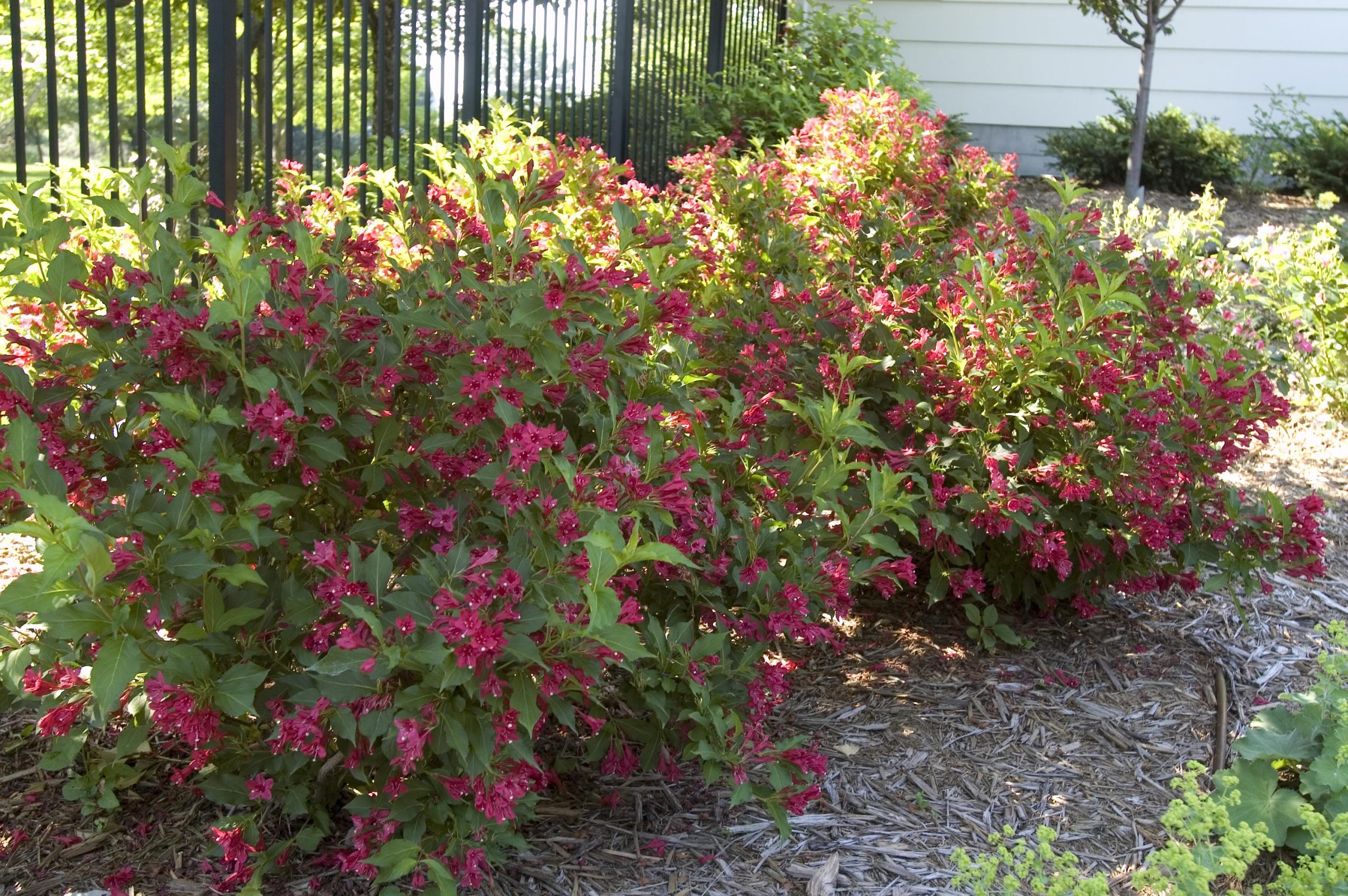
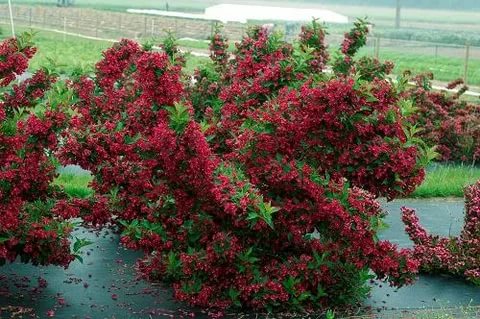
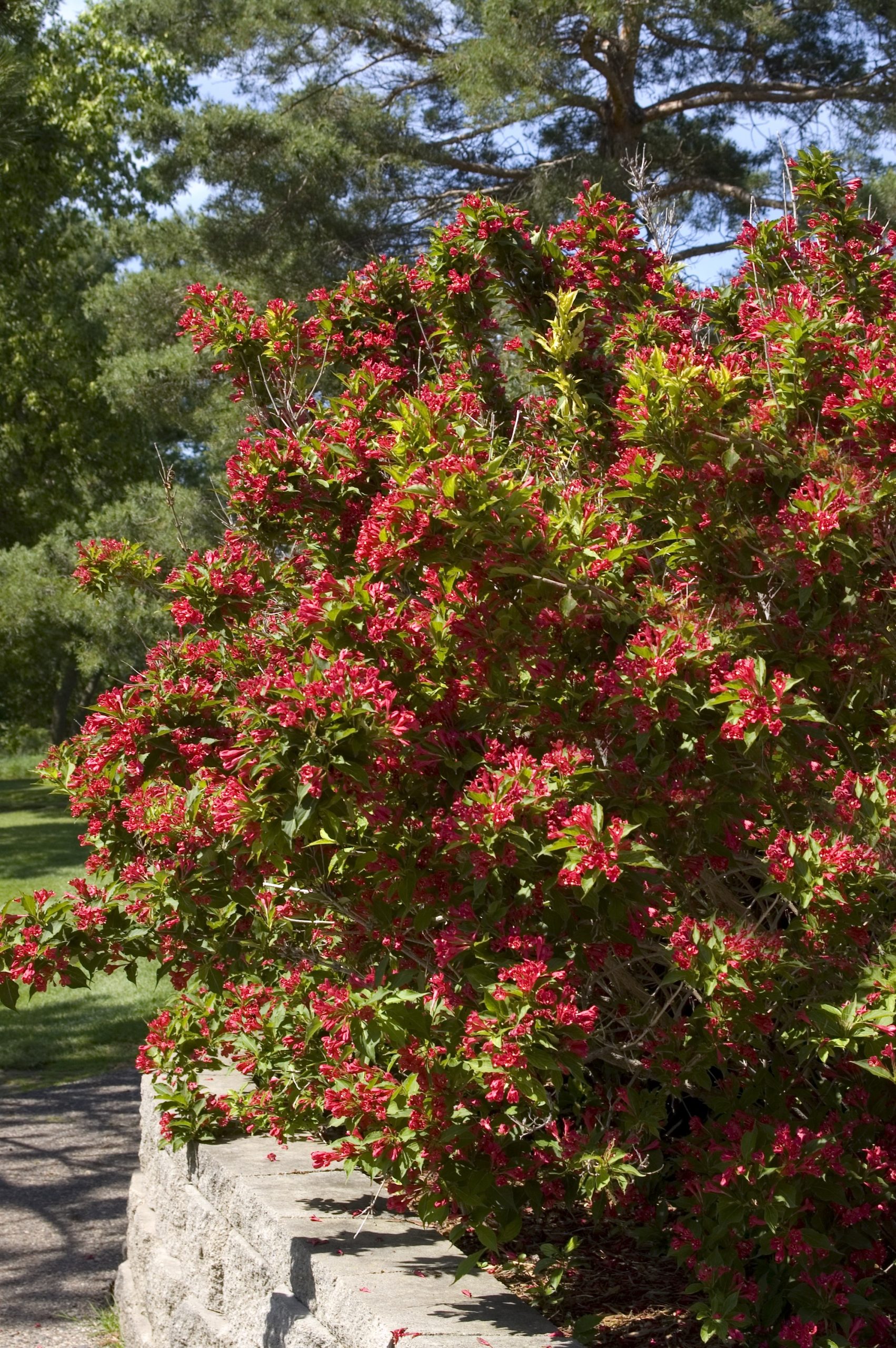
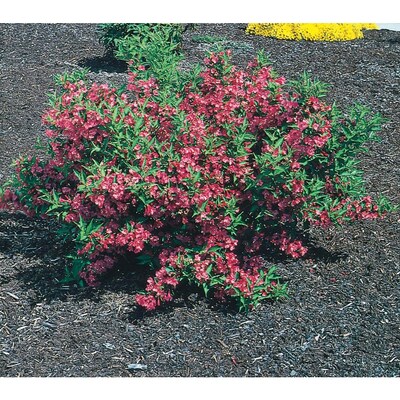
Weigela Red Prince is a beautiful flowering shrub that's easy to plant and care for. If you follow standard care guidelines, the plant will grace your garden for 35 years.