Lady's slipper, or Paphiopedilum, is a perennial plant in the Orchidaceae family. It is native to tropical Asia, particularly the Philippines, Thailand, and India.
Content
Description of Paphiopedilum
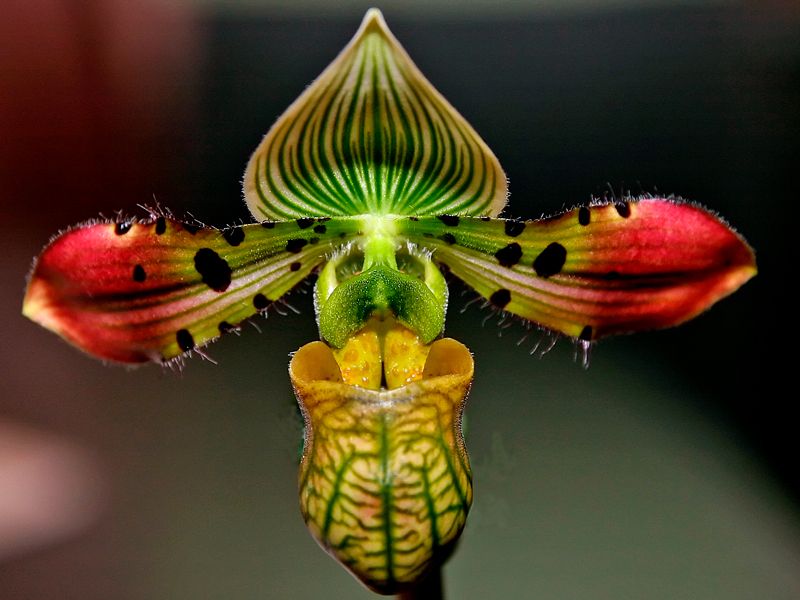
The orchid's appearance resembles a small slipper from a fairytale creature, which is what attracts many gardeners. The stem is fluffy, 15-60 cm long. Three to four pointed, elliptical leaves are located in the center of the stem. The lip is yellow with red speckles.
Popular types of Paphiopedilum
Several varieties of Paphiopedilum can be grown indoors:
| View | Description | Bloom |
| Acaulescent | It has an above-ground stem with two leaves, oval, lanceolate, or oblong in shape. It grows up to 20 cm in length and is greenish-purple in color. The peduncle reaches 35 cm and bears a large, fragrant bud. | Late spring – early summer. |
| Ram-headed | A slender stem reaching a height of 30 cm. The foliage is up to 10 cm long and elliptical in shape. The flowers are small and borne singly. | The end of spring. |
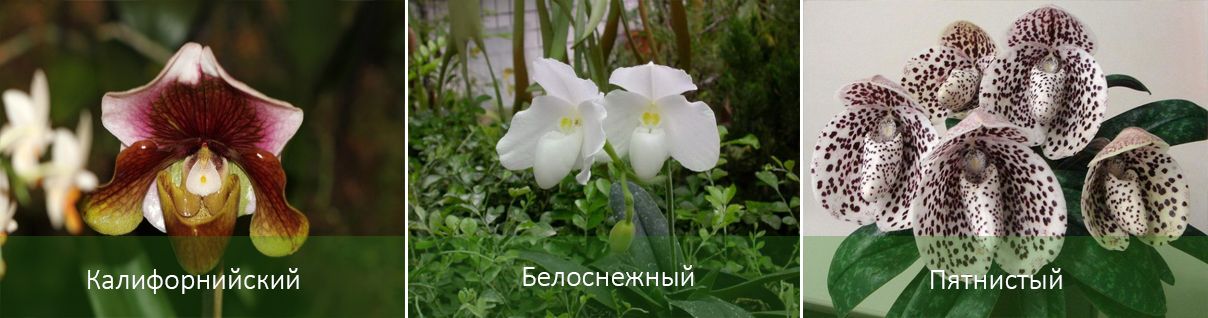
| Californian | A sturdy trunk, 80 cm tall, has 3-4 oval leaves, approximately 10 cm long. The flowers are up to 40 mm in diameter, and the bracts are round and leaf-shaped. The petals are yellowish-green. | May. |
| Snow-white | Up to 30 cm tall, it has a short rhizome. Several scale-like throats are visible at the base of the stem. The leaves are elliptical or lanceolate, with pointed tips. The sepals are greenish-purple. | Late spring or early summer. |
| Tufted | The stem is drooping. Two wide oval leaves, up to 10 cm long, are located in the center. The inflorescences are erect, with one to four flowers. | The end of spring. |
| The slipper is real | A perennial plant growing to 40 cm tall. It has a short, thick root system. The flowers are large and have a faint scent. The sepals are reddish-brown. The lip is yellow-green or deep yellow. | May – June, first fruits appear in August. |
| Large-flowered | A perennial herbaceous plant, up to 45 cm tall. The foliage is oval with slightly pointed tips. Its color ranges from soft pink to cherry. The lip is swollen, covered with spots and dots. It has medicinal properties due to the presence of beneficial substances such as vitamin C and oxalic acid. Tinctures made from this flower are prescribed for frequent headaches, genitourinary disorders, and mental illnesses. | May. |
| Spotted | A herbaceous perennial, up to 30 cm in height. Creeping rhizome, sessile foliage, about 10 cm in length. One flower, white with purple spots. | Late spring or early summer. |
| The Queen's Slipper | A herbaceous flower, up to 60 cm tall, with a short rhizome. The foliage is oval, about 25 cm long, and light green. The buds are white or pink. The lip is slightly convex, white with purple stripes. Frost-resistant. | July. |
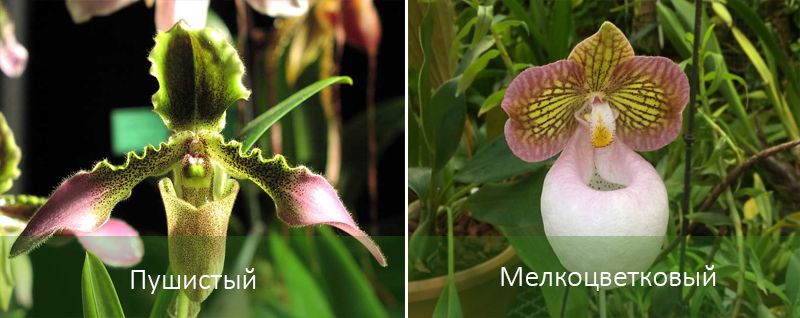
| Fluffy | Height up to half a meter. The stem is sturdy with four alternate leaves. Flowers are solitary, though occasionally two or three may be found. The foliage and sepals are green. The lip is bright yellow with red veins. | May – June. |
| Small-flowered | Up to 7 cm tall, it has four oval or elliptical leaves and two intensely fragrant flowers. The lip is bright yellow with purple stripes. | Late spring or early summer. |
| Mountain | Height: about 70 cm. The stem is fluffy, the foliage is ovate. Up to three fragrant flowers can appear simultaneously. The lip is elongated and purple. | Late spring – early summer. |
Caring for Paphiopedilum at Home
Paphiopedilums are wild plants, so they don't require much care when grown indoors. However, there are still a few nuances to consider.
Choosing a pot, soil
It is recommended to select wide and low containers, this will simplify watering in the future.
The soil mixture should include the following elements in the ratio: 10:1:2:1:2:
- crushed pine bark;
- shell powder;
- charcoal;
- perlite;
- peat.
Location, temperature
This plant is recommended to be placed on an east- or west-facing windowsill, although some orchid species also thrive on a north-facing window. The room containing the plant should be regularly ventilated, and during the summer, the Paphiopedilum can be moved outdoors.
The plant prefers diffused light, but also feels good in slight shade.
Lady's slipper orchids are divided into species that prefer moderate temperatures (18 to 22°C) and heat-loving plants (25 to 30°C). The optimal temperature for all varieties is considered to be 18 to 25°C.
Watering, fertilizing
The plant lacks storage organs, so it requires regular and abundant watering. The substrate should be kept slightly moist at all times. Use room-temperature water, and avoid splashing the stem when applying it, as this can cause rot.
During the summer, lady's slipper plants should be fertilized every 15-20 days. For this purpose, use mineral fertilizer, which is added along with water when watering. To regulate the salt levels in the soil, it is recommended to water the plant with distilled water once a month.
During and after flowering
Most indoor varieties of lady's slipper flower buds form in November–December. During this period, the plant should not be disturbed, moved, or rotated. No changes to care are required.
After flowering, the orchid needs a rest period. During this period, the temperature is reduced to 15–20°C, watering is reduced to once every 14 days, and fertilizing is minimized. Regular care is resumed only after a new shoot emerges from the old rosette.
Transfer
To determine whether an orchid needs repotting, gardeners recommend paying attention to the flower's appearance. Signs of need include:
- very compact soil;
- unhealthy appearance of the flower;
- presence of mold;
- the smell of rot from the orchid.
To ensure healthy growth, gardeners recommend repotting orchids every two years. This is done after flowering, as this allows the plant to more quickly establish itself in the new soil. Carefully remove the orchid from its pot and transfer it to a new container. The first watering should be done three days later.
Growing lady's slipper in open ground
Orchids placed in open soil bloom no sooner than after 15-20 years and can live for about 30. However, caring for orchids growing in the garden involves several nuances:
- at the beginning of spring you need to get rid of the insulation and loosen the soil;
- watering should be regular and moderate (done immediately after the top layer of soil dries out);
- the soil must be as clean as possible, all weeds are removed using pruning shears, this is necessary so as not to damage the orchid’s root system;
- You can skip spring feeding, because the plant feeds on the remains of mulch;
- the second application of fertilizer should be done at the beginning of May (these should be mineral complexes diluted in water);
- the next feeding should be carried out at the end of June, but only in cases of absence of flowering;
- in late summer or early spring, the flower should be cut near the base;
- Before the start of the winter season, mulch the plant.
Top.tomathouse.com informs: Paphiopedilum – medicinal properties, uses, and contraindications
In alternative medicine, lady's slipper is widely used to treat a variety of ailments. Most often, medicines containing Paphiopedilum are used to treat insomnia and migraines. Furthermore, decoctions of this flower can cure epileptic seizures and improve appetite.
Orchid-based products guarantee the following effects:
- laxative;
- exciting;
- pain reliever;
- sedative.
Decoctions of the flower are used for uterine bleeding, heart and vascular diseases, and hepatitis. Remedies made from the large-flowered lady's slipper deserve special attention:
- An infusion for treating gynecological conditions. One fresh plant is steeped in 300 ml of boiling water for several hours. The resulting remedy is consumed within 24 hours. It is also approved for use after childbirth, as it has a blood-purifying effect.
- A sedative. Place a teaspoon of the dried plant in a thermos and add a glass of boiling water. Allow the mixture to steep, strain, and then it's ready to use. Recommended for those with neurological conditions.
- Diuretic infusion. Add a teaspoon of crushed herb to 200 ml of boiling water. Let the mixture steep, strain, and then consume 1 tablespoon after meals.
- A decoction for colds. Pour 200 ml of boiling water over 5 g of dried flowers. Simmer for 5-10 minutes over low heat, cool, and strain. Take 5 ml before meals.
However, despite the numerous beneficial properties of lady's slipper, preparations containing this plant are strictly prohibited during pregnancy and lactation. Furthermore, it should be remembered that Paphiopedilum contains many alkaloids, which are toxic and, if taken inappropriately, can cause serious poisoning.