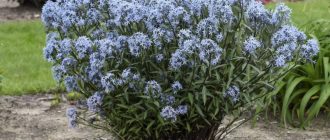
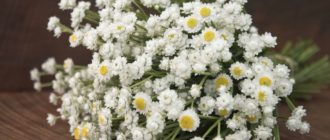
Verbena is a herbaceous plant native to Africa and Australia. The Verbenaceae family is widespread and comprises 200 species. It goes by a wide variety of names, some of which trace their roots back to ancient Greece: ironweed, tears of Juno, veins of Venus, and herb of Hercules. Since ancient times, the plant has been credited with magical properties: it was used in love potions, to combat evil spirits, and to protect the hearth.
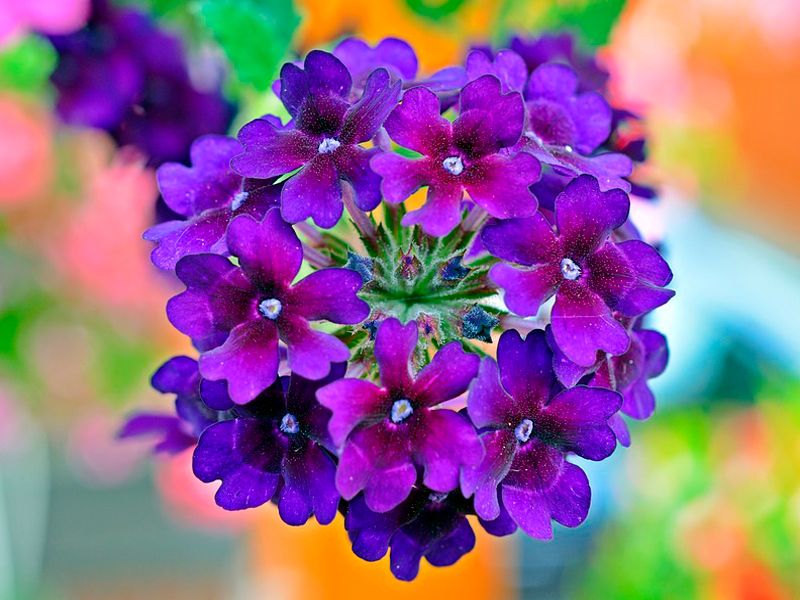
Verbena has also always been famous for its healing properties and has been actively used in folk medicine.
Content
Botanical characteristics of verbena
Verbena's wide habitat is due to its undemanding nature. It thrives not only in meadows but also along borders, on slopes, and in other infertile soils, along with weeds. Traditional Russian medicine has not actively incorporated the plant into its use. This may be due to its status as a weed. However, this has not prevented this medicinal herb from being recognized in several countries in Africa, South America, and Australia.
Types and varieties of verbena
Despite the fact that the flower is represented by several hundred species, only eight, mostly decorative, specimens have been widely distributed in the central zone.
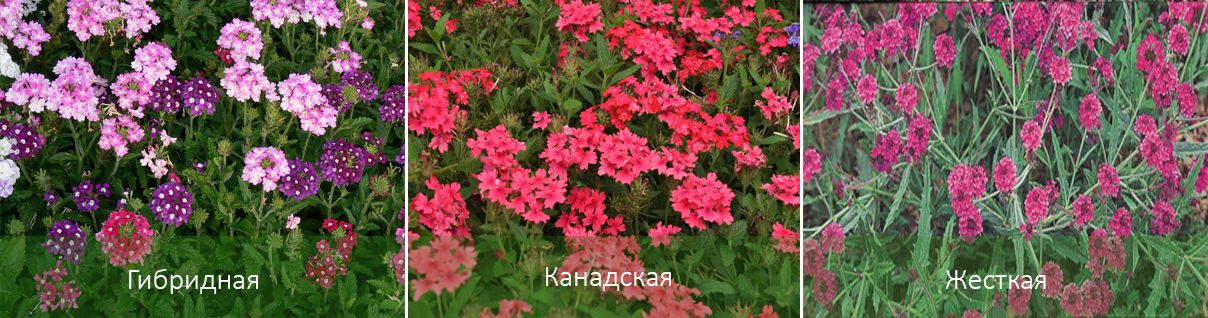
Hybrid
Highly valued for its external characteristics.
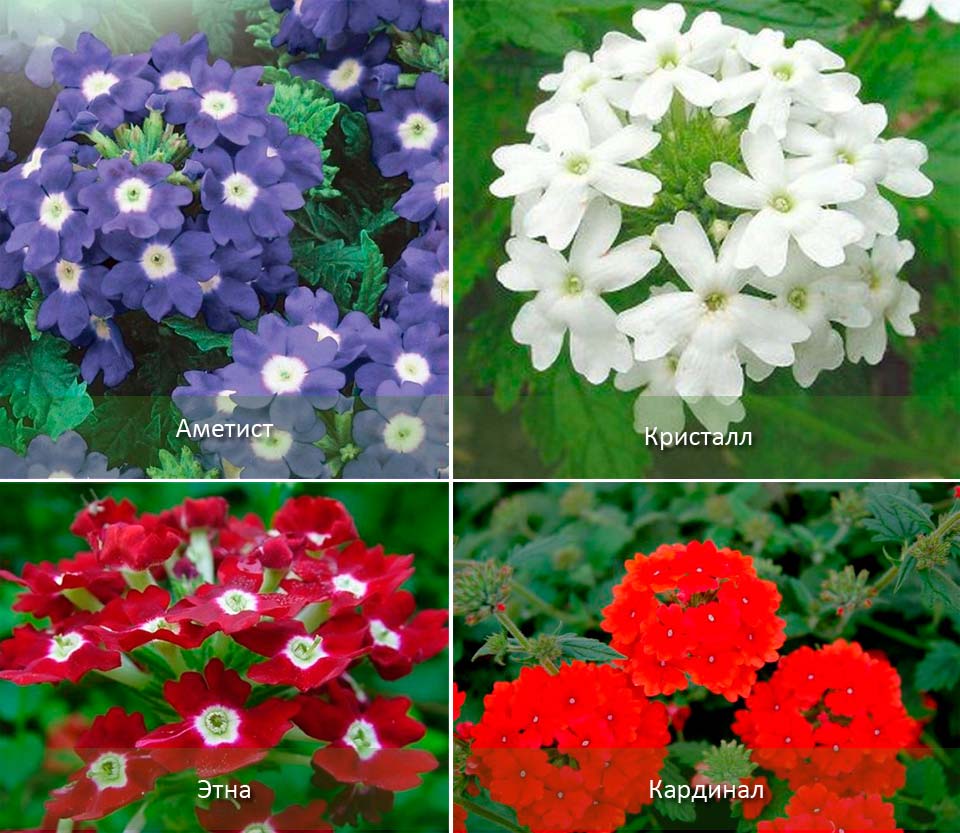
| Variety | Description |
| Amethyst | It grows up to 0.3 m in height, with inflorescences of a rich dark color. |
| Crystal | A branched plant up to 0.25 m; flowers are white with large corollas. |
| Etna | A large specimen, growing up to 0.5 m; flowers are red. |
| Cardinal | Notable for the density of its growing inflorescences with bright red corollas. |
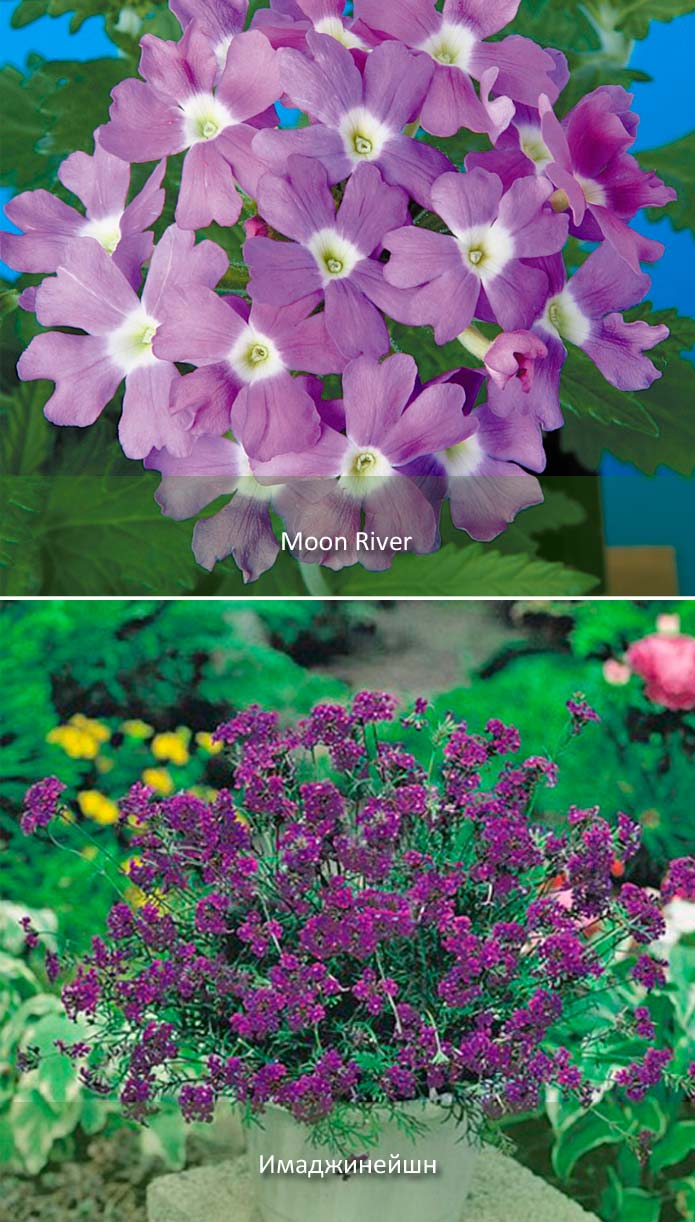
| Imagination | Due to the branching of the stems, this specimen is considered to be ampelous; the flowers are purple in color. |
| Moon River | The bush has a spherical shape and large inflorescences. |
Canadian
This perennial is highly prized because, in certain environments, it can bloom until early November. It grows as a small shrub up to 0.2 m tall with white and pink flowers.
Tough
A perennial species grown as an annual in our climate. The flowers are predominantly lilac in color. Its leaves are notable for their elongated shape and lightly pubescent covering.
Buenos Aires
A tall perennial plant, its stems grow up to 1.2 m in height. It branches extensively above, and below, it is covered with leaves edged with small teeth. It blooms in July with small, tubular, amethyst-colored flowers.
Fragrant (lemon)
A tall perennial, remarkable for its size – 1.5-2 m. The leaves, when crushed, release a faint scent of citrus and mint. The flowers are a delicate pink.
Large-flowered
The species' name derives from the largest flowers of all. A single specimen can reach 10 cm in diameter. They span a wide range of colors, including both dark and light shades.
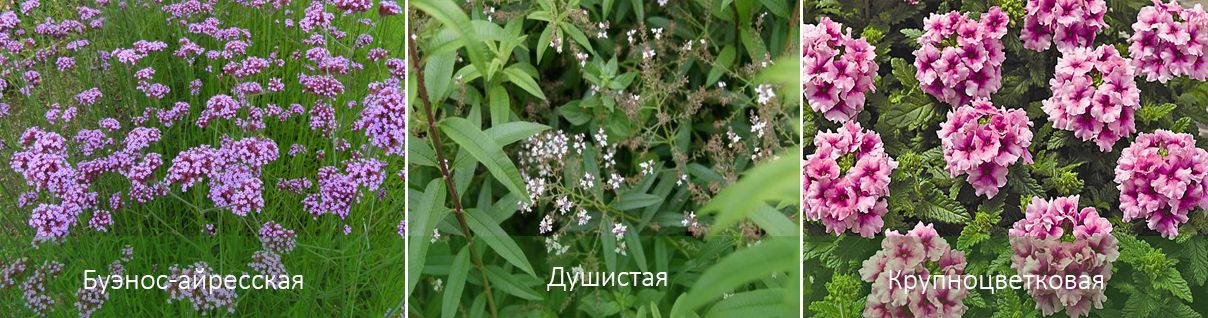
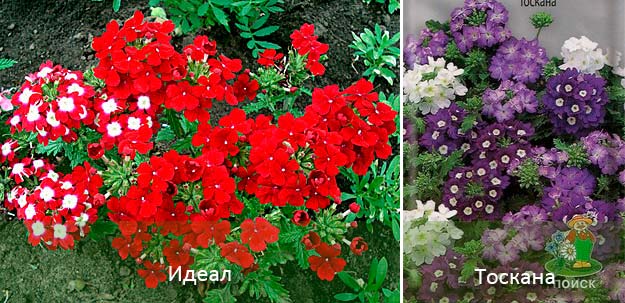
The distinctive white border around each bud adds a decorative touch. The spherical inflorescences bloom in midsummer and end only with the autumn frosts. Only two cultivars of this species are widely cultivated.
| Variety | Description |
| Tuscany | It grows up to 0.25 m, the inflorescences are presented mainly in light shades. |
| Ideal | The stems grow up to 0.3 m. The flower color varies and covers a wide range of shades. |
This species is most revealing in open areas.
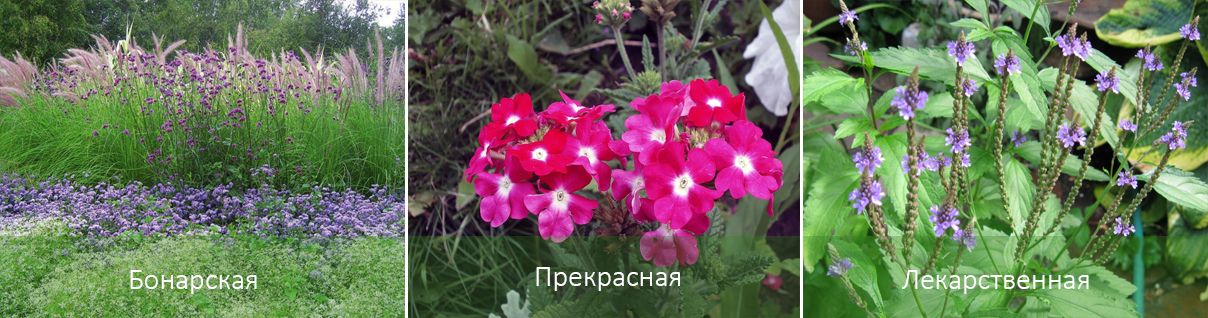
Bonarskaya
Tall stems, about 1 meter tall, bear dense umbels adorned with purple inflorescences. The plant requires little maintenance, staking, or support, yet will delight with abundant blooms until late autumn.
Beautiful
The lush inflorescences are clustered together and shaped like a ball. The flowers are small, but compensate for their size with a wide range of colors. The petals are dissected at the edges. This small shrub grows up to 0.3 m in height.
Medicinal
This species is notable for its roots, which can penetrate deep into the soil, yet the shrub never grows taller than 0.6 m. The stem is cut into a tetrahedron. The leaf blades are decorated with large teeth along the edges. The flowers are small, gathered in neat inflorescences. In late summer, oblong, brown-colored nuts emerge.
Verbena care conditions
Comprehensive care, including maintaining a number of factors at a comfortable level for the plant, guarantees healthy growth and proper development of verbena.
| Factor | Conditions |
| Lighting | It requires good lighting, such as full sunlight. The plant can grow at a normal rate in partial shade, but it will lack lush blooms. At home, you can place the pot on a windowsill or balcony, preferably on a south-facing surface, but it's best to shade the plant during periods of peak sun exposure. |
| Temperature | It covers a wide temperature range and can withstand temperatures as low as -3°C. Favorable temperatures range from +16°C to +25°C. |
| Humidity | The plant loves moisture, but stagnant water can cause root rot, especially in trailing varieties. Providing a drainage system will protect the plant from excessive moisture. |
| Watering | The amount of watering depends entirely on temperature conditions. During hot summer months, regular and abundant watering is required, while in autumn, it requires much less watering, and therefore less frequent watering. |
| Fertilizers | Both mineral and organic fertilizers are required. Organic fertilizers are used only once and only to maintain nitrogen levels in the soil. Mineral fertilizers should be applied no more than four times per season; otherwise, the plant will develop a large foliage mass but will practically lose its flowering potential. |
Planting and replanting verbena
First, you need to choose a suitable location for planting verbena outdoors. Almost any site will do, but a sunny location with fertile soil is preferable. It's important to ensure adequate drainage, which can easily be achieved using broken brick, crushed stone, or expanded clay.
Repotting should be done in late May, as sudden temperature changes and frosts are possible earlier, which will negatively impact the young plant. Dig and level the soil, fertilizing it with compost at a rate of 1 bucket per 1 m². Then, make holes, taking into account the root ball.
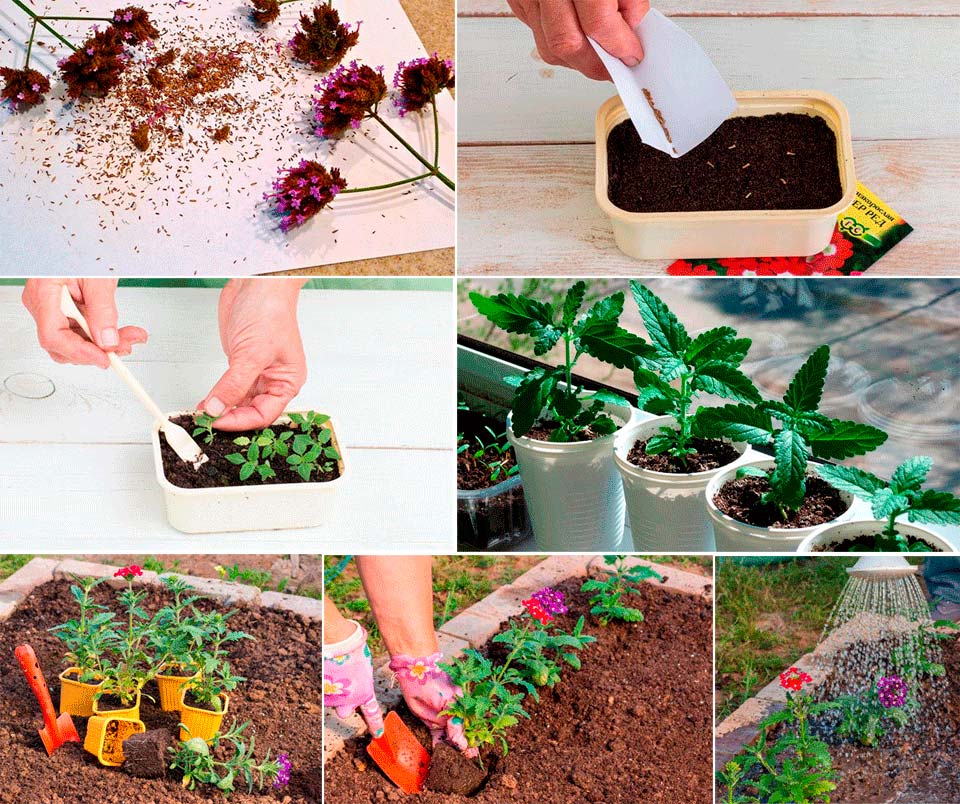
Then, the holes should be watered generously and the verbena bush should be placed in them. It's important to fill the empty space in the hole with soil and compact it. Maintain a distance of at least 0.2 m between the holes. The newly planted plant requires watering.
Propagation of verbena by seeds
Sowing should include the following sequence of actions:
- Soaking seeds in warm water for several days;
- Preparing soil with the addition of sand and peat;
- Immersion of seeds and soil moistening;
- Creating a greenhouse effect by covering the container with polyethylene;
- Store in a cool place for 1 month.
Propagation of verbena by cuttings
Take a mature, healthy plant and, in early spring, take cuttings with five leaves each. Plant the cuttings in soil up to the first bud and water them thoroughly. Cover the container with glass and allow the buds to develop. Transplant them outdoors in early summer.
Pests and diseases
Due to improper care or other circumstances, the plant may be attacked by insect pests or susceptible to disease. To avoid such incidents, it's important to carefully inspect the bushes and take immediate action at the first sign of symptoms. However, the most effective measure is timely prevention.
| Problem | Cause | Measure of elimination |
| Powdery mildew. A characteristic symptom is the appearance of light spots on the leaves and stems. Drops then appear throughout the plant. The disease causes verbena to rot. | Over-hydration, water stagnation. | As a preventative measure, treat the plant with bitertanol. If the disease is already present, treat it with foundationazol. Verbena in advanced stages should be destroyed. |
| Blackleg or root rot. The name speaks for itself: the plant stops growing, gradually rots, withers, and ultimately dies. | Incorrect drainage system, overwatering. | Due to the rapid spread of the fungus, affected verbena must be removed immediately. |
| Aphids and thrips. These insect pests become noticeable only when they have already reached a significant stage of reproduction. They hinder and complicate the plant's natural energy production processes, while also depleting its resources. | Favorable conditions for reproduction. | Regular inspection, at the first signs – treatment with insecticides. |
| Gray mold. The pathogen attacks the leaves, then spreads to the stem. Subsequently, the plant weakens and becomes covered with brown spots, followed by a dusty coating. As a result, all parts of the plant, including flowers and fruits, die. | The presence of dead tissue areas combined with the factor of high humidity. | Fungicide treatment. |
| Spider mites. Signs of their presence include webbing on the leaves and yellow spots (punctures). | Favorable environment. | Application of acaricide. |
Top.tomathouse.com recommends: Verbena and its beneficial properties
The presence of essential oils, a high concentration of glycosides and flavonoids that have a beneficial effect on the human body, contributed to the use of verbena as:
- Tonic and restorative ingredient;
- Means stimulating metabolism in the body;
- Antipyretic agent;
- Antibacterial;
- Antispasmodic drug.
When applied externally, it promotes skin regeneration. Simply apply it to the wound as a poultice. It combats the symptoms of various skin conditions, especially:
- Ulcer;
- Rash;
- Eczema;
- Furunculosis;
- Scabies;
- Psoriasis;
- Acne;
- Boils.
It can also be used as a mouthwash by preparing a verbena decoction. This mixture is excellent at neutralizing unpleasant odors.
Verbena is suitable for people complaining of mental health issues, problems with the nervous system, and in particular, it will have a positive effect on stress, anxiety, emotional tension, and even epilepsy.
Verbena also has a tonic effect, which will be an indispensable solution for people suffering from chronic fatigue and exhaustion.
A number of genitourinary problems in women can be easily resolved with the use of this perennial. Verbena was previously an ingredient in aphrodisiacs. It also normalizes sexual function in men.
Verbena has a beneficial effect on the cardiovascular system, including circulation, blood vessels, and cholesterol levels. It normalizes digestion and stimulates appetite.
There are a number of contraindications to using the plant. Pregnant women should strictly avoid taking verbena-based preparations, as this can lead to premature birth or miscarriage. Use of the plant should be discontinued during lactation, or consult a doctor first.