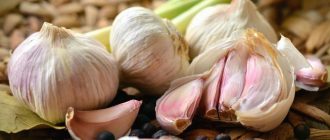
Unlike winter garlic, spring garlic must be planted in early spring. It grows in smaller sizes and is also less juicy, but retains its freshness significantly longer.
Content
What is the difference between spring garlic and winter garlic?
Winter garlic is planted in the second half of autumn and stored in the ground throughout the winter months. Noticeable growth begins only in March, provided the soil has warmed above freezing. Full maturity occurs in mid-summer.
Spring garlic is harvested no later than early fall, meaning it can be planted as early as April. Garlic varieties also differ in their external characteristics, the most important of which is the arrangement of the cloves. Winter garlic grows in rows, while spring garlic has a spiral arrangement. They also have the following characteristics:
- Dense arrangement of teeth;
- Does not shoot;
- The central rod is missing;
- As it moves away from the center of the head, it increases in size;
- Propagation by cloves.
Varieties of spring garlic
The plant's varietal diversity is not great, and since each plant is tied to its own climate, it may not take root or fully blossom in a new location.
Spring garlic varieties for Siberia:
- Novosibirsk 1.
- Siberian.
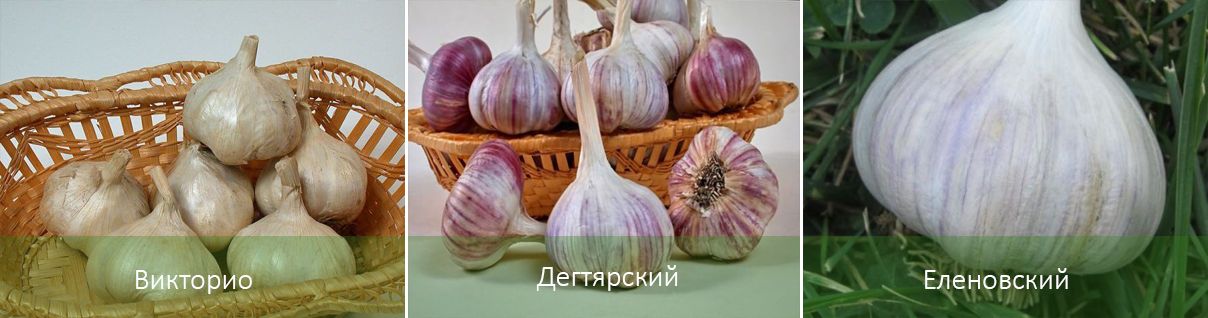
Semi-hot garlic varieties:
- Victorio,
- Degtyarsky,
- Demidovsky,
- Elenovsky,
- Ershovsky,
- Fellow countryman,
- Perm resident,
- Porechye,
- Nugget,
- Uralets,
- Shunut.
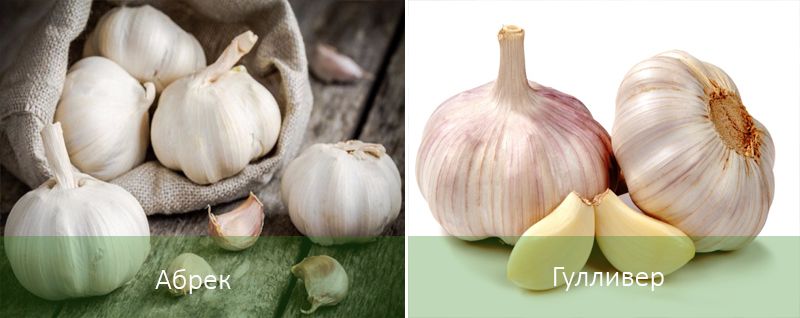
Hot varieties of spring garlic:
- Abrek,
- Gulliver,
- Advice.
Planting spring garlic
The yield depends on the planting location, the weight of the planted clove and its mother bulb.
- It is worth giving preference to the cloves that are farthest from the center, since their germination rate is a third higher than that of the heads located in the middle;
- Small mother bulbs should not be used for planting; specimens weighing 30 g or more are ideal. The recommended clove weight is 3 g;
- It is necessary to ensure conditions for the simultaneous ripening of the crop, so the size of the planting material should not vary greatly, otherwise there may be significant losses during harvesting.
Preparation of planting material
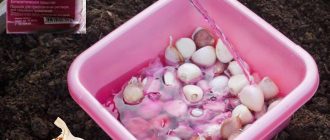
Spring garlic requires pre-germination, so this procedure should be carried out in the first half of spring.
Otherwise, ripening will be significantly delayed and occur as late as mid-autumn. To carry out the procedure correctly, follow these steps:
- Prepare a growth stimulating solution;
- Soak in the evening and leave until the morning;
- Store in the refrigerator, after wrapping in gauze and plastic (to prevent drying out).
These measures will stimulate root growth, which will reach 1 cm by planting time. Root damage is common in sprouted plants. To avoid this, carefully insert the cloves, avoiding any force.
Timing of planting spring garlic
Early planting is most beneficial, so it should be done no later than mid-May, when the soil has thawed. During the initial growth stage, high temperatures are detrimental to cloves. Late planting significantly reduces rooting due to dry soil, while leaf growth does not slow down, as they consume the potential of the mother clove. Under such conditions, a bountiful harvest is unlikely.
The best predecessors
You should refrain from planting garlic in places where the following plants previously grew:
- Potato;
- Carrot;
- Onion;
- Garlic.
In this case, in the case of the last two, the break must be at least 3-4 years.
The best predecessors are considered to be pumpkins, grains, and legumes. Cabbage, cucumbers, and zucchini are also suitable. Garlic also has another advantage: its ability to repel certain pests. Therefore, it can be planted in the same bed with roses, tulips, tomatoes, and cucumbers. Planting it near beans or peas is undesirable, as it will suppress the latter.
Planting pattern for spring garlic
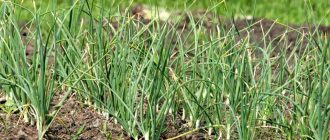
The most common methods are band and wide-band cultivation. A higher density of cloves will increase yield but reduce the weight of each individual specimen. This method is suitable for growing for consumption, but for seed crops, a minimum distance of 6 cm between cloves must be maintained.
It's important to consider the soil's mechanical structure when planting garlic: the lighter the soil, the deeper (around 5-6 cm is standard). Planting too deeply will delay ripening and may also deform the planting material.
Caring for spring garlic
Weeds are the main threat to garlic, as they deprive the soil of nutrients, lead to various diseases, and increase the likelihood of pests, so the soil must be regularly loosened and weeded.
Watering
To promote leaf growth, garlic needs ample moisture during the first half of the growing season. Symptoms of water deprivation appear at the tips of the leaves:
- Yellowness;
- Drying out.
Then, reduce the frequency and amount of watering, otherwise the garlic will become diseased. After rain, loosen the soil.
Top dressing
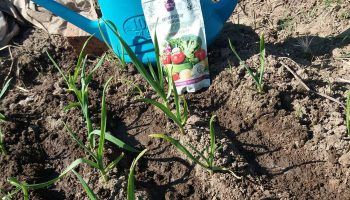
The presence of mineral and organic fertilizers in the soil will promote a higher yield, as garlic's modest root system poorly absorbs nutrients. Fertilizing is necessary throughout the entire growth cycle. Immediately after planting, nitrogen-based fertilizers are most suitable. Once the plants reach 10 cm in height, the following fertilizers are suitable:
- 15 g of ammonium nitrate per 10 l;
- 1 tbsp. urea per 10 l;
- Low concentration bird droppings;
- Diluted mullein.
It is not recommended to use fresh manure as fertilizer.
From early to mid-summer, you can feed the plant with an herbal infusion. You can also apply 150 g of wood ash diluted in 10 liters of liquid 3-4 times. It's important to apply the fertilizer sparingly, otherwise the plant may crack.
Top.tomathouse.com recommends: harvesting and storing spring garlic
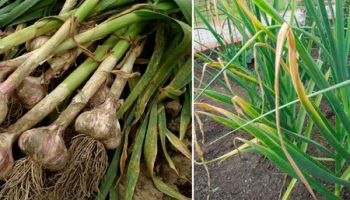
The signal to harvest spring garlic may be:
- Wilting of the lower leaf layer;
- Stem lodging;
- Yellowing of the upper leaves.
Harvesting time depends on the garlic variety, climate, and soil conditions. Symptoms indicating the need to harvest will likely appear in late summer. Delaying this process is not recommended, as overharvesting the cloves significantly deteriorates their quality.
Watering should be stopped a few days before harvesting, which should be done on a dry day. After removing from the soil, the garlic should be dried outdoors for 5 days. If precipitation occurs, move it to a dry, well-ventilated area.
Before storing garlic, it must be processed:
- Shorten the roots and stems;
- Trim the foliage;
- Distribute by size.
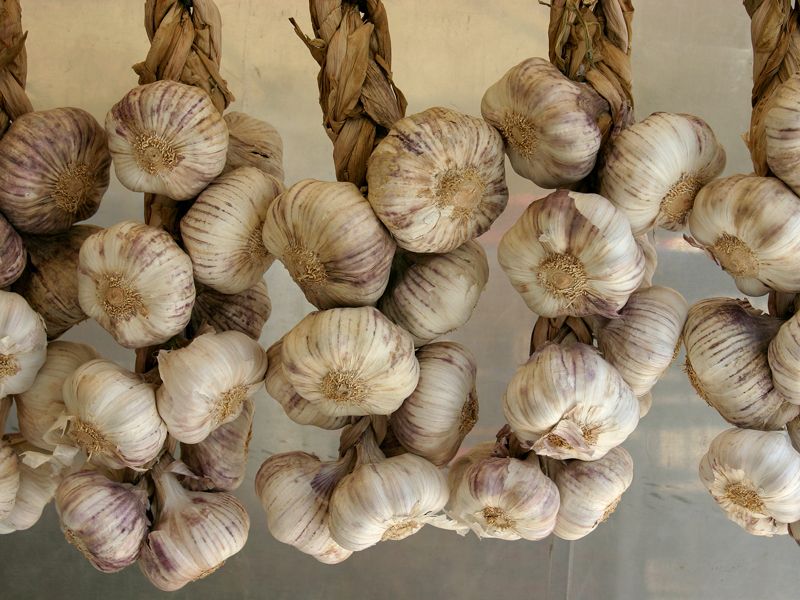
Spring garlic is usually stored in a hanging net, wooden box or wicker basket.