Cerastium (Cerastium) is an annual or perennial plant belonging to the Caryophyllaceae family. The scientific name Cerastium comes from the Latin word for "horned," referring to the small horns that form in the flowers of some varieties.
Content
Description of the yaskolka
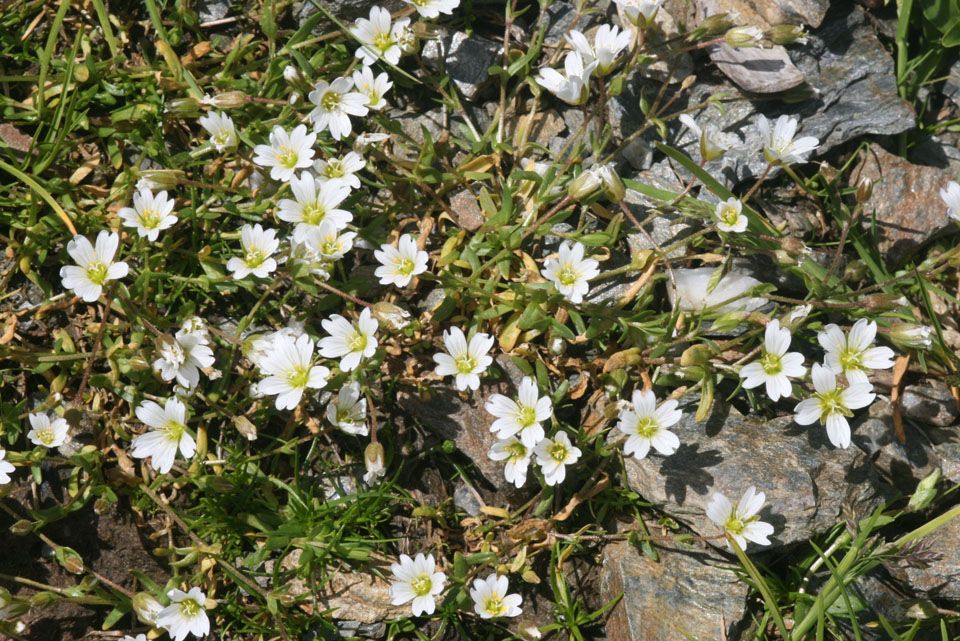
It grows in the northern parts of the Earth: Eurasia, Africa, America, and Australia. The flower petals are white and serrated, and the shape is most often oval, lanceolate, or ovoid.
The seeds are brown. Varieties reach approximately 200 seeds. Abundant flowering begins late in May.
The common field variety of Cerastium can be found in the USA, Canada, Mediterranean countries, the Caucasus, Ukraine, Russia and other regions.
While admiring cultivated flowers, people do not realize that these representatives of the flora are a magnificent and rich material for the treatment of many ailments.
Popular varieties
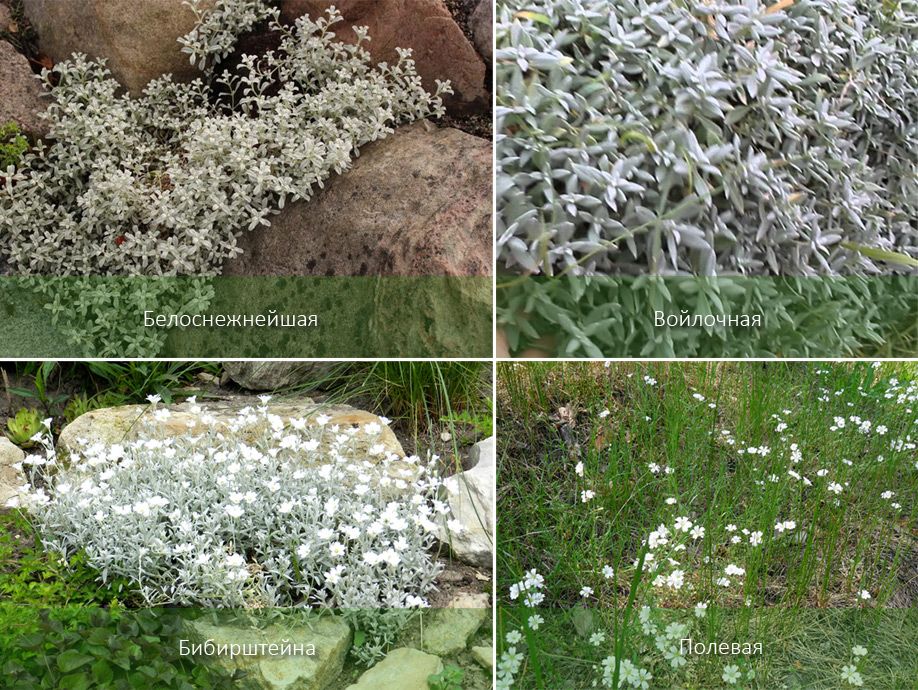
Currently, the unusual and highly diverse yaskolka has approximately 200 species. Florists distinguish several varieties:
| View | Description |
| Biberstein |
|
| Felt |
|
| The snow-whitest |
|
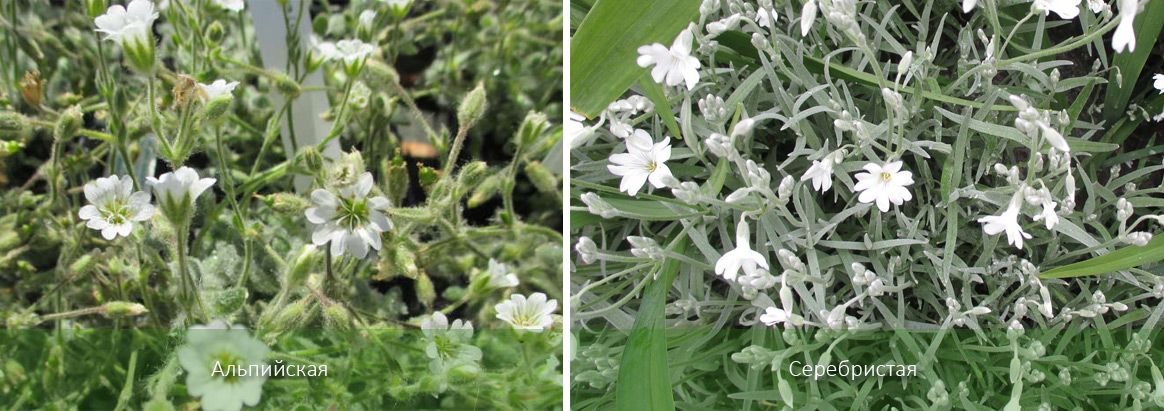
| Silvery |
|
| Alpine |
|
| Field |
|
Planting and caring for the yaskolka
For a beautiful flowerbed to grow, the soil must be loose and airy:
- It needs to be loosened deep inside, 10-25 cm.
- Then thoroughly fertilize the soil with compost, manure, peat (approximately 6 kg per 1 sq.m.) or mix with sand (1 part sand to 4 parts fertile garden soil).
- Dig holes at a distance of 25-30 cm, fill with warm water and plant the seedlings.
- Water periodically for the first three days. The plant's root system is strong and active.
You can also sow seeds outdoors at the same spacing. The ideal seedling temperature is 20 to 25°C. The dense cover protects the flowers from sun and strong winds.
The plant is drought-resistant and usually thrives on rain. If the flower becomes too dense, remove excess stems. However, keep in mind that pruning prolongs flowering.
Regular tilling and weed control are recommended. To prevent the soil from becoming too hard, mulch it in early spring. For winter, cut the stems back to 3 cm and cover with peat or pine needles.
Avoid planting perennial yaskolka next to crocuses, muscari, and bulbous irises. Tulips, lilies, daffodils, and deadnettle make excellent neighbors.
Rules for growing yaskolka
In general, the flower is undemanding in terms of location and care, but it is important to follow the rules for its cultivation.
Key points of care:
- In early spring, you need to cut off lifeless stems, thoroughly clean and loosen the soil around them.
- If necessary, for abundant flowering, apply up to 3 additional fertilizers with a mineral-vitamin complex.
- Water once a week.
- Remove early flowering shoots.
- Trim stems to create desired shape.
- No shelter is required during winter.
- To ensure the flower blooms profusely, it needs to be rejuvenated (transplanted overgrown bushes into smaller ones for abundant bloom) – once every 5 years.
Reproduction of the yaskolka
Each species is propagated by traditional methods that are familiar to every gardener:
- seeds;
- dividing the bush;
- rooting cuttings.
Seeds for seedlings
The most common method is seed propagation. In early spring, they are sown as seedlings in containers with soil. The seeds are distributed well and watered lightly. The tray is placed in a bright, daylight-filled room with an average temperature of 19 to 23°C.
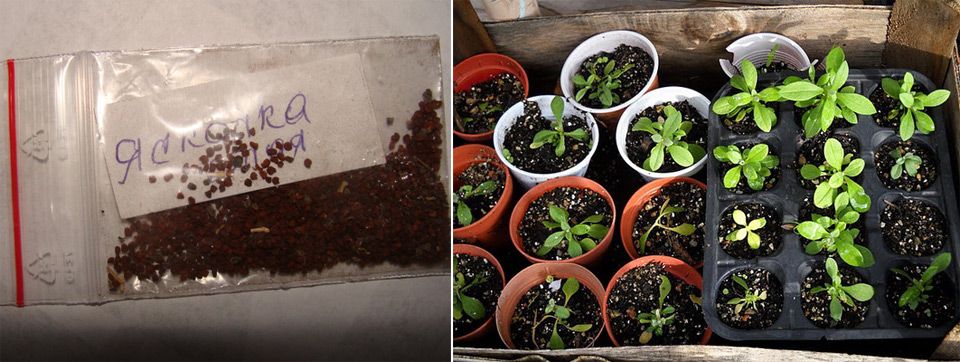
The first shoots appear on the 10th day. Seedlings about 5 cm tall are placed 2-3 at a time in small pots. In late spring (May) or early summer (June), the finished seedlings are planted in the ground.
Dividing the bush
Propagation by dividing a bush consists of dividing part of the bush and planting it with soil in another location.
Reproduction mostly occurs in these two ways, but sometimes cuttings are used for perennial yaskolka.
cuttings
In March or August, the removed stems are secured in open soil, watered thoroughly 24 hours before treatment. Until roots appear, the planting material is stored under a protective cover.
Pests, diseases, and problems when growing yaskolka
Cerastium has fairly strong immunity to pests and infections, but some diseases can affect it. Therefore, it is important to know them to overcome them quickly.
| Problem | Cause |
| Slow growth | Planting in soil that is not nutritious enough or not pruning the stems. |
| Abundant growth | No rejuvenation (dividing bushes) was carried out. |
| Fungal diseases | Planting in soil that is too wet, with stagnant moisture. |
| The flower gets wet | Variable local climate, temperature fluctuations. It is found in regions of the Russian Federation, from the Leningrad region to the Moscow region and Siberia. |
Top.tomathouse.com informs: the benefits and harms of the yaskolka
The medicinal properties of cerastium have long been used by traditional healers and natural medicine enthusiasts. Decoctions have long been popular in home medicine. They have a calming and anti-inflammatory effect.
Flowers are used for the following diseases:
- irritability and depression;
- vitamin deficiency;
- tumor removal;
- conjunctivitis;
- intestinal disorders;
- skin diseases: dermatitis, eczema.
It is strictly contraindicated to use this folk remedy for allergies, stomach ulcers and duodenal ulcers.
To prepare long-term storage preparations, use the roots, stems, and crushed leaves of the plant. The best time to store and dry the material is during the flowering period. Dry the preparations in a dry, warm place on a piece of paper. Store in plastic or glass containers to retain heat. Experienced users dry the raw materials in a thin layer in an electric oven at 30–35°C.
The most common recipes
- A soothing decoction: add 3-4 tablespoons of chopped herb to 0.5 liters of boiled water and steep. Take internally or use in a bath.
- Tincture for cancer: 1 teaspoon of dried flowers is filled with a glass of water, boiled for 3-5 minutes over low heat, infused for 2-3 hours, and half a glass of the decoction is consumed 4 times a day.
- Conjunctival tincture: Add 3 tablespoons to 0.5 liters of water and boil for 5 minutes. Use as a compress after cooling.
- Treatment of vitamin deficiency: take a third of a glass of the brewed decoction three times a day before meals.
Thus, a real snow river will decorate and refresh a flowerbed in any garden.
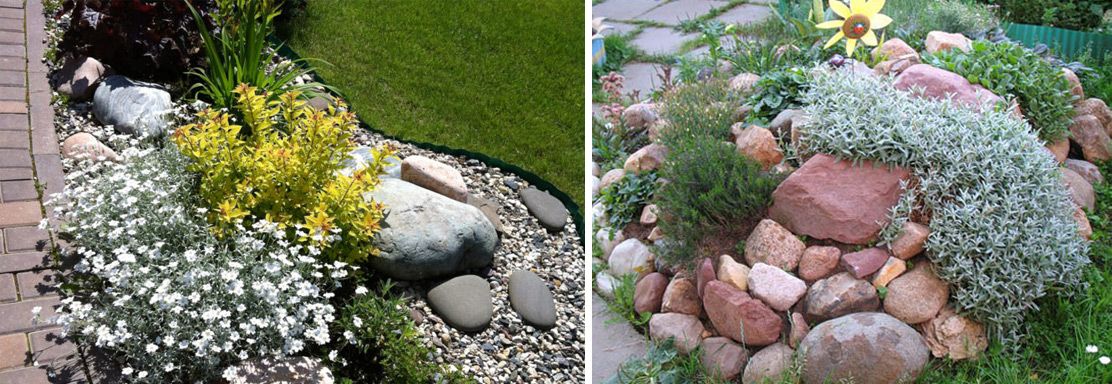
This ornamental plant will always delight with its striking color, lush white blooms, and low-maintenance care. Furthermore, these flowers have numerous beneficial and medicinal properties that can easily be used in traditional home remedies.