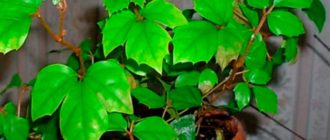
The striped zebrina belongs to the Commelinaceae family, genus Tradescantia. It is native to Central America, from Mexico to Florida.
Zebrina has a unique foliage coloration. If you look at the photo, the foliage is purple-violet underneath, but bicolored above: a purple-green stripe runs along the central vein (the narrow margin is also the same shade), and the sides are silvery.

Thanks to these characteristics, the plant can be easily distinguished from other species.
Zebrina morphology:
- Creeping shoots 0.6-0.8 meters.
- The stems are smooth, juicy, cylindrical in cross-section, purple-violet in color.
- The leaves are alternate, sessile, broadly lanceolate, roundish at the base or oval with a pointed tip. They are approximately seven centimeters long and up to three centimeters wide.
- The flowers are single, symmetrical, have three petals, and are lilac-colored. They arise in the leaf axils at the tip of the stem.
Flowering begins in spring and summer.
Varieties
A common species is Zebrina pendula (pendulous). Its drooping shoots form clumps with shallow rooting. The leaves are ovate with an elongated tip and grow in two rows. They are reddish in color, with two silvery-white stripes on the outer side and purple on the inner side. The flowers are sparse and pinkish.
Surrounded by a pair of bracts, white beneath and pinkish-purple above, pendula grows in the humid tropical forests of the Americas and Mexico.
Another variety is the Zebrina Purpuzo. This variety is grown as a houseplant in favorable indoor conditions. The leaves lack the characteristic stripes. The stem and foliage are a reddish-olive-green. The outer side is pubescent, while the inner side is bare and purple. In the wild, it grows in the savannas of Mexico, at altitudes of 400-500 meters above sea level.
There are also other varieties: Zebrina pendula quadrangularis, Phlocculosa, and Calathea. The leaves of the former are greenish in the center with a metallic sheen. They are framed by greenish-red or light-colored stripes. The foliage underneath is purple. Phlocculosa has soft, fuzzy foliage and purple flowers. Calathea was bred specifically for indoor use. Its leaves are light green, velvety with dark stripes. The plant reaches 45 cm in length.
Growing indoors
The plant is easy to maintain: caring for zebra lilies at home doesn't take much time. It's virtually impossible to kill, so even a novice gardener can manage it.
Watering and fertilizing
The plant tolerates dry climates well, but this can cause its foliage to become smaller. To maintain its beauty, the zebra plant needs to be watered regularly as the top layer of soil dries out. Tradescantia dislikes excess water. Therefore, watering should be alternated with loosening the soil and irrigating.
Fertilizing helps the leaves grow larger and the shoots grow faster. Fertilizing should be done every couple of weeks from March to September. Use a complex fertilizer with minerals for indoor plants. Avoid this in winter. Zebrina also needs to be watered less frequently because evaporation decreases.
Lighting, temperature and humidity
The plant prefers bright light. Therefore, it's best to place the Zebrina on a windowsill, on any side, but not on the north side. This is because it will receive little light there, causing the foliage to become smaller. When watering in hot weather, it's best to remove the plant from the windowsill to prevent it from burning.
Sufficient lighting can be provided artificially by installing additional lamps. Daylight hours should be ten hours at any time of year.
Humidity isn't important for the plant. In summer, it's recommended to mist it with water to prevent the leaves from drying out. This isn't necessary in winter.
It grows well at temperatures between 10 and 25 degrees Celsius. In very hot weather, it's best to keep the zebra plant out of direct sunlight and mist it regularly. In winter, avoid lowering the room temperature below 8 degrees Celsius. Otherwise, the spiderscantia won't live long.
Pruning, propagation, planting, replanting
The plant tolerates pruning well. It's necessary when shoots become too elongated, as it promotes branching and rejuvenation. Young shoots will develop quickly and bloom well. Cut shoots are ideal for planting.
Zebrina is usually delivered from the store in a small pot. A few weeks after purchase, it is recommended to repot it into a more suitable standing or hanging container: one 2-3 cm larger, shallow, and wide. The container should have drainage holes in the bottom.
It's best to plant spiderwort in a ceramic pot. This material allows for good air and water permeability. Plastic doesn't, so you'll need to loosen the soil more frequently. The container should be medium-sized, wide, and not too deep (the plant's roots are close to the surface).
Potted zebrina isn't particularly picky about soil, but prefers light and fertile soil. The soil should consist of humus, garden soil, and sand (in a ratio of 1:2:1). Avoid overfeeding the plant with organic matter. This can cause it to lose its natural appearance (lose its distinctive color, and the grass will turn green).
Tradescantia takes root well. Its cuttings and tips take root within a few days.
Propagation is by seed and vegetatively. In the former case, it is recommended to cover the plant with glass or plastic until germination occurs. In the latter case, place six to eight seeds in a single pot. After watering, you can cover the plant with plastic for a greenhouse effect.
Young shoots should be kept away from the sun until they become stronger. When propagating vegetatively, cuttings and tops are planted directly in a permanent pot. Roots will begin to grow within a few days.
Diseases and pests
Tradescantia is a strong and resilient plant. Pests and diseases rarely affect it. Most commonly, only scale insects and spider mites take hold. The first parasite lives on the underside of the foliage, where characteristic plaques are visible. If the spider mite infests the foliage, it can be seen by inspecting the internodes. This can cause some foliage to fall off without any apparent cause.
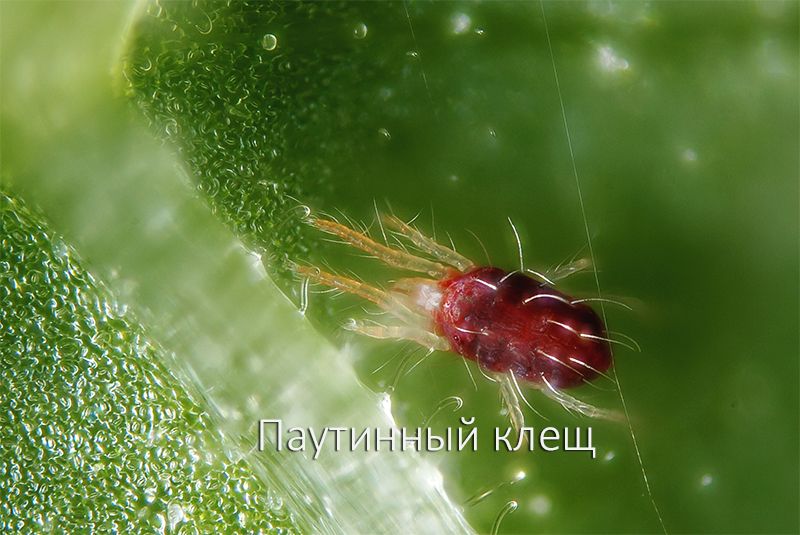
If pests are detected on the plant, treatment must begin immediately, otherwise the plant will die. In the early stages of infestation, the spiderwort is treated with a soapy solution. Afterward, rinse thoroughly to remove any detergent residue from the leaves and dry with a hairdryer.
If pests have severely damaged the plant, treatment with toxic chemicals is necessary. These are available at any flower shop. Use them strictly according to the instructions.
Harm and benefit, medicinal properties
Tradescantia is effective at purifying indoor air of dust, toxins, and cigarette smoke. Furthermore, the plant is beneficial for ailments such as colds, runny noses, sore throats, and diabetes.
The plant has wound-healing, hemostatic, antidiabetic, and anti-inflammatory properties. Zebrina is used to treat the following conditions:
- If the plant is small, take a small leaf and rub it between your hands until the juice appears. Then apply the leaf to the affected area and secure it with a bandage or adhesive tape.
- For boils, collect the leaves and crush them thoroughly. Be careful not to lose all the juice. Apply the leaves to the affected area, cover with plastic wrap, and secure with a bandage. Leave the compress on for 6-8 hours, then change. Repeat until the boil ruptures.
- For diarrhea, you can make an infusion of zebrina. Take a 20-cm-tall stem with the greens. Finely chop everything and pour a glass of boiling water over it. Let it steep for several hours, strain, and take 100 ml orally 30 minutes before meals.
- To treat a sore throat, squeeze the juice from the stems and mix it with a glass of warm water. Gargle with the mixture three times a day.
- To treat a runny nose, make juice from the spiderwort stem. Place 2 drops of the extract in each nostril 3 times a day.
Any of the above-mentioned medicinal recipes should be approved by a physician. This will help avoid adverse effects.