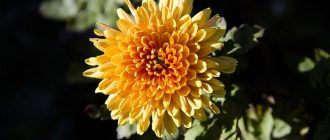
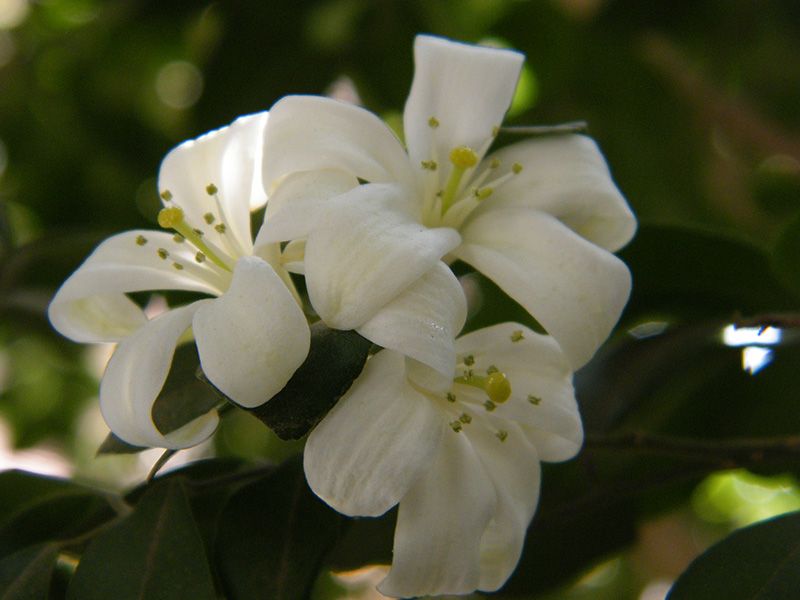
Jasmine is a flowering plant belonging to the Oleaceae family. It is found in the tropics and subtropics of Africa, Australia, and Asia.
Content
Description
Species of this plant can be evergreen, deciduous shrubs, or vines. The leaves are simple, trifoliate, or odd-pinnate. The flowers are star-shaped, with a white, yellow, or pink corolla, and can be solitary or clustered in inflorescences. They are located at the top or side of the plant. Jasmine is often confused with mock orange due to their similarly scented flowers. However, garden mock orange is a shrub belonging to the Hydrangeaceae family.
Types of jasmine for the home
There are over 300 species in the jasmine genus. Only a few can be grown indoors.
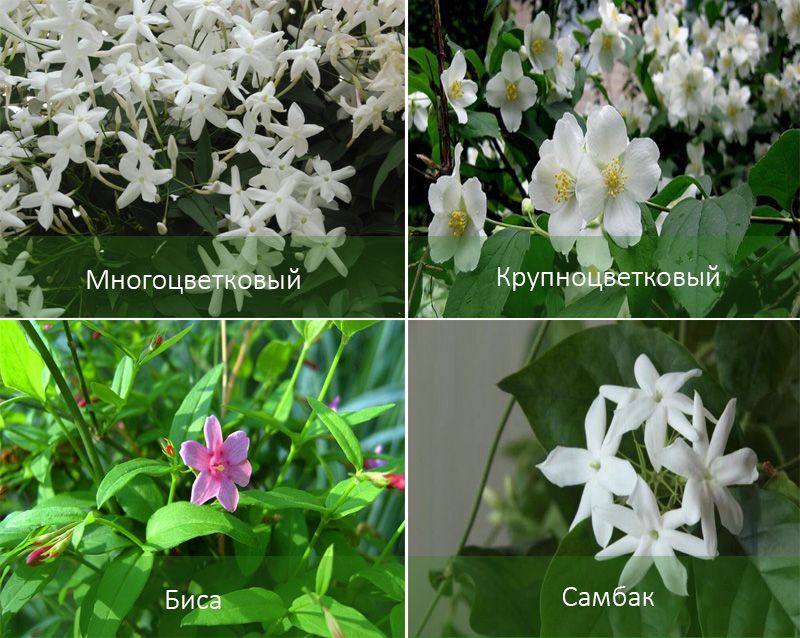
| View | Description | Flowering period |
| Multi-flowered | A sparsely branched shrub about 2 meters tall. The dark green leaves are oval-pointed, with a wavy edge. At the top of each stem is an inflorescence consisting of numerous flowers. The buds are pink, turning white when they open. It has a pungent scent. | February – August |
| Large-flowered | An evergreen shrubby vine with bare shoots. It grows up to 10 m. The leaves are opposite. The umbel inflorescence, located at the top of the stem, contains 10 or more white flowers with a fabulous aroma (used for brewing tea). | June – October |
| Bisa | An evergreen shrub (growing up to 2 m). Lanceolate, dark green leaves reach 5 cm in length and are arranged opposite each other. At the top of the shoots are clusters of fairly large, light- to dark-pink flowers. It has a rich aroma. | May |
| Sambac (Indian, Arabian or Arabian) | Unpretentious. A long vine, it can reach 6 m. It has slender shoots and large, ovoid leaves, and white flowers reminiscent of camellias or semi-double roses. | March – October |
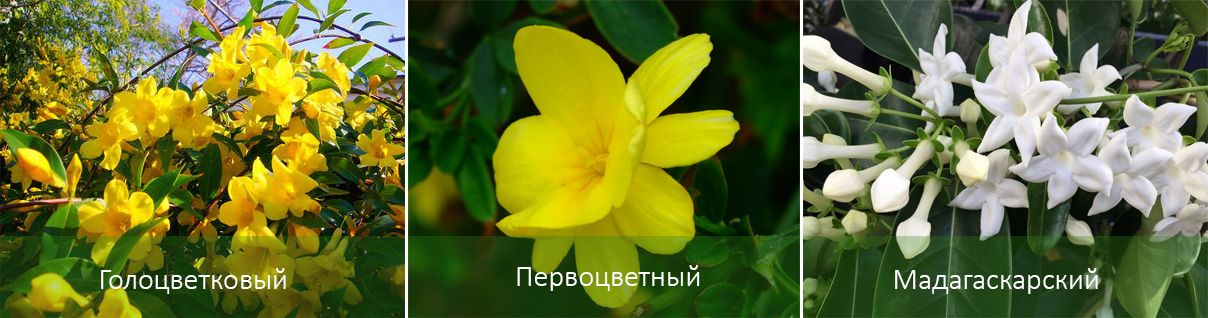
| Naked-flowered | A sparsely branched deciduous shrub with long branches and small, green, trifoliate leaves. The flowers are quite large, a rich yellow, and are borne singly along the entire length of the shoots. | January – April |
| Primrose | A fast-growing vine whose slender shoots require support. Semi-double, yellow flowers. Unscented. | May – June |
| Malagasy | An indoor vine with dark green oval leaves (10 cm). The flowers are white stars, gathered in inflorescences. They can also have shades of cream, yellow, and purple. It has a pleasant aroma. The sap secreted by this vine is toxic and can cause skin irritation. | June – August. However, with proper care, supplemental lighting, and the right temperature, it can bloom in winter. |
Caring for indoor jasmine at home
This tropical plant is finicky. This shrub, intolerant of temperature fluctuations and cold, can only grow indoors and cannot survive outdoors in our latitudes. Jasmine requires meticulous care.
Temperature
For indoor jasmine during the flowering period (spring and summer), the average temperature is comfortable – from +21…+26 °C. A sharp cold snap can cause harm, and at +15°C jasmine will not only stop developing, but may even die.
During the winter season, when the plant is dormant, it is recommended to place it in a cooler room at a temperature of +11°C to +13°C, otherwise flowering will not occur. To encourage jasmine to bloom, experienced gardeners recommend a temperature shock by placing it in cooler conditions with increased humidity for a while. This shock causes the bush to bloom quite quickly. Different jasmine species respond differently to wintering. Sambac is considered a heat-loving variety.
At the stage of respite from flowering, the plant needs +18°C. The vine is extremely sensitive to drafts. Ventilating the room with the plant should be done with extreme caution.
Lighting requirements
Jasmine doesn't tolerate shade or artificial light. It prefers a fair amount of diffused sunlight but doesn't tolerate direct light. Therefore, it's recommended to place the plant on west- and east-facing windowsills.
On the north side, the plant will not bloom due to a clear lack of sun, and on the south windowsill it will have to be constantly moved further away from the window or shaded from the light.
Irrigation
Watering frequency should be adjusted to the ambient temperature. During warmer months, the plant should be watered every three days. When it's time to water, you can water when the top half of the soil is dry. It should always be slightly moist—not too dry or too wet.
With the onset of cold weather, the intervals between waterings should be increased to 6 days, and watering should only occur after the middle soil layer has dried out. To maintain soil quality, settle water acidified with apple cider vinegar at a ratio of 1 teaspoon per liter. Use this solution every third watering.
Air humidity
The main challenge in growing jasmine is maintaining the proper humidity level. These delicate flowers don't tolerate excessively dry air: in such conditions, they are susceptible to disease and pest attacks, which can cause them to stop blooming and eventually die.
In spring and summer, the shrub is usually sprayed with softened water every other day, and twice daily on hot days. In winter, when the air is dry from heating and temperatures are high, spray every three days. Additional methods include:
- use of a humidifier;
- placing a stand with wet moss or pebbles under the flowerpot;
- laying a damp cloth on the heating radiator;
- placing a container filled with water near a flower pot.
Fertilizer
Jasmine requires optimal soil conditions. It should be loose, well-drained, and slightly acidic. A special soil mix for roses or begonias is usually used for planting. Azalea soil is added to other soil types by adding one-third of the soil to the mix. All ready-made soil mixes already contain the necessary fertilizers and micronutrients.
To create ideal growing conditions and abundant flowering from April to August (and until the end of flowering for sambac), jasmine is fed with a general-purpose liquid fertilizer designed for flowering plants. It is advisable to alternate between mineral and organic nutrients. Foliar sprays are very beneficial for the foliage, which absorbs micronutrients well.
Transfer
After purchasing and acclimating the plant to its home environment, transplant it into a larger pot. During the first few years, repotting is done annually, and later, every two to three years. The new pot should be a few centimeters larger.
When repotting, careful handling of the root system is paramount, ensuring it doesn't become overcrowded. The roots should be gently straightened. Good drainage in the pot is essential, as excess moisture will cause root rot.
Trimming
Crown shaping has a positive effect on plant development. The best time for pruning is the end of the dormant period (February – March). Pruning helps promote growth and prolong flowering.
It's important to ensure all dried and damaged shoots, leaves, and remaining flowers are removed. Shoots should be pruned by a third, or by half if they are diseased. This will encourage new, young branches to emerge.
Reproduction
Indoor jasmine can be propagated in two ways: by cuttings and layering; seeds are not suitable.
- The first method is considered quite painstaking and complex. It is performed after pruning. The removed shoots are placed in water, where they take root for a month, and are then planted in soil. To accelerate rooting, the diagonal cuts are kept in a growth stimulator.
- Propagation by layering is much simpler and is used in spring and summer, primarily for climbing varieties. The offshoot is then buried in an additional container of soil, maintaining the required moisture level. After roots form (usually in the fall), the young shoot is carefully separated from the main plant and planted in its own pot.
Diseases and pests of flowers
Indoor jasmine can be attacked by:
- aphids;
- tick;
- leaf weevil.
These insects feed on plant sap. As a result, the shrub becomes diseased, stops blooming, loses its leaves, and may die if the cause of the wilting isn't identified and addressed promptly. To prevent death, the plant should be regularly inspected.
Aphids are easy to spot: they nest on the upper shoots. Mites can be identified by their webbing on the underside of leaves. Weevils live in the soil, and their larvae feed on plant sap. Pest control involves using specialized insecticides according to the package instructions.
Top.tomathouse.com warns: The challenges of growing jasmine
Failure to follow proper jasmine growing practices can cause complications during its growth and flowering. By analyzing the changes in the plant's growing conditions, you can identify the causes of its ailments and address them.
- Yellow, wrinkled leaves indicate dry air in the room and insufficient humidification.
- A plant's leaves may begin to fall due to overwatering. The health of the leaves directly depends on the condition of the roots, which cannot tolerate excess water and begin to rot.
- Insufficient light also negatively impacts plant growth. It begins to stretch upward, become deformed, and lose leaves.
The absence of flowering indicates the following deficiencies in maintenance:
- failure to maintain the required humidity;
- temperature changes;
- nutritional deficiencies;
- lack of lighting;
- pest attacks.
Indoor jasmine has become very popular not only for its decorative qualities but also for its wonderful fragrance. Its flowers are used in folk medicine, aromatherapy, and perfumery. They are also used to make a fragrant tea. By following the correct recommendations, you can ensure that this wonderful flower blooms at home.