Goldenrod, also known as solidago, is a species of herb in the Asteraceae or Compositae family. Its Latin name is "solidus," meaning "strong." Solidago grows as a dense bush, producing paniculate inflorescences reminiscent of mimosa in color and shape.
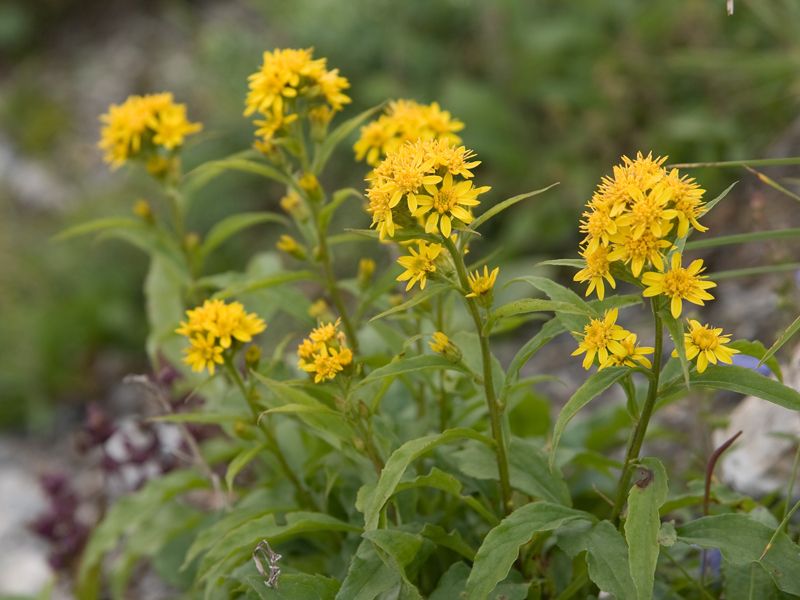
This plant is often found in gardens and is prized for its ornamental qualities. The flowers are collected for winter bouquets; they last as long as dried flowers. They are also used as a herbal ingredient in traditional remedies.
Content
- 1 Description and characteristics of goldenrod
- 2 Canadian goldenrod, common goldenrod and other species
- 3 Varieties of hybrid goldenrod
- 4 Goldenrod propagation methods
- 5 Caring for goldenrod in the garden
- 6 Diseases and pests
- 7 Using goldenrod in the landscape
- 8 Top.tomathouse.com informs: Goldenrod – medicinal properties and contraindications
Description and characteristics of goldenrod
There are over 80 species of this plant native to the Northern Hemisphere, with the majority growing in America and Canada. The height of the bush varies, with low-growing varieties and giants reaching up to 1.5 meters. The shoots are branched, some only beginning to branch at the inflorescence level. They range from 20 to 35 cm in length and are yellow with lemon or orange hues. The leaves are wedge-shaped, with serrated edges resembling a saw.
Small flowers are collected in baskets, clinging to the flower stem on one, both sides, or all around. Depending on the species, they bloom from midsummer to late fall. They produce cylindrical seed pods up to 4 mm long.
Goldenrod reproduces rapidly, displacing other species from its range. Up to 100,000 seeds are produced annually, with a high survival rate. It has medicinal properties and is used in medicine, pharmacology, and cosmetology.
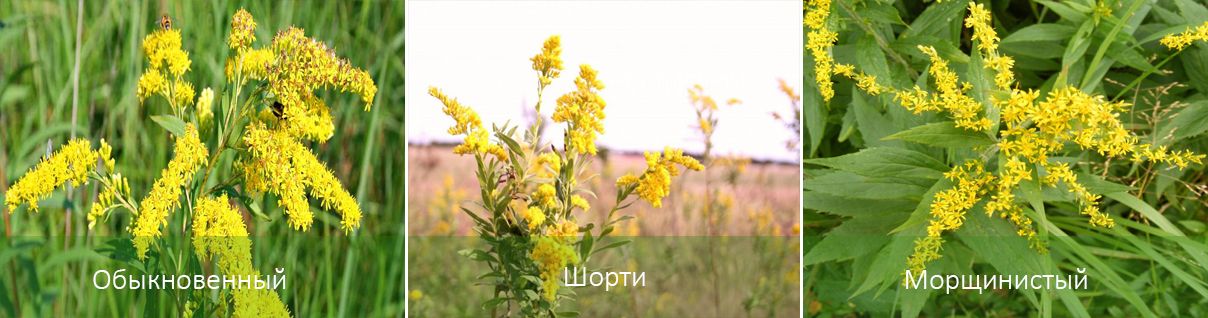
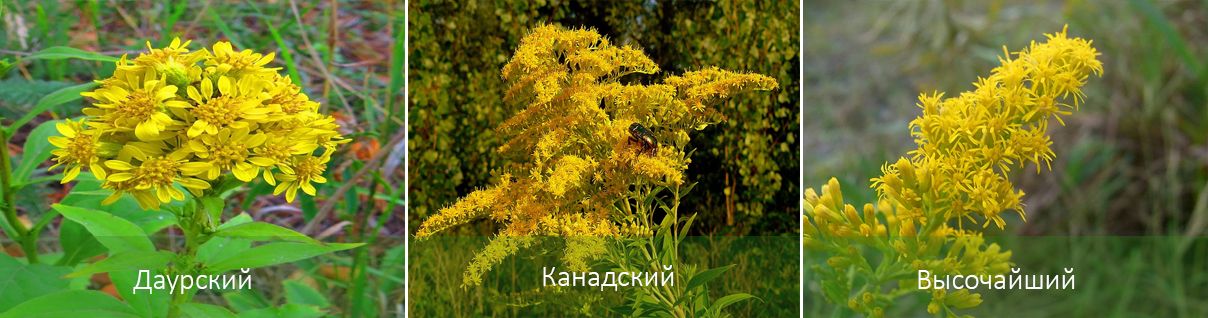
Canadian goldenrod, common goldenrod and other species
| View | Distinguishing features. Height (m) | Natural range |
| Common (Solidago virgaurea) |
Up to 1. |
|
| Shorty (Solidago shortii) |
Up to 1.6. |
Foothills of North America, in Russia it is artificially bred, and is rare. |
| Wrinkled (Solidago rugosa) |
Up to 2. |
Swamps, wet meadows, roadsides of North America. |
| Daurian (Solidago dahurica) |
Up to 1. |
Grows along river banks in Siberia. |
| Canadian (Solidago canadensis) |
Up to 2. |
Grows in central and northern North America. |
| The highest (Solidago altissima) |
Up to 1.8. |
Grows in prairies and along roadsides in central North America. |
| Drummond (Solidago drummondii) |
Up to 50. |
In the wild, it is found in America and is often used in landscape design in Central European countries and central Russia. |
| Spatulate (Solidago spathulata) |
Up to 60. |
It grows on the Pacific coast of America, was introduced to the Far Eastern regions of Russia, and is cultivated in garden plots. |
Varieties of hybrid goldenrod
Hybrid goldenrod (Solidago x hybrida) includes selected varieties derived from the Canadian variety; they are used to decorate land plots and park areas.
| Variety | Description. Height (m) | Flowering period |
| Goldstrahl | The inflorescences are paniculate, up to 20 cm long, golden-yellow in color. Up to 1. |
August – beginning of autumn. |
| Schwefelgeyser | The inflorescences are fluffy, dense, with small baskets, rich yellow in color. 1.4. |
Mid-August – end of September. |
| Kronenstall | The length of the inflorescences is up to 25 cm, the color of the flowers is bright yellow. Up to 1.3. |
The first two months of autumn. |
| Golkind | The inflorescences are up to 35 cm long, the flowers are sunny yellow. Up to 1.5. |
From the beginning of September to November. |
| Shpetgold | Lemon-yellow flowers are collected in dense cone-shaped inflorescences of 20 cm. Not higher than 1. |
August–September. |
| Golden Dwof | The leaves are wedge-shaped, petiolate, with a smooth edge, the inflorescences are bush-shaped, fluffy, yellow-saffron in color. Up to 0.6. |
Late summer – mid-October. |
| Goldtann | Flowers with a blue bloom, one-sided inflorescences, up to 20 cm long, buds yellow-orange in color. Up to 1.2. |
August–beginning of October. |
| Frugold | The length of the double-sided inflorescences is up to 25 cm, the color is rich yellow. Up to 1.2. |
From early September until late autumn. |
| Dzintra | The leaves are lanceolate, serrated, the inflorescences are umbel-shaped, with dense baskets of yellow-lemon color. Up to 0.6. |
From July to mid-October. |
| Strahlenkron | The length of the feathery inflorescences, densely covered with flowers, is up to 20 cm, the color is rich yellow. Up to 0.6. |
From the end of July to mid-September. |
| Perkeo | The stems are erect and dense, the leaves are small and wedge-shaped, the inflorescences are paniculate, up to 35 cm long, yellow with a greenish tint. 1.5. | From June to early September. |
Goldenrod propagation methods
The grass is planted as seedlings. Not all seed pods ripen before the cold weather sets in, so be prepared for low germination rates of seeds collected in the fall. Cultivation begins in late March. By moving the sowing date to February, you can achieve flowering in June.
Seeds germinate in 15-20 days, requiring germination temperatures between 10°C and 22°C. Select partially shaded areas, protected from wind, for planting—some varieties are prone to lodging. Young plants are spaced 40 cm apart. Goldenrod is not demanding in terms of soil quality, but proper cultivation practices ensure abundant flowering and lush inflorescences.
Caring for goldenrod in the garden
The plant doesn't take up much of gardeners' time. Goldenrod often grows like a weed, without any care, but it's not particularly ornamental in such conditions.
Watering
A drought-resistant plant, it doesn't require regular watering; dry leaf tips indicate a lack of moisture. It's best to moisten the soil during the flowering period.
Fertilizer
Any complex fertilizer is suitable for top dressing. They are diluted according to the instructions and applied twice a year: in the spring during the active growth period and during abundant flowering. Moderation in organic matter is essential. Excess nitrogen will cause the leaves to overgrow rather than the flowers.
Garter and transplant
Bushes are formed only for plants with weak shoots and varieties prone to lodging. Wooden or mesh frames are made for these plants, and the stems are tied into a bundle. The perennial is repotted no more than once every four years, dividing the bush into two to four sections, and refreshing the soil mixture. Mature bushes are planted to a depth of 20 cm.
Trimming
In late autumn, the shoots are cut back to a height of 10 to 15 cm above ground level. After the shoots emerge, the bush is thinned, removing weak stems. This procedure promotes the formation of branched flower stems and abundant flowering.
Diseases and pests
The plant is susceptible to fungal diseases such as powdery mildew and brown rust. The best preventative measure is thinning to prevent leaf rot. Avoid overfeeding. Sanitary treatment is carried out in the spring by sprinkling the soil around the bush with wood ash mixed with chalk (1:1). This disinfection replaces spring fertilizing.
At the first signs of fungal infections, treatment is carried out with preparations intended for berry bush crops.
Using goldenrod in the landscape
When decorating front gardens, choose lushly colored varieties of goldenrod that bloom at different times.
The use of hybrid varieties in landscape design is common in Europe. They are used as flower stalks to attract pollinating insects to the garden. Goldenrod pairs well with conifers and perennials such as phlox, dionysus, sage, and thyme. Annual asters, zinnias, and double calendula are planted around it.
Top.tomathouse.com informs: Goldenrod – medicinal properties and contraindications
Goldenrod contains aromatic resins, esters, phenols, flavonoids, and bioactive substances, and has anti-inflammatory, expectorant, and diuretic properties. The plant's benefits are officially recognized.
Goldenrod is toxic in high concentrations. People with allergies should use it with caution. Consult a doctor before using it.
Goldenrod has contraindications: liver and kidney disease, systemic heart disease, and thyroid disease. Self-medication can cause irreparable harm to the body.
The plant is harvested during the flowering phase, and its leaves, flowers, and soft shoots are used medicinally. The plant material is used to make infusions, decoctions, and extracts. It is used to heal wounds, treat acne and flaking skin, and treat both humans and animals.