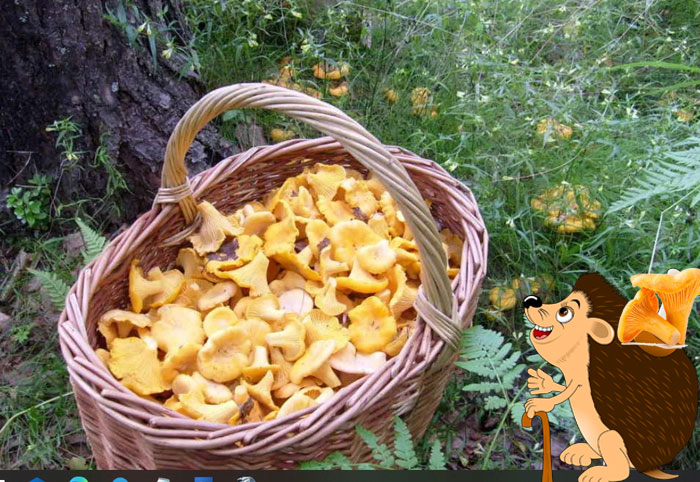
Chanterelles are widely used in cooking due to their unique flavor and aroma. If desired, they can be used to create many interesting dishes. In this article, we'll tell you where and when to look for chanterelles.
Content
- 1 In which forests do chanterelles grow?
- 2 Chanterelle collection season
- 3 Where and when to pick chanterelles in the Moscow region in 2022
- 4 Where and when does the common chanterelle grow?
- 5 Where and when does the pale chanterelle grow?
- 6 Where and when does the amethyst chanterelle grow?
- 7 Where and when does the velvety chanterelle grow?
- 8 Where and when does the trumpet chanterelle grow?
- 9 Where and when does the yellow chanterelle grow?
- 10 Where and when does the gray-yellow chanterelle grow?
- 11 Where and when does the gray chanterelle grow?
- 12 Where and when does the black chanterelle grow?
- 13 Chanterelles from North America
- 14 Where do false chanterelles grow?
- 15 Rules for collecting chanterelles
- 16 Interesting facts about chanterelles
In which forests do chanterelles grow?
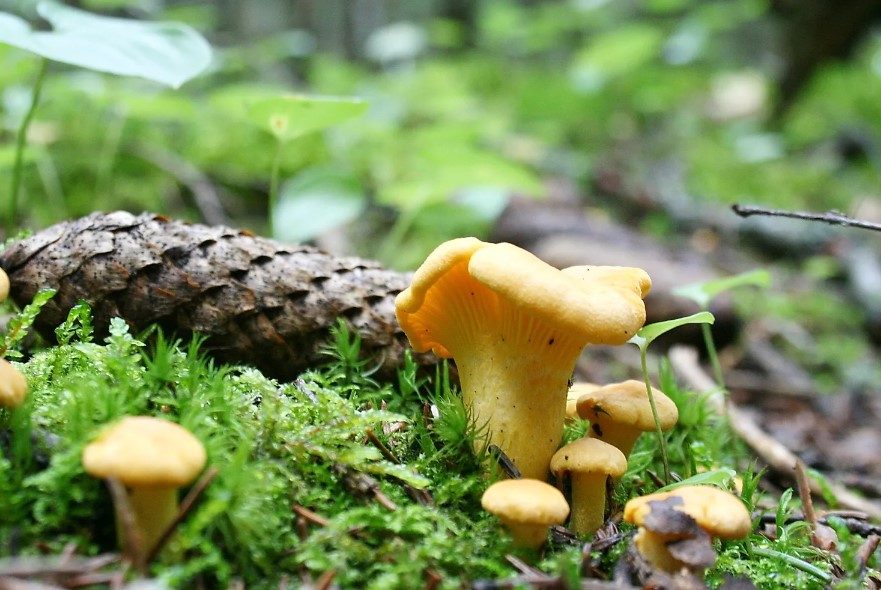
Chanterelles can be found in almost all damp forests, both deciduous and coniferous. But they are most often found under pine, oak, spruce, and birch trees.
Mushrooms can also appear in an open sunny clearing, provided that there has been a warm rain recently.
Chanterelle collection season
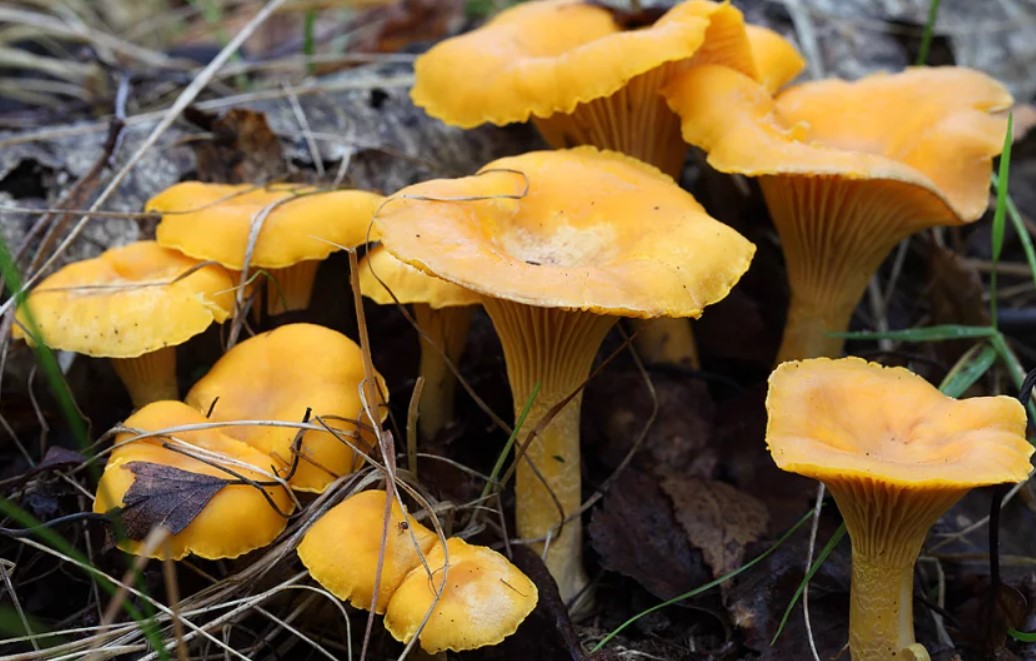
In some regions, the first mushrooms can be picked as early as June, but they are still few in number and grow solitarily. Chanterelles peak in fruiting from July to September, but there's still a chance to find them in the forest as late as October.
Where and when to pick chanterelles in the Moscow region in 2022
Mushroom pickers in the Moscow region know the places where you can't leave without chanterelles. They are listed in the table below.
| Direction | Chanterelle gathering place |
| Gorky | Fryazino, platform 61 km. |
| Kazan | Forests are 2 km from the stations Chernaya, Lukhovitsy, Platform 63 km. |
| Savelovskoye | Morozki, Taldom, Iksha, Tourist, Vlasovo. |
| Riga | Nakhabino, Opalikha, Yadroshino square. |
| Ryazan | Stations Chernaya, Bronnitsa, Faustovo, platform 63 km. |
| Kursk | Stations Grivno, Kolkhoznaya, Stolbovaya, Chekhov. |
| Yaroslavl | Stations Pushkino, Abramtsevo, Sofrino, Ashukinskaya. |
Where and when does the common chanterelle grow?
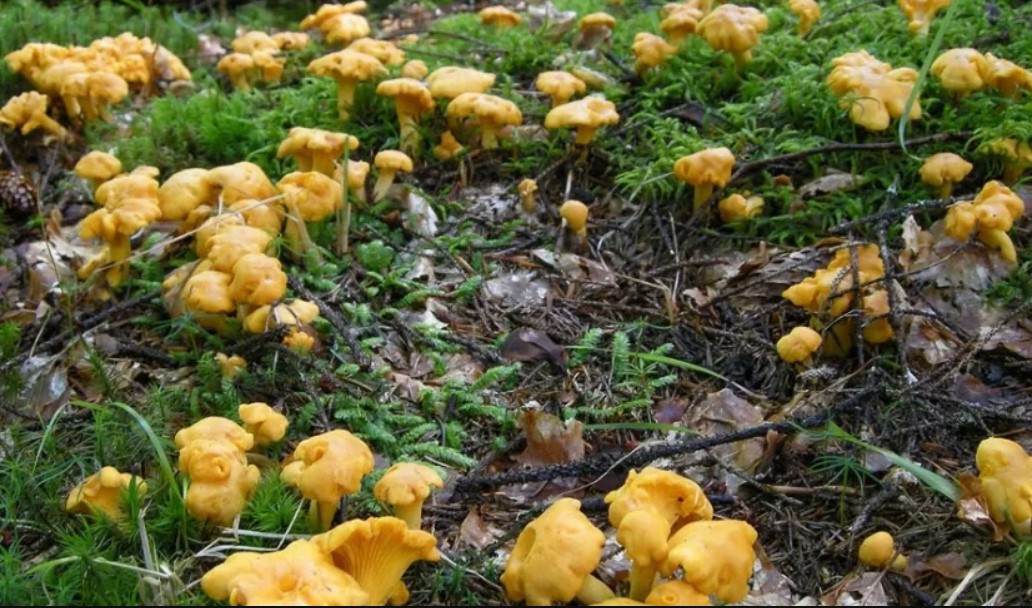
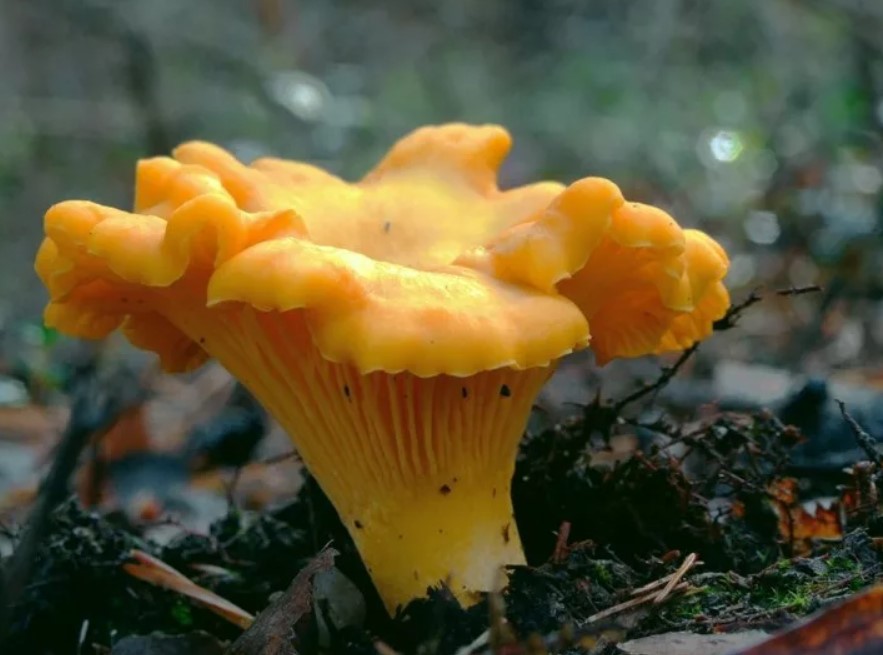
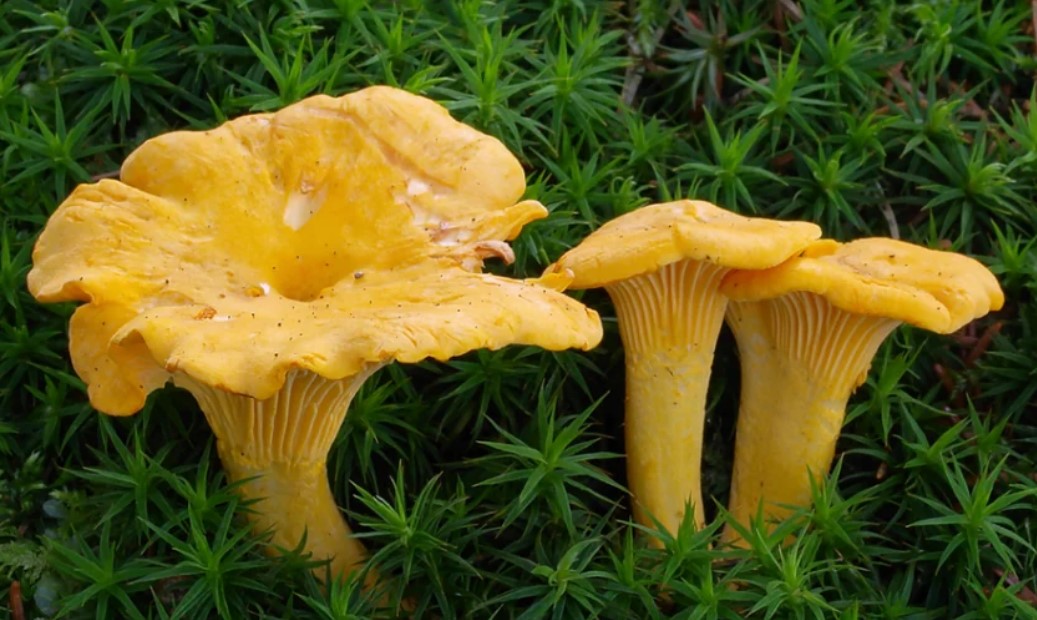
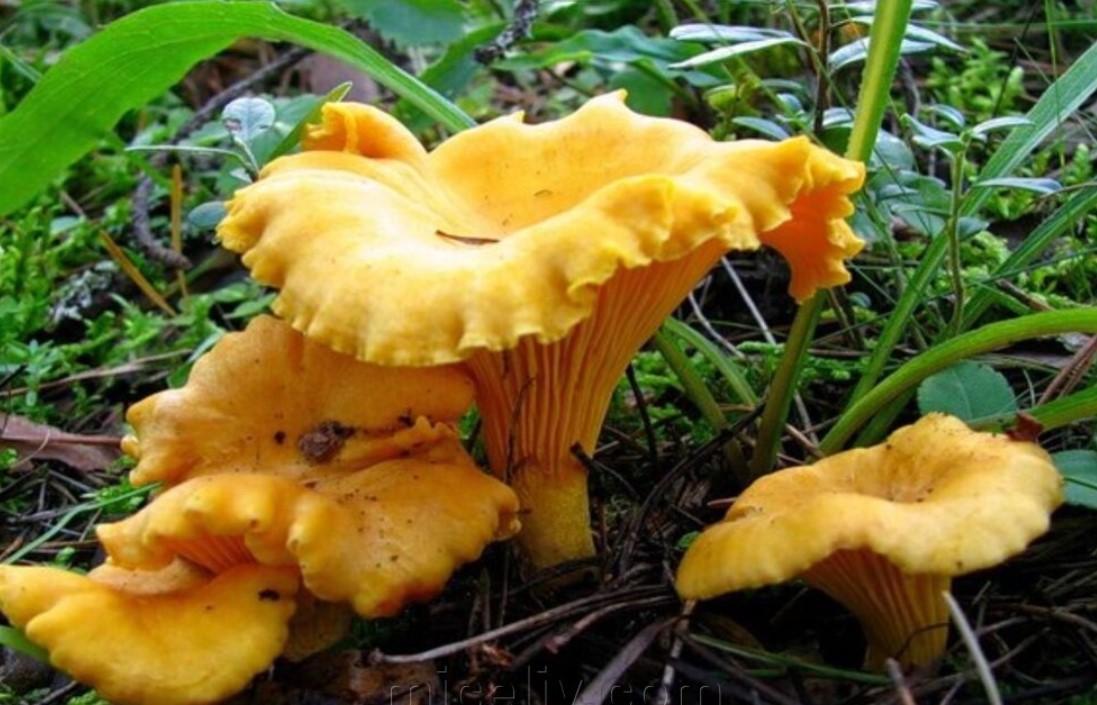
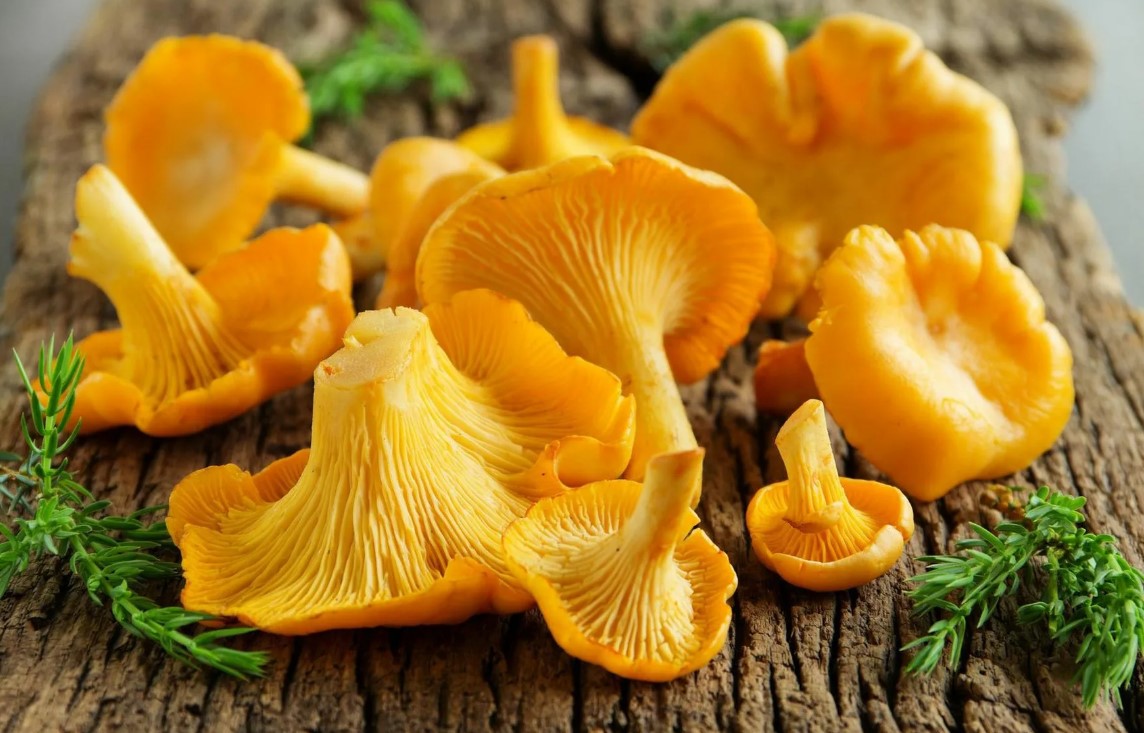
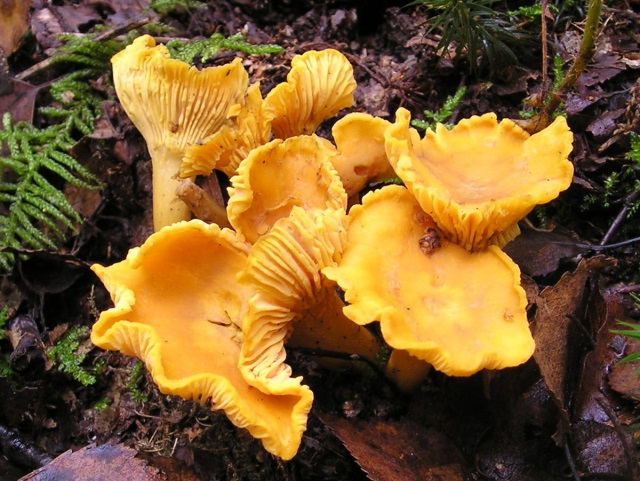
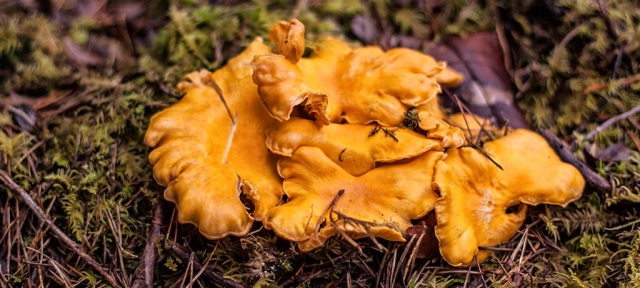
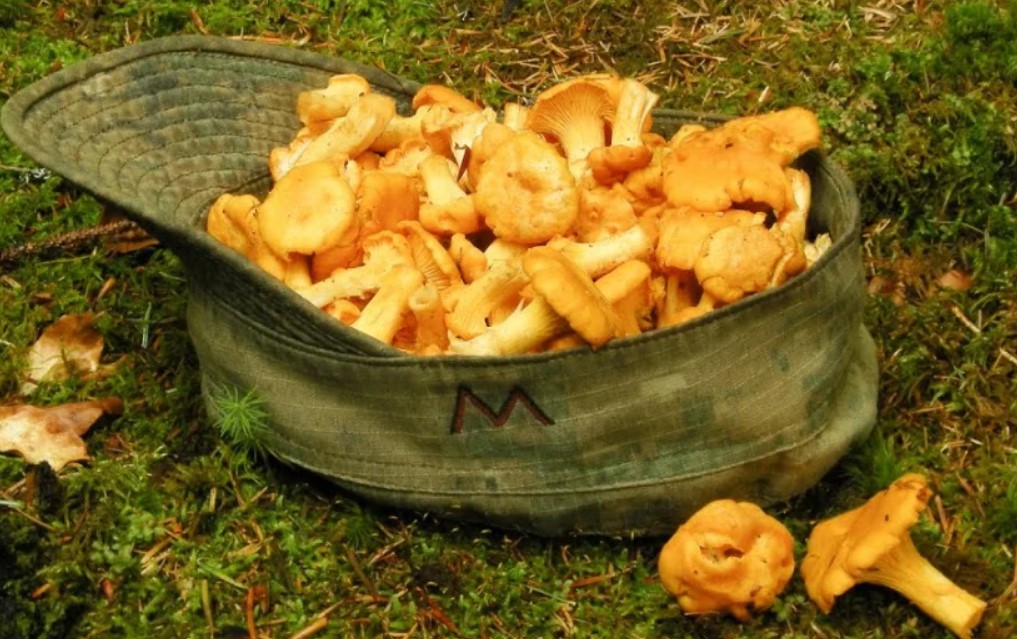
The common chanterelle can be easily found in mixed and coniferous forests, and you should be especially careful to look for the mushroom near beeches, oaks, pines, and spruces.
The first specimens are found by fans of the "silent hunt" already in June, but the mass appearance of chanterelles begins in mid-July, and the season continues until October.
Photo gallery of the common chanterelle
Where and when does the pale chanterelle grow?
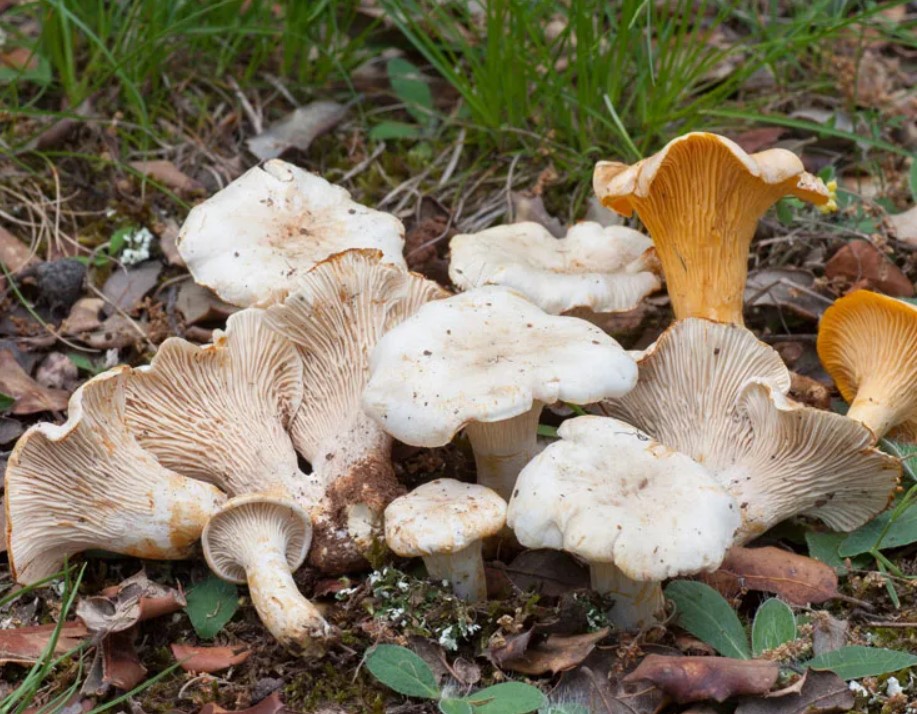
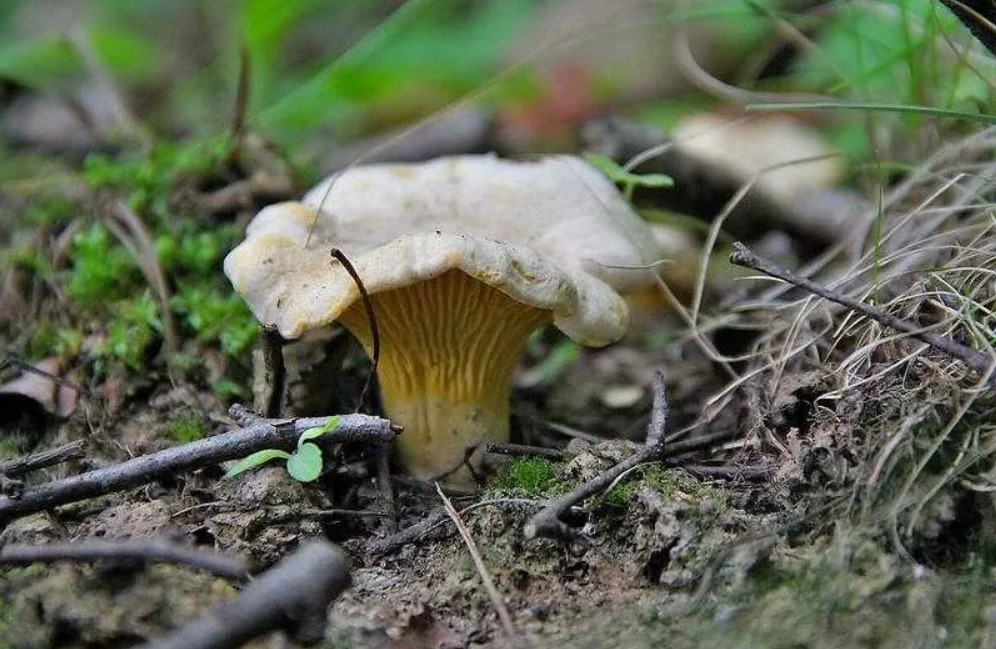
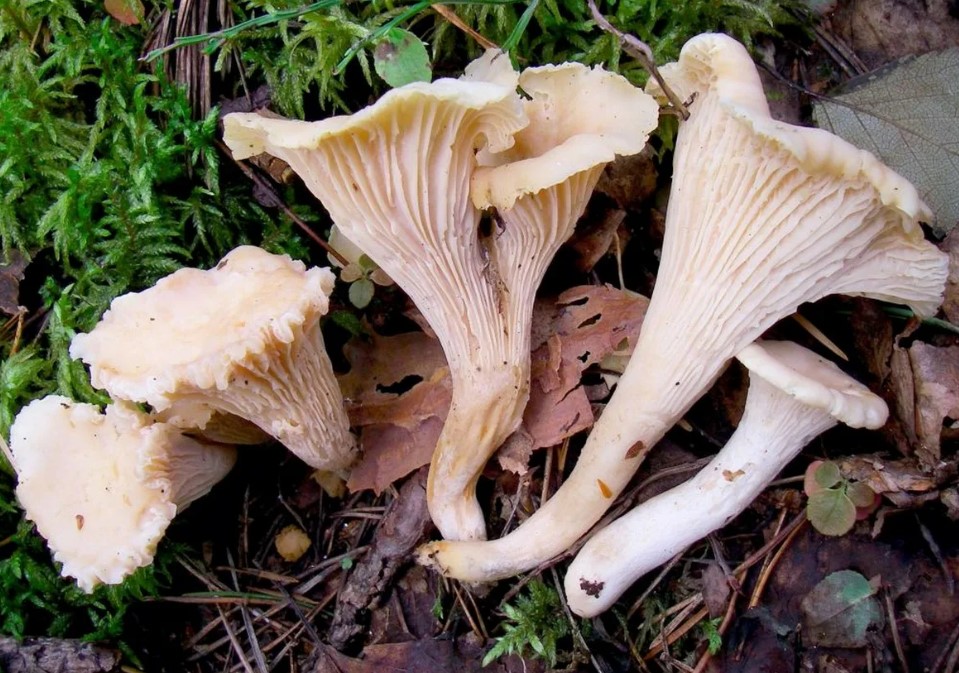
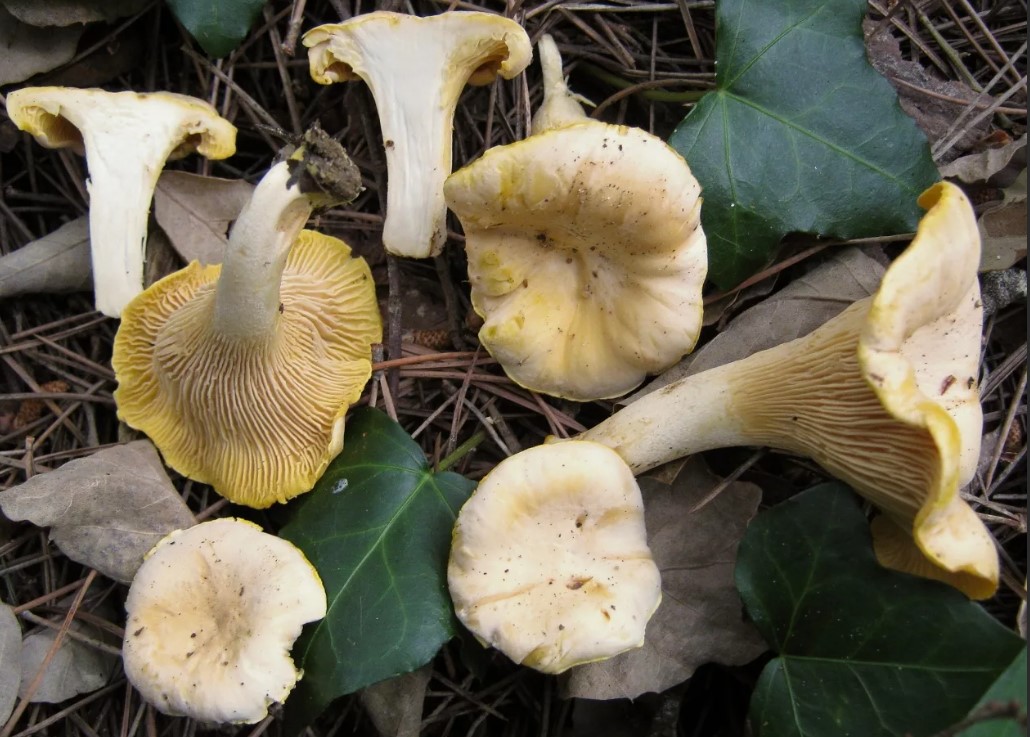
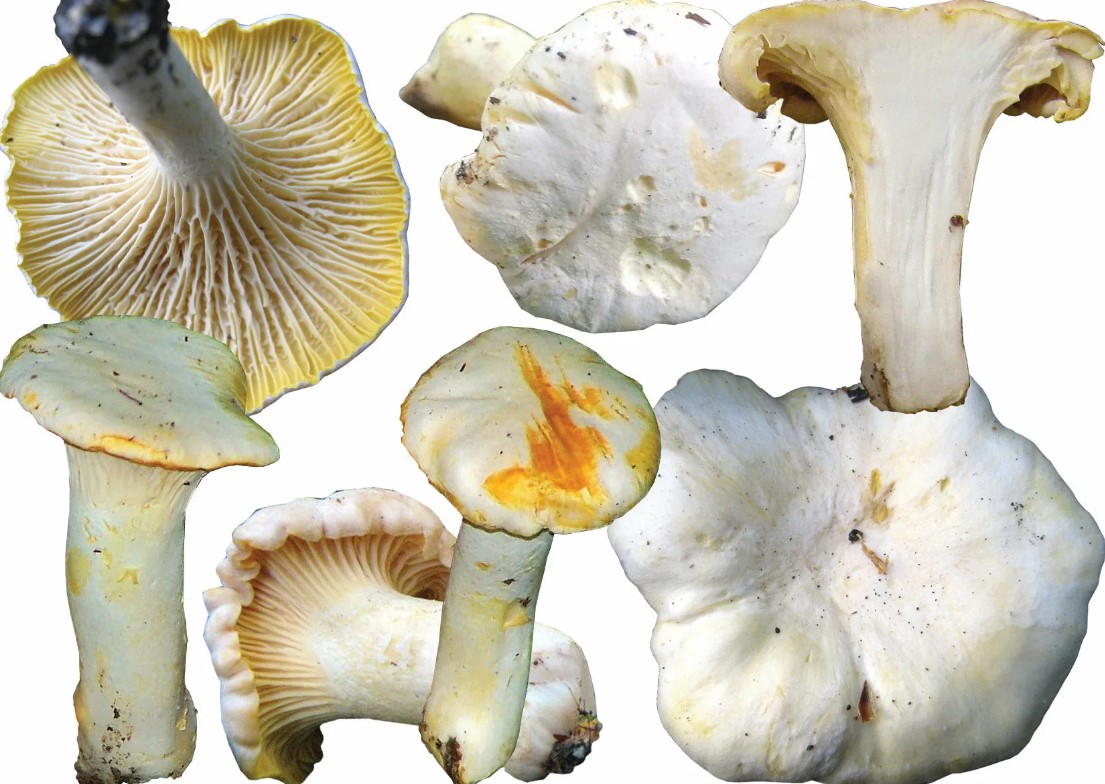
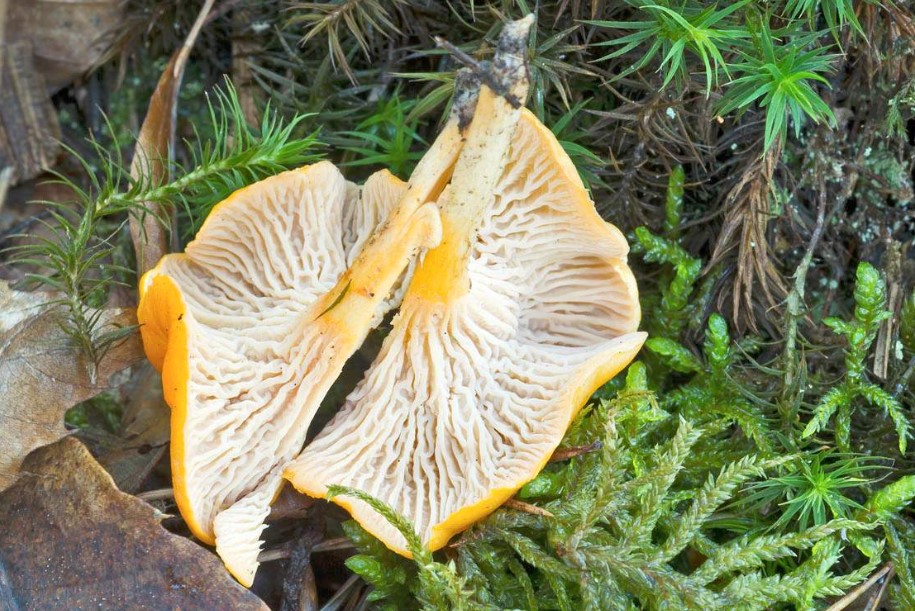
The pale chanterelle differs from the common mushroom in its slightly less pronounced color scheme and is considered an edible mushroom. It is found in mixed and coniferous forests, but a bountiful harvest is most often found in areas with deciduous trees. The pale chanterelle is a relatively rare addition to the basket.
Fruiting period: mid-July-October.
Photo gallery of the pale chanterelle
Where and when does the amethyst chanterelle grow?
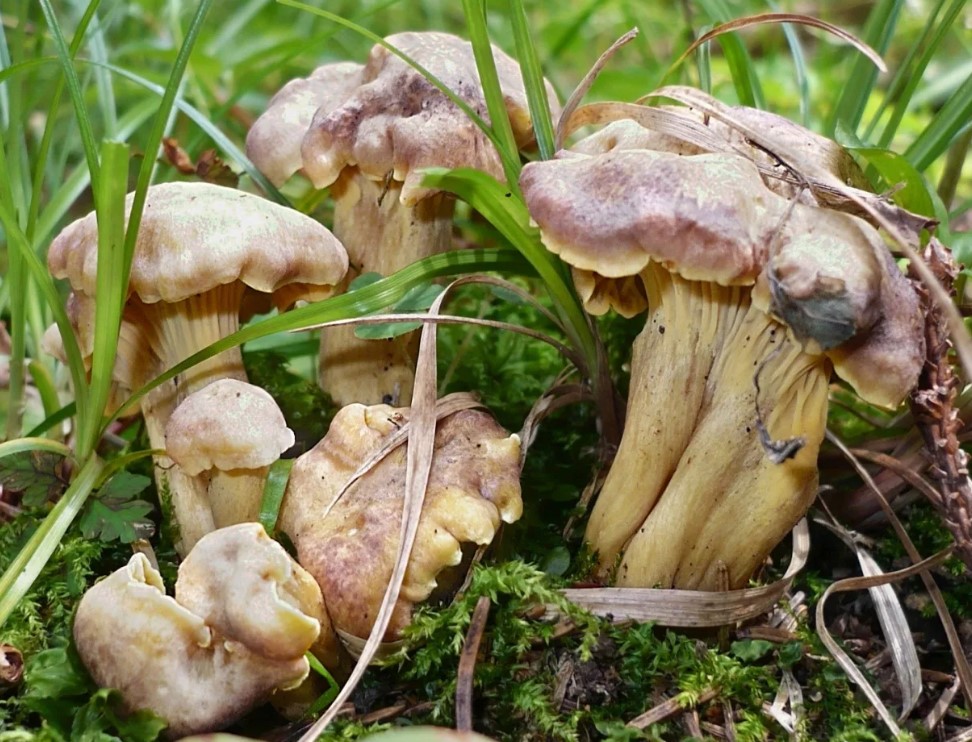
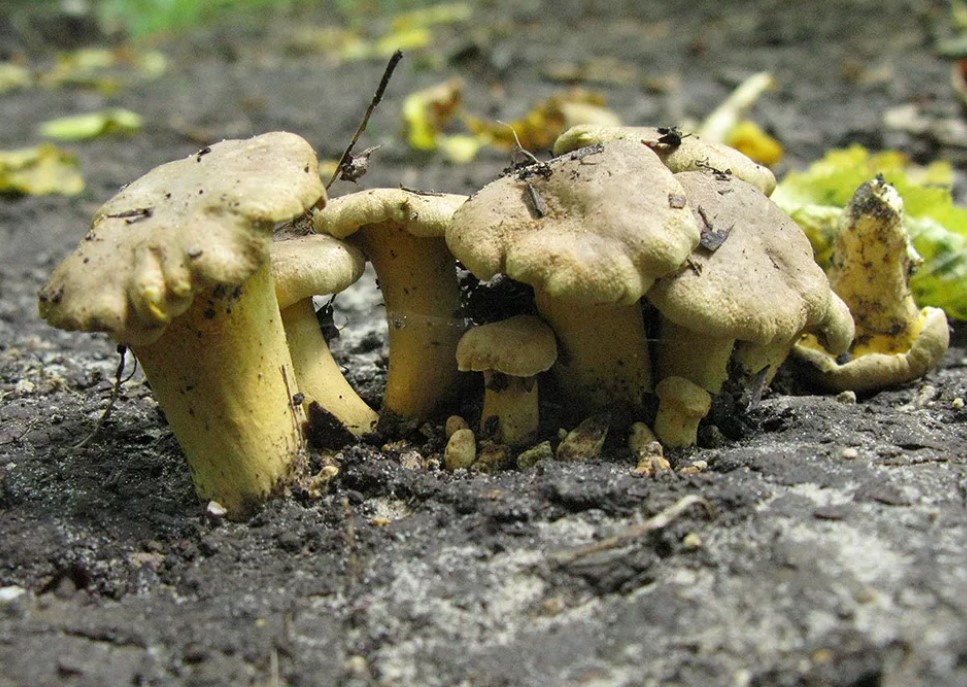
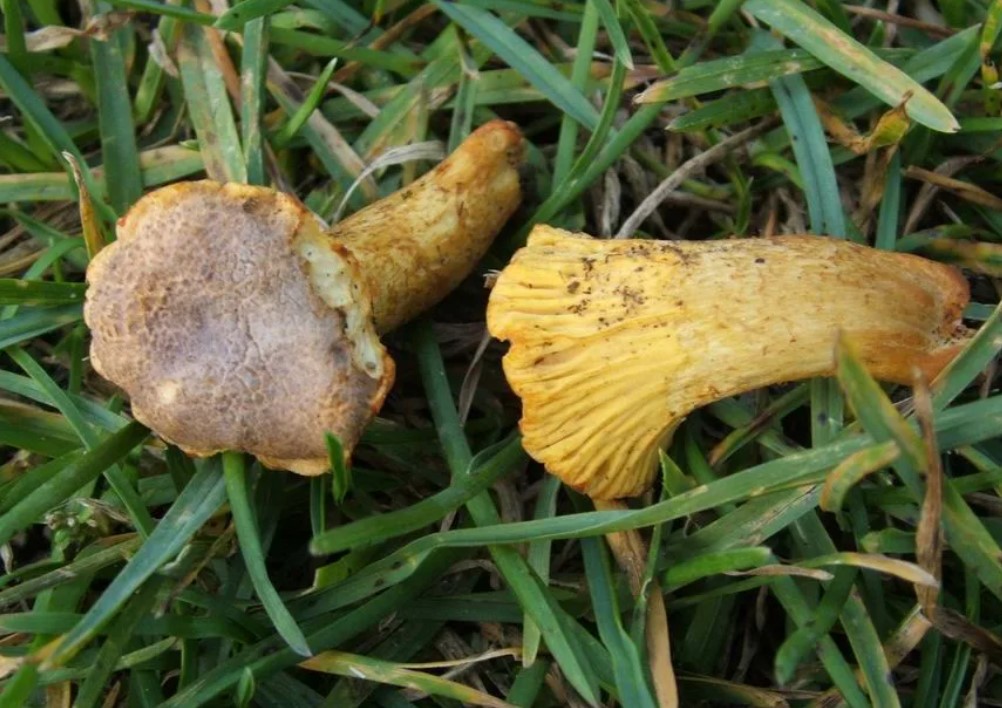
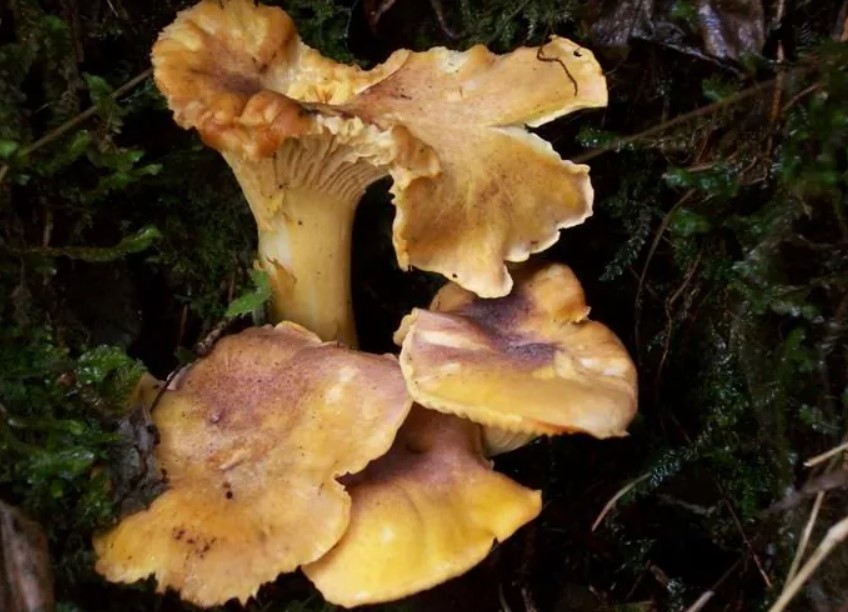
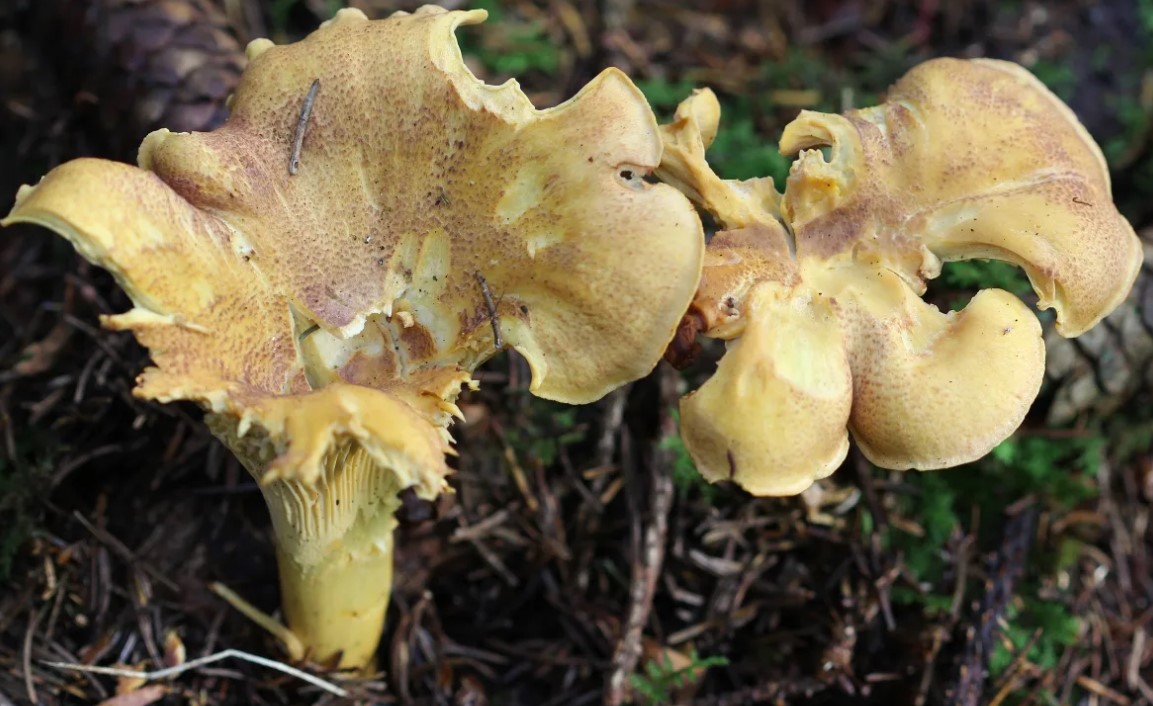
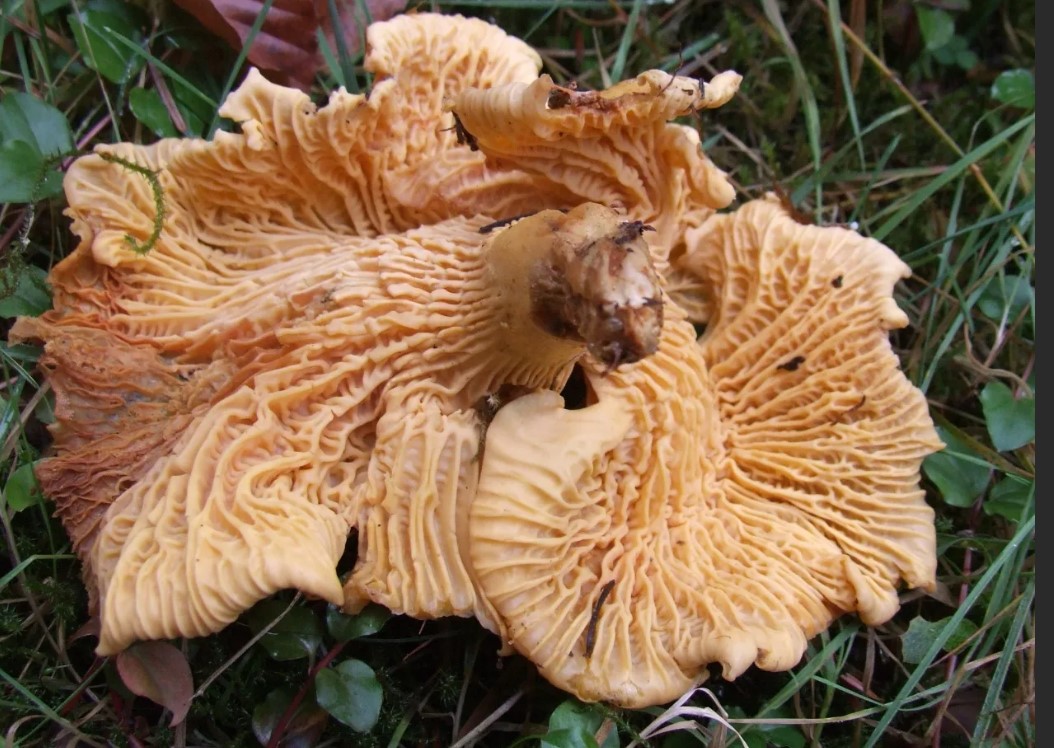
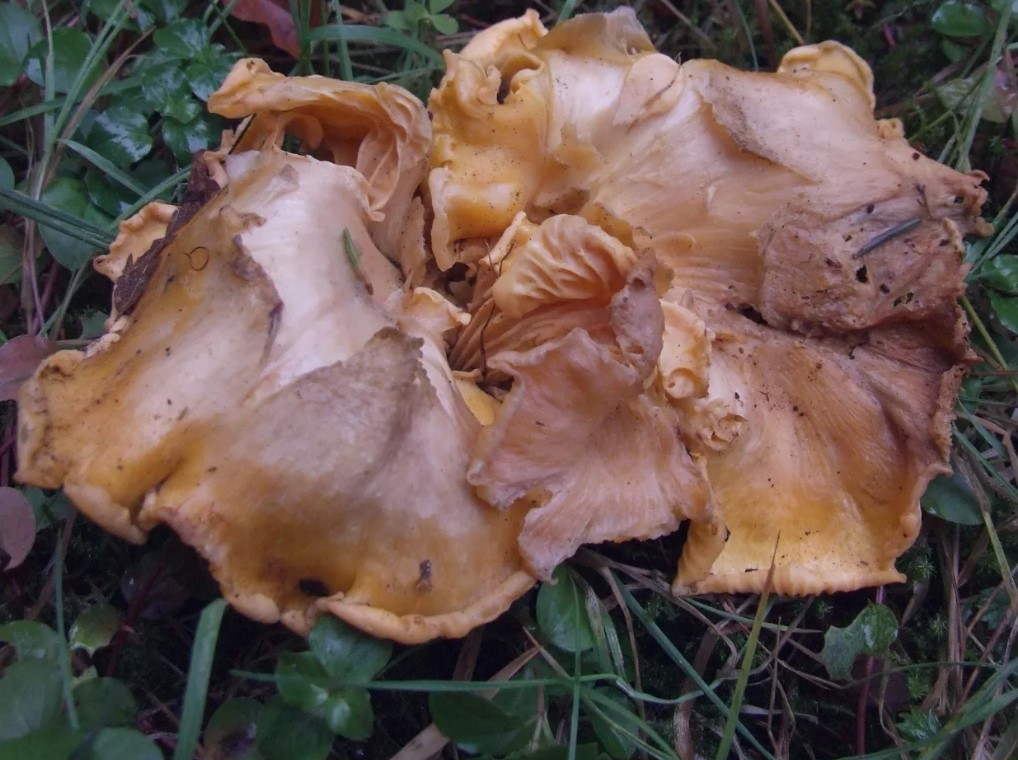
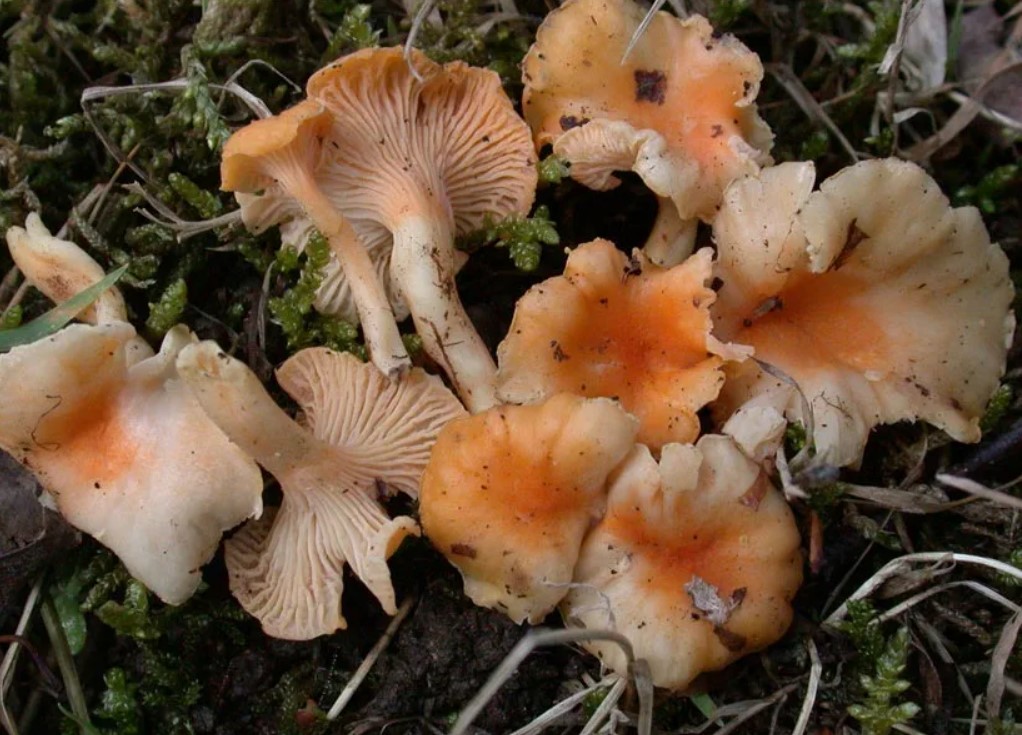
The amethyst chanterelle is very similar in shape to the common chanterelle, the only difference being the cap's color—it's slightly paler. The scaly skin is covered with a purple-brown bloom, concentrated in the center.
The mushroom is rare because it forms mycorrhiza with beech. However, there are reports of it occasionally being encountered by mushroom pickers in mixed forests near spruce and birch trees.
Fruiting period: June-October.
Photo gallery of the amethyst chanterelle
Where and when does the velvety chanterelle grow?
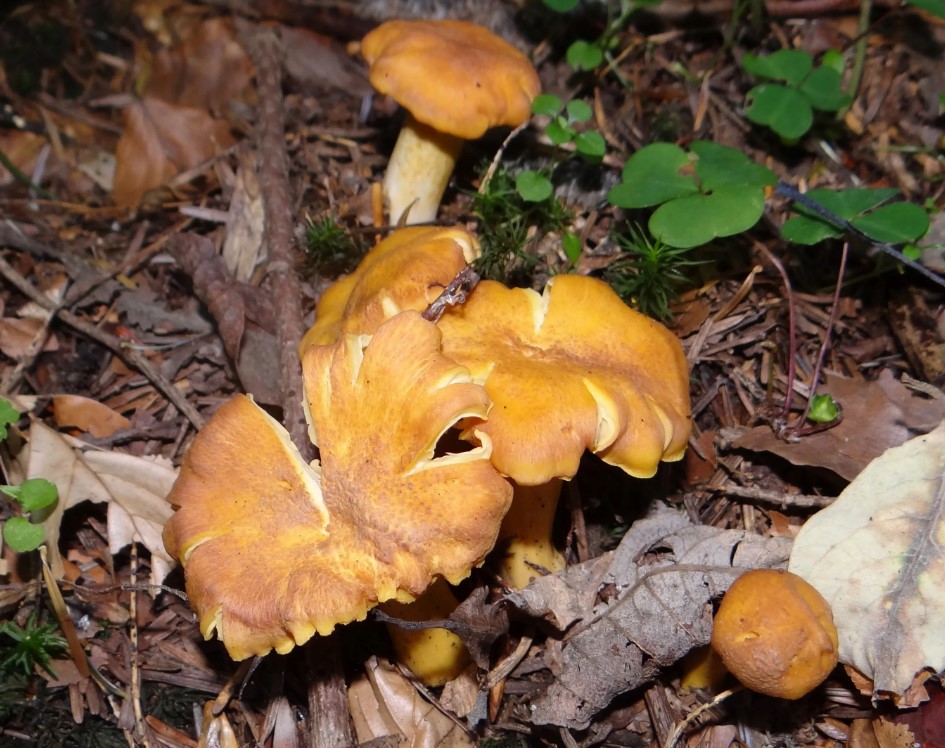
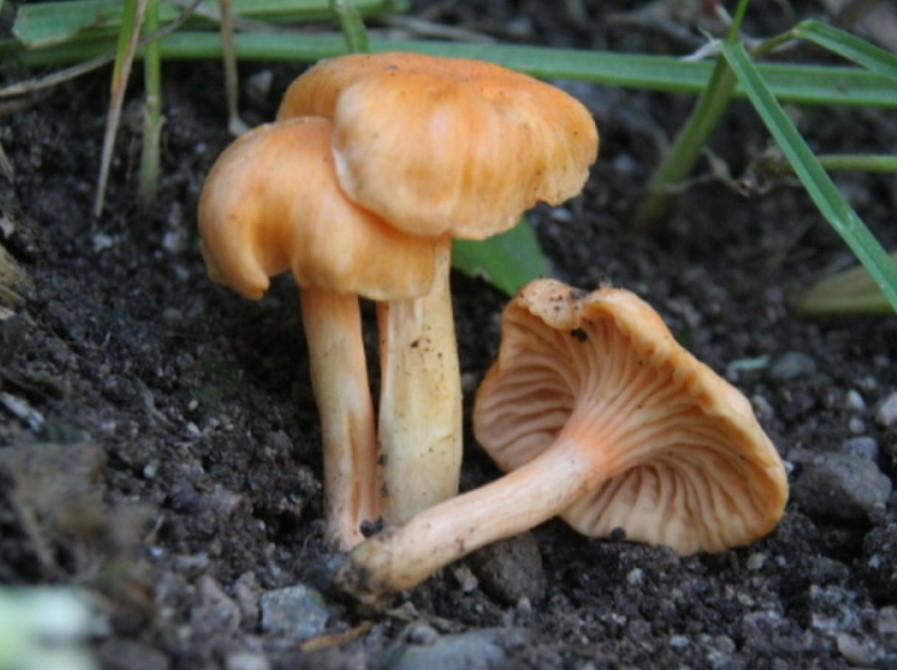
This chanterelle is also known as the orange chanterelle or the Friesian chanterelle. Its fruiting body is slightly smaller than the standard variety and is bright orange.
This mushroom is rare; its habitat is limited to southeastern Europe. It prefers acidic soils in deciduous forests.
Fruiting period: July-October.
The mushroom is considered edible, but may have a bitter taste.
Photo gallery of the velvety chanterelle
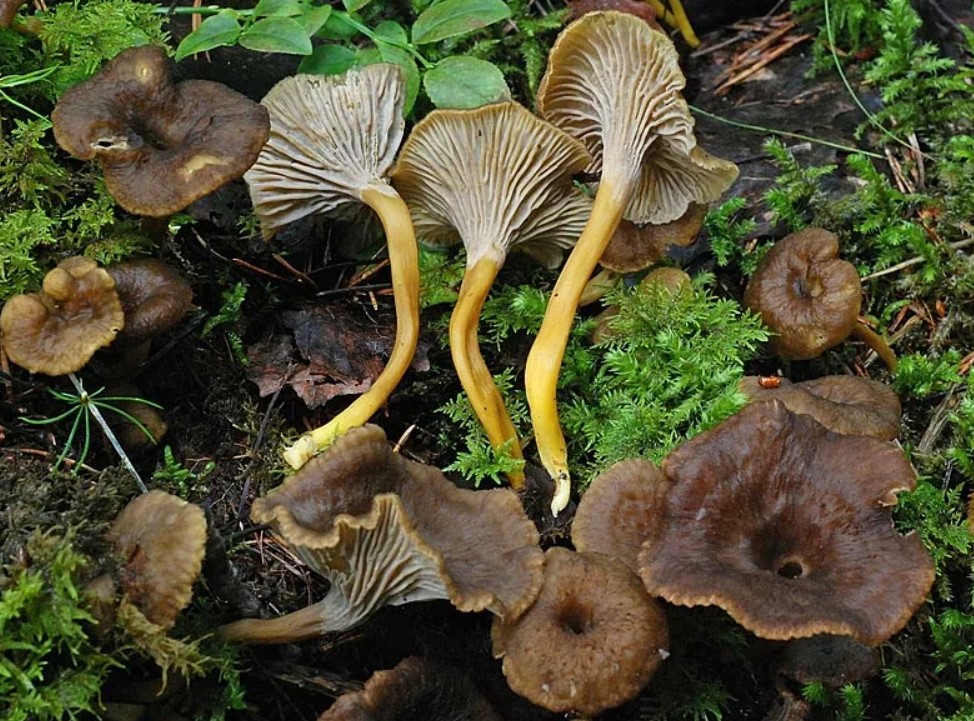
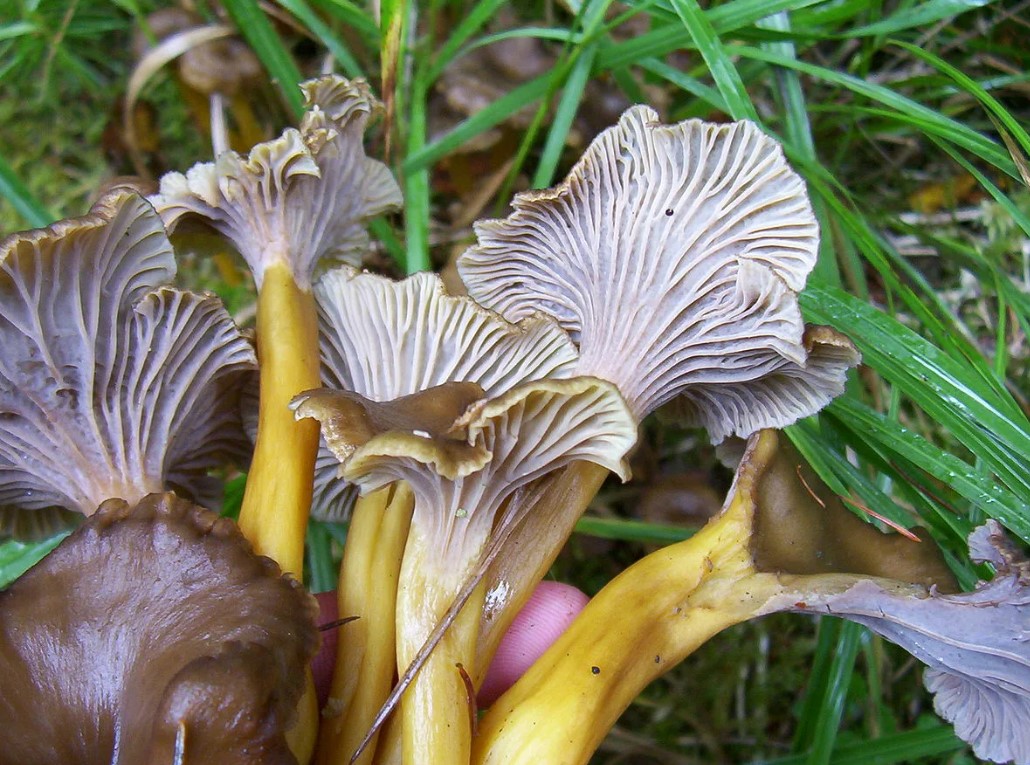
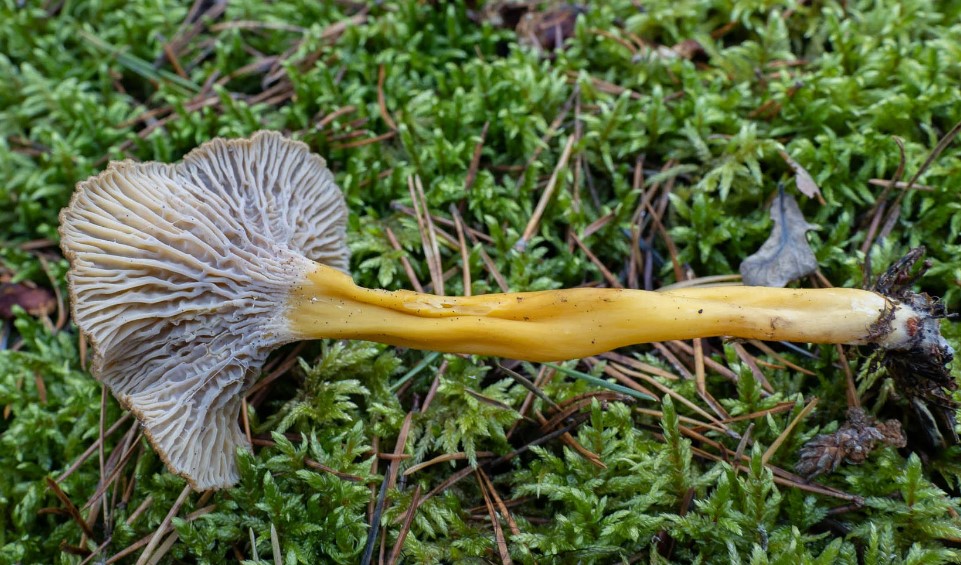
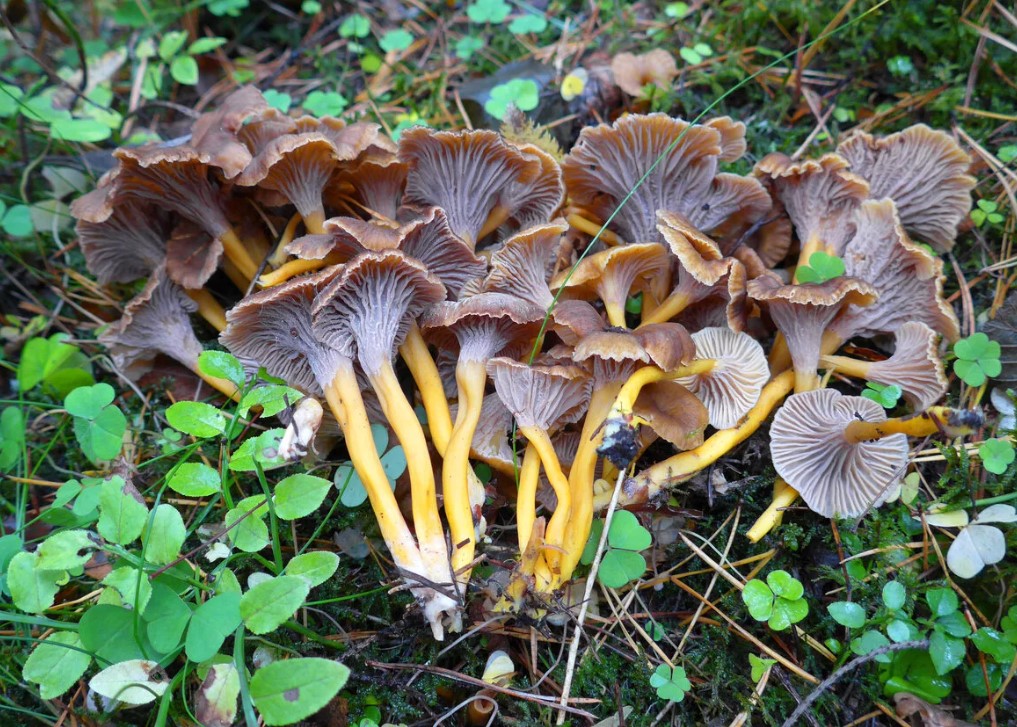
Where and when does the trumpet chanterelle grow?
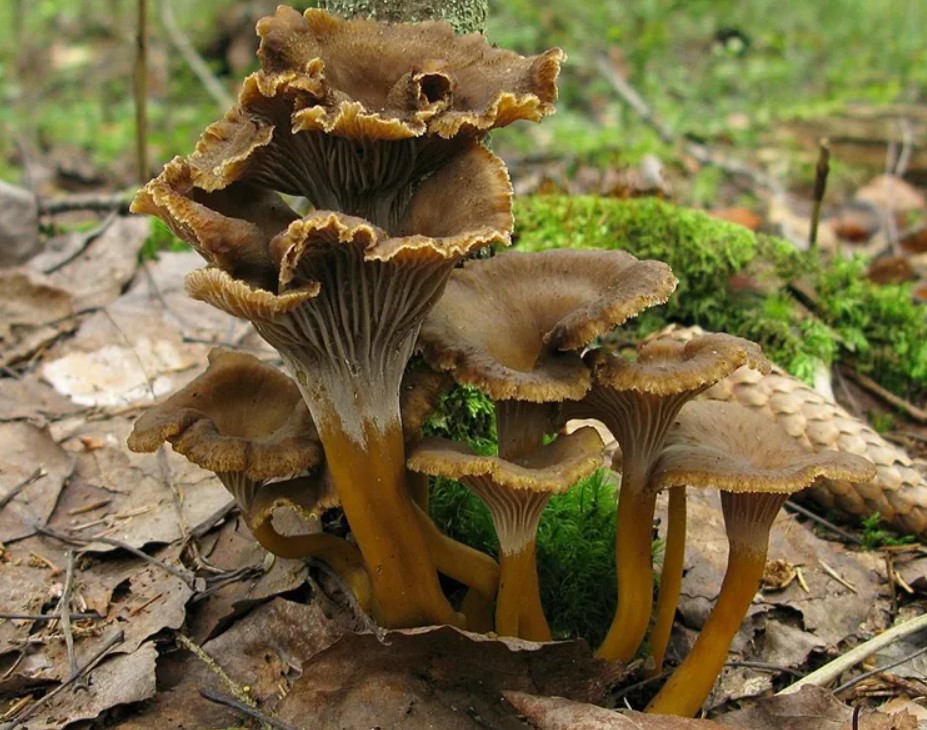
The mushroom gets its name from the hollow stem, which forms a hole in the cap when mature. The cap diameter is 6 cm, and the fruiting body height does not exceed 8 cm. The color is brownish or grayish-yellow, with a reddish tint to the cap. The stem is light-colored.
This chanterelle grows in large groups in coniferous forests.
Fruiting period: August-October.
The taste is pleasant, but the flesh is tougher than that of the common chanterelle.
Photo gallery of the Trumpet Chanterelle
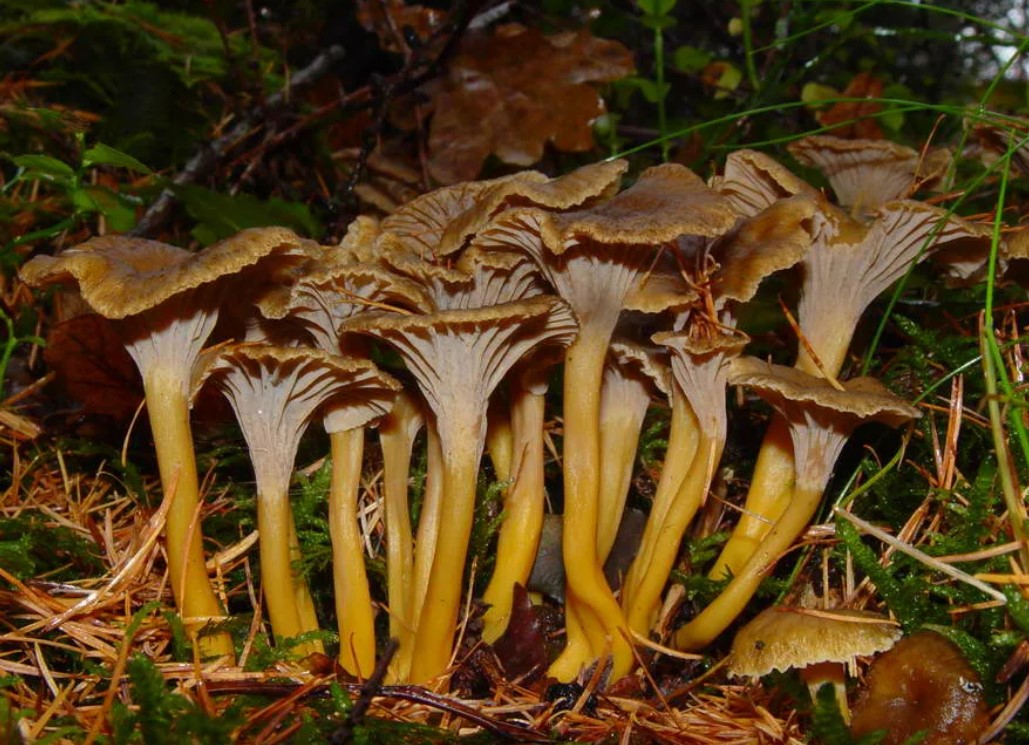
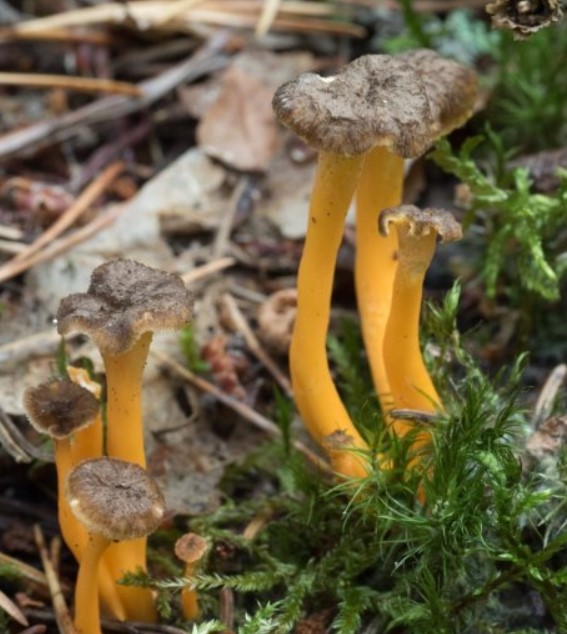
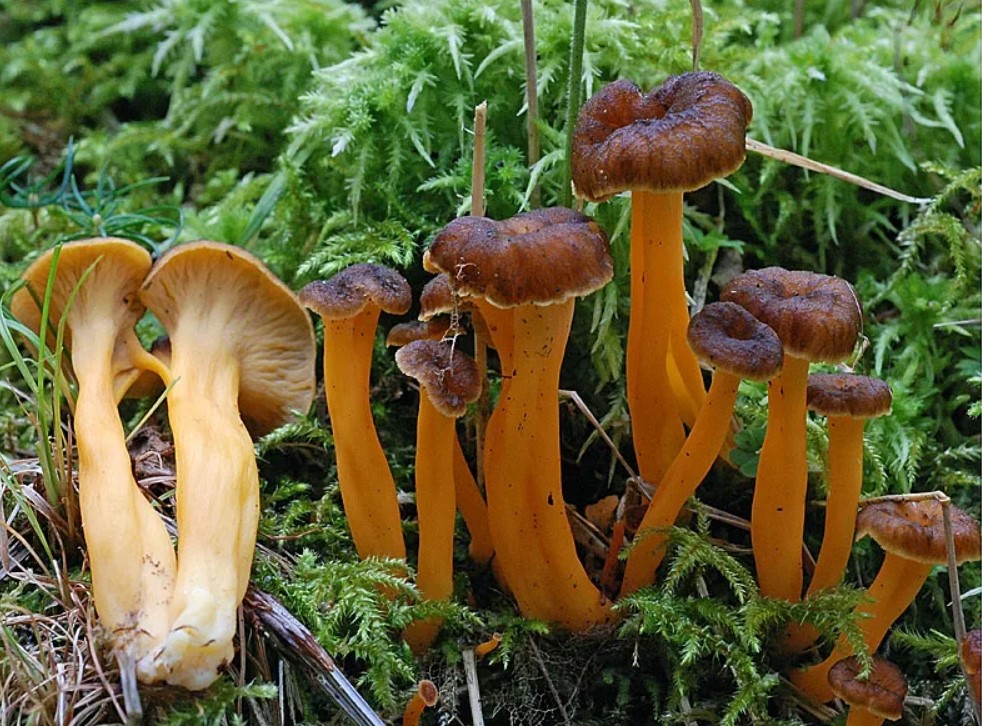
Where and when does the yellow chanterelle grow?
It differs from the common chanterelle by the fringed edges of its cap and its color—the entire fruiting body is uniformly orange. In brightly lit areas, it can fade to a creamy color.
Prefers to grow in moss or on rotting wood in coniferous forests.
Fruiting period: July-October.
The mushroom is edible, but has no distinct taste or aroma.
Photo gallery of yellowing chanterelle
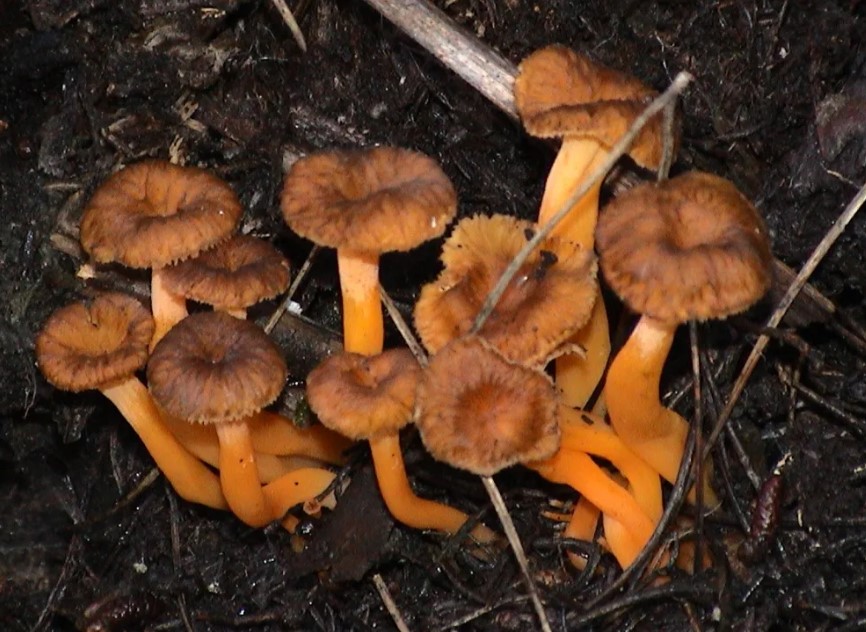
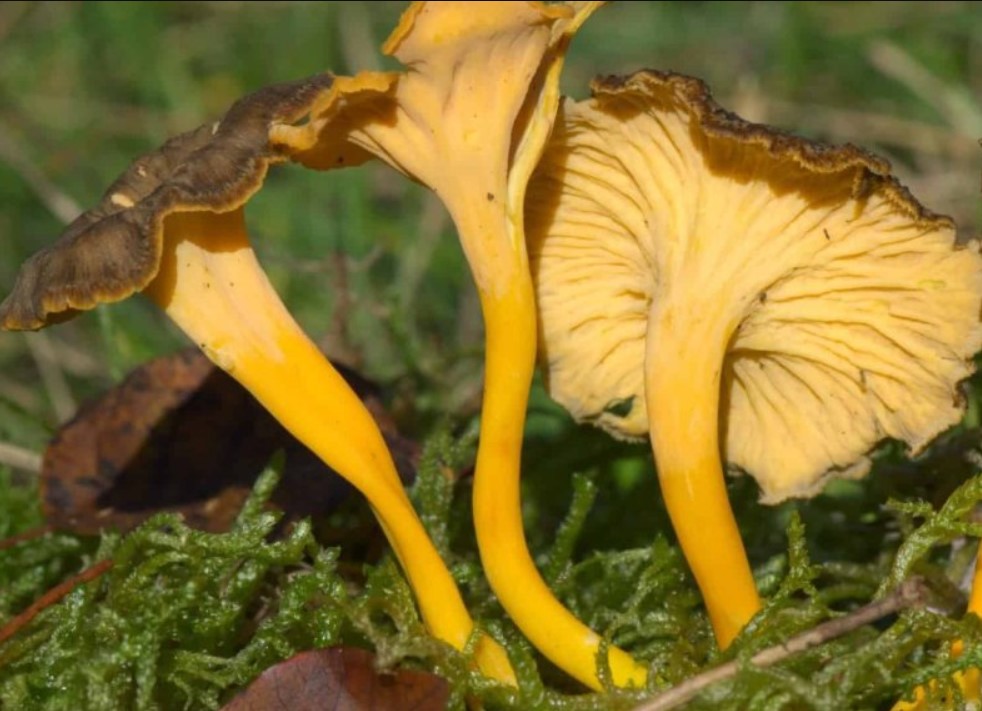
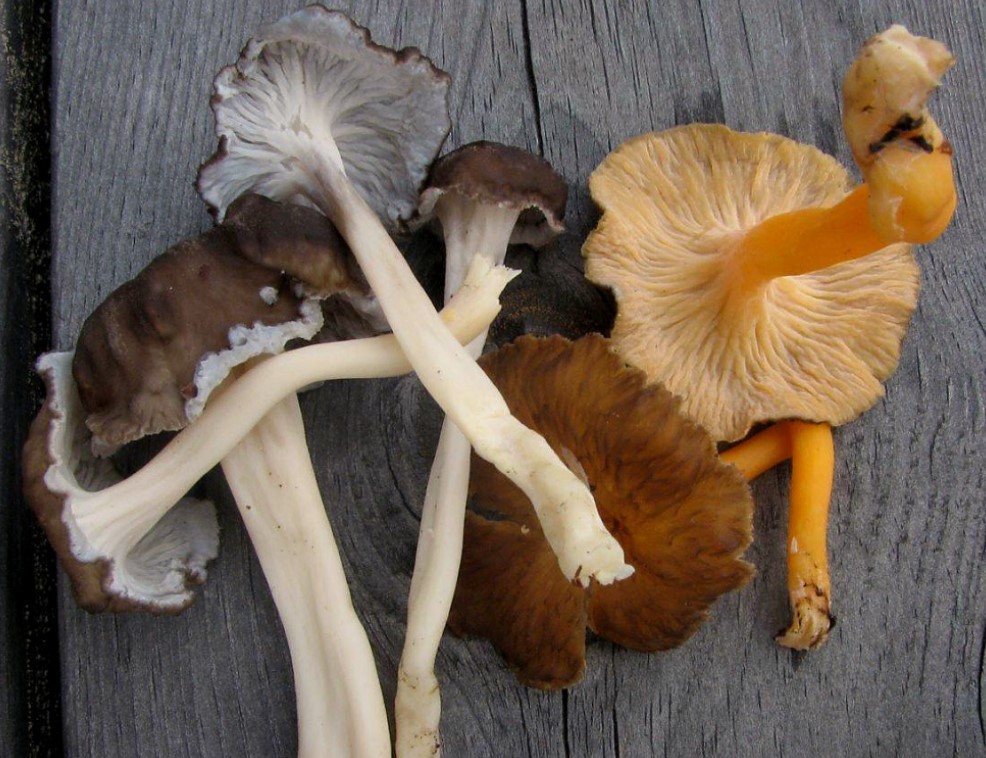
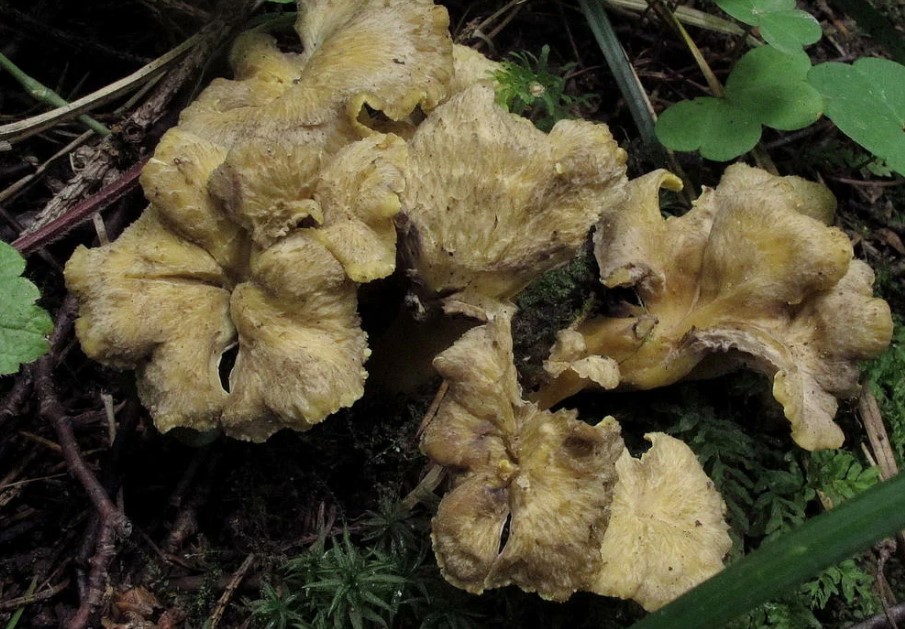
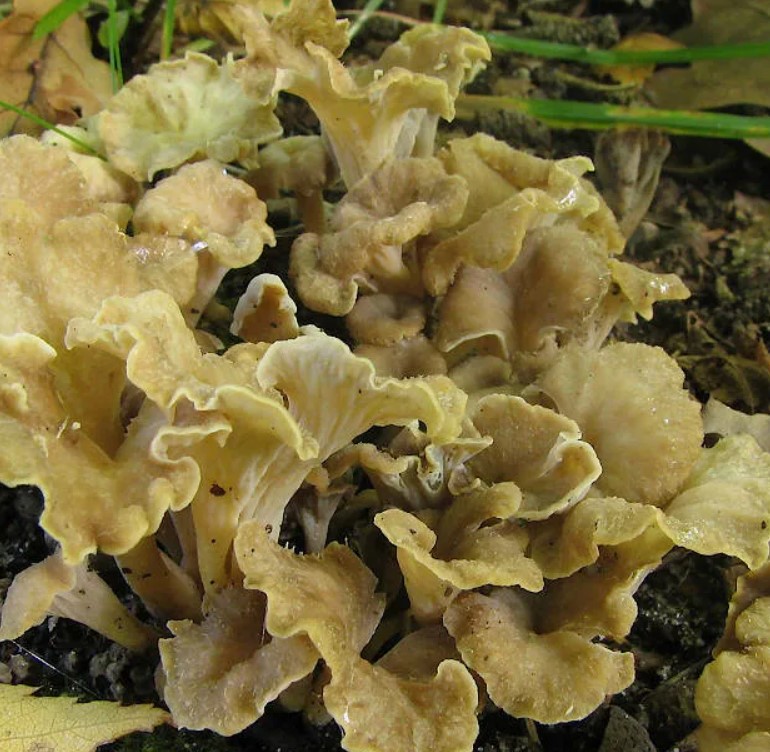
Where and when does the gray-yellow chanterelle grow?
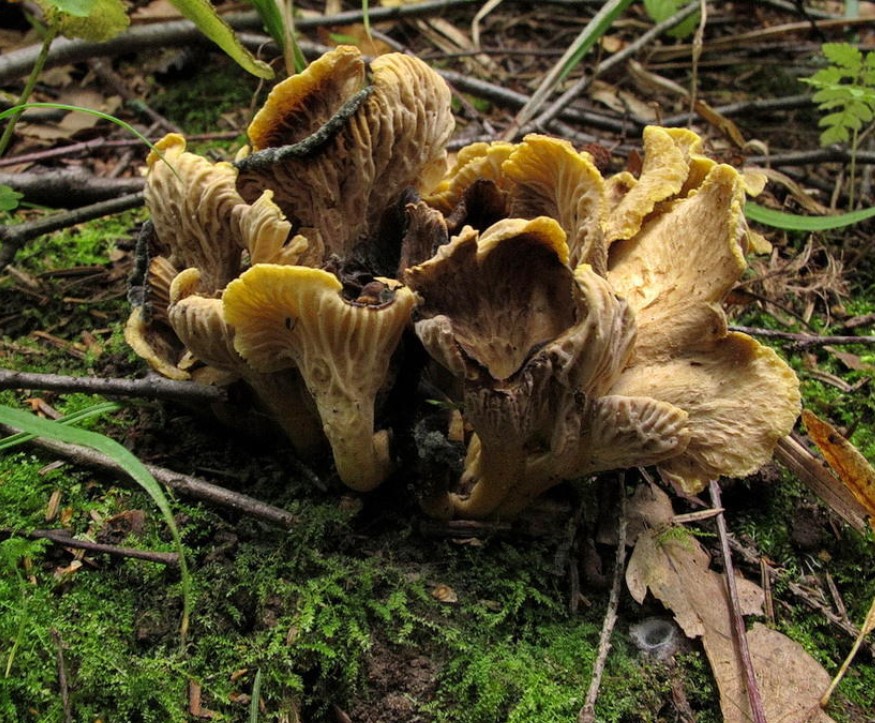
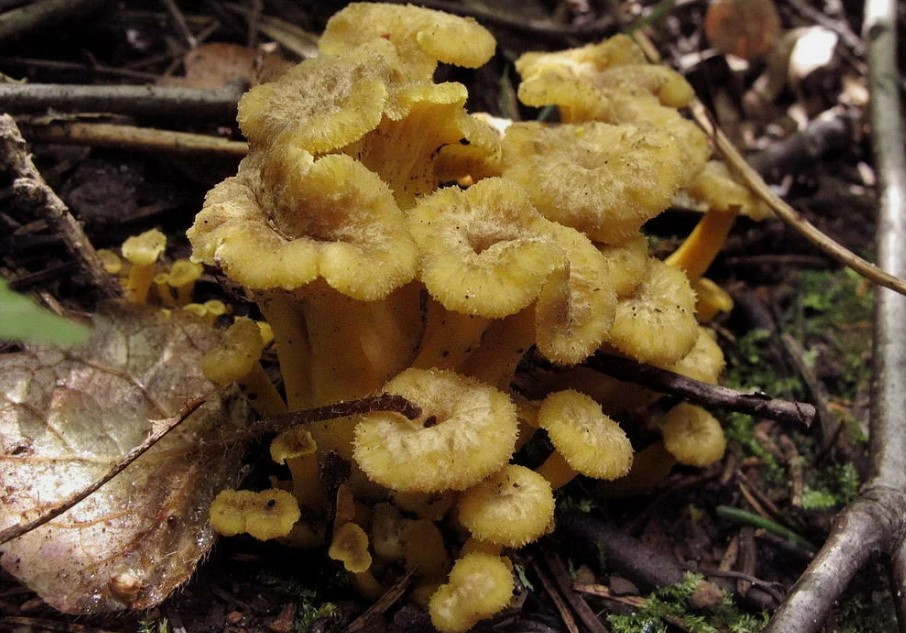
The cap is strongly wavy and yellowish-gray. This mushroom is rare, as it prefers habitats under beech trees in broadleaf forests of Western and Central Europe.
Bears fruit from July to September.
The mushroom is edible.
Photo gallery of gray-yellow chanterelles
Where and when does the gray chanterelle grow?
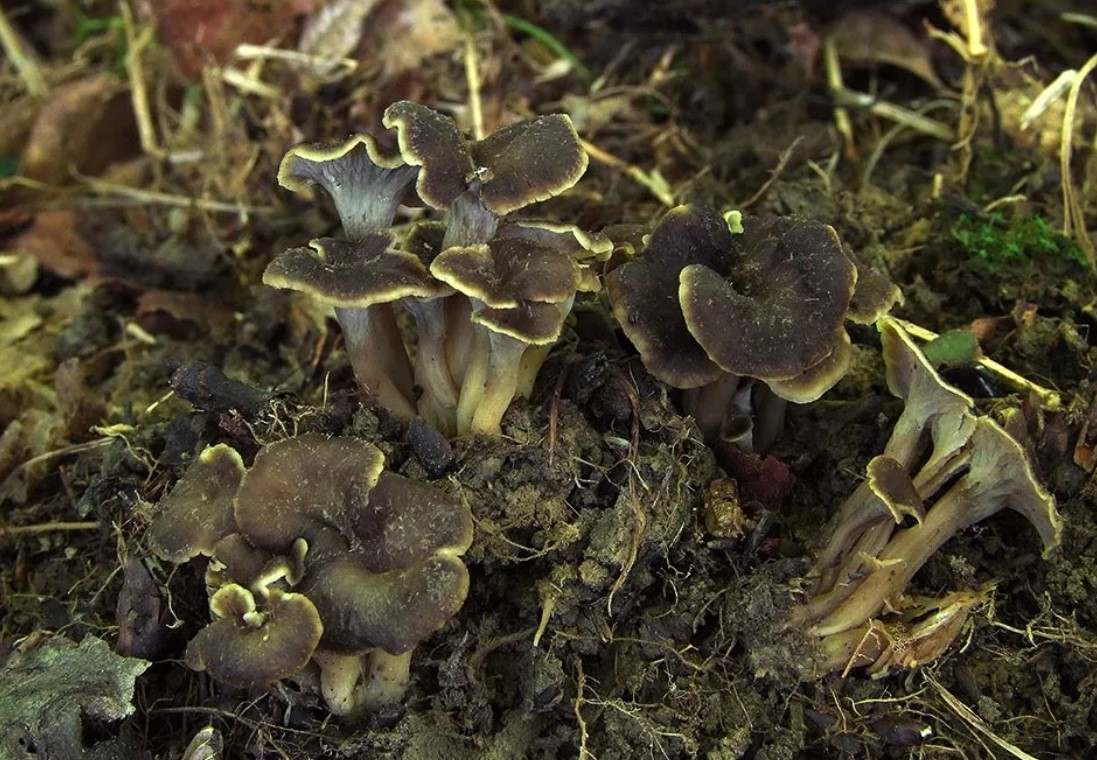
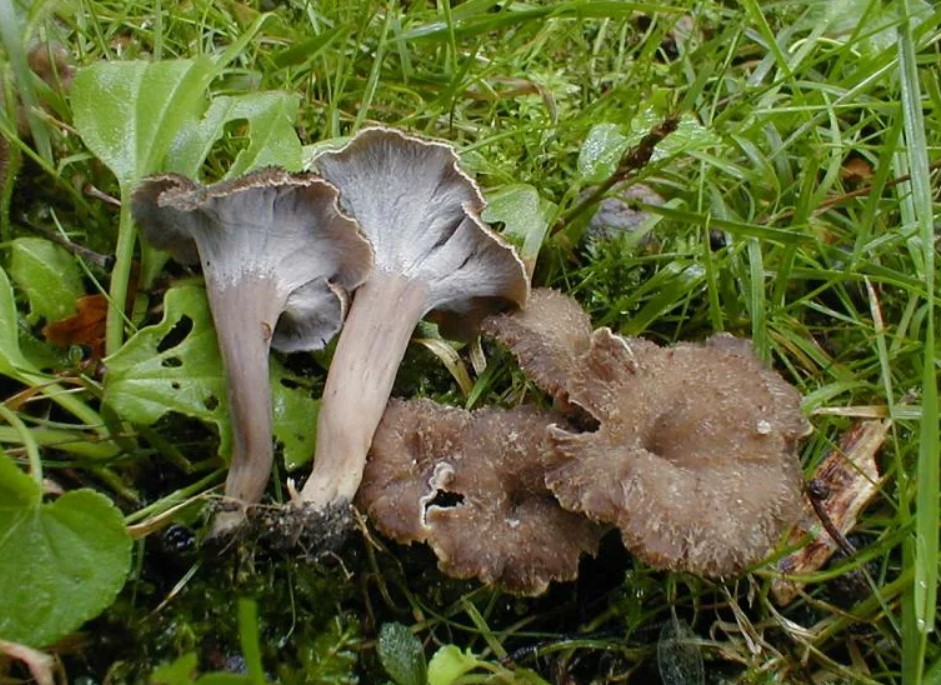
It is slightly smaller in size than the common chanterelle. The top of the cap is dark brown, while the underside is noticeably lighter. The surface is wrinkled.
Prefers warm or humid forests of the European part.
Grows next to spruce and oak.
Fruiting period: August-October.
The mushroom is edible.
Photo gallery of the gray chanterelle
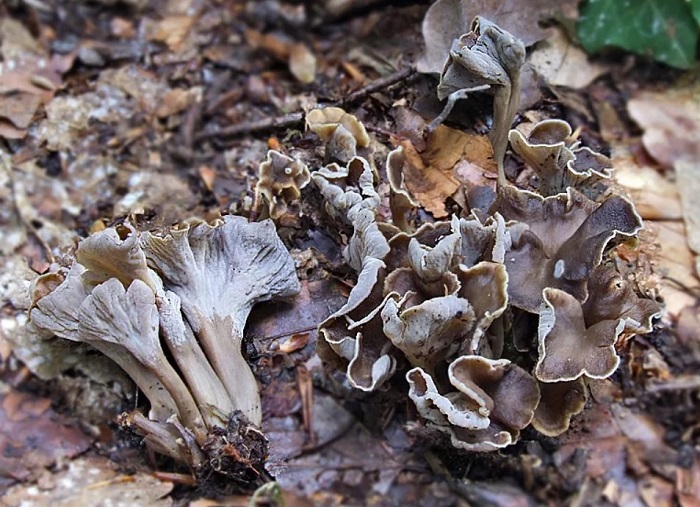
Where and when does the black chanterelle grow?
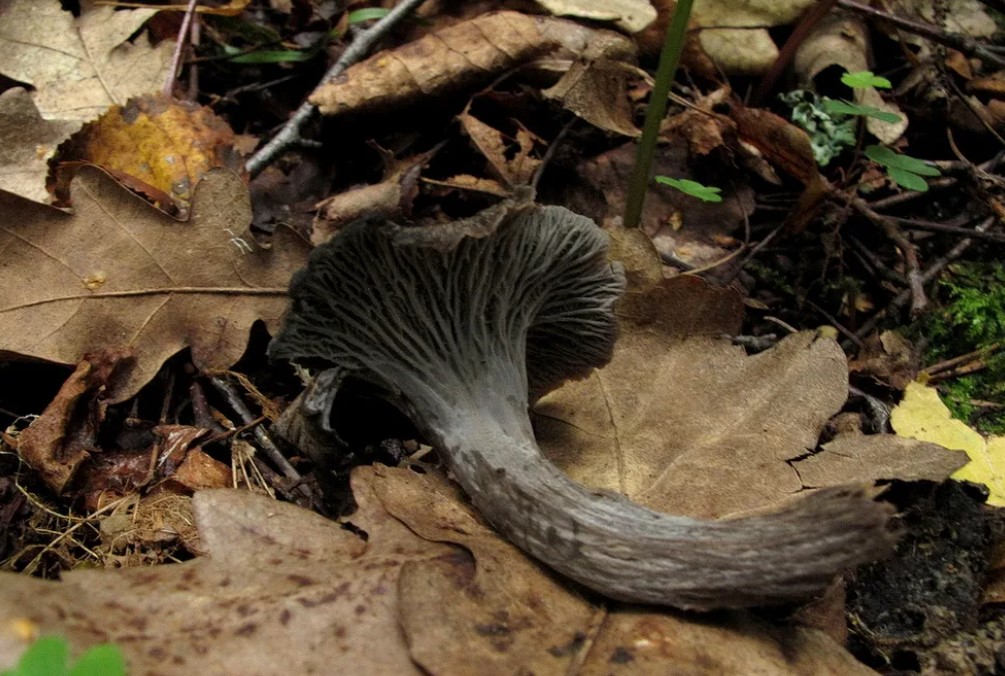
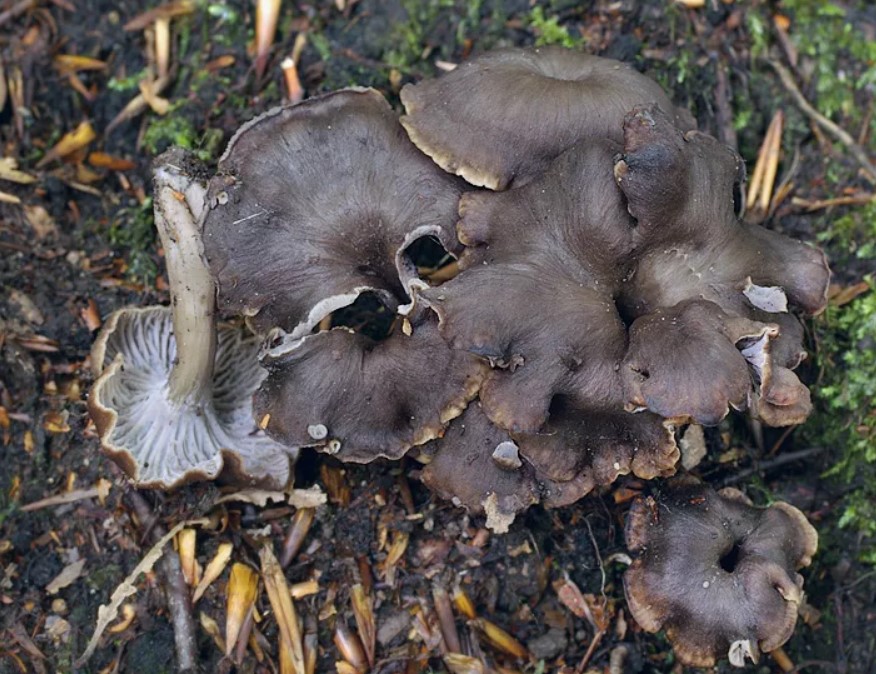
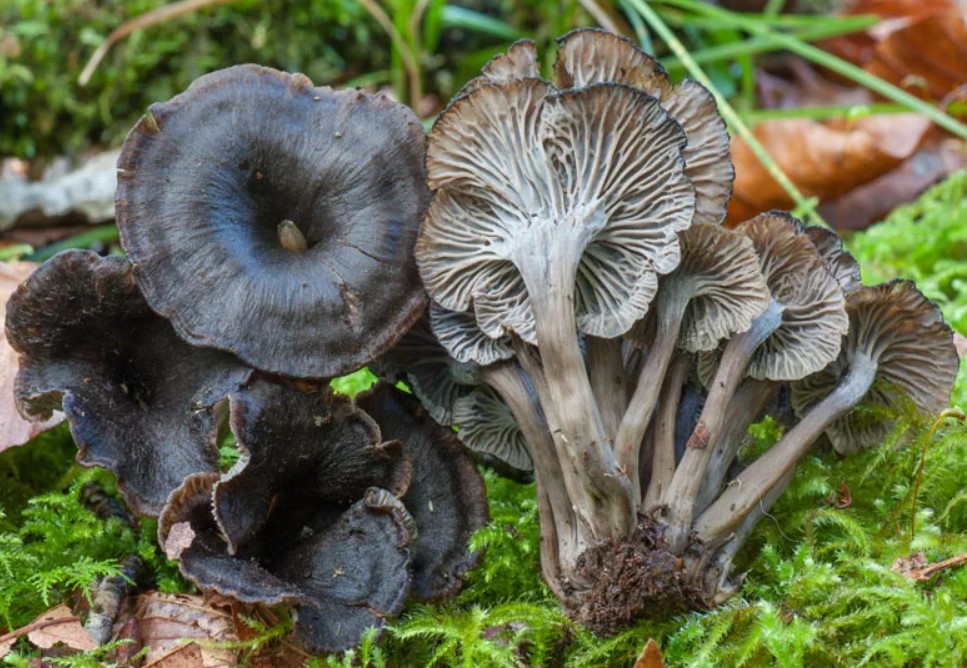
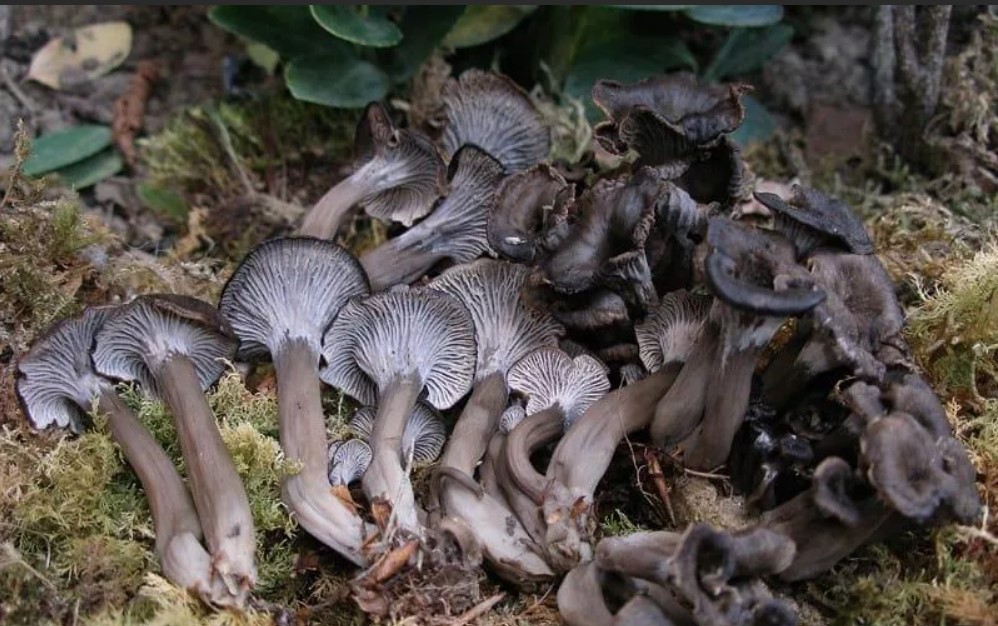
A delicacy mushroom that is quite rare. Its signature feature is its steeply funnel-shaped cap with wavy edges. The diameter reaches 8 cm, and the fruiting body height is 12 cm. The surface color is almost black, while the underside is grayish-blue.
It is found in forests where beeches, spruces, hazels and oaks grow.
The mushroom bears fruit from July to October.
Photo gallery of black chanterelle
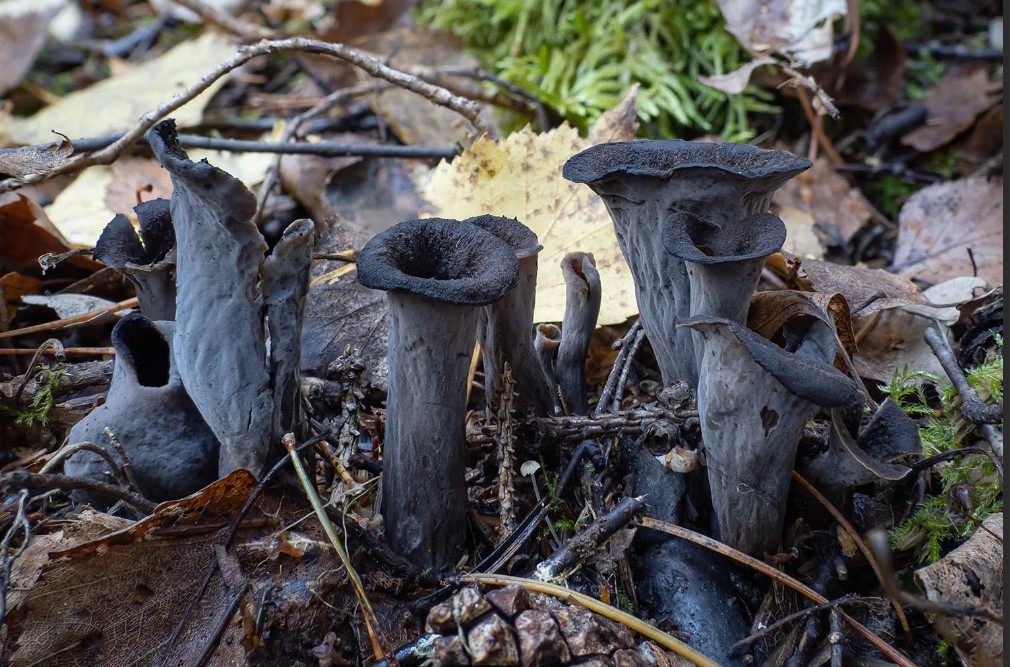
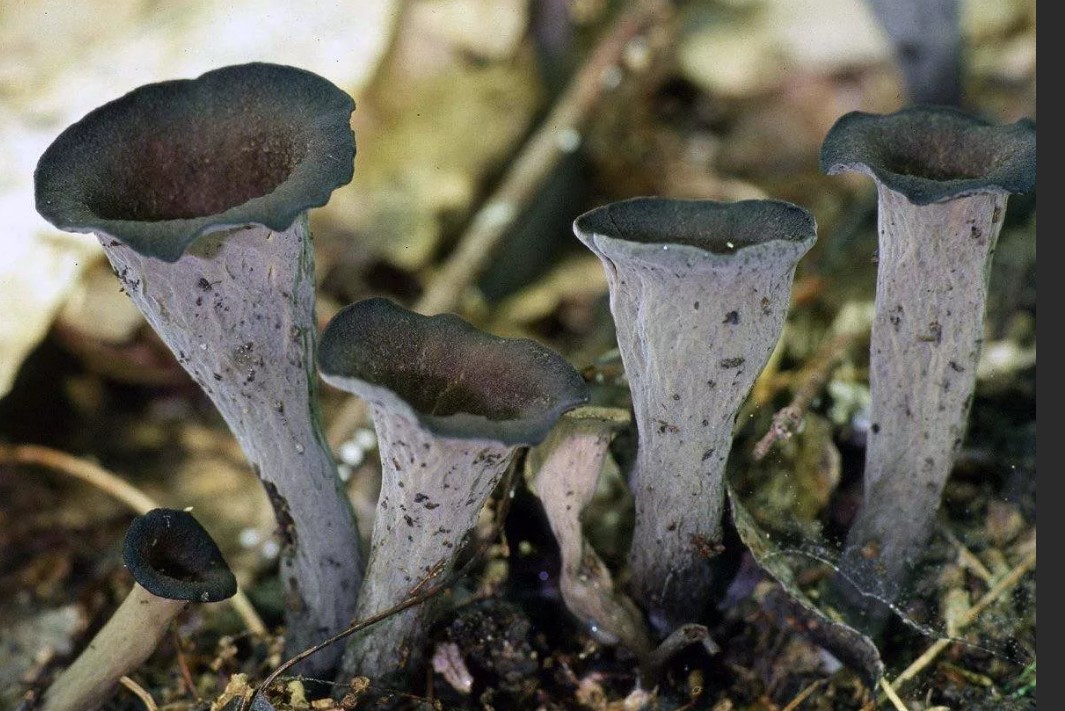
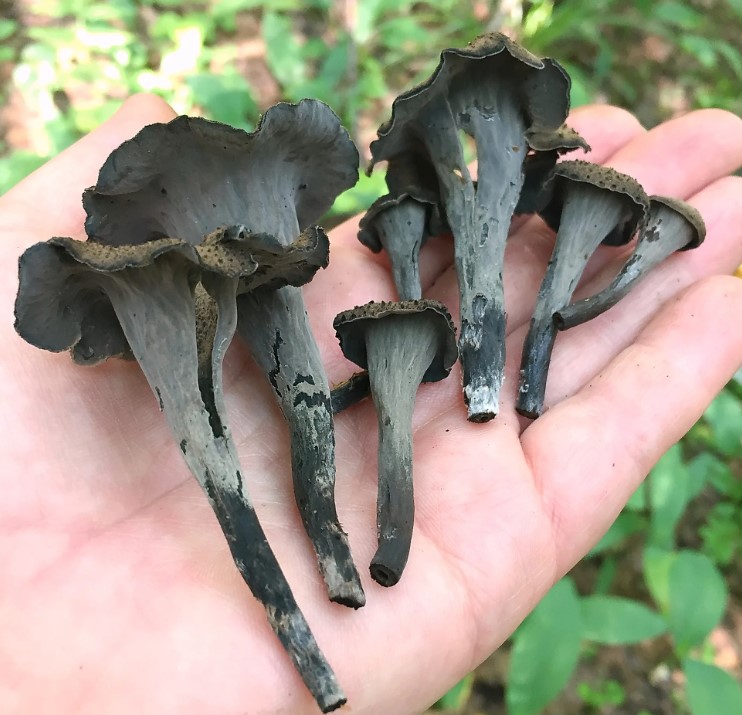
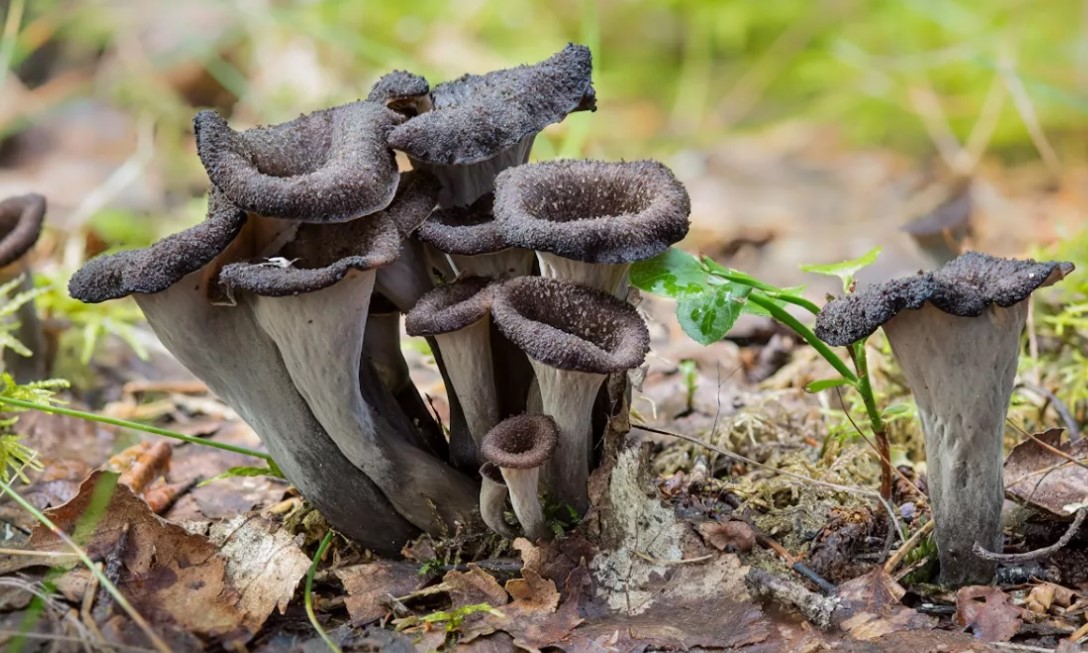
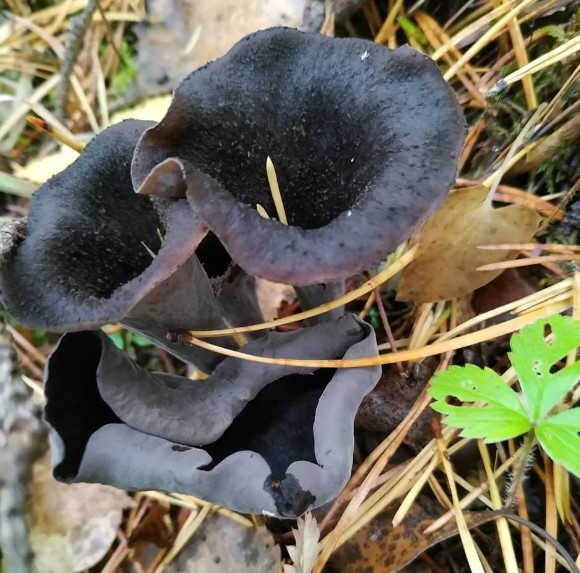
Read more about the black chanterelle in the articleBlack chanterelle mushrooms: photos and descriptions, where and when they grow, and how to cook them.
Chanterelles from North America
These chanterelles are not found in our country, but are widespread on the other side of the continent; it would be wrong not to mention their existence.
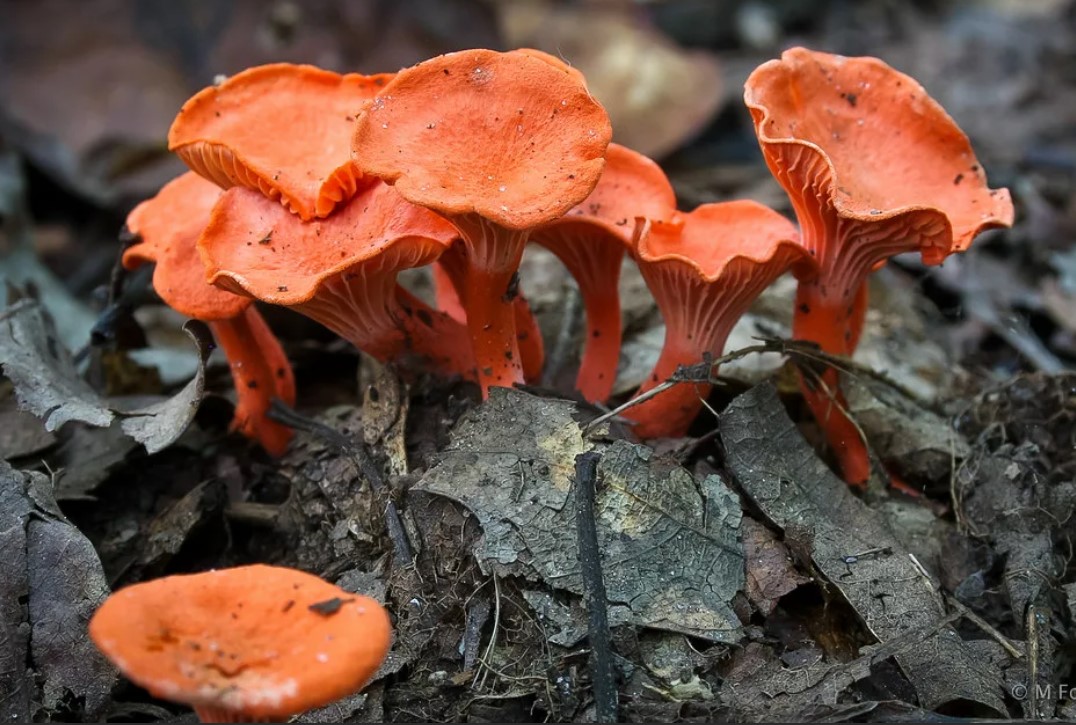
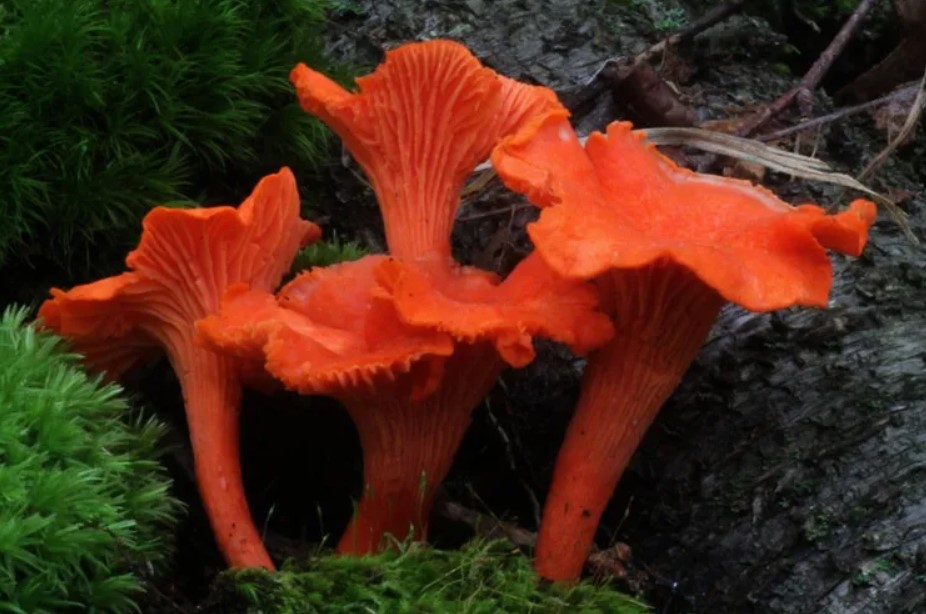
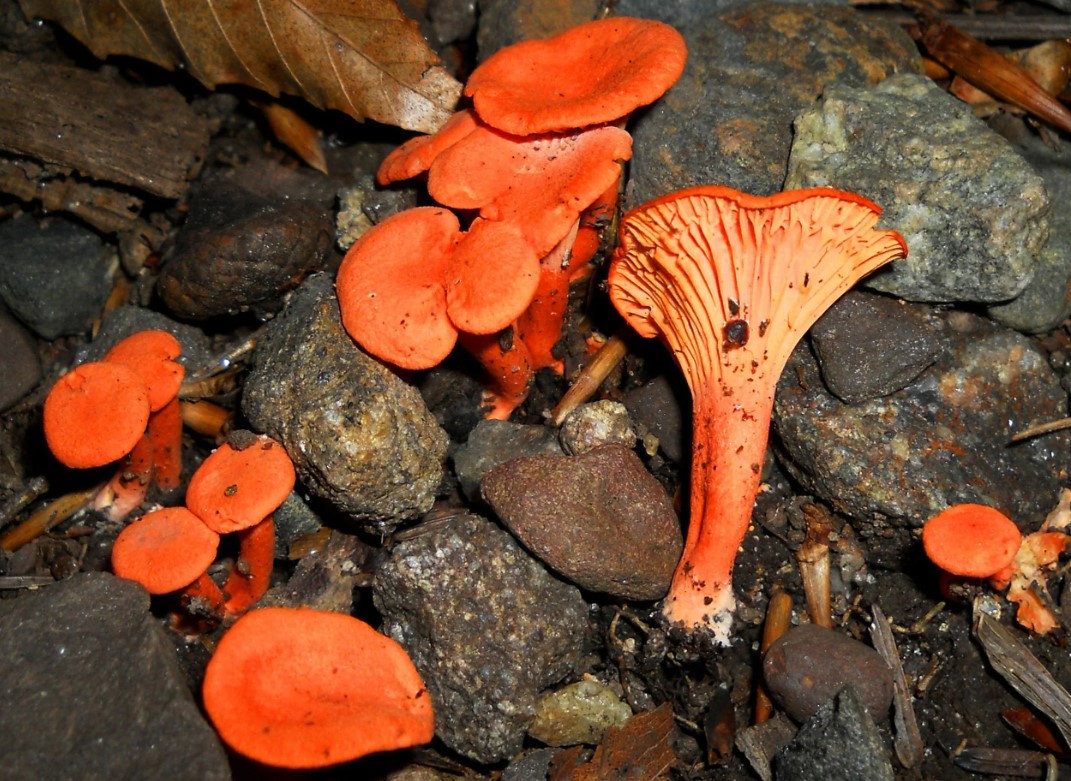
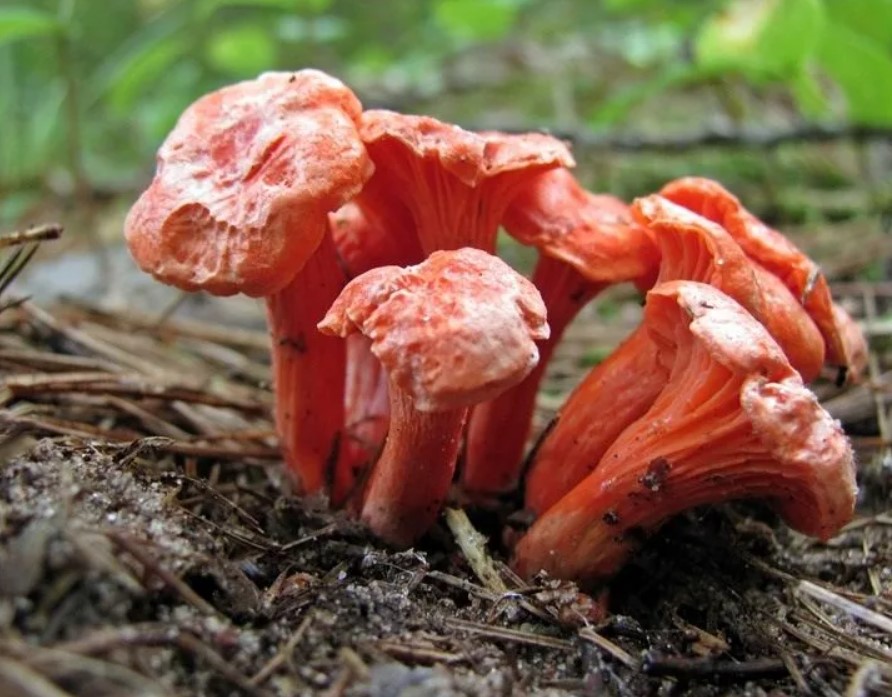
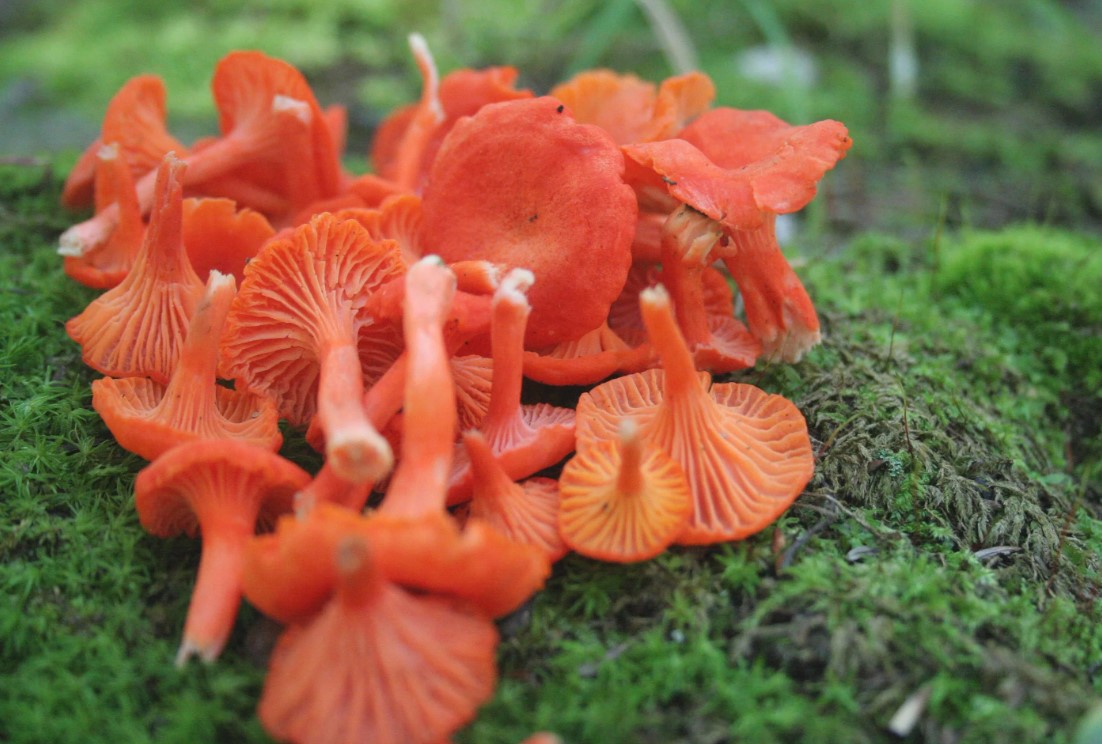
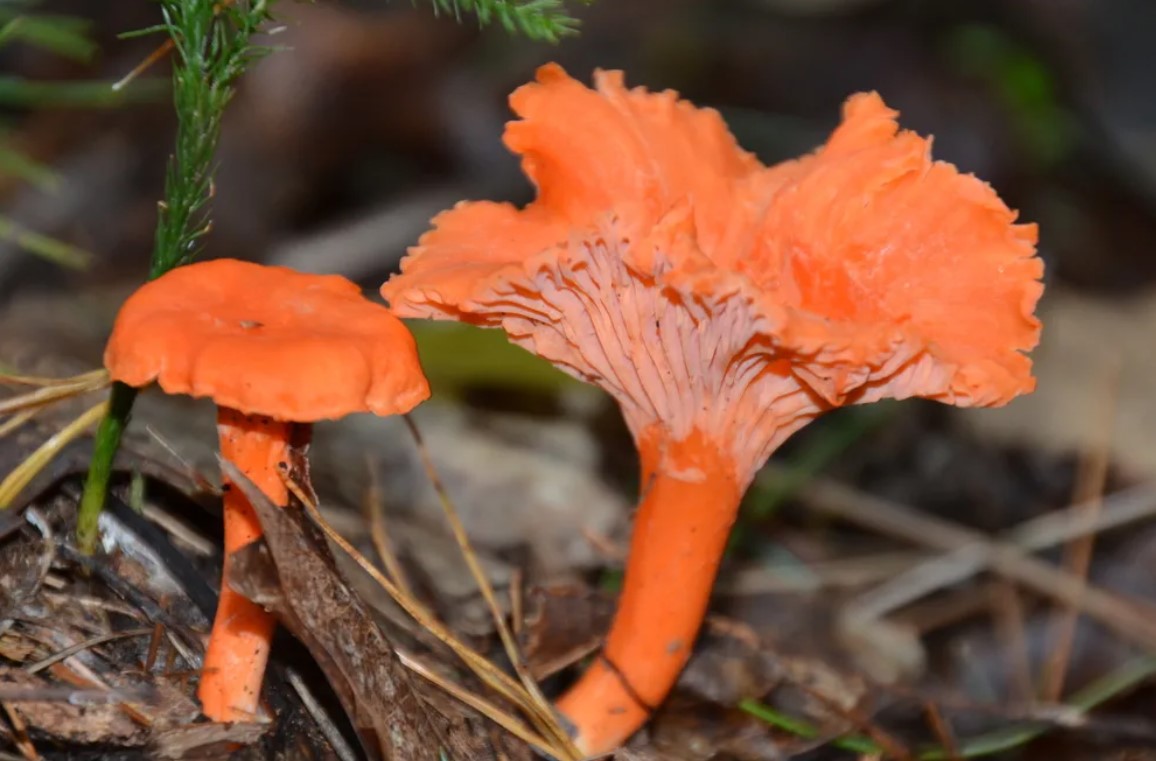
Cinnabar-red chanterelle
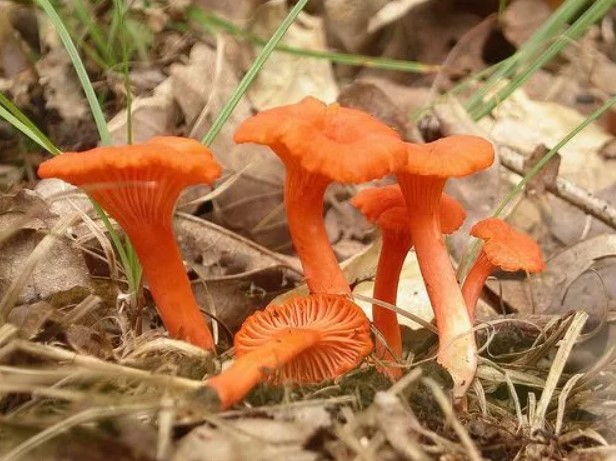
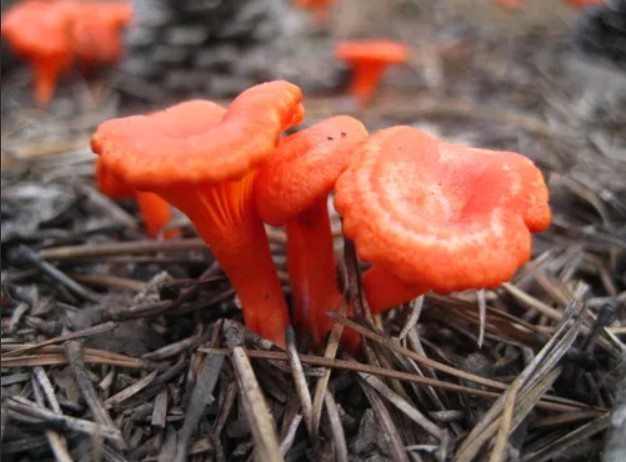
A small mushroom with a cap diameter of up to 4 cm. It is distinguished by its red-orange coloration; the younger the mushroom, the more vibrant it becomes.
The mushroom is edible and can be found in the eastern part of the continent.
Faceted chanterelle
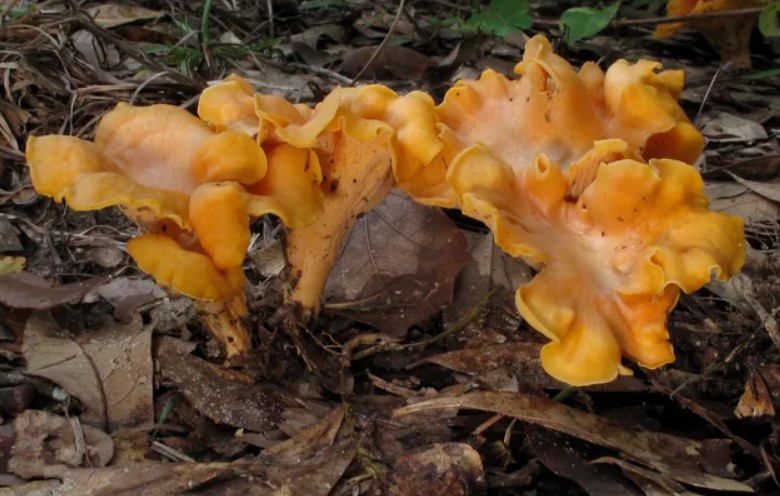
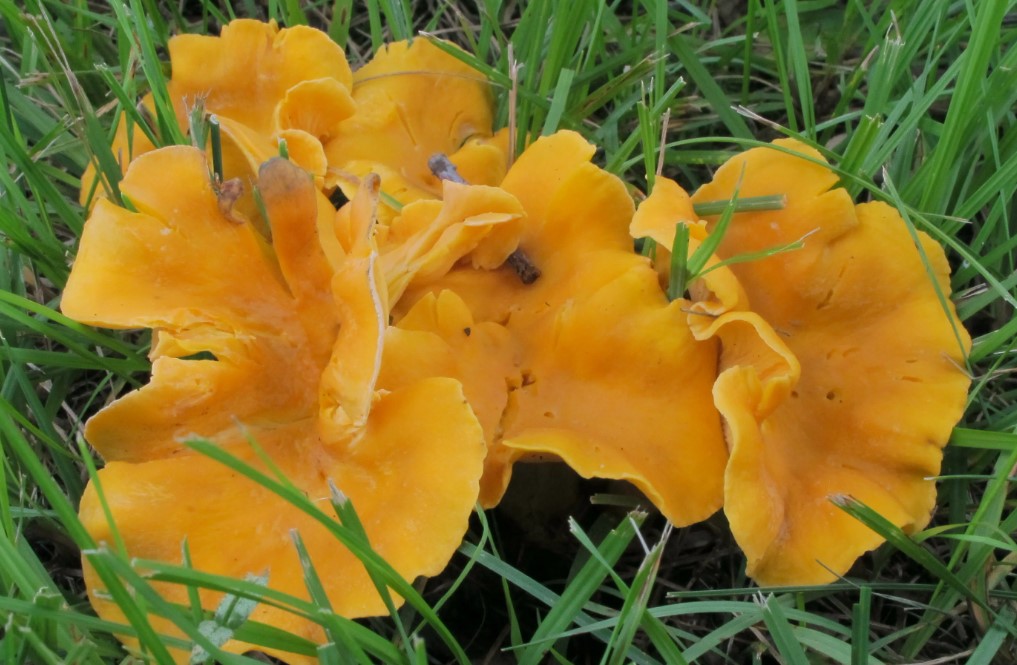
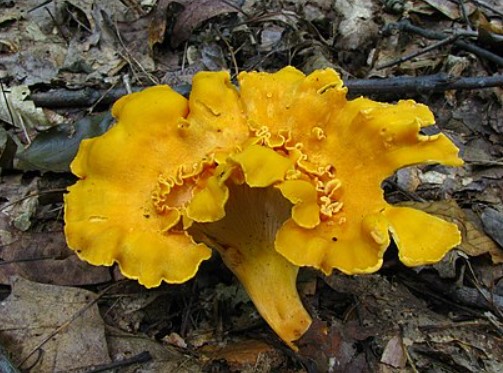
Common in many forests and parks across North America, it's very similar in appearance to our common chanterelle, but has wrinkles instead of scales.
Fruiting period: July-October.
Photo gallery of the faceted chanterelle
Fragrant chanterelle
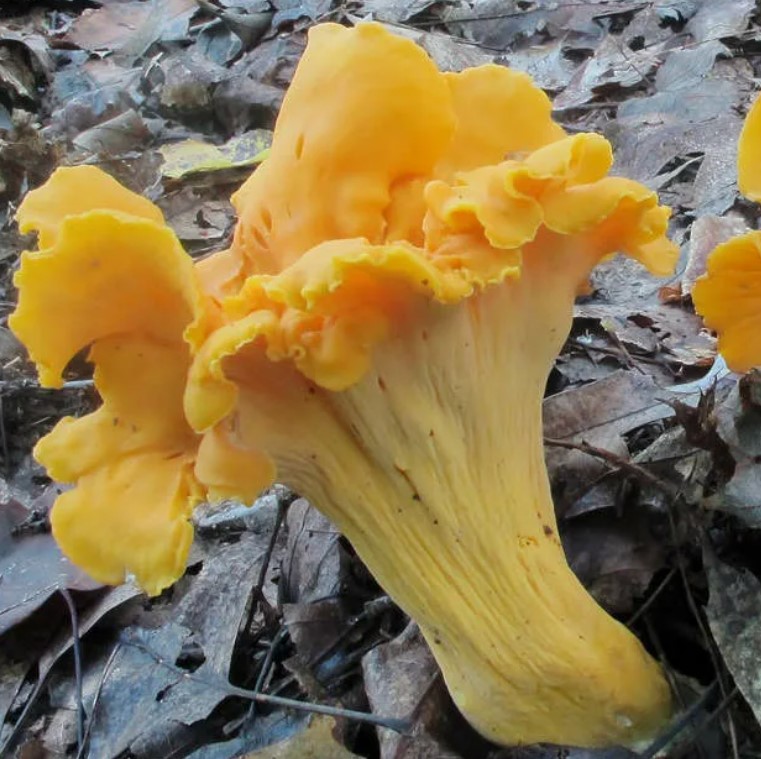
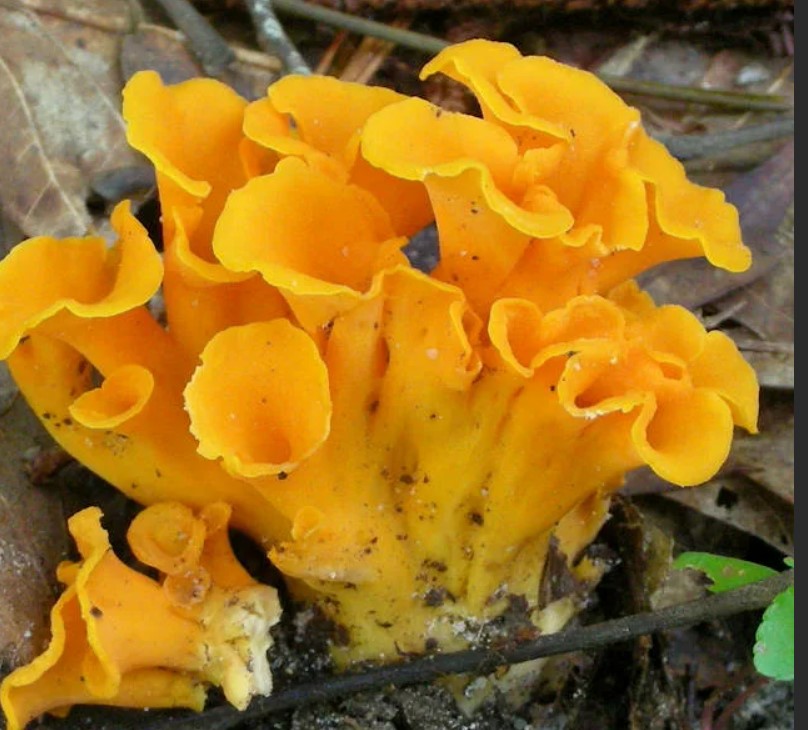
This mushroom can be found in the eastern United States and Mexico. It's very similar to the common chanterelle, with only the cap's shape differing—it's a distinct funnel.
The pulp has a pungent aroma.
It bears fruit from mid-summer to autumn.
Photo of a fragrant chanterelle
Little chanterelle
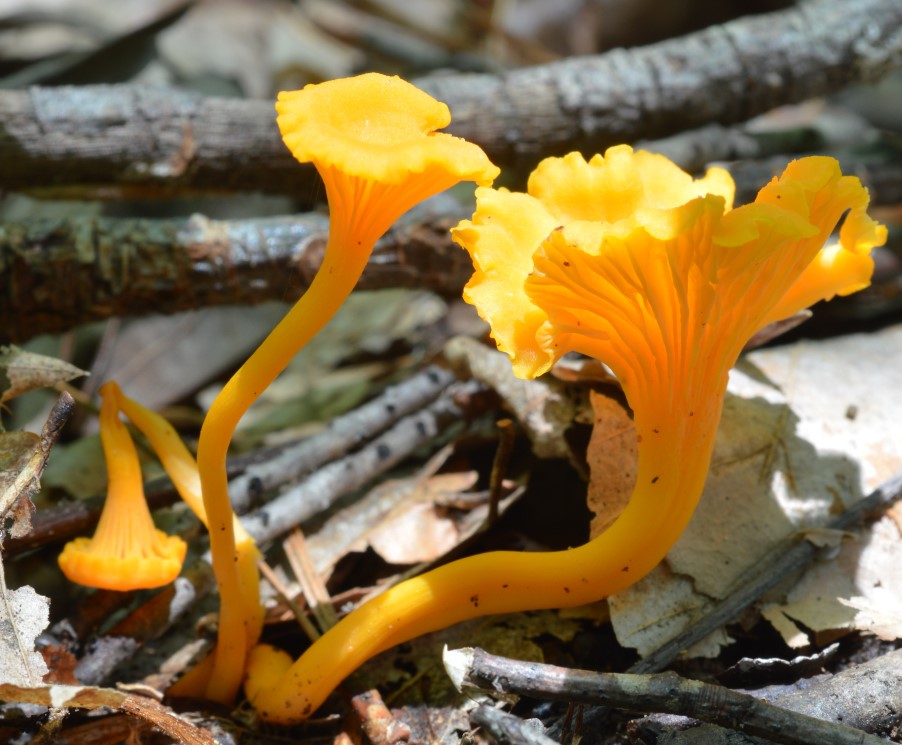
It grows in the eastern part of the continent and is a miniature version of the common chanterelle – the diameter of the mushroom cap does not exceed 3 cm. The color is light orange.
Found in mixed forests.
Fruiting period: July-October.
Photo gallery of the little chanterelle
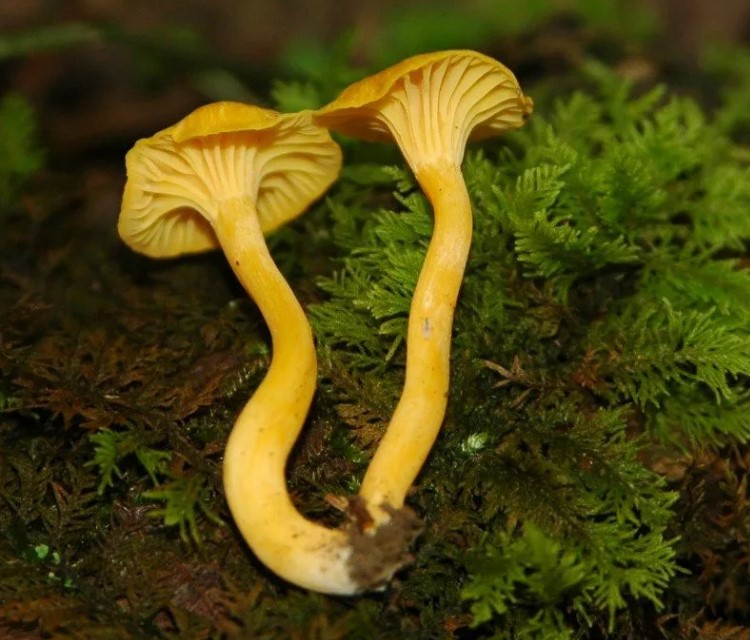
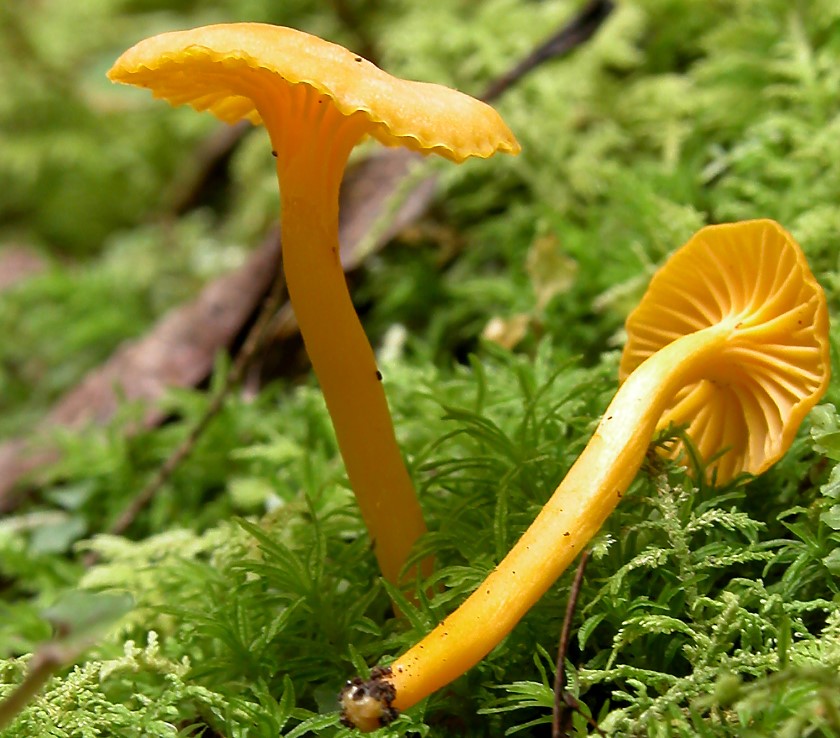
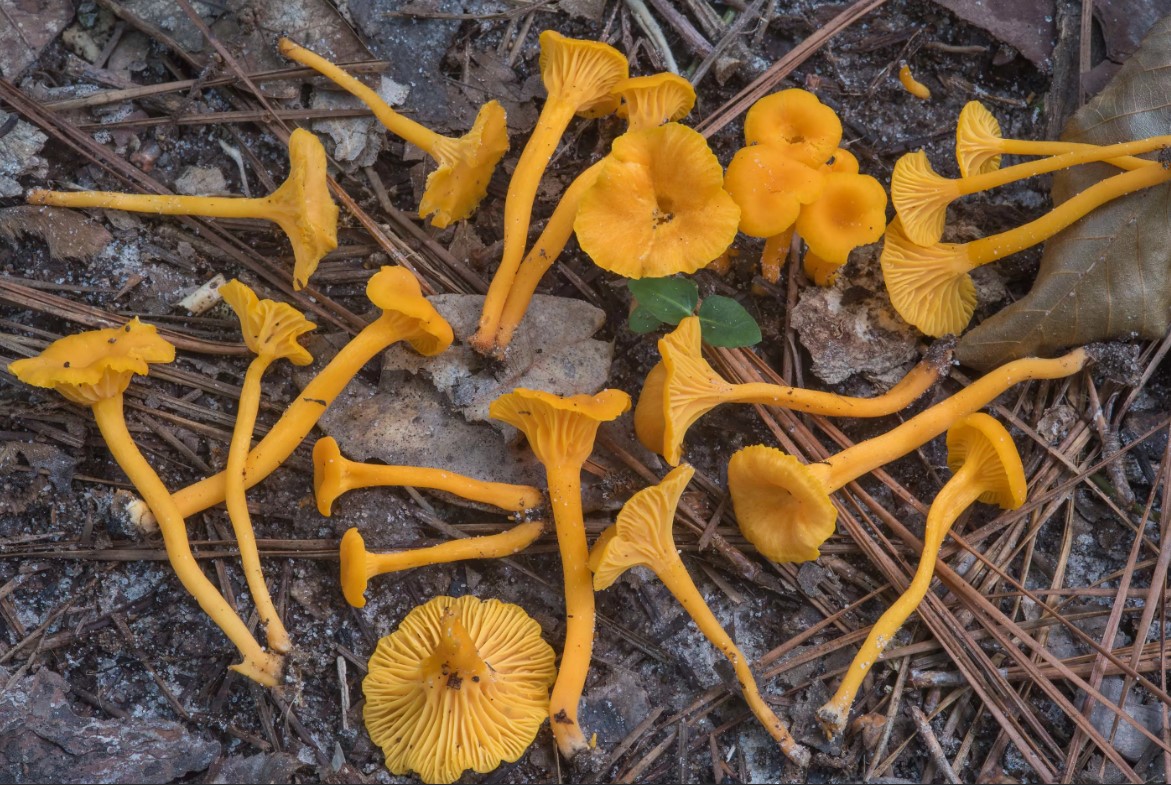
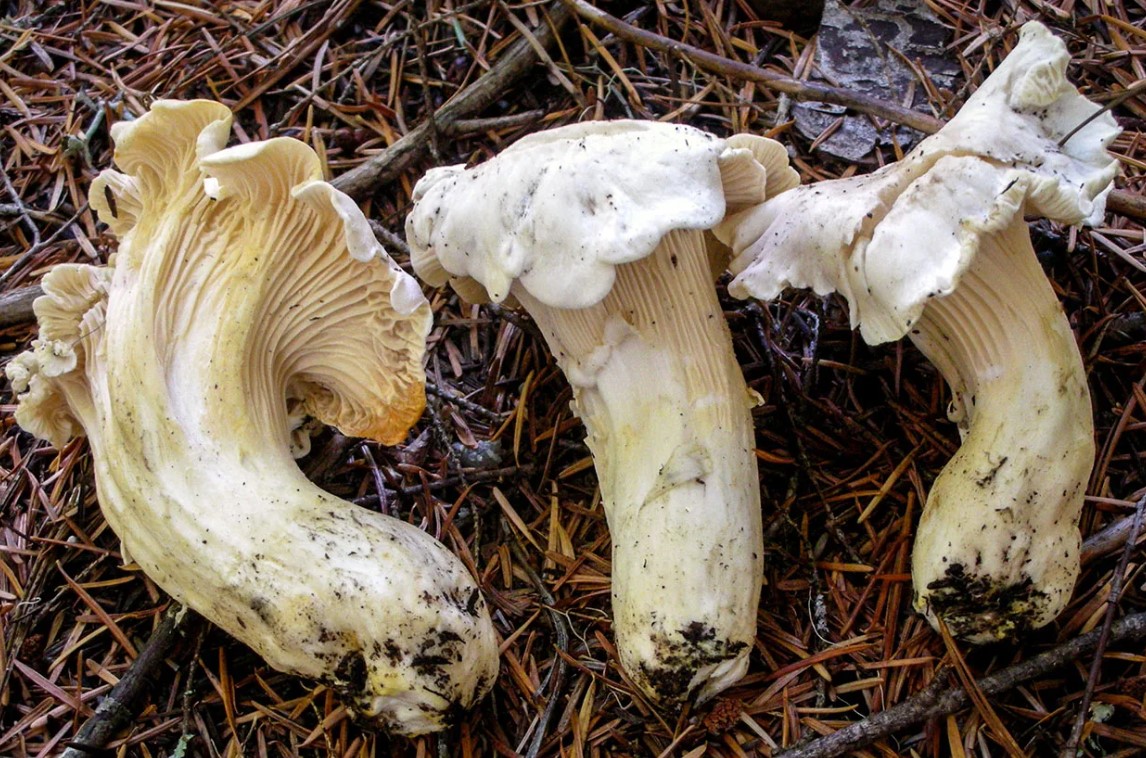
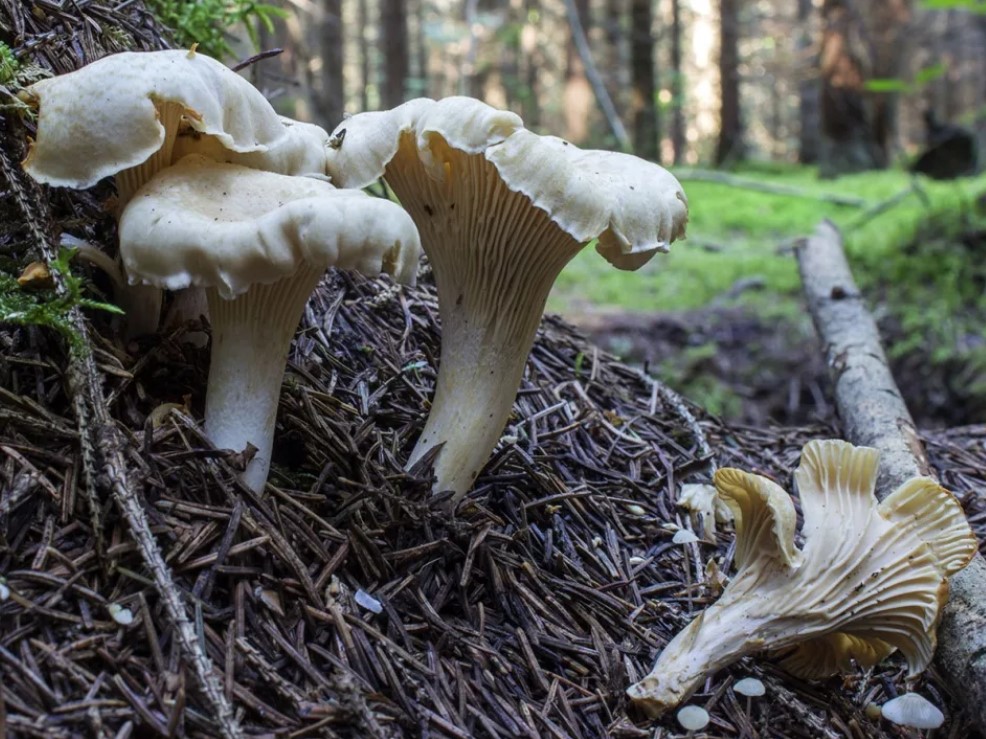
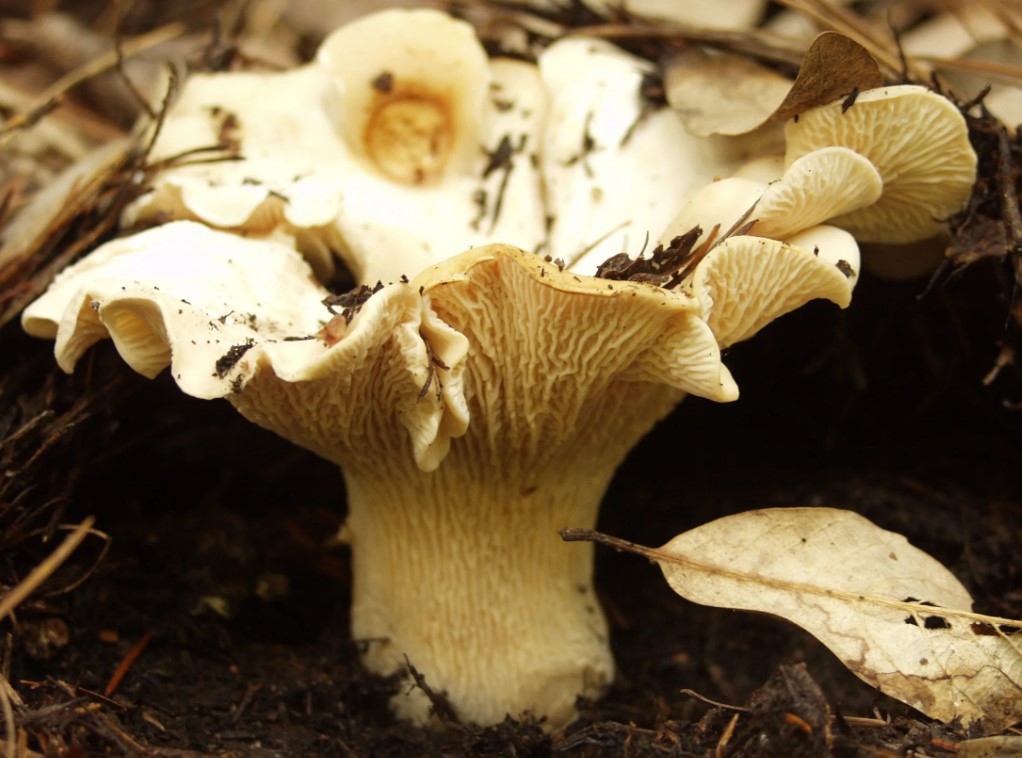
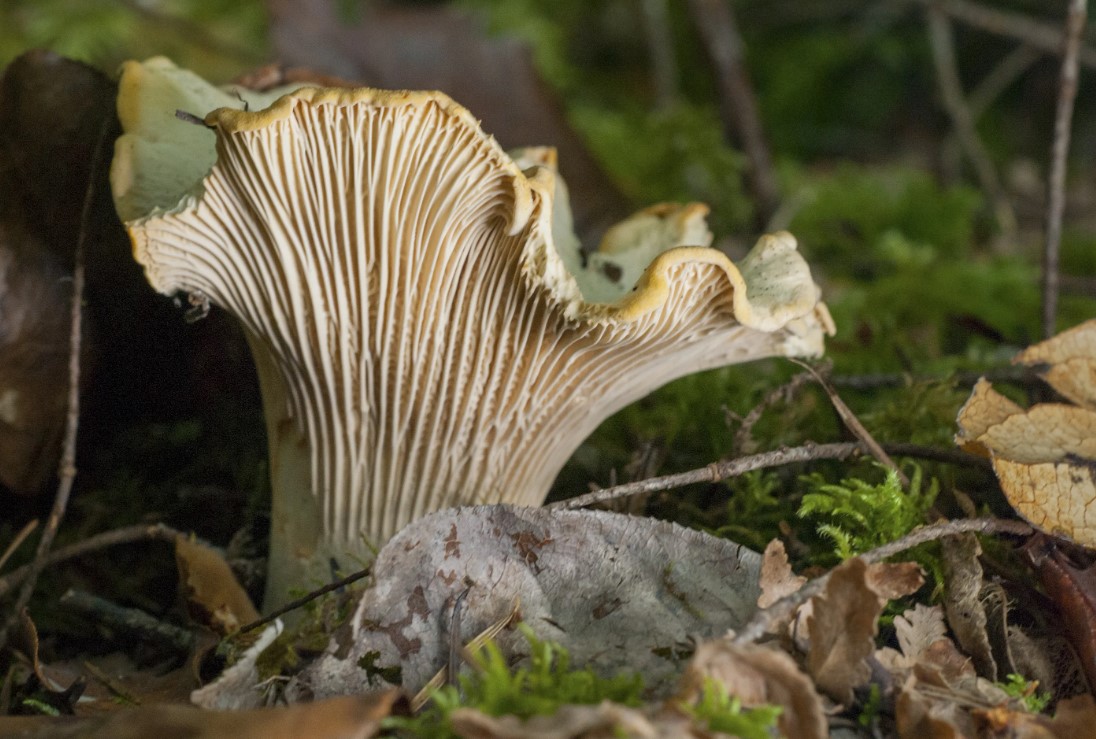
Whitish chanterelle
It's lighter in color than what we're used to seeing in chanterelles. The flesh has no distinctive odor.
Grows near pines and firs.
Fruiting period: June-October.
Photo gallery of white chanterelles
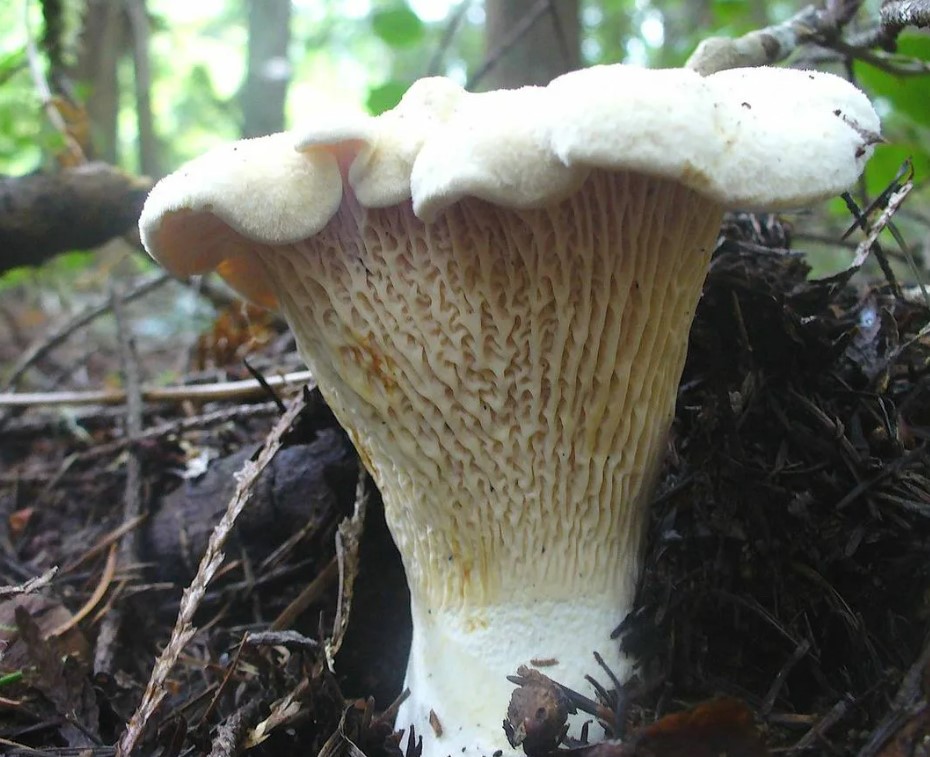
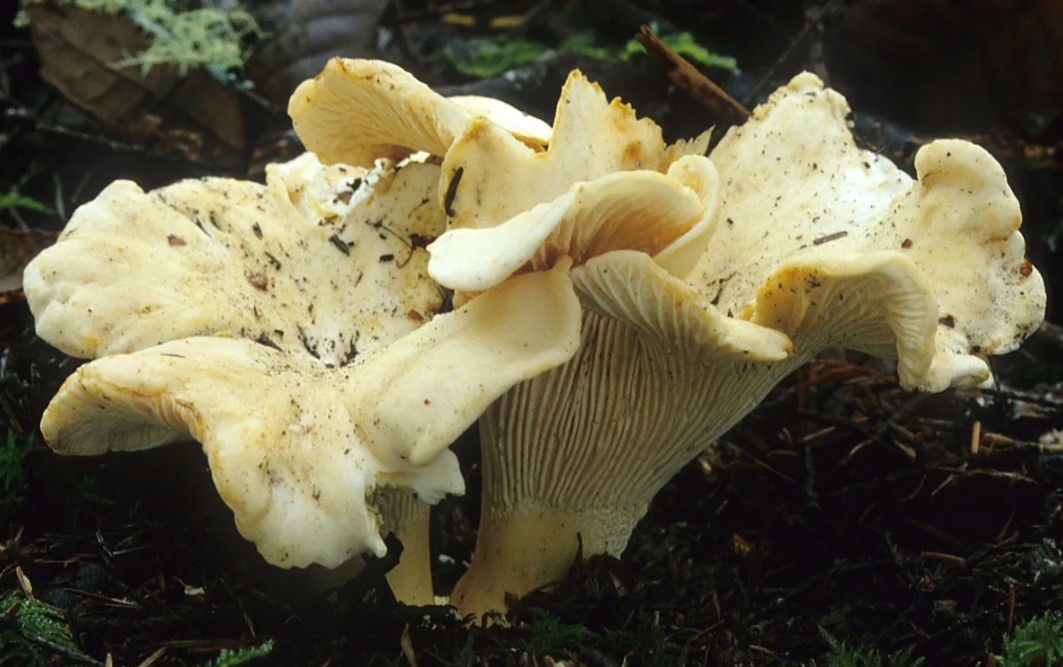
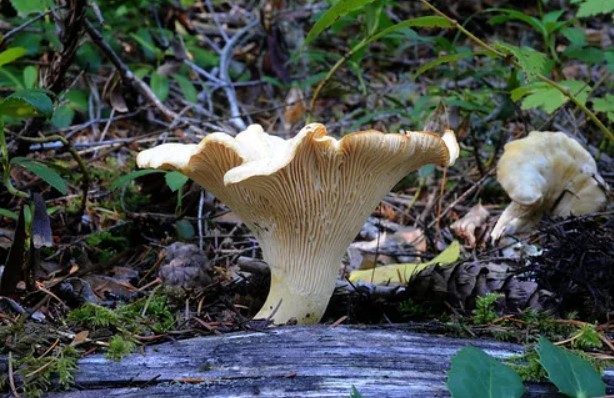
Where do false chanterelles grow?
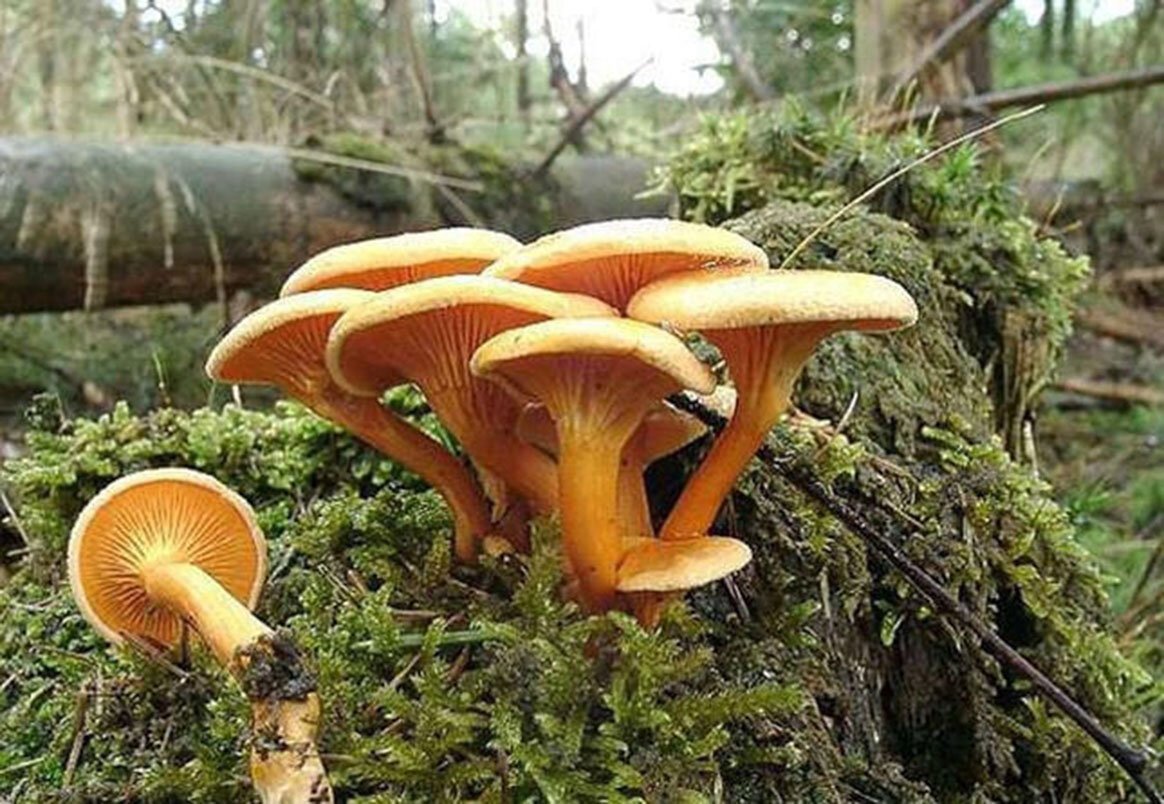
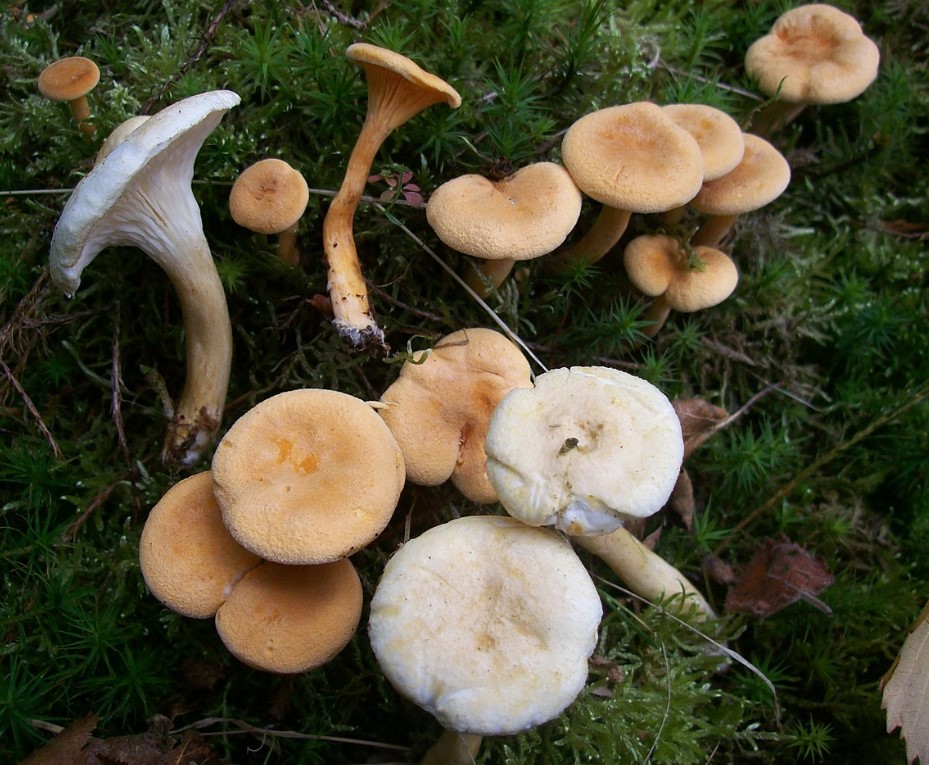
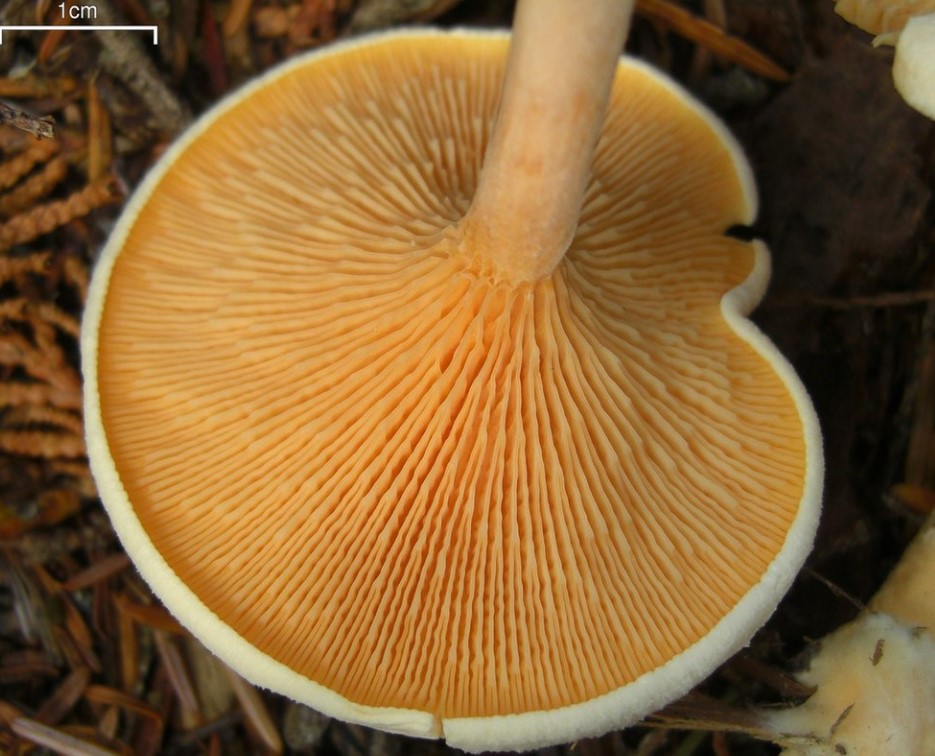
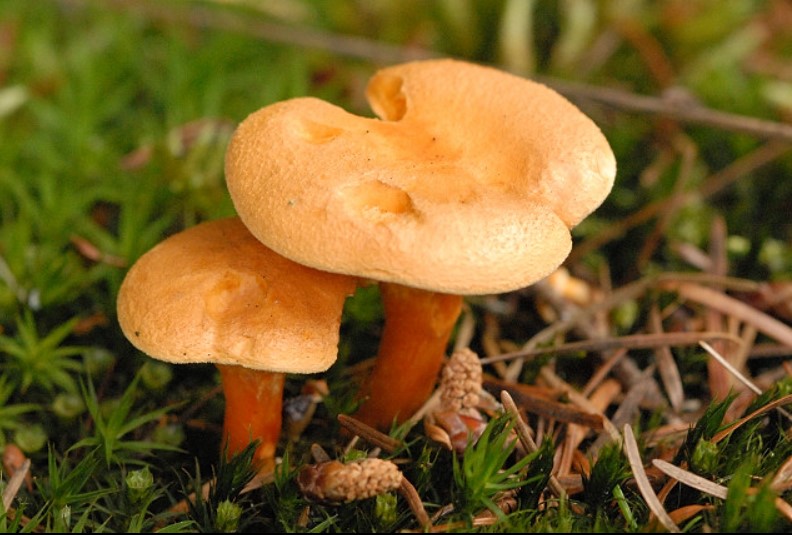
False chanterelles look similar to regular mushrooms. However, if you look closely, you'll notice differences. These mushrooms are not recommended for consumption due to their poor taste and the presence of toxic substances.
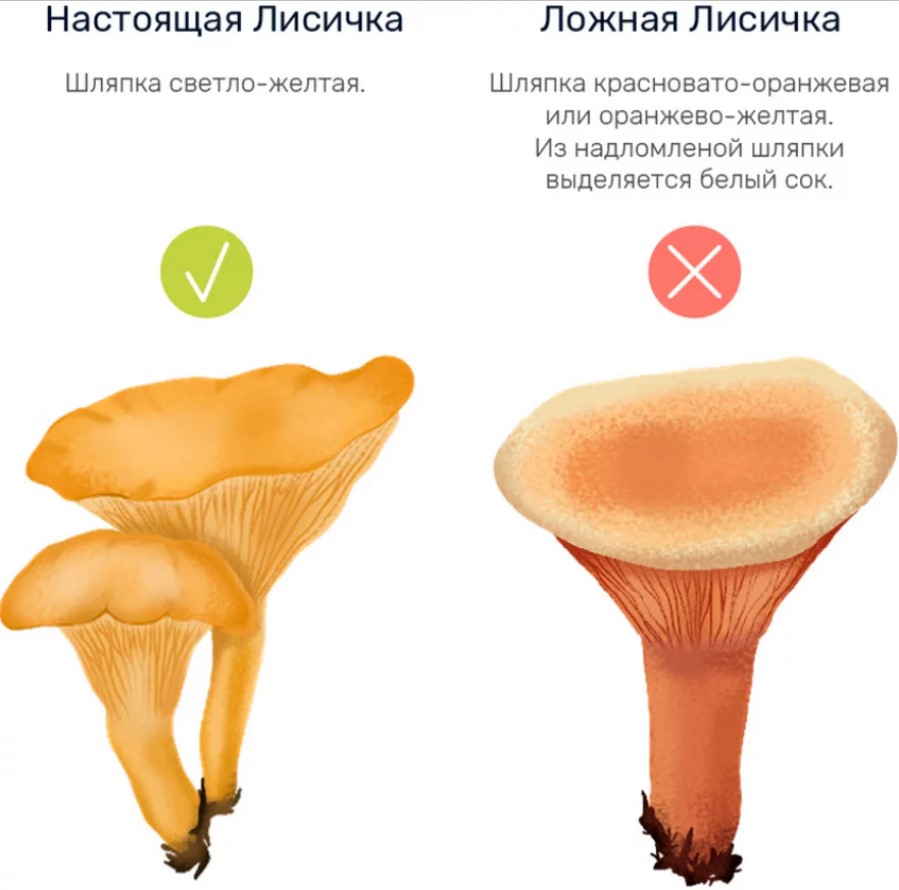
False chanterelle (orange talker)
This mushroom differs from the common chanterelle in its round cap with smooth, inward-curving edges. It's orange in color, but the stem is much darker. Furthermore, the stem is thin and straight, with a distinct border between the stem and cap. The skin is velvety, which is not found on the common chanterelle.
It bears fruit in August-September and is frost-sensitive. It is often found on decaying fallen trees in coniferous and mixed forests.
It is considered a conditionally edible mushroom.
Photo gallery of the false chanterelle
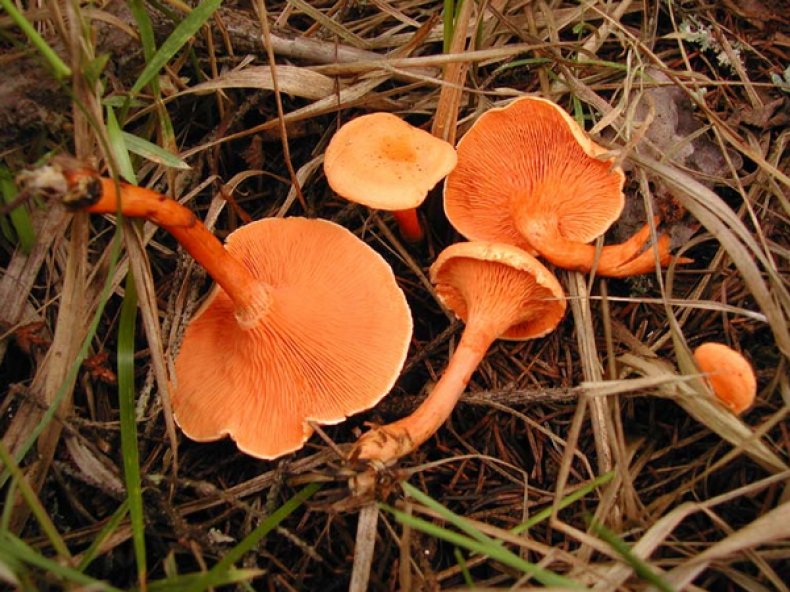
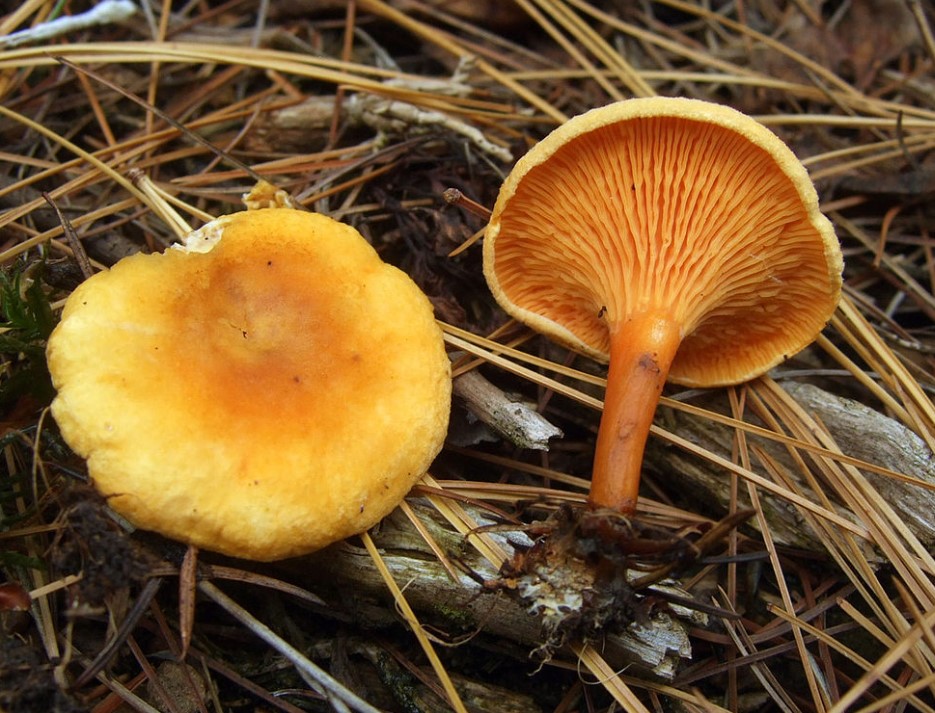
Read more about the false chanterelle in the articleFalse chanterelle, differences from the real one in the table, photo + mushrooms similar to chanterelles.
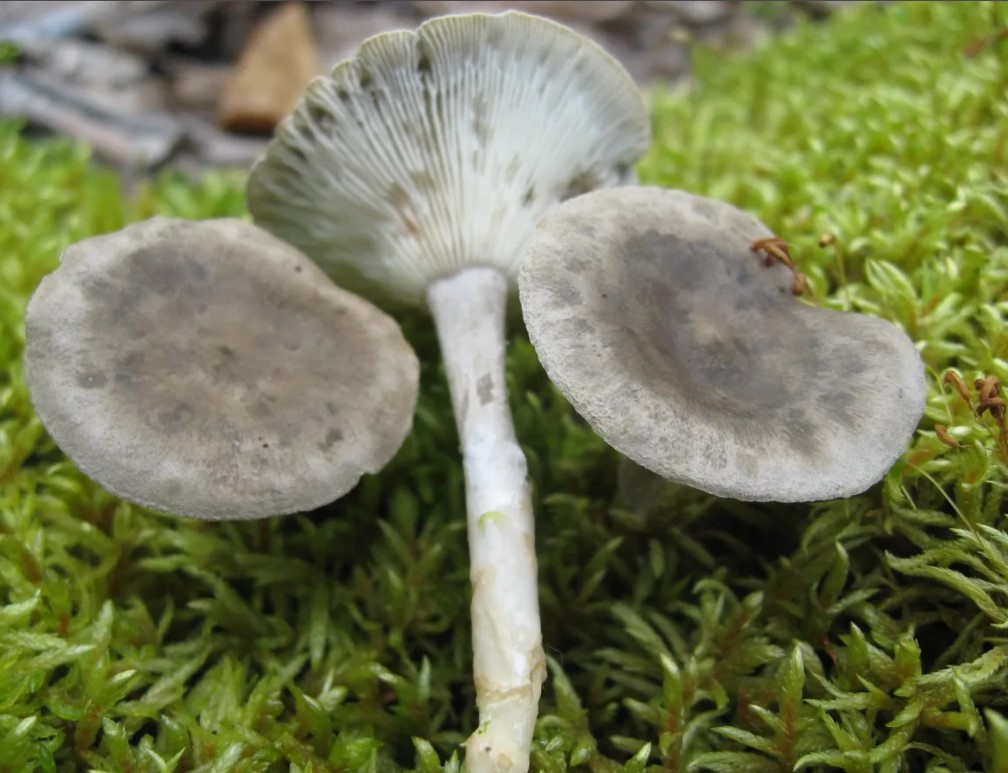
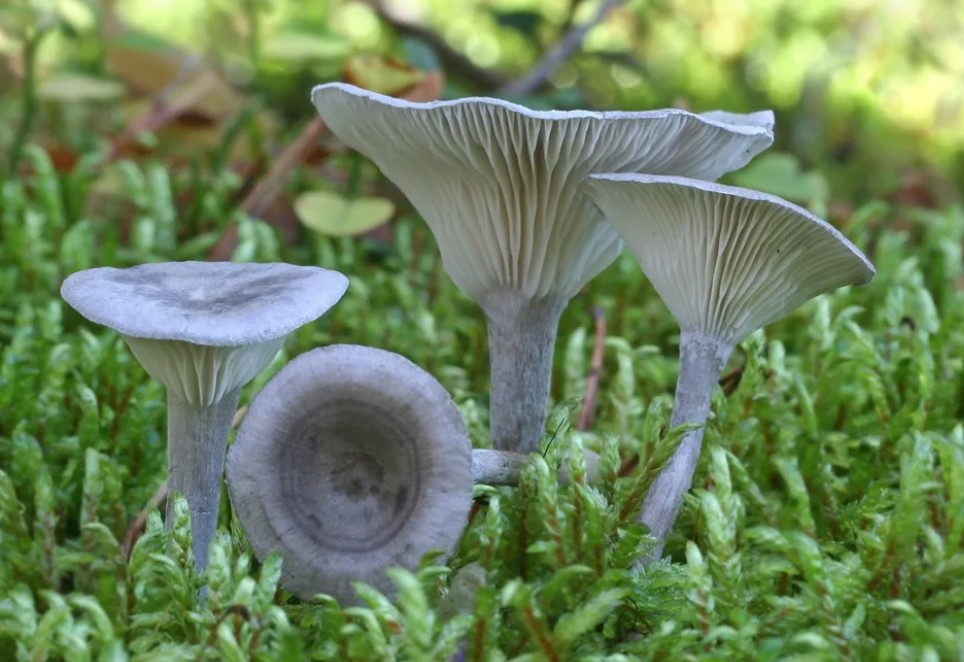
Humpbacked fox
It is distinguished by its grayish-blue fruiting body and very thin stem. Its size is very modest, with the cap diameter not exceeding 3 cm.
Prefers moist coniferous and mixed forests. Found from July to September. The mushroom is conditionally edible, but the flavor is not pronounced.
Photo gallery of the humpbacked fox
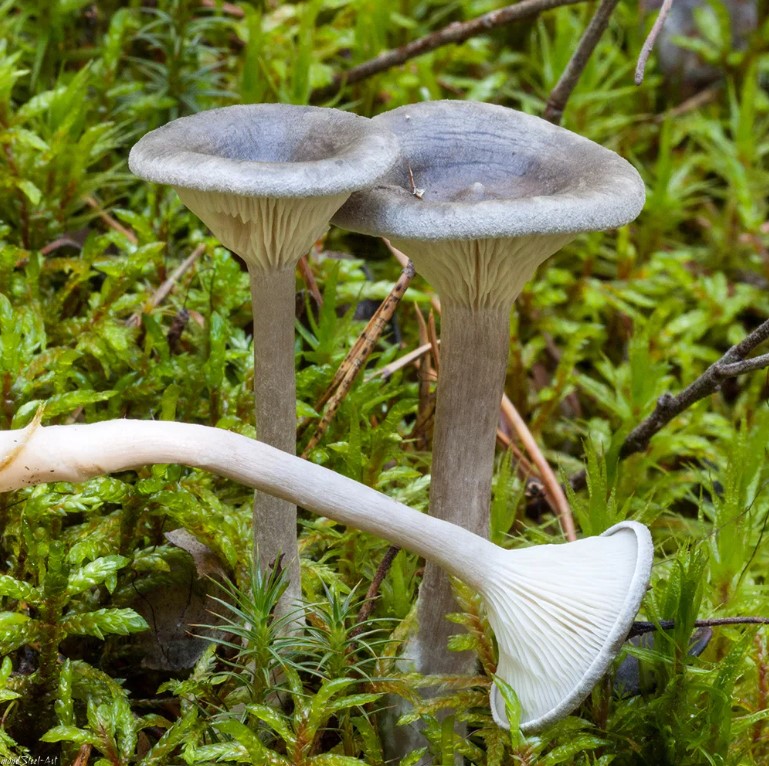
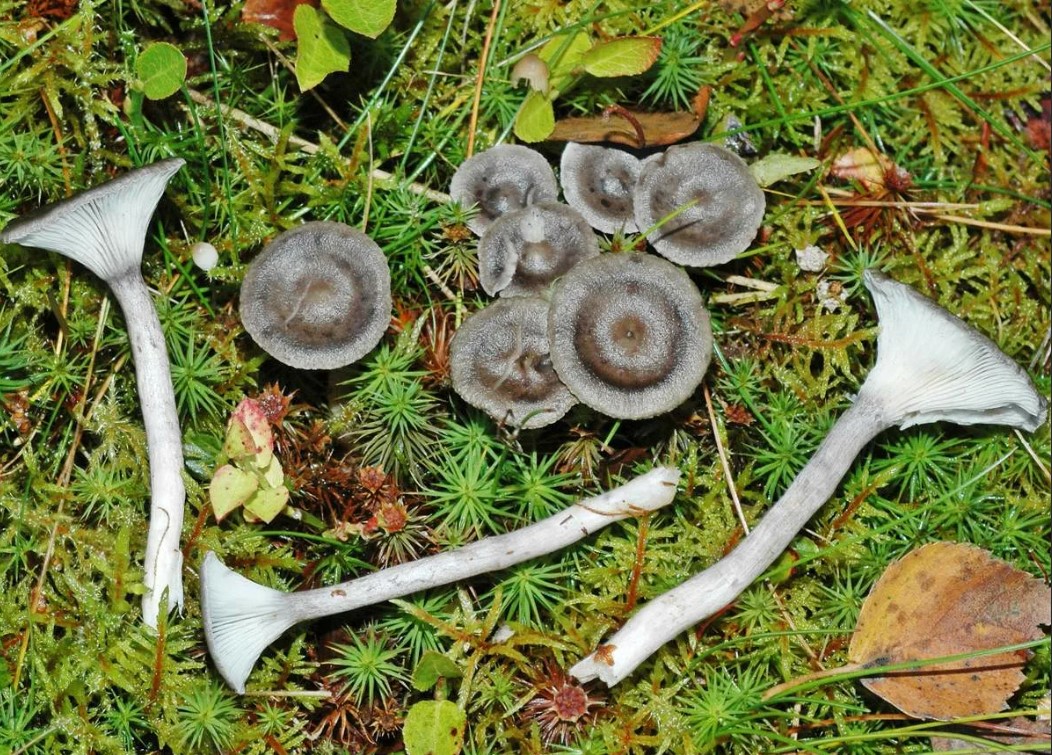
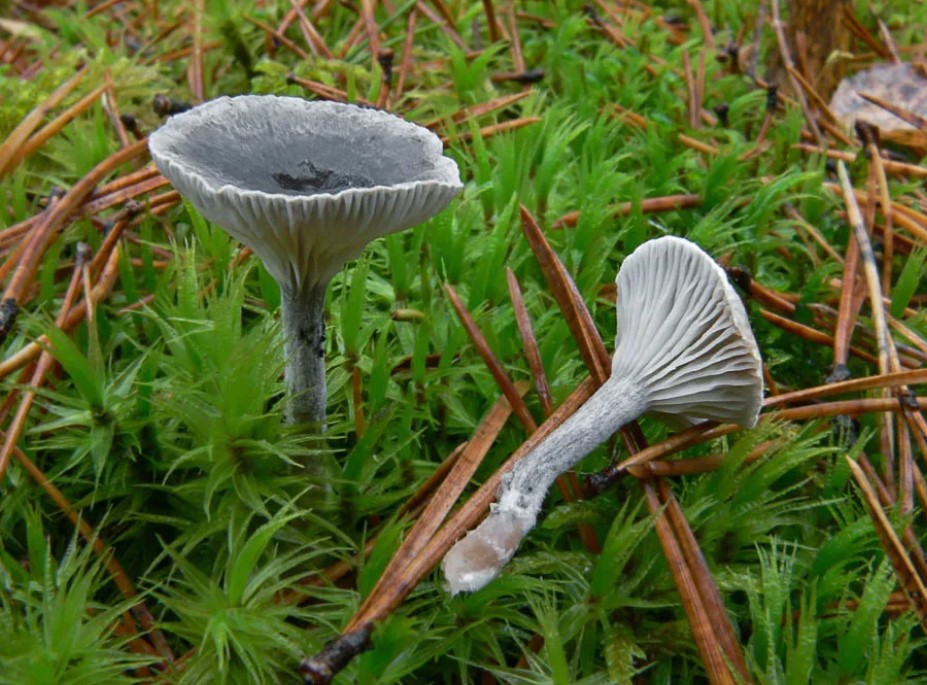
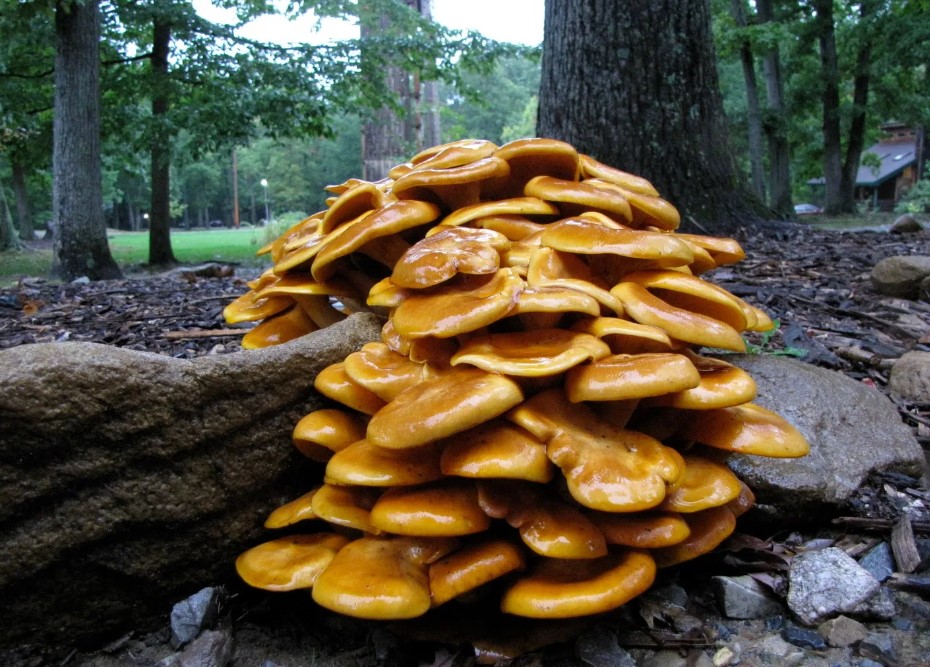
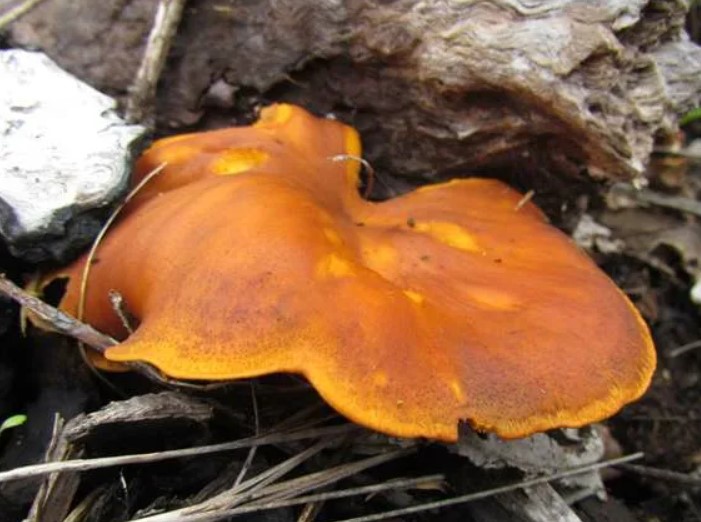
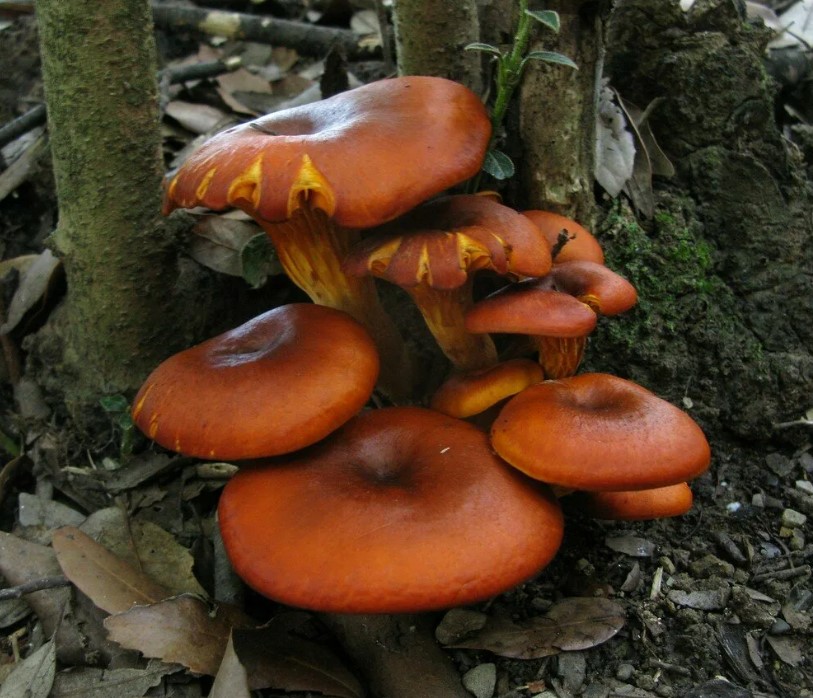
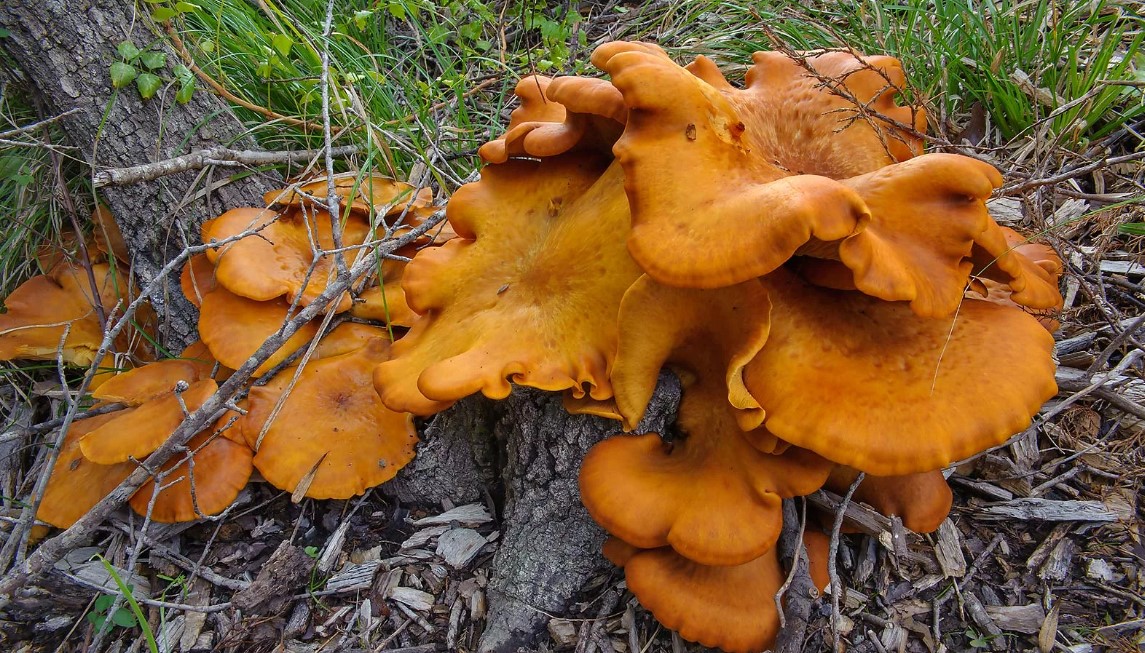
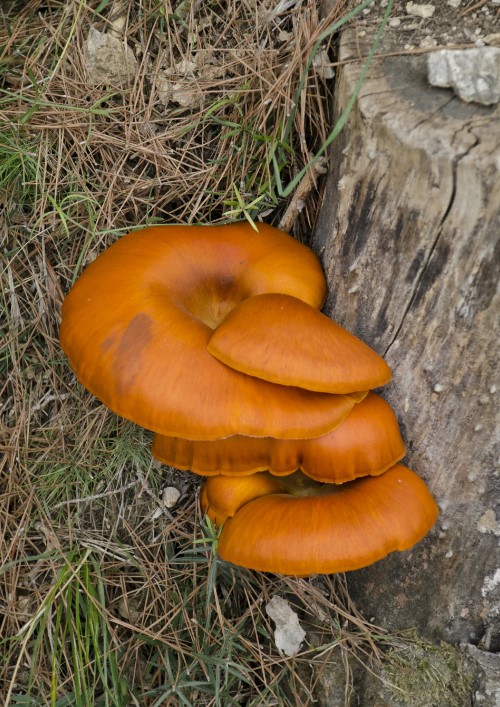
Omphalotus oleifera
The cap is smooth, the edges are smooth and curved downward, and the skin is smooth. The color is darker than that of the common chanterelle, but visually, these mushrooms are very difficult to distinguish. The only telltale sign of the Omphalota is the unpleasant odor of the flesh.
Found in Crimea and the Mediterranean.
Poisonous mushroom.
Photo gallery of the Omphalotus oleifera
For more information about these and other types of chanterelles, as well as their look-alikes, read the article.Chanterelle mushrooms: 15 species with descriptions in tables, photos, where and when to collect, how they grow.
Rules for collecting chanterelles
You can start looking for chanterelles in the forests as early as June, but the largest harvest won't be until mid-July. If you see several mushrooms, we recommend taking a closer look – chanterelles grow in groups, so there may be other mushrooms nearby.
It's best to collect small specimens, as the flesh of mature mushrooms is stringy and dry. Overgrown mushrooms are best strung cap-side down on a tree branch to allow the spores to fall to the ground and expand the mycelium.
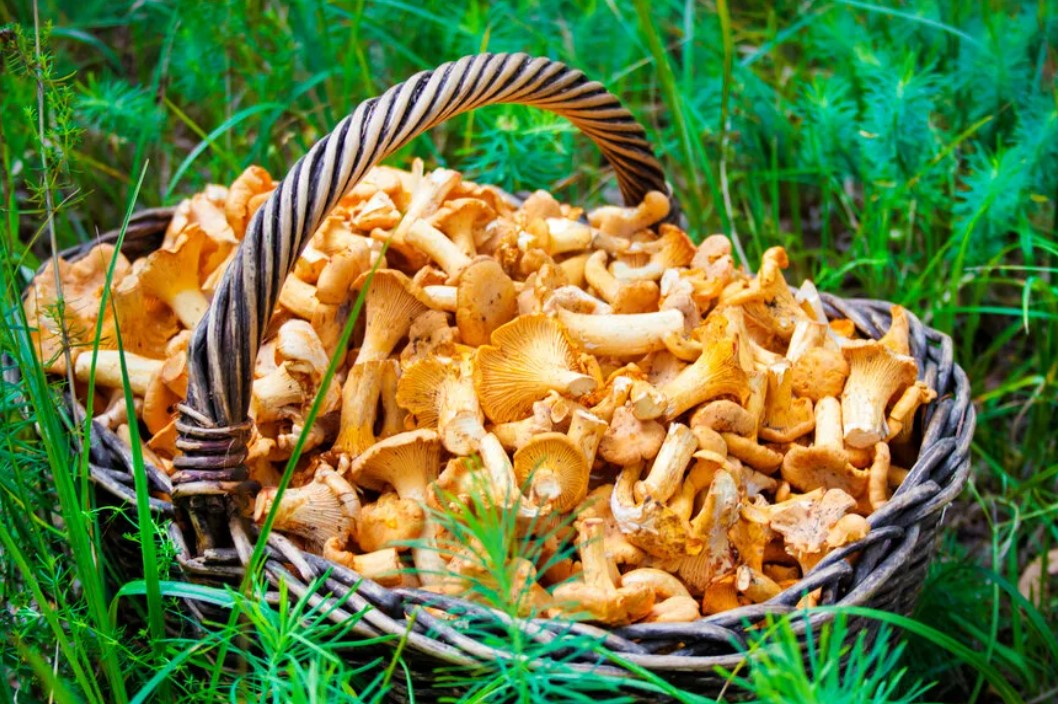
Chanterelles are cut at a distance of 2 cm from the ground.
Avoid picking mushrooms near highways or industrial plants, as they absorb toxins, so there is a high risk of poisoning from such a harvest.
Look carefully at your finds, as chanterelles have many false doubles.
Interesting facts about chanterelles
Some people believe that chanterelles got their name from the fox, due to their similar coloring. However, both fox and chanterelle come from the same word, "lisy," which means "red" in Old Russian.
Chanterelles grow in large groups, very often they form so-called "fairy rings", which our ancestors avoided.
Read about the benefits of chanterelles, how to cook them, preserve them for the winter, and whether they can be eaten raw in the following articles:
Dried chanterelles: 6 ways to dry them, calorie content, benefits and harms, use, recipes;