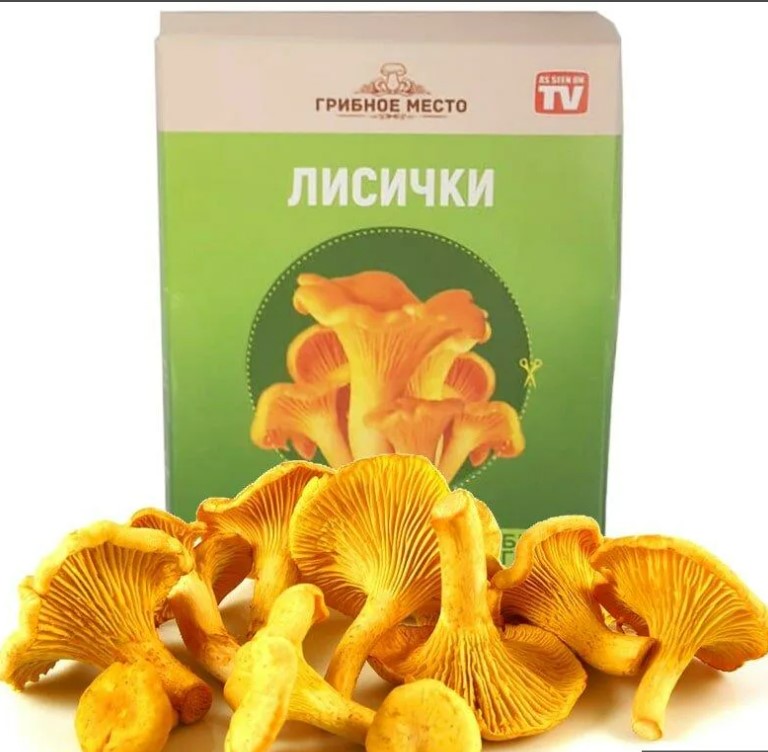
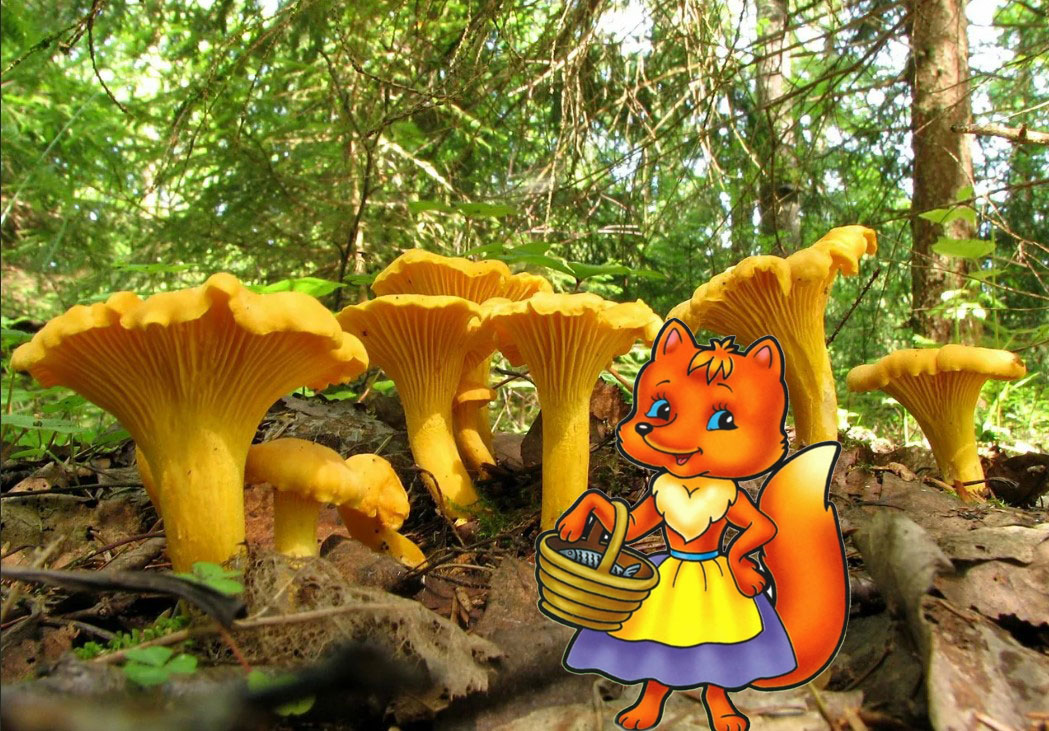
Chanterelles are a very popular mushroom. It's hard to miss them in the forest thanks to their cap shape and bright orange color. In this article, we'll discuss the specifics of chanterelle harvesting, as well as the most popular species found in the wild.
Content
- 1 Chanterelle family (Cantharellaceae): description
- 2 Description of the genus Chanterelle (Cantharellus)
- 3 Where do chanterelles get their name?
- 4 15 types of chanterelles with descriptions and harvest times in tables + photos
- 4.1 Common chanterelle (Cantharellus cibarius)
- 4.2 Amethyst chanterelle (Cantharellus amethysteus)
- 4.3 Cinnabar chanterelle (Cantharellus cinnabarinus)
- 4.4 Pacific golden foxfish (Cantharellus formosus)
- 4.5 Velvet chanterelle (Cantharellus friesii)
- 4.6 Faceted chanterelle (Cantharellus lateritius)
- 4.7 Little chanterelle (Cantharellus minor)
- 4.8 Pink chanterelle (Cantharellus persicinus)
- 4.9 White chanterelle (Cantharellus subalbidus)
- 4.10 Pale chanterelle (Cantharellus pallens)
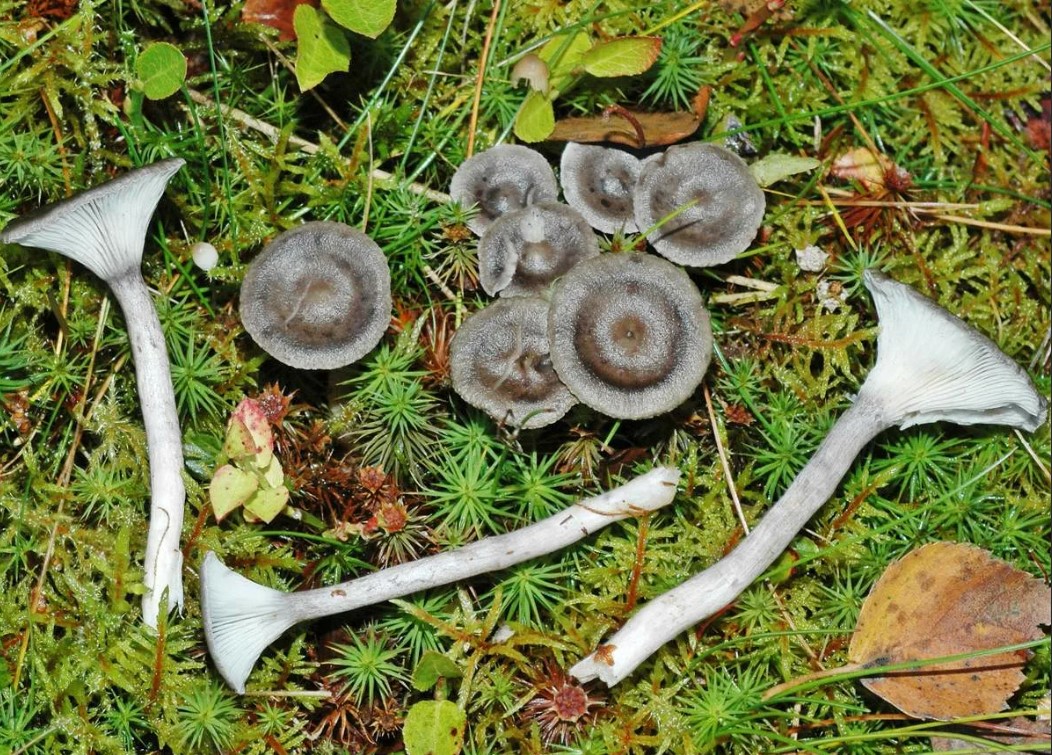
- 4.11 Trumpet chanterelle, or funnel-shaped chanterelle (Cantharellus tubaeformis)
- 4.12 Yellow chanterelle (Craterellus lutescens)
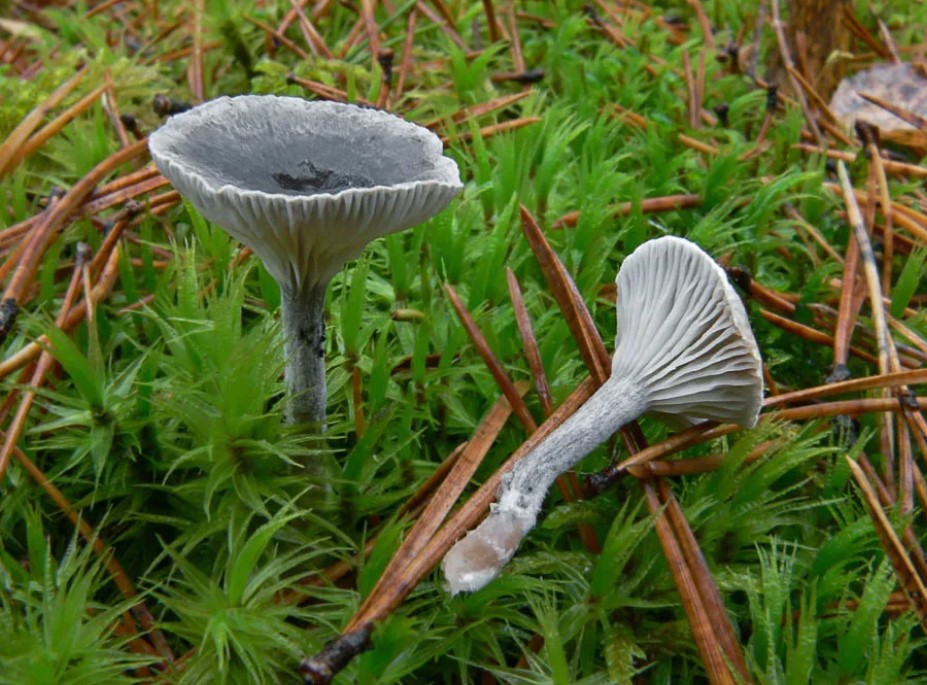
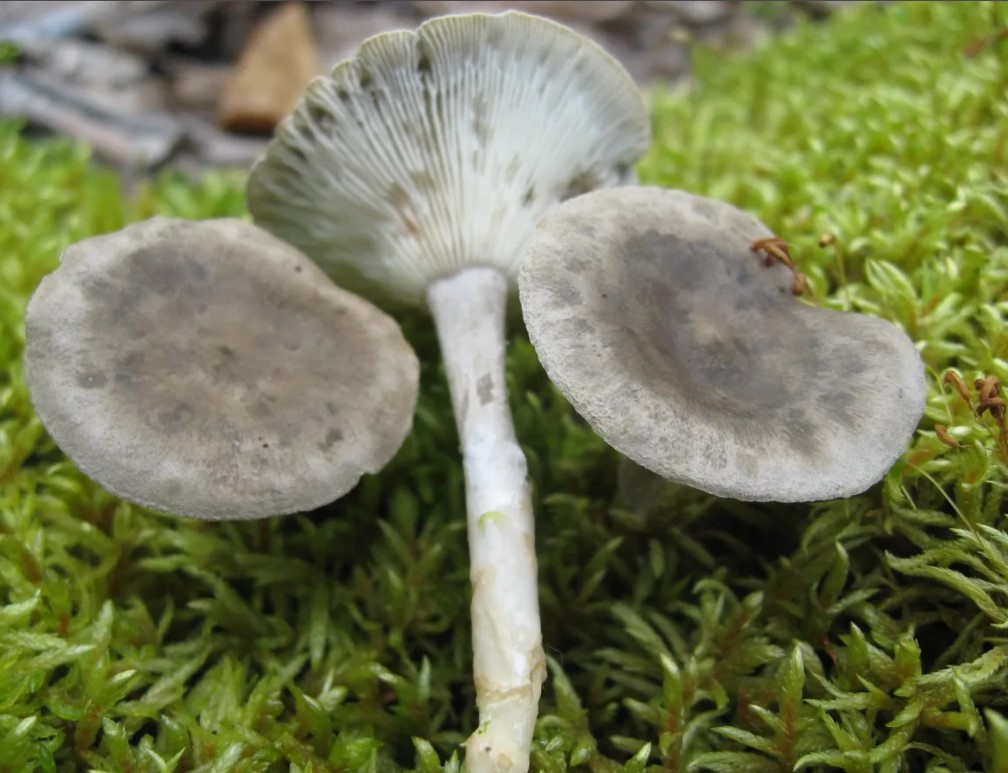
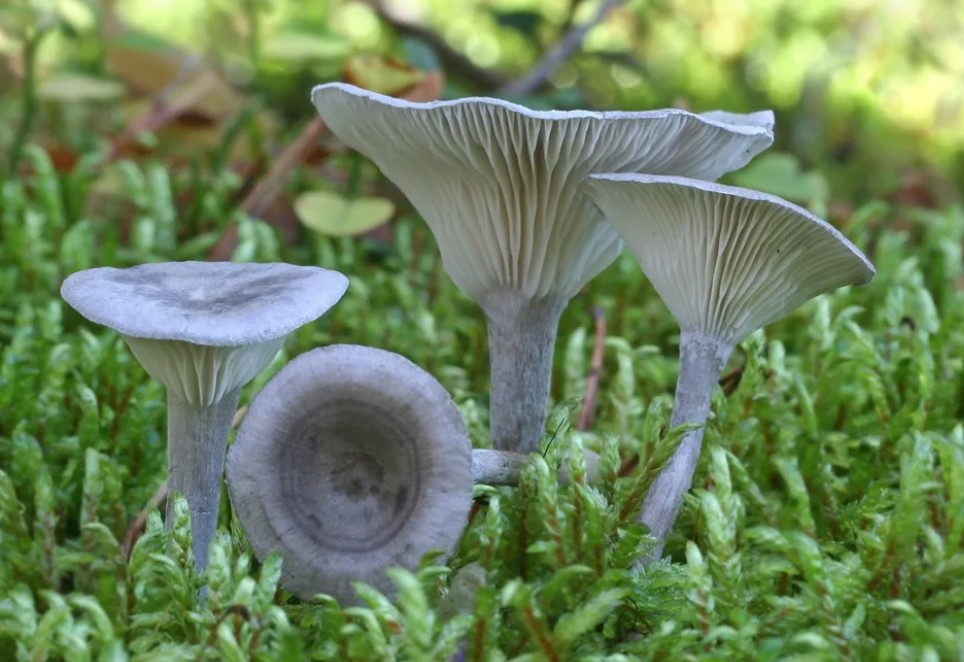
- 4.13 Gray chanterelle (Cantharellus cinereus)
- 4.14 Gray-yellow chanterelle (Cantharellus melanoxeros)
- 4.15 Appalachian chanterelles (Cantharellus appalachiensis)
- 5 2 mushrooms from the genus Craterellus
- 6 A mushroom of the genus Pseudocraterellus
- 7 2 mushrooms similar to chanterelles from other families
- 8 2 false inedible chanterelles
- 9 Where and when do chanterelles grow?
- 10 How quickly do chanterelles grow in the forest?
- 11 At what temperature do chanterelles grow?
- 12 How many days does it take for chanterelles to grow after rain?
- 13 Why chanterelles don't have worms
- 14 Calorie content of chanterelles
- 15 Nutritional value of chanterelles
- 16 Use of chanterelles in cooking
- 17 The benefits and harms of chanterelles
- 18 How to prepare and store chanterelles
- 19 Growing chanterelles at home
- 20 Use of chanterelles in medicine
- 21 In what cases and for whom is it better not to eat chanterelles, contraindications
- 22 How to choose chanterelles when buying
Chanterelle family (Cantharellaceae): description
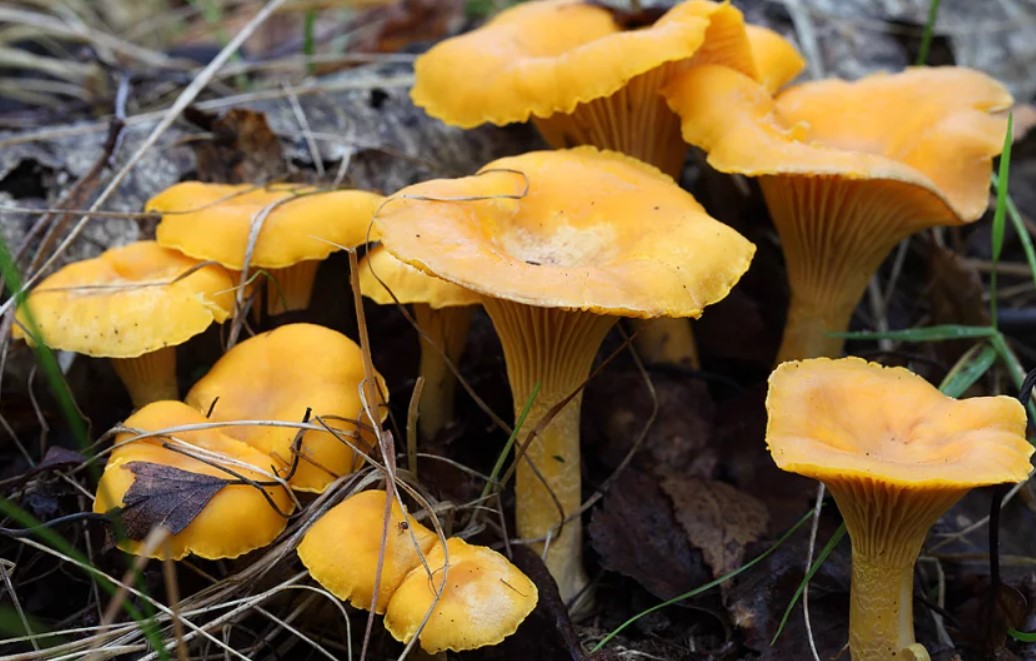
Chanterelles were long classified as members of the Agaricaceae family. However, key distinguishing features were later described, allowing them to be classified as a separate family thanks to their forked folds and cylindrical basidia.
Description of the genus Chanterelle (Cantharellus)
Chanterelles have a very recognizable appearance.
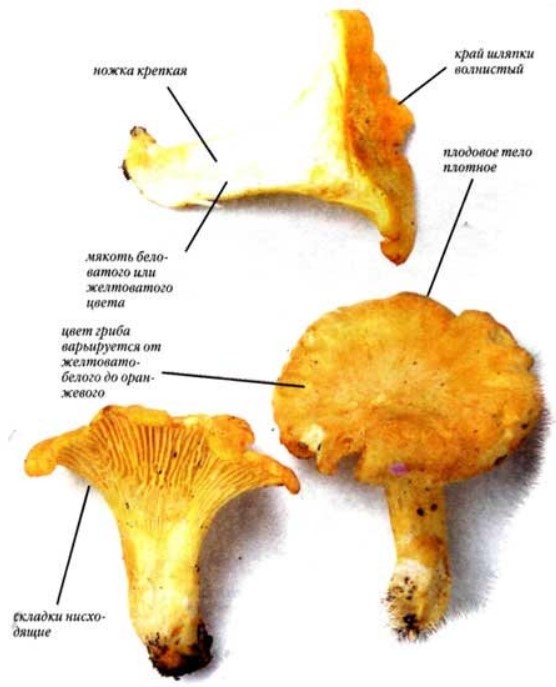
- The body is cap-like, fleshy, and funnel-shaped. The coloration can be reddish, beige, grayish, or yellow.
- The cap is up to 10 cm in diameter, very fleshy, with a wavy edge, and the hymenophore, which smoothly transitions to the stem, cannot be separated from it.
- The flesh is white or yellowish. It may remain the same color after cutting, but most often turns blue or reddish.
- The stem is up to 8 cm high, very strong, wide, and has no cover.
- The spore powder is white.
Where do chanterelles get their name?
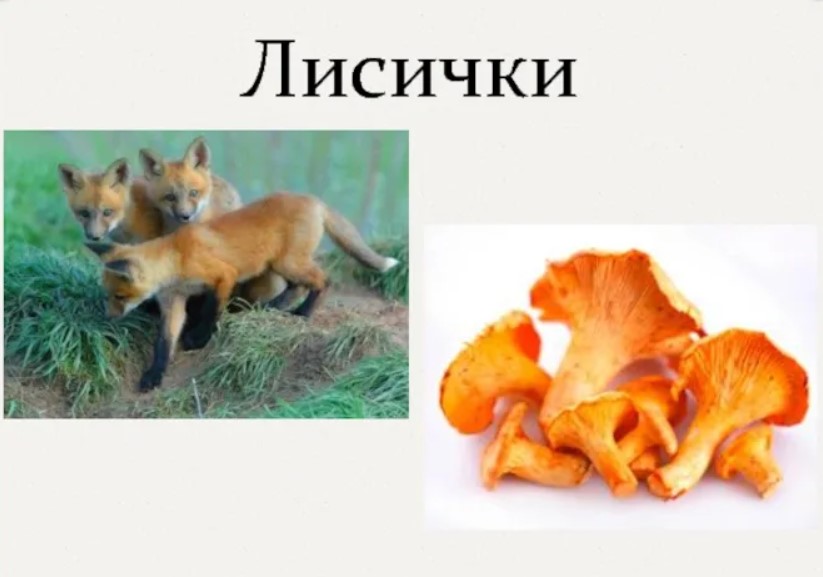
Many people believe the chanterelle got its name from its resemblance to a fox in color. But in fact, both the mushroom and the furry sly one got their names from the Old Russian word "lisy," meaning "red."
15 types of chanterelles with descriptions and harvest times in tables + photos
Let's look at 15 species that belong to the genus Chanterelle (Cantharellus) from the Chanterelle family (Cantharellaceae).
Common chanterelle (Cantharellus cibarius)
| View | Description | Edibility | Collection deadlines | Where to look |
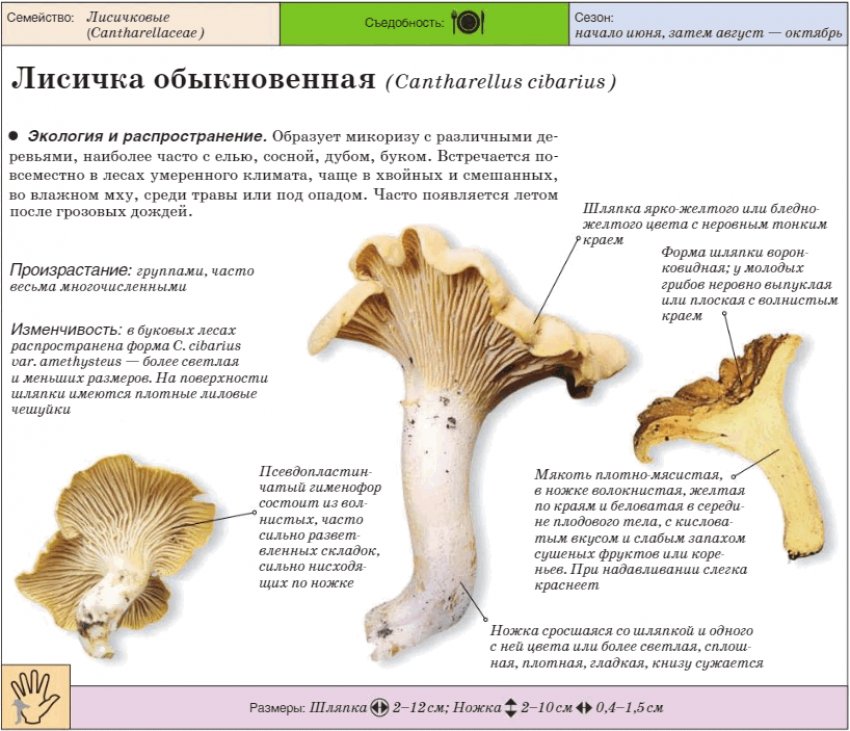
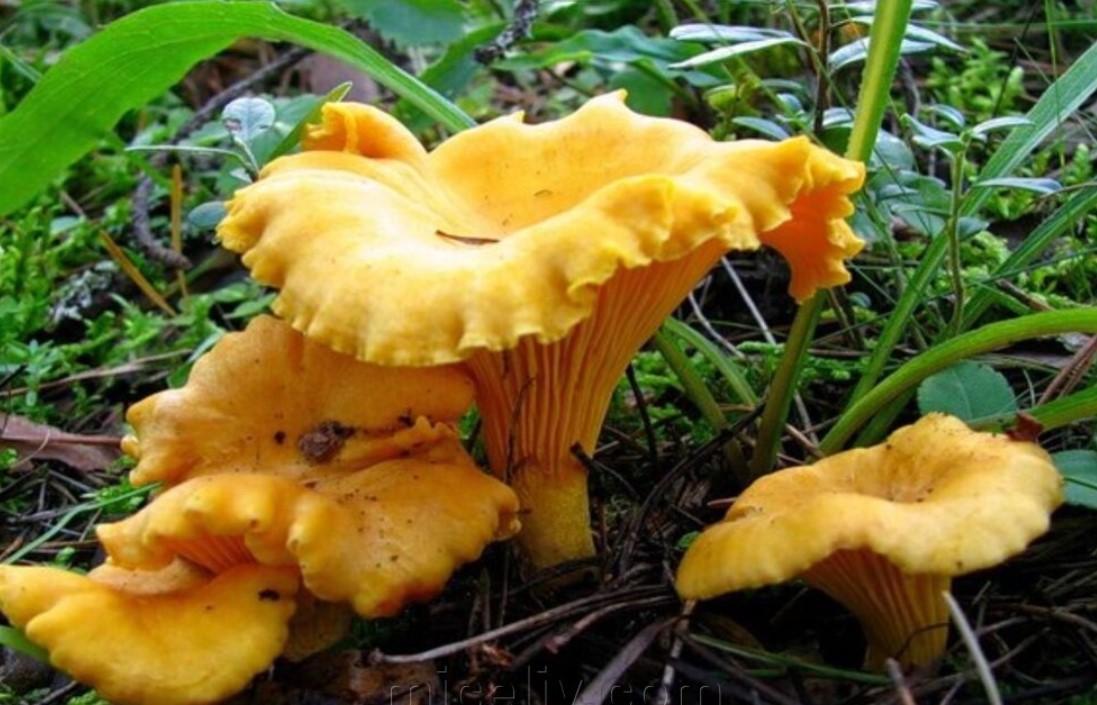
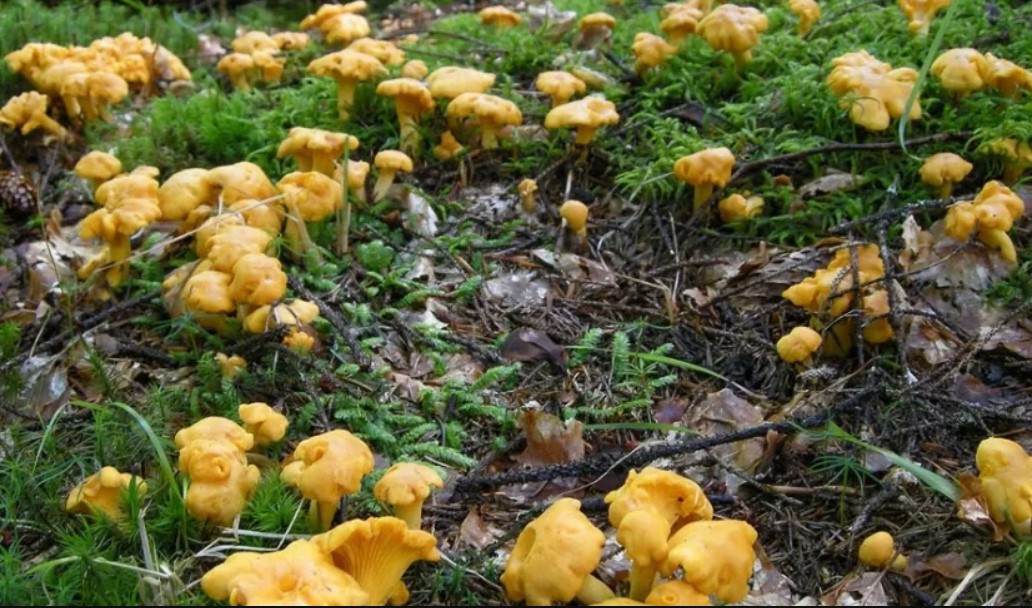
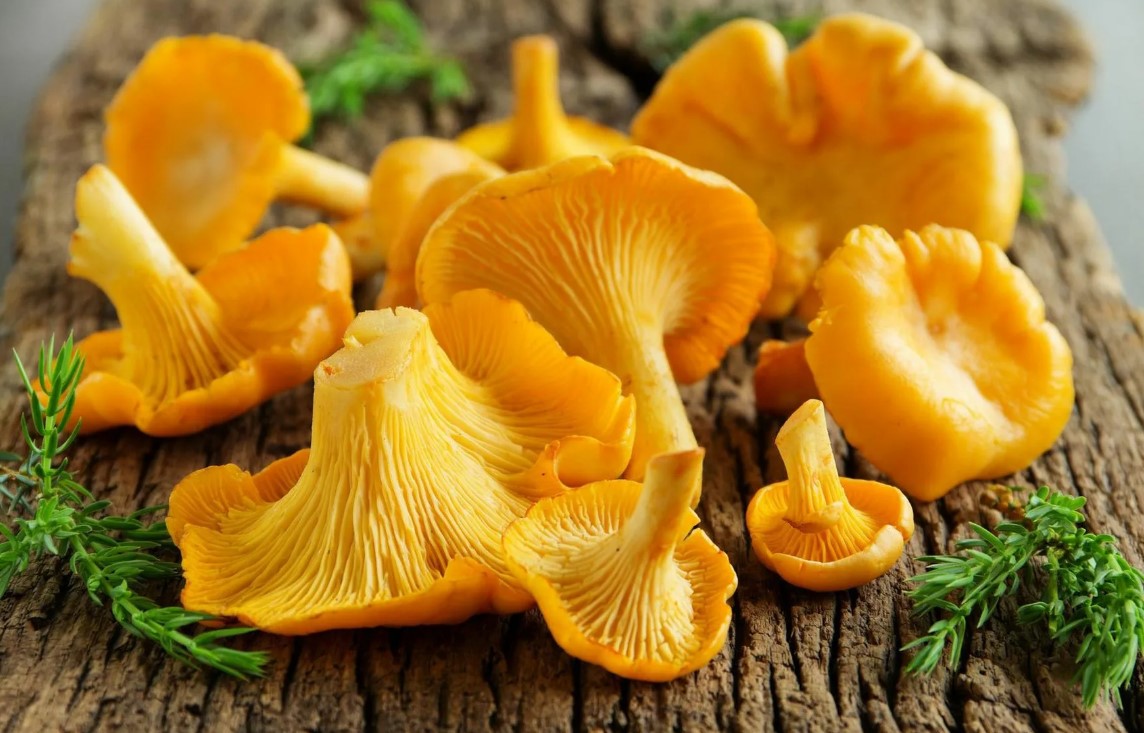
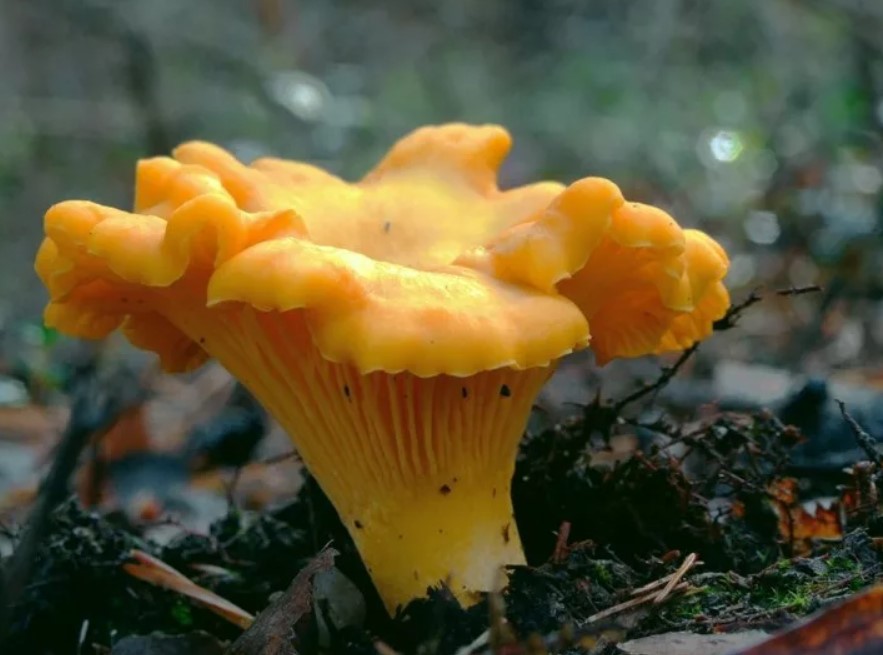
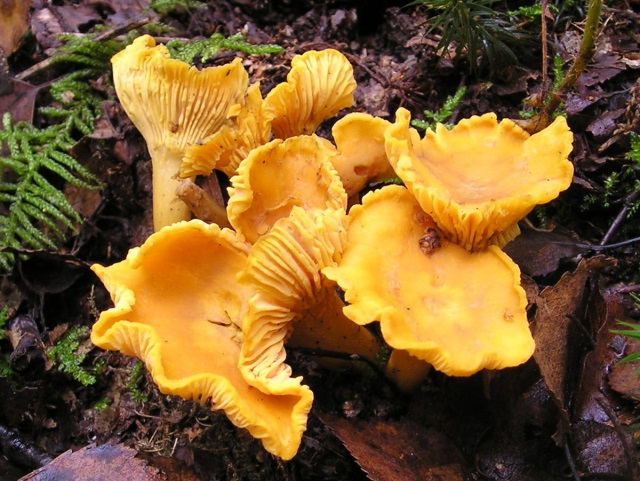
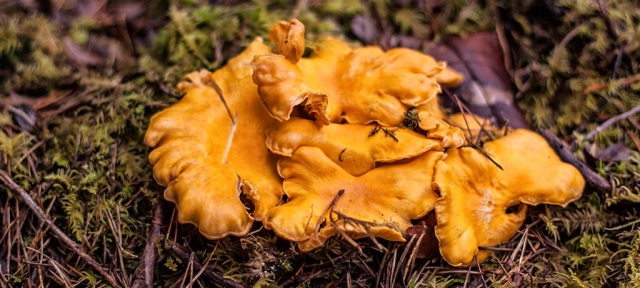
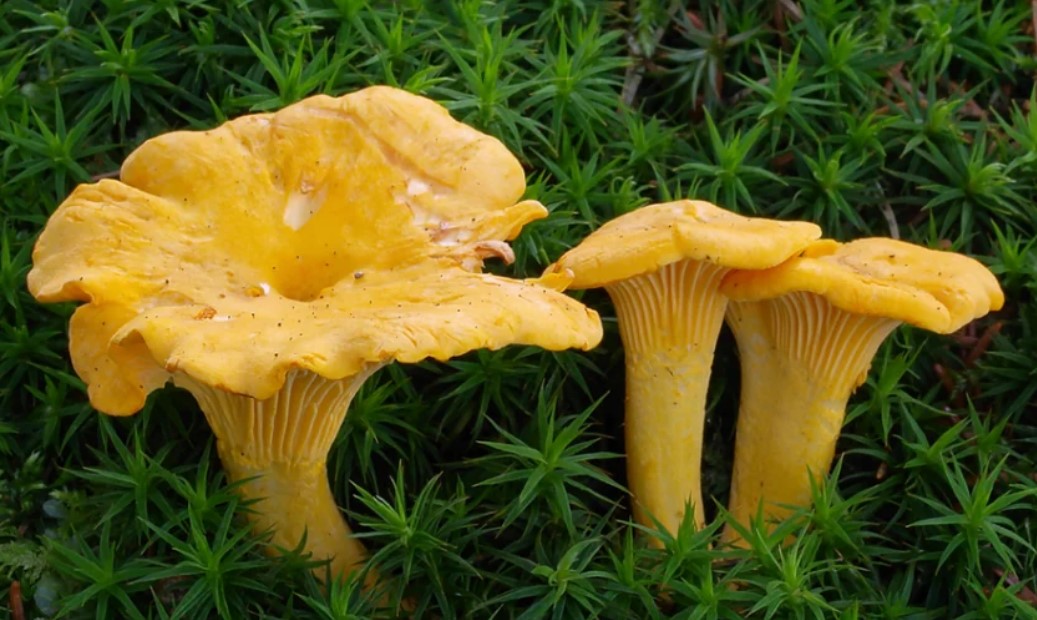
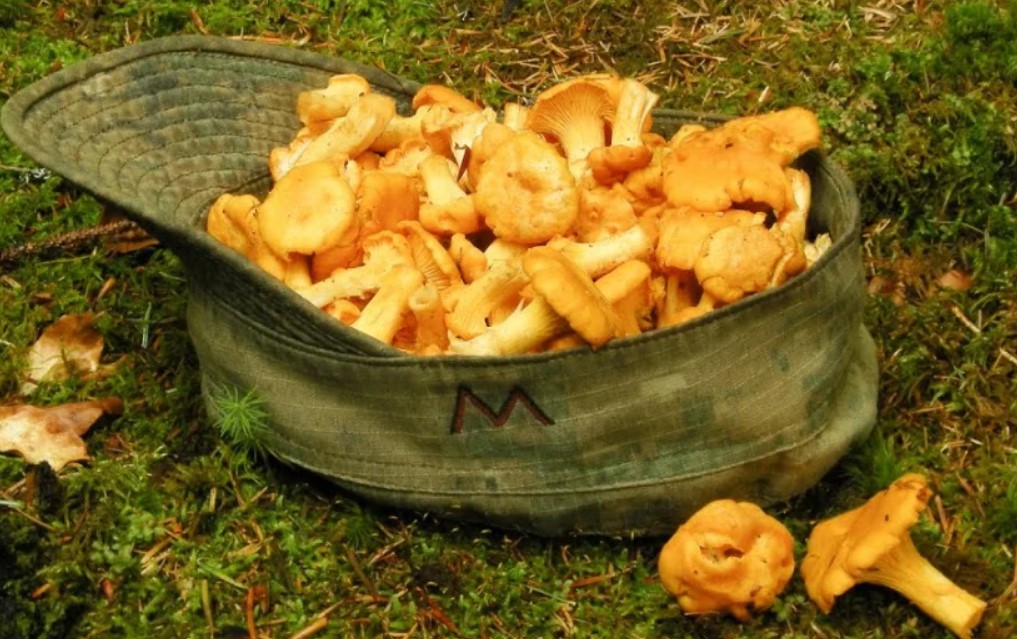
| Common chanterelle (Cantharellus cibarius) | The cap diameter is 2-12 cm, the edge is wavy, and the shape is concave, becoming funnel-shaped in mature mushrooms. The color ranges from light to orange-yellow. The cap blends smoothly into the stem, which is up to 7 cm tall, without a noticeable border. The skin is matte. | Edible. | June, August-October. | Coniferous and deciduous forests, grows near oaks, pines, beeches and spruces. |
Photo gallery of the common chanterelle
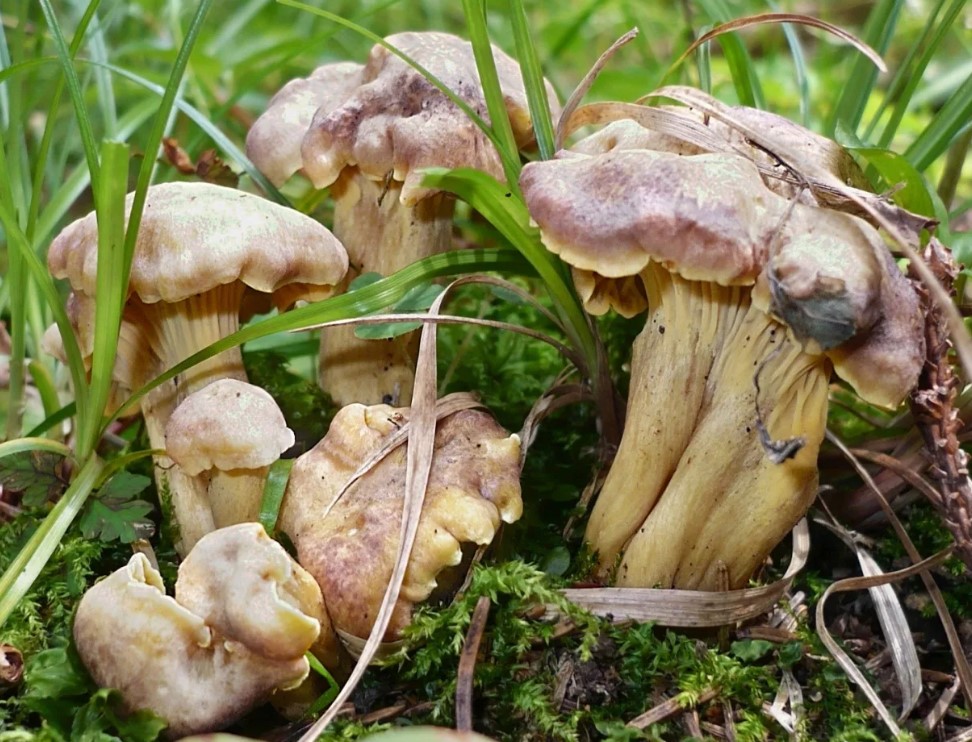
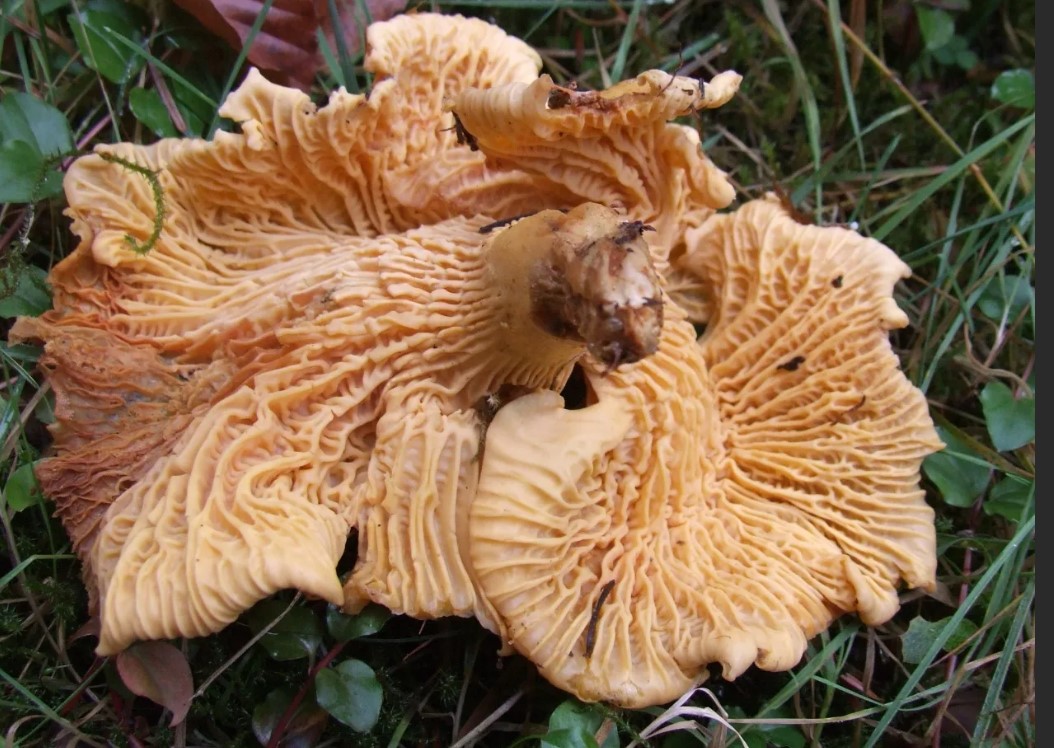
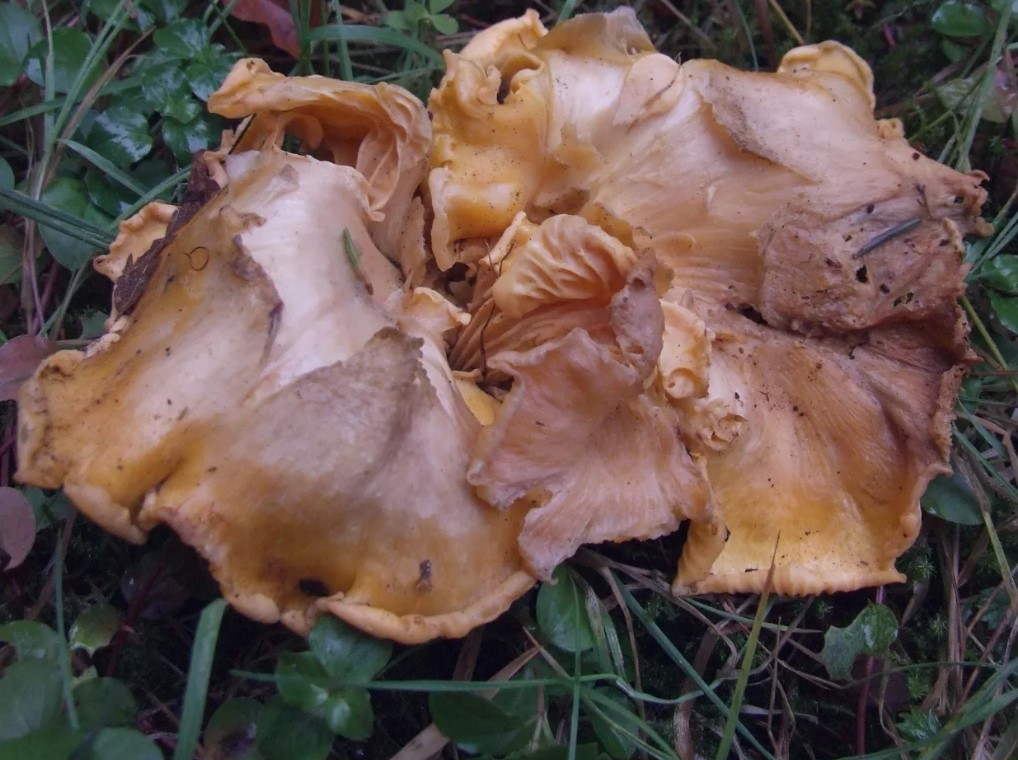
Amethyst chanterelle (Cantharellus amethysteus)
| View | Description | Edibility | Collection deadlines | Where to look |
| Amethyst chanterelle (Cantharellus amethysteus) | The cap is 2-10 cm in diameter, funnel-shaped, with curled, wavy edges. The color is yellow. The flesh is yellowish, but turns white over time. | Edible. | June-October. | Deciduous, mixed, and coniferous forests. Grows in large groups. |
Photo gallery of the amethyst chanterelle
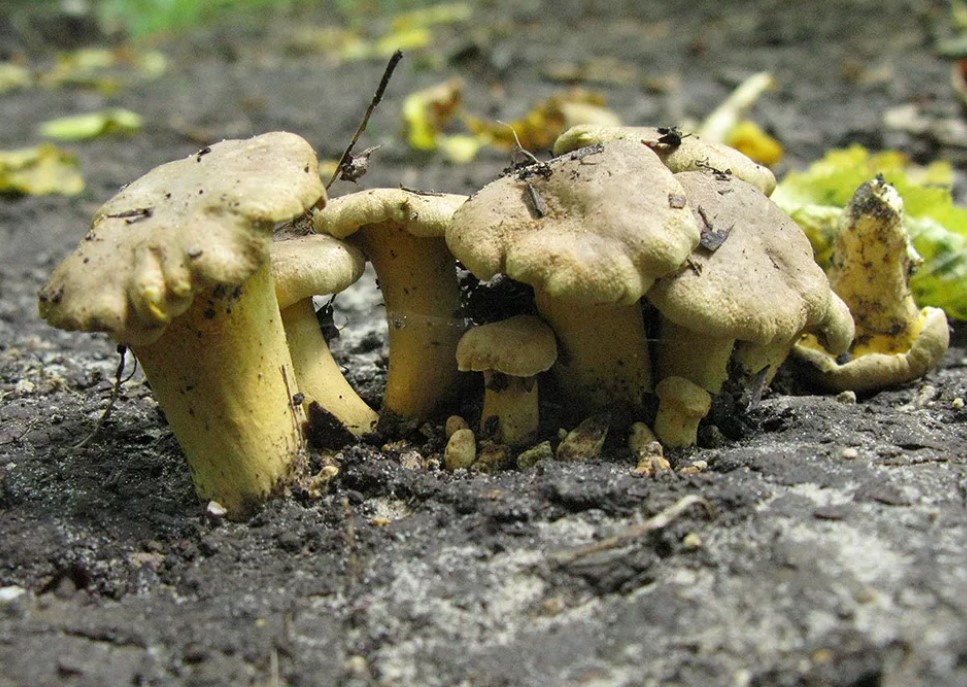
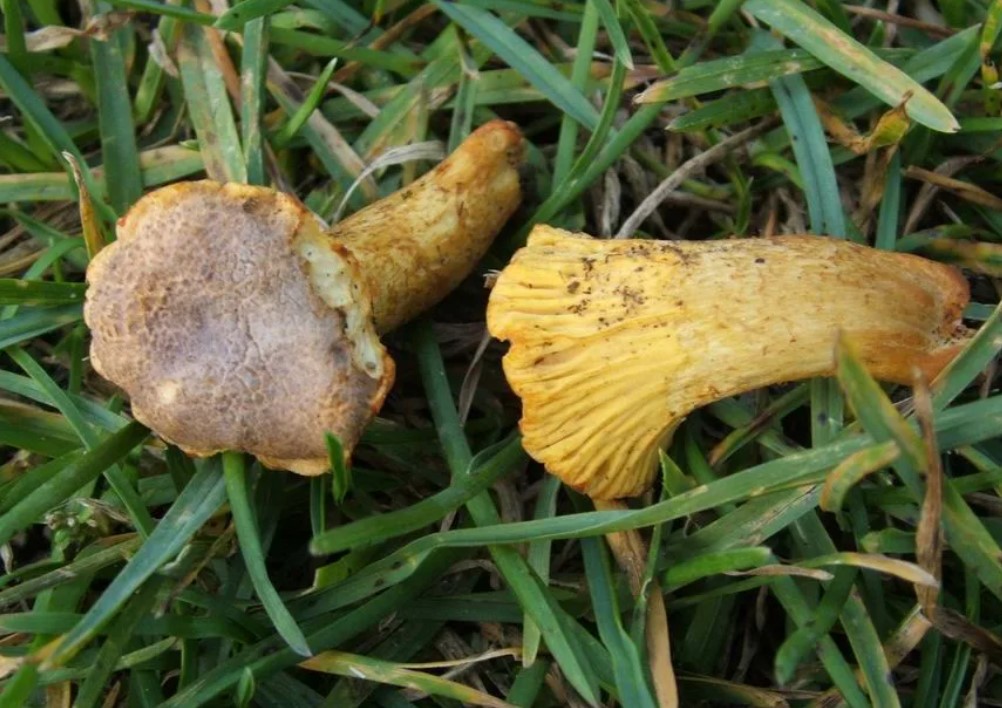
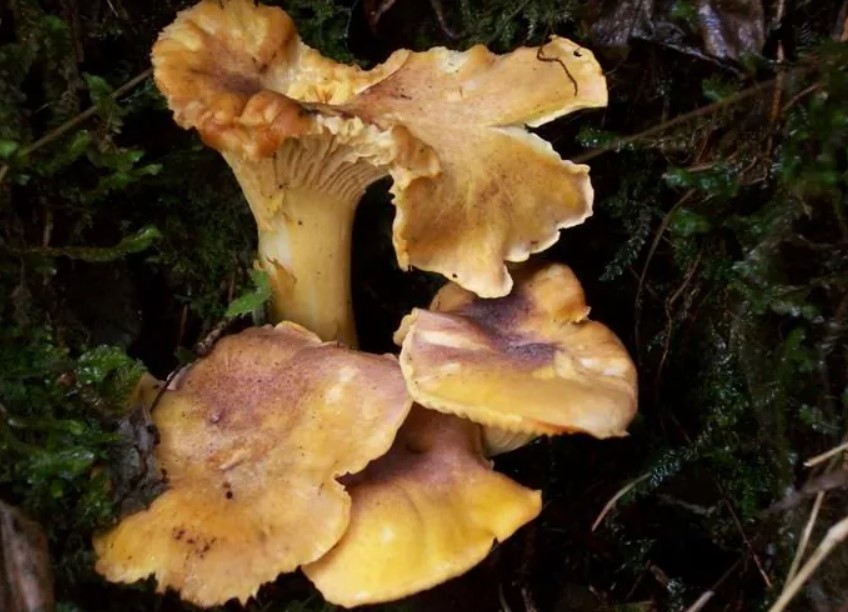
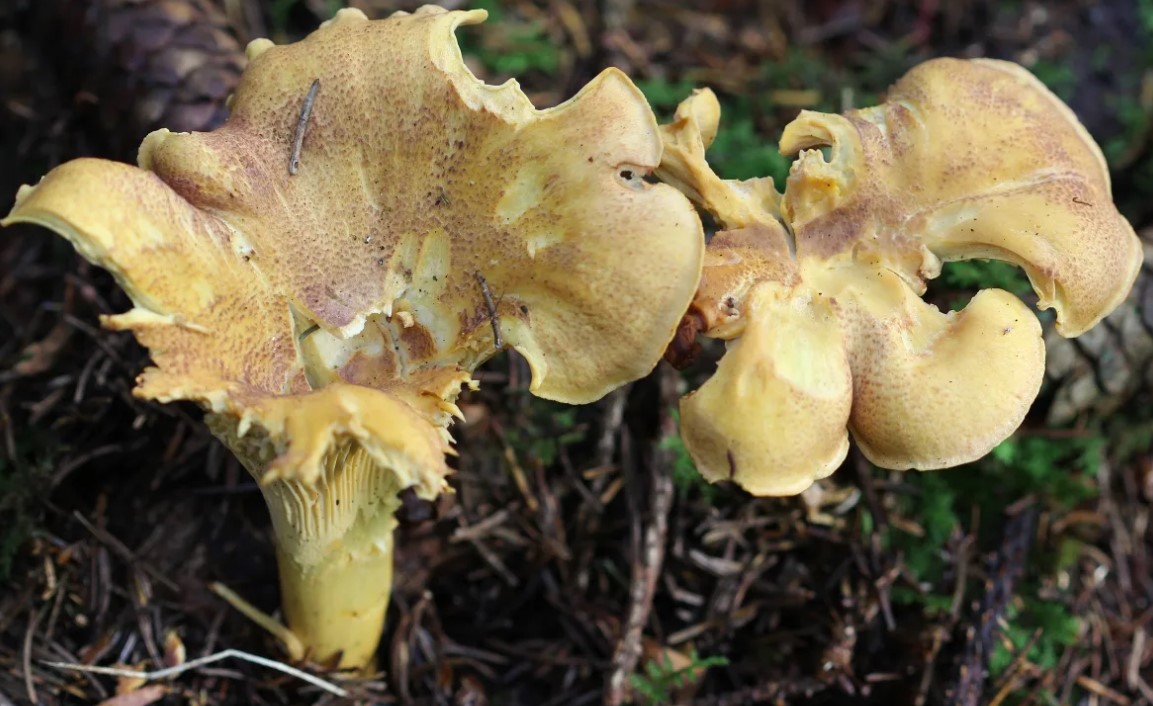
Cinnabar chanterelle (Cantharellus cinnabarinus)
| View | Description | Edibility | Collection deadlines | Where to look |
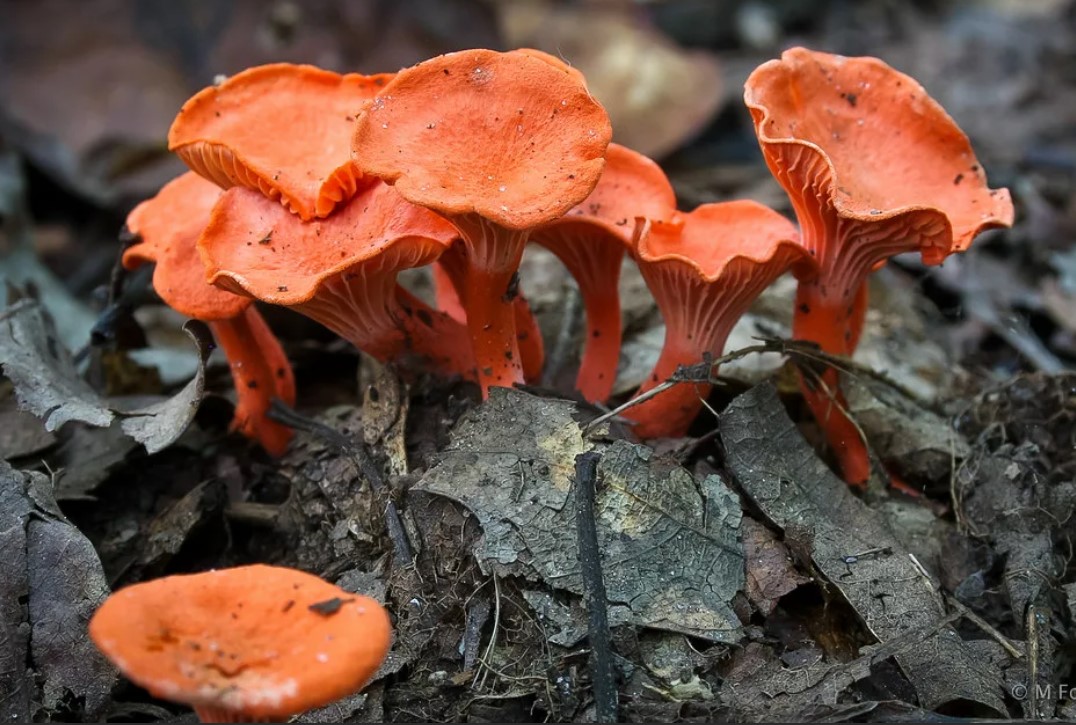
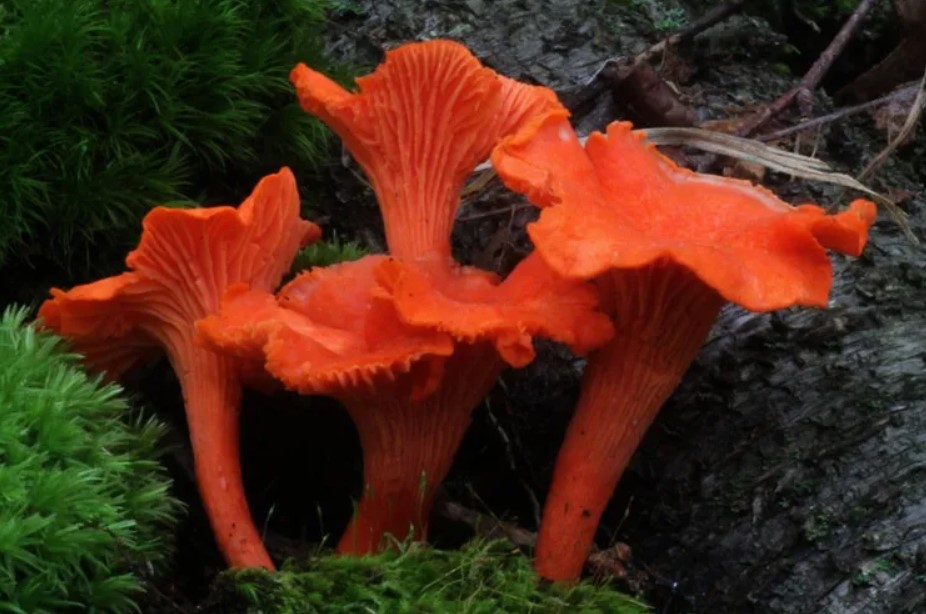
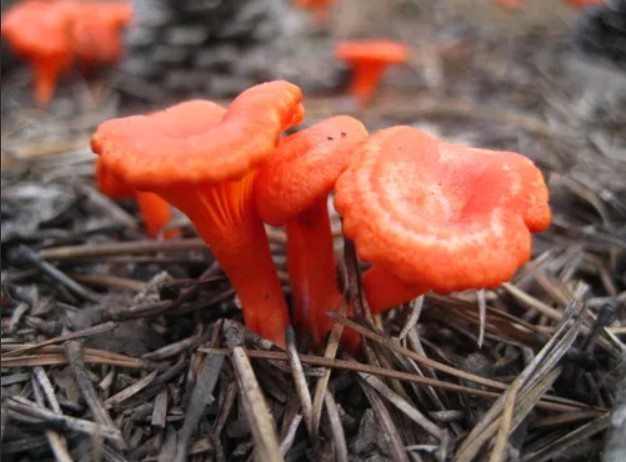
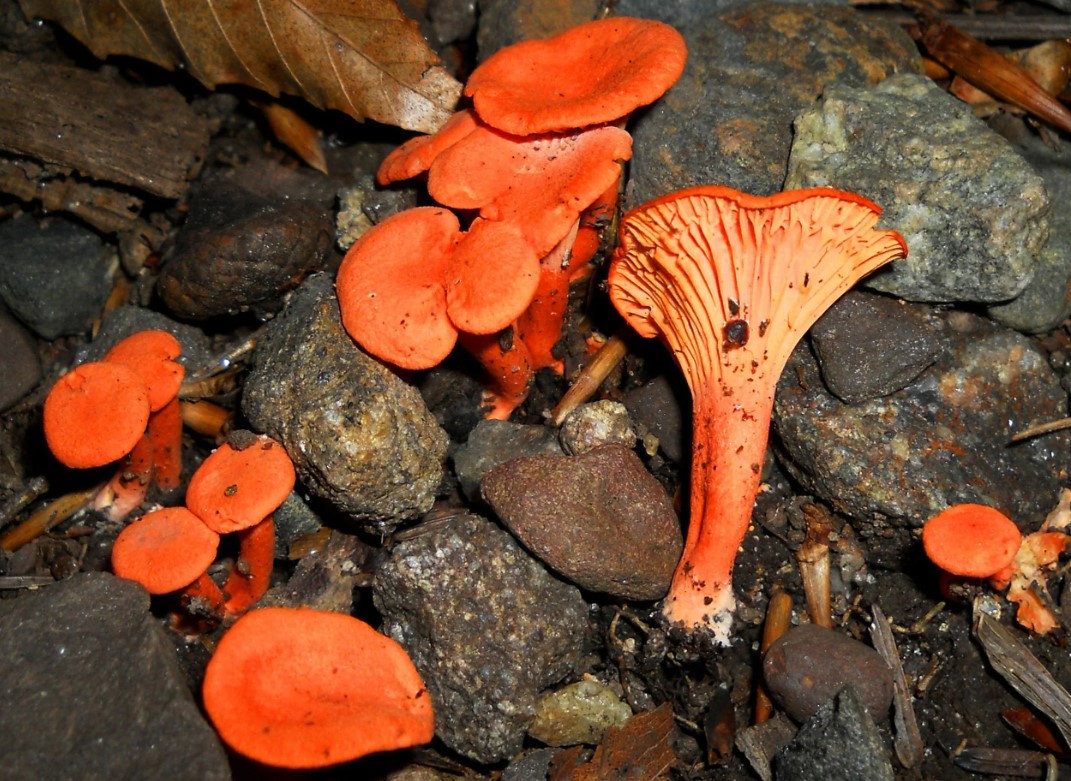
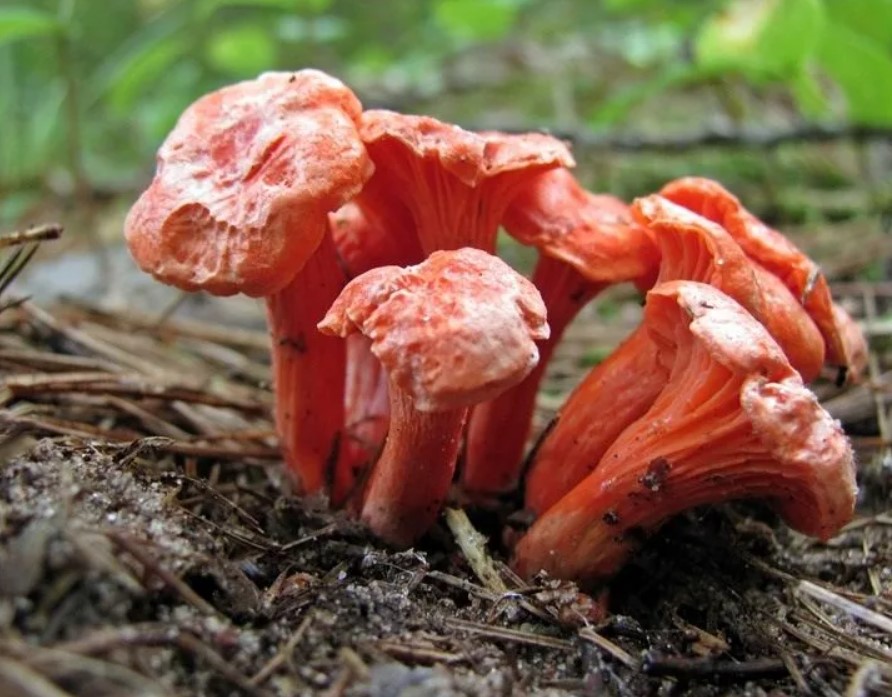
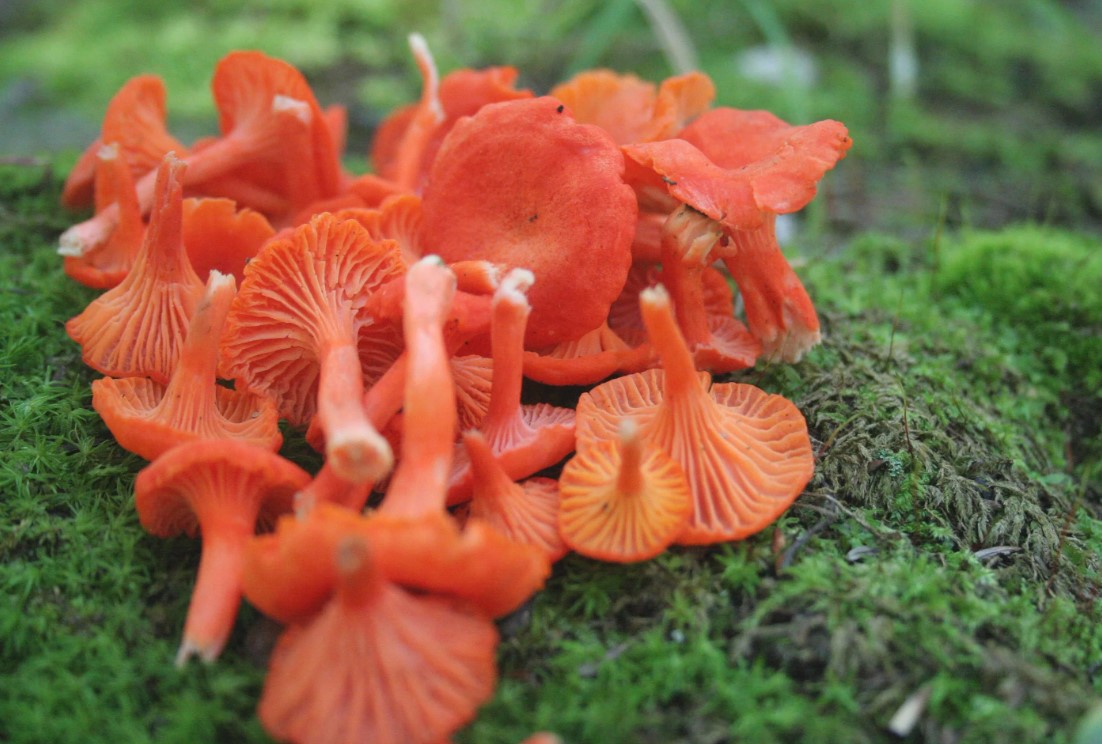
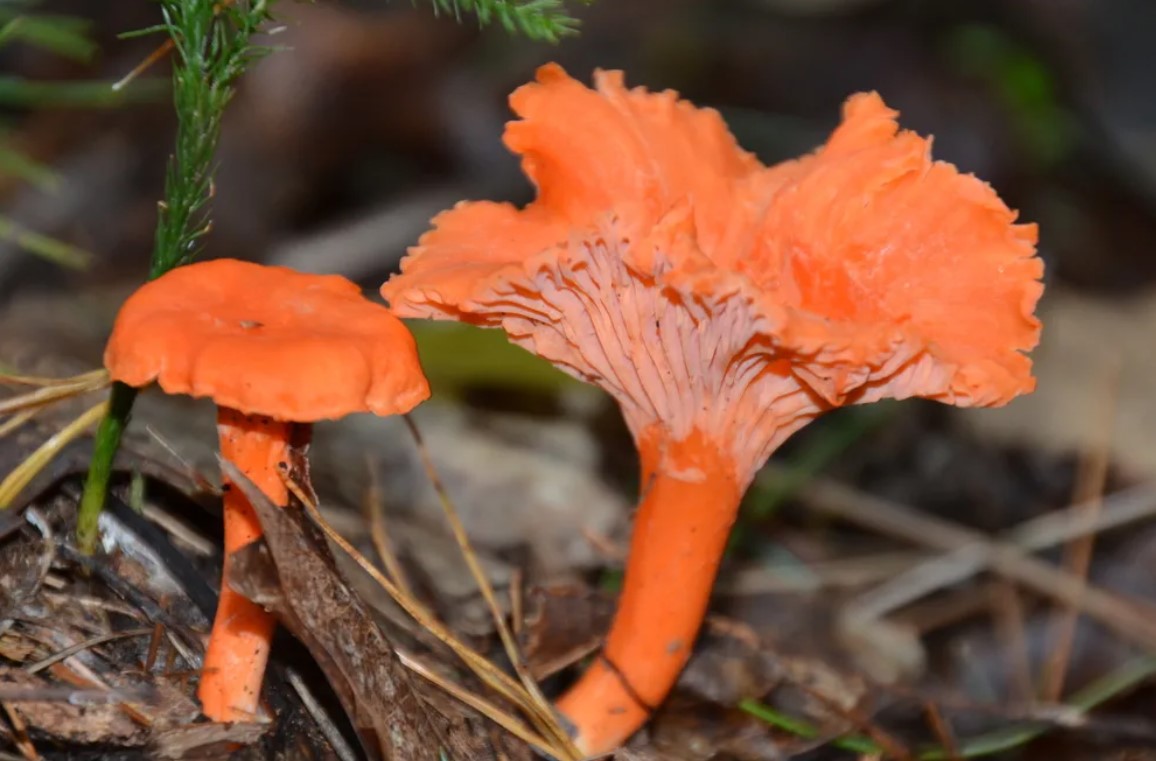
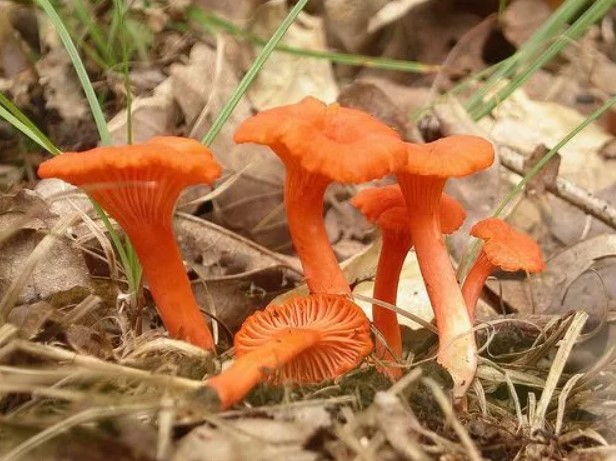
| Cinnabar chanterelle (Cantharellus cinnabarinus) | Young mushrooms have a convex cap. As they mature, it becomes concave, with wavy edges and a reddish-red color. | Edible | June-October. | Prefers oak forests and is found in eastern North America. |
Photo gallery of the cinnabar-red chanterelle
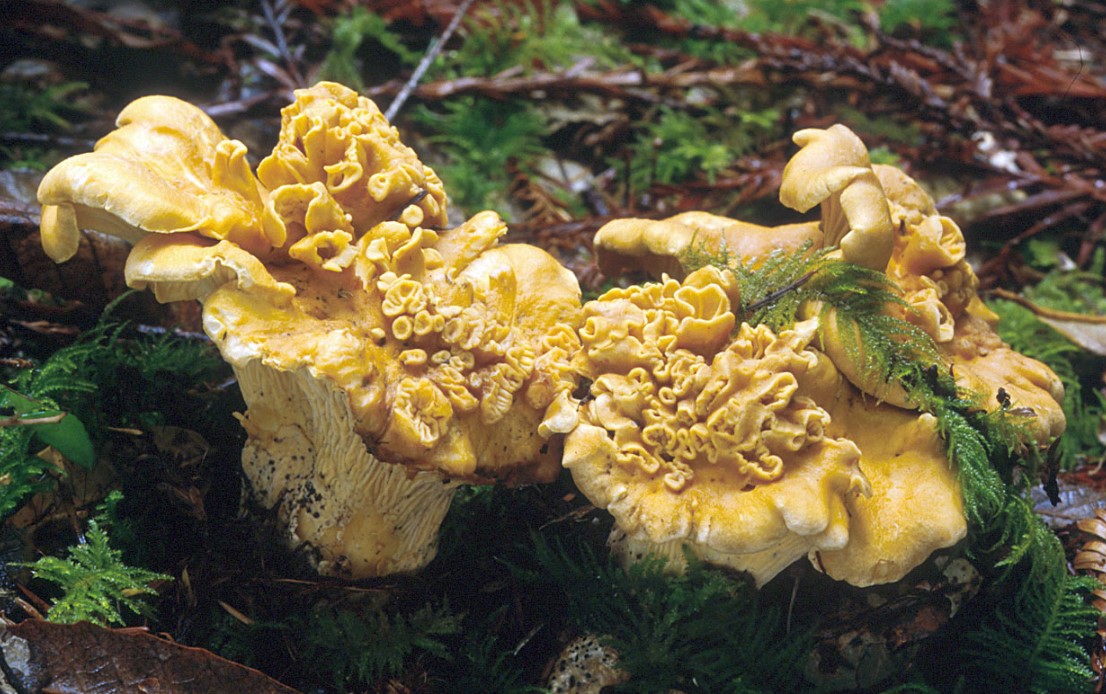
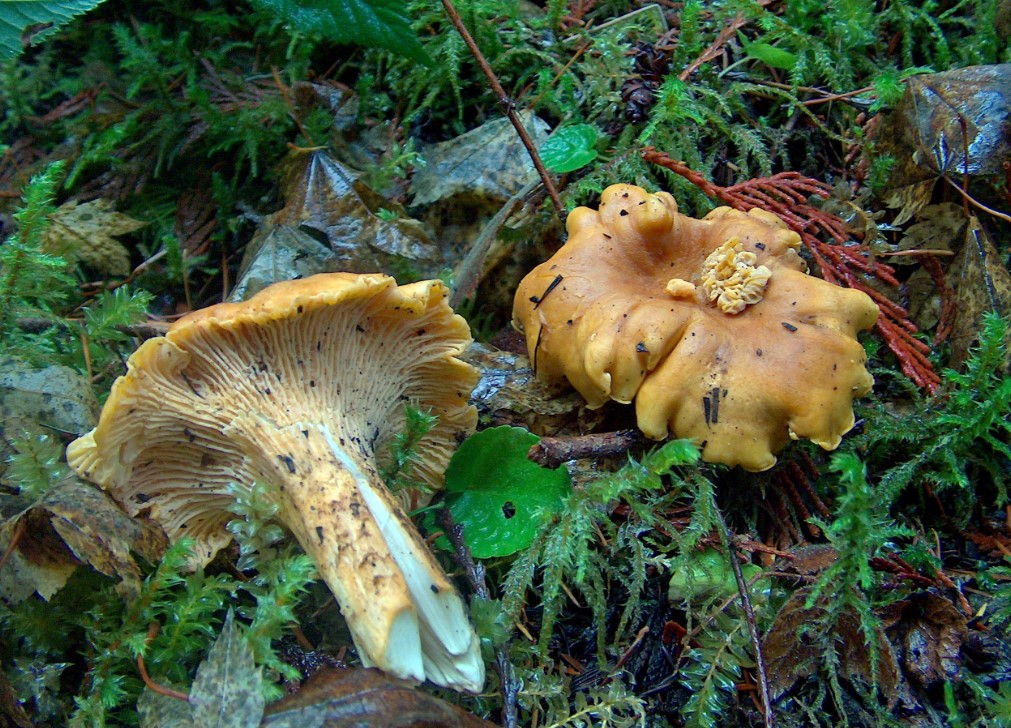
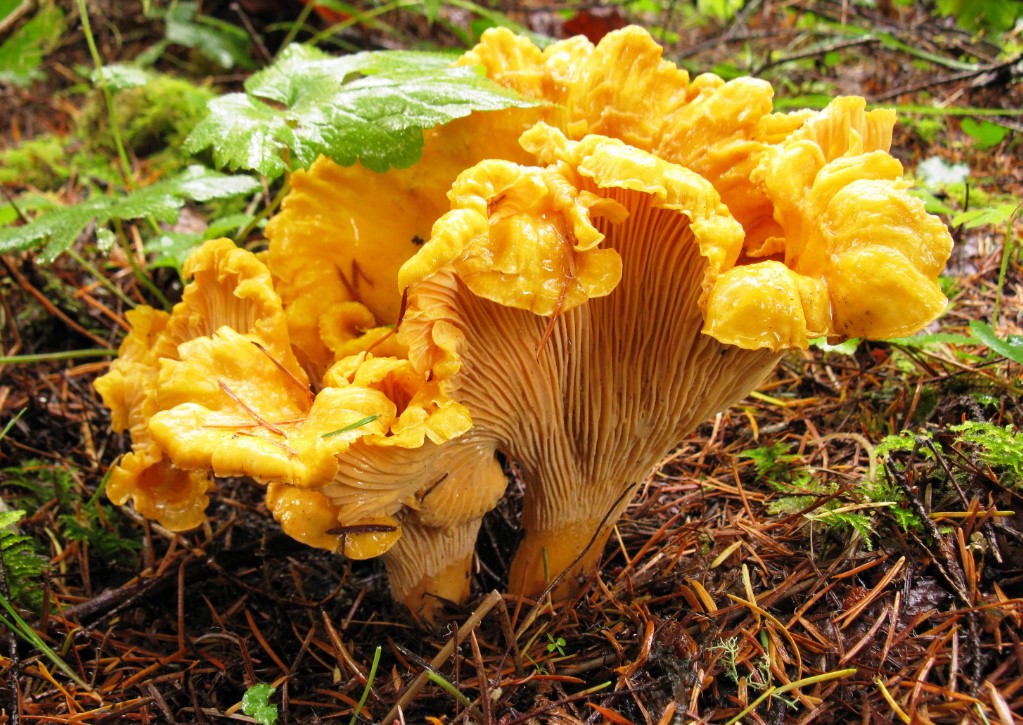
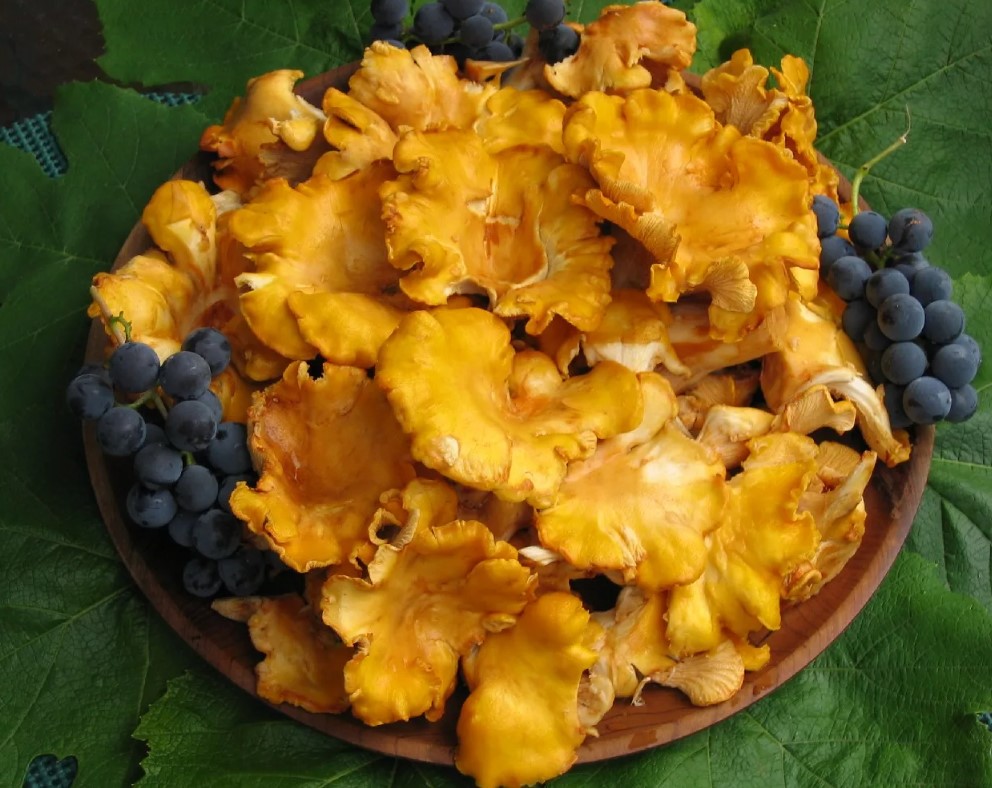
Pacific golden foxfish (Cantharellus formosus)
| View | Description | Edibility | Collection deadlines | Where to look |
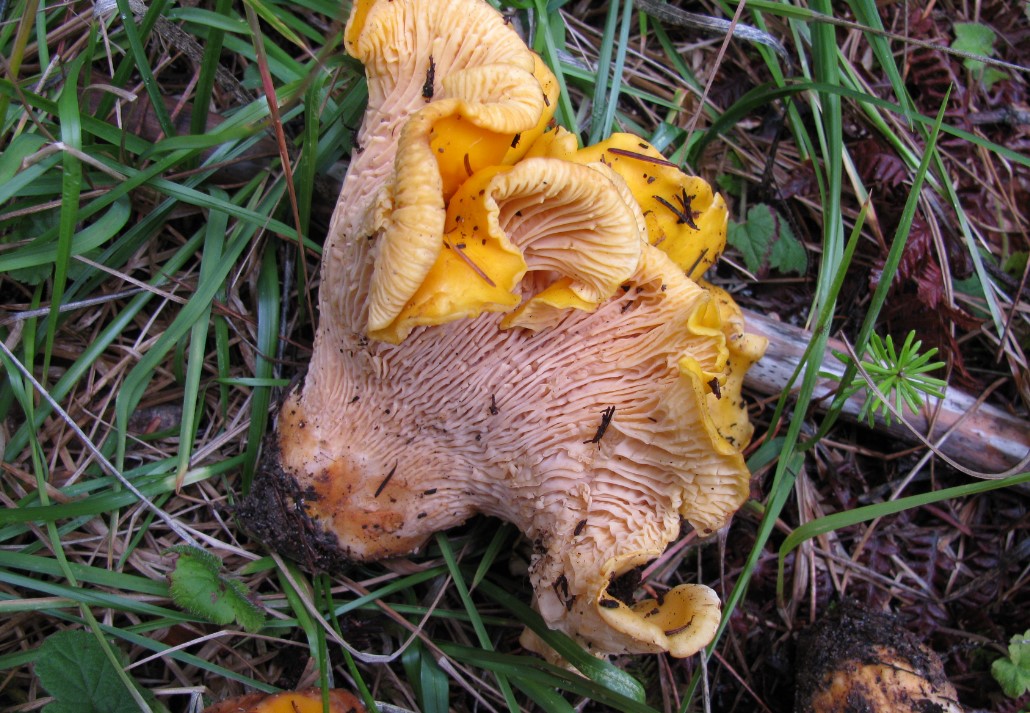
| Pacific golden foxfish (Cantharellus formosus) | The cap diameter is 2-14 cm, and its color ranges from orange to yellow-brown, depending on humidity. The stem is cylindrical and up to 7 cm tall. | Edible. | July-September. | Young coniferous forests of the Pacific Northwest region of North America. |
Photo gallery of the Pacific golden chanterelle
Velvet chanterelle (Cantharellus friesii)
| View | Description | Edibility | Collection deadlines | Where to look |
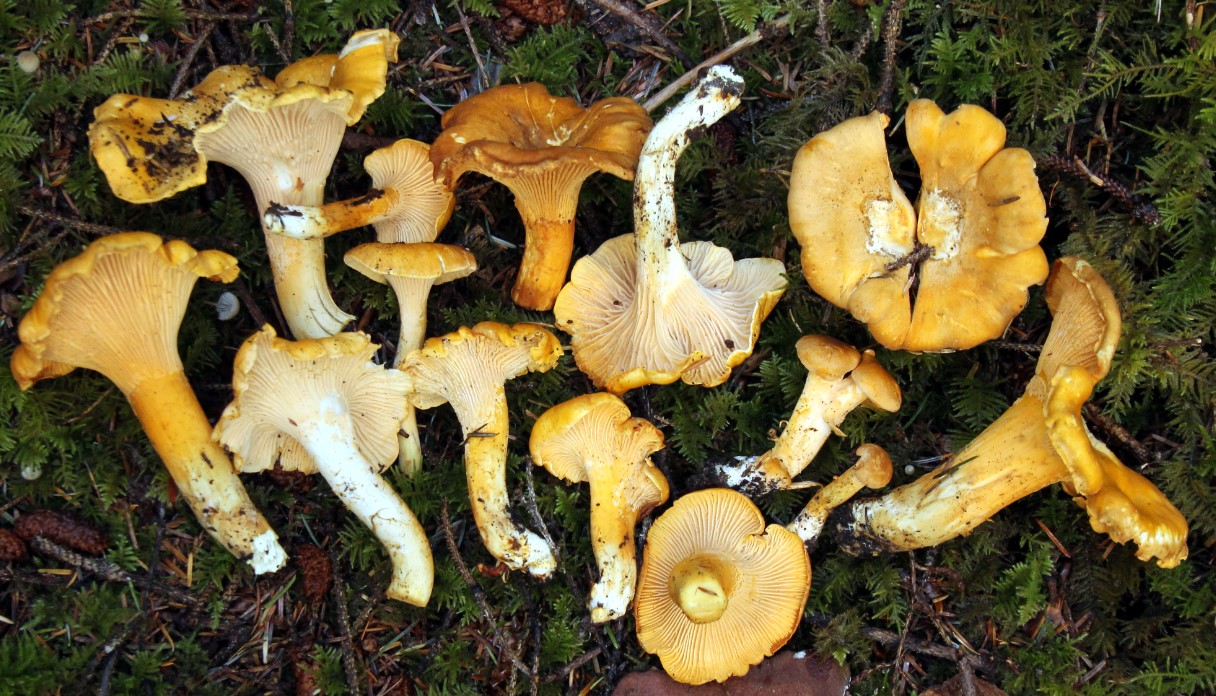
| Velvet chanterelle (Cantharellus friesii) | The cap diameter ranges from 4 to 5 cm, with a convex to funnel-shaped shape. The color ranges from yellowish to orange-red, with heavily wavy edges. The stem is up to 4 cm tall, and the flesh is aromatic. | Edible. | July-October. | South-eastern part of Europe. |
Photo gallery of the velvety chanterelle
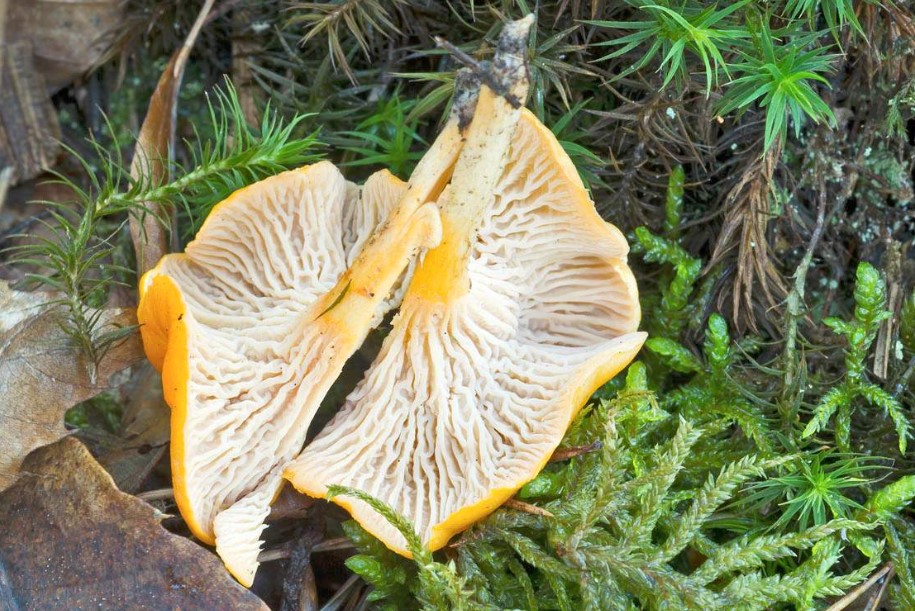
Faceted chanterelle (Cantharellus lateritius)
| View | Description | Edibility | Collection deadlines | Where to look |
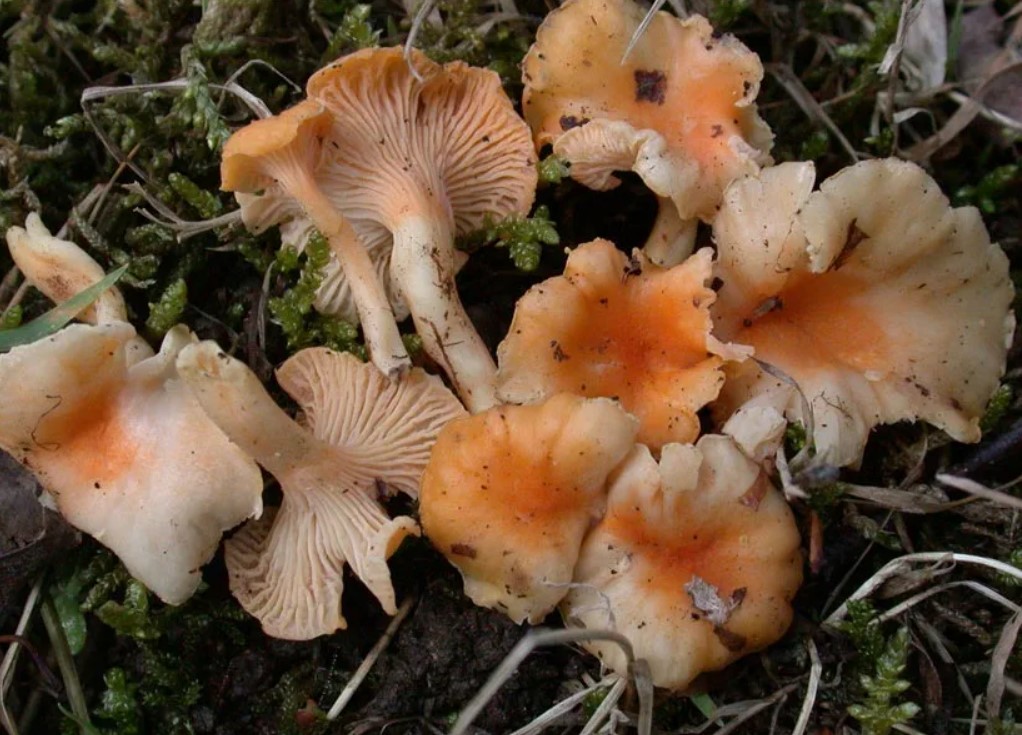
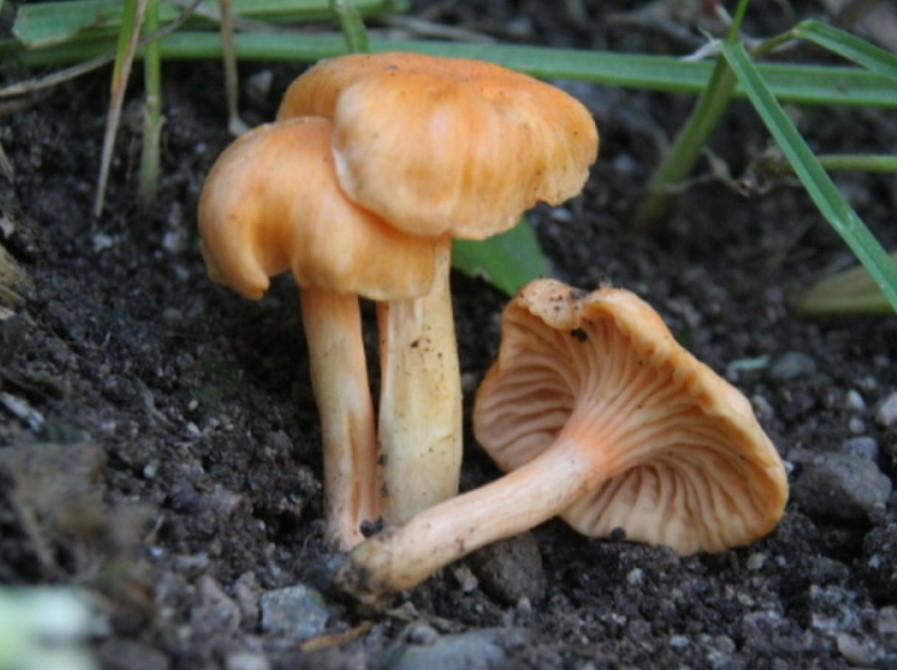
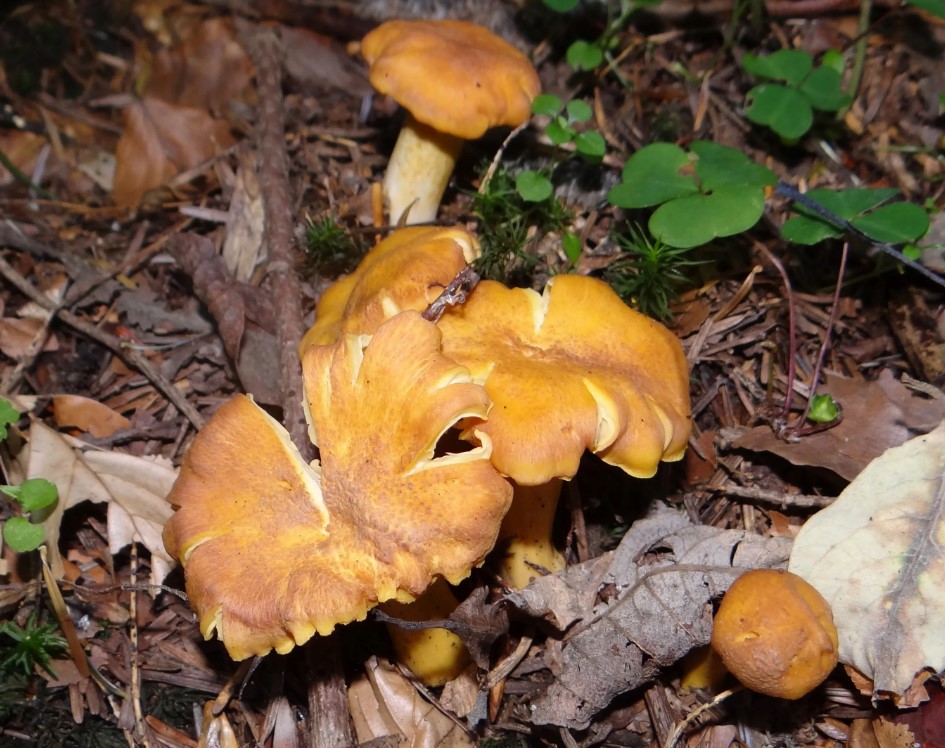
| Faceted chanterelle (Cantharellus lateritius) | The cap reaches 10 cm in diameter and is orange-yellow in color. The stem is up to 5 cm high and up to 2.5 cm in diameter. | Edible. | July-October. | It grows in forests and parks where oak trees are present. It is widespread in North America. |
Photo gallery of the faceted chanterelle
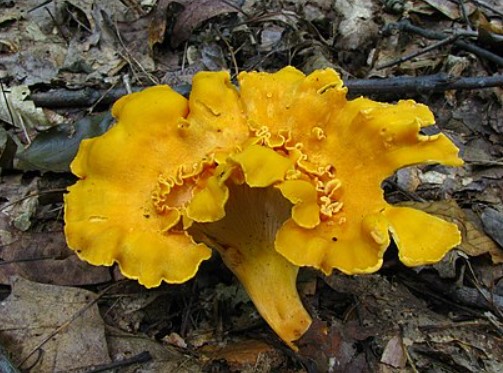
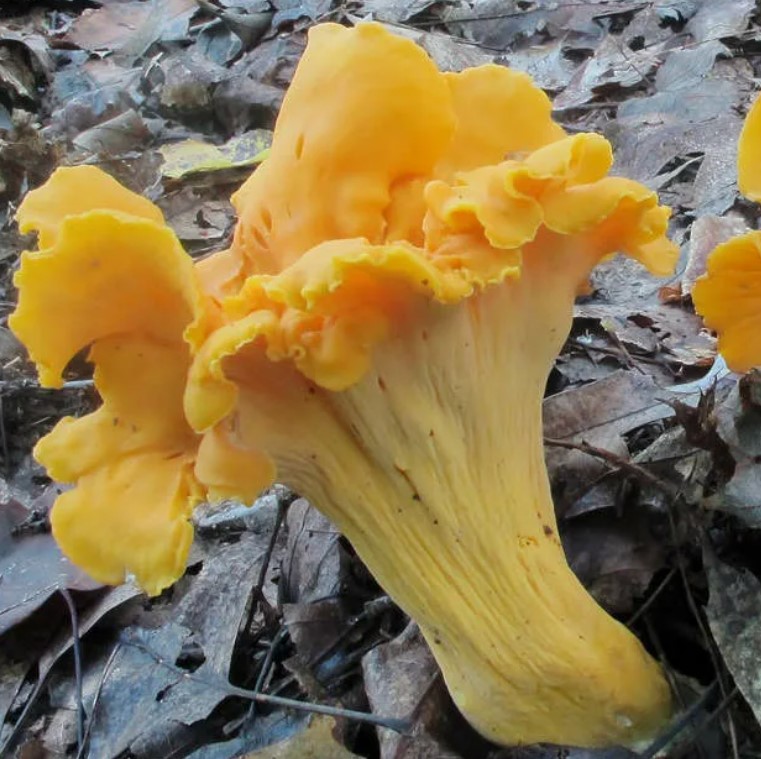
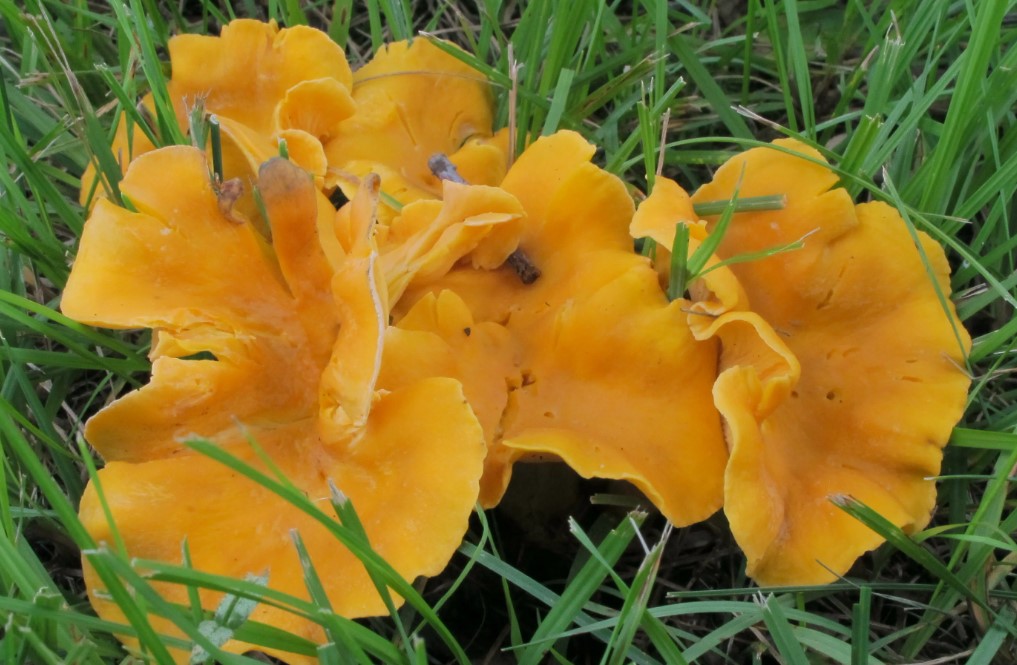
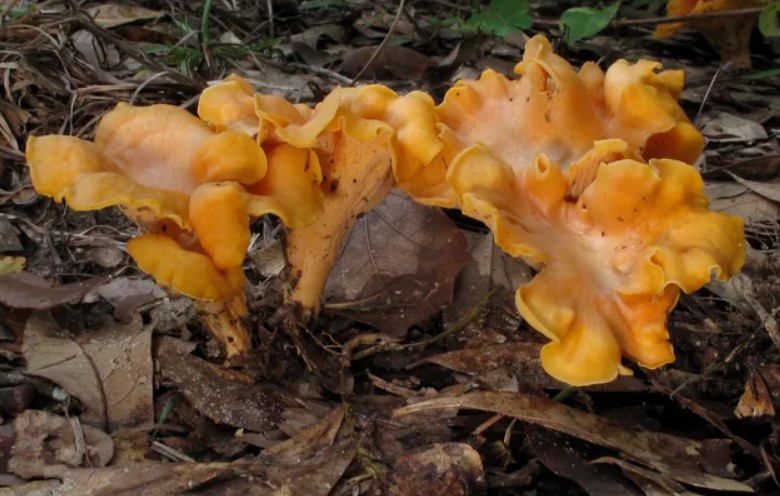
Little chanterelle (Cantharellus minor)
| View | Description | Edibility | Collection deadlines | Where to look |
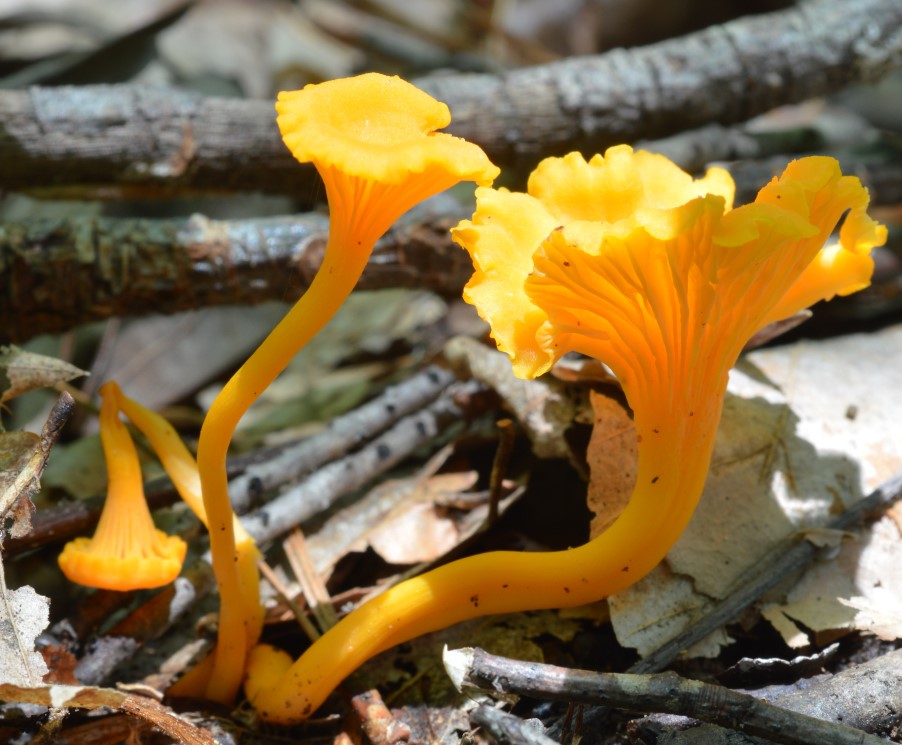
| Little chanterelle (Cantharellus minor) | The cap diameter is no more than 3 cm, yellow or orange-yellow, with wavy edges. The stem is curved, up to 6 cm long, and may be slightly lighter in color than the cap. | Edible. | July-October. | East of North America. |
Photo gallery of small chanterelles
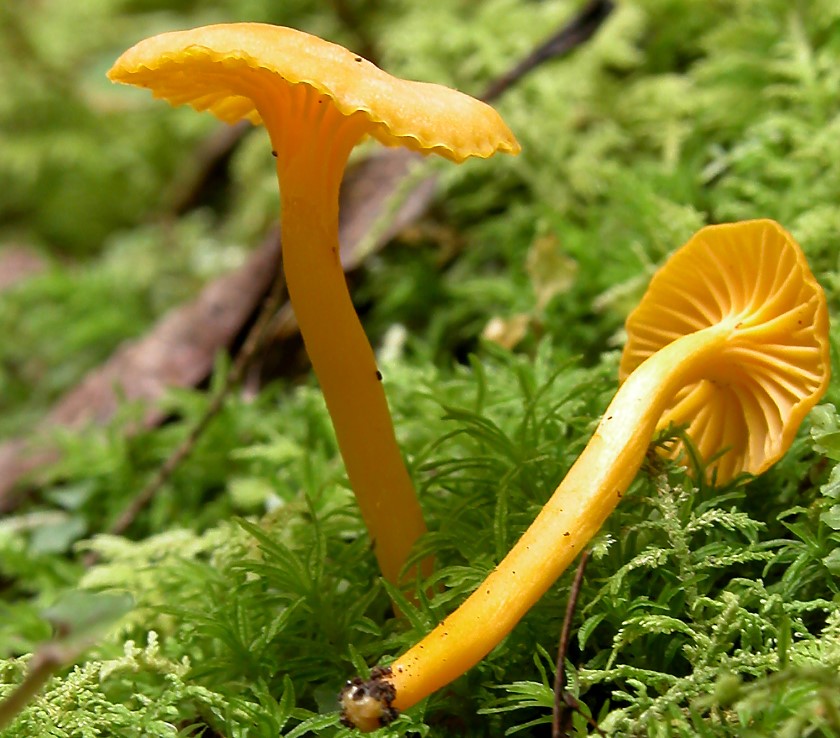
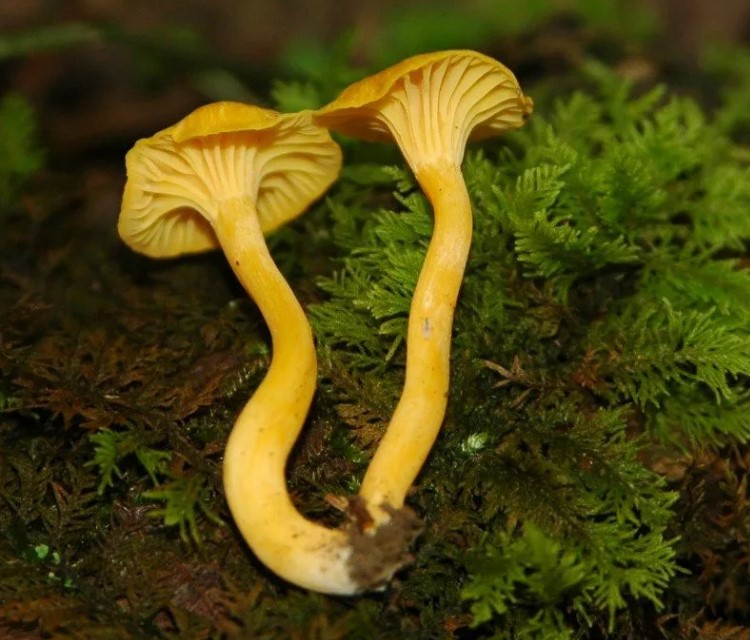
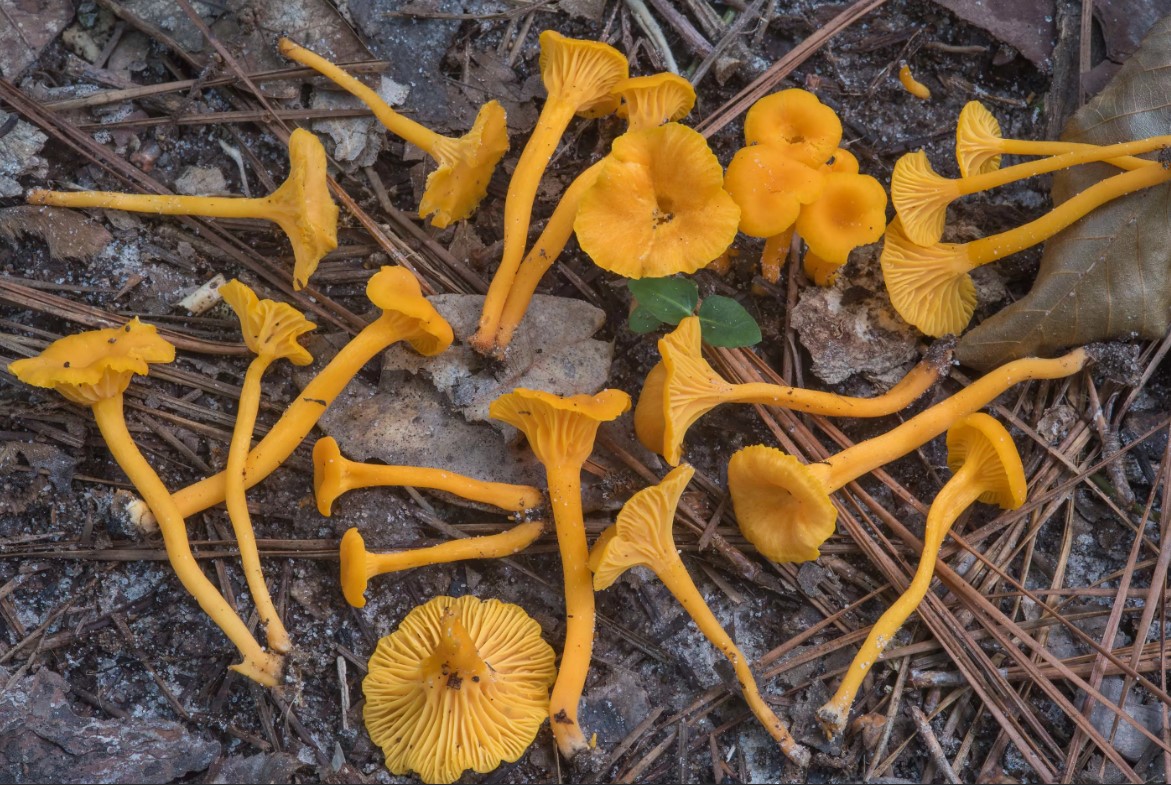
Pink chanterelle (Cantharellus persicinus)
| View | Description | Edibility | Collection deadlines | Where to look |
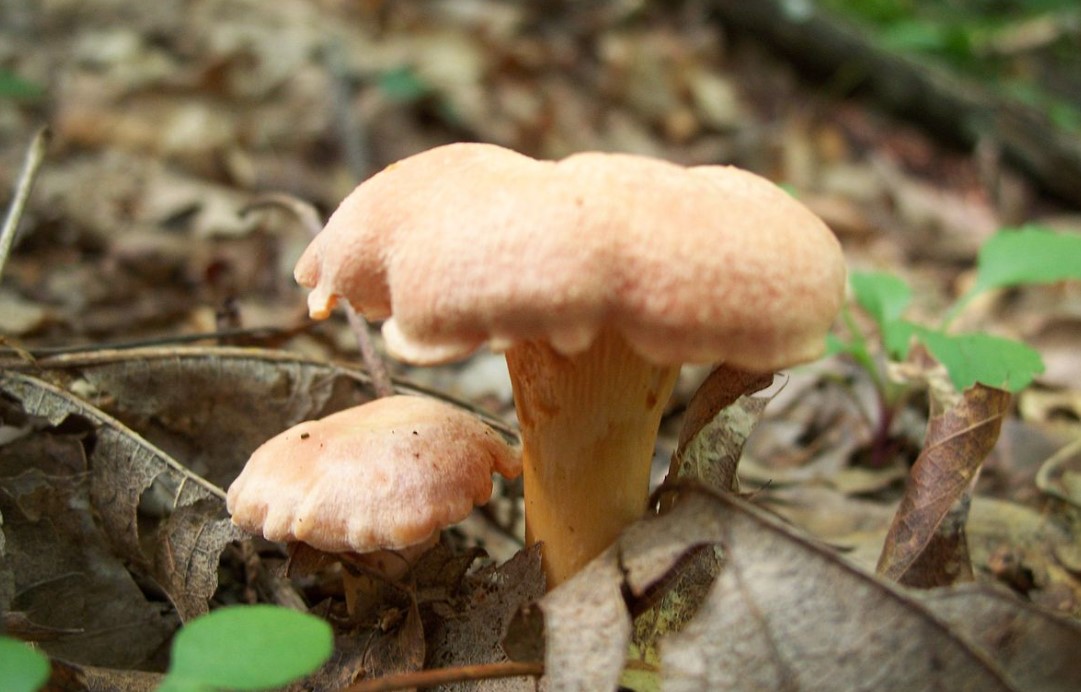
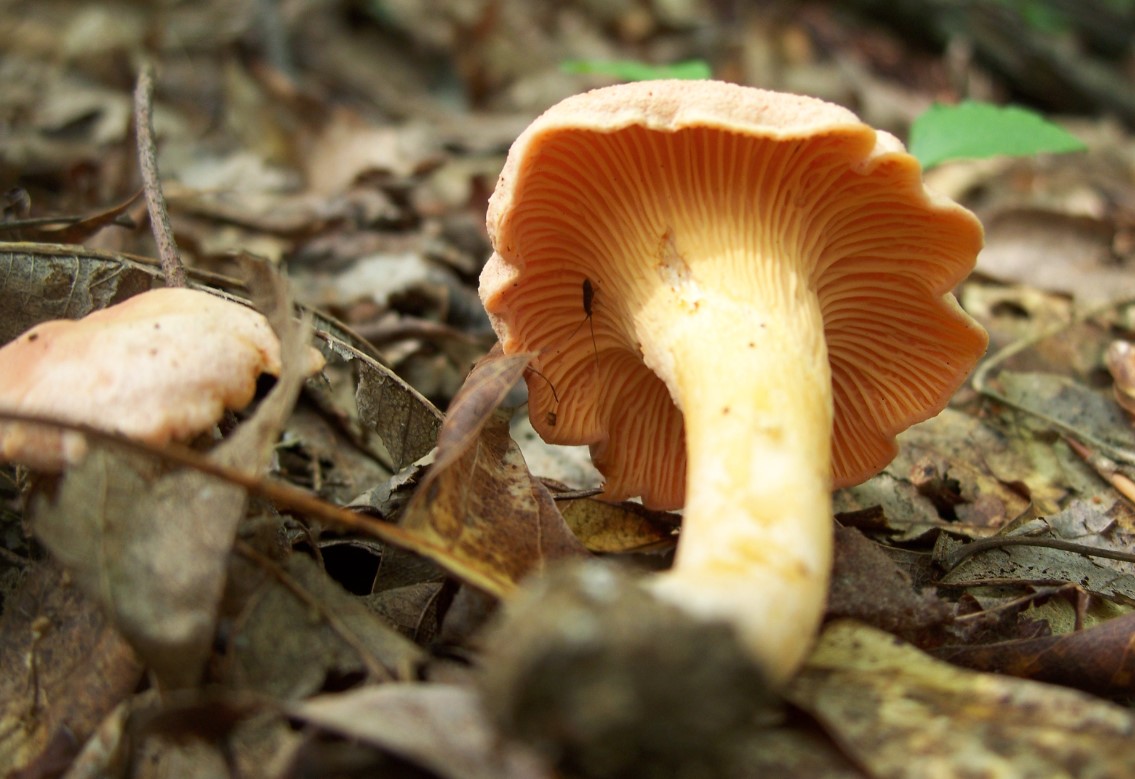
| Pink chanterelle (Cantharellus persicinus) | The cap is up to 5 cm in diameter, initially convex, later becoming funnel-shaped. The color is pinkish-yellow. | Edible. | July-October. | Eastern North America. |
Photo gallery of pink chanterelle
White chanterelle (Cantharellus subalbidus)
| View | Description | Edibility | Collection deadlines | Where to look |
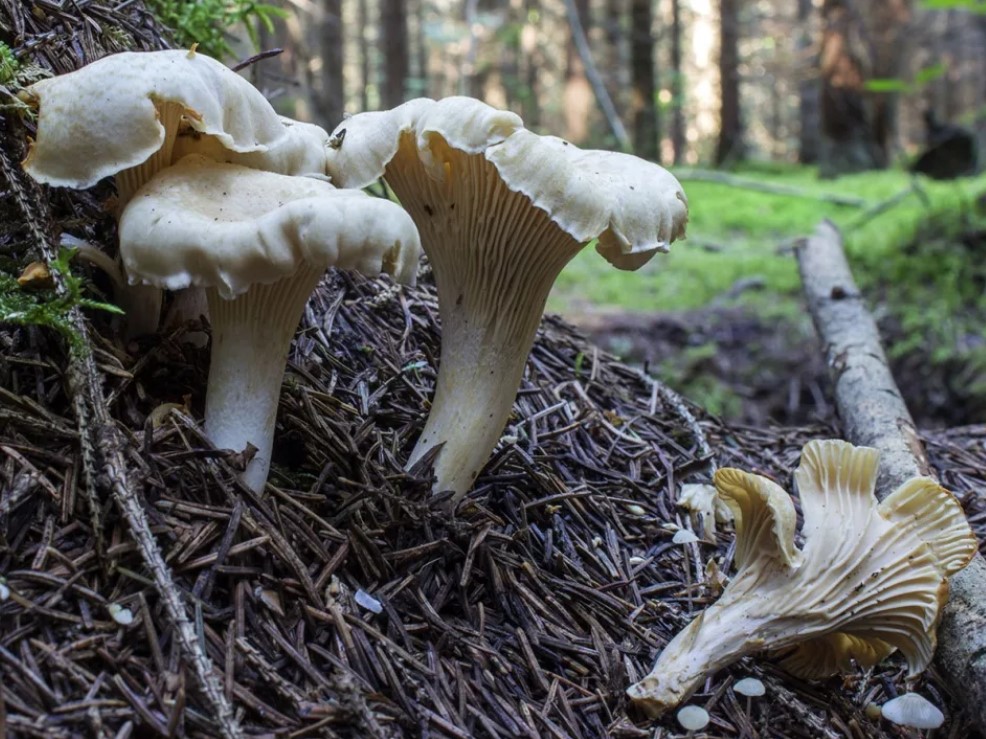
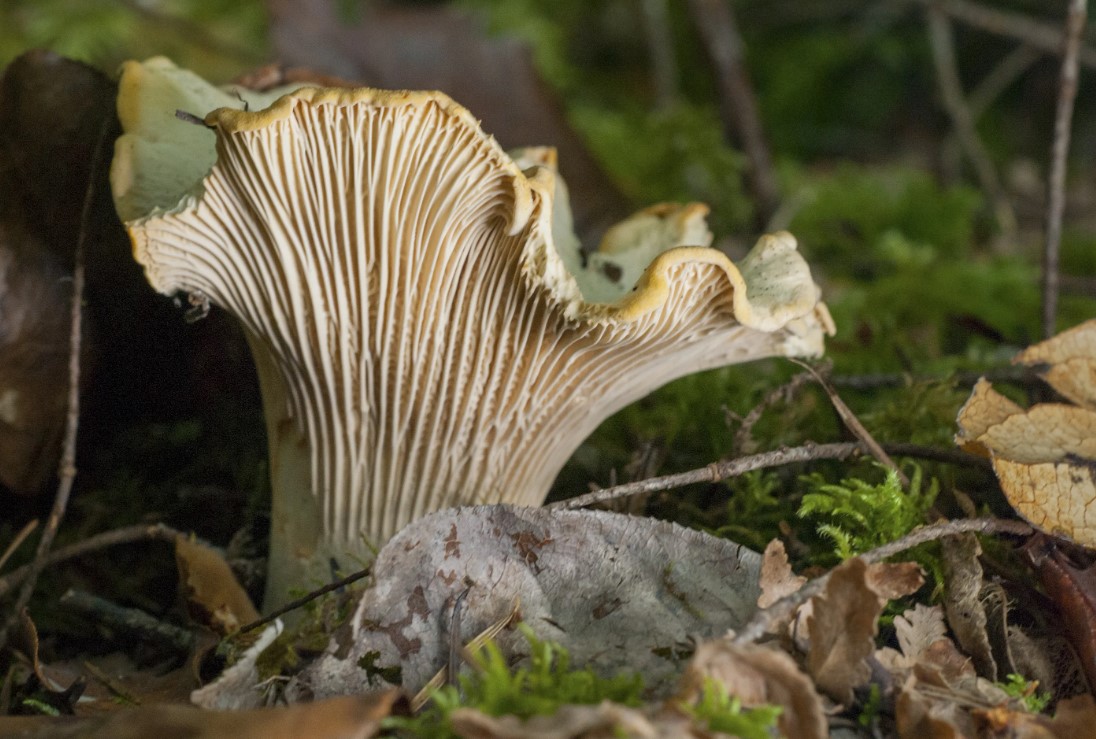
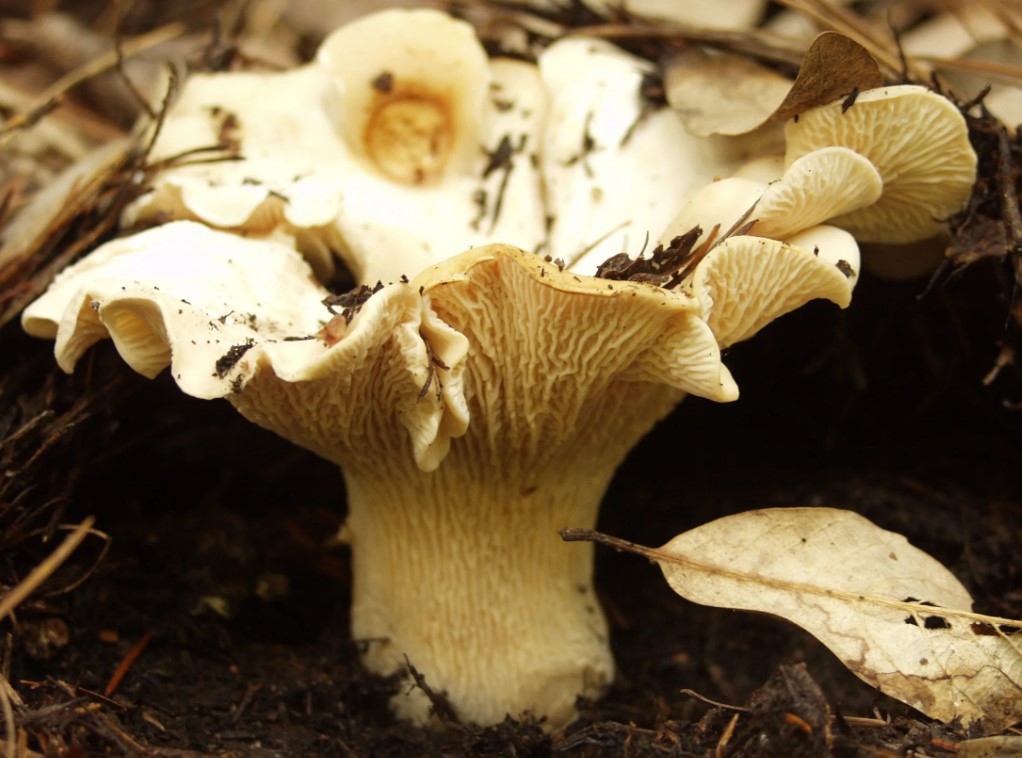
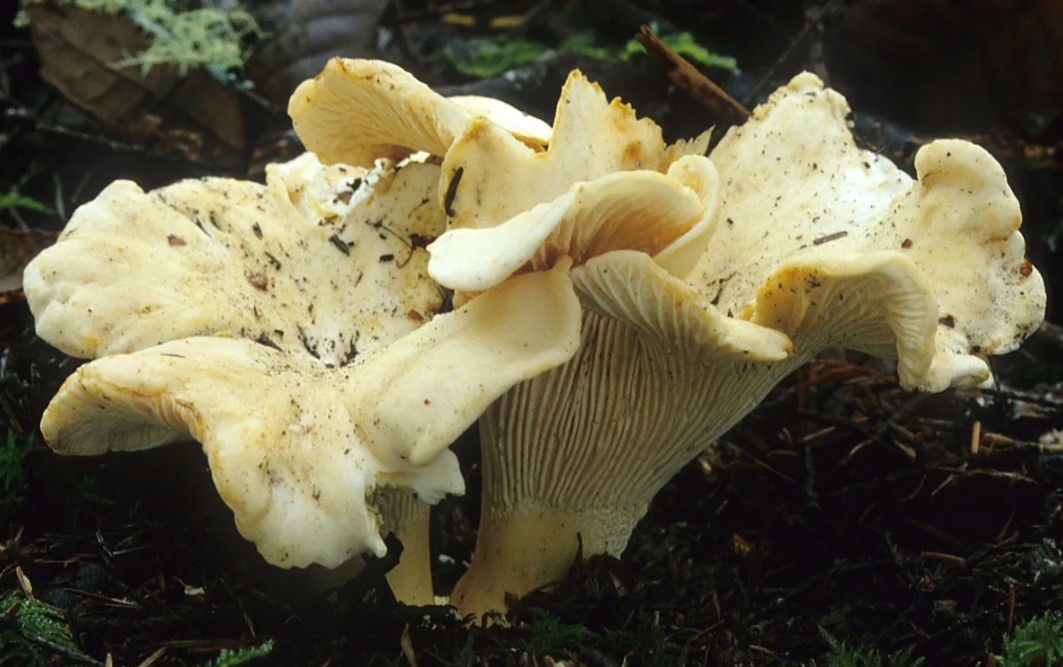
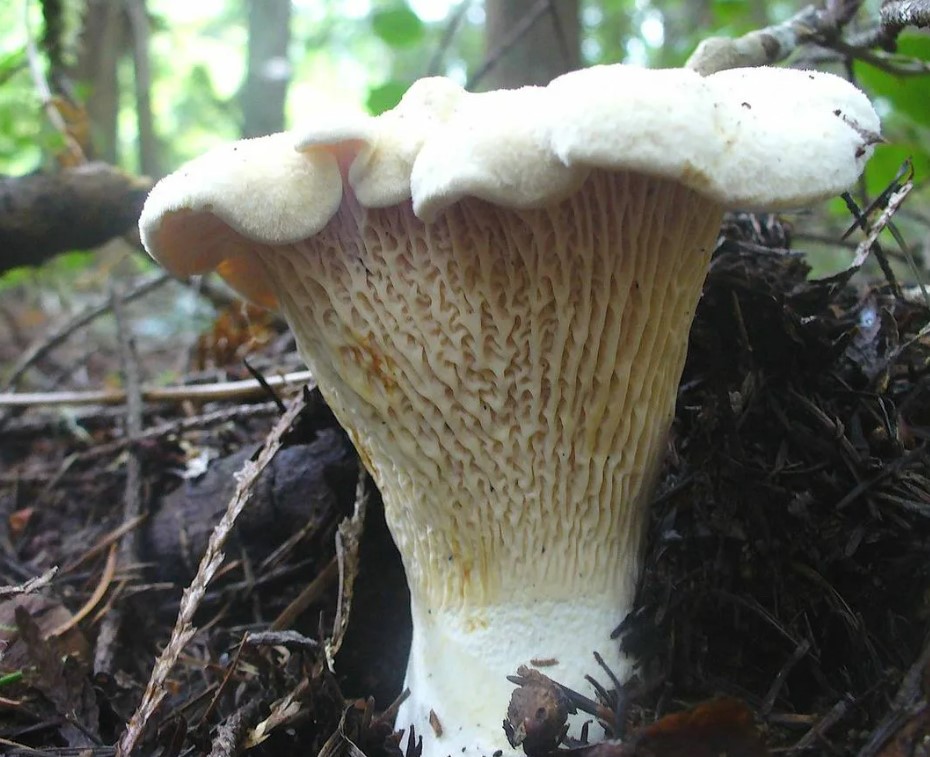
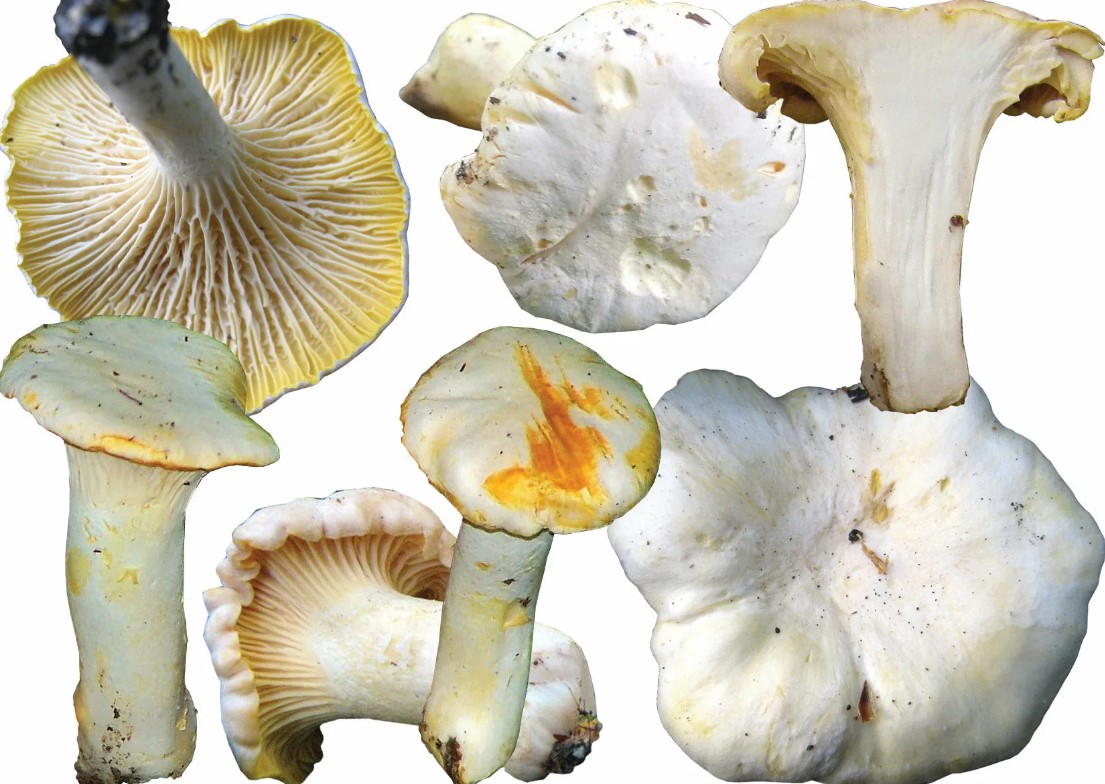
| White chanterelle (Cantharellus subalbidus) | The cap diameter can sometimes reach 14 cm; with age, it becomes funnel-shaped, with the edges becoming heavily wavy. The surface is light cream, but when pressed, it turns orange. The stem is up to 5 cm high and up to 3 cm wide, tapering toward the base. | Edible. | July-September. | Coniferous forests in northwestern North America. |
Photo gallery of white chanterelles
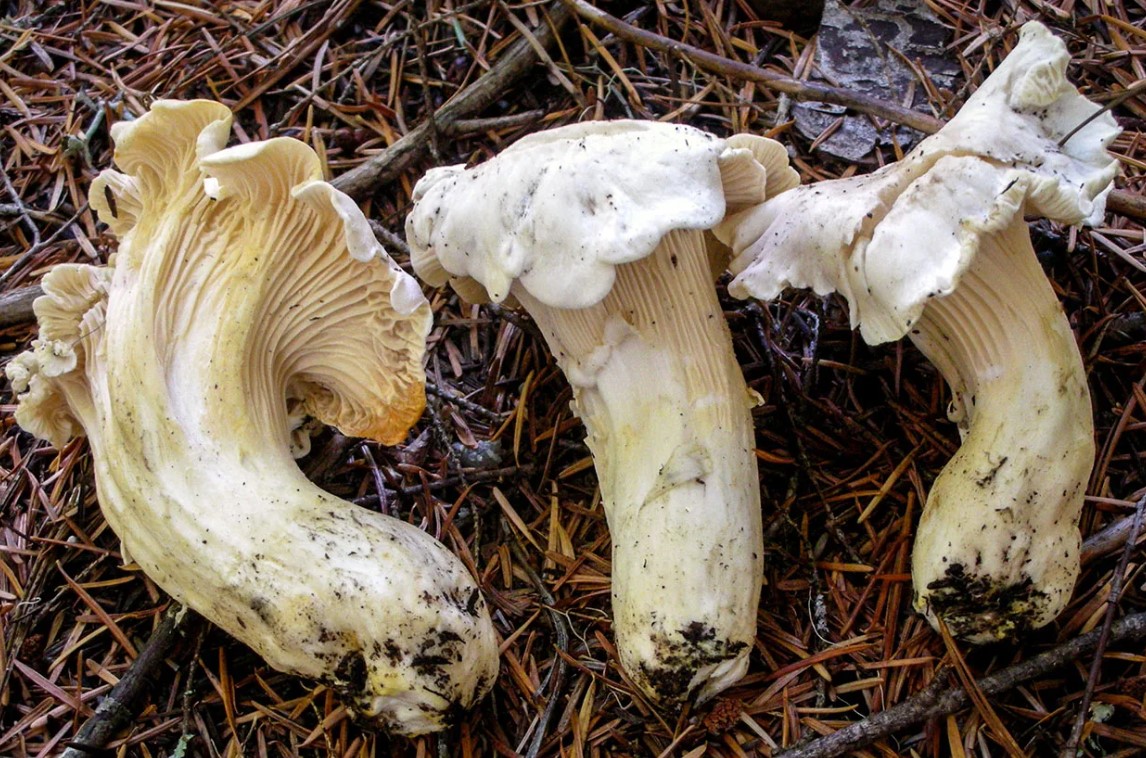
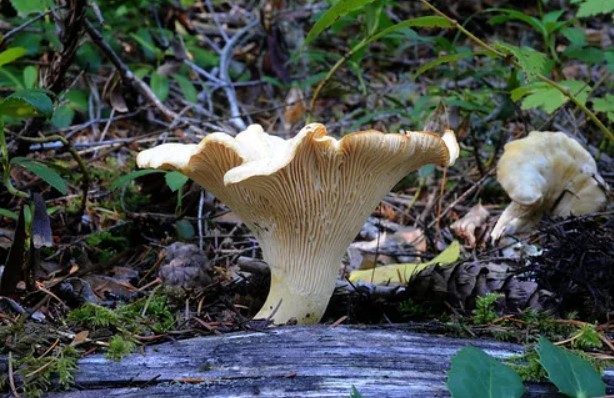
Pale chanterelle (Cantharellus pallens)
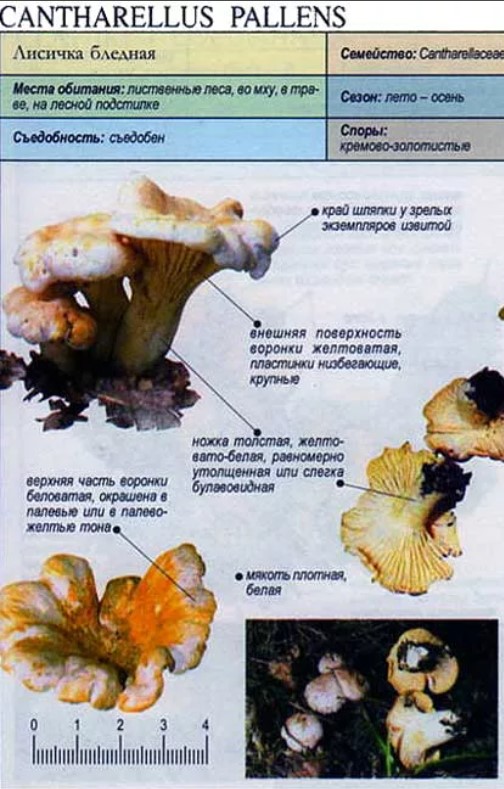
| View | Description | Edibility | Collection deadlines | Where to look |
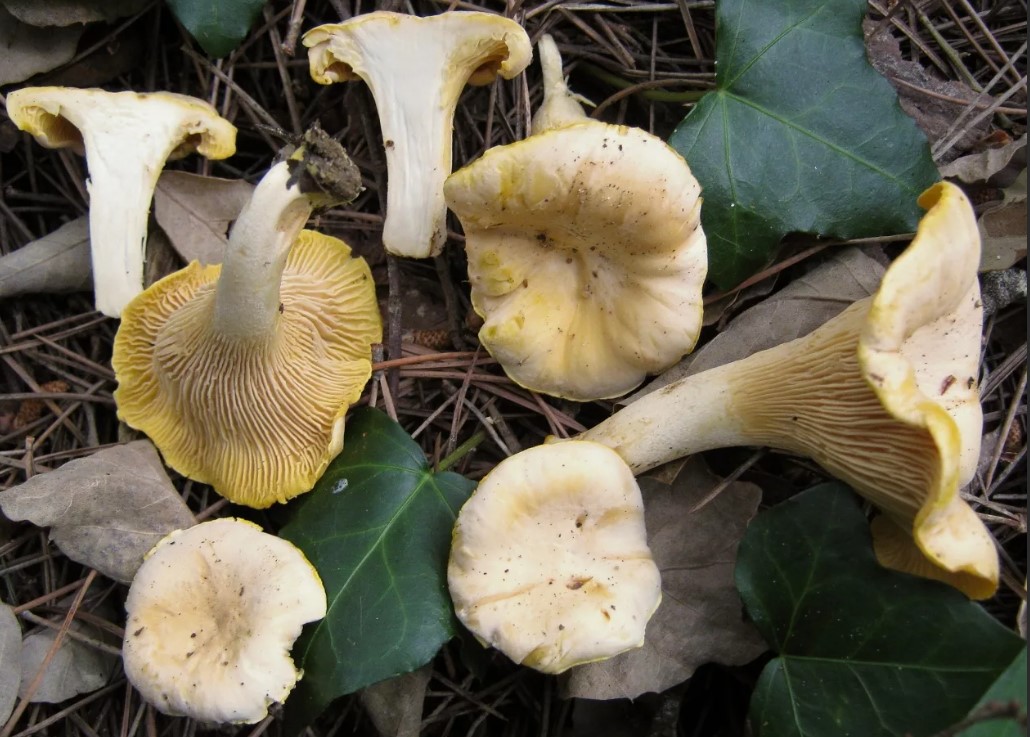
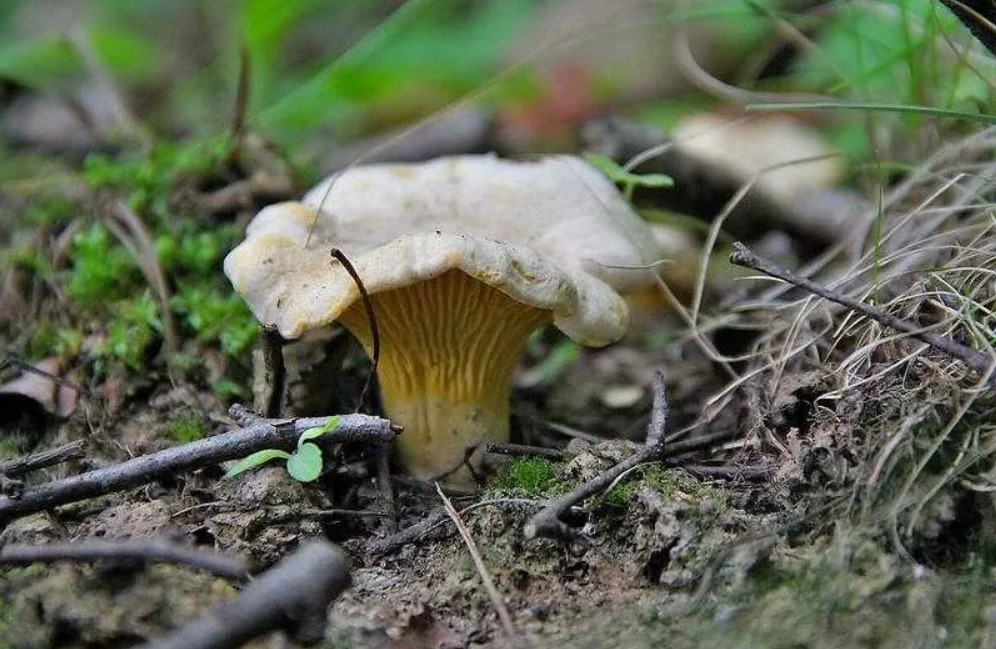
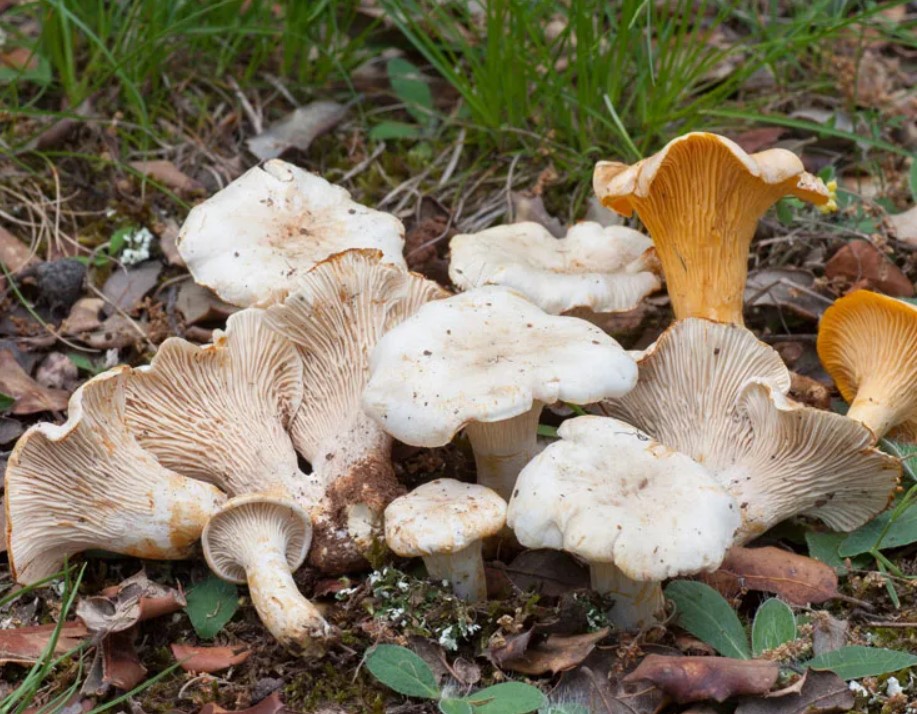
| Pale chanterelle (Cantharellus pallens) | The cap is small, 1-5 cm in diameter, with wavy edges and a funnel-shaped form. The color is pale yellow, the surface is uneven and spotted. The stem, up to 5 cm tall, is cone-shaped, tapering at the base. | Edible. | June-September. | Mixed and deciduous forests. |
Photo gallery of the pale chanterelle
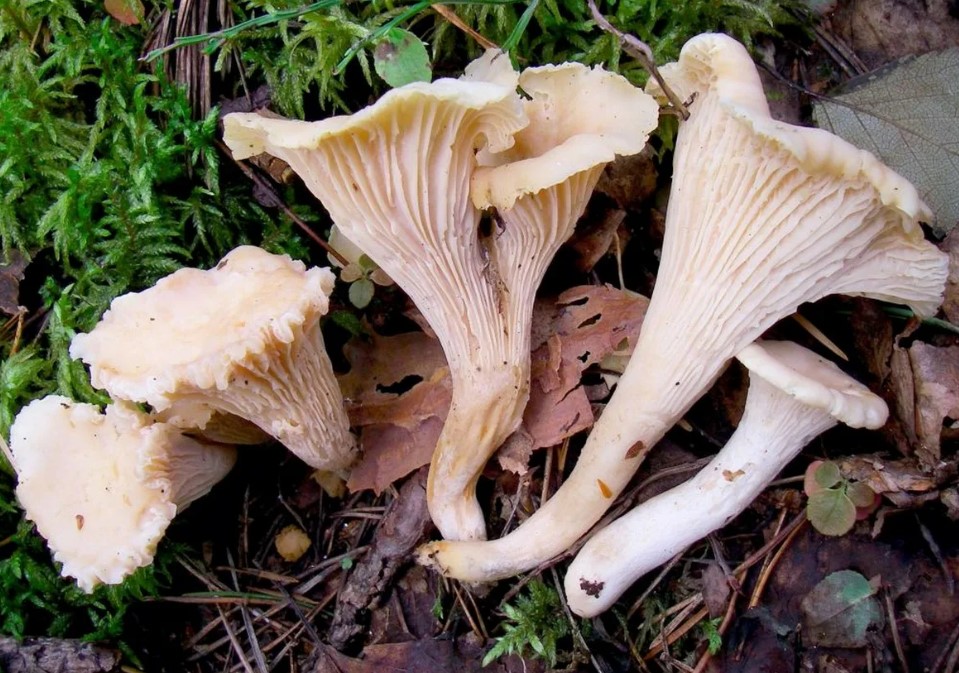
Trumpet chanterelle, or funnel-shaped chanterelle (Cantharellus tubaeformis)
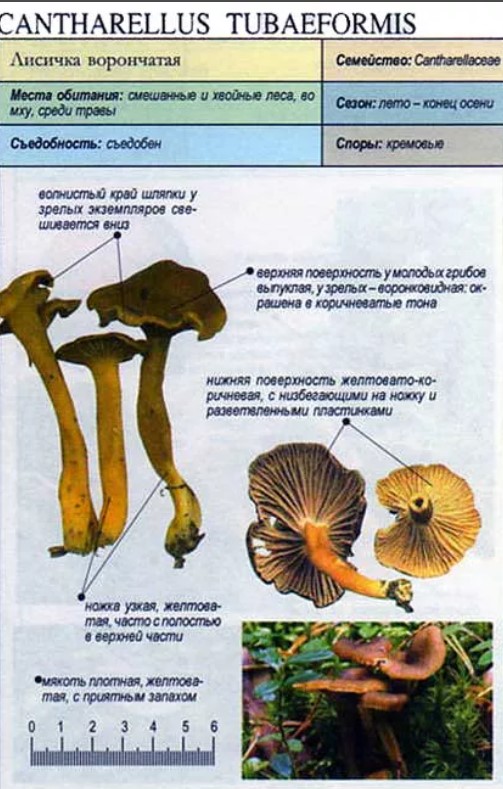
| View | Description | Edibility | Collection deadlines | Where to look |
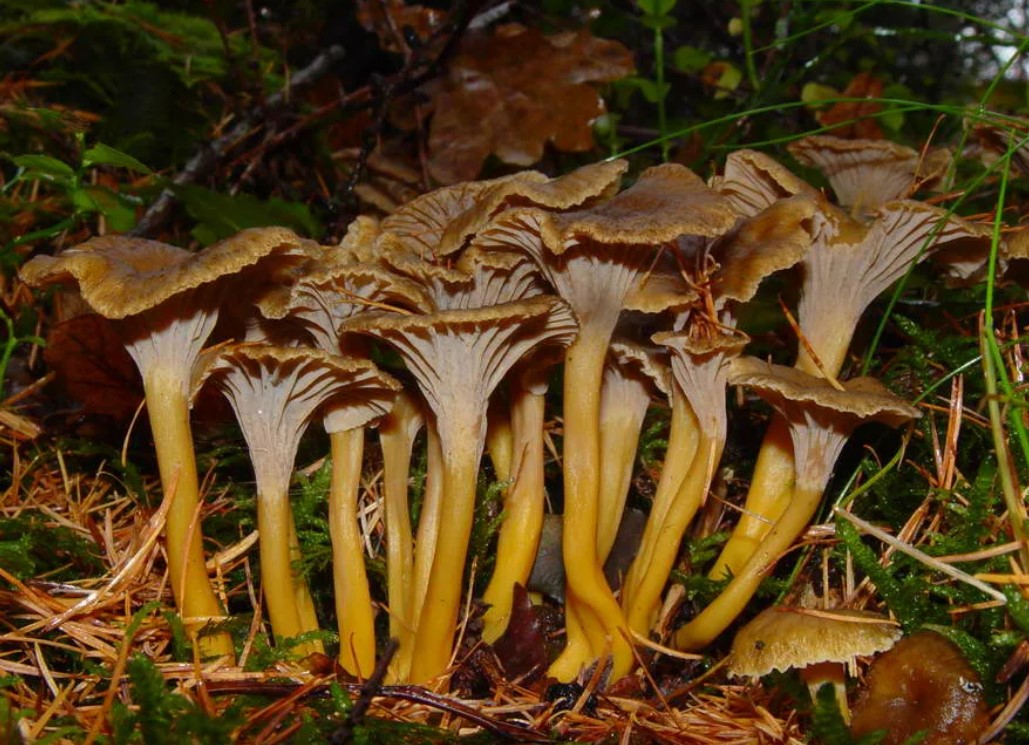
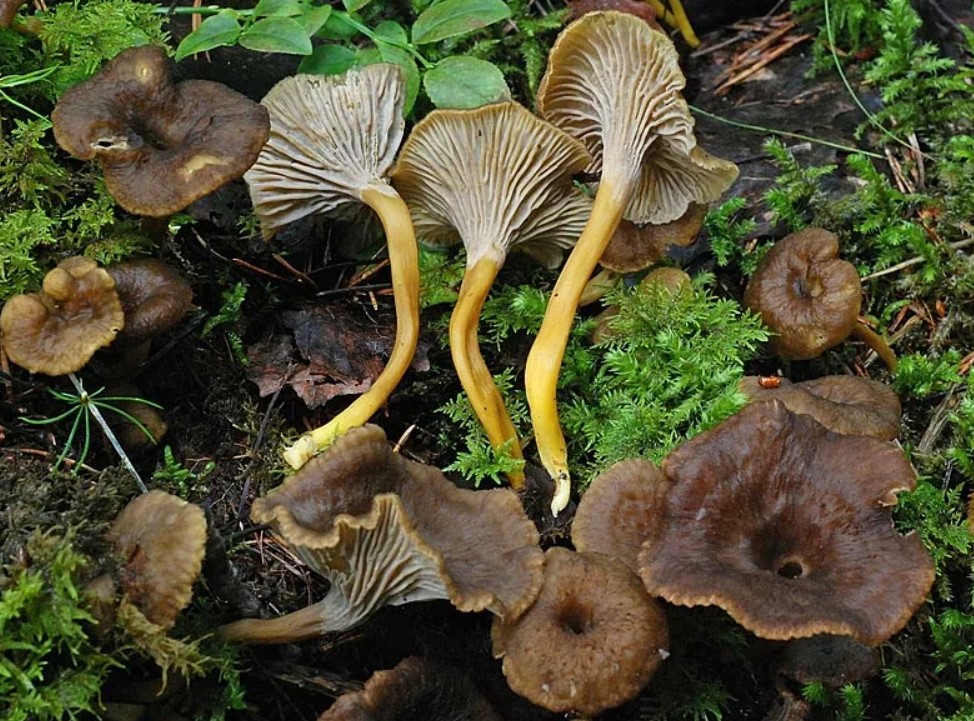
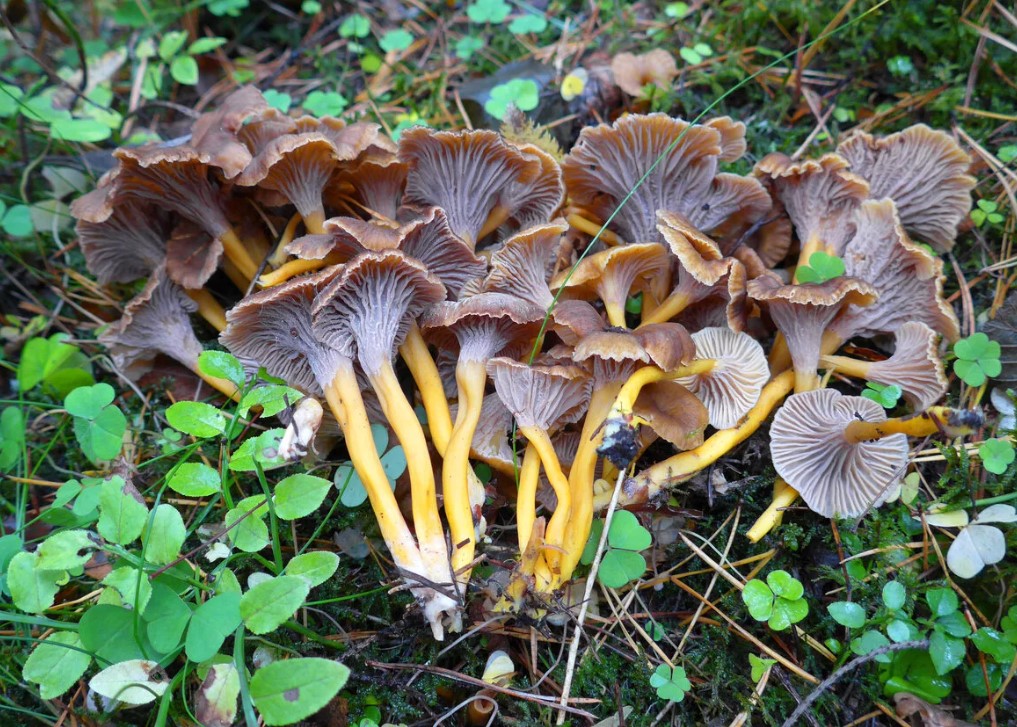
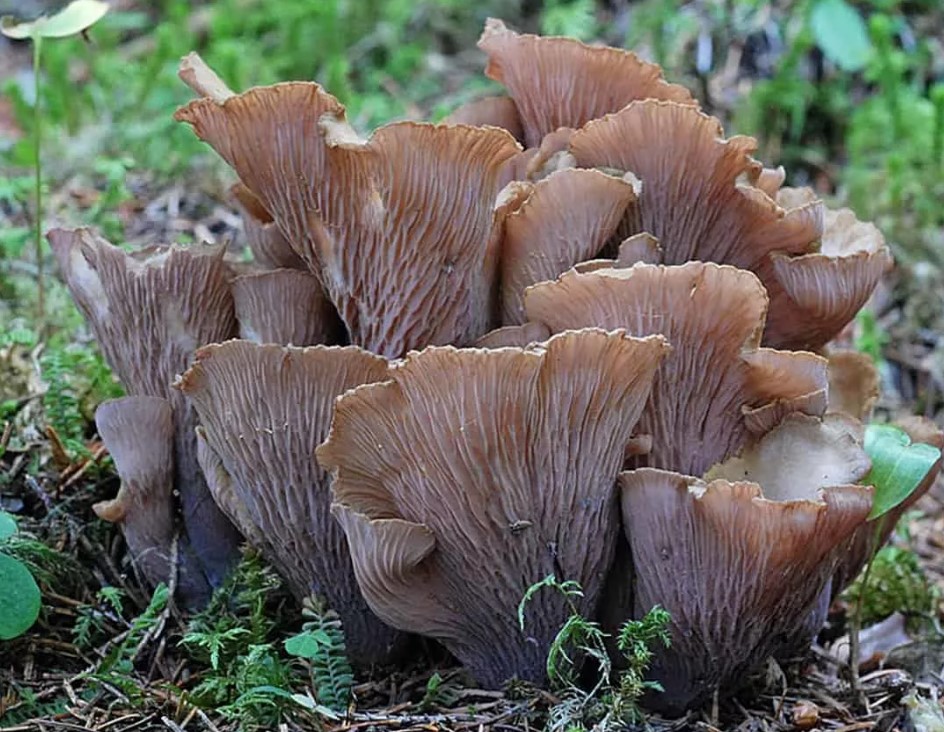
| Trumpet chanterelle, or funnel-shaped chanterelle (Cantharellus tubaeformis) | The cap is 2-6 cm in diameter and funnel-shaped. The edges are uneven. The color can be brown or grayish-yellow. The stem is up to 8 cm tall and cylindrical. | Edible. | September is the beginning of winter. | Most often grows in coniferous forests, prefers acidic soil. |
Photo gallery of the Trumpet Chanterelle
Yellow chanterelle (Craterellus lutescens)
| View | Description | Edibility | Collection deadlines | Where to look |
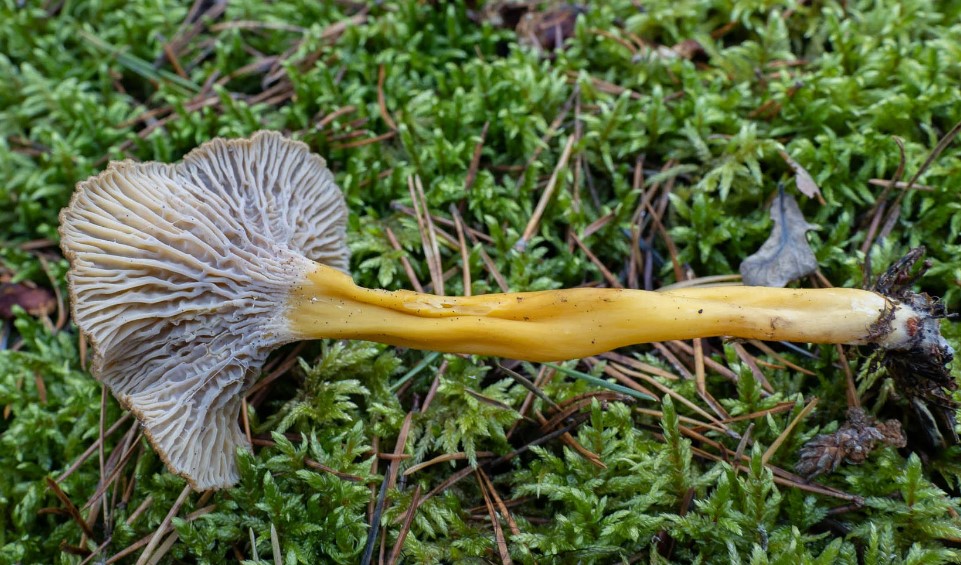
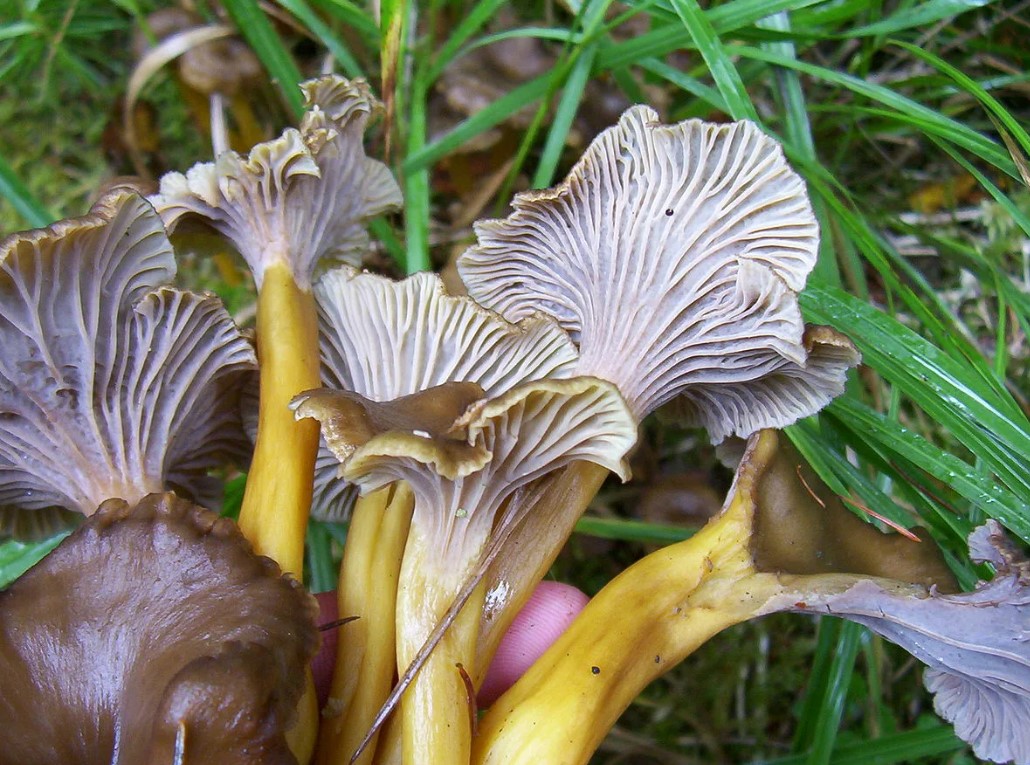
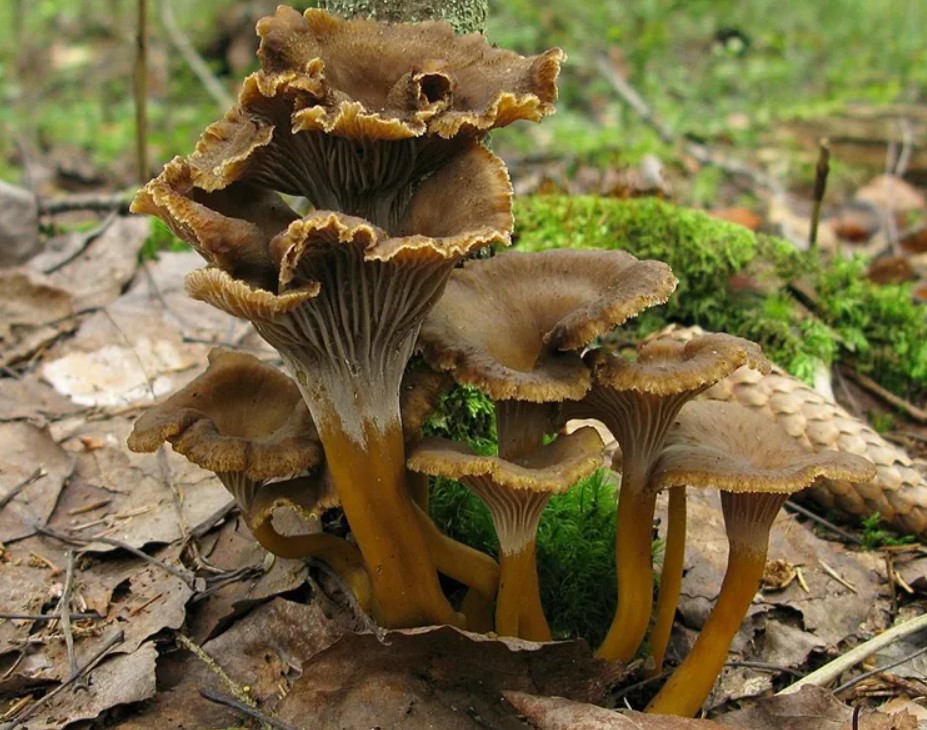
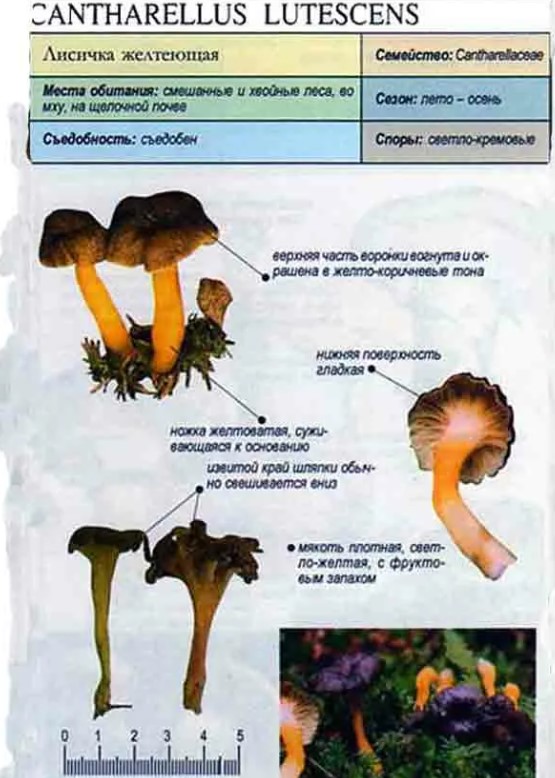
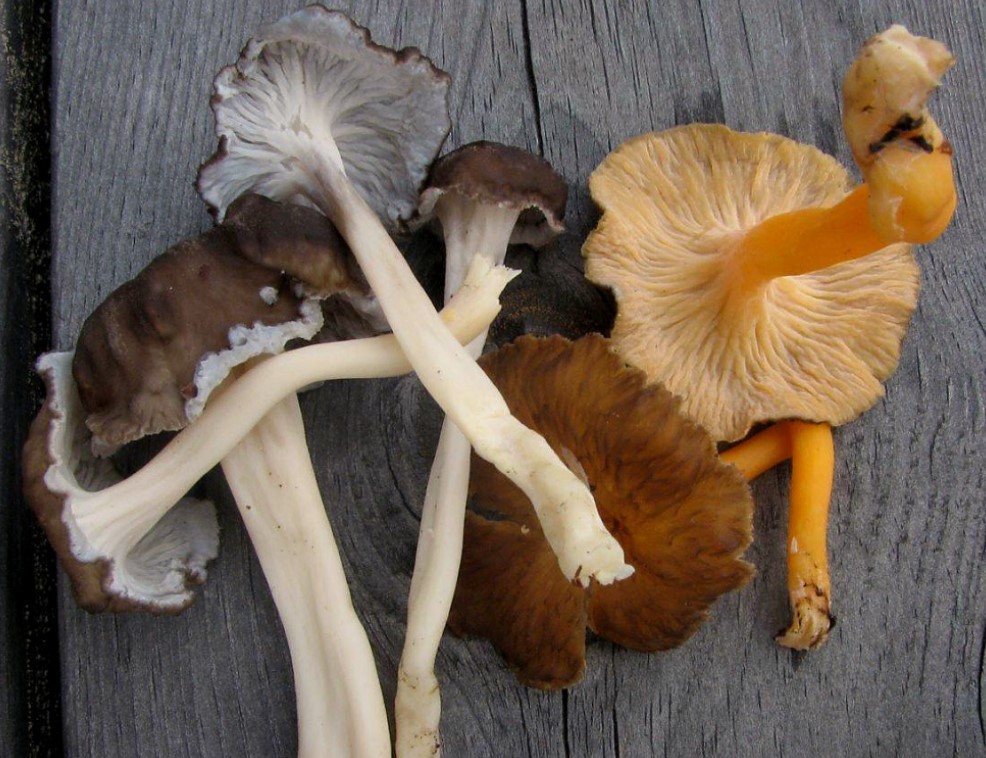
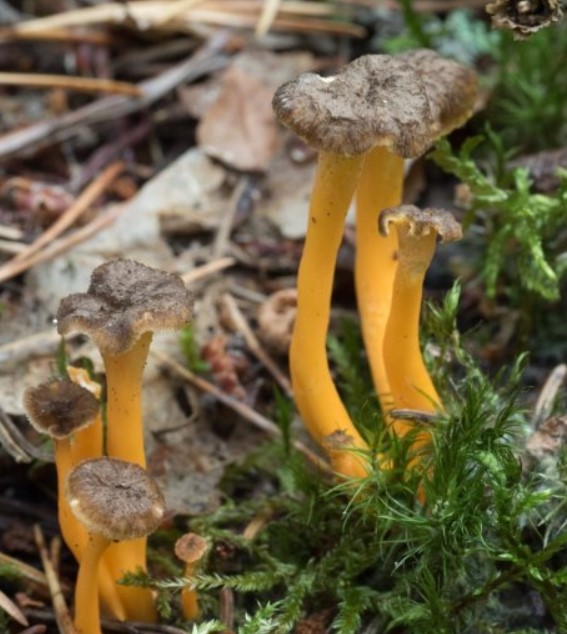
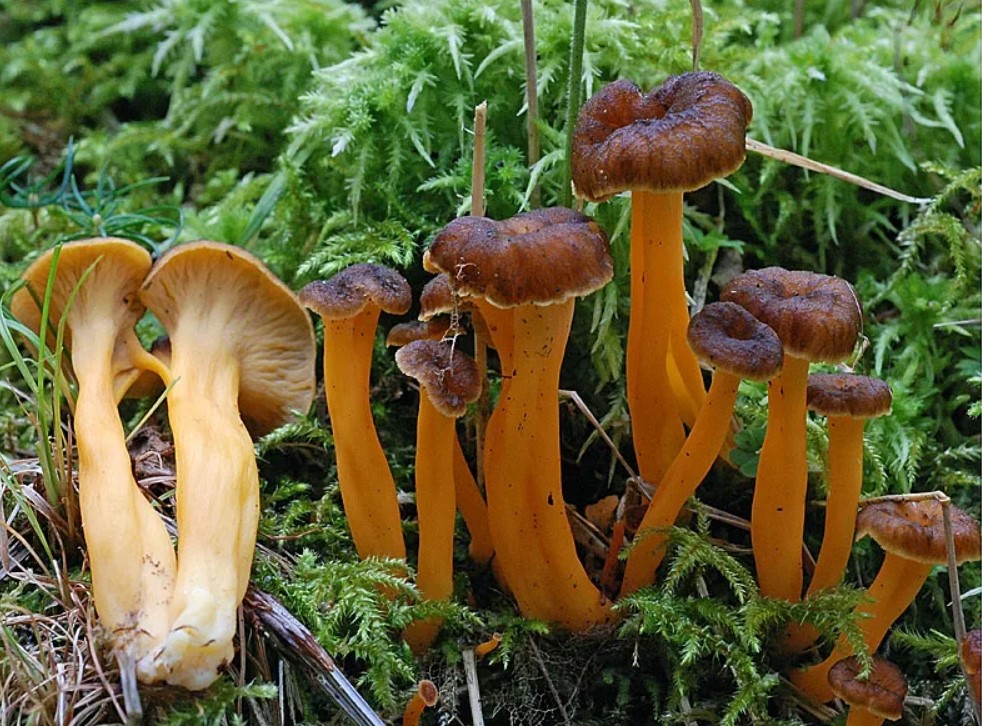
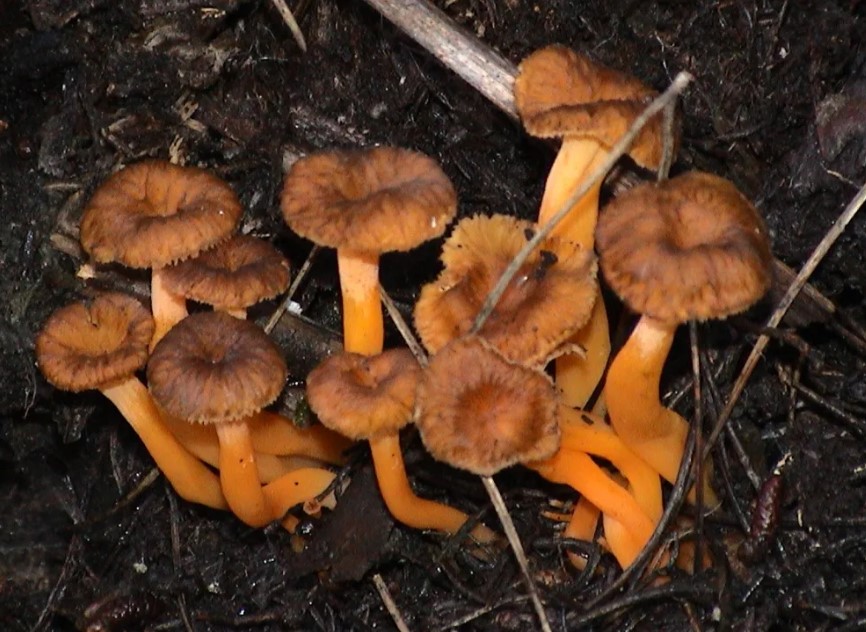
| Yellow chanterelle (Craterellus lutescens) | The cap, up to 6 cm in diameter, changes shape with age from convex to funnel-shaped. The color is yellow-brown, but the skin has brown scales. The stem is up to 5 cm high and orange. | Edible. | June-September. | Coniferous forests with high humidity. |
Photo gallery of yellowing chanterelle
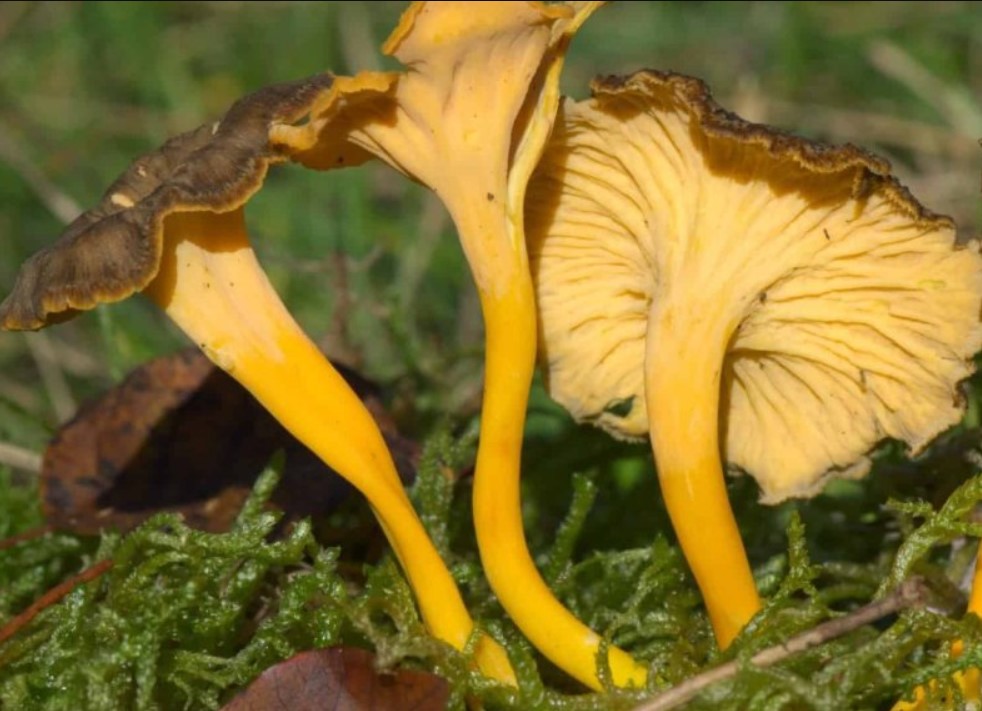
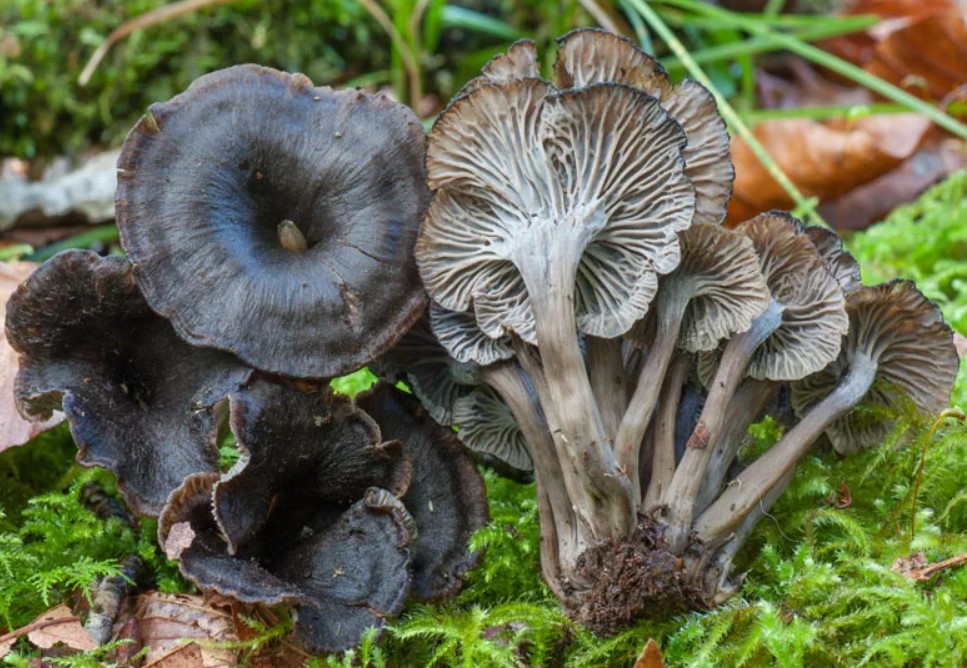
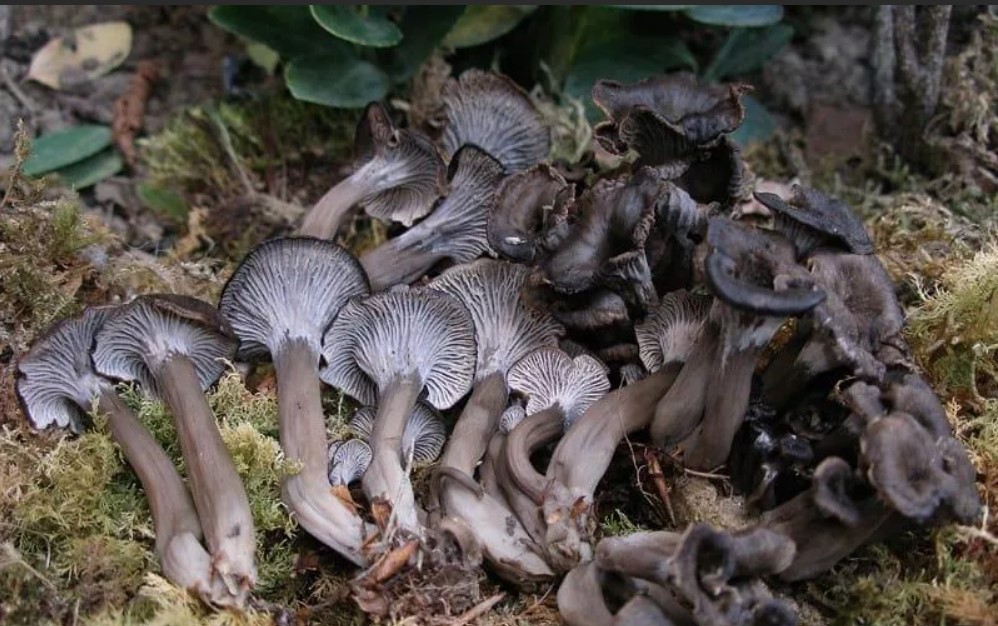
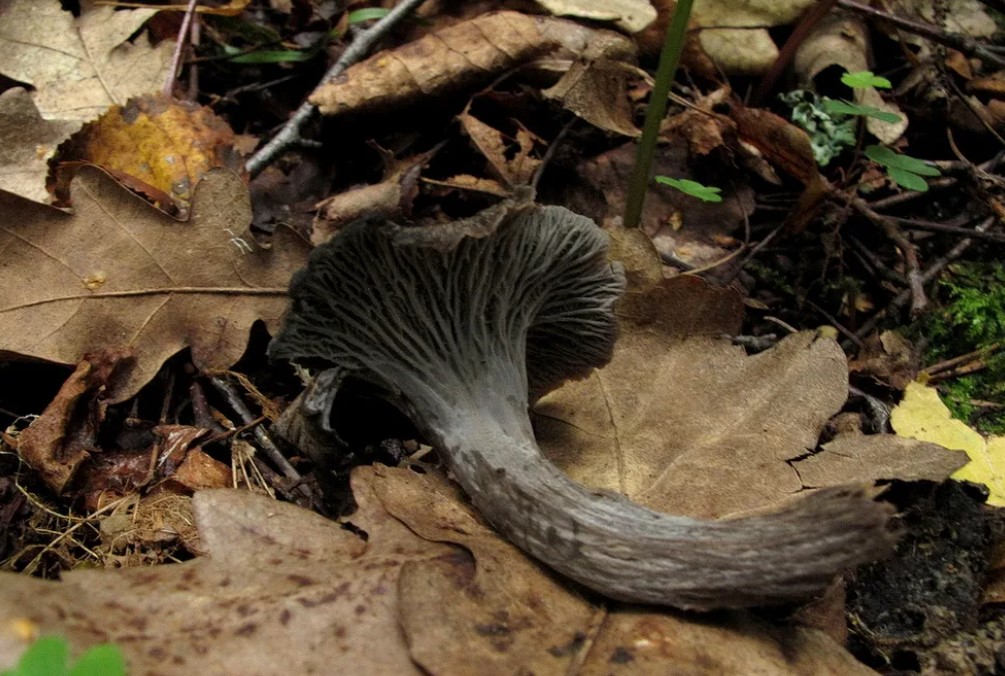
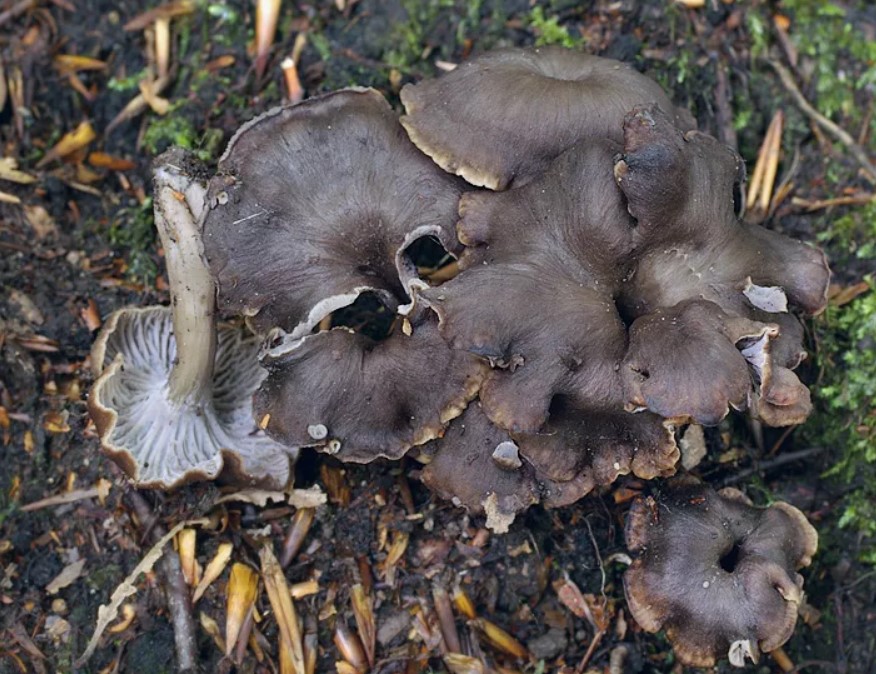
Gray chanterelle (Cantharellus cinereus)
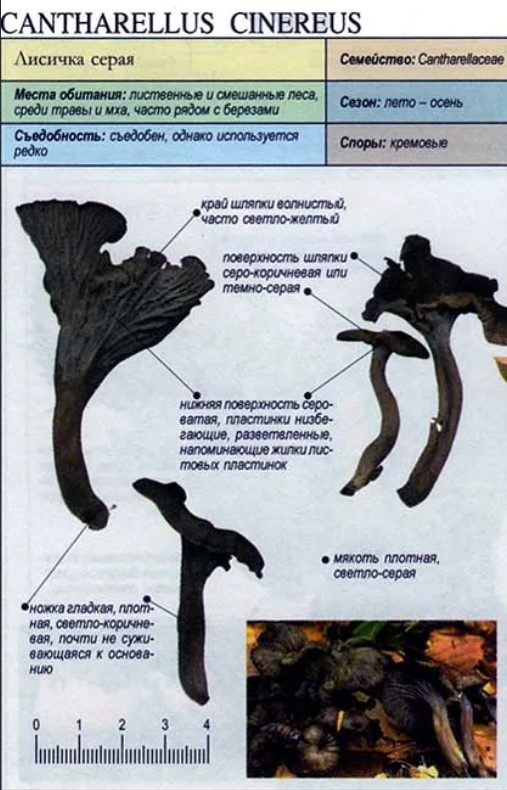
| View | Description | Edibility | Collection deadlines | Where to look |
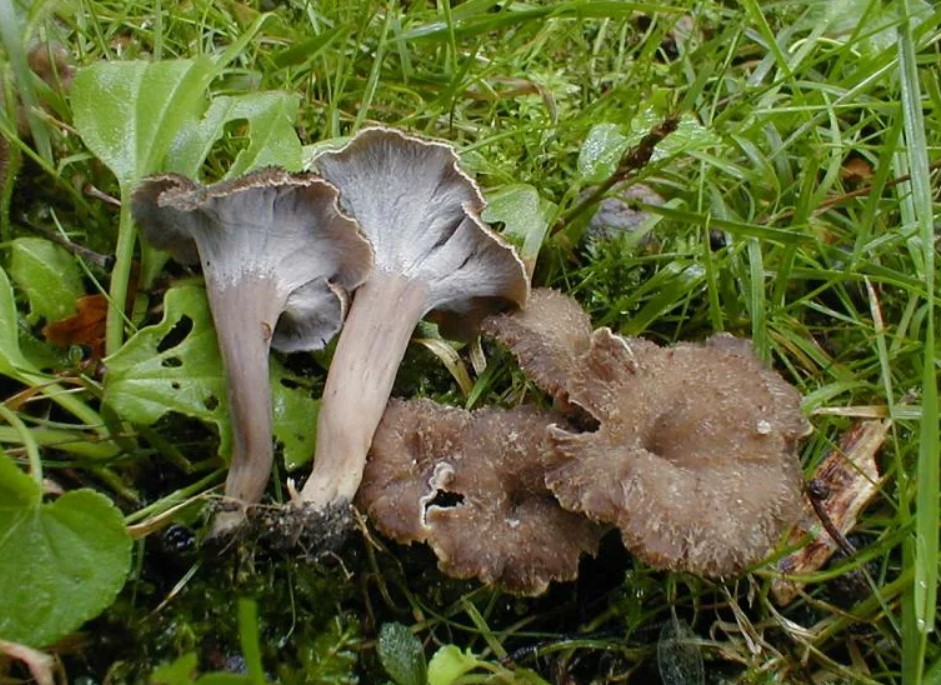
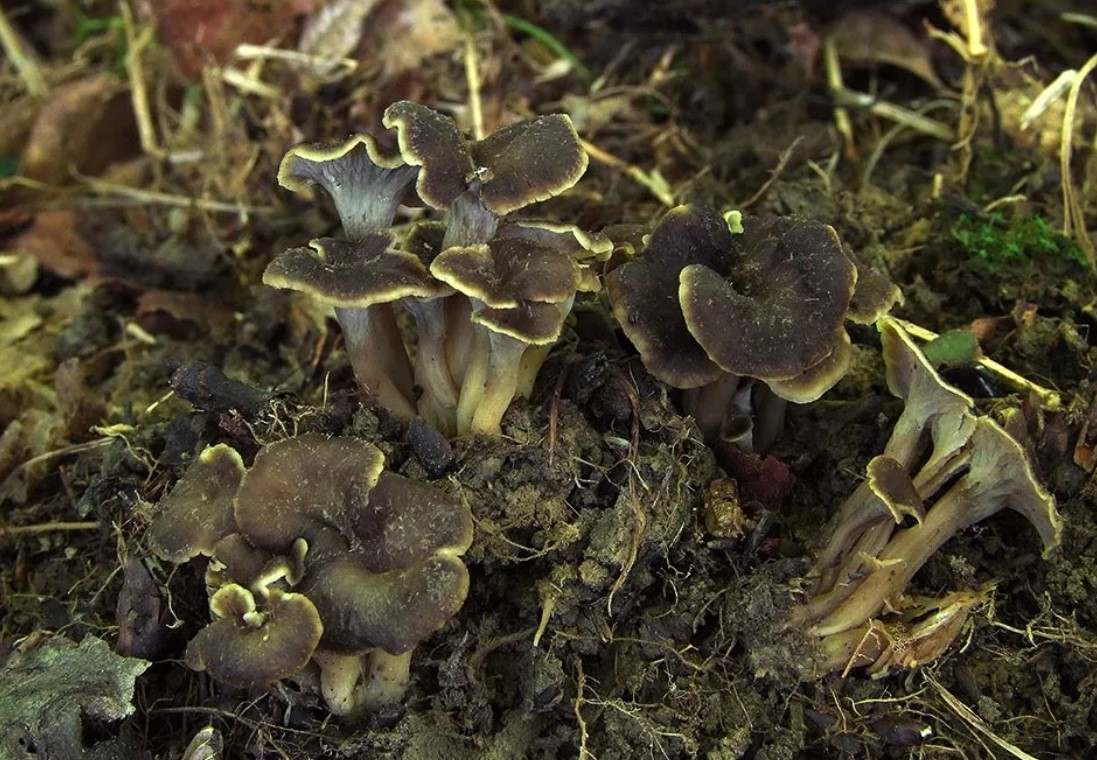
| Gray chanterelle (Cantharellus cinereus) | The cap is funnel-shaped, with upward-curved, wavy edges. The cap diameter is up to 6 cm and the color is grayish-brown. The stem is up to 5 cm tall, blending directly into the cap and tapering toward the bottom. The flesh is black. | Edible. | July-October | Mixed and deciduous forests. Prefers hazel and oak trees. |
Photo gallery of the gray chanterelle
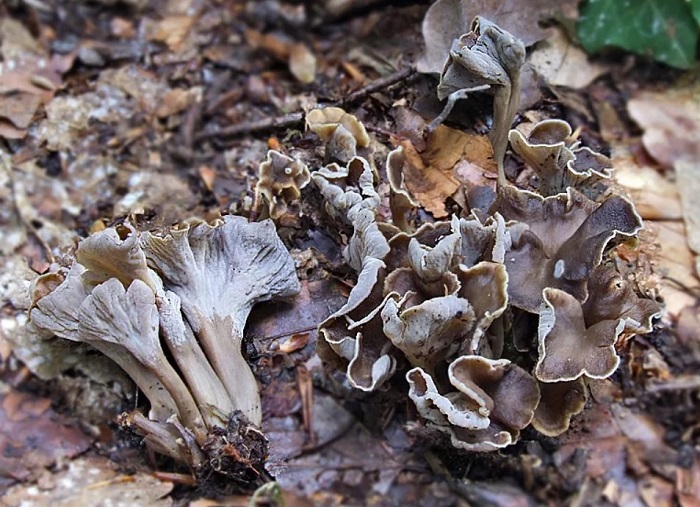
Gray-yellow chanterelle (Cantharellus melanoxeros)
| View | Description | Edibility | Collection deadlines | Where to look |
| Gray-yellow chanterelle | This rare mushroom is beige-yellow in color. The cap of an adult chanterelle is funnel-shaped, with strongly wavy edges. | Edible. | July-October. | Central and Western Europe, prefers to settle near beeches in broad-leaved forests. |
Photo gallery of gray-yellow chanterelles
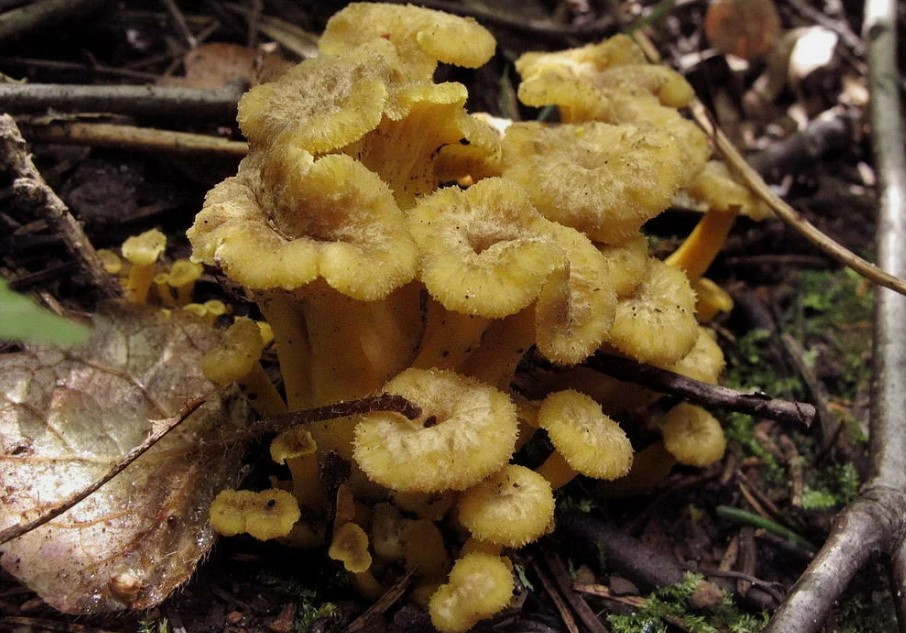
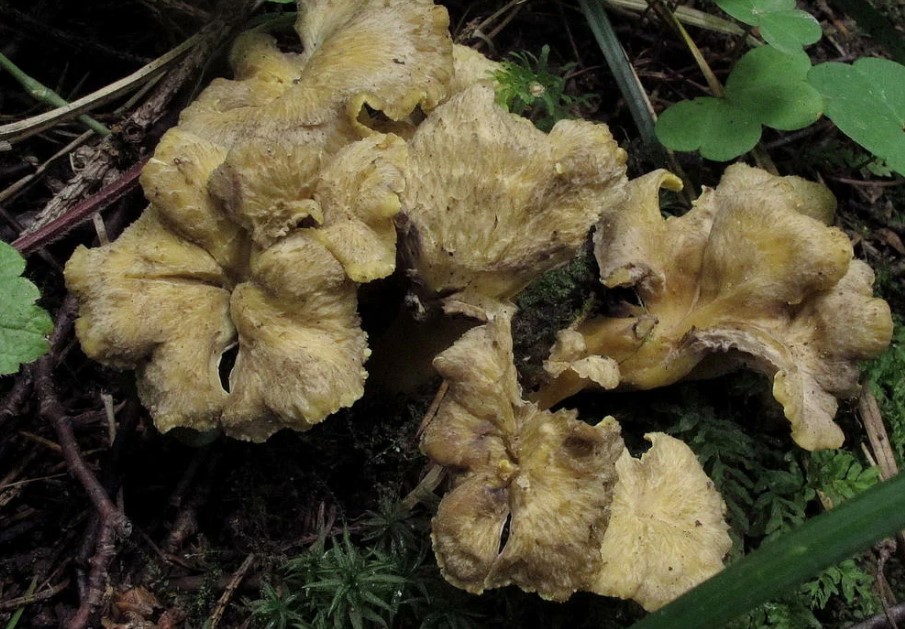
Appalachian chanterelles (Cantharellus appalachiensis)
| View | Description | Edibility | Collection deadlines | Where to look |
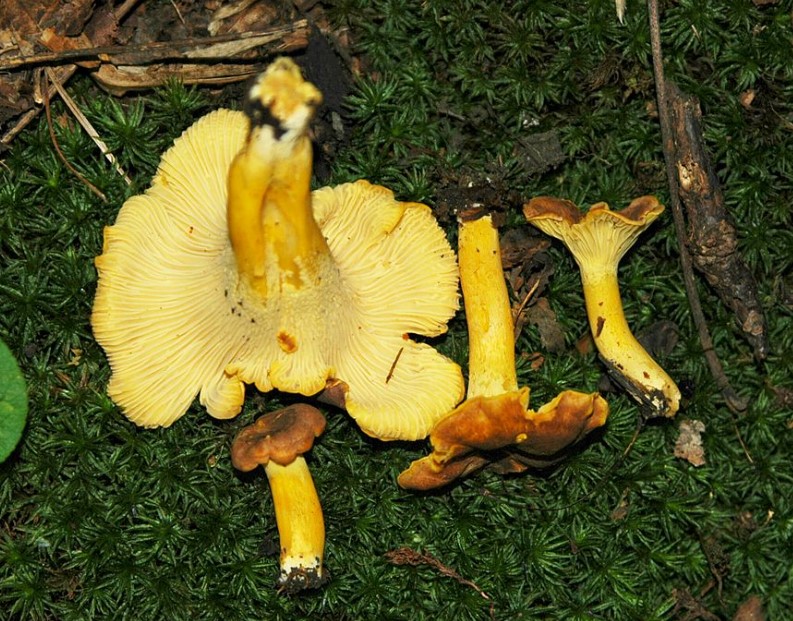
| Cantharellus appalachiensis | The cap is up to 5 cm in diameter, with a convex to depressed shape. The color is yellow-orange or brownish-orange. The stem is up to 7.5 cm tall and yellow. | Edible. | July-September. | Eastern North America, prefers mixed and broadleaf forests. Named for the Appalachian Mountain range where it is found. |
Appalachian Chanterelle Photo Gallery
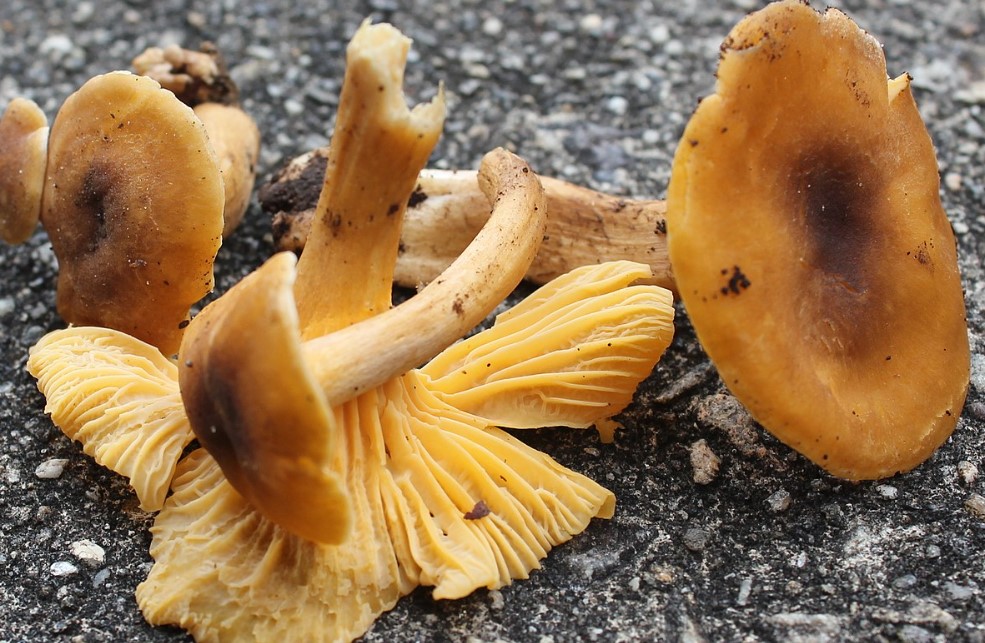
2 mushrooms from the genus Craterellus
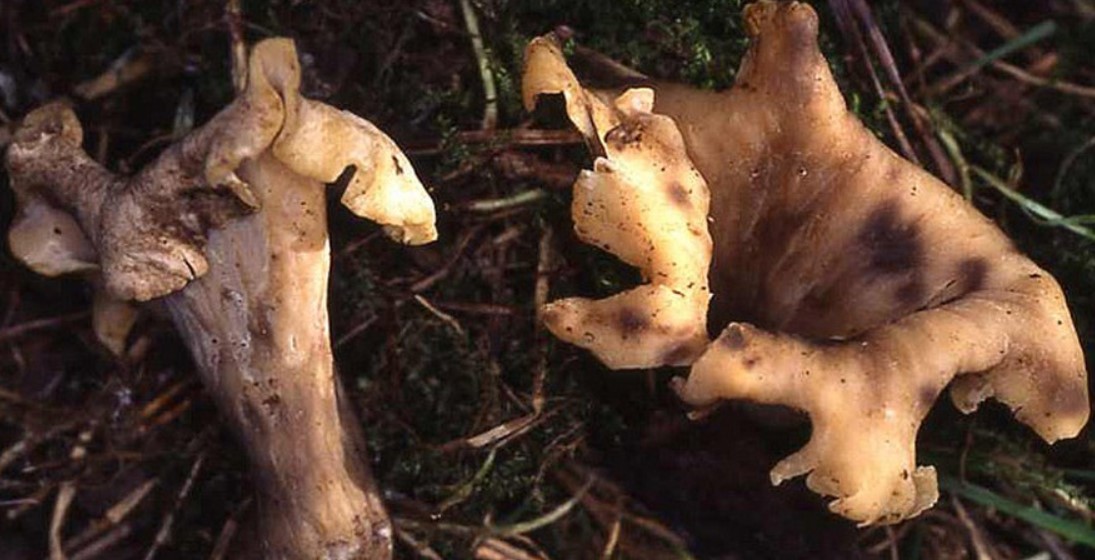
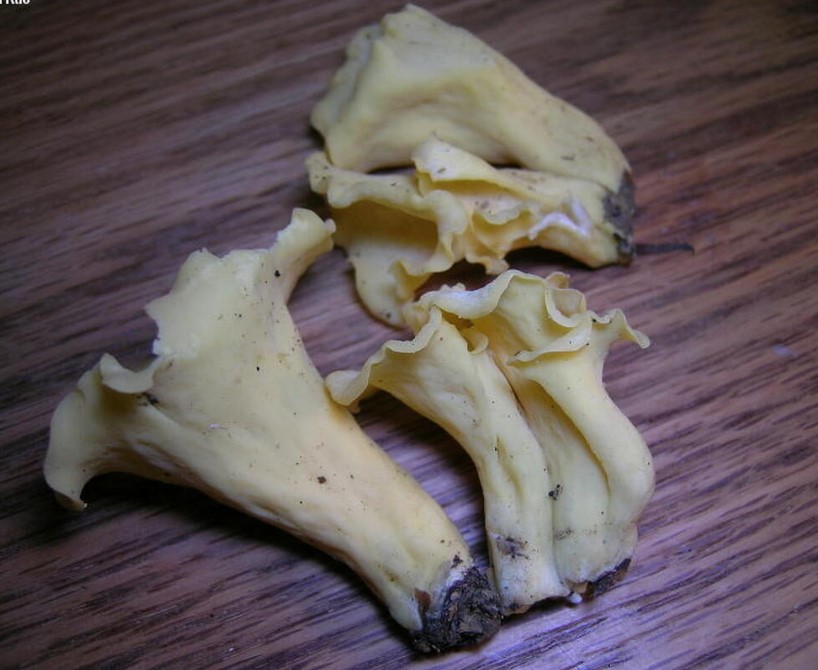
Now let's look at two species that belong to the genus Craterellus from the Chanterelle family (Cantharellaceae).
Black chanterelle, Craterellus cornucopioides
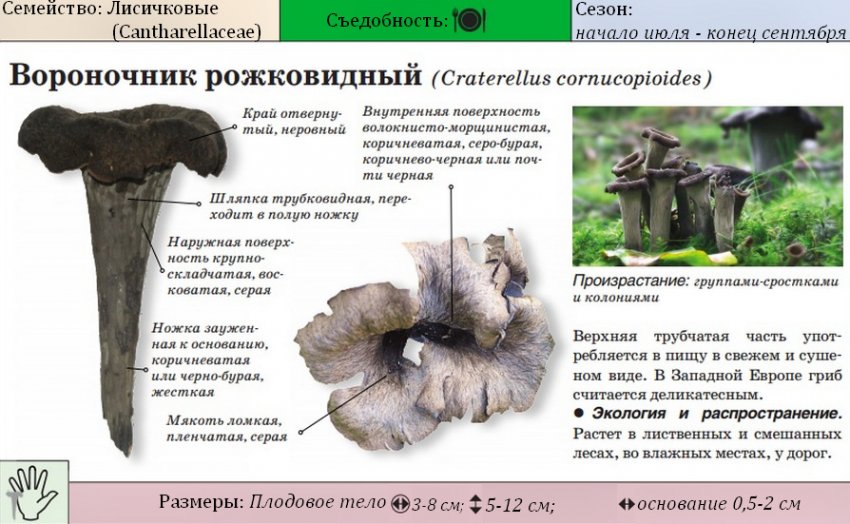
| View | Description | Edibility | Collection deadlines | Where to look |
| Black chanterelle, Craterellus cornucopioides | The cap is funnel-shaped and up to 5-8 cm in diameter. It is brownish-brown in color, appearing black in high humidity. The stem reaches 10 cm in length, narrowing at the base. | Conditionally edible. | July-September. | Deciduous and mixed forests. |
Photo gallery of black chanterelle
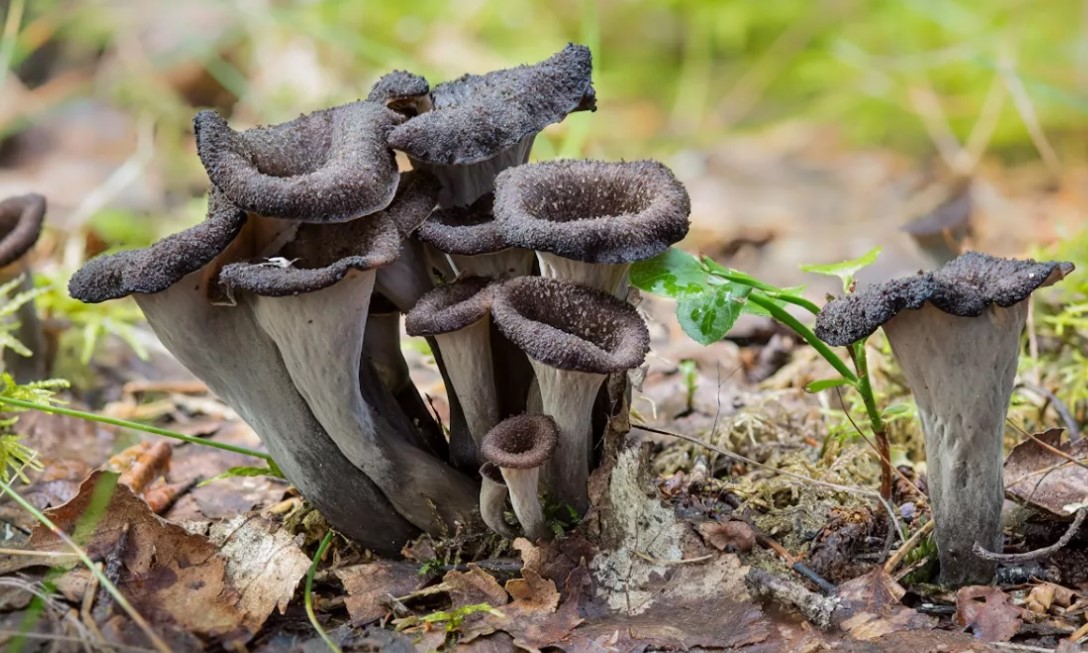
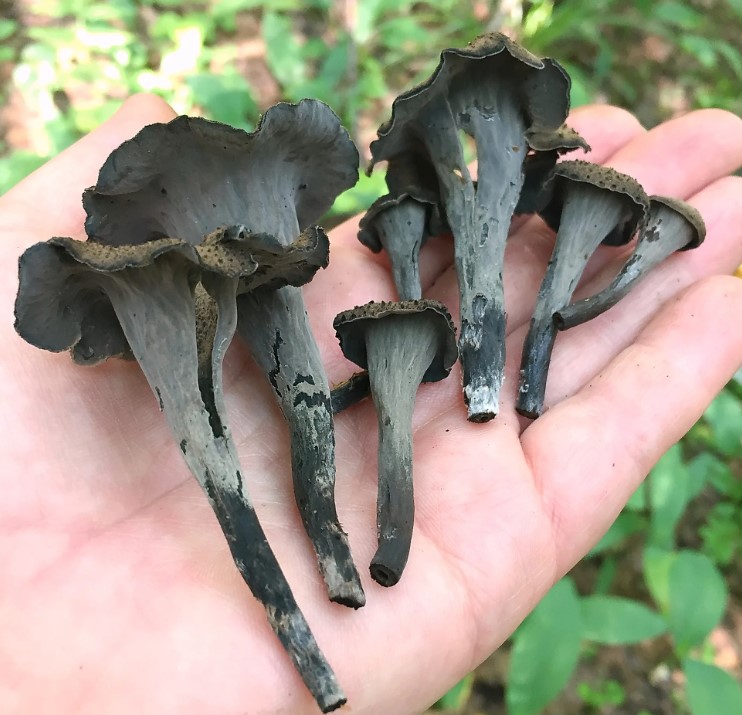
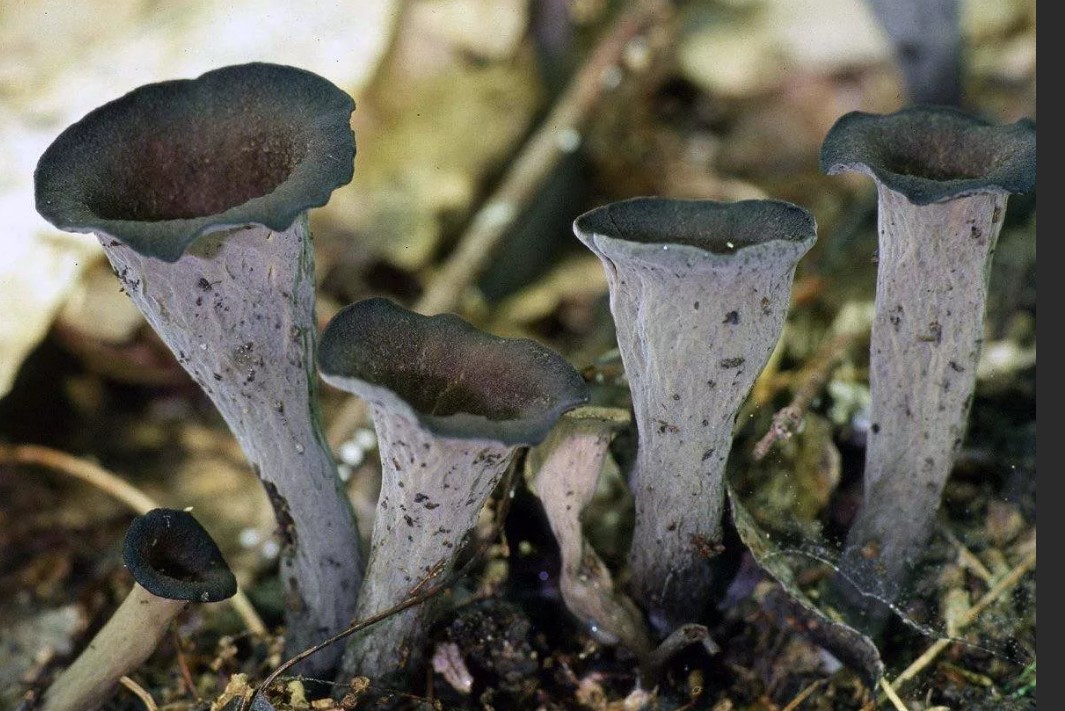
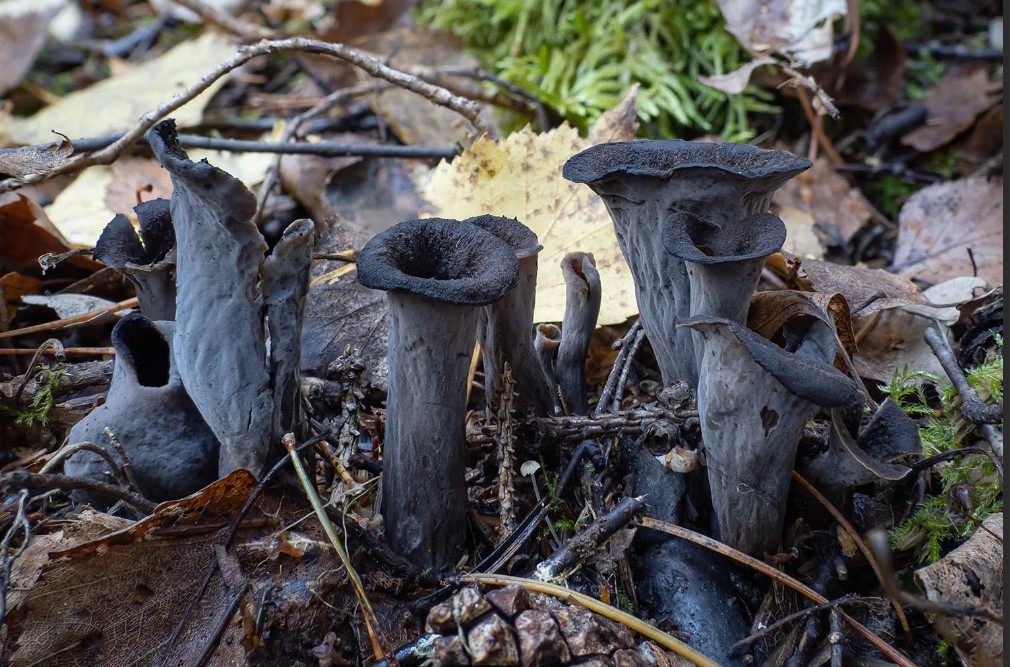
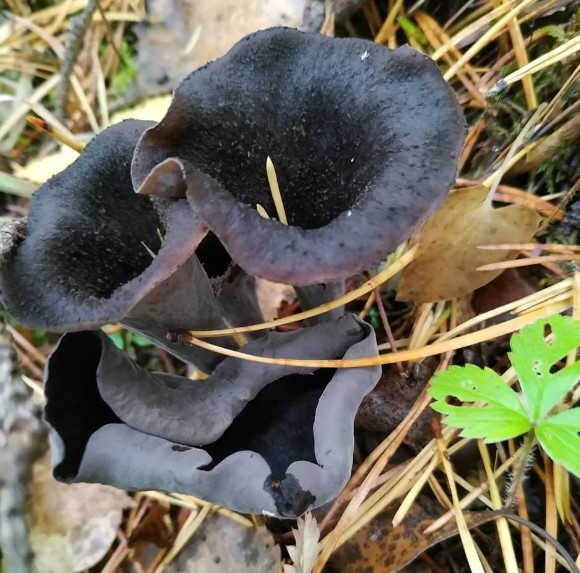
Read more about the funnel-shaped funnel in the articleBlack chanterelle mushrooms: photos and descriptions, where and when they grow, and how to cook them.
Conrad's Funnel-billed Beetle (Craterellus konradii Bourdot)
| View | Description | Edibility | Collection deadlines | Where to look |
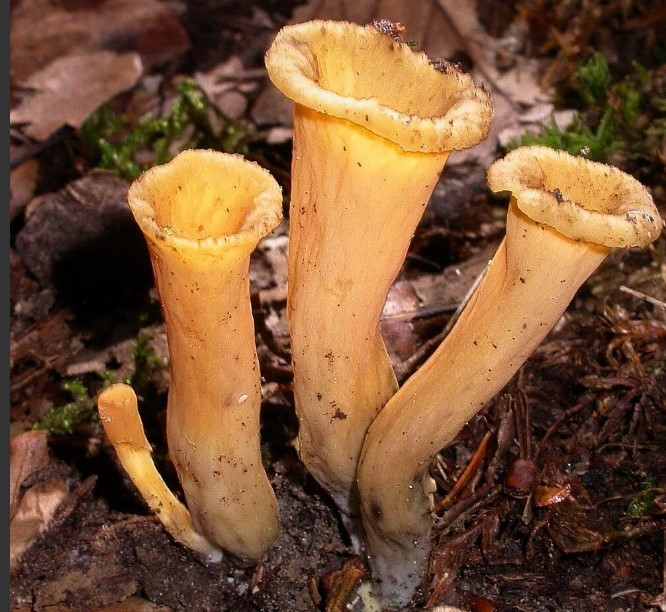
| Conrad's Funnel | An albino funnel-shaped mushroom, the horned funnel-shaped ... | Edible. | July-October. | Deciduous and mixed forests, in which spruce, oak, beech, and hazel trees are found. |
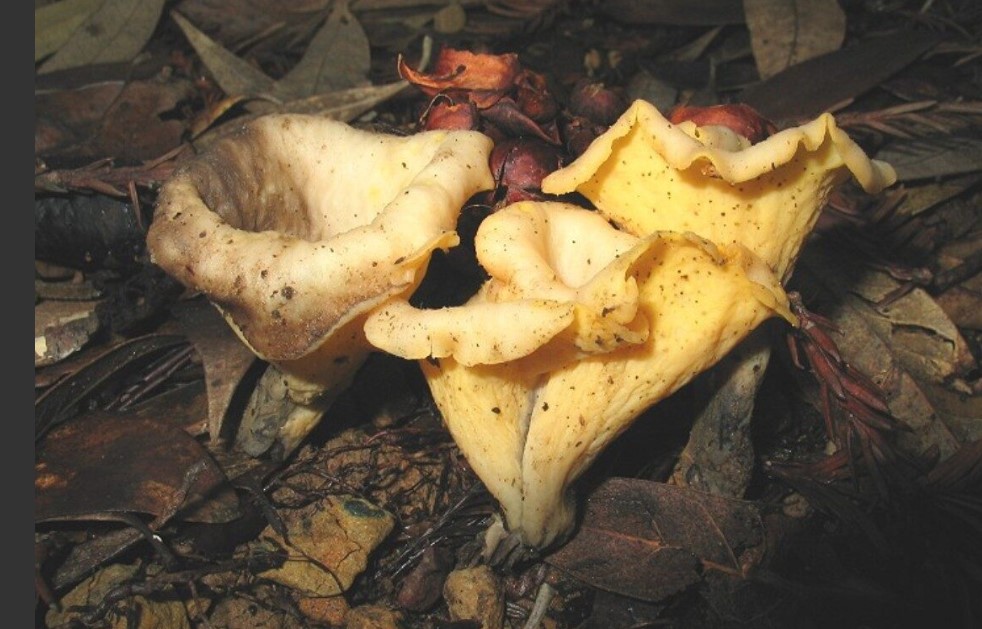
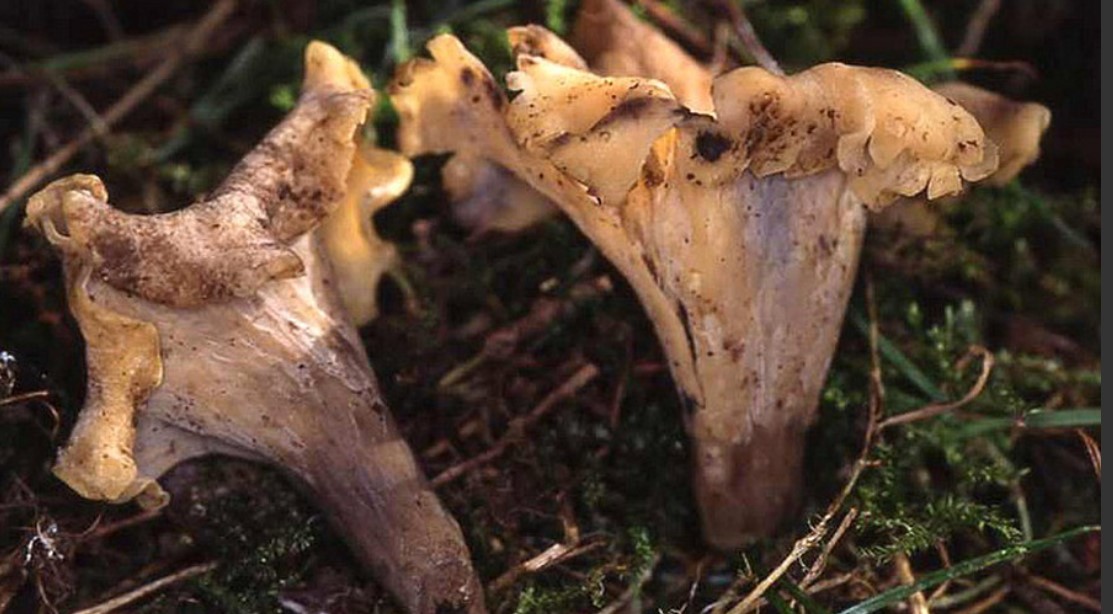
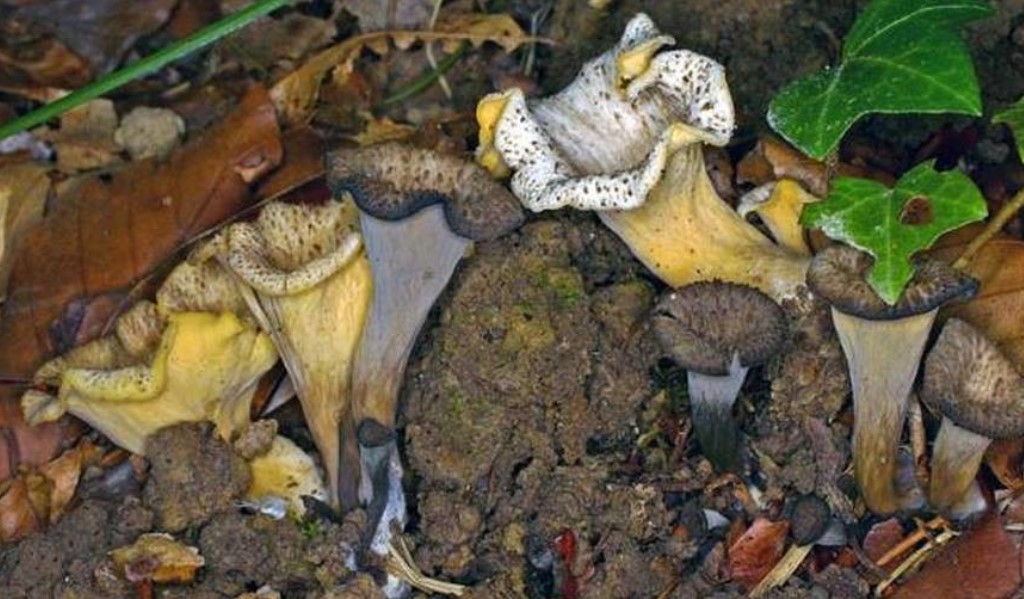
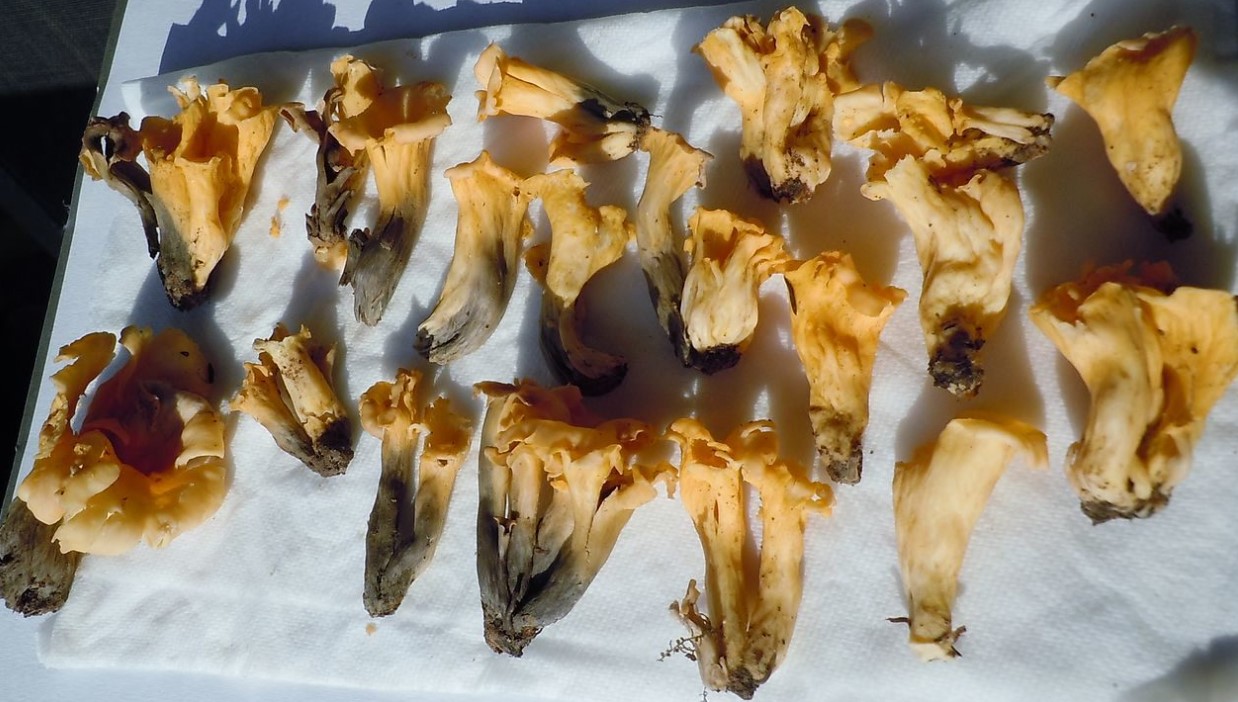
Photo gallery of Conrad's funnel-headed owl
A mushroom of the genus Pseudocraterellus
There is also a mushroom that belongs to the Chanterelle family (Cantharellaceae), but to another genus - Pseudocraterellus.
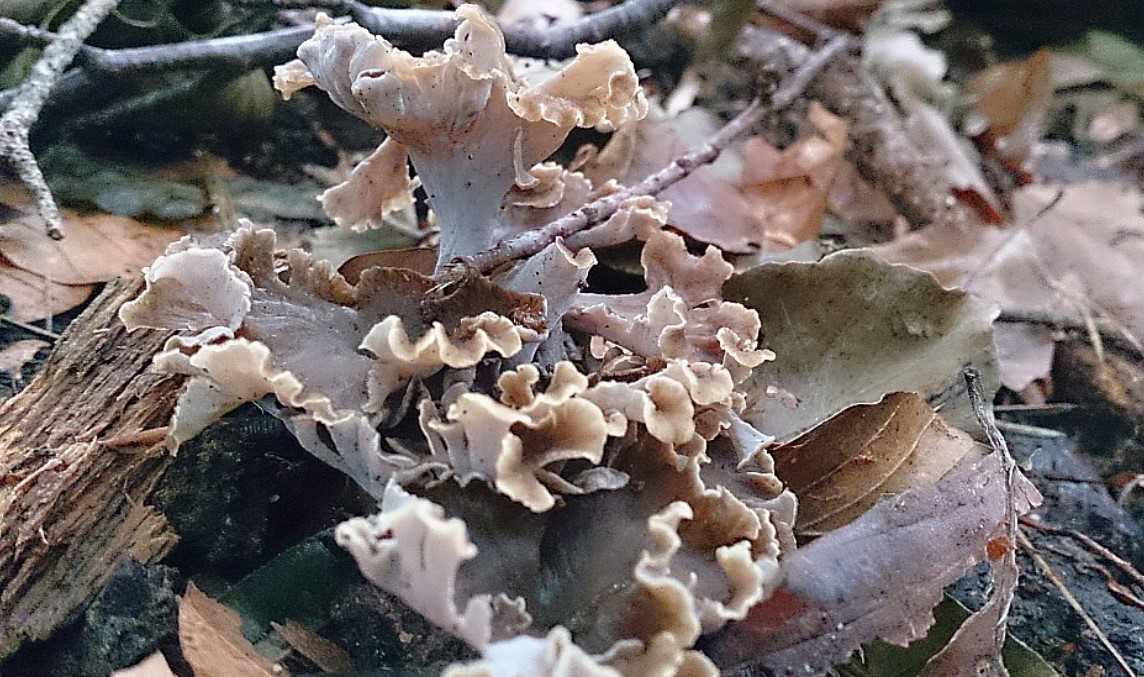
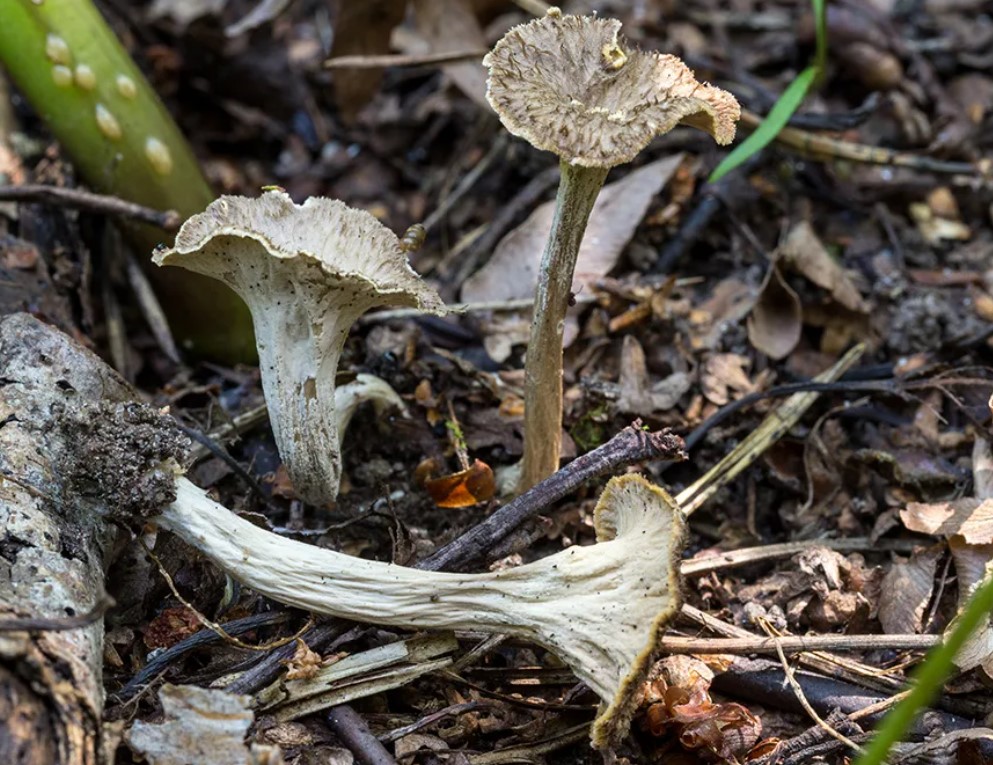
Undulated Chanterelle, Pseudocraterellus undulatus
| View | Description | Edibility | Collection deadlines | Where to look |
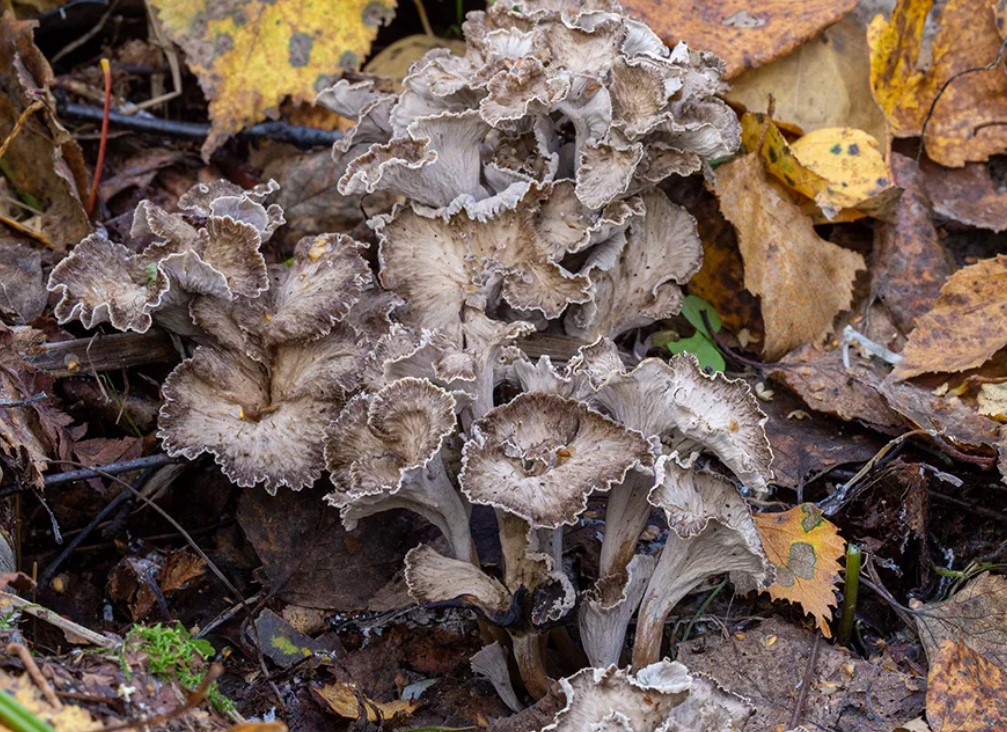
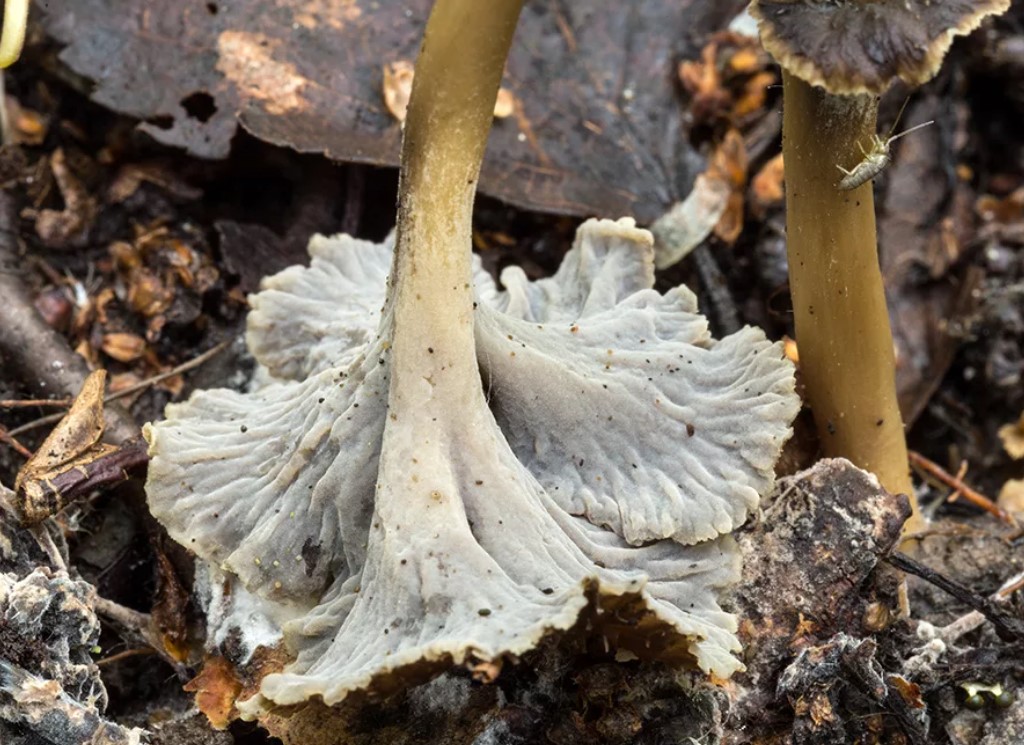
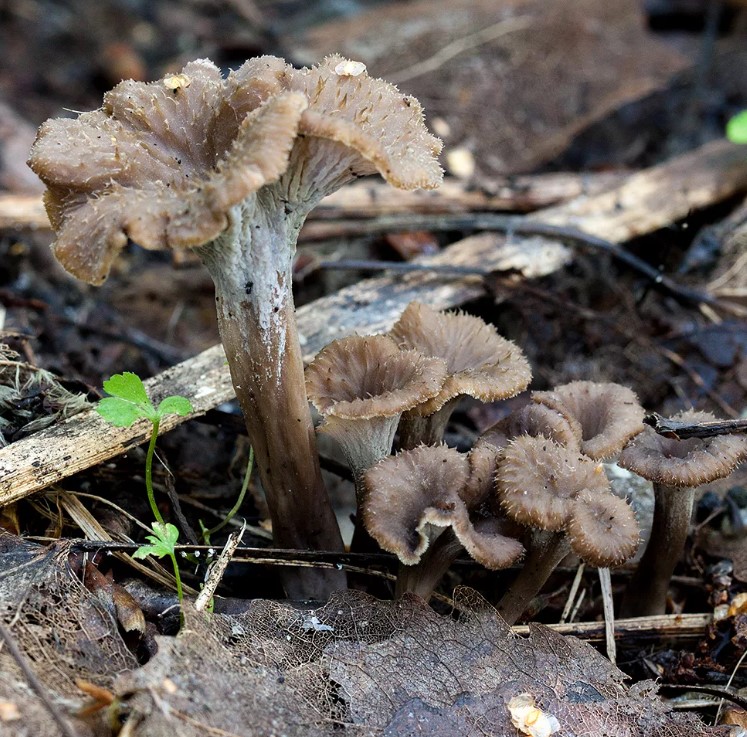
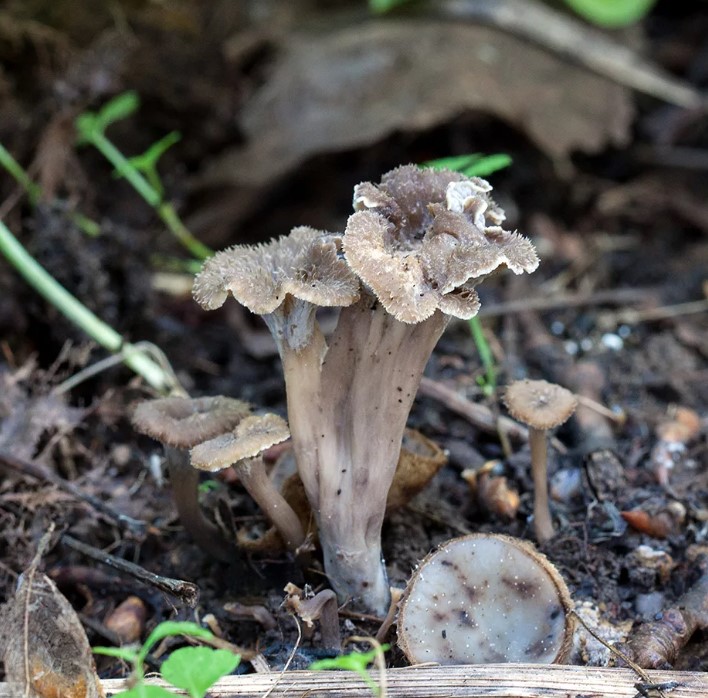
| Undulated Chanterelle, Pseudocraterellus undulatus | The cap is 5 cm in diameter, flat or funnel-shaped, with wavy edges. It is brownish-brown in color and has a scaly surface, sometimes bearing new fruiting bodies. The stem is up to 6 cm long and tapers at the base. | Inedible. | July-October. | Mixed and deciduous forests with high humidity. |
Photo gallery of the wavy chanterelle
2 mushrooms similar to chanterelles from other families
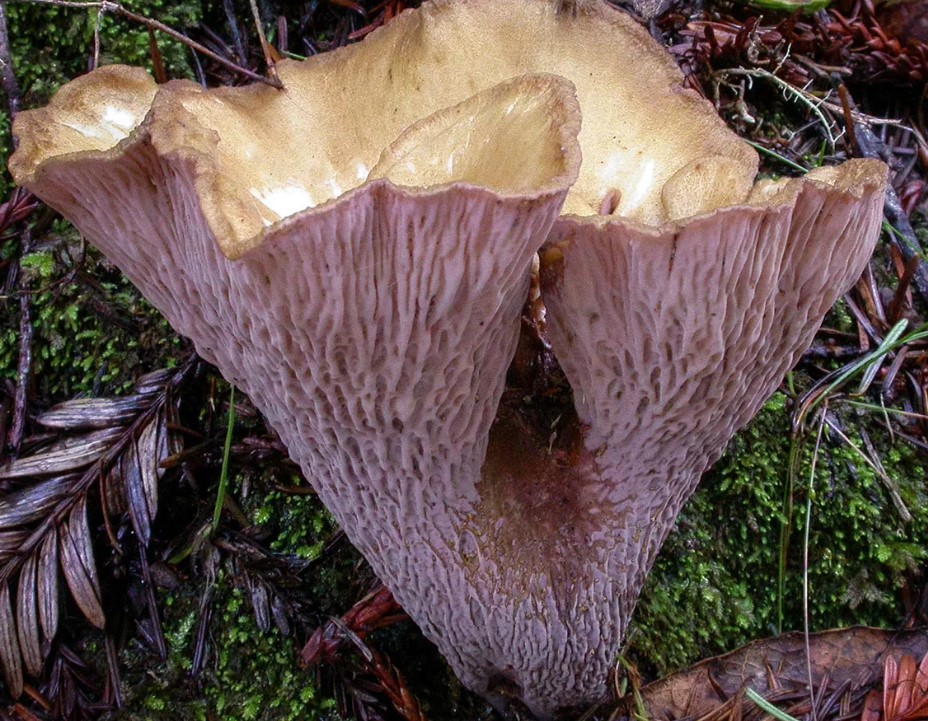
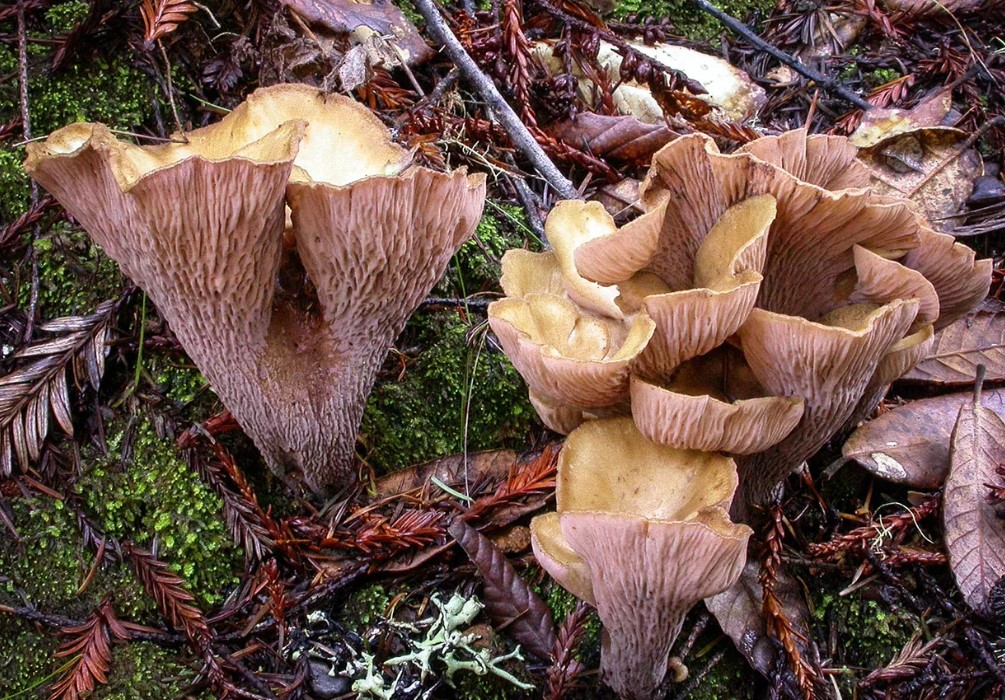
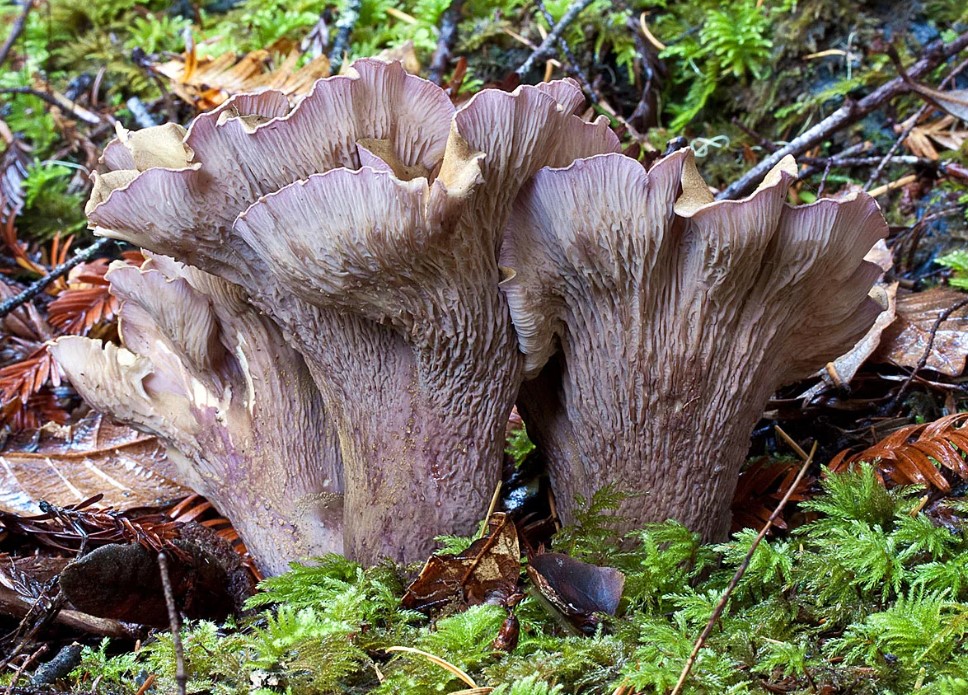
Gomphus clavatus
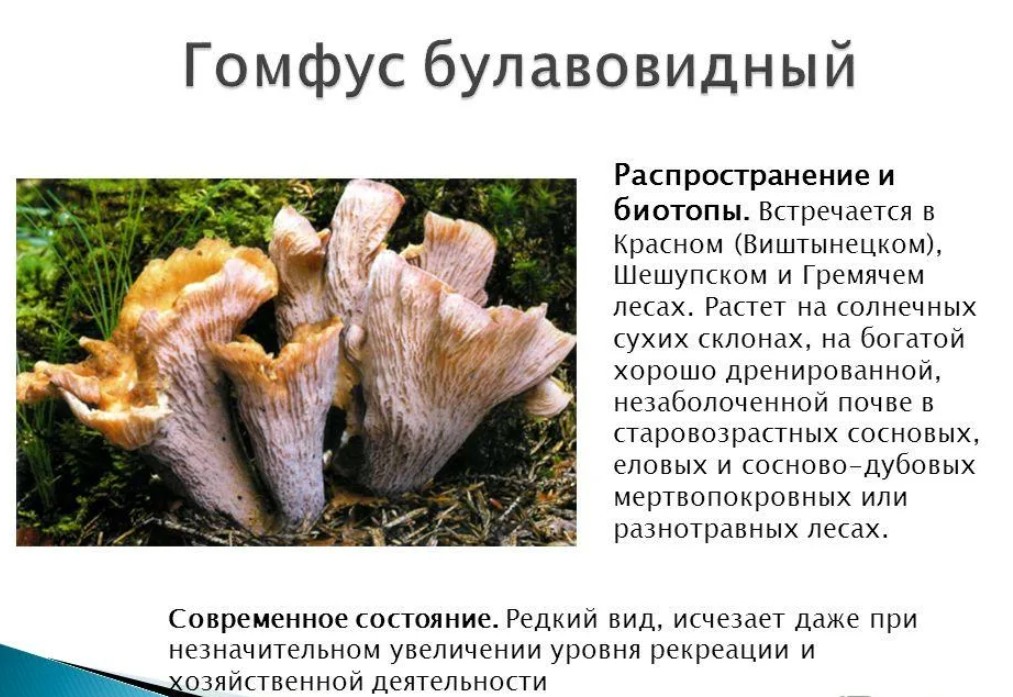
| View | Description | Edibility | Collection deadlines | Where to look |
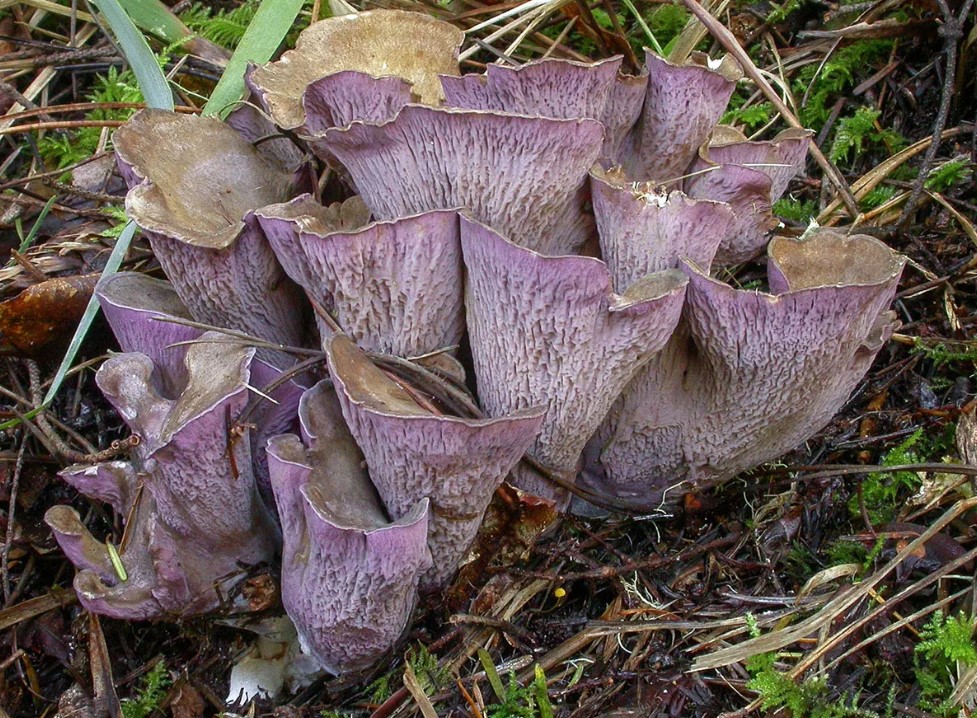
| Gomphus clavatus | A large species of chanterelle, up to 14 cm tall. The cap is initially purple, but sometimes turns yellowish with age. The edges are wavy. The stem is brownish and club-shaped. | Edible. | June – October. | Deciduous or mixed forests, grows in grass or moss. |
Photo gallery of the club-shaped chanterelle
Humpbacked chanterelle, Cantarellula umbonata
| View | Description | Edibility | Collection deadlines | Where to look |
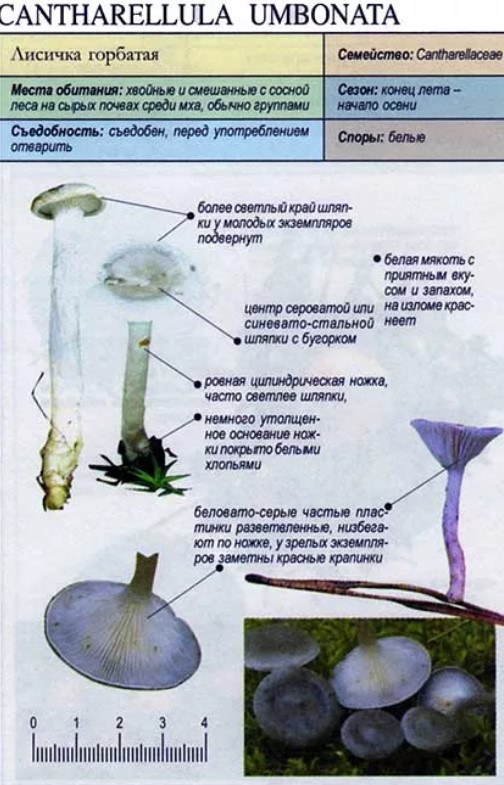
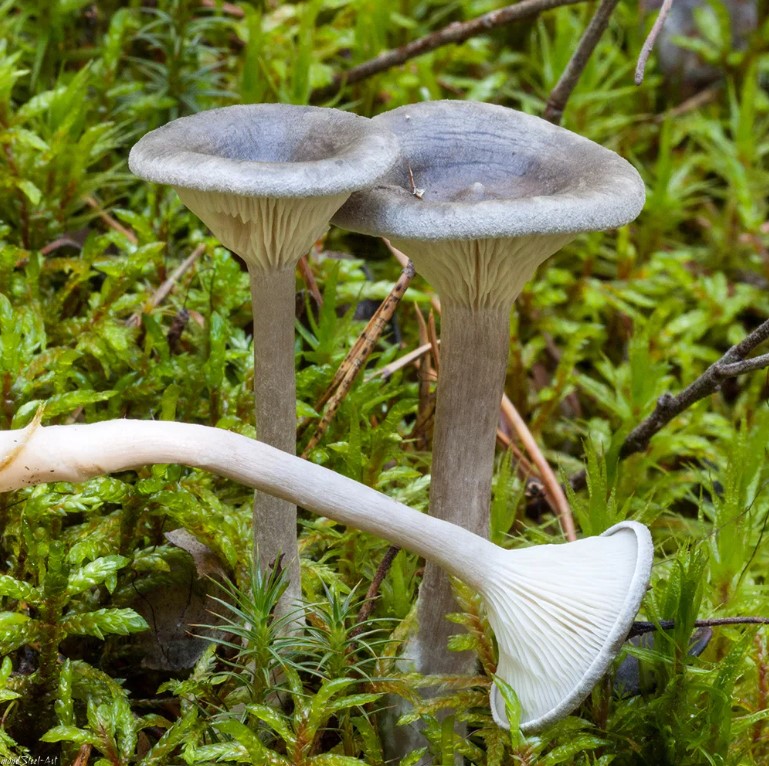
| Humpbacked chanterelle, Cantarellula umbonata | The cap reaches 5 cm in diameter and, when young, resembles the letter T. The edges are wavy, the color is grayish, and there are spots on the surface. The edges are lighter than the center. After breaking, the flesh takes on a red tint. The stem is up to 6 cm tall and has a pubescent base. | Conditionally edible. | Mid-August – first frosts. | Coniferous and mixed forests. |
Photo gallery of the humpbacked fox
2 false inedible chanterelles
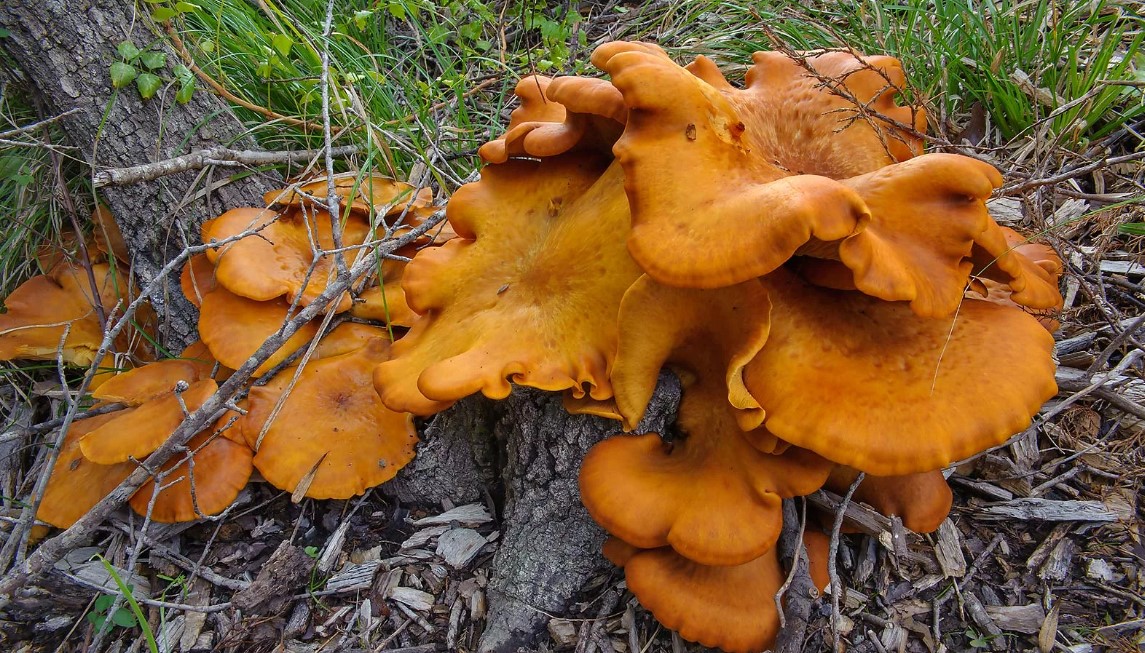
Chanterelles have a false lookalike, which is now considered conditionally edible, but requires lengthy processing and can cause gastrointestinal upset and hallucinogenic effects. It's best to be able to distinguish it from the real edible mushroom.
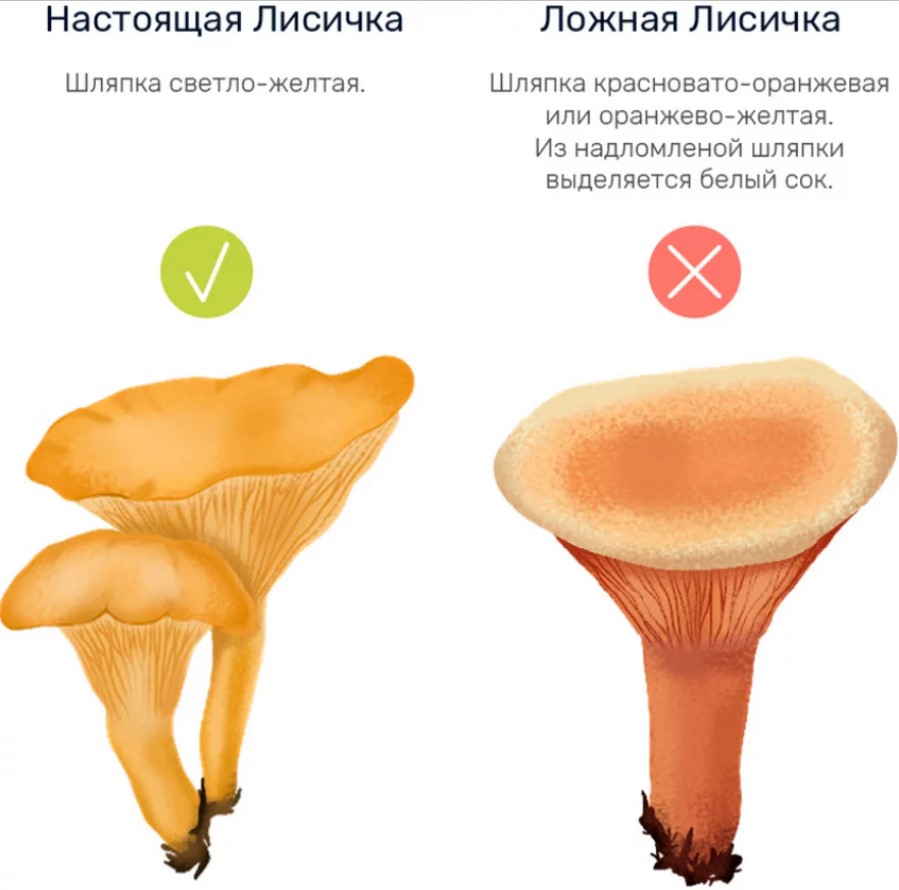
False chanterelle, orange talker (Hygrophoropsis aurantiaca)
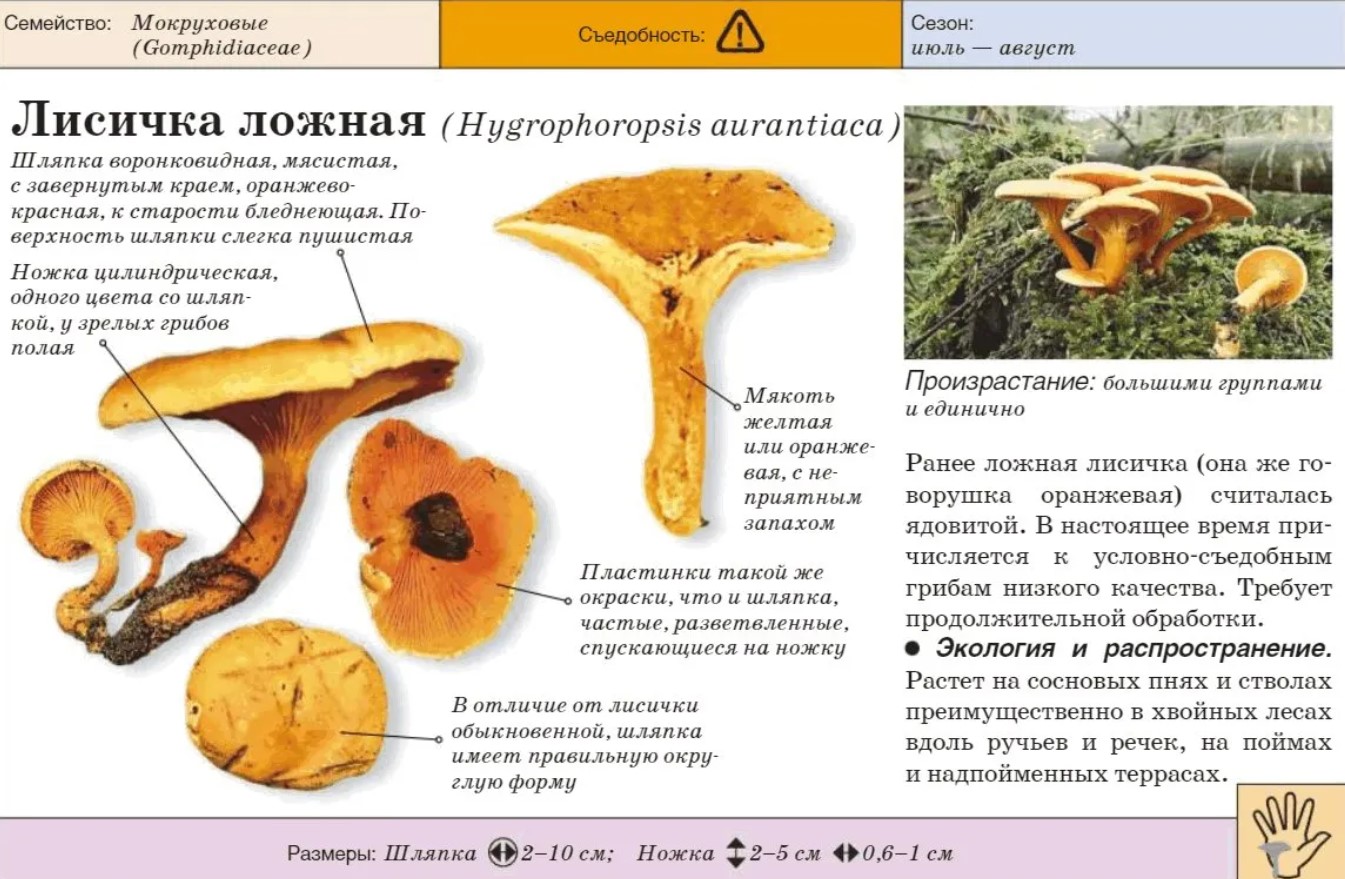
| View | Description | Edibility | Collection deadlines | Where to look |
| False chanterelle, orange talker (Hygrophoropsis aurantiaca) | The cap diameter varies from 2 to 5 cm; in mature mushrooms, the cap is wavy and funnel-shaped. The color is yellow-orange, slightly darker in the center. Concentric zones may be visible on the surface, but these disappear with age. It has an unpleasant odor. | Conditionally edible. | August-October. | Coniferous and mixed forests, loves rotting wood, anthills, moss. |
Photo gallery of the false chanterelle
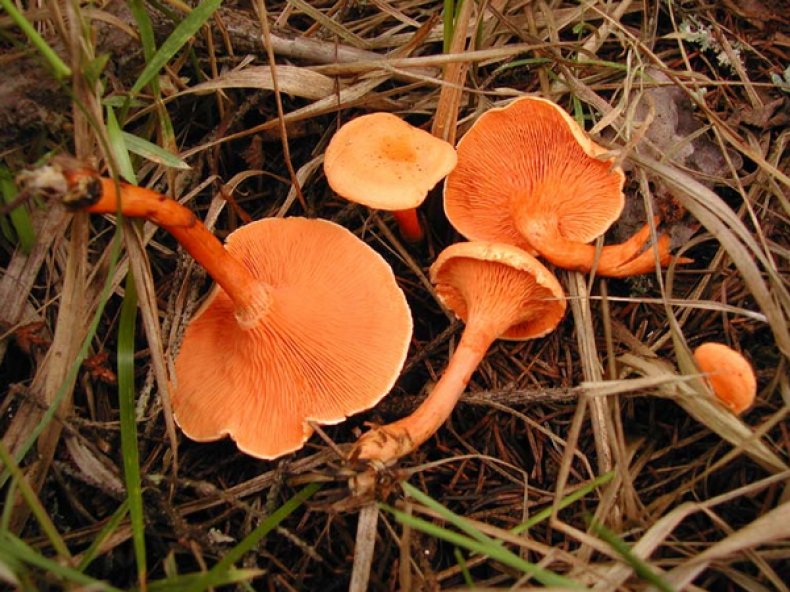
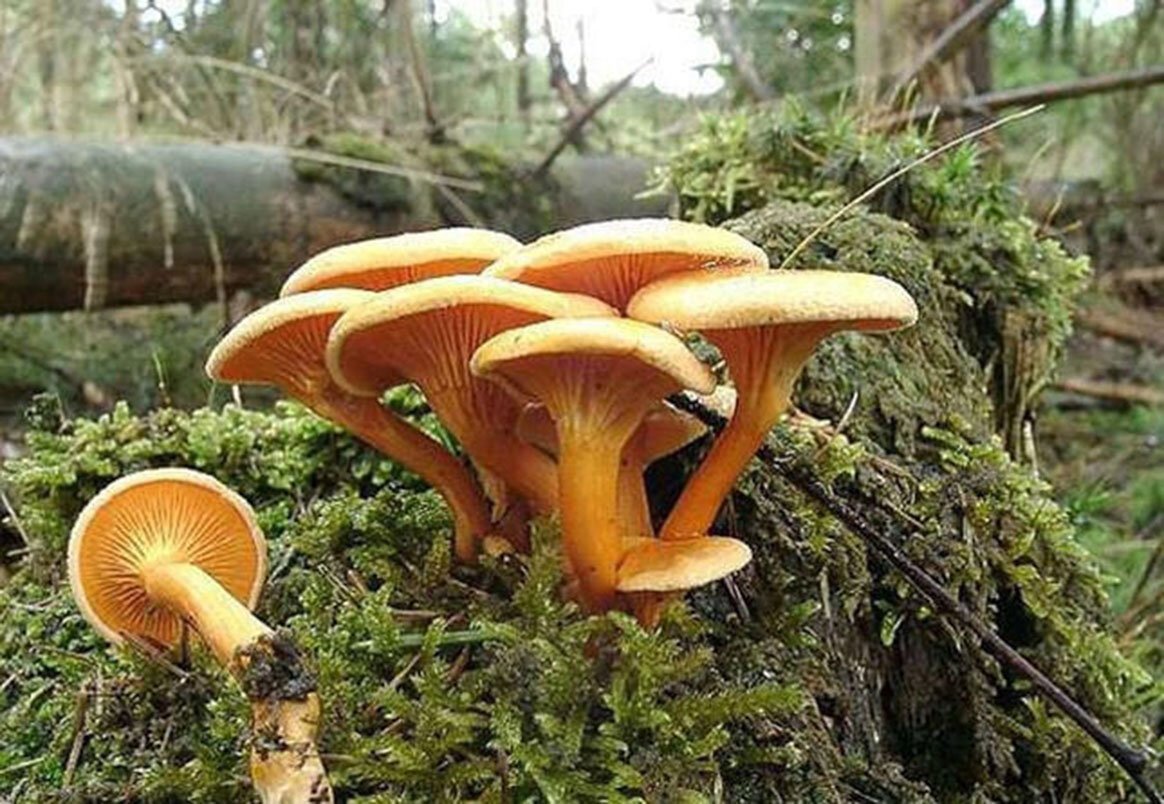
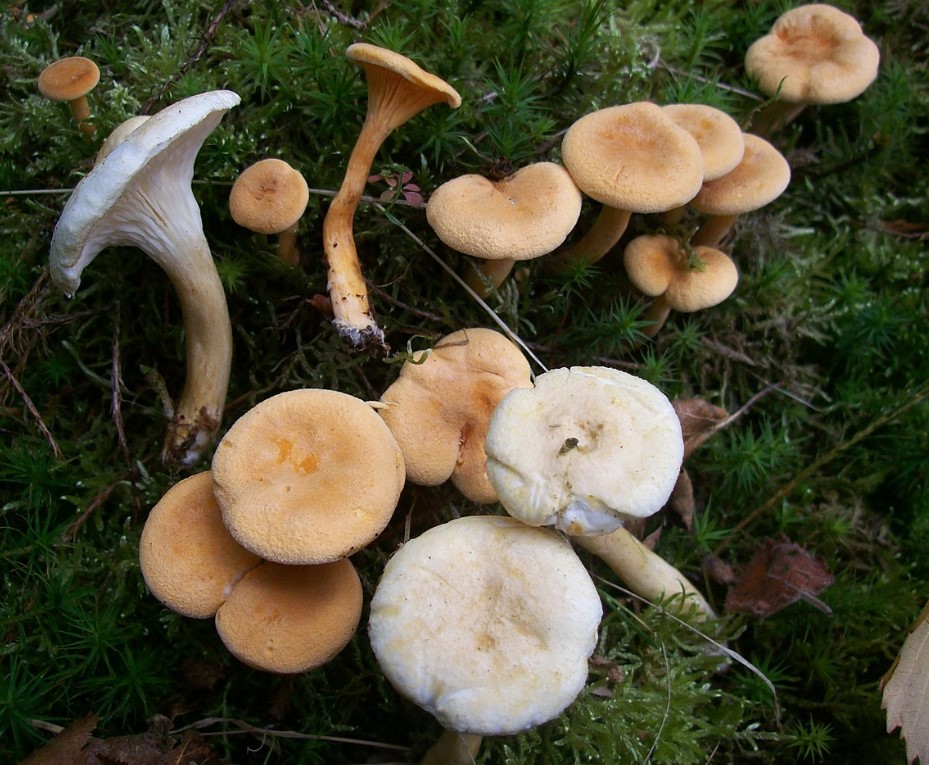
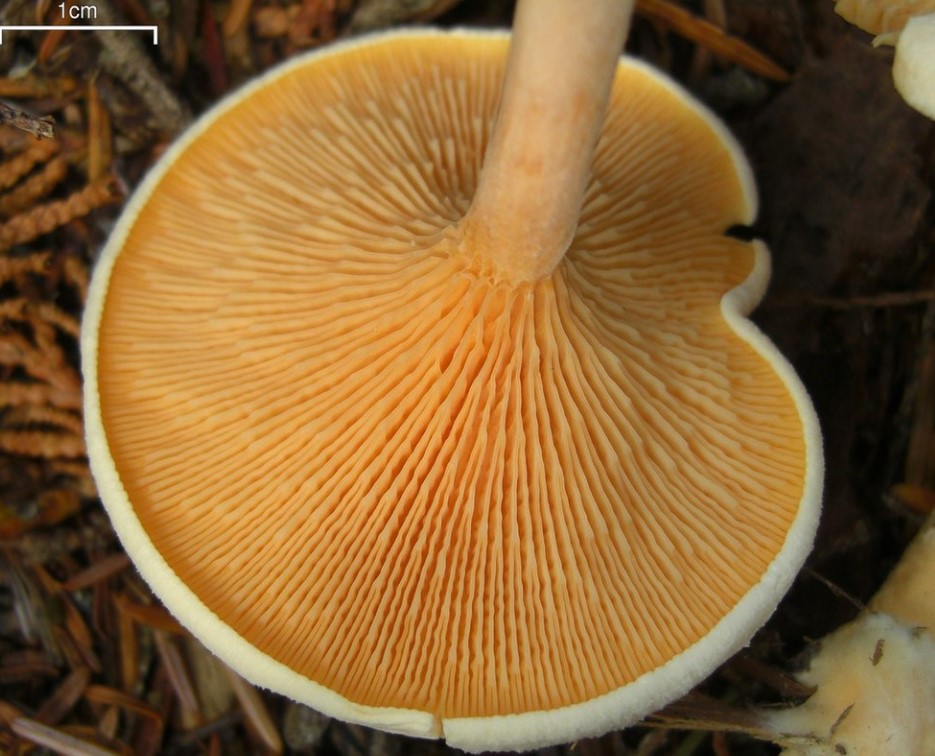
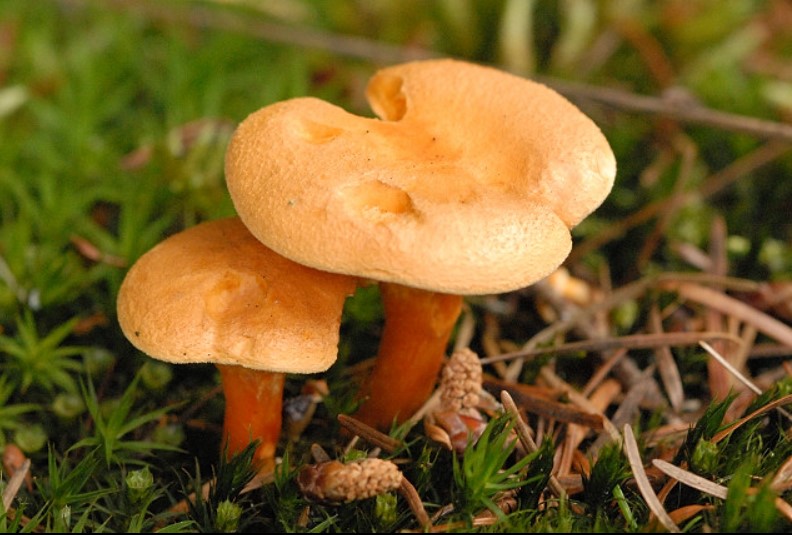
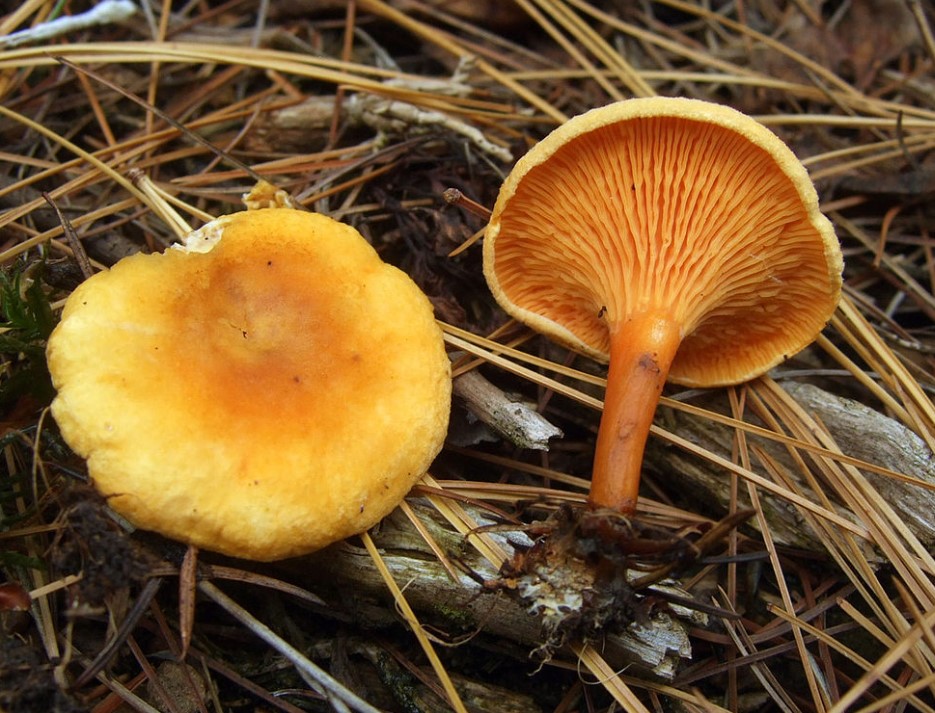
Read more about the false chanterelle and how to distinguish it from the real one in the articleFalse chanterelle, differences from the real one in the table, photo + mushrooms similar to chanterelles.
Olive omphalotus (Omphalotus olearius)
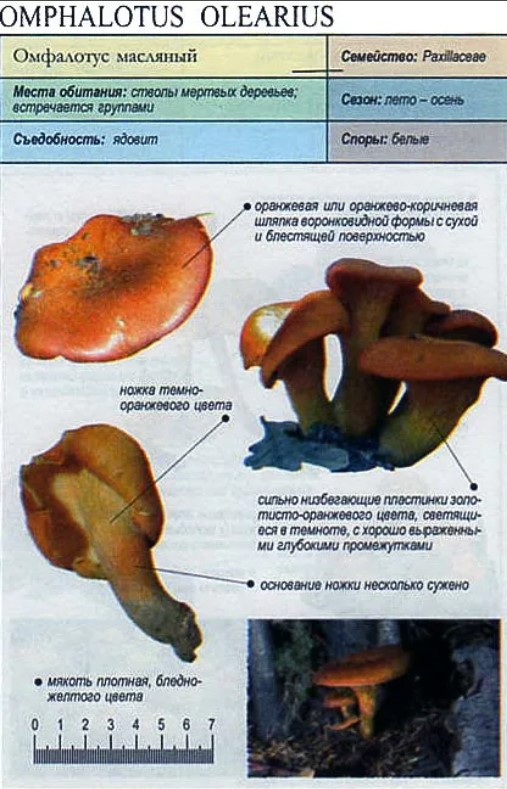
| View | Description | Edibility | Collection deadlines | Where to look |
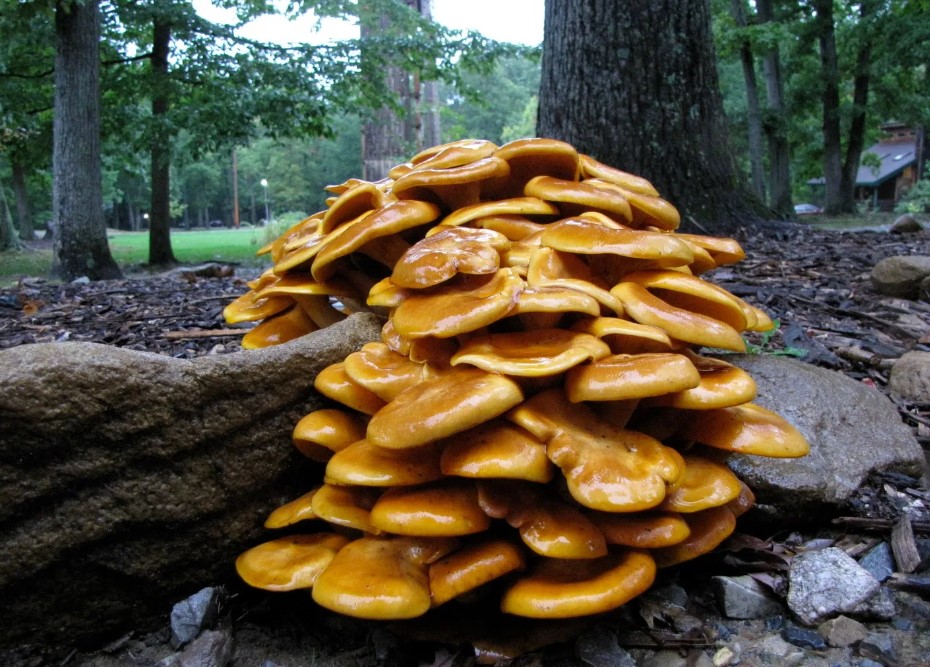
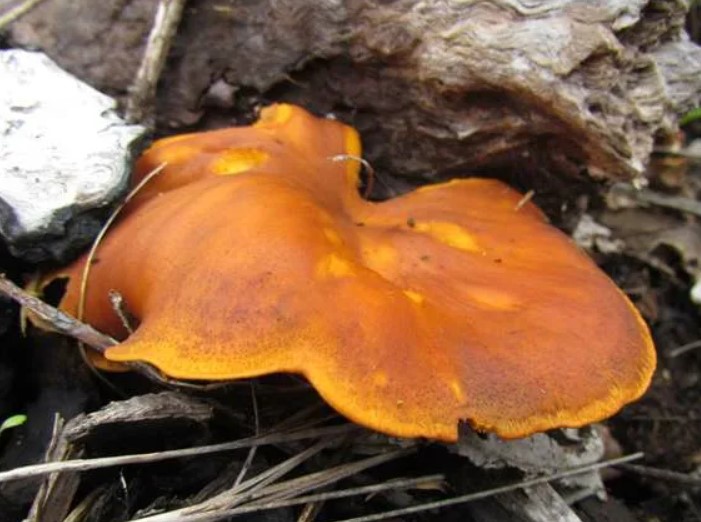
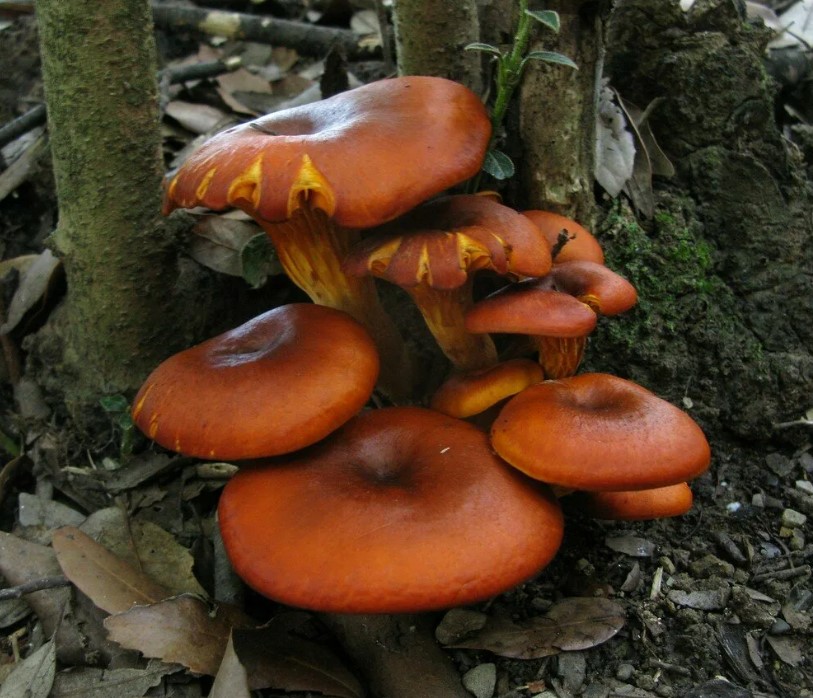
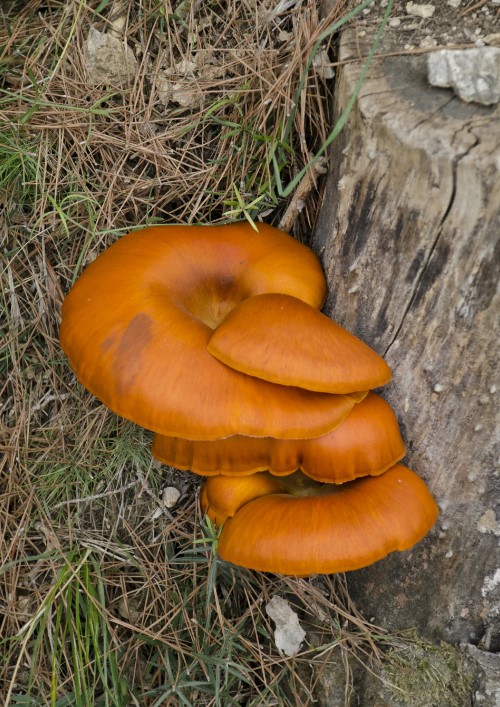
| Olive omphalot (Omphalotus olearius) | The cap is large, up to 12 cm in diameter, fleshy, and spreading. It is orange-red-brown in color. Yellowish gills extend down the stem, which glow phosphorescently in the dark. The flesh has a yellow tint and an unpleasant odor. | Poisonous. | September-October. | Rotten trunks and stumps of deciduous trees. Common in Crimean forests. |
Photo gallery of the Omphalotus oleifera
Where and when do chanterelles grow?
Chanterelles can be found in almost any forest where they have sufficient warmth and moisture. During rain, they venture into open clearings and forest edges.
Important! If you find a couple of chanterelles, don't rush away. They grow in families, and if you carefully inspect the area, you're sure to find more.
How quickly do chanterelles grow in the forest?
The first individual chanterelles can be spotted as early as early summer, but their peak growth occurs in mid-July. They are especially abundant in warm weather after rain.
In our country, chanterelles can be collected from the second half of July until October.
Read more about where different types of chanterelles grow in the article.Where chanterelles grow, which forests to look for in the Moscow region and other regions, and the harvest season.
At what temperature do chanterelles grow?
It is generally accepted that the optimal temperature for chanterelle growth is between 10 and 24 degrees.
How many days does it take for chanterelles to grow after rain?
Chanterelles are considered relatively slow growing. It takes about three weeks for the mushroom to mature.
- In cool weather (8-18 degrees) chanterelles will ripen in 2-3 weeks.
- In warm weather (19-24 degrees) the ripening period is reduced to 9 days.
- In hot weather (over 24 degrees) the growth of chanterelles stops.
Why chanterelles don't have worms
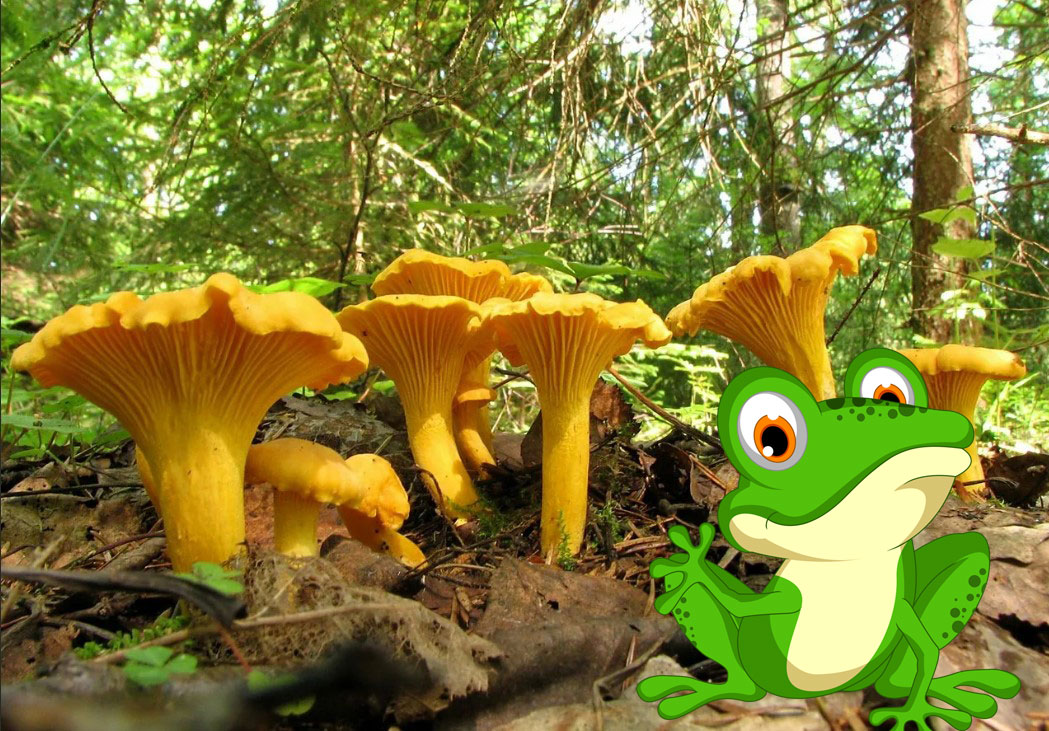
Experienced mushroom pickers know that chanterelles never contain worms. The reason is simple: they contain a natural monosaccharide called quinomannose. It has a paralyzing effect not only on insect pests but also on their larvae.
Very rarely, you can find wireworms or bugs in mushrooms with a dense chitinous coating that does not allow the poisonous substance to enter the body.
Calorie content of chanterelles
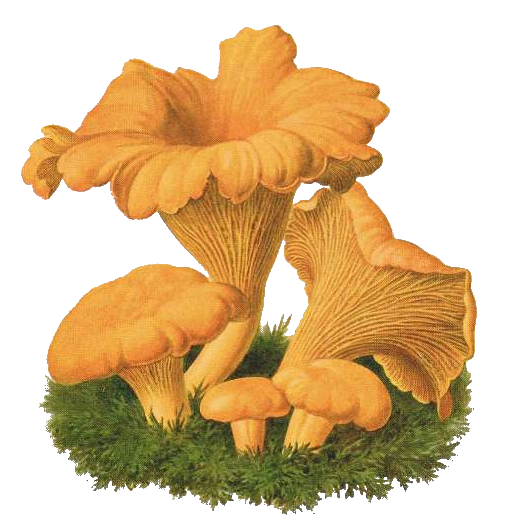
Chanterelles, like all other mushrooms, are considered low-calorie. 100 grams of fresh mushrooms contain only 20 kcal.
Nutritional value of chanterelles
Chanterelles are considered very healthy mushrooms. They contain many important elements:
- CopperNecessary for normal heart function and beneficial for connective tissues.
- Fiber. Helps with intestinal function by stimulating natural contractions of its walls.
- PotassiumParticipates in protein synthesis and supports the cardiovascular system.
- Zinc. Stimulates the immune system and helps regulate blood sugar levels.
- Thiamine (B1)Essential for the heart muscle and nervous system.
- Pyridoxine (B6)Strengthens the immune system, promotes proper absorption and distribution of fats, proteins, and carbohydrates, and stimulates lymph flow.
100 g of product contains:
- Carbohydrates – 6.9 g.
- Proteins – 1.5 g.
- Fats – 0.5 g.
- Water – 89.8 g.
- Fiber – 3.8 g.
Read the articleCan you eat raw chanterelles? The benefits and harms of mushrooms, how much you can eat, and for different purposes..
Use of chanterelles in cooking
Chanterelles have a unique aroma, which is further enhanced when these mushrooms are prepared correctly.
What is the best way to cook chanterelles?
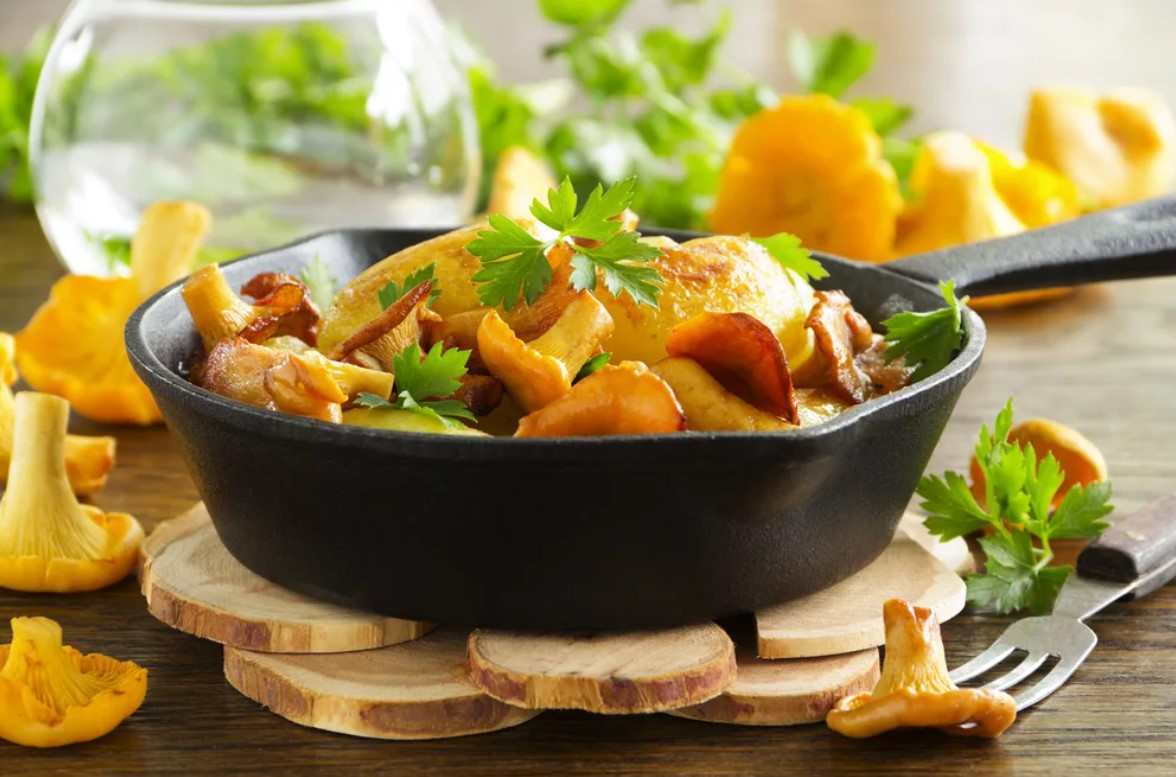
Chanterelles can be boiled, stewed, or fried—the choice is yours. But the very first step in preparing any dish is soaking and thoroughly cleaning the mushrooms. A large amount of sand can be hidden in their many folds.
The easiest way to cook chanterelles is to boil them for about 20 minutes. This will preserve their volume and flavor. Add a small amount of vinegar to the water. After this, they can be added to salads, main or first courses, or frozen (for up to 3 months).
Another way is to fry chanterelles in butter and serve as a side dish.
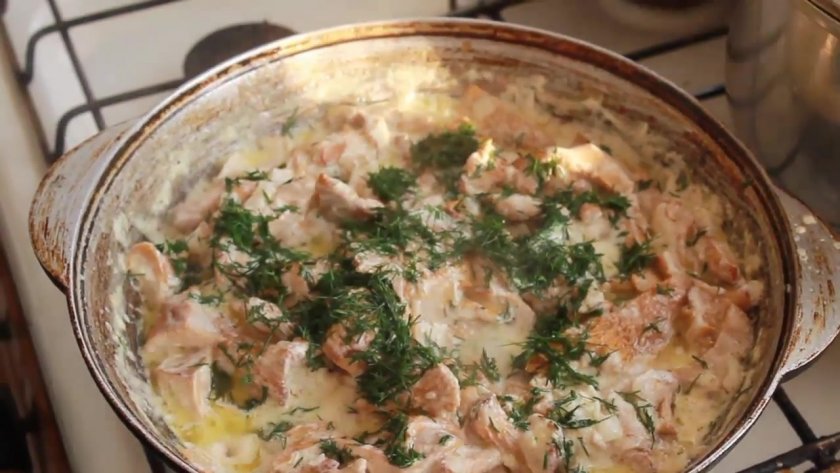
Many people like stewed chanterelles with onions and sour cream. To prepare the dish, take fried or boiled chanterelles, pour sour cream over them and simmer for 5-7 minutes over low heat.
Important! Chanterelles should only be salted at the final stage of cooking, otherwise they will become tough.
Some mushroom pickers prefer to dry chanterelles for the winter. This allows them to be stored for quite a long time. To preserve all the nutrients, soak the chanterelles in milk for two hours before drying.
For pickling, boiled chanterelles are placed in jars and covered with the marinade. To prepare, you'll need:
- 1 liter of water;
- 400 ml vinegar;
- bay leaf;
- black and allspice pepper.
Read more about cooking chanterelles in the articleDo chanterelles need to be boiled? How long do they need to be boiled before frying, in soup, until done?.
Why can chanterelles taste bitter?
Chanterelles can taste bitter for several reasons:
- A false mushroom got into the dish.
- The specimens collected were too large and old.
- Chanterelles grew along highways and heavily polluted areas.
- Insufficient cooking time.
- Harvesting during dry periods.
To avoid problems with mushrooms, they should be processed within a few hours of harvesting. It's acceptable to leave them in the refrigerator for a few days.
Recipes with chanterelles
Chanterelles can be used in a variety of dishes, and they're even suitable for pie filling. Here are a few simple and delicious recipes:
Chanterelle soup
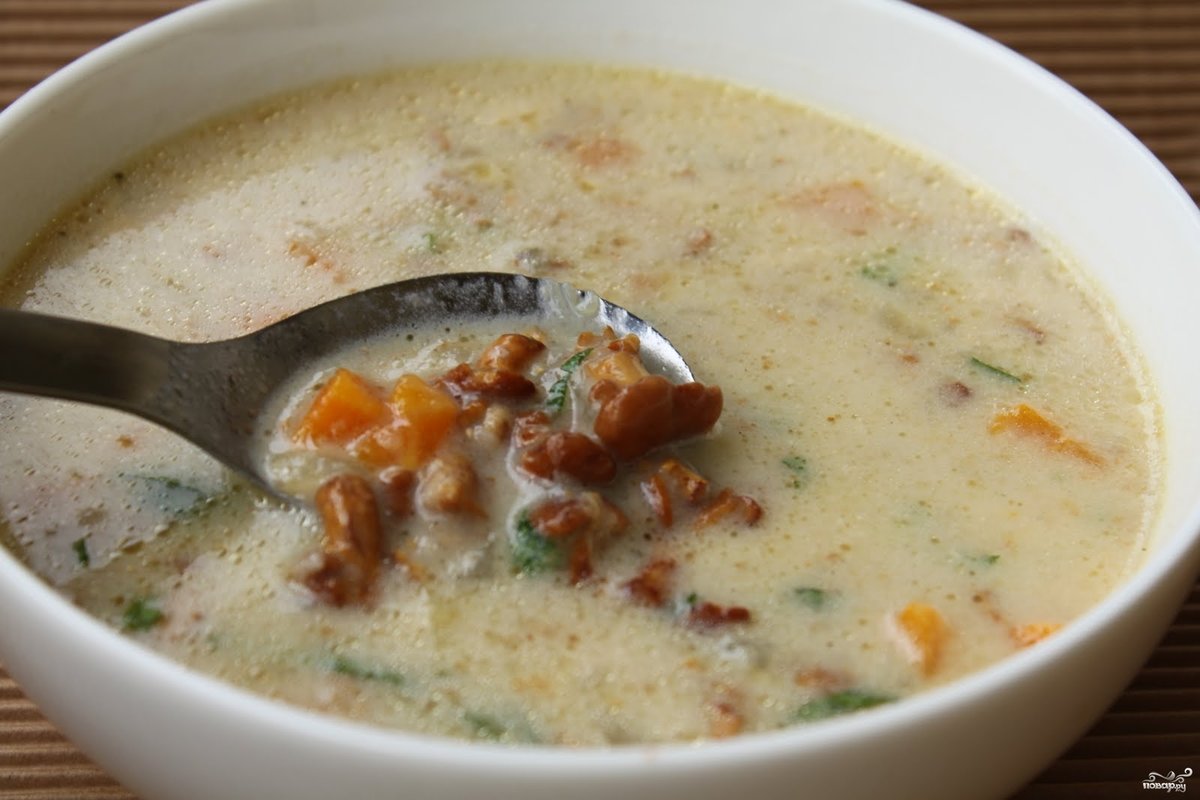
Ingredients:
- 500 g chanterelles;
- 1 processed cheese;
- 2 pcs of potatoes;
- 1 carrot;
- 1 onion;
- 20 g butter;
- Salt to taste;
- Green.
Method of preparation:
- Boil the peeled mushrooms in water without salt for 15 minutes.
- Fry finely chopped carrots and onions in butter.
- Add diced potatoes to the mushrooms and cook for 10 minutes.
- Add grated processed cheese to the soup and stir well until dissolved.
- Add salt to taste, wait until it boils and turn off the pan.
- Add herbs when serving.
Omelette with chanterelles
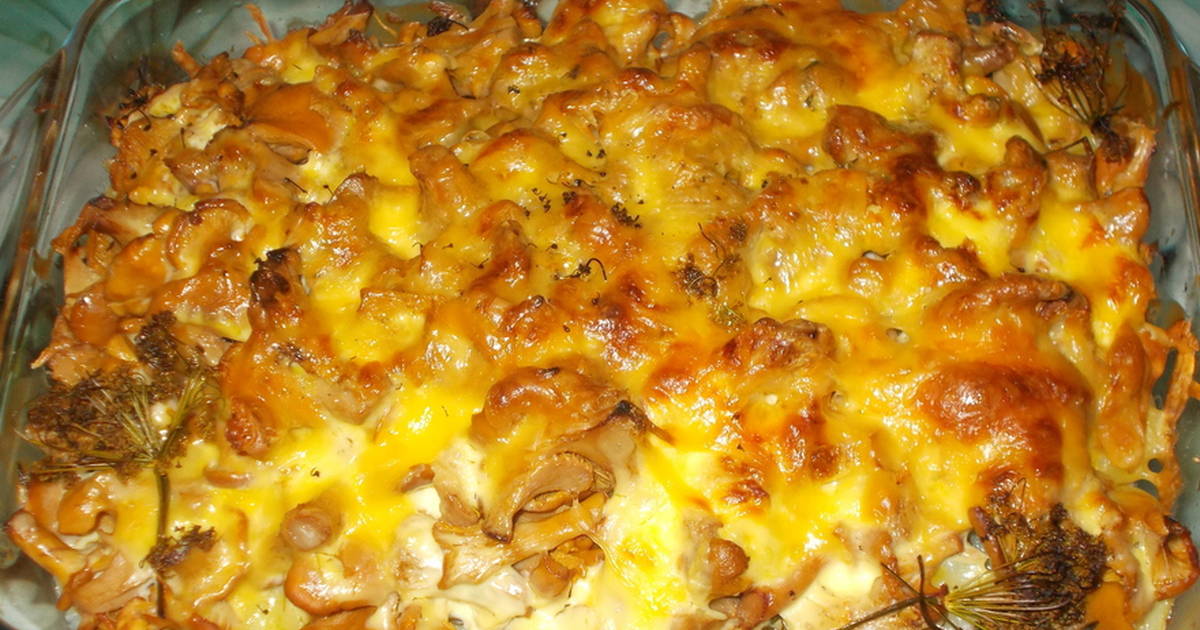
Ingredients: 200 g chanterelles
- 1 onion;
- 3 eggs;
- 1 clove of garlic;
- Paprika;
- Salt to taste.
Method of preparation:
- Onions and garlic are fried in a frying pan until translucent.
- Boiled mushrooms are added to the onion and fried for another 5-7 minutes.
- In a separate container, beat the eggs with salt and paprika.
- The omelette mixture is poured over the chanterelles and fried for 5 minutes.
For a more attractive presentation, you can place the omelette on toasted baguette slices.
The benefits and harms of chanterelles

- Chanterelles have many beneficial properties:.
- They have an antiparasitic effect.
- Removes toxins from the liver.
- They help fight bronchopulmonary infections.
- Regulate blood glucose levels.
- Strengthen the immune system.
- They help fight cancer cells.
- Strengthen the cardiovascular system.
- Helps fight stress.
- Improve joint mobility.
- Stimulates collagen production.
Chanterelles, like all mushrooms, are considered difficult to digest. Therefore, they may be harmful to people with gastrointestinal disorders and chronic liver disease.
How to prepare and store chanterelles
Chanterelles collected in the forest should be thoroughly cleaned of sand by soaking them briefly in water. They can then be pickled, frozen, dried, boiled, or fried.
Fresh mushrooms can be stored in the refrigerator at 10 degrees Celsius for up to 2 days, in the freshness zone for about 7 days, and frozen for 3 months. Mushrooms cannot be re-frozen.
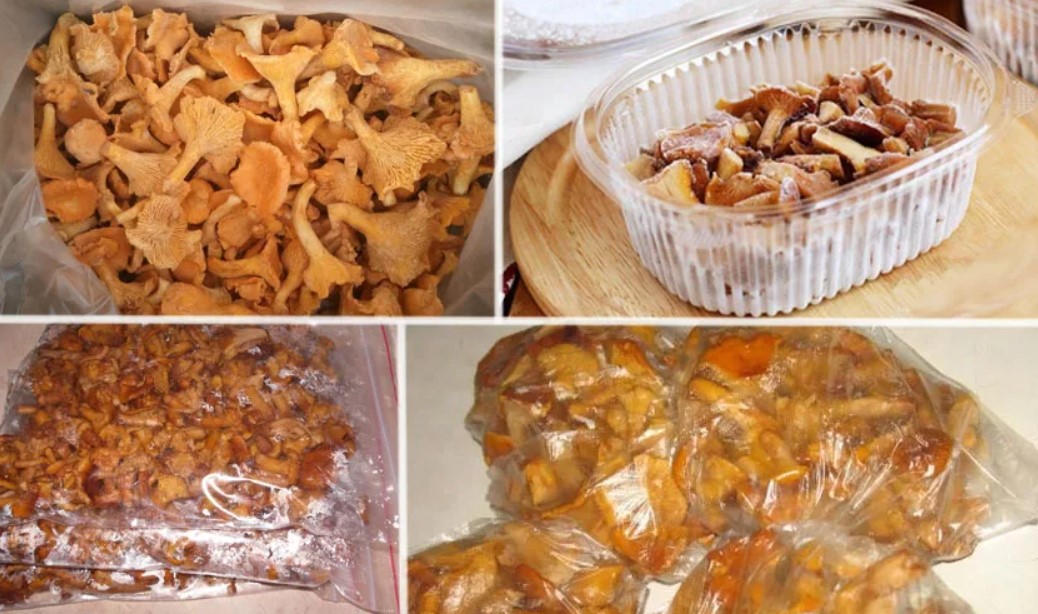
For more information on how to prepare chanterelles, read the following articles:
Dried Chanterelles: 6 Drying Methods, Calorie Content, Benefits and Harms, Uses, and Recipes
Growing chanterelles at home
Chanterelles can only be grown at home in a garden plot with conditions similar to the mushrooms' natural habitat. The mycelium is planted in June, and the harvest can be expected no sooner than a year later.
There are two main ways to plant chanterelles at home:
- Through ready myceliumHigh-quality mycelium is readily available in specialized stores today. Dig a 20-cm-deep hole under the chosen tree in a damp but warm spot. Place the mycelium at the bottom, cover it with soil, and water with warm water. Cover the mycelium with spruce branches, sawdust, or leaves for the winter to prevent it from freezing.
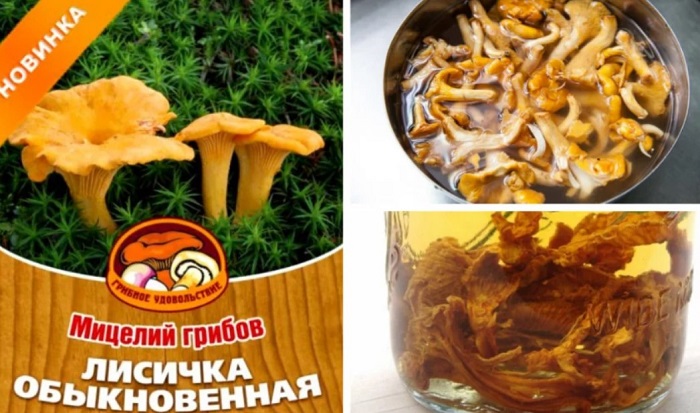
Making mycelium yourself. This method takes longer to prepare, but yields a higher yield. A tree is selected in the garden plot under which the mycelium will grow. Chanterelle mushrooms are harvested from a tree of the same species in the forest. The caps are cut off and soaked for 20 hours in sweetened water (100 g per 1 liter). The substrate is then filtered, but the caps should not be discarded; they will be used later. The mushroom water is poured under the tree, the caps are placed near the roots and lightly covered with soil. Water is then added as needed with warm water. For the winter, the mycelium is covered with spruce branches and leaves.
For more information on growing chanterelles, read the article.Growing chanterelles at home and in the garden step by step + on an industrial scale.
Use of chanterelles in medicine
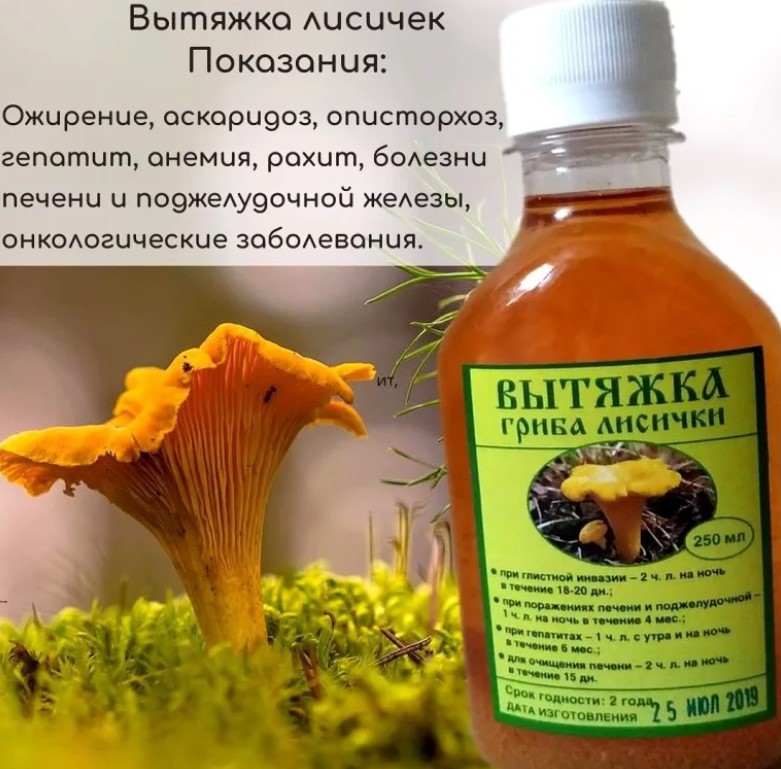
The most common use of chanterelles in medicine is based on their antiparasitic properties, which is why the mushrooms are used as an ingredient in numerous anthelmintic supplements.
Chanterelles for cleansing the body
As mentioned above, chanterelles contain a monosaccharide that kills parasites. This property also extends to humans, which is why chanterelles are used as an ingredient in detox programs. While heat-treated chanterelles will not have this effect, you can use mushrooms dried at temperatures no higher than 40 degrees Celsius or infused in alcohol.
Five chanterelles need to be dried and ground into powder. This powder should be enough for 10 days, and a pinch should be added to each meal.
This dish will not only remove parasites but also cleanse the liver of toxins.
In what cases and for whom is it better not to eat chanterelles, contraindications
Chanterelles, like any other mushrooms, have a number of contraindications for consumption:
- Children under 7 years of age.
- Chronic gastrointestinal diseases.
- Liver diseases.
- Nursing and pregnant women.
- Older people.
It is best to eat mushrooms in the first half of the day; it is strictly not recommended to consume them less than 2 hours before bedtime.
How to choose chanterelles when buying
When buying chanterelles, you should consider the following nuances:
- The cap and stem must be dry, without damage or dark spots on the surface.
- There are no damaged areas on the mushrooms.
- The aroma is pleasant.
- The color of the mushroom is apricot or golden.