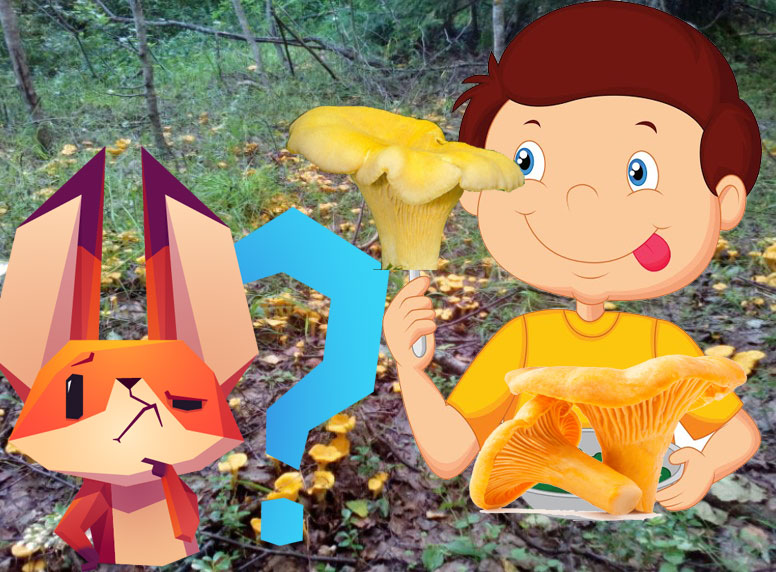
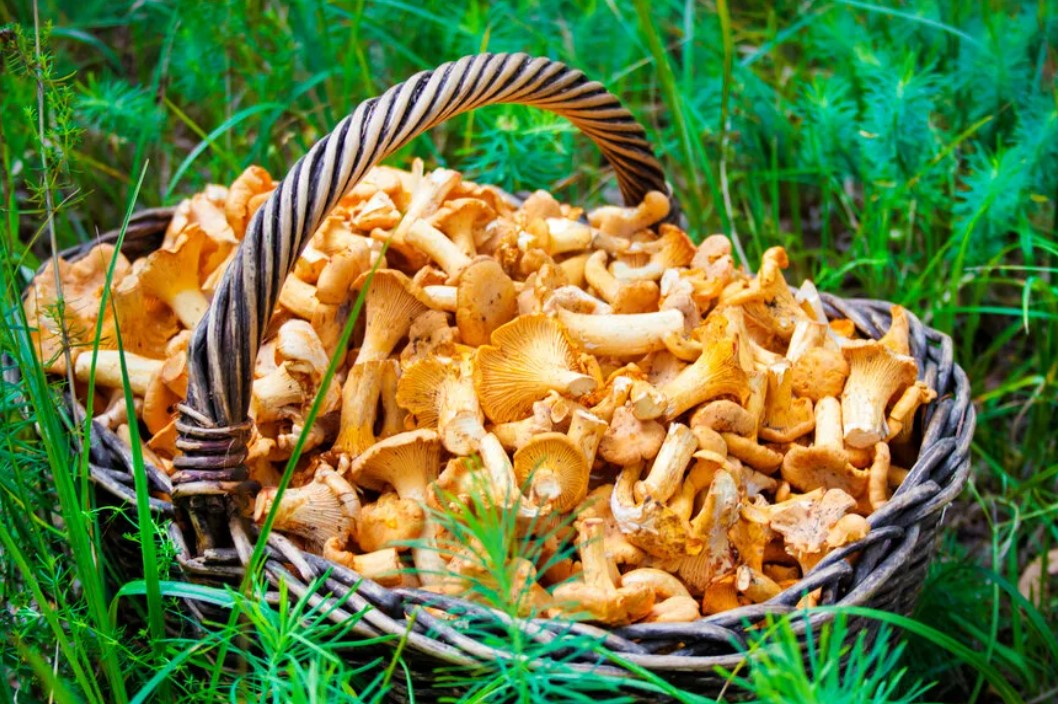
Chanterelles are considered not only tasty but also healthy. They're fairly easy to find—they have a recognizable appearance and virtually no poisonous lookalikes—but the benefits of eating chanterelles are enormous. The key is knowing how to use them properly. We'll cover that in the article below.
Content
- 1 Caloric content, chemical and mineral composition of chanterelles, vitamins
- 2 Can you eat raw chanterelle mushrooms? Benefits
- 3 Treatment of parasites with raw chanterelle mushrooms
- 4 How to use raw chanterelle mushrooms as medicine
- 5 How to prepare medicinal raw materials from chanterelle mushrooms for the winter
- 6 Rules for collecting chanterelle mushrooms
- 7 Harm and contraindications of chanterelles
- 8 Video reviews of eating raw chanterelles
Caloric content, chemical and mineral composition of chanterelles, vitamins
Chanterelles are considered a low-calorie product; 100 g contains:
- 38 kcal;
- 6.86 carbohydrates (2% of daily value);
- 1.49 proteins (2% of daily value);
- 0.53 fat (1% of daily value);
- 89.85 water.
Contains no cholesterol or trans fats, 1.2 g of sugar, and 3.8 g of fiber.
Chanterelles contain a unique composition of vitamins and amino acids, particularly tramenolic acid, which actively helps fight the hepatitis C virus. Chanterelles also contain valuable polysaccharides, such as quinomannose and beta-glucans, which have powerful antiparasitic properties.

Read more about chanterelle mushrooms in the articleChanterelle mushrooms: 15 species with descriptions in tables, photos, where and when to collect, how they grow.
Can you eat raw chanterelle mushrooms? Benefits
Chanterelle mushrooms can and should be eaten raw. Cooking destroys the mushrooms' unique components. Therefore, to achieve their medicinal benefits, chanterelles are eaten only raw or dried.
The main property of these vibrant mushrooms is their antiparasitic properties. Quinomannose acts on parasites by paralyzing their nervous system and preventing them from breathing. They die almost instantly and are eliminated from the body naturally.
The larvae are affected by another substance found in chanterelles. It's called beta-glucan. This polysaccharide stimulates the production of eosinophils, which are lethal to the parasite larvae.
Experts say eating 3-4 mushrooms a day is enough to rid the body of parasites. It's important to have a healthy stomach and only eat mushrooms harvested in an ecologically clean area.
Treatment of parasites with raw chanterelle mushrooms
Chanterelles are renowned not only for their pleasant taste but also for their antiparasitic properties. They contain a unique polysaccharide, quinomannose. Chanterelles were originally thought to be toxic mushrooms, which is why worms never inhabit them. However, their chemical composition was later studied in more detail, and the magical component was discovered.
Hinomannose paralyzes the worms' nervous system, disrupting oxygen exchange. They die and are eliminated from the body naturally.
But that's not all. Chanterelles contain another important element: beta-glucan. It stimulates the synthesis of myelin protein in iseosinophils, which are also actively formed under its influence. This powerful effect kills not only the parasites themselves, but also their larvae.
To fight parasites, it is enough to eat 3-4 chanterelles a day for 10 days.
How to use raw chanterelle mushrooms as medicine
Medicinal properties are preserved in mushrooms only in two forms:
- fresh,
- dried at a temperature not exceeding +40 degrees.
Please note! These recipes are not intended as a recommendation. Consulting a doctor is essential.
From parasites
For an antiparasitic effect, take 2-4 chanterelle mushrooms (depending on size) without visible damage. The course of treatment lasts 7 to 10 days.
If you don’t feel like eating fresh mushrooms, you can make a tincture of chanterelles.
Place finely chopped chanterelles in a jar and pour in a 1:1 alcohol diluted with water. You can use good-quality vodka or homemade moonshine without any additives or impurities. Let the solution steep for 21 days, then take 1 teaspoon daily on an empty stomach. The course of treatment is 21 days.
Oncology
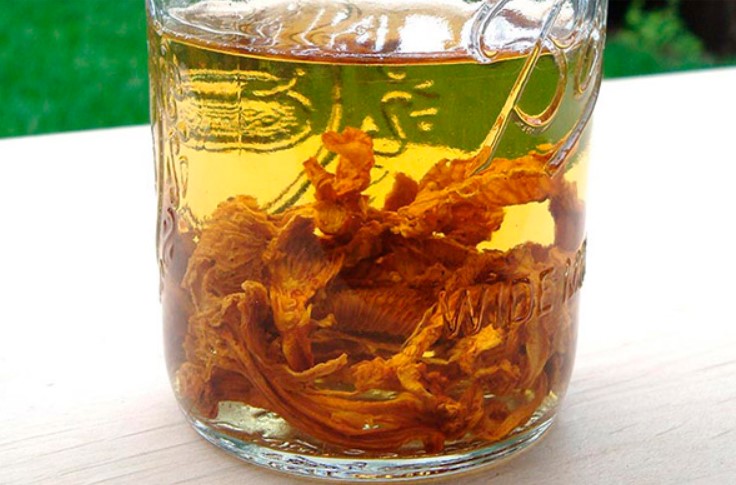
Mushrooms support the body in complex cancer treatments. A tincture of dried chanterelles is used at a rate of 3 teaspoons per 200 ml of alcohol or good vodka.
The medicine should be steeped for two weeks, shaking the container periodically. Drink it twice a day on an empty stomach, approximately 40 minutes before meals, for 45 days.
Liver and pancreas cleanse
To support and cleanse the pancreas and liver, prepare a tincture of 250 ml of alcohol or vodka and 1 tablespoon of dried chanterelle mushrooms. The solution should be kept in a dark place for 10 days, after which it is consumed on an empty stomach, 1 teaspoon twice daily. As a preventative measure, the course of treatment can last from 3 to 6 months.
How to prepare medicinal raw materials from chanterelle mushrooms for the winter
The medicinal properties of chanterelles are preserved only as long as they are not cooked. Therefore, for treatment and prevention, chanterelles should be frozen or dried. Let's take a closer look.
How to freeze chanterelles
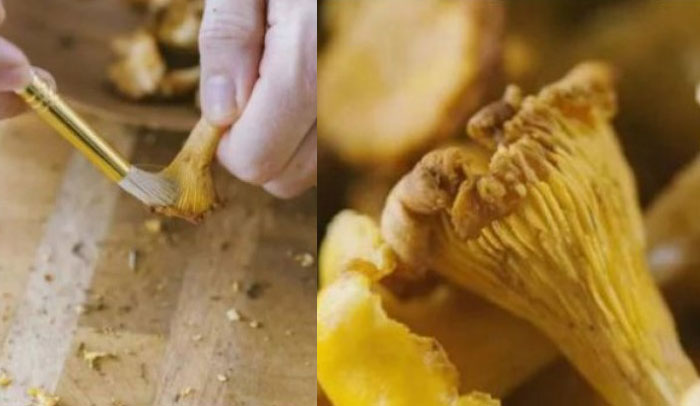
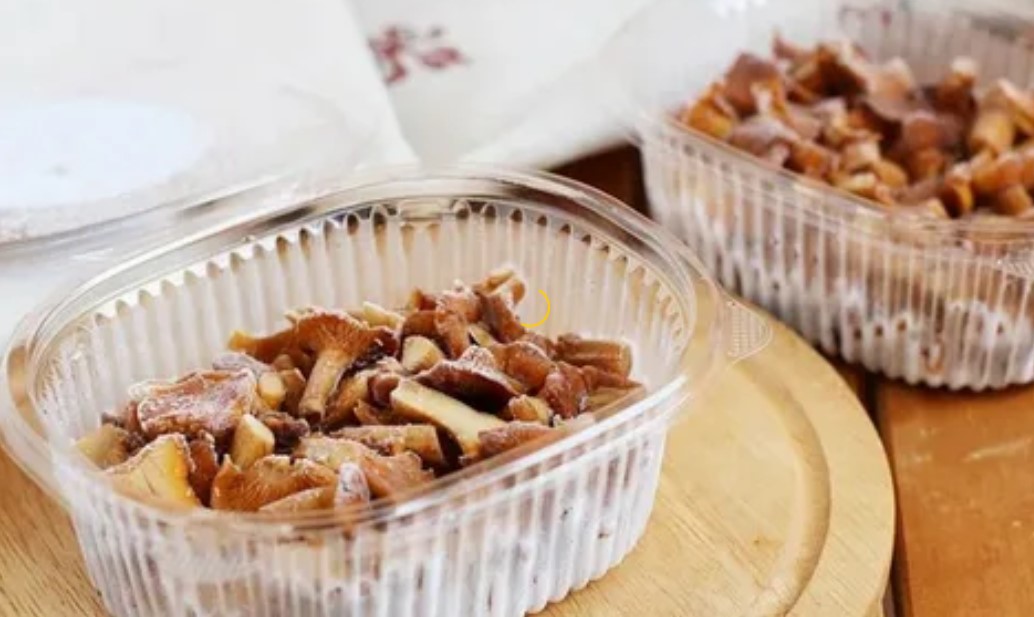
Fresh chanterelles don't need to be washed. Simply brush sand off the cap and stem with a thick paintbrush, then wipe the mushrooms with a damp sponge and arrange them in a single layer on a food-safe tray. Freeze the mushrooms in this state for 5-7 hours, then remove them and transfer them to a container.
How to dry chanterelles
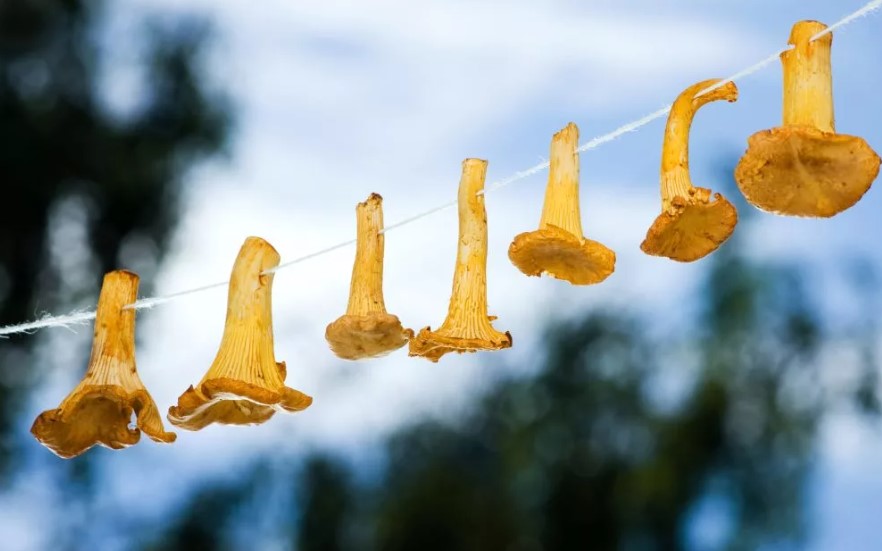
Chanterelles are shaken free of sand and forest debris, wiped with a cloth, and laid out on racks in a well-ventilated area. You can hang the mushrooms on nylon threads. After drying, place the mushrooms in an oven preheated to 40 degrees Celsius (104 degrees Fahrenheit). The dried chanterelles are then chopped and stored in jars.
Recipes
To preserve the beneficial properties of chanterelles, they are not only dried or frozen for the winter, but also pickled. The recipe is quite simple:
- 1 kg of fresh chanterelles;
- 3 dill umbrellas;
- 2.5 tbsp salt;
- 10 allspice peas;
- 1 horseradish leaf (chopped);
- 5 cloves of garlic.
Bring a liter of water to a boil, add salt, oil, and pepper. Place two chopped garlic cloves and a sprig of dill in the bottom of the container. Add the mushrooms, periodically layering the chanterelles with garlic, horseradish, and dill. Once the solution has cooled, pour it into the container with the mushrooms, cover it tightly with plastic wrap, tie it with twine to keep out oxygen, and store it in the cellar. These mushrooms are ready to eat after three weeks.
In addition to pickling, you can make a versatile tincture from dried mushrooms. To do this, take 7 teaspoons of ground dried chanterelles, pour 500 ml of vodka or a 1:1 diluted alcohol solution over them, and let them steep for 21 days in a dark place.
Read the article to learn how to cook chanterelles.Do chanterelles need to be boiled? How long do they need to be boiled before frying, in soup, until done?.
Rules for collecting chanterelle mushrooms
Foraging for chanterelles in the forest is a pleasure. They grow in clusters, have a distinctive appearance, and are completely uncommon for worms. However, there are a few rules to follow when harvesting chanterelles:
- The mushroom is carefully cut off with a sharp knife, the root remains inside.
- You can't trample on the mycelium for long, otherwise it will die.
- If there is the slightest doubt that the mushrooms are false, it is better not to collect them.
- You shouldn't look for chanterelles in places with poor ecology.
Read the article about collecting chanterelle mushrooms.Where chanterelles grow, which forests to look for in the Moscow region and other regions, and the harvest season.
Chanterelles are a subspecies of mushrooms that do not contain any toxic substances of their own. If you are absolutely sure they were collected in an ecologically clean area, they can be eaten raw. The presence of radionuclides is detected in virtually all mushrooms grown in the wild. They are divided into four major subgroups based on their ability to accumulate radioactive substances:
- Poorly accumulative.
- Average cumulative.
- Highly cumulative.
- Battery mushrooms.
Chanterelles belong to the second subgroup – their rate and volume of radionuclide accumulation are characterized as average. This means that in poor soil conditions, chanterelles are quite capable of absorbing harmful and hazardous substances from the soil. Therefore, when picking mushrooms, extreme caution should be exercised when considering the environment in which they were found. Incidentally, no differences in cesium content were found between young and old mushrooms, but density studies have shown that toxic substances accumulate much faster in the cap than in the stem.
Chanterelles can be decontaminated if there's any doubt about their purity. This is done by boiling them in salt water:
- Place the chanterelles in a saucepan.
- Fill with a saline solution at the rate of 30 g of salt per 1 liter of water.
- Boil for 20 minutes, change the water.
- Cook for another 20 minutes.
- Harmful substances will be removed from the mushrooms, but there will be practically no useful ones left.
Read the article to learn how to grow chanterelle mushrooms at your dacha.Growing chanterelles at home and in the garden step by step + on an industrial scale
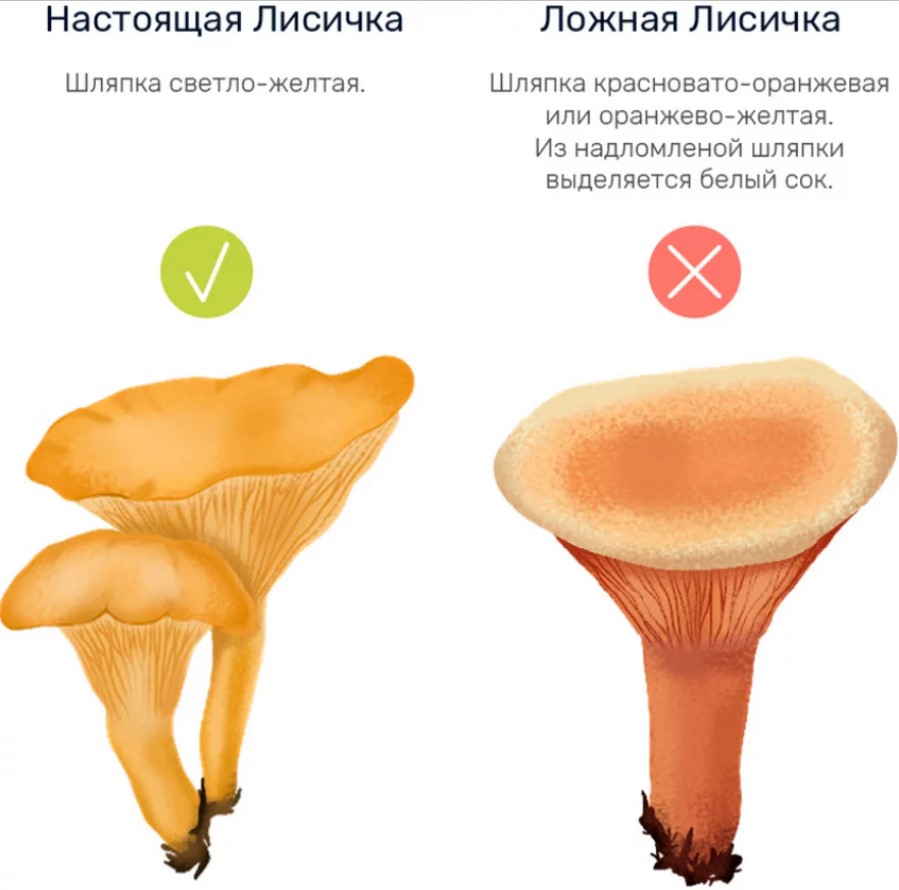
Another factor that prevents eating chanterelles raw is the risk of mistakenly picking a false mushroom. Chanterelles, like other mushrooms, have lookalikes. Eating them is unlikely to be fatal, but they can cause indigestion, especially if eaten raw. The following mushrooms are considered chanterelle lookalikes:
- False chanterelle. This mushroom can be eaten after prolonged cooking if desired, but most people consider it inedible. Its flavor is weak.
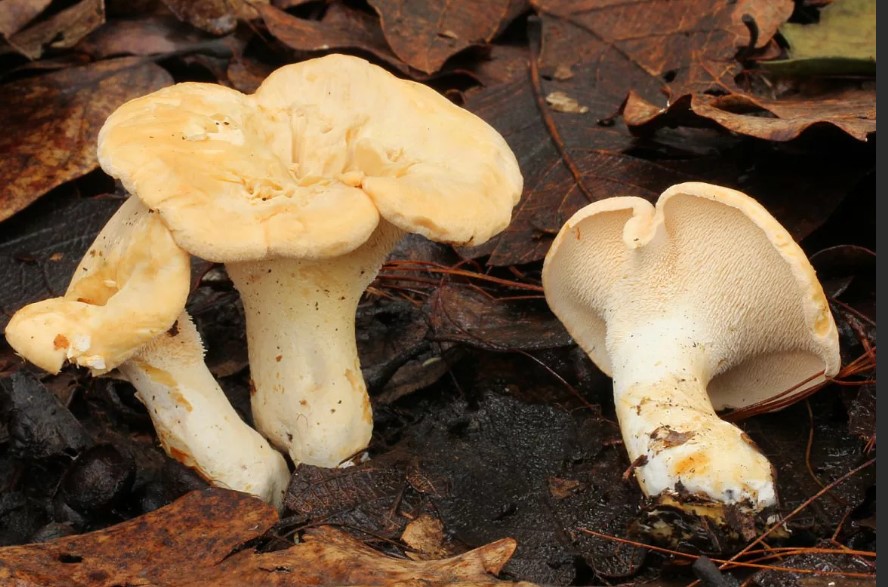
- The white blackberry is an edible mushroom. If picked in a clear clearing and not too long ripe, it can be eaten raw, but don't expect any anthelmintic effects.
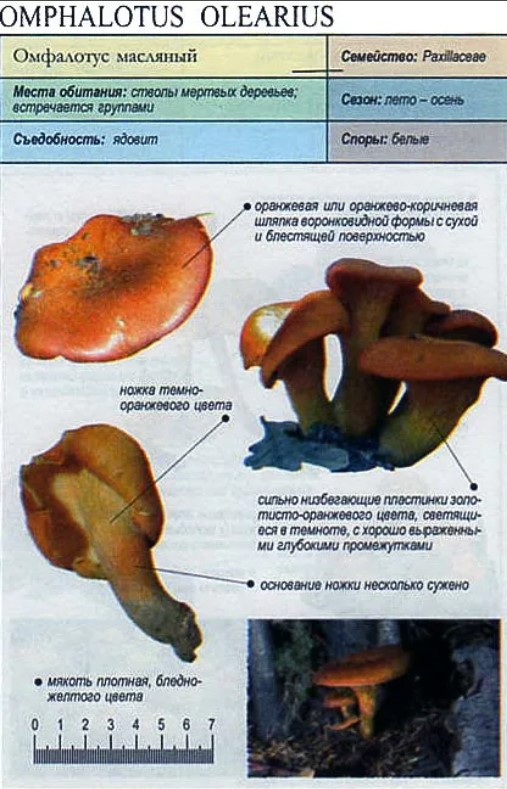
- Olive Omphalot. This mushroom should not be eaten as it is poisonous.
For more information on how to differentiate false chanterelle mushrooms from real ones, read the article. False chanterelle, differences from the real one in the table, photo + mushrooms similar to chanterelles.
Harm and contraindications of chanterelles
Chanterelles can bring not only benefits to a person, but also harm:
- Cause an allergic reaction.
- Cause problems with the digestive system.
Chanterelles are strictly contraindicated for the following groups of people:
- Children under 14 years old.
- Nursing and pregnant women.
- Elderly people.
- People with gastrointestinal diseases and mold allergies.
Video reviews of eating raw chanterelles