The false chanterelle's appearance can be confusing to novice mushroom pickers. This mushroom belongs to the Hygrophoropsis family and is commonly known as the "orange talker."
In this article, we'll tell you how to easily distinguish a false chanterelle from a real one, and what harm such confusion can cause.
Content
- 1 Description of the false chanterelle (Hygrophoropsis aurantiaca)
- 2 Description of the false red chanterelle (Hygrophoropsis Rufa)
- 3 Where do false chanterelles grow?
- 4 The main differences between false and true chanterelles
- 5 Comparison of the real and false chanterelle
- 6 Edibility of the false chanterelle
- 7 Can false chanterelles be used in cooking? Recipes
- 8 Mushroom pickers' reviews of the edibility of the false chanterelle
- 9 How to avoid poisoning from false chanterelles
- 10 Symptoms of false chanterelle poisoning
- 11 What to do if you're poisoned by false chanterelles, first aid
- 12 Controversy over the edibility of the false chanterelle
- 13 Other mushrooms similar to chanterelles
Description of the false chanterelle (Hygrophoropsis aurantiaca)
In appearance, the false chanterelle is somewhat similar to the real one, but it still has its own distinctive features.
hat
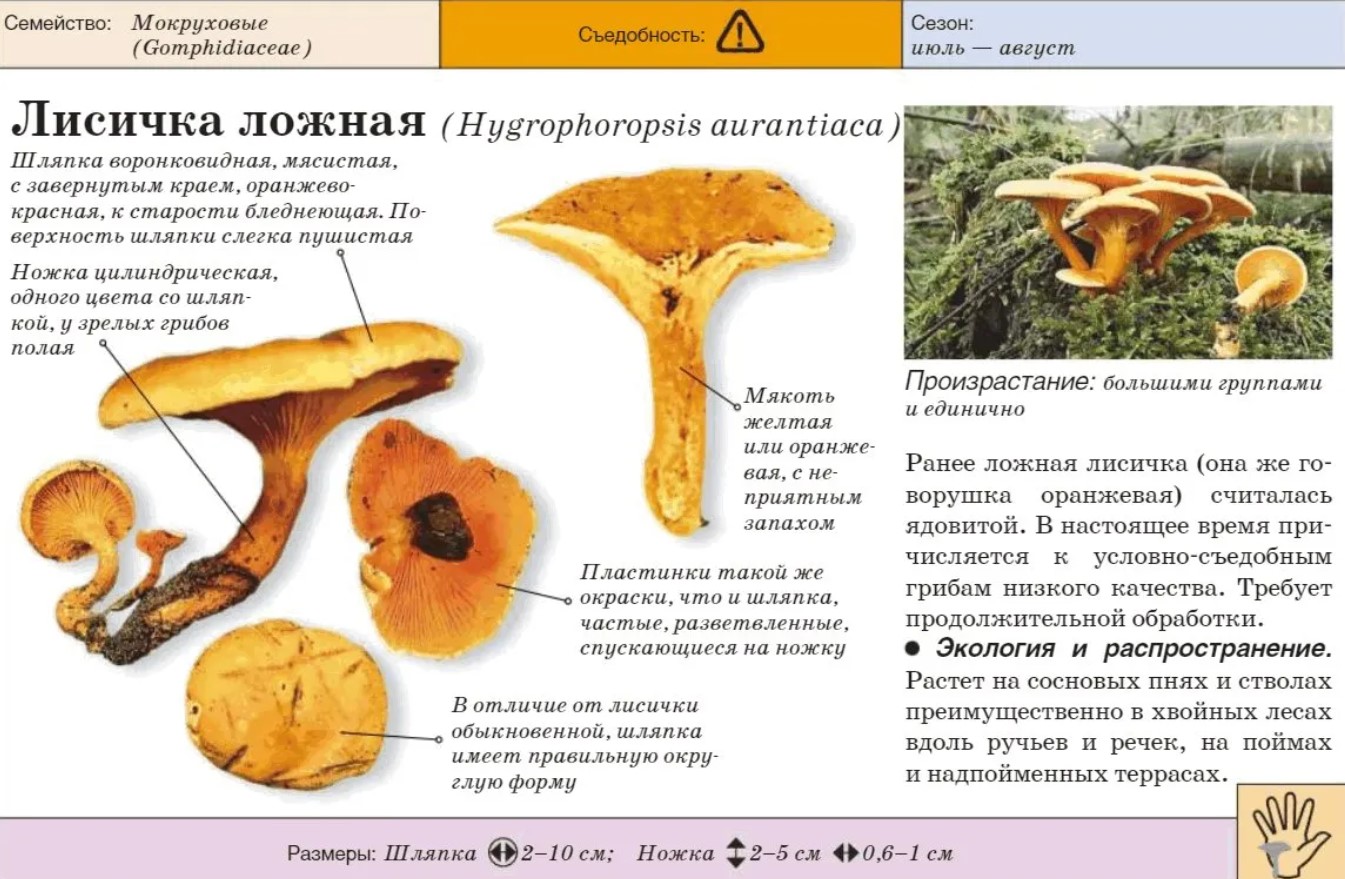
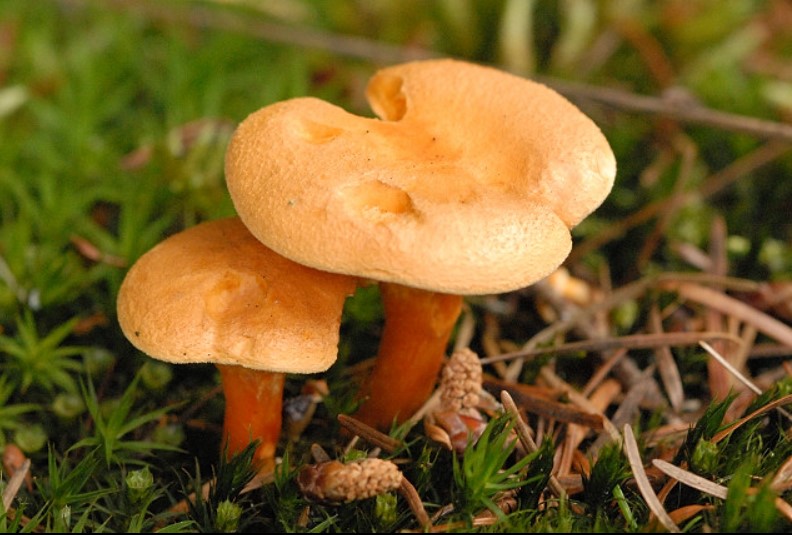
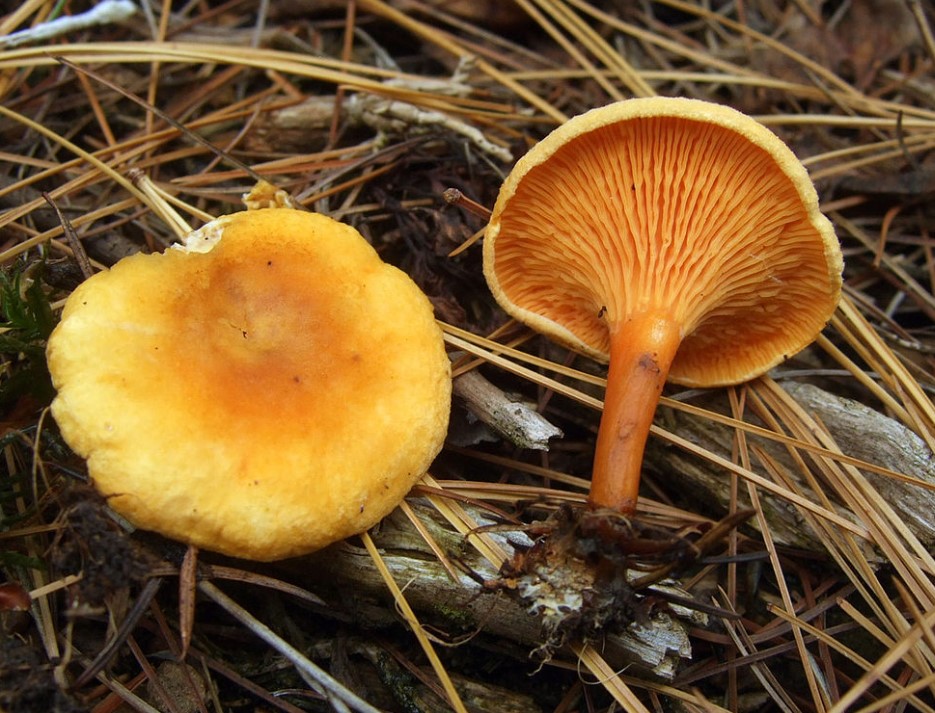
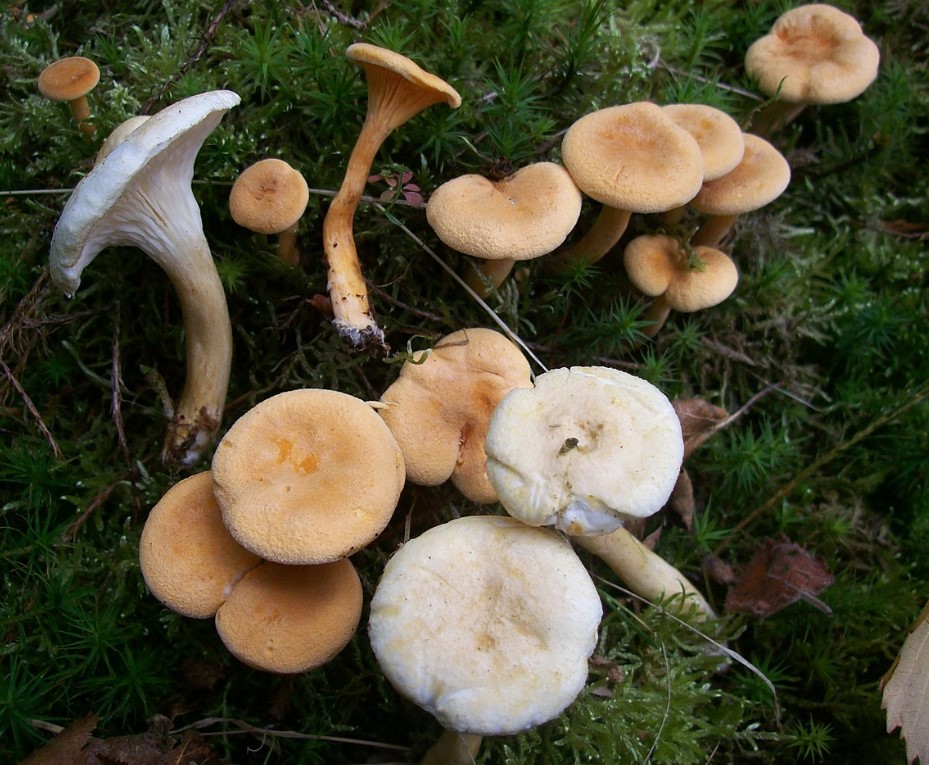
The cap diameter ranges from 2 to 5 cm, sometimes reaching 10 cm. Its shape is initially convex, with margins strongly curved inward. However, as it grows, the cap straightens out, eventually taking on a funnel-shaped form with a wavy edge. The skin is dry, mucilaginous, and the surface of young specimens is slightly velvety. The color is orange or orange-brown, with a more intense center. Concentric zones are present, but they disappear with age.
Plates
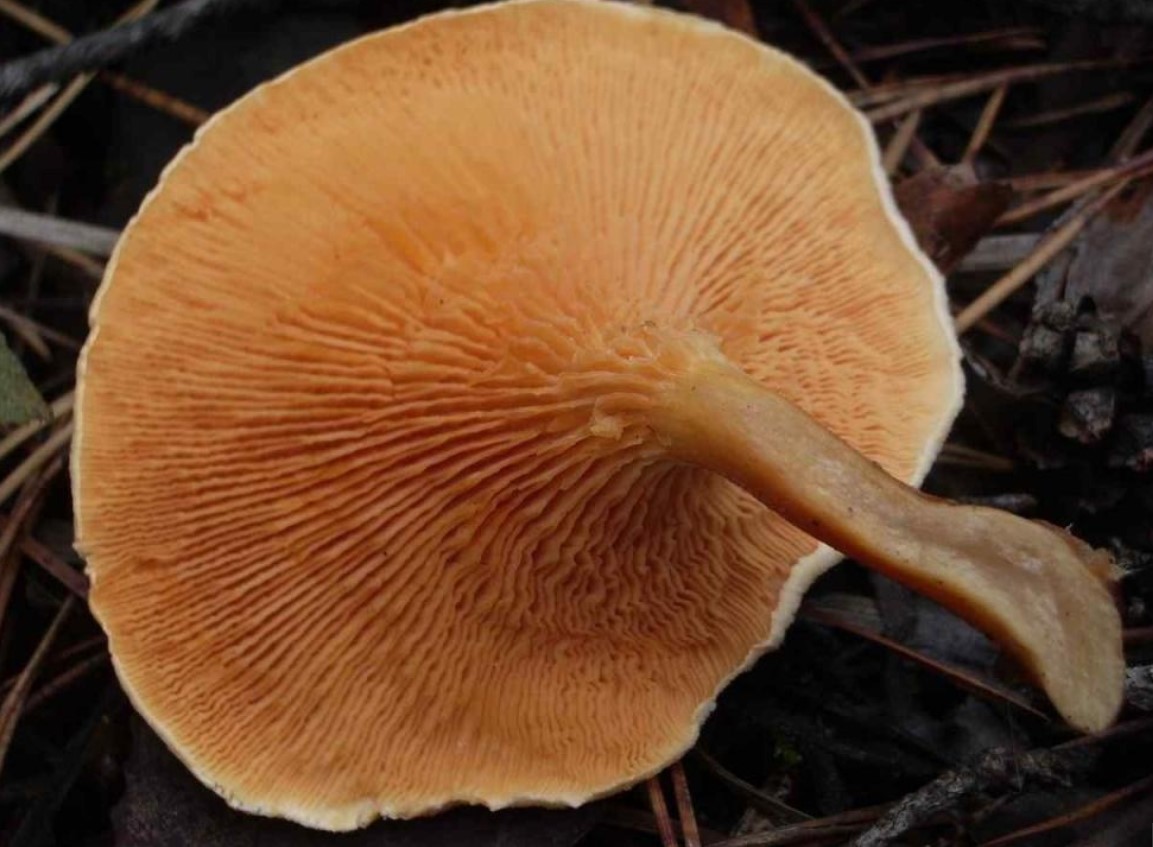
The plates are relatively thick, closely spaced, and have extensive branching. They are yellow-orange in color; if pressure is applied to the plates, they turn brown.
Leg
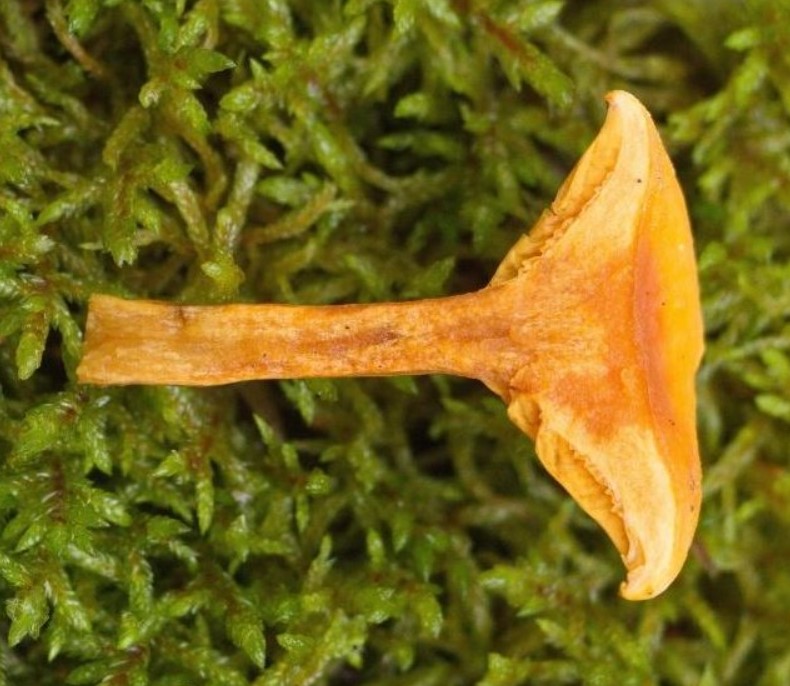
The false chanterelle stem is 3-6 cm tall and reaches 1 cm in diameter. It is cylindrical in shape, tapering slightly and curved at the base. The color is identical to the gills, brighter than the cap.
Pulp
The cap flesh is thick in the center, thinning toward the edge. The older the mushroom, the looser its texture becomes. The stem, on the other hand, is very dense.
Smell and taste
The smell is weak and practically not noticeable.
Disputes
Spores are white, elliptical, smooth.
Description of the false red chanterelle (Hygrophoropsis Rufa)
This species of false chanterelle was finally recognized only in 2013, having first been described in 1972.
hat
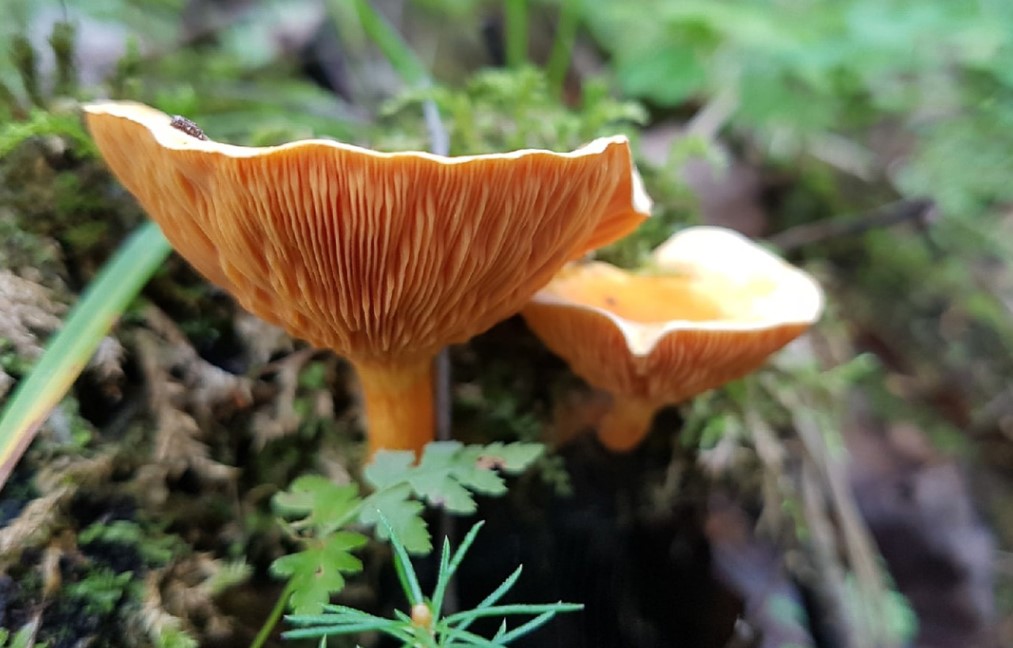
The cap is 10 cm in diameter and ranges in color from yellow to brown. The skin is covered with scales, the number of which decreases toward the inward-curving edges of the cap.
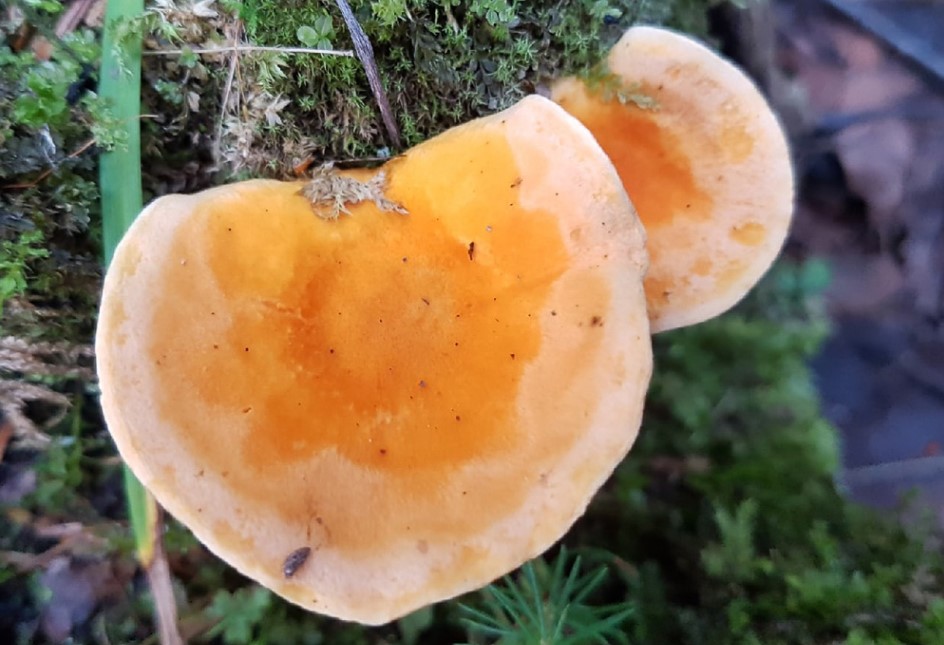
Plates
The plates are yellow-orange in color, they split into two and slide down the stem.
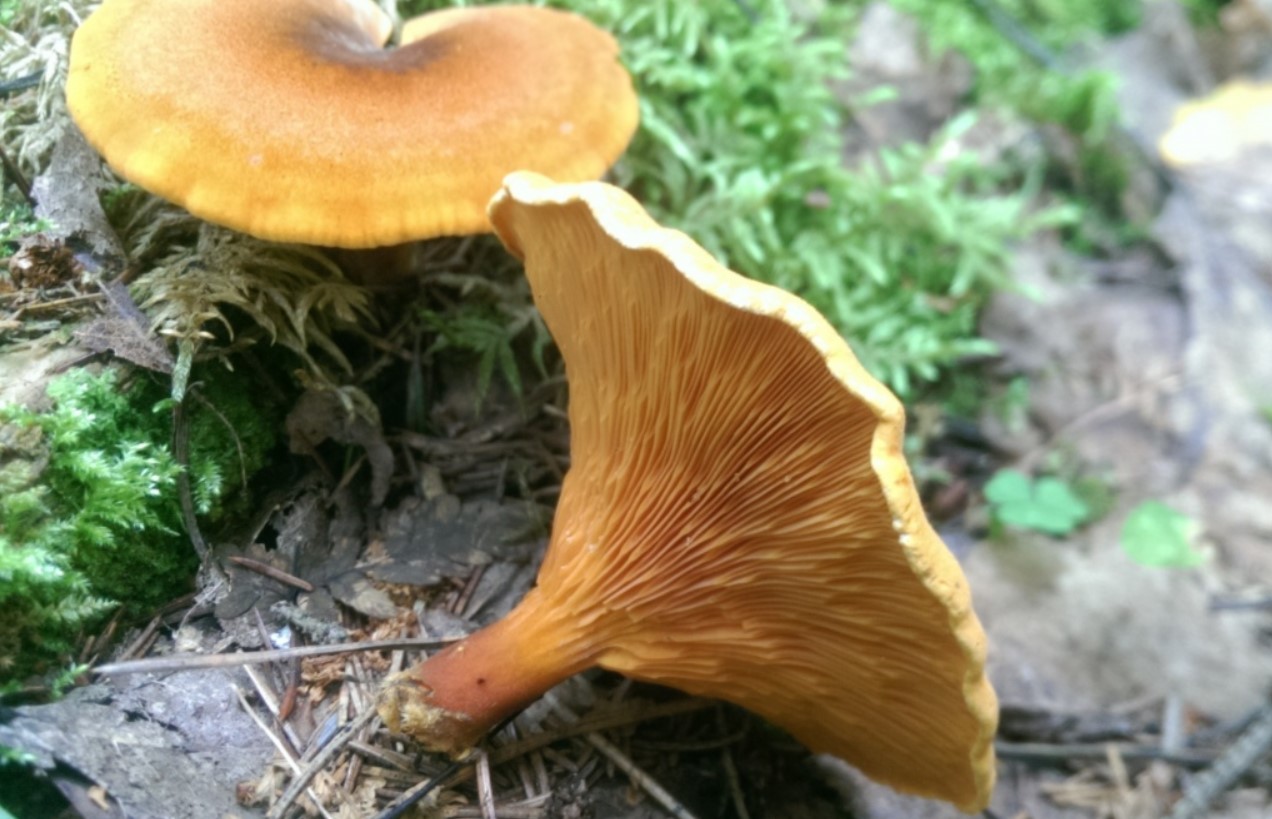
Leg
The red chanterelle's stem is medium in height, up to 6-8 cm. It is almost identical in color to the cap. The surface is scaly, the shape cylindrical, and widens toward the base.
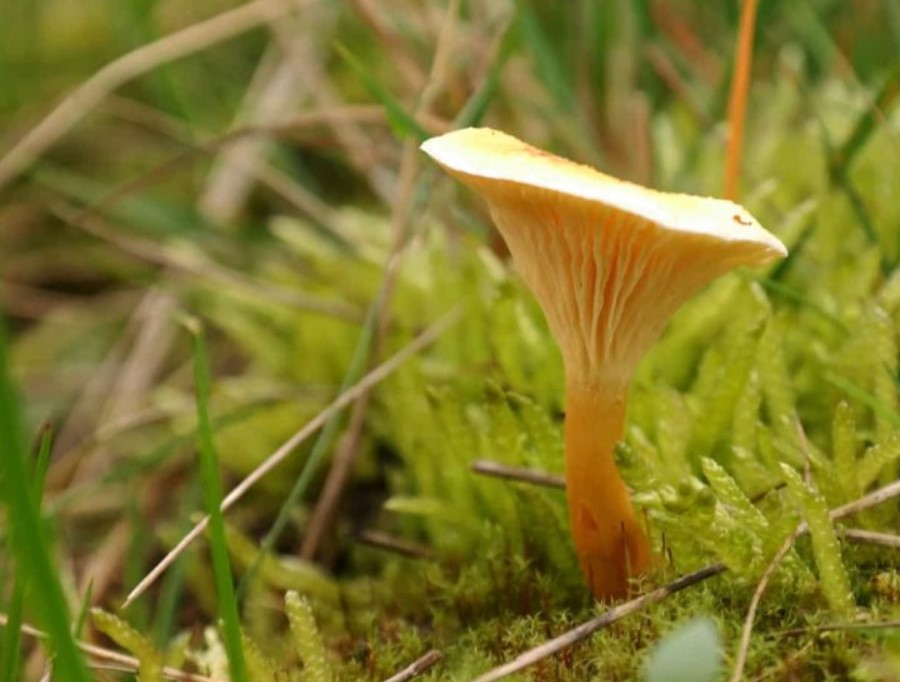
Pulp
The color of the pulp is orange and does not change when broken.
Smell and taste
The smell contains hints of ozone notes, the taste is neutral.
Disputes
Spores are red-brown, elliptical.
Where do false chanterelles grow?
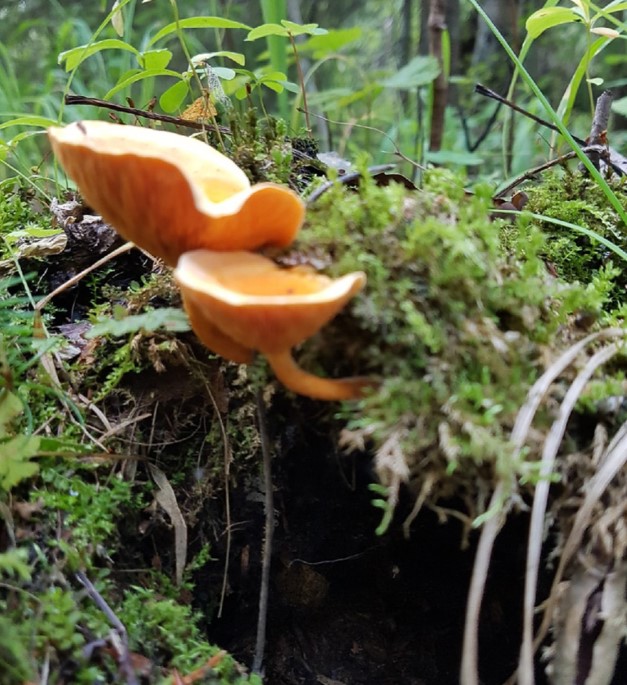
The habitats of true and false chanterelles are very similar. Both mushrooms prefer moist areas in various forest types, especially near birch and spruce trees. False chanterelles are very common in coniferous and small-leaved forests, where the ground surface is strewn with damp needles and fallen leaves, and there are many rotting trees and deadwood nearby.
You can find out where and how real chanterelles grow from the articleWhere chanterelles grow, which forests to look for in the Moscow region and other regions, and the harvest season
The main differences between false and true chanterelles
Despite the undeniable similarities between the false and true larvae, distinguishing between these mushrooms is not difficult. The main thing is to know what to look for.
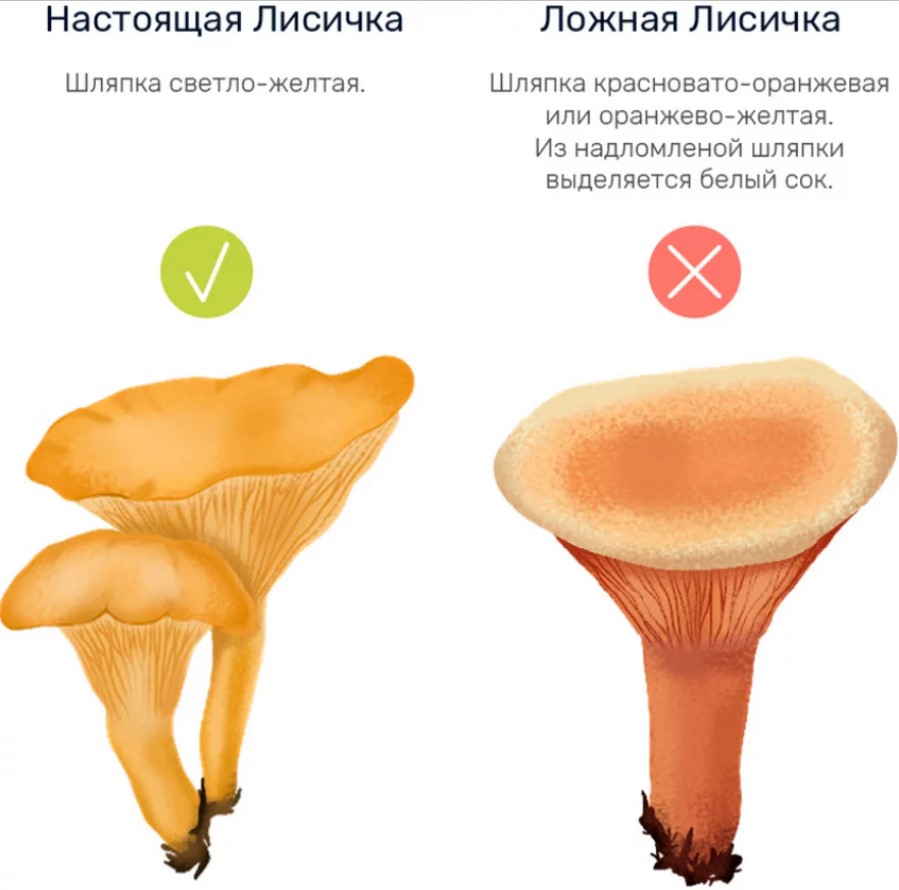
Comparison of the real and false chanterelle
The table below describes the main differences between these mushrooms.
| Distinguishing feature | A real fox | False chanterelle |
| hat | The cap can grow up to 12 cm in diameter, the color is muted reddish, the edges are curved, the shape is funnel-shaped. | The cap is no more than 6 cm in diameter and is bright orange in color. |
| Records | They do not have plates; the hymenophore is represented by frequent folds descending onto the stem. | There are plates, they are bright, thin, often located, extending onto the stem. |
| Leg | A true chanterelle has a distinctive stem—it's plump and sturdy, rarely exceeding 6 cm in height, but can reach 3 cm in diameter. It's slightly lighter in color than the cap. At the top, the stem widens and merges into the cap. | The false chanterelle gives itself away by its thin stem, barely 1 cm in diameter. Its height, however, is impressive, reaching up to 10 cm. Its shape is quite even. However, its color is much darker than that shown on the cap. |
| Pulp | The flesh is very light, almost white, and turns slightly red when cut. | Yellow or white. |
| Smell | Sourish aroma. | It has a mushroomy, slightly sweet smell. |
| Skin | Smooth, not removable. | Rough, easy to remove. |
| Growing | Grows in large groups. | Grows singly. |
| Wormy | Absent. | There may be worms. |
| Fruiting | From mid-summer until the first frost. | The peak falls in August and subsides by September-October. |
Read more about the real chanterelle and its varieties in the article Chanterelle mushrooms: 15 species with descriptions in tables, photos, where and when to collect, how they grow
Edibility of the false chanterelle
Experts consider the false chanterelle to be a conditionally edible mushroom. This means it doesn't contain any potent toxins that could cause death. Naturally, this applies only to moderate quantities.
The false chanterelle has an unpleasant taste, so you'll recognize it immediately after the first bite. However, eating this type of chanterelle is still not recommended.
Read the article to find out if you can eat real chanterelles raw.Can you eat raw chanterelles? The benefits and harms of mushrooms, how much you can eat, and for different purposes..
Can false chanterelles be used in cooking? Recipes
False chanterelles are considered conditionally edible mushrooms, so after careful preparation they can be used as food.
We present to your attention several delicious and simple recipes.
Julienne
For julienne, small portioned molds are best.
We will need:
- 500 g mushrooms;
- 250 g sour cream;
- 50 g hard cheese;
- 2 tbsp vegetable or olive oil;
- 1 tsp flour;
- 1 onion;
- Salt and spices to taste.
Wash the mushrooms thoroughly, soak for 2-3 hours, and cook for about 30 minutes. Then chop the chanterelles into small pieces, place them in a hot frying pan with butter, and fry for 10 minutes. Then add finely chopped onion, salt, and spices and fry for another 5 minutes. Next, add flour to the pan and fry, stirring constantly, until golden brown. Divide the mixture into molds, filling them 2/3 full. Fill with sour cream, sprinkle with grated cheese, and bake in an oven preheated to 180 degrees Celsius (350 degrees Fahrenheit) for 5 minutes.
Pickled chanterelles
These mushrooms are a joy and a treat to discover in winter, bringing back memories of sunny days. To prepare, you'll need:
- 1 kg of mushrooms;
- 1 tsp sugar;
- 0.5 tbsp salt;
- 2/3 cup vinegar (9%);
- 2 umbrellas of carnations;
- 1 bay leaf;
- 5 black peppercorns.
Soak the mushrooms and boil for 15 minutes. Then change the water and boil for another 30 minutes. After this, drain the liquid; it will be used for the marinade. Add salt, sugar, all the above-mentioned spices, and vinegar. Add the bay leaf last, but remove it after 15-20 minutes. Place the chanterelles in pre-sterilized jars, pour the marinade over them, and seal with lids. Store this mixture in a cool place for up to 90 days.
Read the articles to learn how to prepare real chanterelles, how to dry them, and their benefits:
Dried Chanterelles: 6 Drying Methods, Calorie Content, Benefits and Harms, Uses, and Recipes.
Mushroom pickers' reviews of the edibility of the false chanterelle
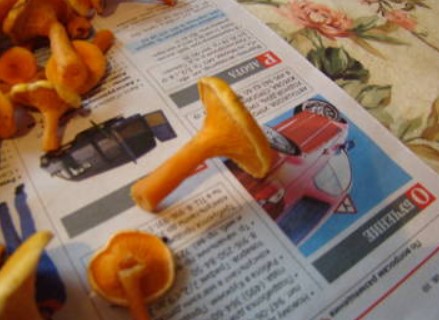
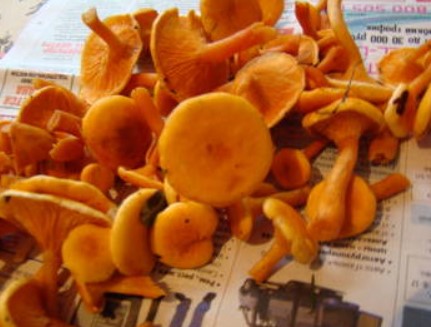
I discussed this very issue with comrade Vishnevsky in correspondence by email.
According to many sources, the mushroom is completely edible. Pre-boil for about 20 minutes. The taste, they say, is unremarkable. Incidentally, I only encountered it in large numbers in one place (50 km along the Riga highway). For example, I've never seen it at my mother-in-law's (Sergiev Posad district).
I collected them about three years ago. I suspected they might be chanterelles (due to my inexperience and initial suspicions), but my doubts compelled me to write to the book's author and thoroughly research the literature and online. Naturally, I didn't eat them.
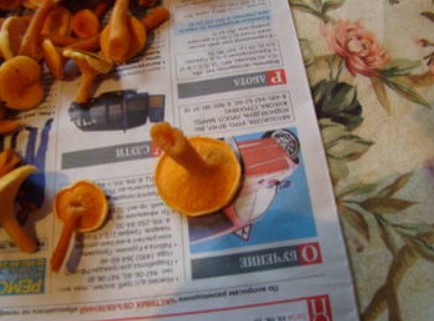
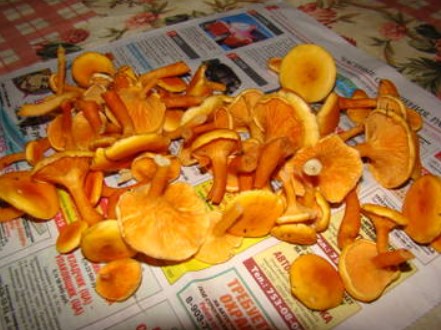
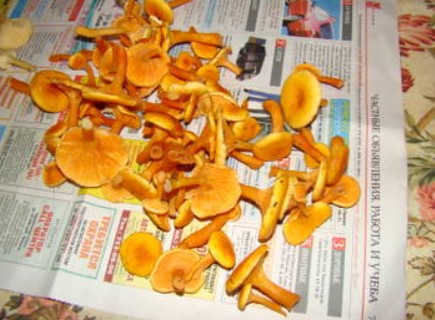
Edited by Ivanych (Wednesday, August 14, 2013, 7:20:21 PM)
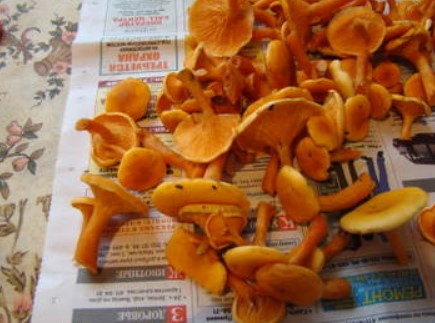
There's nothing scary about Hygrophoropsis aurantiaca (false chanterelle). The latest scare tactic, "Learn to distinguish false chanterelles from real ones!", sparks interest among novice mushroom pickers, and a bit of anxiety: What if I can't tell the difference? What then?
Nothing!
A modest orange mushroom from the Tricholomaceae family, the cap is brighter in the center and lightens toward the edges. It's not a chanterelle at all, but a typical talker with descending gills; confusing it with a red milk cap is even more likely.
When there were no mushrooms at all, I picked these talkers in a swampy pine forest, intending to make a marinade. But the mushrooms were a disappointment—in the acidic environment, they immediately lost their beautiful orange color (a real chanterelle would never do that!) and turned into soft, whitish lumps.
There's conflicting information about the edibility of the orange talker, and I couldn't find any reliable information about its toxicity, but I don't want to collect this "false chanterelle" anymore. It's not tasty.
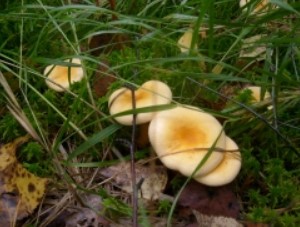
The correct name of this mushroom is Hygrophoropsis aurantiaca.
I don’t know why they call it “false chanterelle”, because in fact it doesn’t look like a chanterelle at all.
In terms of edibility, it's similar to other "talkers," which aren't poisonous but, when cooked, turn into nothing... absolutely nothing. A rag is a rag.
So, when an inexperienced mushroom picker picks this talker instead of chanterelles, they won't be poisoned. They'll simply be "disappointed in chanterelles."
This mushroom is beautiful, but only while it's growing. Therefore, its destiny is to be photographed.
The false chanterelle, as has been quite correctly noted above, isn't quite a chanterelle, so I won't repeat myself. My point is: it's a very common species here on the Karelian Isthmus, growing in spruce and pine forests. We've collected them and tried cooking them... The taste... "so-so": the flesh is sticky, flavorless, and slightly burnt. Whether with potatoes, in sour cream, or pickled, the mushrooms didn't impress, so we decided to let them decorate the forest, as their aesthetic qualities far outweigh their flavor!
Quote:
Message from alatyir:
...has anyone tried drying "false chanterelles"? ...I'm currently trying "false whites"—they're bitter, after all. I'll post the results here (I'm curious myself).We also have many who enjoy "mushroom experiments." I'm more conservative (although I've cooked sarcoscypha, leotia, and tremellodon): if a fresh mushroom's taste and smell aren't worth mentioning, then why dry it? After all, there are plenty of mushrooms with a strong, pleasant aroma that remains even when dried. Personally, I really like dried honey mushrooms. Firstly, they retain their crunch when soaked! And the smell... Oh, it's very good! Chanterelles also smell very good. Even puffballs are better than false chanterelles. And even then, that's only in a very, very lean mushroom year. Even in an average mushroom year, there are always plenty of good mushrooms for drying.
How to avoid poisoning from false chanterelles
To avoid food poisoning from false chanterelles, you must adhere to the following rules:
- Be sure to soak and boil the mushrooms for at least 20 minutes to remove toxins.
- Be careful not to let false or poisonous mushrooms end up in a basket with real ones. Otherwise, the entire harvest will become unfit for consumption.
- Any chanterelles, whether real or false, can only be collected in clean places, as they absorb toxins like a sponge.
- When salting and pickling, it is necessary to observe all sanitary precautions to avoid the occurrence of botulism.
- You can’t store mushrooms for a long time, even in the refrigerator, maximum – 2-5 days
Symptoms of false chanterelle poisoning
The first symptoms of false chanterelle poisoning can appear within 30 minutes. However, this depends on the amount consumed, how the mushrooms were prepared, the presence of chronic diseases, and the person's age.
Poisoning manifests itself as follows:
- Pain in the stomach area
- Weakness appears
- Starts to feel sick and vomit
- Problems with stool arise, most often diarrhea.
If the mushrooms are not properly prepared and bacteria are introduced to them, botulism can occur. It manifests itself as follows:
- Vision is impaired, objects become blurry and become blurred.
- Muscle weakness appears
- Dry mouth occurs

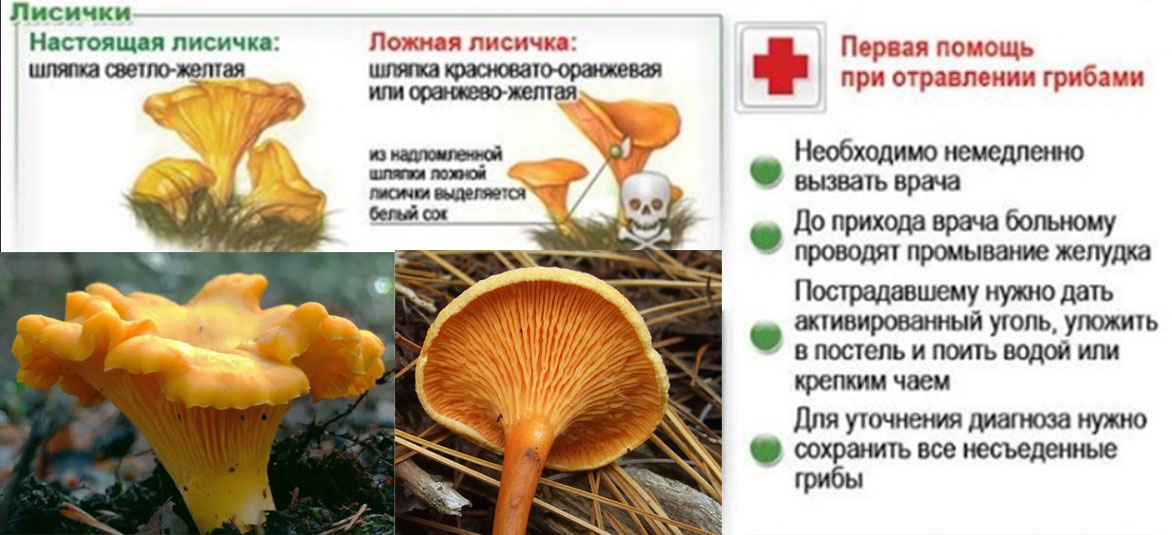
What to do if you're poisoned by false chanterelles, first aid
At the first symptoms of poisoning by false chanterelles, it is necessary to:
- Drink 1-1.5 liters of water, induce vomiting to flush the stomach.
- Take activated charcoal, 1 tablet per kg of weight, Enterosgel or Polysorb (be sure to dissolve in water).
- Take a laxative
In any case, in case of poisoning, it is imperative to seek medical help, because the consequences can be unpredictable.
Controversy over the edibility of the false chanterelle
Scientists are still debating the edibility of the false chanterelle. Some claim that all toxins are released after soaking and cooking. Others argue that the risk of poisoning remains, and prolonged soaking can damage the flesh.
Be that as it may, we're all for avoiding unnecessary risks. Even proper processing doesn't guarantee safety. And the mushroom's flavor isn't worth the time and effort.
Other mushrooms similar to chanterelles
Quite often, some mushroom pickers refer to the false chanterelle as something completely different from what they're talking about. It turns out that the false chanterelle also has its own lookalikes. We'll discuss them below.
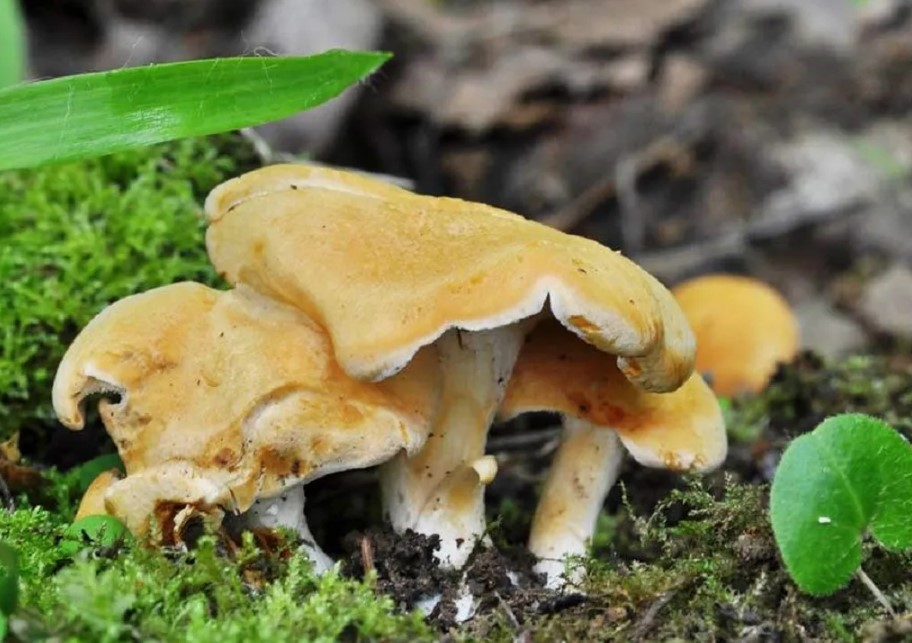
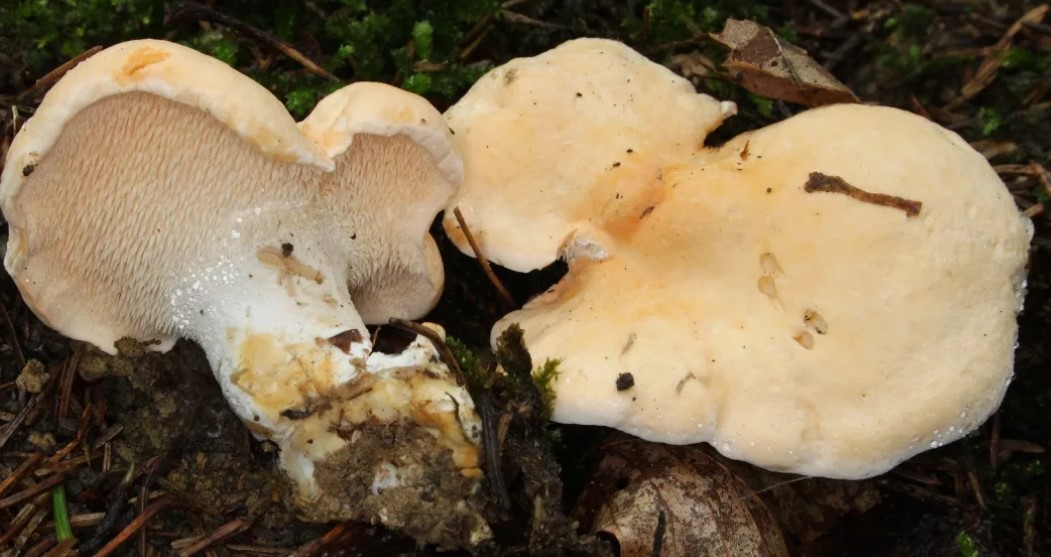
Yellow hedgehog mushroom (Hydnum repandum)
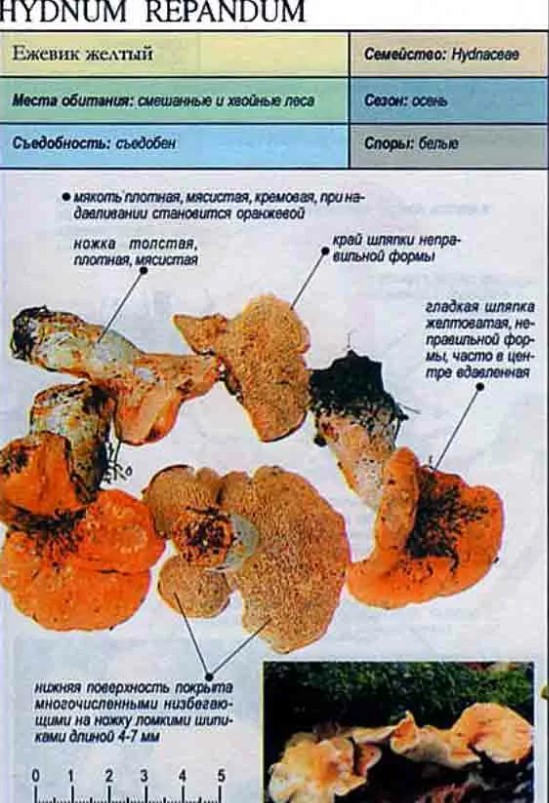
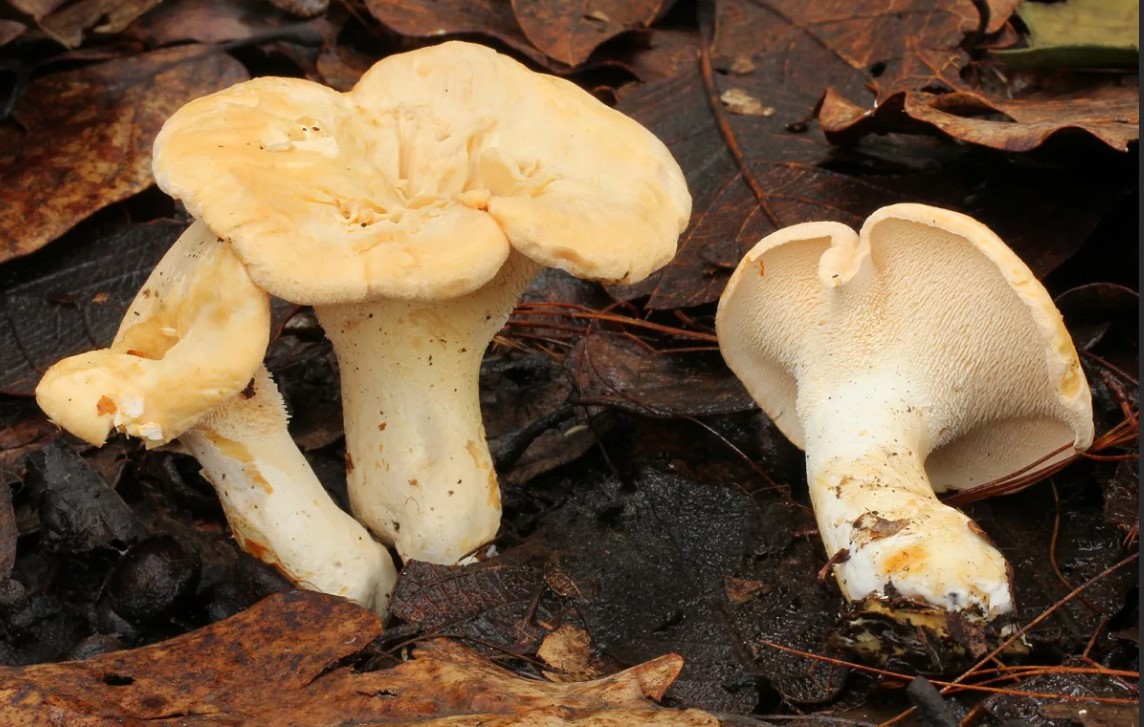
The cap is up to 12 cm in diameter and flat. The edges are curved inward. The color changes from orange to milky as it grows.
The height of the stem is up to 6 cm, the shape is cylindrical, expanding at the base.
The hymenophore is represented by small soft needles, which clearly distinguishes the mushroom from the chanterelle.
The mushroom is considered conditionally edible; boiling isn't always required for its preparation. It's quite rare in the moss beds of mixed and coniferous forests.
The peak growth period is July-October.
Edible.
Photo gallery of the yellow hedgehog mushroom
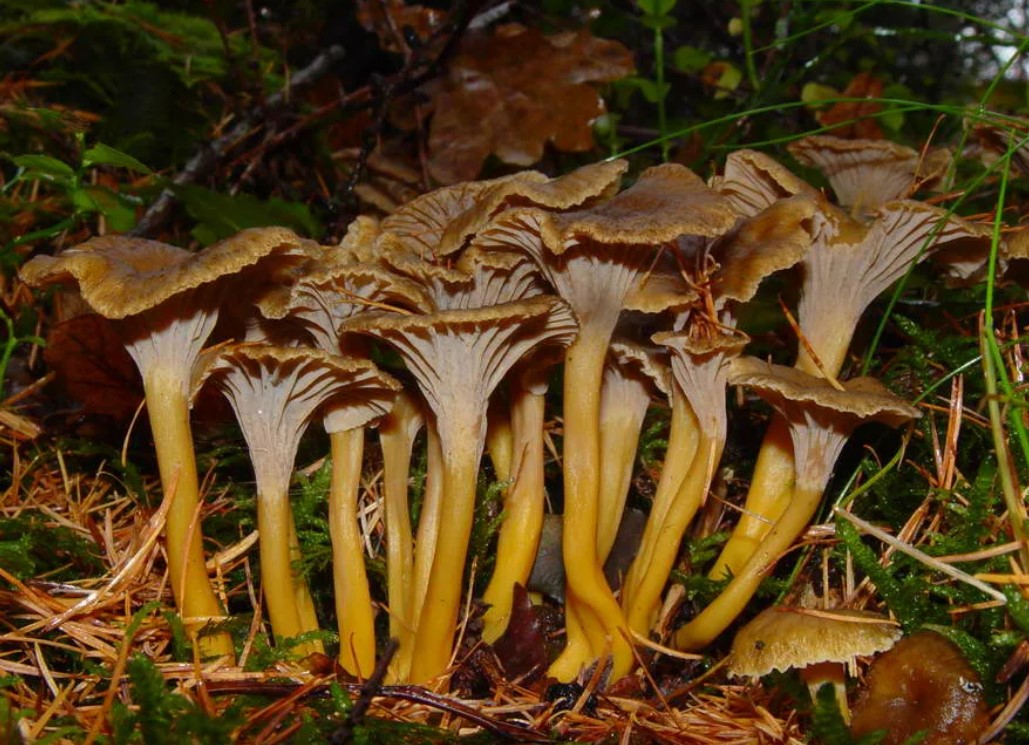
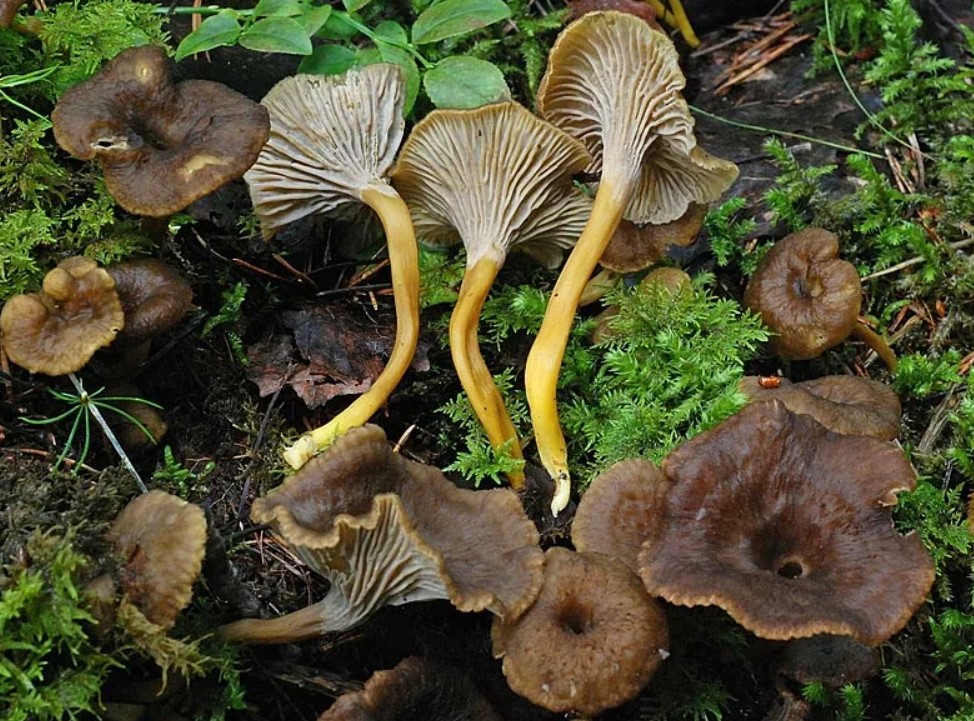
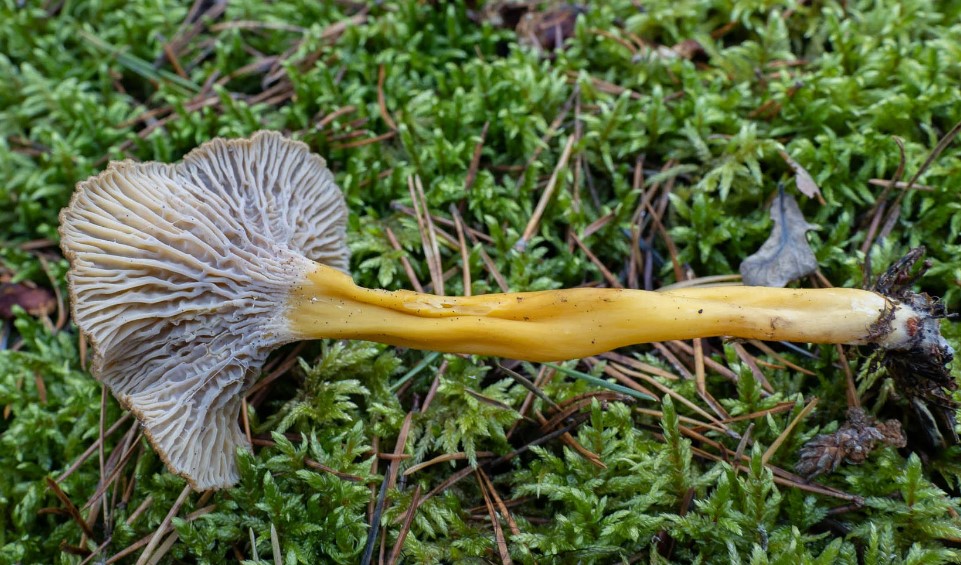
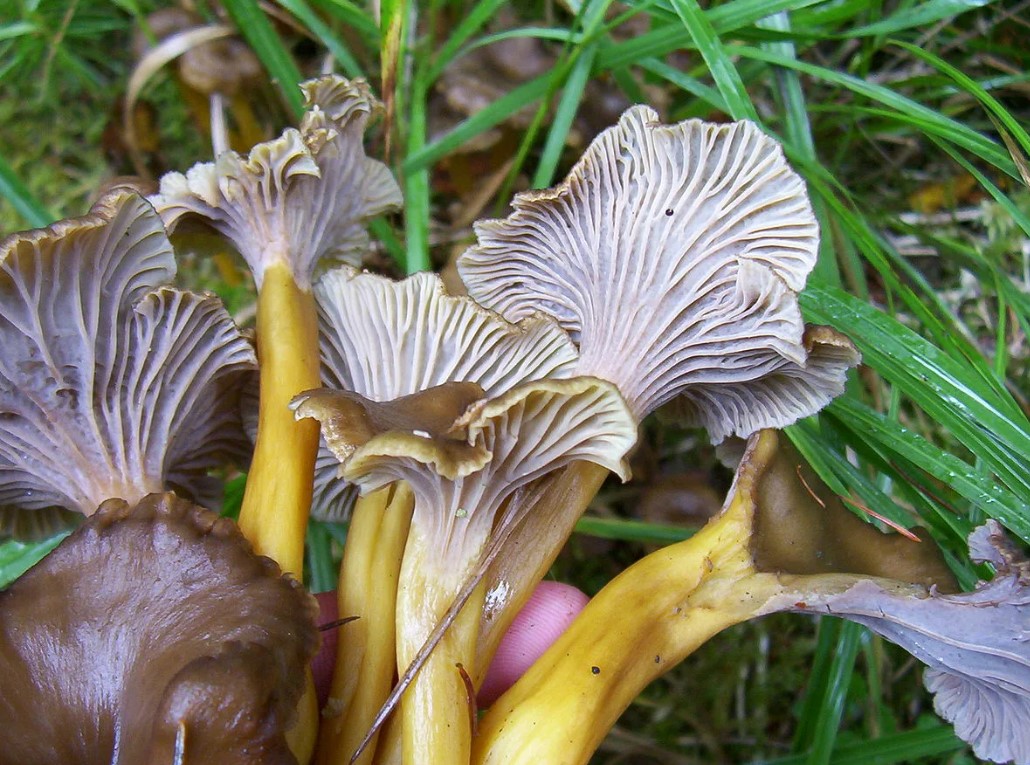
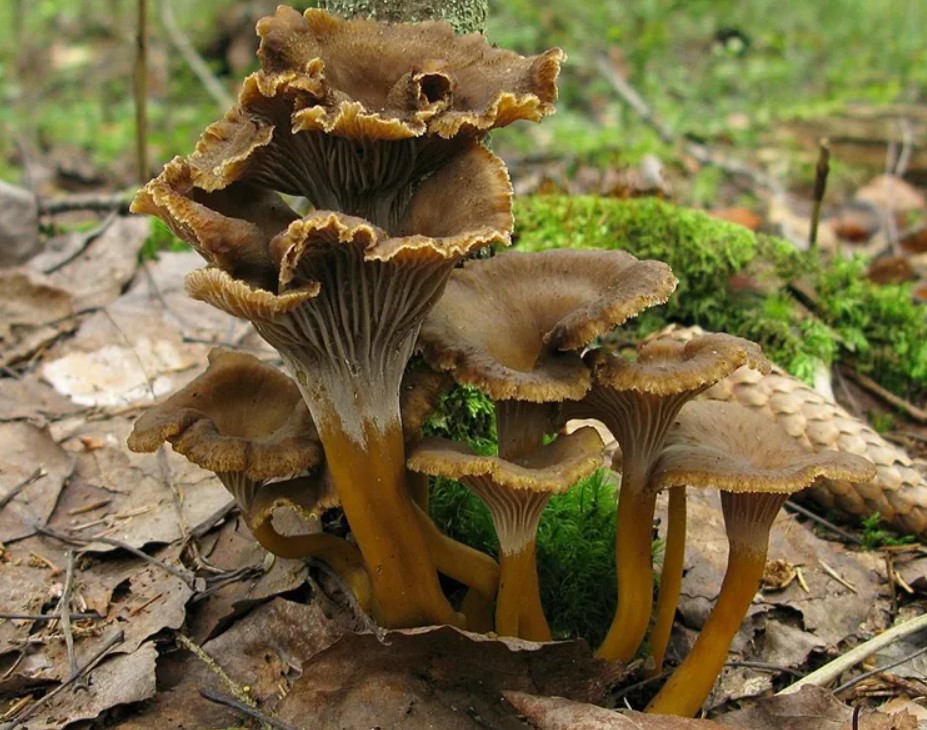
Funnel-shaped chanterelle (Cantharellus tubaeformis)
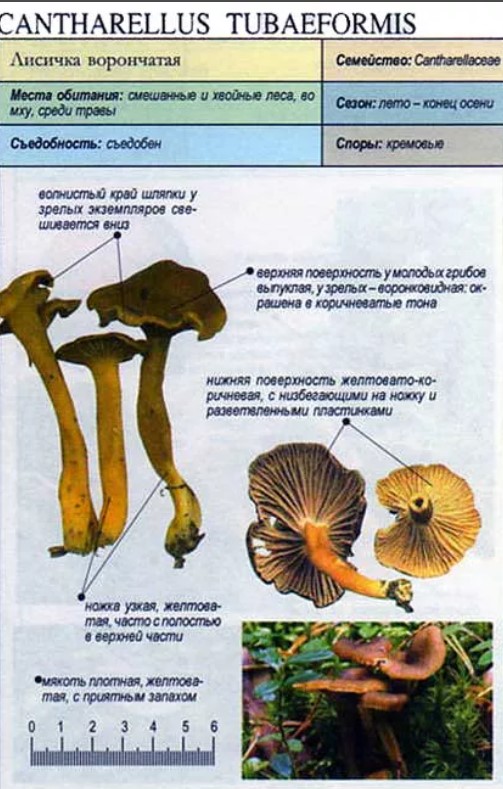
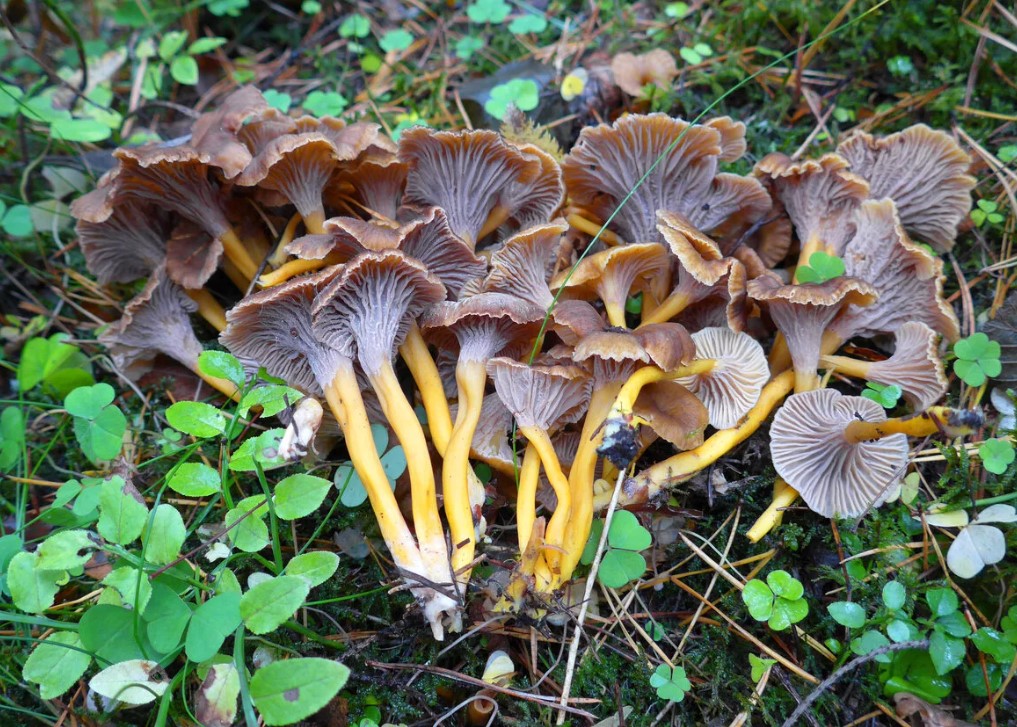
The cap is funnel-shaped and ranges from 2 to 6 cm in diameter. The edges are curved. The color ranges from brownish to yellow. The surface is covered with velvety scales.
The stem is up to 8 cm high, the diameter is no more than 0.8 cm. The shape is slightly compressed on the sides.
The hymenophore is represented by downward folds of a bluish or yellowish color.
It grows primarily in coniferous forests, but can also be found in deciduous ones. It grows in large clumps.
The mushroom is collected from September until the first frost, and can be eaten.
Funnel-necked Chanterelle Photo Gallery
Talkers (Clitocybe)
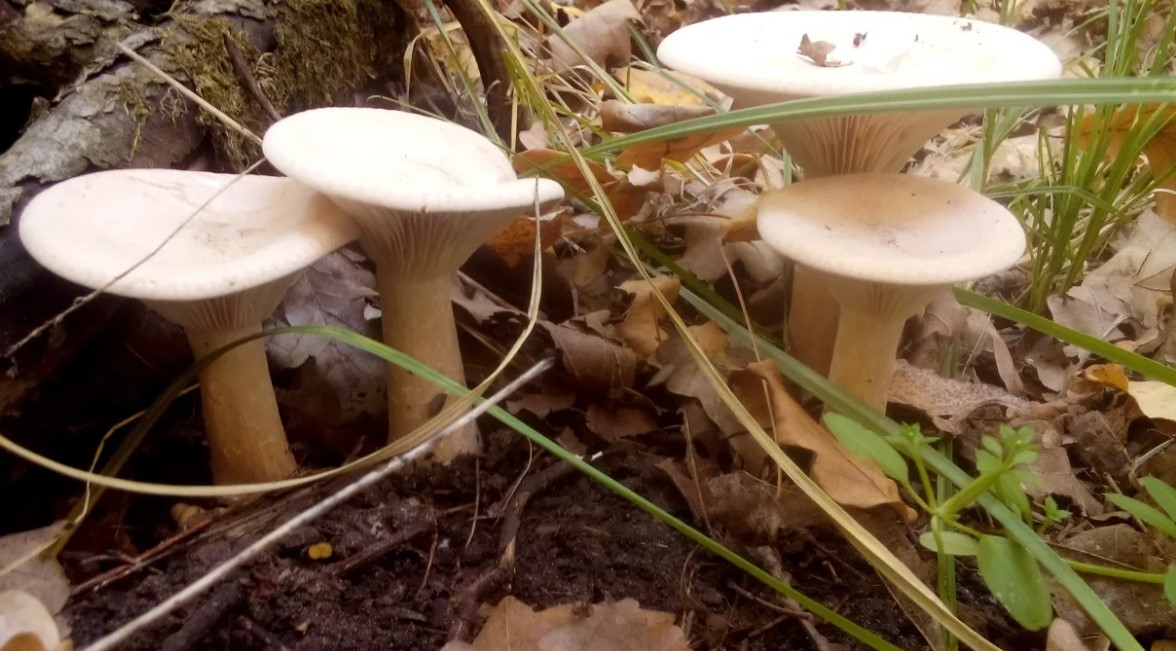
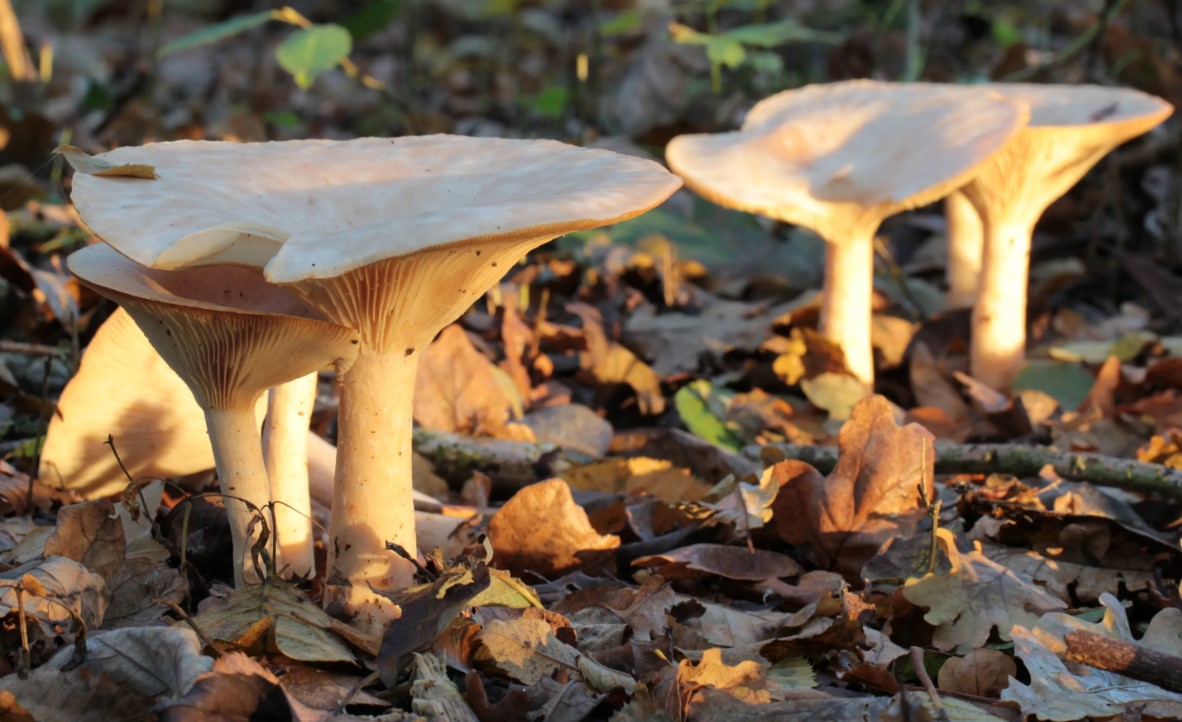
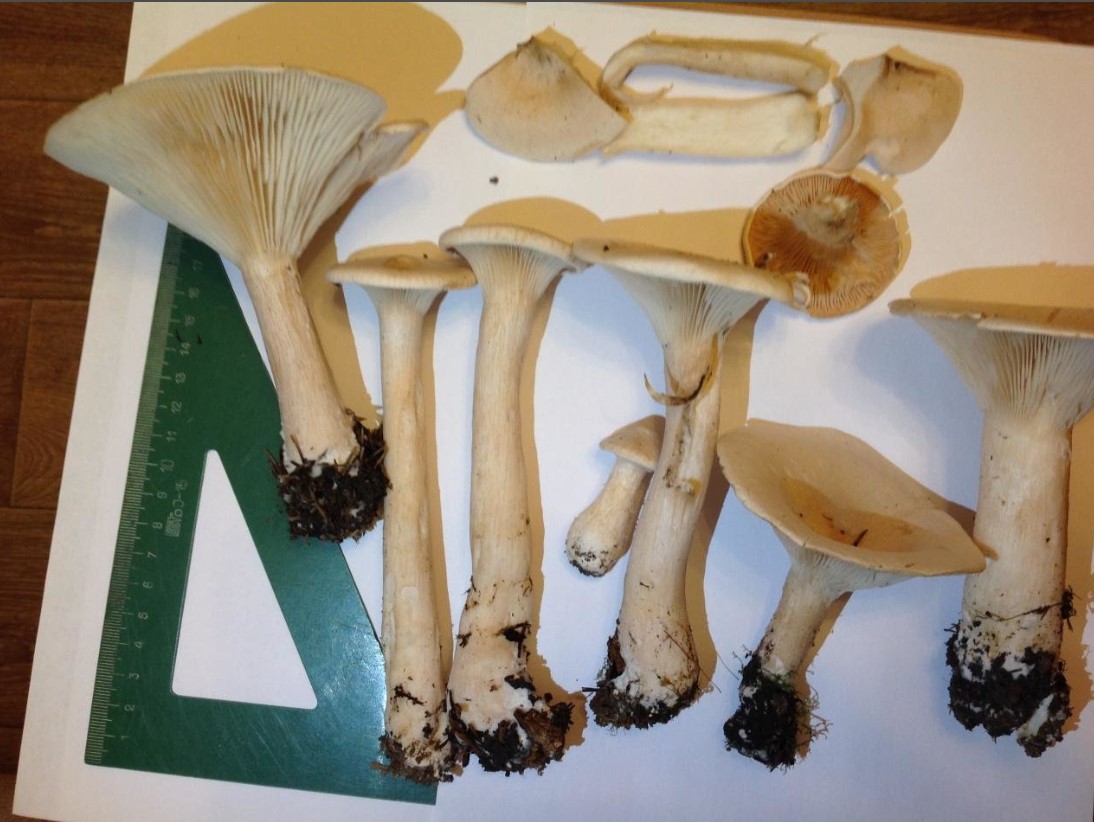
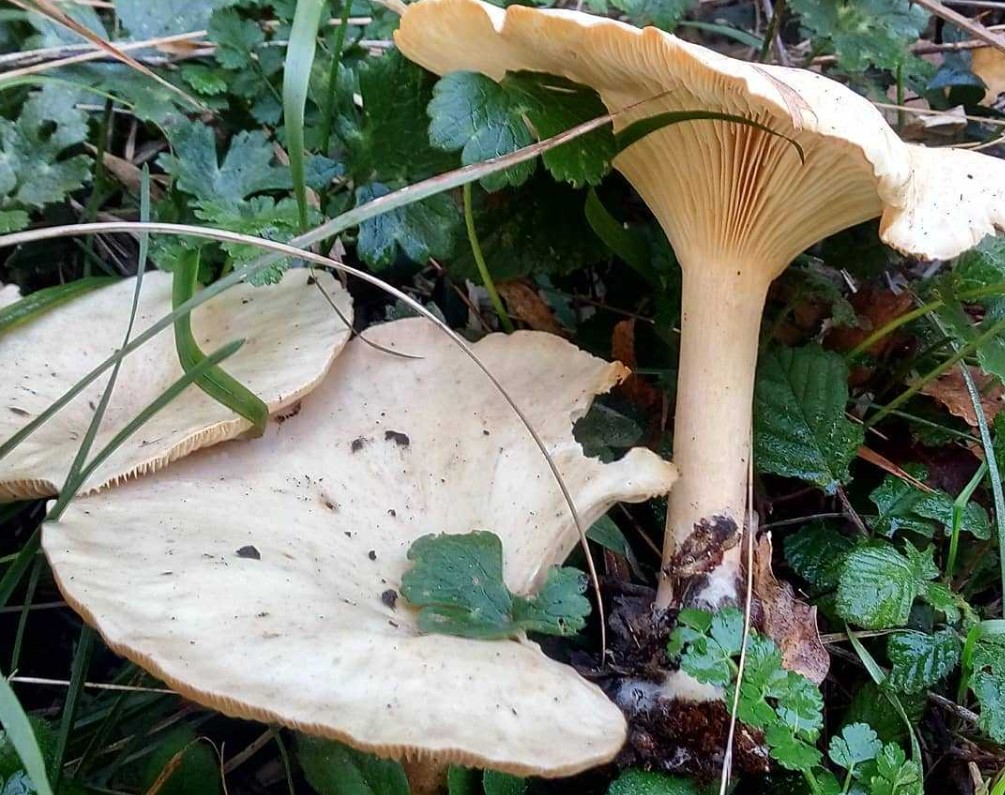
This species of mushroom belongs to the Trichomycetes family. The cap is reddish-brown, but more spreading than that of chanterelles. The diameter can reach 20 cm, and the surface is dry and matte.
The stem is cylindrical and up to 15 cm high. The plates are very thin and white.
The flesh is white and fairly dense. It does not change color when cut or pressed. The taste is bitter, with an almond aroma.
Talkers grow from July to October in mixed and deciduous forests.
The mushroom is considered conditionally edible.
Photo gallery of the talker
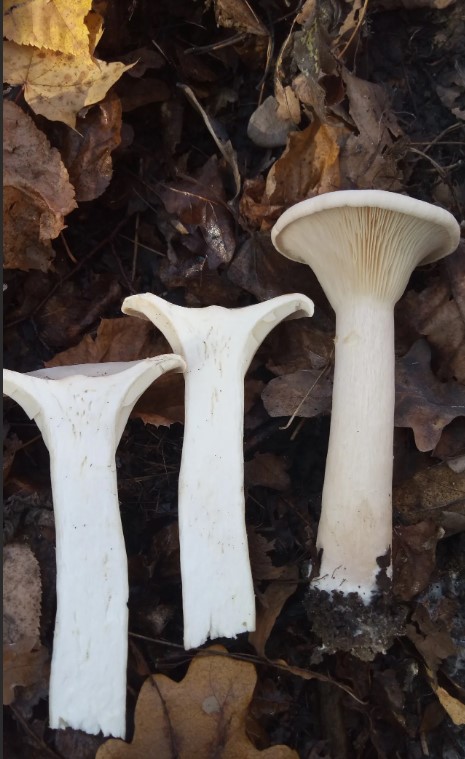
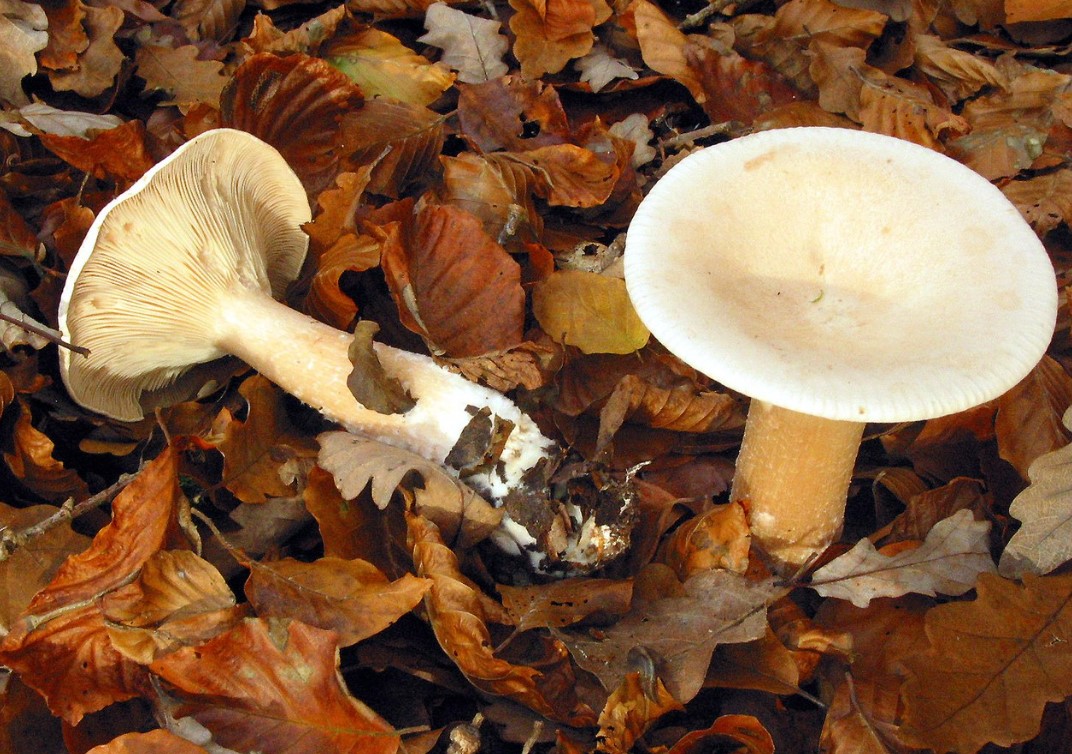
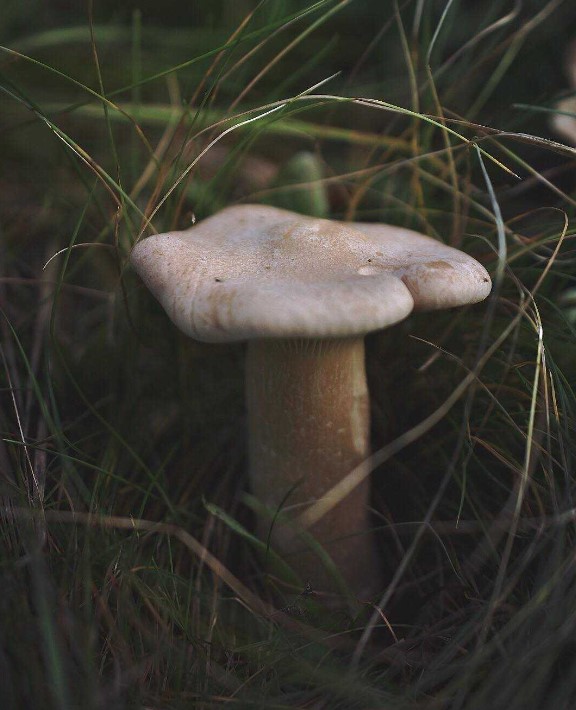
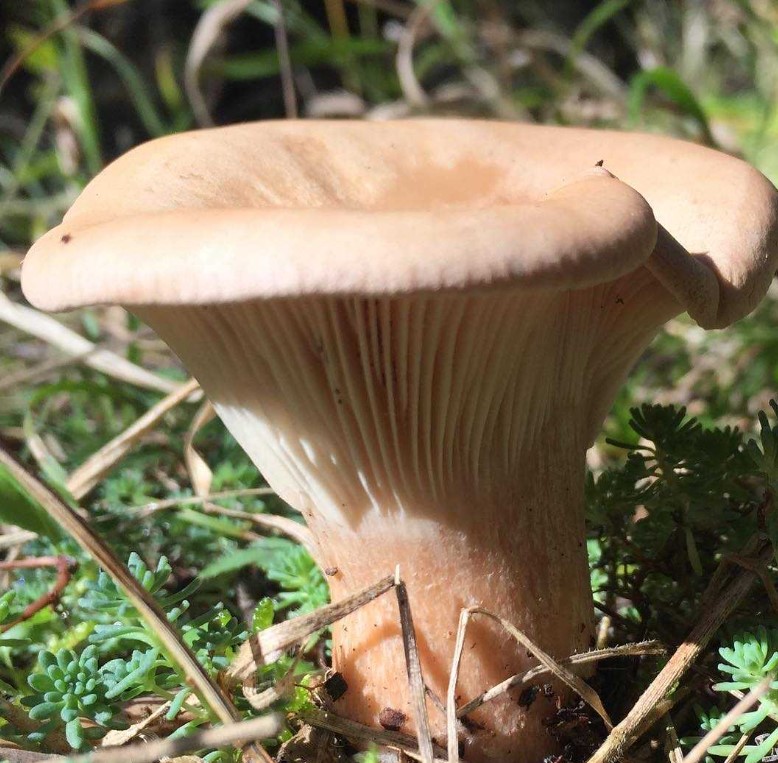
Read more about the different types of talkers in the articleTalker mushrooms: 6 species with descriptions in tables + 91 photos, when and how to collect.
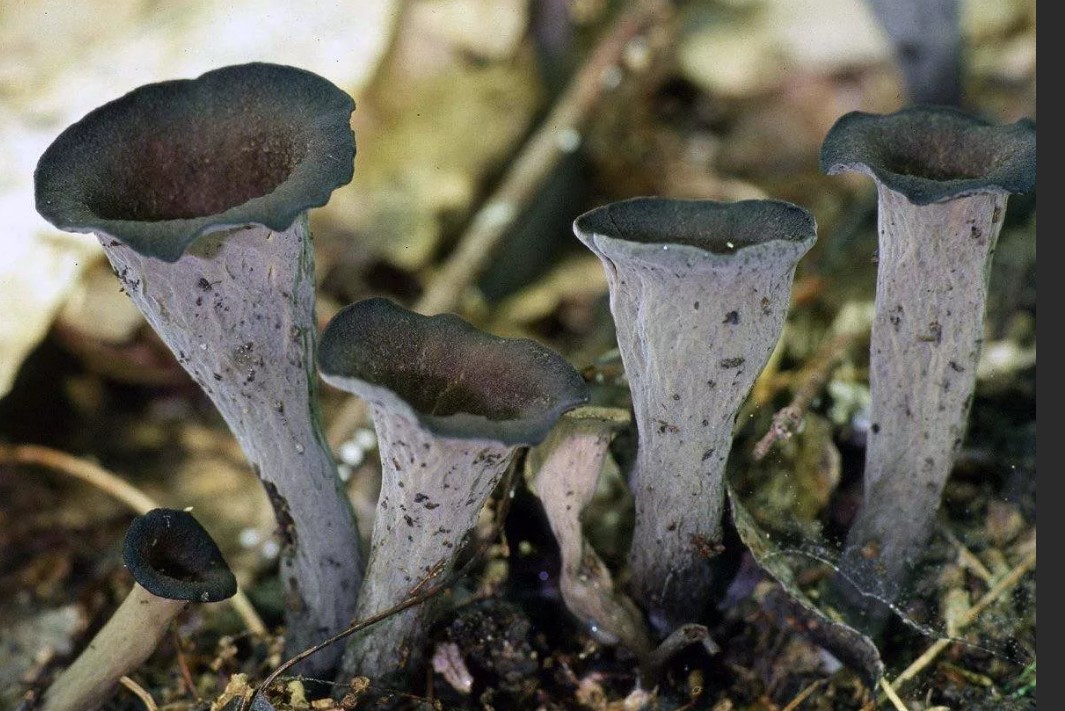
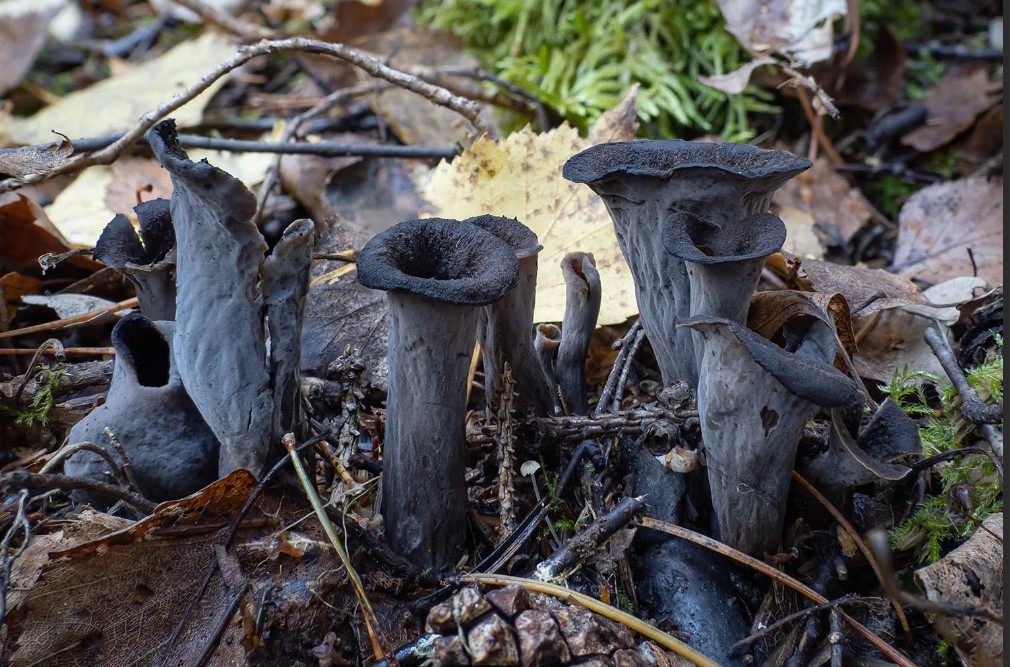
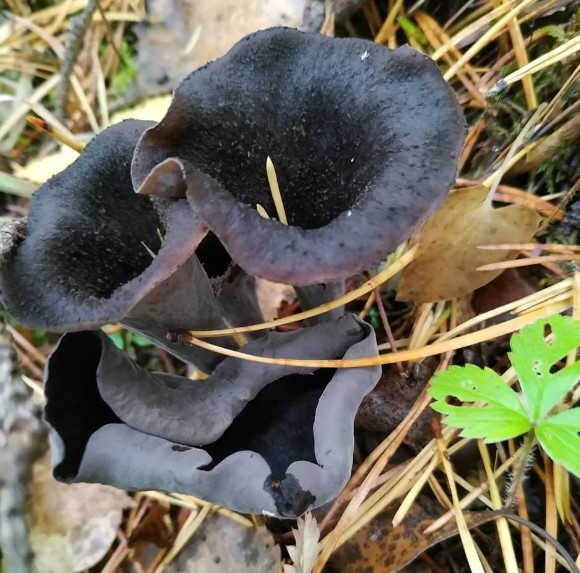
Funnel-shaped hopper (Craterellus cornucopioides)
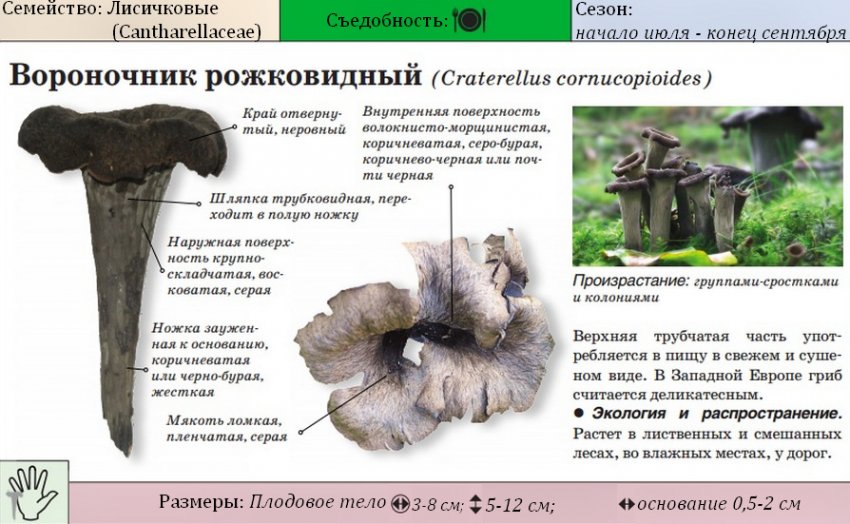
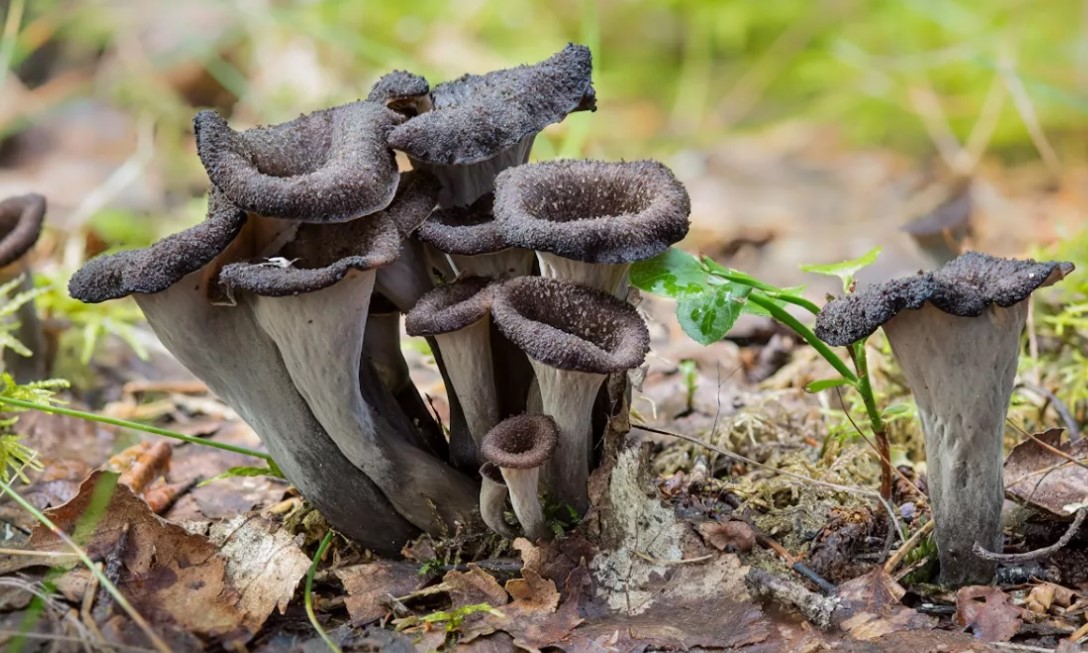
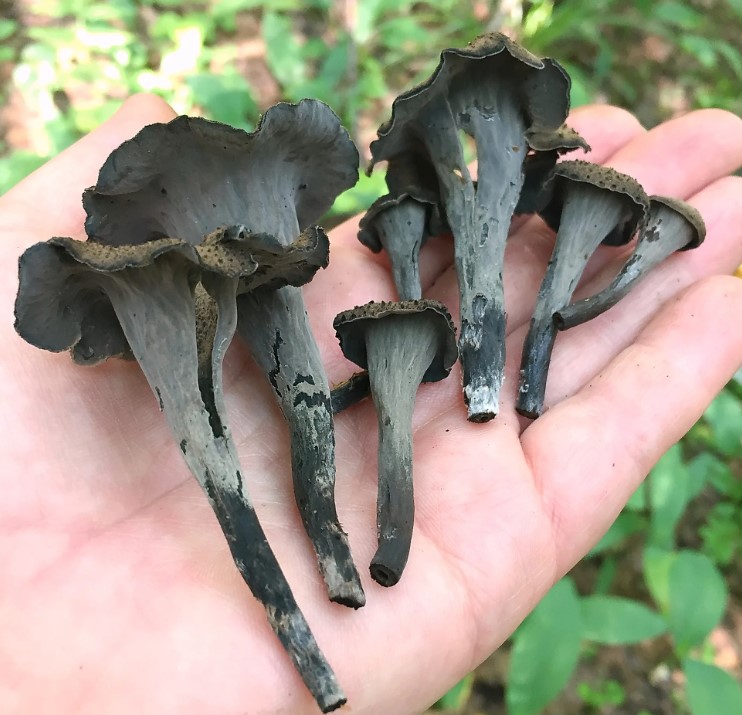
Found in many countries, this mushroom is shaped like a trumpet or horn, hence its name. The cap, up to 8 cm in diameter, is deeply wavy and shaped like a very deep funnel. Its color is very dark, almost black. Therefore, it is often called the black chanterelle.
The stem is up to 8 cm high and no more than 1 cm in diameter. It is the same color as the cap. The usual gills are absent.
The pulp is dark in color, fragile, and has virtually no odor.
Conditionally edible mushroom.
Photo gallery of the Horn-shaped Funnel
Read more about the black fox in the articleBlack chanterelle mushrooms: photos and descriptions, where and when they grow, and how to cook them.