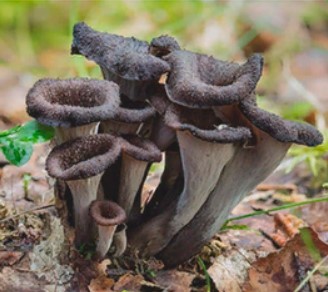
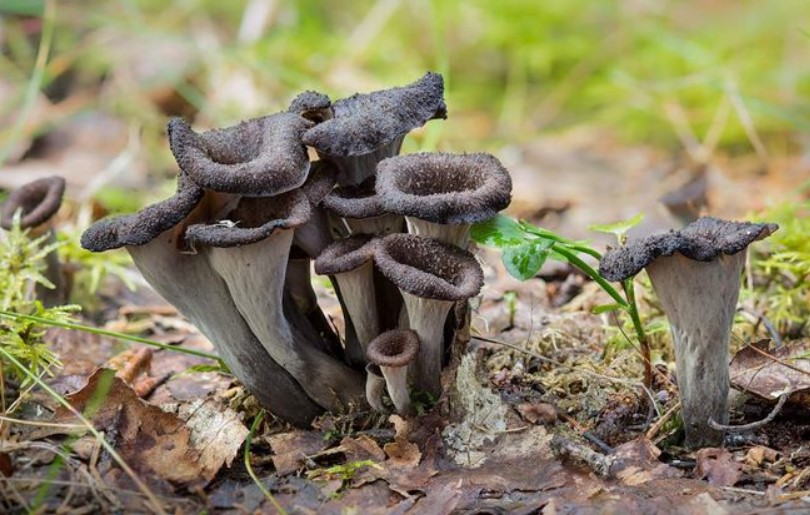
The black chanterelle (Cerulean chanterelle) is an edible mushroom considered a delicacy in some countries. Its unusual appearance can be disconcerting to novice mushroom pickers. Let's take a closer look at this mushroom and offer several delicious recipes for preparing it.
Content
- 1 The History of Black Chanterelles
- 2 Description of the black chanterelle
- 3 Where and when do black chanterelles grow?
- 4 Black fox look-alikes with photos and descriptions
- 5 Nutritional qualities of black chanterelle
- 6
- 7 The benefits and harms of black chanterelle
- 8
- 9 Medicinal uses of black chanterelle
- 10 How to cook black chanterelle mushrooms: the best recipes
- 10.1 Preparing black chanterelles for cooking
- 10.2 Boiled black chanterelles
- 10.3 How to pickle black chanterelles
- 10.4 Frying black chanterelles
- 10.5 Salted black chanterelles
- 10.6 Drying black chanterelles
- 10.7 How to freeze black chanterelle mushrooms
- 10.8 Canned black chanterelles
- 10.9 Black chanterelle soup
- 10.10
- 10.11 Black chanterelle sauce
- 11 How to grow black chanterelle mushrooms
- 12 Interesting facts about black chanterelles
- 13 Reviews of black chanterelles
The History of Black Chanterelles
A special feature of these mushrooms is that they begin to appear in the forests on November 2nd. This date is known in Europe as All Souls' Day. This is where the mushroom's somber name comes from.
It's sometimes popularly called the "poor man's truffle." This nickname was given to black chanterelles by biologist Augusto Tocci, who studied them for many years.
Description of the black chanterelle
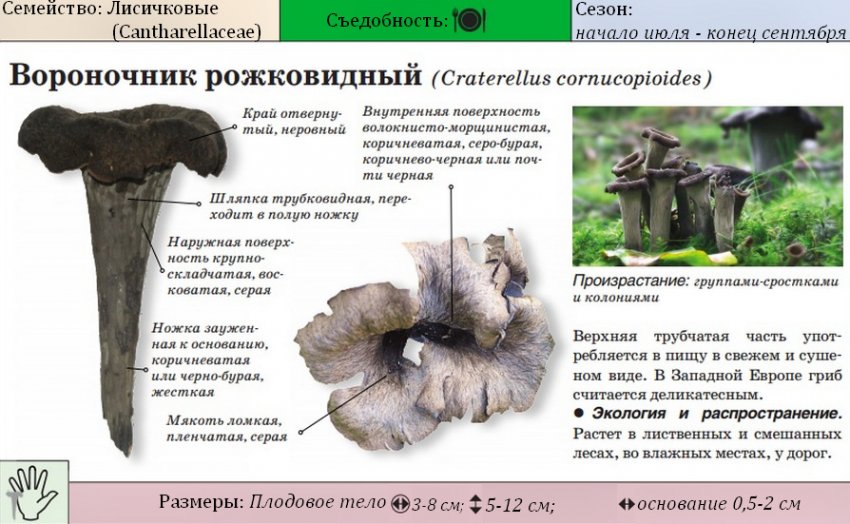
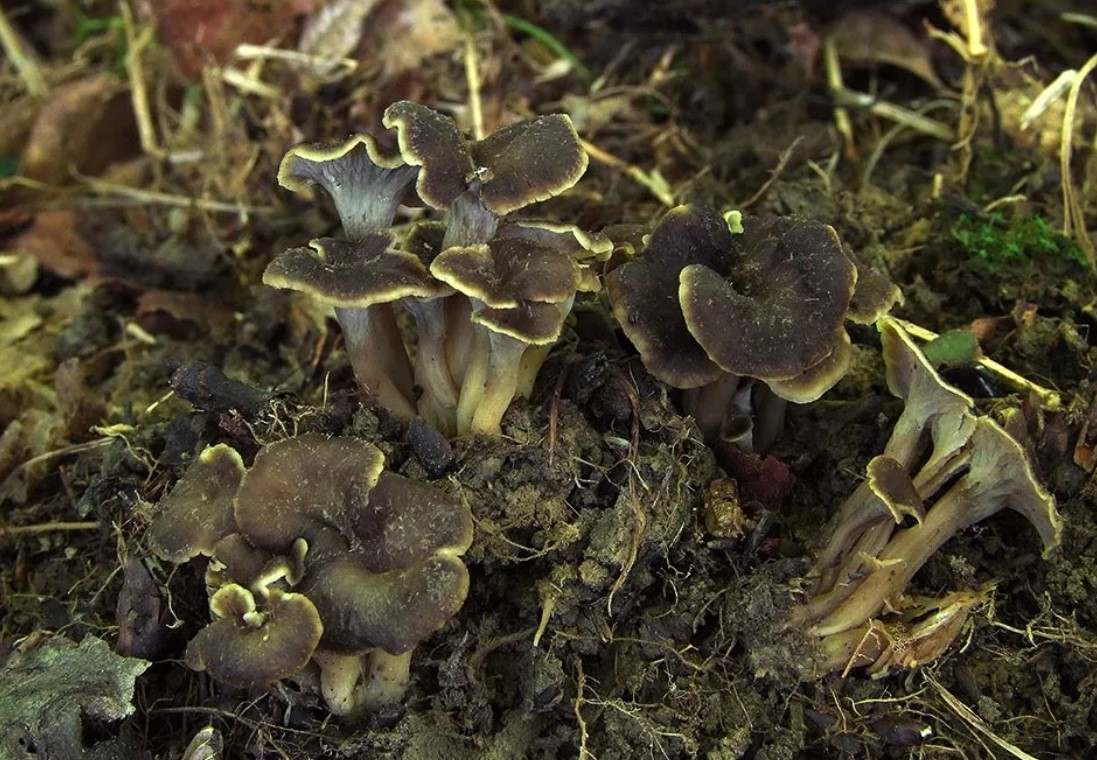
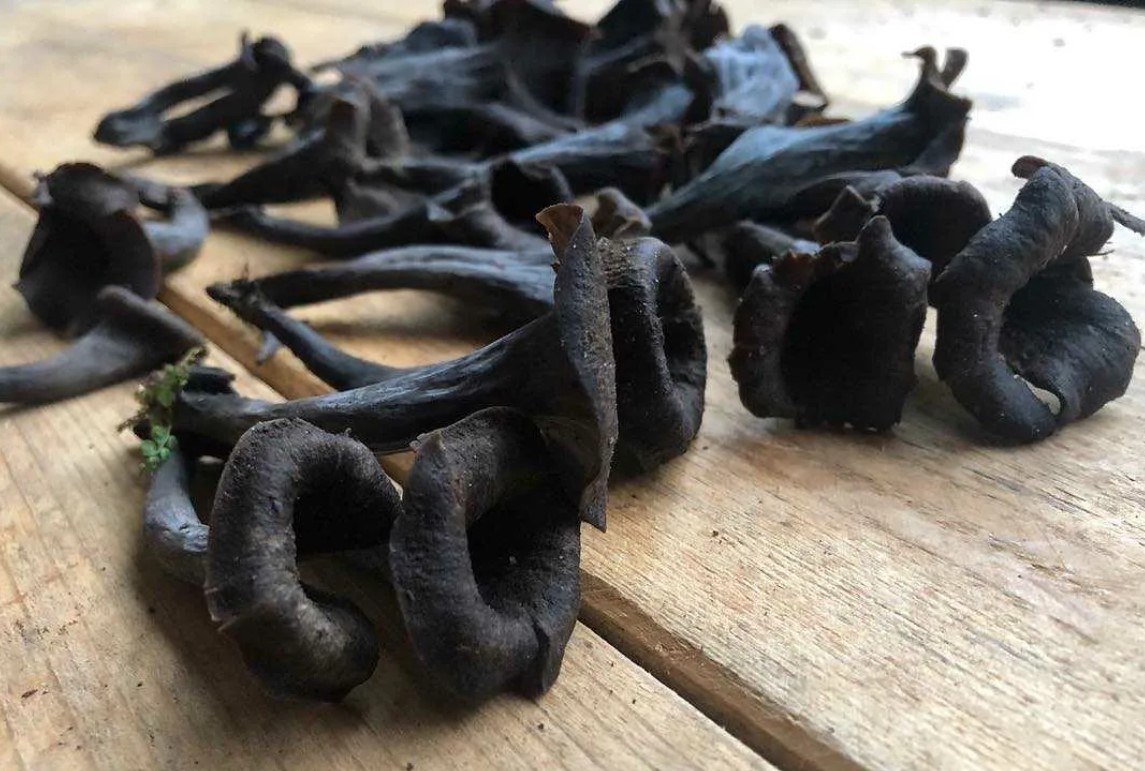
The Latin name is Craterellus cornucopioides. It belongs to the genus Craterellus, family Chanterelle. This species is distinguished from others by its darker fruiting body.
|
Characteristic |
Description |
|
Fruiting body |
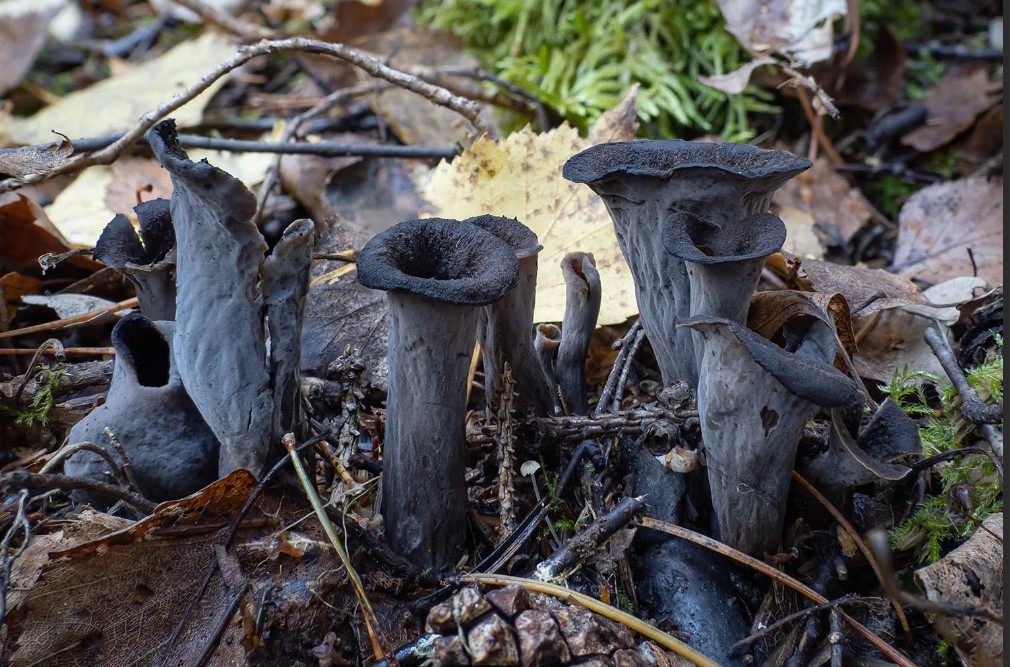
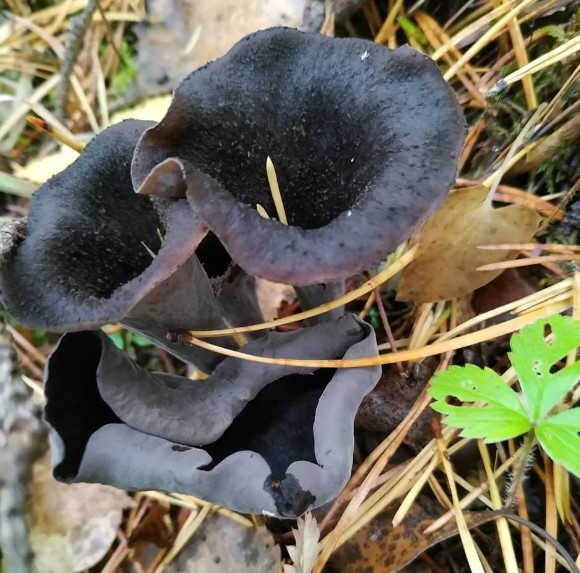
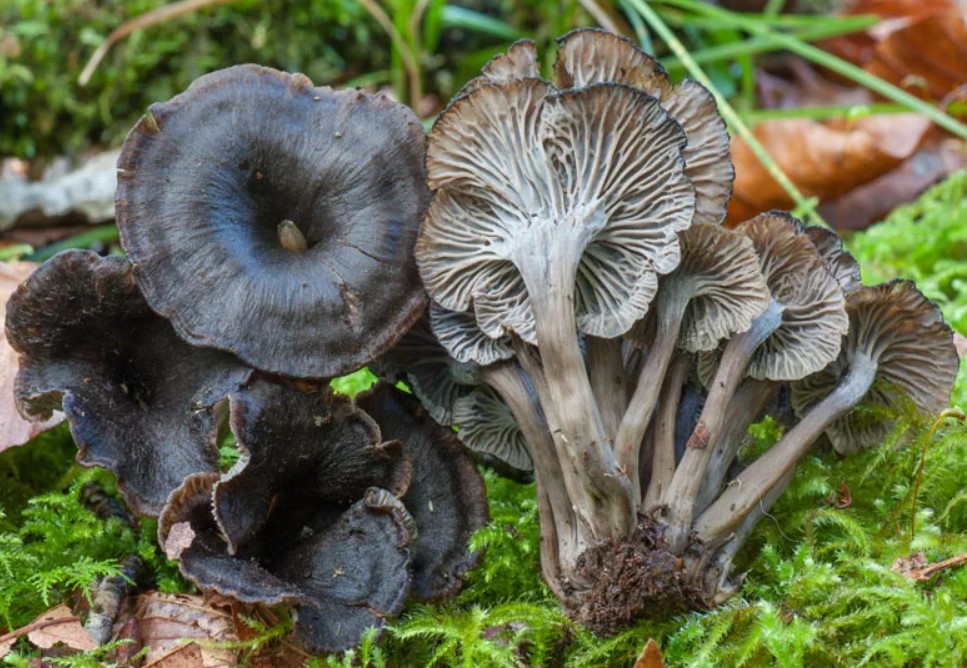
It reaches 10-12 cm in height. It is tubular or cup-shaped, tapering towards the base. The upper part is fibrous, with small scales. In young specimens it is blackish-brown, while in mature specimens it is dark gray, almost black. The lower part is grayish-brown. Covered with a thin spore-bearing layer. The cap and stem are the same color. They lighten after drying. |
|
hat |
3-8 cm in circumference, funnel-shaped. The edges are wavy and turned outward. In older specimens, they may be torn or lobed. |
|
Leg |
No more than 10 cm in diameter, up to 1 cm in circumference. Dry, brittle, and hollow. That is, the cap cavity immediately opens into the cavity of the stem. |
|
Pulp |
Brittle, brittle, grayish in color when young, turning dark brown or black as they age. After heat treatment it also acquires a dark color. Fresh, it has almost no flavor or aroma. After cooking, it becomes distinctly mushroom-like. |
|
Spore powder, spores |
Pseudoplates are absent. Instead, there is a hymeneum. This is a thin spore-bearing layer. It is whitish or slightly yellow. Spores are 8-14 x 5-9 µm, ovoid-ellipsoid, smooth, and colorless. |
|
Peculiarities |
The chanterelle mushroom is a close relative of the chanterelle. However, it bears little resemblance to the chanterelle in appearance. It has a darker color and a distinctive shape. Some chefs claim that this mushroom has superior flavor to its cousin. |
Photo gallery of black chanterelles
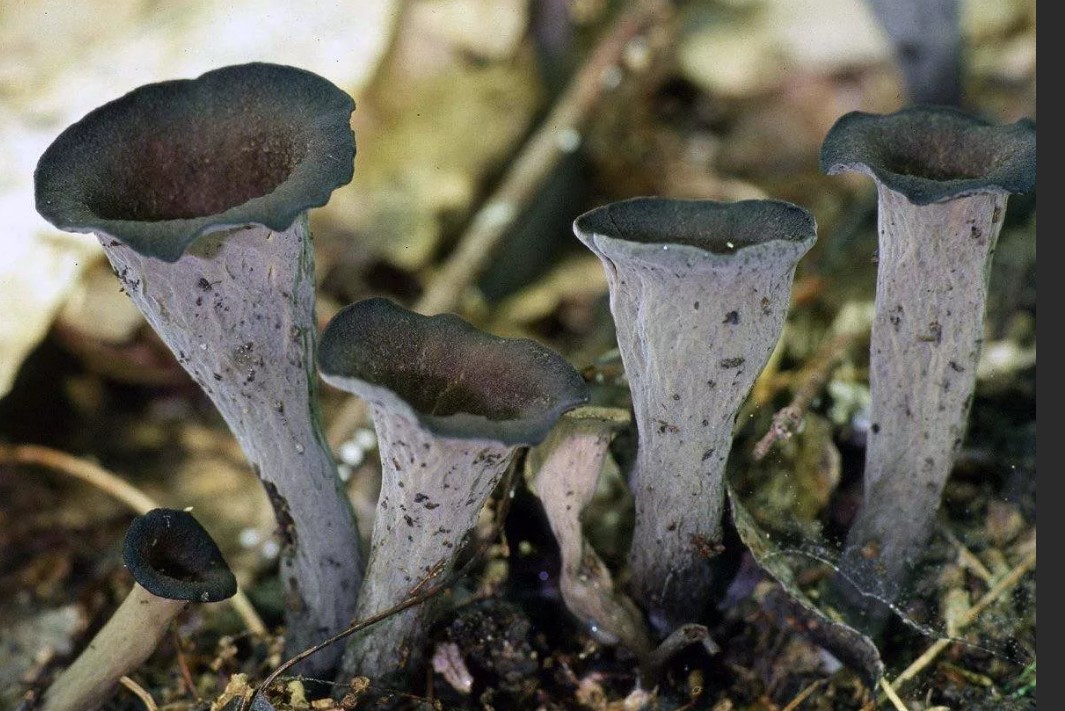
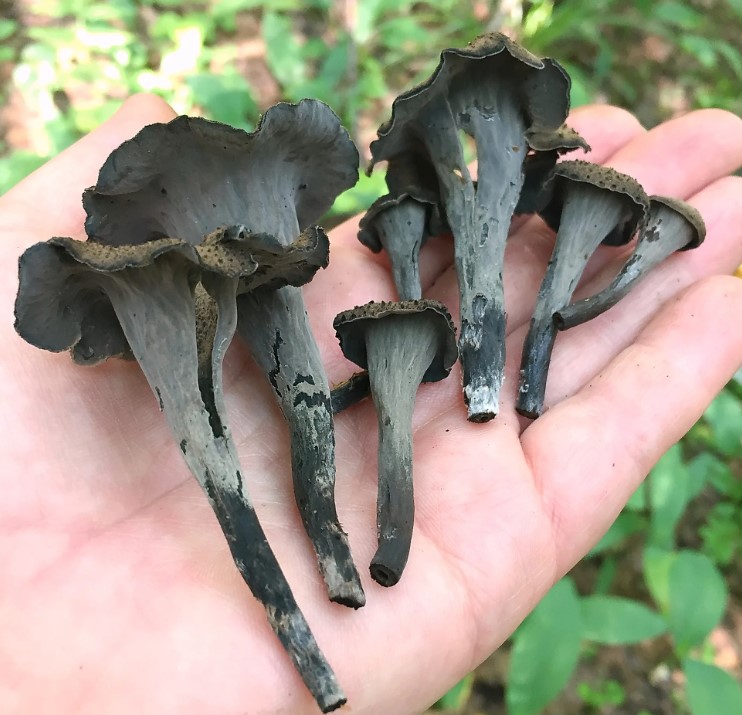
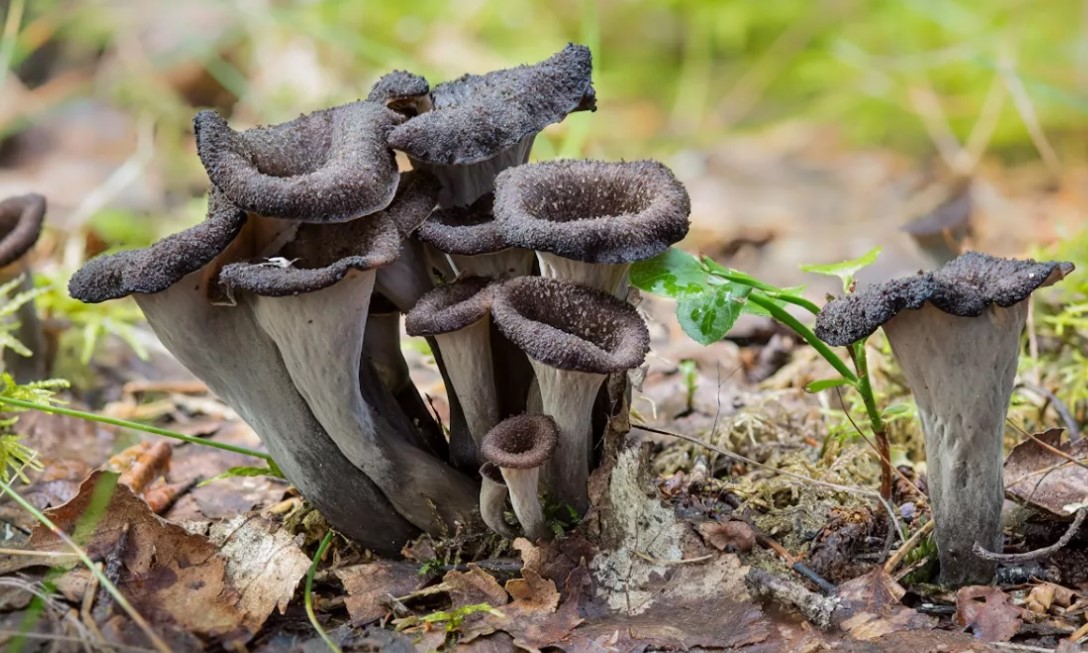
Where and when do black chanterelles grow?
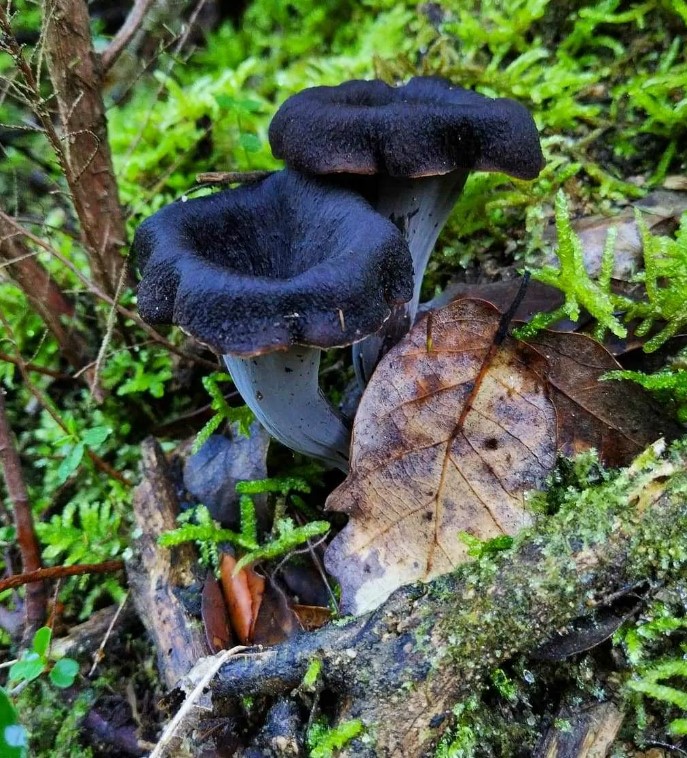
They grow naturally in Europe, Asia, North America, and here in Russia. They can be found:
- in deciduous and mixed forests;
- in open clearings and forest edges;
- on the roadsides;
- on the mountain plains;
- near the ditches;
- near oaks and beeches.
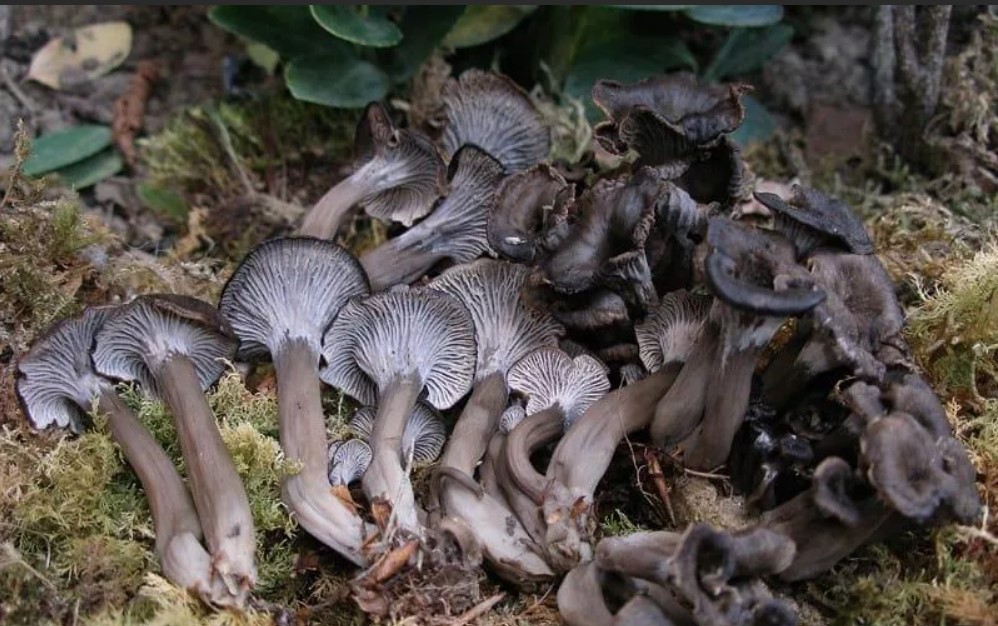
They usually cluster in groups of four or more. The cap blends into the ground, making them difficult to spot.
Black fox look-alikes with photos and descriptions
The black fox does not have many similar relatives, there are only two.
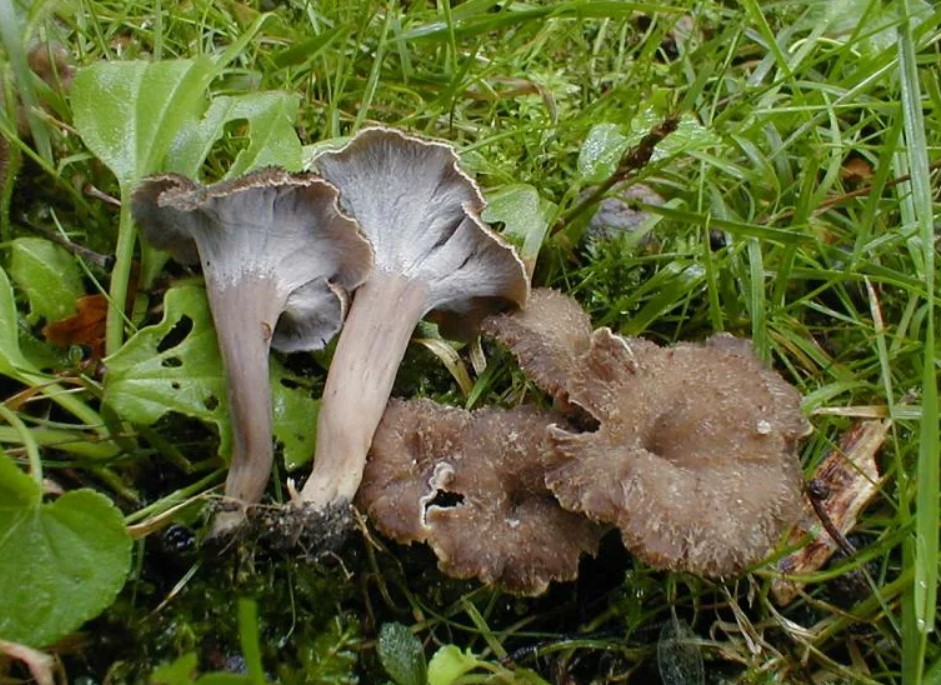
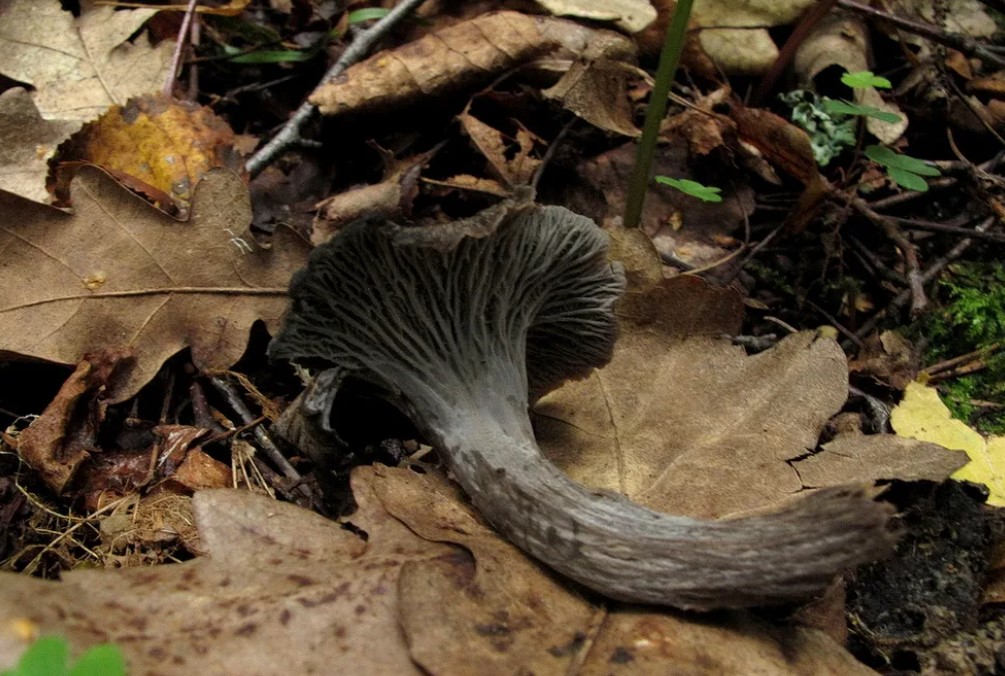
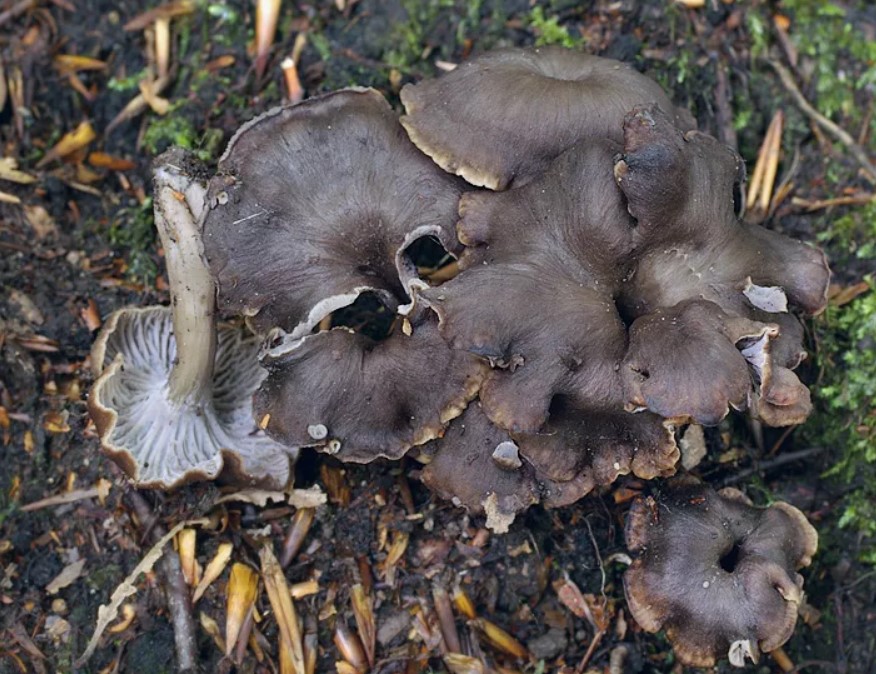
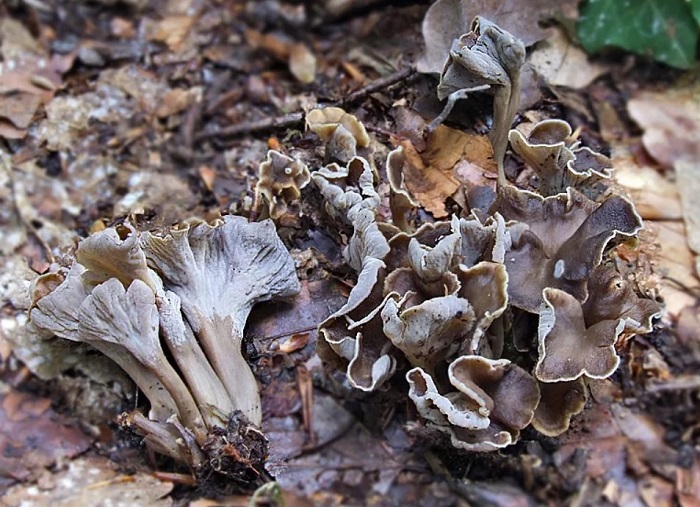
Gray chanterelle (Cantharellus cinereus)
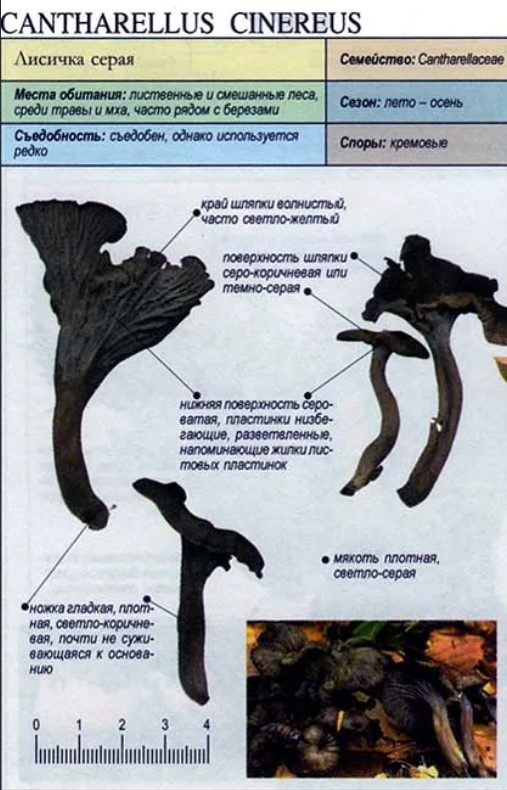
It also has a funnel-shaped cap with jagged edges. It measures 3-6 cm in circumference. The flesh is thin, rubbery, and fibrous, without flavor or aroma. The stem is up to 3-5 cm long. The fruiting body can be gray or grayish-brown.
It differs from the black chanterelle in color and the more uneven perimeter of the cap. Furthermore, it has pseudo-gills rather than a hymen.
The twisted funnel is edible. However, its flavor is very weak.
Photo gallery of the gray chanterelle
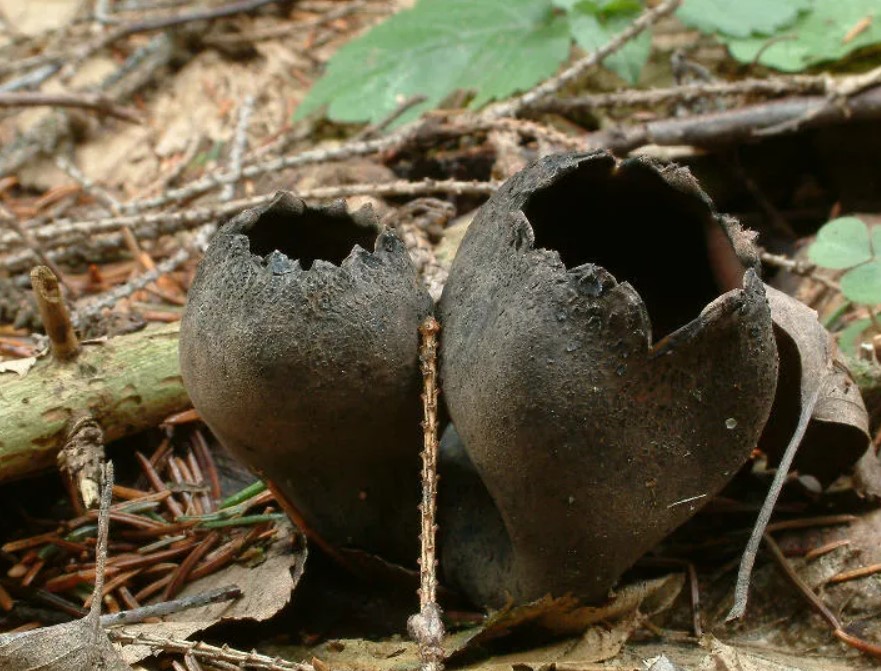
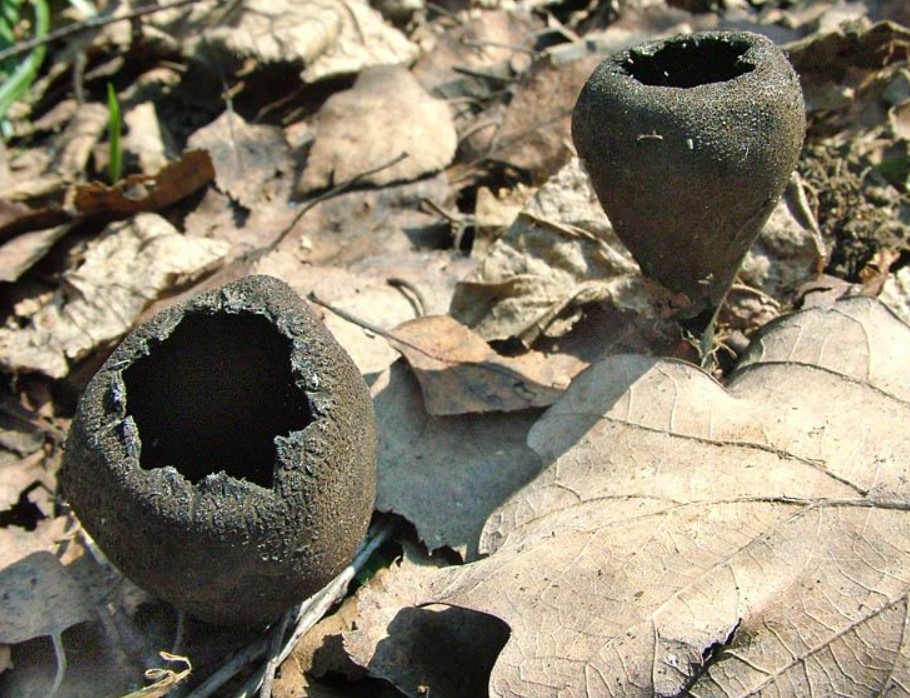
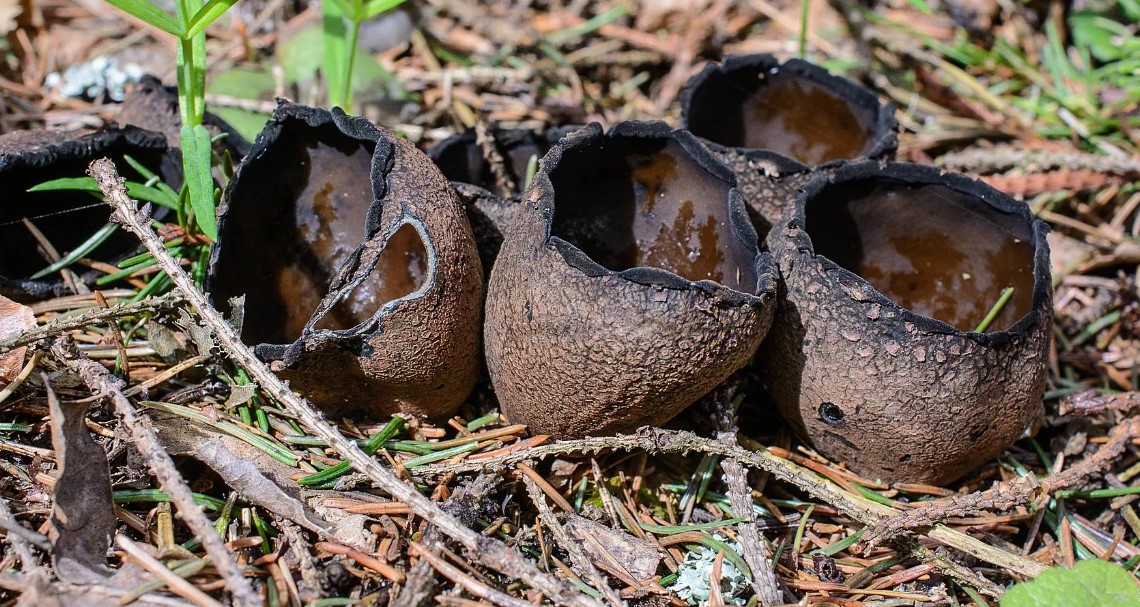
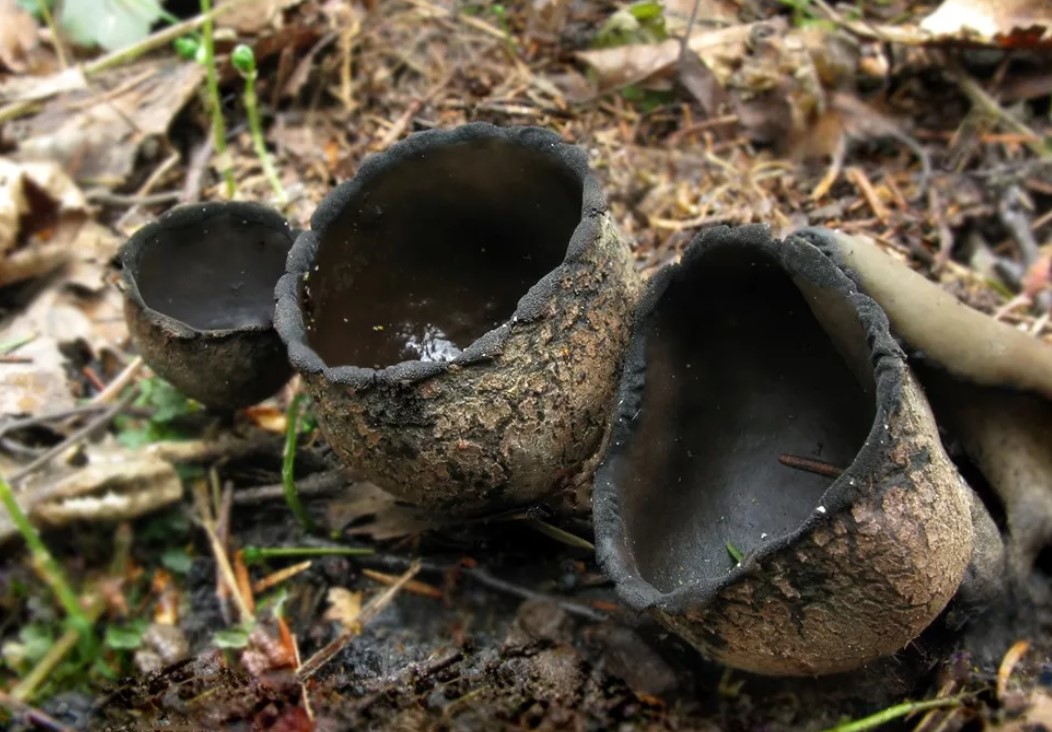
Urnula craterium
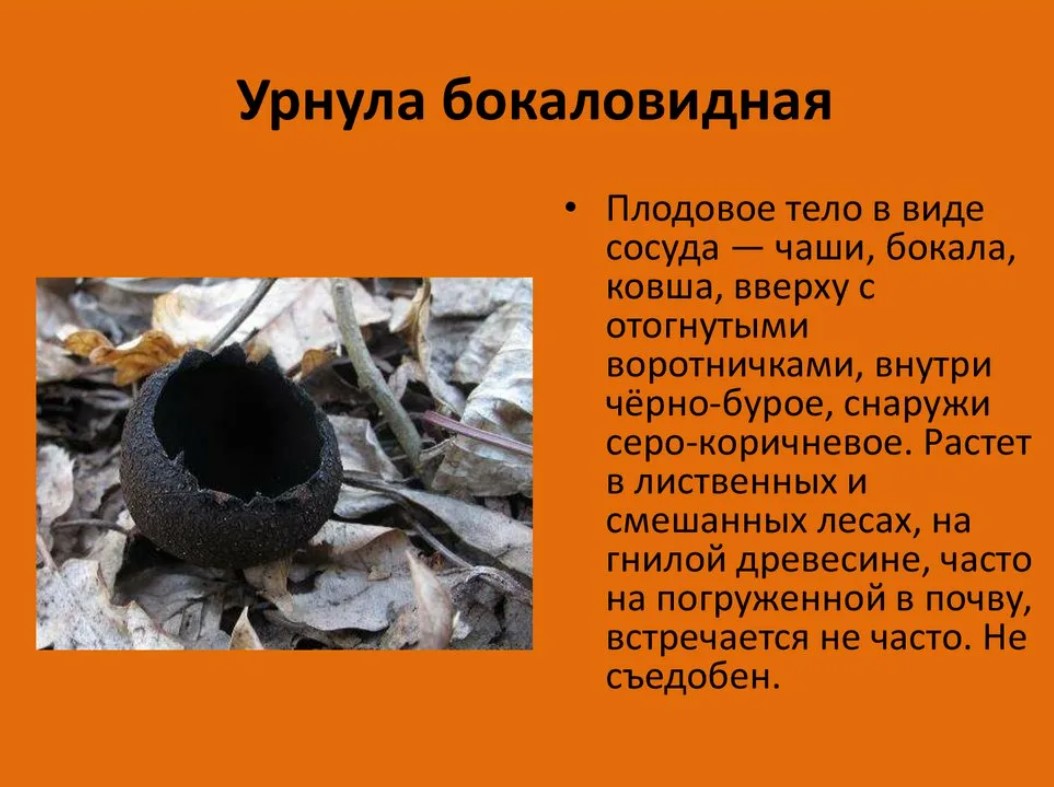
This mushroom bears a very vague resemblance to the black chanterelle. It's impossible to confuse them. The cap is goblet-shaped, reaching 2-6 cm in circumference. When young, it's closed, resembling an egg. As it ages, it opens, and the jagged edges smooth out. The interior is dark gray, almost black. The exterior is slightly lighter.
Nothing is known about the edibility of this mushroom, so it's not worth trying.
Photo gallery of Urnula gobletata
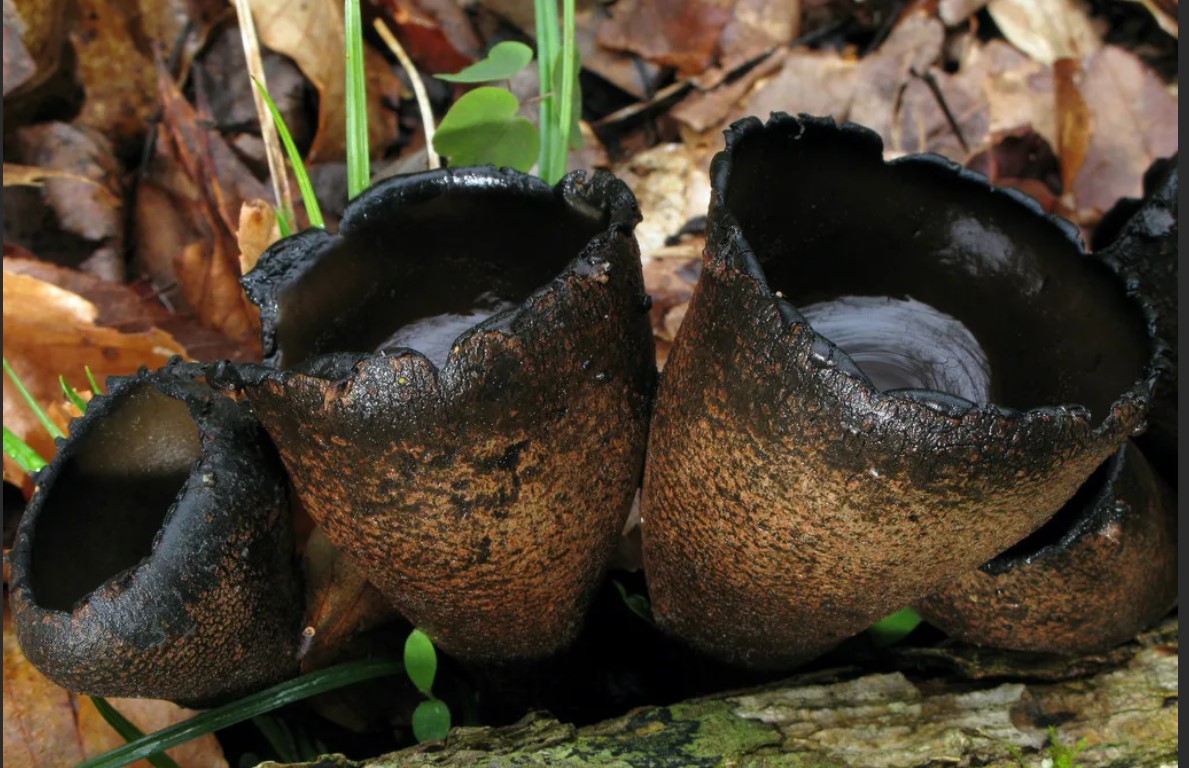
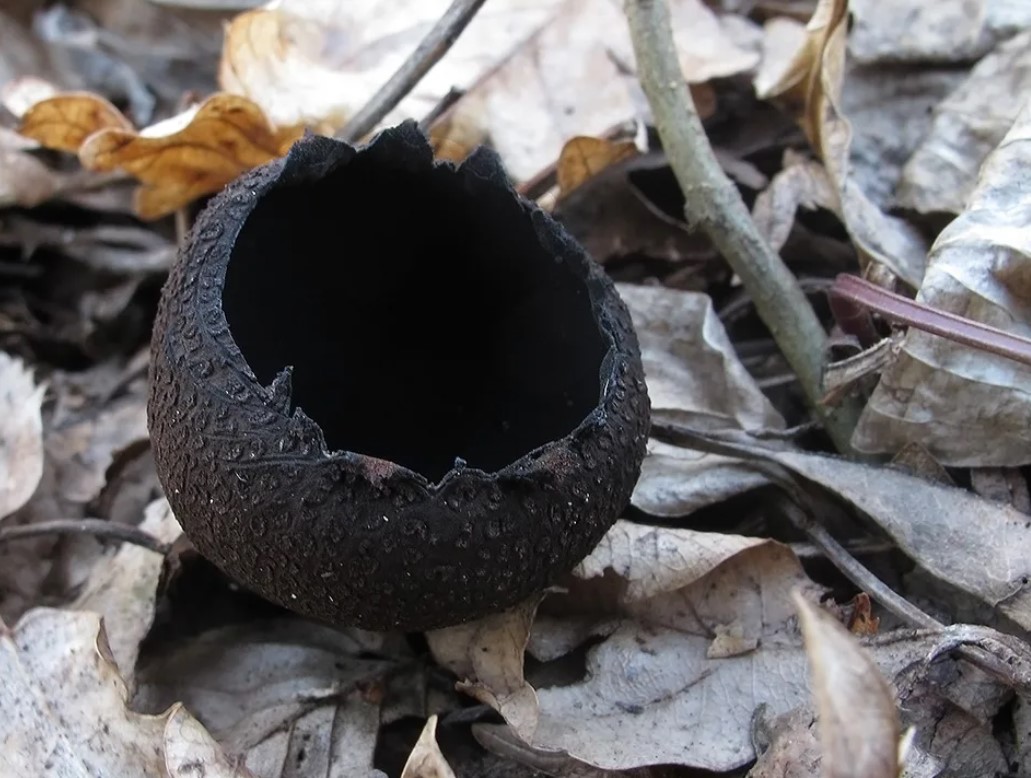
Read about the different types of Chanterelles and their look-alikes in the articleChanterelle mushrooms: 15 species with descriptions in tables, photos, where and when to collect, how they grow.
Nutritional qualities of black chanterelle
The mushroom is edible and belongs to nutritional group 4. This is a relatively low rating. This is most likely due to the fact that black chanterelles are difficult to clean. However, only the cap can be eaten, as the stem is tough.
Many who have tried this mushroom say it's no different from the common chanterelle, except for the unusual color of the fruiting body.
Craterellus cornucopioides is suitable for all cooking methods. According to some sources, it can even be eaten raw with salt. It pairs harmoniously with various sauces and is suitable for topping dishes.
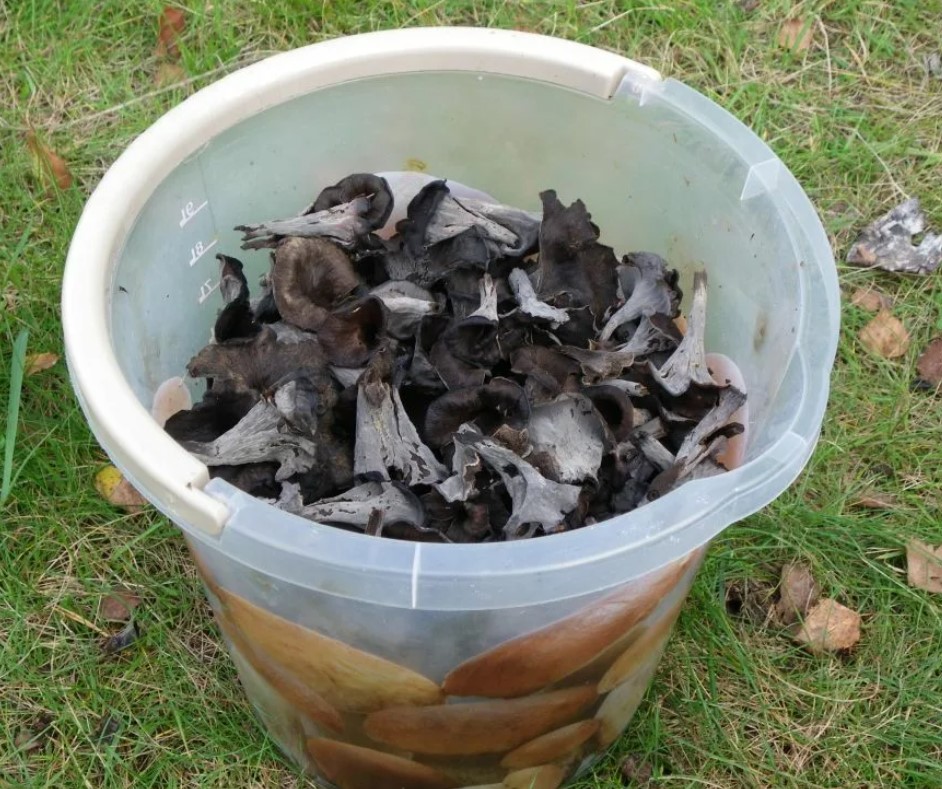
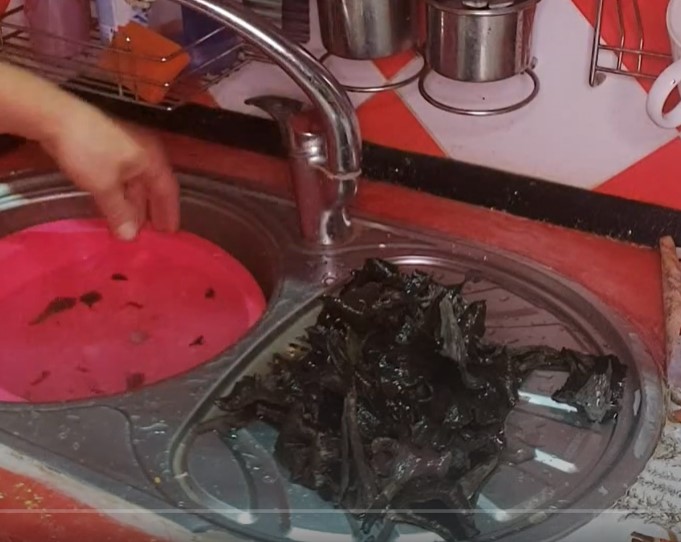
When boiling, the water turns blue-black. This may be alarming, but it's nothing to worry about.
The benefits and harms of black chanterelle
This mushroom contains a large number of beneficial elements. It has the following beneficial effects:
- relieves spasms;
- improves the condition of the nail plates and skin;
- strengthens bones;
- improves metabolic processes;
- normalizes intravenous pressure;
- removes toxins and other harmful substances;
- improves sleep quality;
- has a good effect on the brain;
- strengthens the immune system.
However, it can also be harmful. To avoid poisoning, only young specimens should be consumed. It also has contraindications:
- individual intolerance;
- period of gestation and breastfeeding;
- age up to 8 years.
Please note! Mushrooms should be collected only in environmentally friendly areas, away from industrial plants and highways.
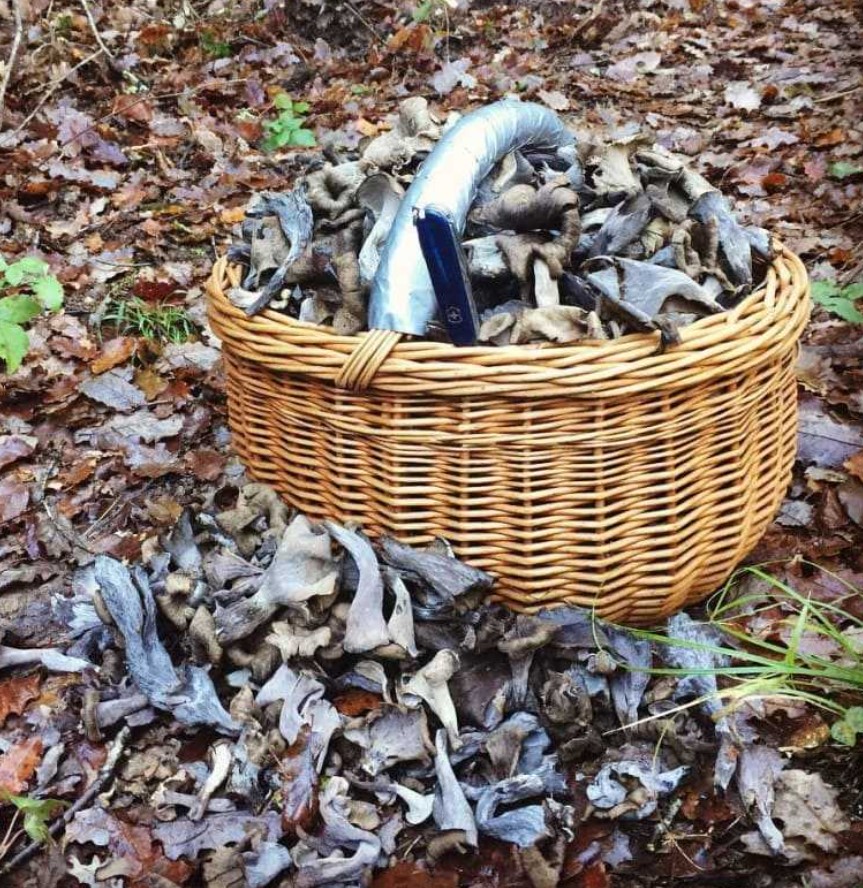
Read the article to find out where to collect different types of Chanterelles. Where chanterelles grow, which forests to look for them in the Moscow region and other regions, and the harvest season.
Medicinal uses of black chanterelle
Due to its beneficial properties, the mushroom is often used in alternative medicine for the following diseases:
- muscle cramps;
- brittle bones;
- sleep disorders;
- high blood pressure;
- osteoporosis;
- inflammatory processes in soft tissues and joints;
- helminthiasis.
Please note, that before using mushrooms for medicinal purposes, a doctor's consultation is necessary!
Read the article to find out whether chanterelles can be eaten raw and their medicinal properties.Can you eat raw chanterelles? The benefits and harms of mushrooms, how much you can eat, and for different purposes..
How to cook black chanterelle mushrooms: the best recipes
We'll tell you how to prepare funnel cake in various ways.
Preparing black chanterelles for cooking
Select young mushrooms. Older ones accumulate toxins and can cause poisoning even after cooking. Only the cap is used for cooking, so the stem should be removed. No cooking is required.
Boiled black chanterelles
Step by step actions:
- Place the pre-cleaned caps in an enamel bowl. Fill with water and place on the stove.
- Add half a teaspoon of citric acid. Bring to a boil.
- After this, cook for another 10-15 minutes. Transfer to a colander and rinse with cold water.
This method is best used for winter preparations, since the funnel mushroom also performs well in dried form.
Read more about cooking chanterelles in the articleDo chanterelles need to be boiled? How long should they be boiled before frying, in soup, or until done?
How to pickle black chanterelles
Required:
- mushrooms - one and a half kilograms;
- salt - 20 g;
- sugar - 30 g;
- vinegar - 4 tbsp;
- sunflower oil - 30 ml per jar;
- boiling water - 3 cups;
- bay leaf and cloves - 3 each;
- peppercorns - 1 tsp.
How to cook:
- Boil the caps and place them in a deep container.
- Prepare the marinade by adding salt, sugar, and spices to boiling water. Stir until the ingredients dissolve.
- Pour the marinade over the chanterelles. Bring to a boil.
- Cook for 10 minutes, add vinegar, keep on heat for another 5 minutes.
- Place into jars. Add boiling oil to each.
- Roll up the jars and keep in a cool place.
Please note! No careful preparation is required before pickling, since mushrooms are not inhabited by worms.
Frying black chanterelles
For the classic recipe you will need the following products:
- mushrooms - 0.6 kg;
- garlic - 2 cloves;
- dill, parsley;
- sunflower oil - 60 ml;
- salt and pepper - to taste.
Recipe:
- Boil the funnel mushrooms. Drain the water in a colander.
- Dry by laying it out on a paper napkin.
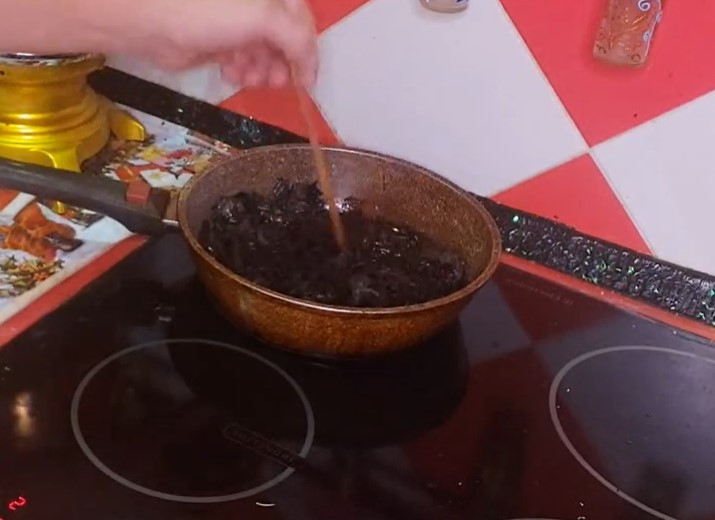
- Pour oil into a frying pan, add mushrooms and fry for 5-7 minutes, stirring.
- Chop the garlic and herbs, and after the time specified earlier, add them to the mushrooms.
- Fry for 5 minutes. If desired, at this stage you can add cheese, sour cream, cream, or any other ingredients to taste.
Chanterelles go well with any side dish and vegetable salads.
Salted black chanterelles
Ingredients for a two-liter jar:
- chanterelles - 2 kg;
- salt - 300 g;
- garlic - 10 cloves;
- dill - 2 bunches;
- bay leaf - 5 pcs.;
- black peppercorns - 10 pcs.
Recipe:
- Place the caps in a deep container.
- Add water until the mixture is completely covered. Cook for 8-10 minutes. Drain and repeat.
- Cook for a quarter of an hour, drain the water through a colander.
- Place spices, salt, and garlic into a saucepan.
- Place a layer of mushrooms on top.
- Sprinkle again with a layer of spices, salt and garlic.
- Add dill.
- Cover with a clean cloth and place a weight on top.
- When the juice appears, put it in a cool place for 30 days.
Mushrooms store well and will be an excellent addition to the New Year's table.
Drying black chanterelles
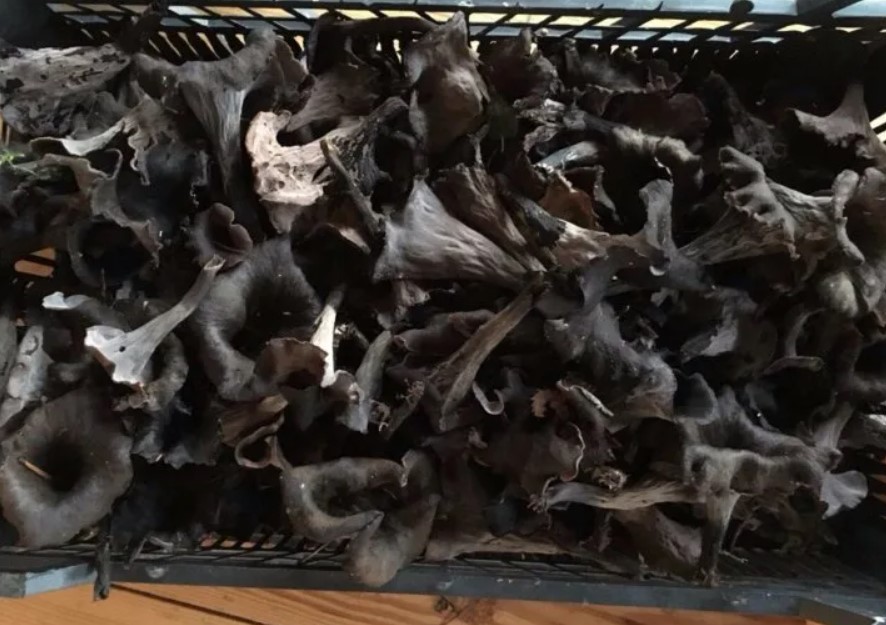
Before drying, be sure to clean the mushrooms, but do not wash them. Only whole, firm caps should be left for processing. If they are large, cut them into several pieces.
The easiest way to dry chanterelles is in the oven:
- Line a baking sheet with foil or parchment paper. Arrange the mushroom caps on top.
- Turn the oven on to +50 ºС and place a baking tray inside.
- After 2 hours, reduce the temperature to +10 ºС.
- After 60 minutes, remove and check for doneness. The caps will only crumble under firm pressure.
During the drying process, leave the oven open. This will allow the liquid to evaporate faster.
In Spanish cuisine, black chanterelles are used to make tapas. These are small appetizers made by spreading cream cheese on a crouton and sprinkling the mushrooms on top.
Dried chanterelles, ground into a powder, can also be mixed with salt. This makes an excellent seasoning for various sauces, soups, fish, and meat dishes.
Read the article to learn how to dry regular chanterelles.Dried Chanterelles: 6 Drying Methods, Calorie Content, Benefits and Harms, Uses, and Recipes.
How to freeze black chanterelle mushrooms
Step by step actions:
- Clean the mushrooms from debris.
- Cut off the bases of the legs and wash.
- Place on a paper towel to dry completely.
- Place into bags and freeze in the freezer.
Mushrooms in this form can be stored for at least 6 months without losing their properties.
Canned black chanterelles
You will need:
- chanterelles - 1 kg;
- carrots and onions - 250 g;
- vinegar (9%) - 50 ml;
- sugar - ½ tbsp;
- salt - to taste;
- sunflower oil - 125 ml;
- black peppercorns - 4 pcs.;
- bay leaf.
Recipe:
- Fry the peeled caps.
- In another bowl, fry the vegetables cut into strips.
- Mix everything in a deep saucepan. Cook until the moisture evaporates. Add salt, pepper, and sugar.
- Simmer for half an hour, add vinegar.
- Prepare sterilized jars and lids.
- Place into jars, roll up, and let cool naturally.
- Store in a cool place for no more than 6 months.
Black chanterelle soup
To prepare this dish you will need the following products:
- vegetable broth - 0.5 l;
- thickened cream - 100 ml;
- mushrooms - 200 g;
- onion - 1 pc.;
- flour - 2 tbsp;
- butter - 2 tbsp.
- parsley or any other greens.
Preparation:
- Chop the caps into several pieces, cut the onion into thin strips.
- Place butter in the bottom of a saucepan and fry the onions and mushrooms in it, one at a time.
- Add flour. Stir constantly to prevent lumps from forming, then pour in the vegetable broth.
- Add spices and salt, cook for 15-20 minutes.
- Add cream. Cook for another 5 minutes.
The soup is ready. You can garnish it with fresh herbs before serving.
You can use either fresh or frozen mushrooms.
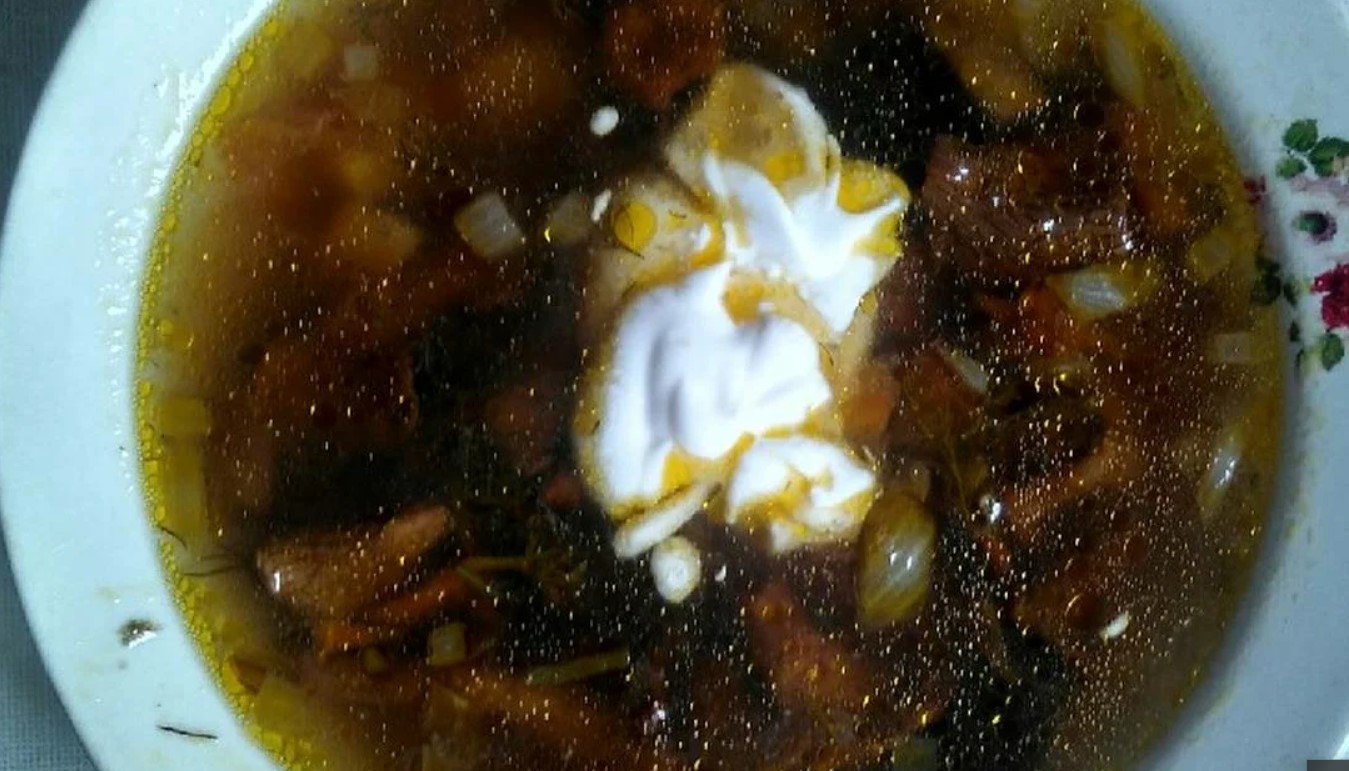
Black chanterelle sauce
To prepare you will need:
- funnel cake - 400 g;
- cream - 200 ml;
- onion - 1 piece;
- olive oil - 1 tbsp;
- salt, pepper, spices, herbs to taste.
Recipe:
- Heat oil. Fry mushrooms and onions.
- Cook for 8-10 minutes.
- Add salt, pepper, spices, and herbs to taste.
This sauce pairs well with pasta dishes and is suitable for meat and vegetables.
How to grow black chanterelle mushrooms
Chanterelles don't naturally grow in garden plots, but if you create optimal conditions for them, they can. Keep in mind that the mushrooms won't thrive under fruit trees. They should be planted under beech, oak, pine, or spruce trees.
To plant them in your garden, you can dig up a small tree with mycelium in the forest and plant it in your garden. The mycelium is usually located 15-20 cm below the soil surface. It's important not to damage it when replanting.
To collect the mycelium, use bags. Fill them with topsoil and pine needles to create optimal conditions for the chanterelles.
The dug-up tree should be planted in partial shade. Watering should be moderate. Fertilizing is not necessary; the mycelium receives all the necessary nutrients from the tree.
Mushrooms can also be grown using spores. To do this, collect the caps of overripe specimens and scatter them under a suitable tree. Water them and keep the soil moist. If it dries out, the mycelium will die.
Mycelium can be purchased in stores or from third parties. It's inexpensive, but there's a risk that something else might sprout.
The mycelium can be planted from early summer to mid-autumn. If it takes root, the first harvest is collected in June of the following season.
Read the article to learn how to grow common chanterelles.Growing chanterelles at home and in the garden step by step + on an industrial scale.
Interesting facts about black chanterelles
Interesting and useful information:
- Chefs have counted 157 ways to prepare these mushrooms. Moreover, they retain their beneficial properties throughout the process.
- Some mushroom pickers say that the open cap of the chanterelle is very reminiscent of a flower, so many simply don’t notice it.
- Dried and chopped chanterelles can be stored for a very long time as a seasoning.
- Black chanterelles are especially prized by chefs because they do not harbor insects, making cleaning and pre-preparation easier.
If you happen to come across a trumpet mushroom in the forest, you're lucky. They don't grow at every forest edge. If you come across one, you should look for others nearby, as they grow in small groups.
Black chanterelles don't require much preparation, making cooking much easier and more convenient. These mushrooms make excellent dishes that can be considered delicacies.
Reviews of black chanterelles
Black chanterelles can, for example, be dried and the mushroom powder can be added to meat dishes as a seasoning, and you can also prepare everything that is made from “regular” mushrooms.
I fry them, make soup, bake pies, marinate them, add mushroom powder to meat when stewing...
Much tastier than red chanterelles.
For some reason, it's undervalued in Russia, while in Finland, for example, it's called "forest gold." Many people collect only them.An edible mushroom, considered a delicacy in Western Europe, it requires no pre-treatment. Only the tubular stem is eaten; the coarser, solid stem is removed. It is used in fried and stewed dishes, soups, sauces, and condiments. When cooked, it turns black. Unlike chanterelles, this mushroom dries well, although it becomes brittle and crumbly. The flavor is somewhat enhanced. Dried mushrooms serve as a base for various sauces.
Of course, we are familiar with red chanterelles, and everything that is different from them we often call toadstools, but we simply don’t know all the edible mushrooms well.
There's a mushroom that resembles a chanterelle in shape, but it's distinctive in that it's black and lacks gills on the inside of the cap. These mushrooms are also known as black chanterelles or the funnel-shaped chanterelle, and they have many other common names.
These mushrooms grow everywhere in deciduous and mixed forests, and if we don’t collect them, it doesn’t mean they aren’t in demand; in Canada, France, and England, these mushrooms are considered delicacies.
These mushrooms can be eaten raw, with a little salt, but only the cap is used for food, as the stem of these mushrooms is tough, like rubber.
These mushrooms are good to dry and ground and used as a seasoning.
So, if you come across such black chanterelles, you shouldn’t refuse them, especially if there are no other mushrooms
The fact is that in Russia, few people know or collect these mushrooms; they belong to the fourth category of edible mushrooms, which is the lowest.
But in some foreign countries they are considered equal to truffles and morels and are considered a delicacy.
Of course, this mushroom species doesn't look particularly appetizing. It's called the funnel mushroom.You shouldn't skip them while mushroom hunting; the best option is to dry them, then grind them and add them to various dishes as a seasoning. It resembles a cone in appearance.
I was intrigued. I googled it. The scientific name is Funnel-cap mushroom. In Germany, it's called the Trumpet of the Dead, and in France, the Trumpet of Death. But in England, it has a wonderful name: the Cornucopia. It's a perfectly edible mushroom, and a delicacy, too. But only the cap is used, as the stem is tough.
I'm not sure I would risk picking these mushrooms.