Every mushroom picker has encountered chanterelles in the forest, but few know that, if desired, they can be grown at home. All it takes is a strong desire and a few tips. Learn about them in this article.
Content
What conditions are needed for chanterelles to grow at home?
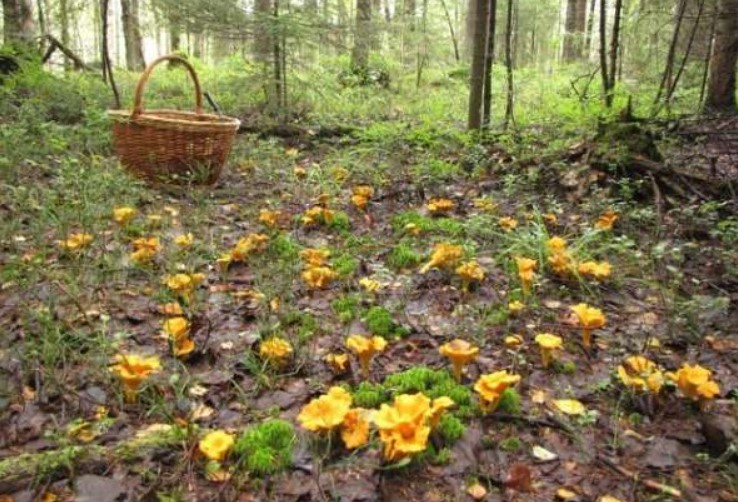
Between July and October, recognizable red mushrooms begin to appear here and there in forest clearings. In their natural habitat, chanterelles thrive in forests of various types and form a symbiotic relationship with trees, drawing nutrients and moisture from them. In return, they share chemicals that their symbionts lack. This creates a mutually beneficial partnership between mushrooms and trees, which can also be exploited in artificial cultivation.
The best option is to have a coniferous tree such as pine or spruce on the site. The location should be shaded, as the mycelium will die at high temperatures. Optimal temperatures are considered to be between 20 and 28 degrees Celsius. Fruiting can continue until temperatures drop to -2 degrees Celsius.
The mycelium will have a better chance of survival if you dig up a small pine or spruce tree in the forest with its already developed mycelium. It should be planted in a location protected from wind and sunlight. If the mycelium is successful, a chanterelle harvest may appear as early as next year.
It's quite difficult to achieve ideal conditions in an open garden, so growing chanterelles often requires constructing various sheds and shelters, or even improving the forest area adjacent to the house.
Read all about chanterelles in the articles:
- Chanterelle mushrooms: 15 species with descriptions in tables, photos, where and when to collect, how they grow;
- Black chanterelle mushrooms: photos and descriptions, where and when they grow, and how to cook them;
- False chanterelle, differences from the real one in the table, photo + mushrooms similar to chanterelles;
- Where chanterelles grow, which forests to look for in the Moscow region and other regions, and the harvest season;
- Do chanterelles need to be boiled? How long do they need to be boiled before frying, in soup, until done?.
How to choose planting material for growing chanterelles
If the planting material is taken from the forest, it's crucial to determine the tree with which it has formed a symbiotic relationship. If it's a birch, then the mycelium should be located only near a birch tree in the plot.
Any type of planting material can be used to grow chanterelles:
- Mushroom caps.
- Spore infusion.
- The top layer of soil from under a tree infected with fungi.
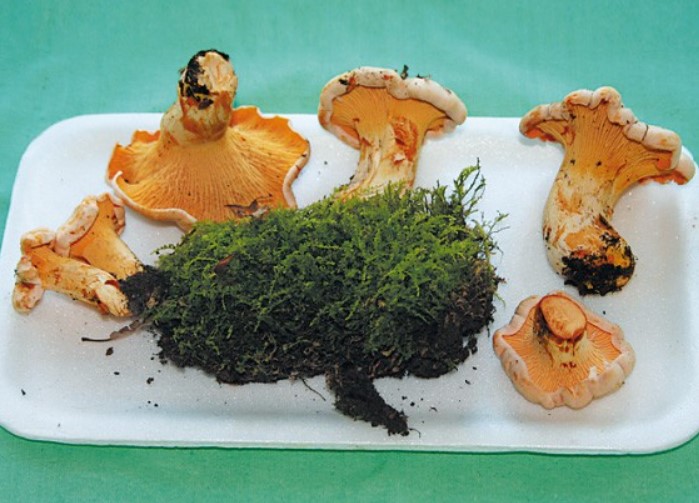
- Ready dug up mycelium.
Which is better, store-bought or homemade?
When planning to breed chanterelles, people often face the same question: should they buy ready-made mycelium or prepare it themselves?
To answer this question, we need to understand the nuances of mushroom planting. Chanterelles will never grow on artificial stumps or on trees that don't match their donor. That is, mycelium from an aspen will never thrive near a birch, and vice versa.
Using ready-made forest mycelium requires taking into account a number of nuances. Therefore, it's easier to purchase ready-made mycelium from a store; it's much more effective. The key is to choose a reliable manufacturer. Such products are easily found online.
Methods for growing chanterelles in your garden
When growing chanterelles, two main methods are generally used:
- Mycelium from the forest.
- Spores from ripe mushrooms.
Each method has its advantages and disadvantages, and the choice depends on individual preference. However, experienced mushroom growers recommend choosing the first method, as it is much more efficient and productive.
Step-by-step spore sowing method for chanterelles
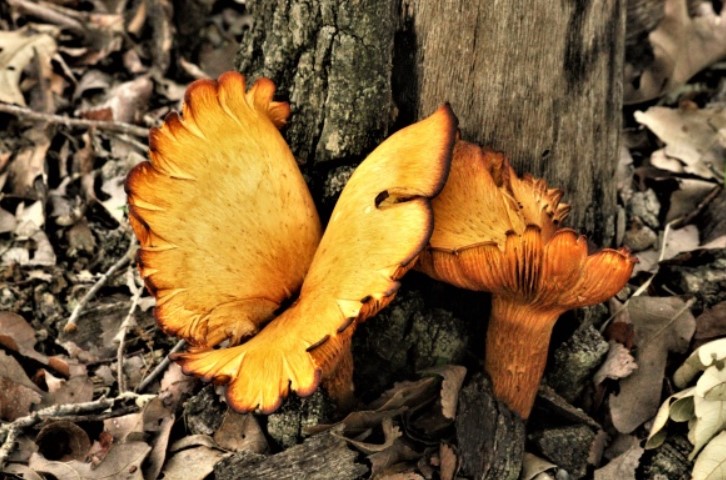
To grow mycelium, you'll need ripe mushroom caps. Finely chop them, place them in a bucket, and cover with water (preferably rainwater), adding 100 grams of sugar. Leave the mushrooms in this state for 24 hours, then strain. The remaining pulp will serve as the planting material. This process is best done in the spring, and follows the following procedure:
- The solution remaining after straining is used to moisten the planting soil.
- 100 g of oak bark is poured with 1 liter of warm water.
- A hole 30 cm deep and 60-70 cm in diameter is made near the selected tree.
- Oak solution is poured into it.
- Mushroom caps are placed on the bottom, covered with soil and watered.
- During the first winter, it is important to cover the planting site with spruce branches to prevent the mycelium from freezing.
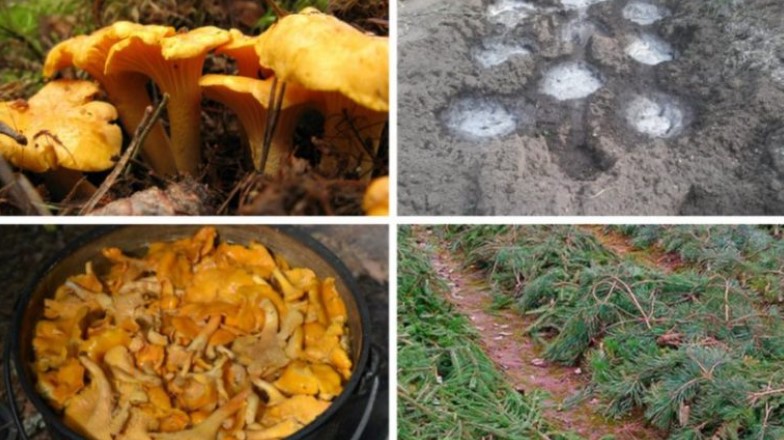
A step-by-step method for sowing chanterelles using mycelium
- Mycelium preparation is carried out in autumn.
- In the forest, find a mycelium from a tree that's already growing in your garden. Dig out some of the mycelium along with the topsoil and place it in a bag. It should remain like this until spring.
- The bags should not be tied tightly so as not to block the oxygen supply.
- Store in a basement or underground at a temperature of -2 to +8 degrees.
- As soon as the night temperature stops dropping below +2 degrees, the soil begins to be replanted with the symbiotic tree, but the harvest can only be expected in a year.

Caring for chanterelles in your garden
Taking care of chanterelles at home is not at all difficult:
- It is necessary to water the plantings once a week, unless there is heavy rain.
- For the winter, the mycelium must be covered with hay or spruce branches.
- Never dig up the soil containing the mycelium. You can check its viability by lifting the top layer of soil, consisting of leaves, grass, and pine needles. A healthy mycelium will have visible purple threads with a slight greenish tint.
- The mycelium does not require feeding; with a healthy symbiont, chanterelles can grow even in the poorest soils.
Growing chanterelles on an industrial scale
Chanterelles, unlike champignons and oyster mushrooms, are less commonly grown at home. But that doesn't mean the idea is doomed. Chanterelles thrive and produce a harvest under the right conditions.
Business idea
First of all, when evaluating a business idea, it is necessary to take into account the following points:
- Is there a plot of land with an area of at least 30 acres?
- Are there any rooms for winter growing?
- Do chanterelles grow in nearby forests and is it possible to stimulate their growth there?
Mushroom growers note that it's cheaper not to create artificial conditions on your own plot, but to set up and plant new mycelium in an existing mushroom patch in a nearby forest and carefully monitor it, harvesting the crop in a timely manner.
The nuances of growing chanterelles
There's one crucial detail about growing chanterelles: they will never grow on artificial stumps. A healthy crop requires a tree with a root system similar to that found in natural conditions. Therefore, chanterelles cannot be grown in greenhouses or basements. Therefore, harvesting will be seasonal, which will inevitably impact profitability. Therefore, when planning a mushroom business, it's best not to limit yourself to chanterelles alone, but to consider other mushroom varieties as well.
Chanterelles for sale
Chanterelles are readily available for sale; they can be frozen, boiled, or fresh, or you can sell the fresh harvest. They are sold at markets, sold to grocery stores and food service establishments, and through advertisements on social media and newspapers.
After a few years of active mushroom sales, word of mouth will begin to operate smoothly, and a circle of regular customers will form.
Profitability of growing chanterelles
If you have a plot of land or a suitable patch of forest, the cost of growing chanterelles will be approximately 20,000 rubles. This includes the cost of tools, mycelium, and planting.
In the best-case scenario, you can harvest 25 liters of mushrooms from each hundred square meters. If the price per liter is 100 rubles, then you can sell mushrooms worth 25,000 rubles from 10 hundred square meters. The larger the planting area, the higher the income.
Reviews of growing chanterelle mushrooms
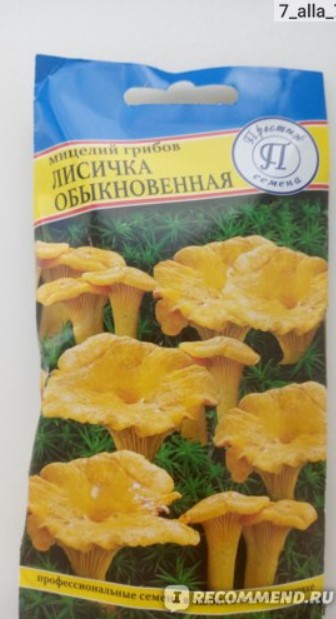
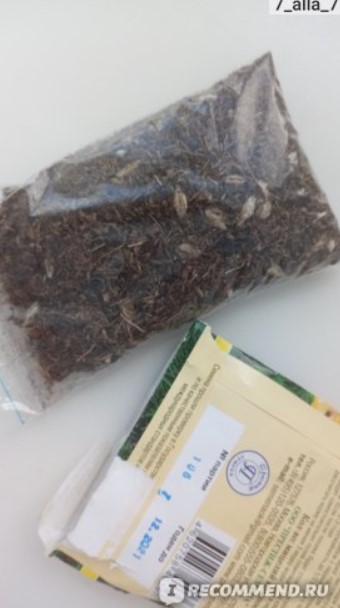
The product was purchased at Leroy-Marlin in Omsk for about 100 rubles. The package contains 50 ml of compost mycelium. It looks like this:
The packaging states "Chanterelle mushroom mycelium (Cantharellus cibarius)"; the reverse side describes where chanterelles are found and how to plant and grow them in your garden. Made in Moscow, Russia.
Bought in July 2018, expiration date is December 2021. I planted them as instructed on the package (as far as I remember) in August 2018 and May 2019, but it's already July 2021 and there's no sign of mushrooms (the package says either next year or the year after). Although I've watched various gardeners, and they say on TV that if you water them with the water you washed your mushrooms in, you'll have mushrooms in your garden in two years... I've tried this way and that, and there are some "messes" with mushrooms, with yeast for several weeks—we don't have any mushrooms. Of course, if chanterelles appear, I'll update this review (at least one mushroom, any kind, would have appeared here). I don't recommend bothering with this, although it could be a matter of experience, luck, and good soil.

User: kukundi KF**, 02/13/17
I planted chanterelle mycelium bought at OBI about 5-6 years ago. The first mushrooms appeared a season after planting. Now we pick them regularly. I chose chanterelles specifically because they are grown artificially, and I was successful.
I planted chanterelles and birch boletes. Nothing grew, although maybe I did something wrong.
I adore chanterelles, but I've completely eradicated all the wild trees in my garden. Chanterelles are a type of mycorrhizal fungi. Chanterelles thrive best with conifers, but you can also try growing them alongside deciduous trees. Few people know this, but there are offers online for chanterelle mycelium. However, it's not as easy to grow them as with button mushrooms or oyster mushrooms. It'll take some effort.
To grow chanterelle mushrooms in your garden, you'll need a tree, 2-3 buckets of forest topsoil, and other forest resources: moss, branches, leaves from forest trees, and pine needles. You'll also need chanterelle mycelium. As I mentioned, you can buy it, or you can carefully dig up the mycelium in the forest and hope it grows. You can also do the same as with porcini mushrooms (discussed in the next thread). Dig holes about 20 centimeters deep and 10 centimeters wide around the tree.
These holes are filled halfway with soil brought from the forest. Ideally, identical holes of the same depth and size should be dug from the forest soil and then transferred to the site. In this case, they will need to be divided into layers of equal thickness. The first, bottom layer is placed at the bottom of the holes, then the mycelium is added, and then the top layer is covered.
The holes and the surrounding soil are watered, but not as deeply. The planting site is covered with moss and fallen leaves, simulating forest conditions. It will be necessary to maintain this moisture, but avoid leaving the soil soggy, as this can create a breeding ground for harmful microorganisms.
You can mulch the planting areas with straw. The best time to plant is summer, from May to August, and your chanterelles will begin to bear fruit in about a year. You can expect good, consistent harvests for 2-3 years.
But still, the dacha plantings don't compare to the forest harvest. From one tree, which requires three holes, you can gather no more than half a bucket of chanterelles per year. So I'd rather go to the forest, the old-fashioned way.
Back to top