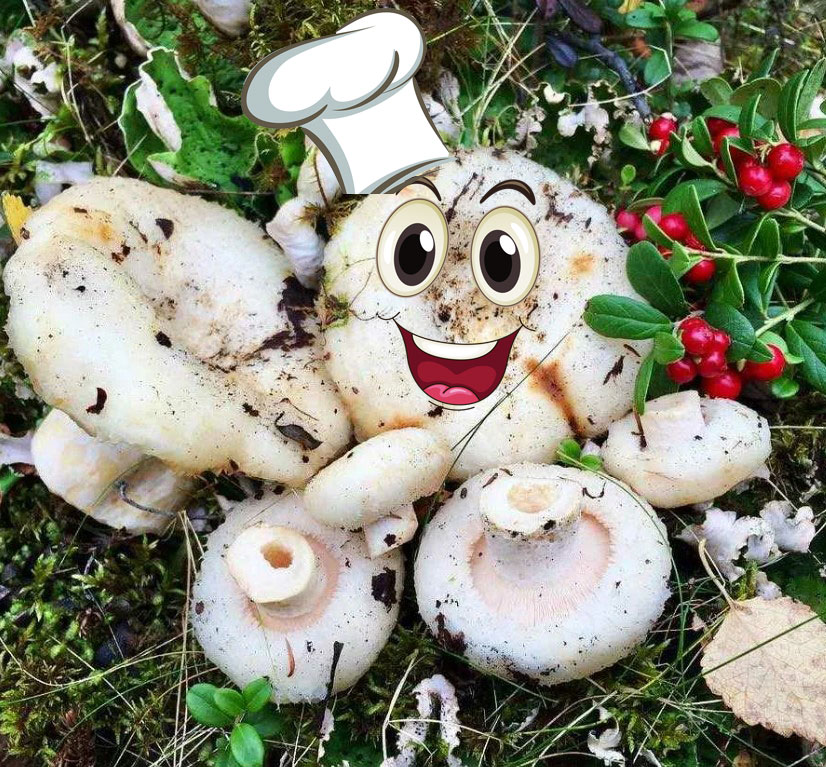
The white (true) milk cap is prized by mushroom pickers for its flavor. It's quite difficult to confuse it with other species, perhaps only with the fiddlehead. The latter is similar in appearance, but is conditionally edible, difficult to prepare, and lacks the same excellent flavor. However, knowing the structure and distinctive features of the white milk cap, mushroom pickers can immediately identify it. We'll discuss all the features of this mushroom below.
Content
- 1 Description of the white or real milk mushroom
- 2 Other names for white milk mushroom
- 3 Where and when does the white milk mushroom grow?
- 4 What mushrooms can it be confused with?
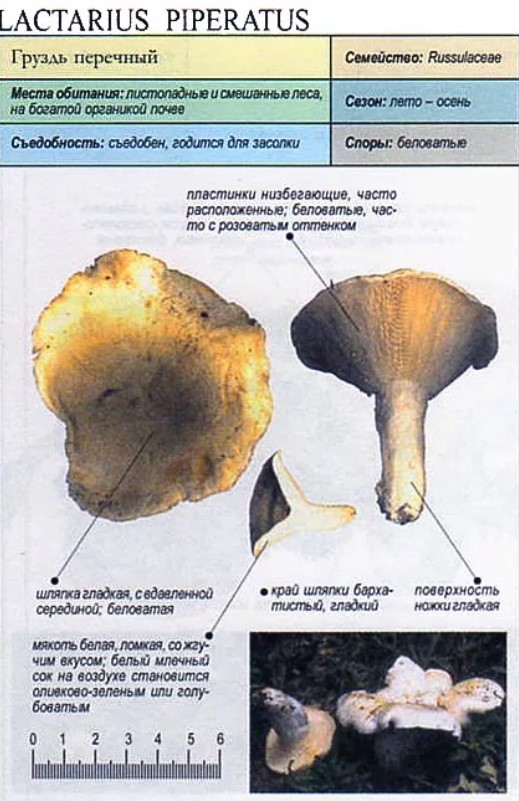
- 4.1 Peppery milk mushroom (Lactarius piperatus)
- 4.2 Violin milk cap (Lactarius vellereus)
- 4.3 Aspen milk cap (Lactarius controversus)
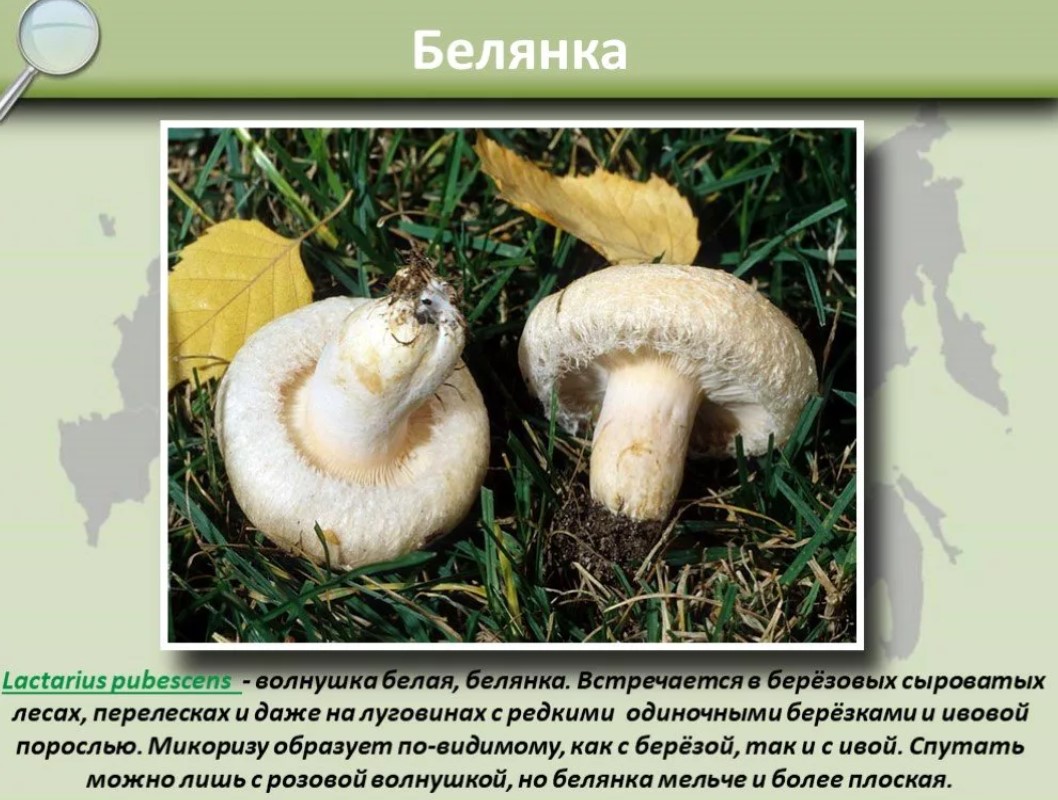
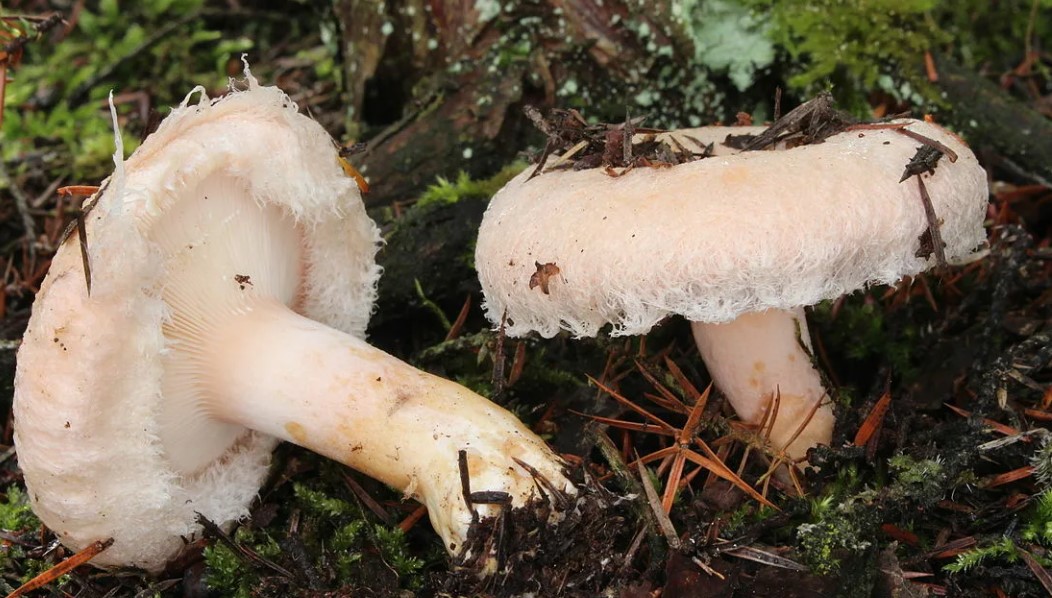
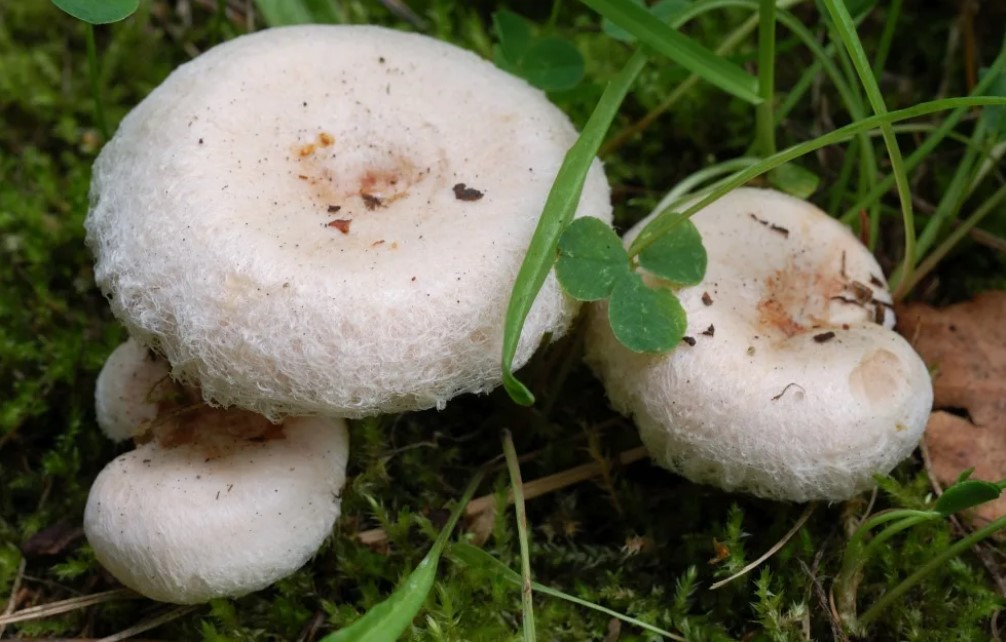
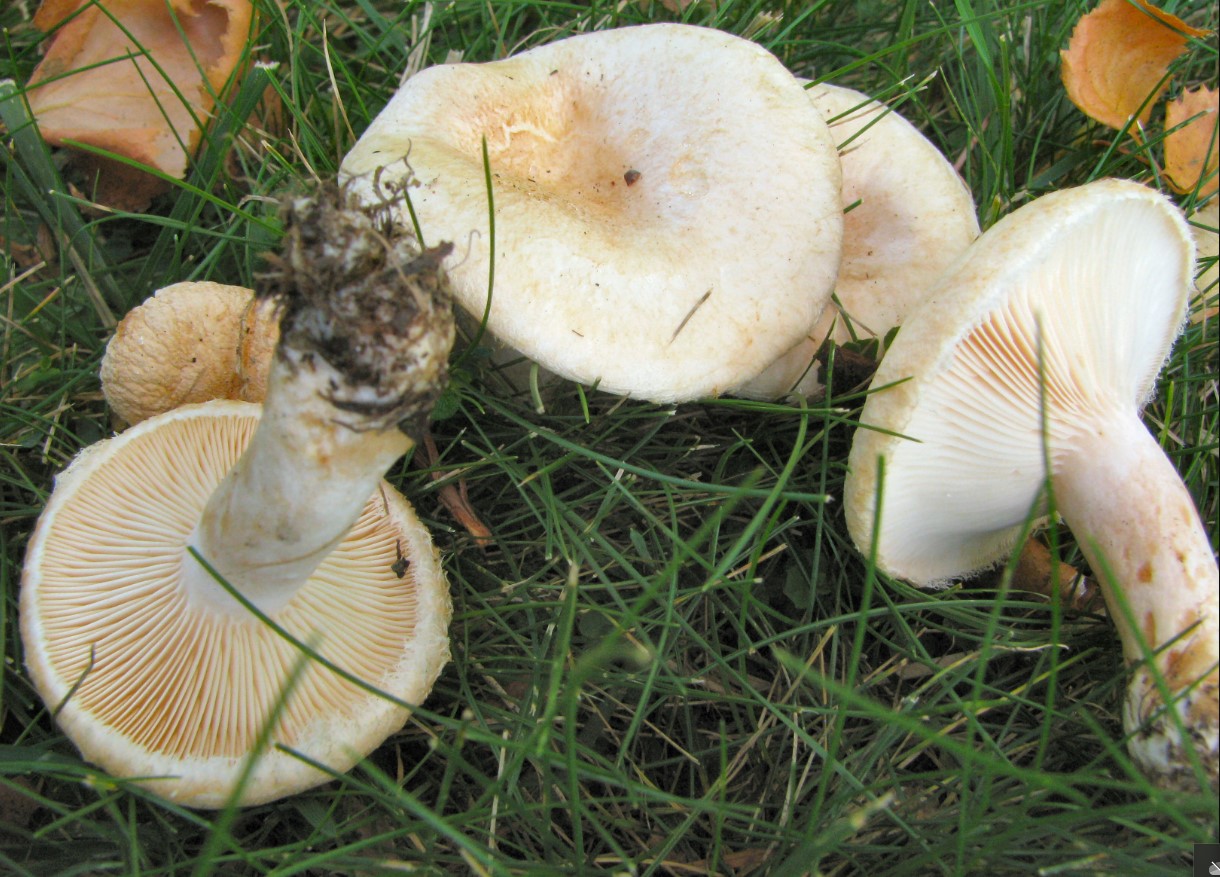
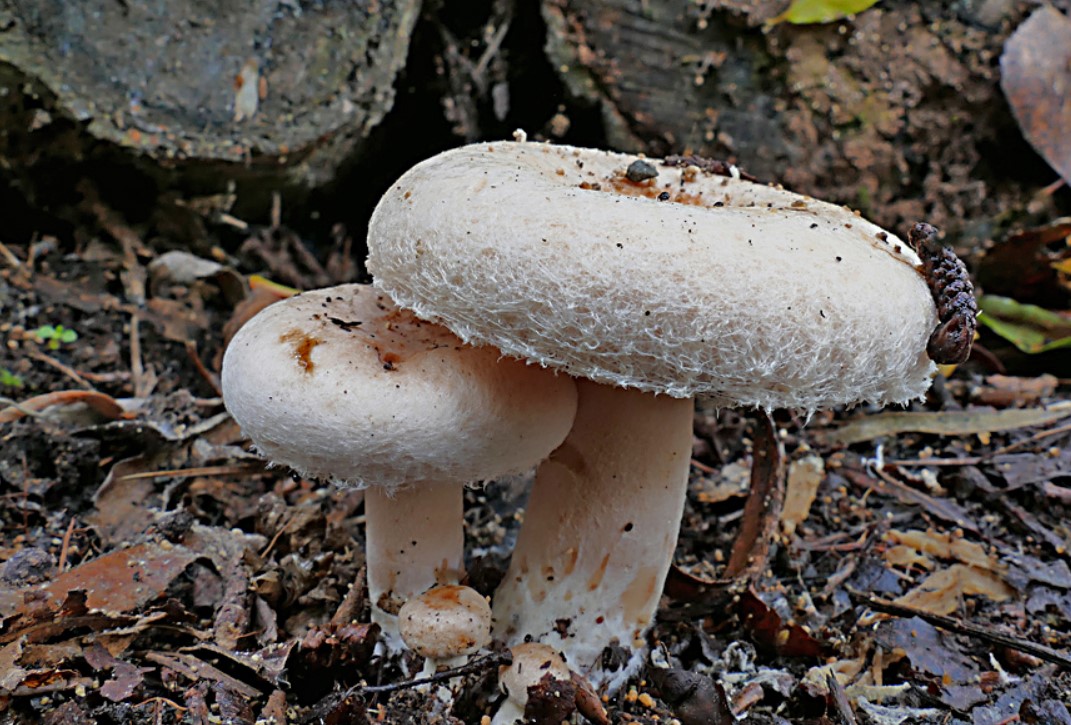
- 4.4 White milkvetch, white milkvetch (Lactarius pubescens)
- 4.5 Parchment milk cap (Lactarius pergamenus)
- 4.6 Yellow breast (Lactarius scrobiculatus)
- 4.7 White milk cap (Russula delica)
- 5 Culinary uses
- 6 Beneficial properties and use in alternative medicine
- 7 Experienced mushroom pickers' reviews of white milk mushrooms
Description of the white or real milk mushroom
Let's see what this mushroom looks like.
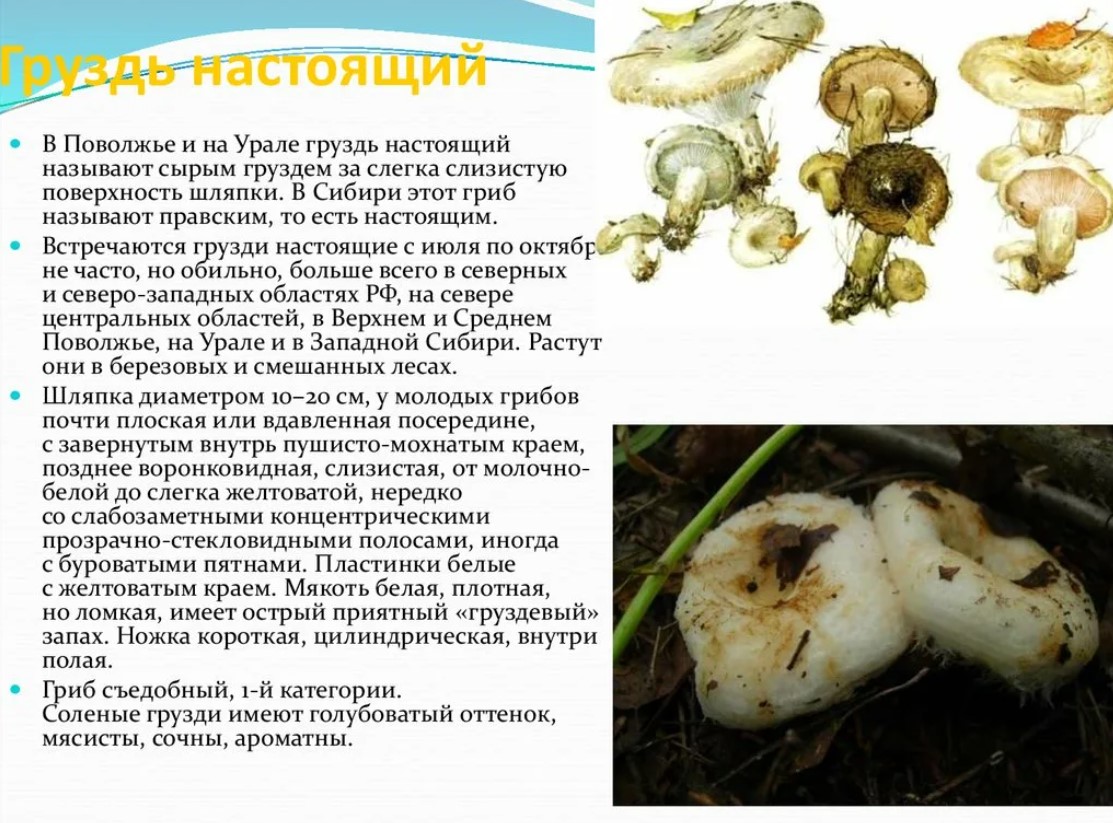
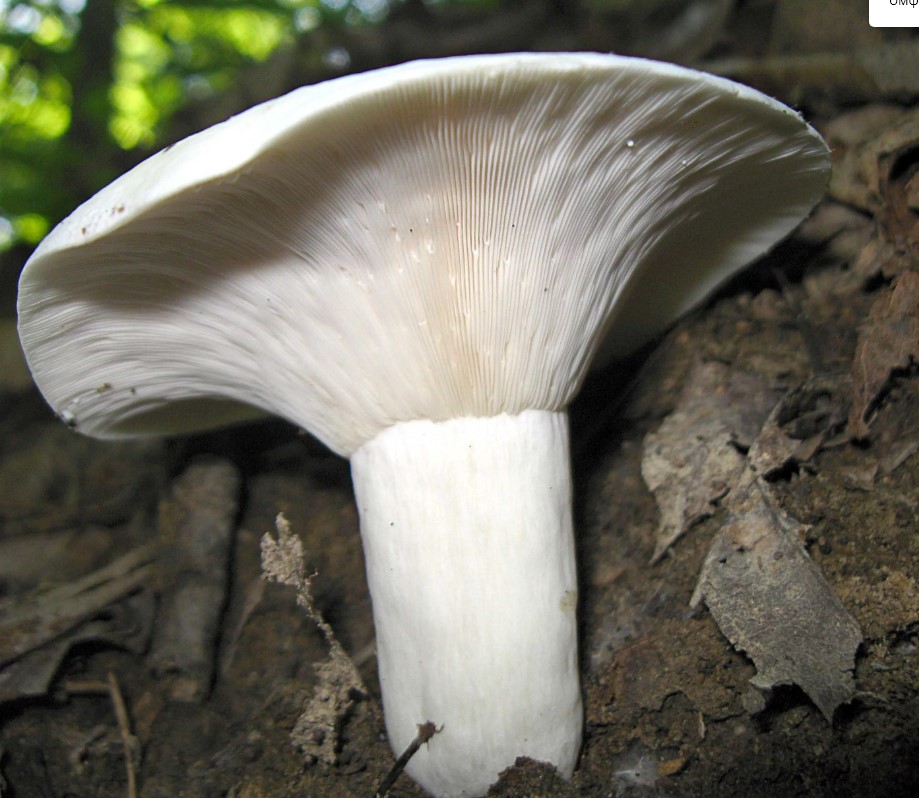
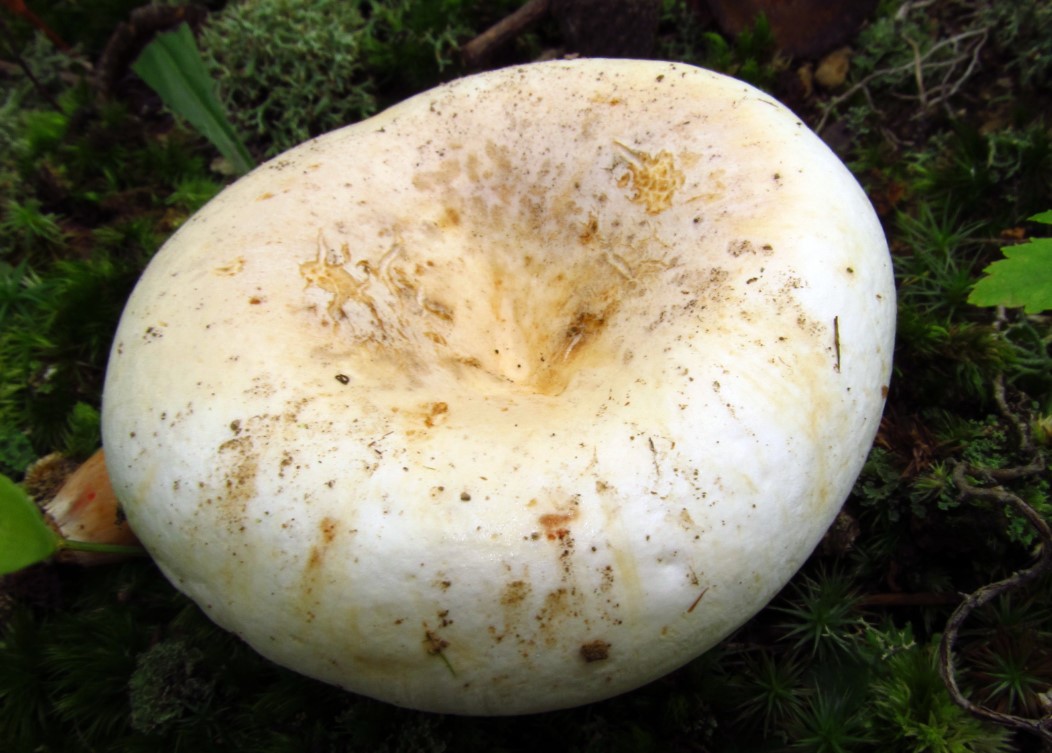
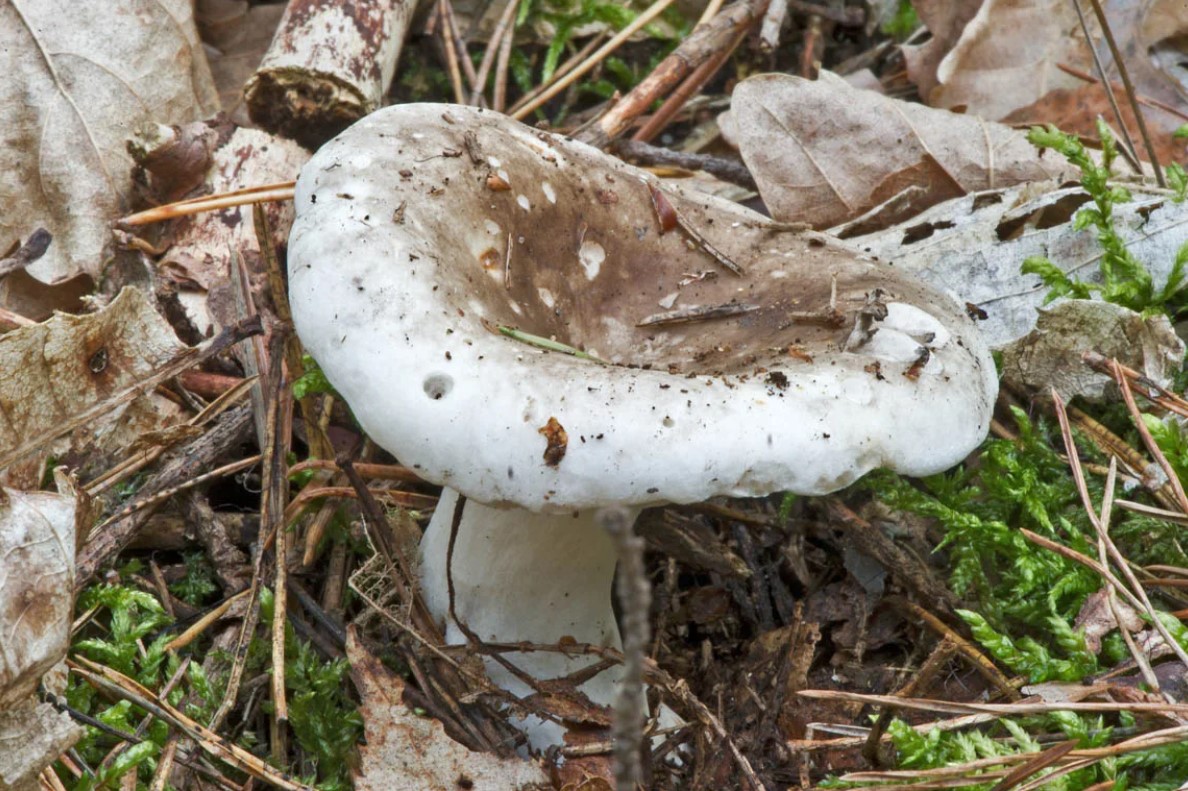
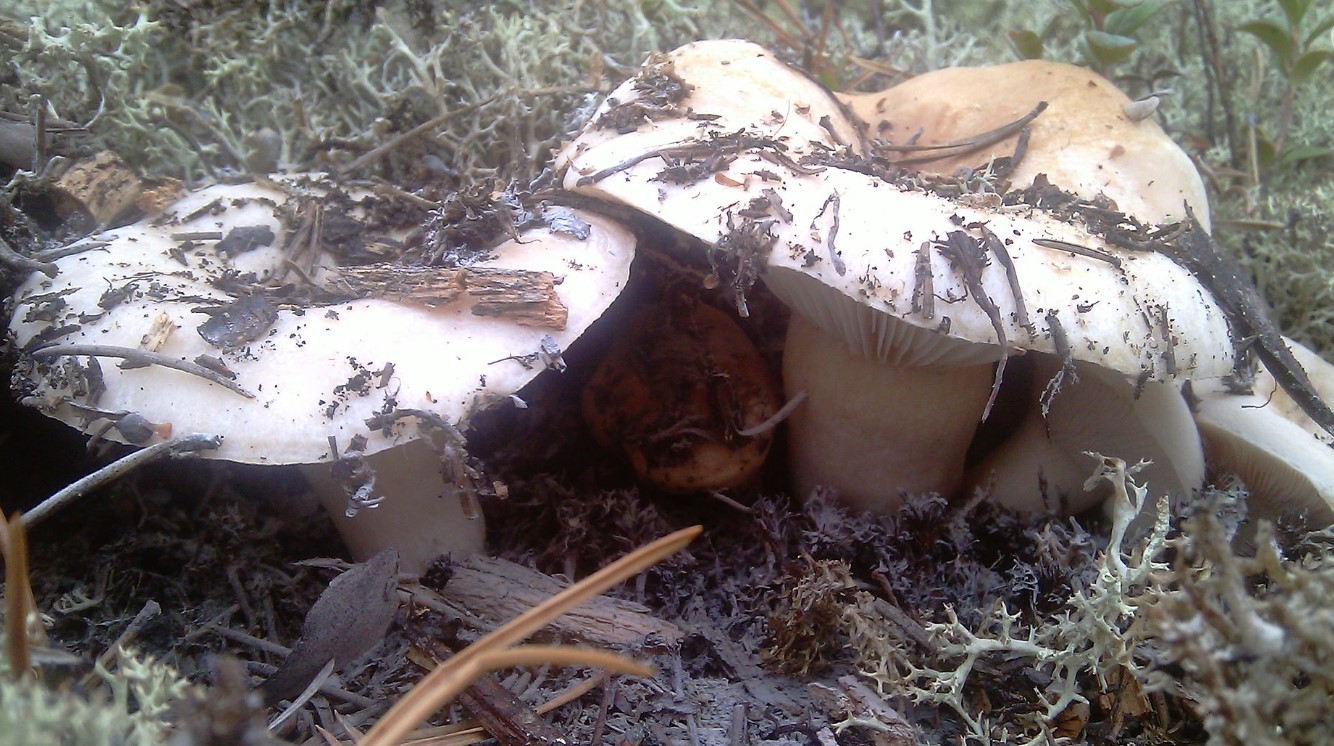
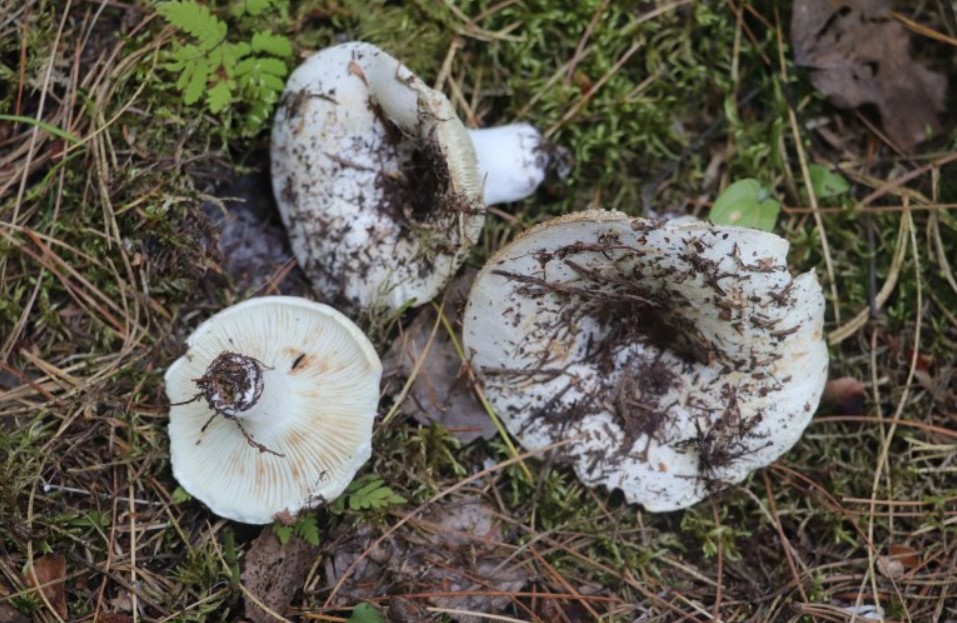
5-20 cm in circumference. In young specimens, it is flat-convex. As it ages, it takes on a funnel-shaped form with an inward-curving pubescent edge and thickens.
The surface is slippery, damp, milky or yellowish in color, with watery concentric zones. Fallen leaves and soil accumulate in these areas.
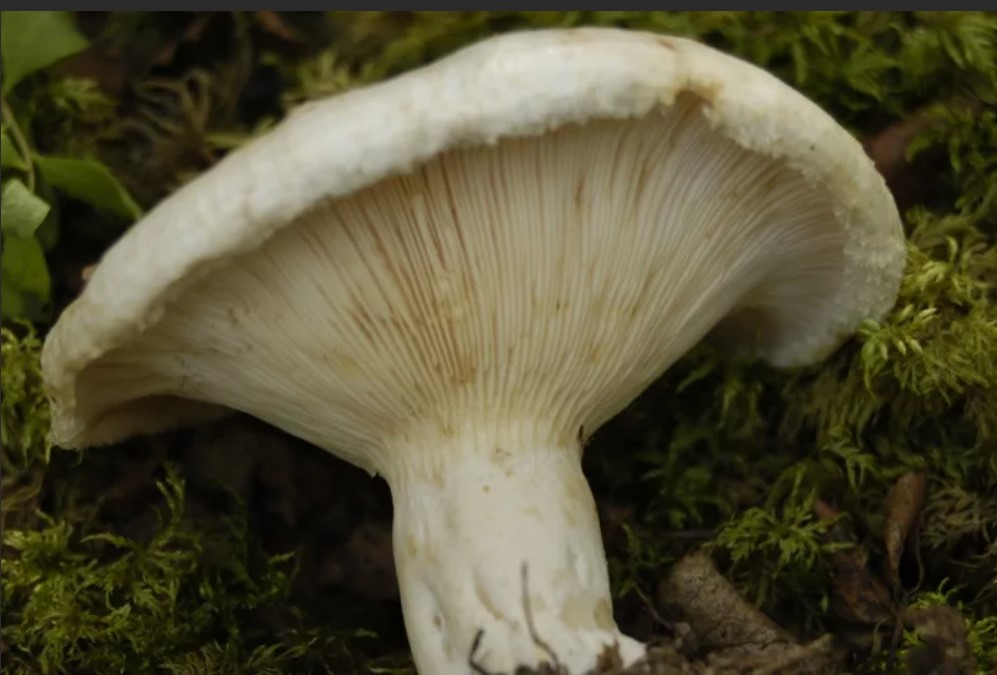
Leg
3-7 cm long, 2-5 cm in circumference, cylindrical in shape. The surface is smooth, white or yellowish, and hollow. Sometimes yellow spots and pits can be seen.
Pulp
Dense, snow-white, and brittle, it has a distinct fruity aroma. It produces a plentiful milky juice. It's tart and white, but turns sulfur-yellow when released.
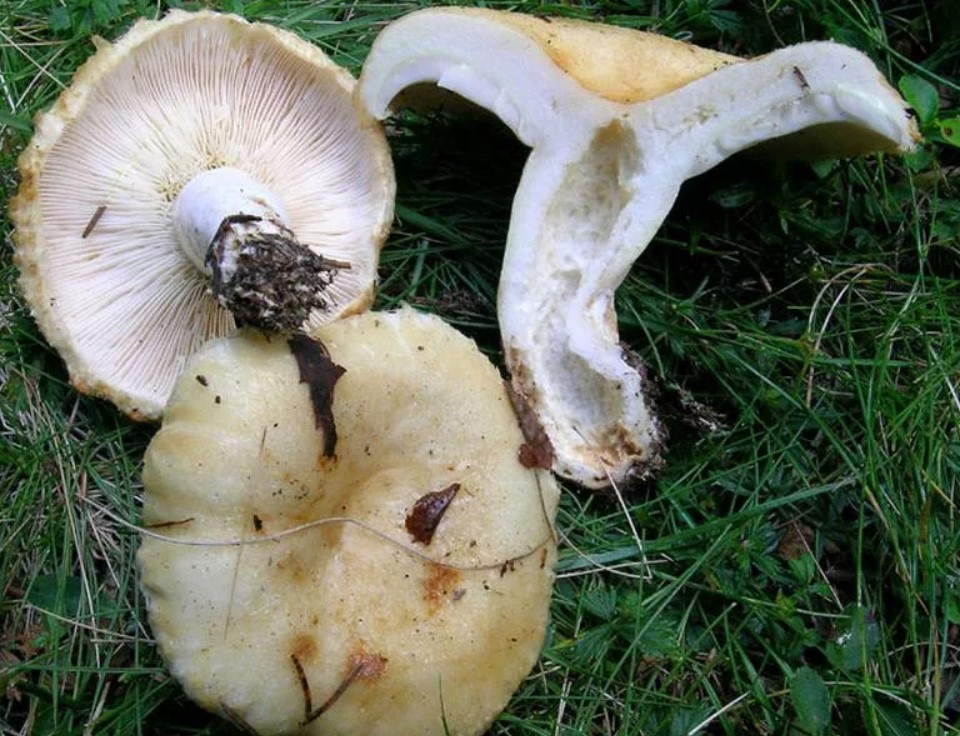
Plates
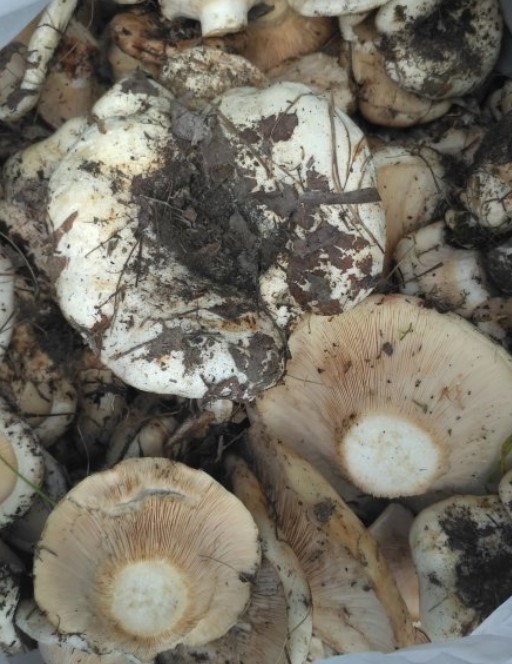
Frequent, widened, gently descending toward the stem. White with a yellowish tint.
Spore powder
Yellow.
Other names for white milk mushroom
In different regions of the Russian Federation and the CIS, the mushroom has different names:
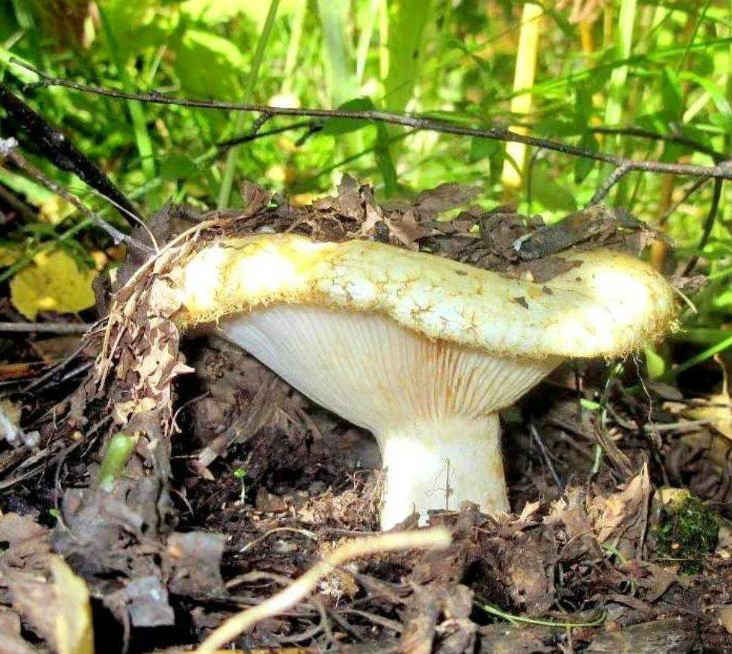
- white, raw milk mushroom - central and southern Europe, the Urals, the Far Eastern Federal District;
- wet milk mushroom - Western Siberia, Kazakhstan;
- Pravsky russula is the Asian part of the Russian Federation.
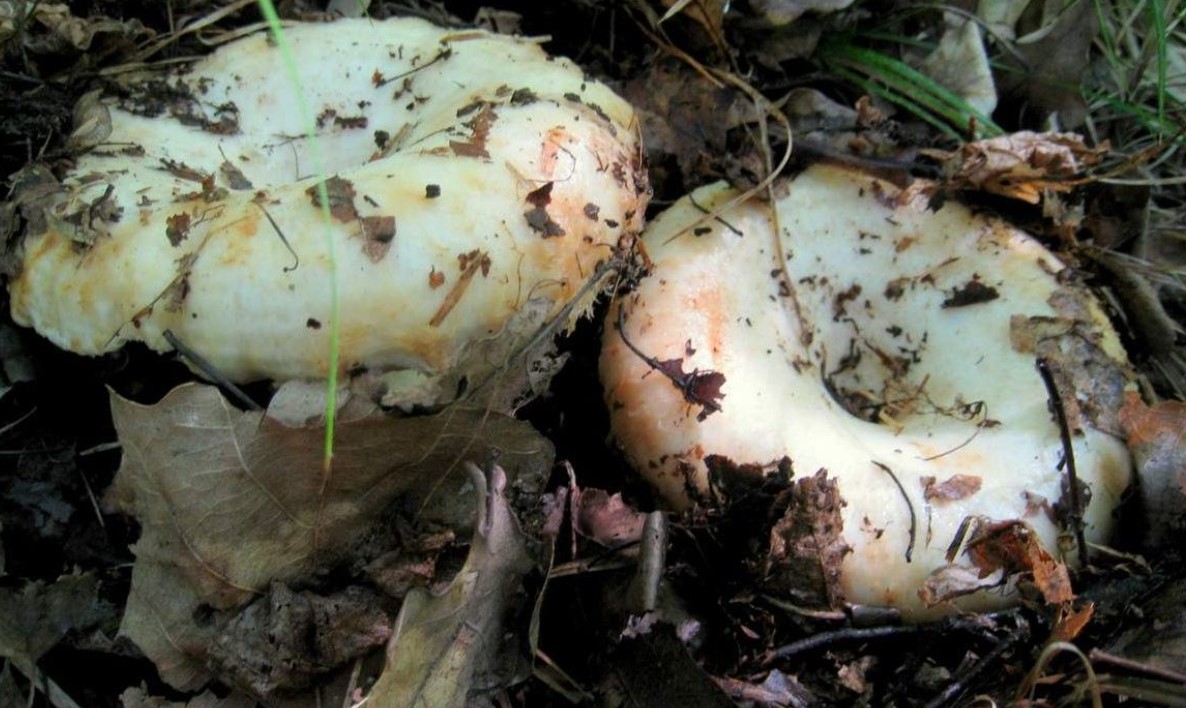
hat
In addition, it has different scientific names:
- Agaricus r.;
- Galorrheus r.;
- Lactifluus r.
It's noteworthy that since the 19th century, Russian mycological literature has referred to the species now known as the peppery milk cap as the true milk cap. It wasn't until 1942 that B. P. Vasilkov demonstrated that this name specifically refers to L. resimus.
Where and when does the white milk mushroom grow?
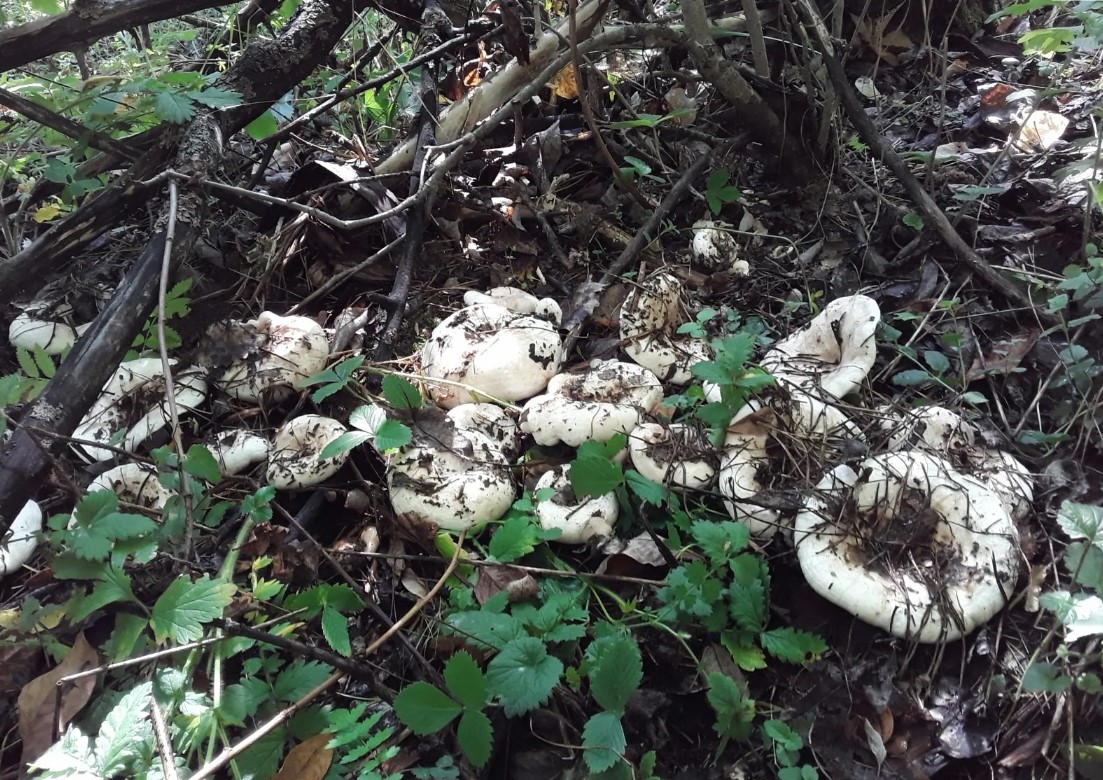
This mushroom is found throughout almost all of Russia and Belarus. It grows in deciduous and mixed forests (primarily birch, pine-birch, and linden undergrowth). It gathers in large, sparsely populated groups. It forms mycorrhiza with birch trees. The harvest can be completed from July to September, and in more southern regions, from August to September. The optimal average daily soil temperature for fruiting is 8 to 10°C.
What mushrooms can it be confused with?
Peppery milk mushroom (Lactarius piperatus)
| View | Description | Edibility | Where to look
Collection deadlines |
Differences |
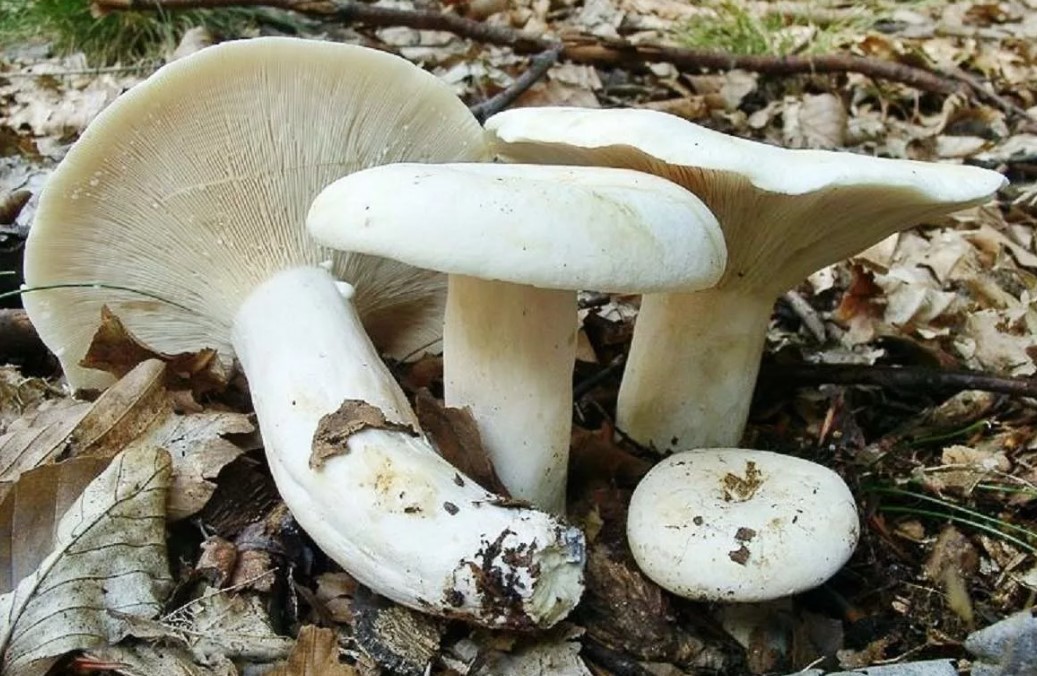
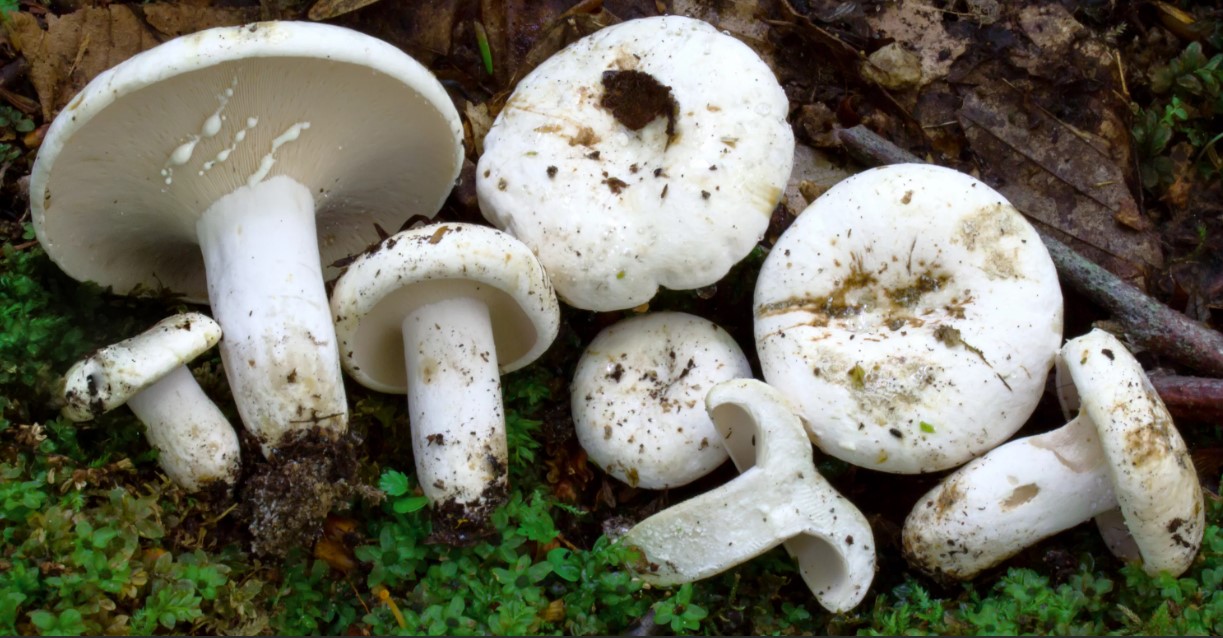
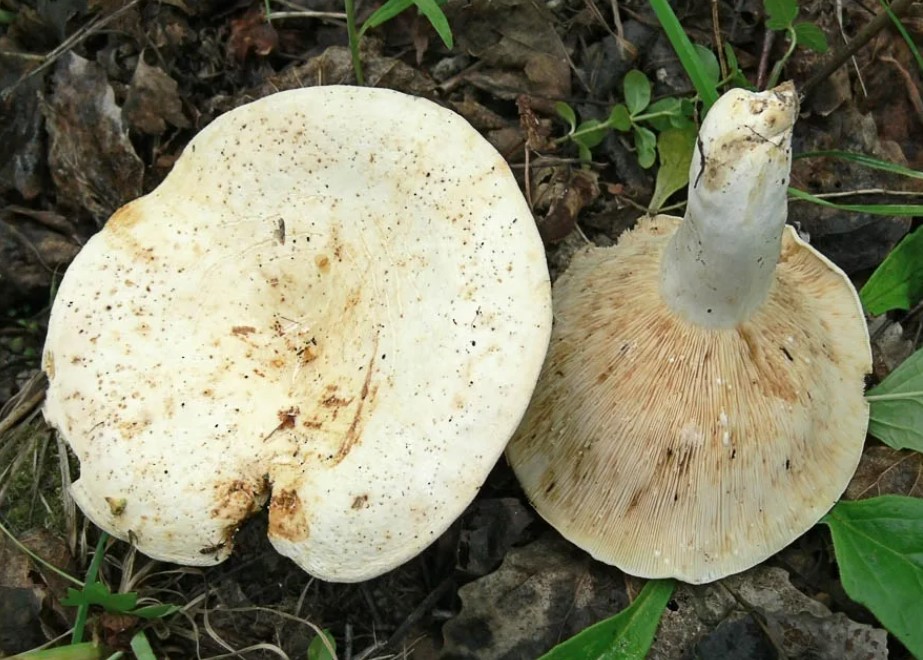
| Peppery milk mushroom (Lactarius piperatus) | The cap is white or slightly creamy, slightly darker in color. The surface is smooth or slightly velvety. Initially, the caps are conical, flattening as they mature. The gills are sparse and become brownish-yellow with age. The stem tapers downward. The milky sap remains constant in color, occasionally turning yellowish or greenish. | Conditionally edible. Often considered inedible, it has a very pungent taste. Used salted or as a seasoning. |
Oak, birch, and mixed forests. Sometimes they are also found in coniferous forests. They prefer well-drained clay soil.
July-October. |
. |
Photo gallery of peppery milk mushrooms
Violin milk cap (Lactarius vellereus)
| View | Description | Edibility | Where to look
Collection deadlines |
Differences |
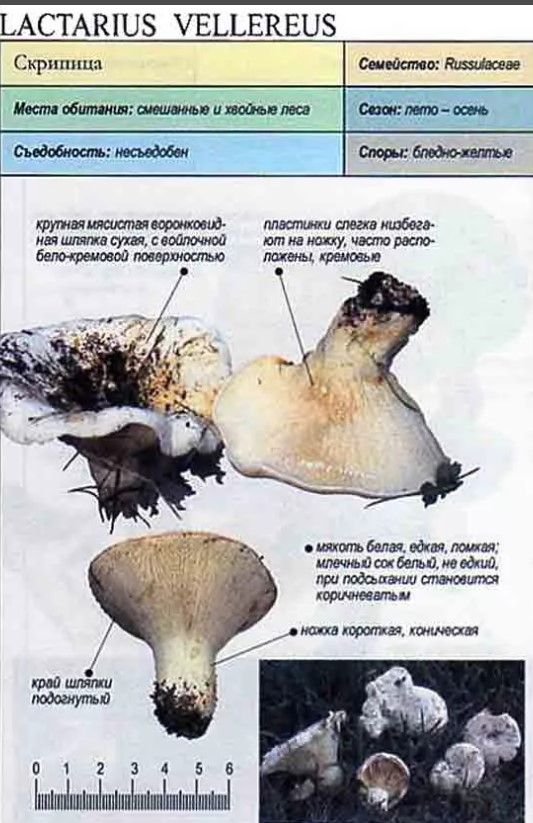
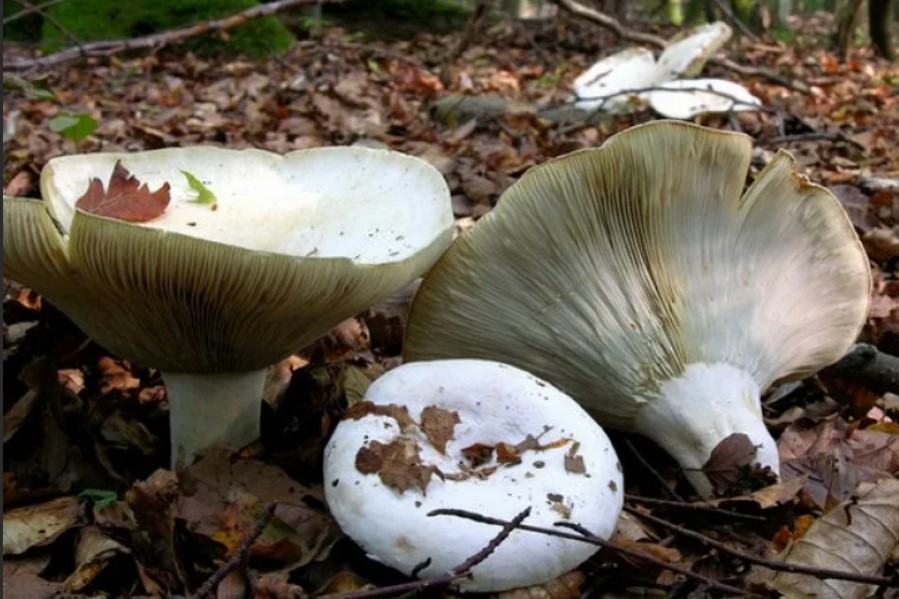
| Violin milk cap (Lactarius vellereus) | Initially, the white cap has a curved shape. As it ages, it becomes open and wavy around the perimeter. The surface is covered with snow-white fluff. | Conditionally edible. Long soaking. |
Coniferous, deciduous, mixed forests.
August-September. |
|
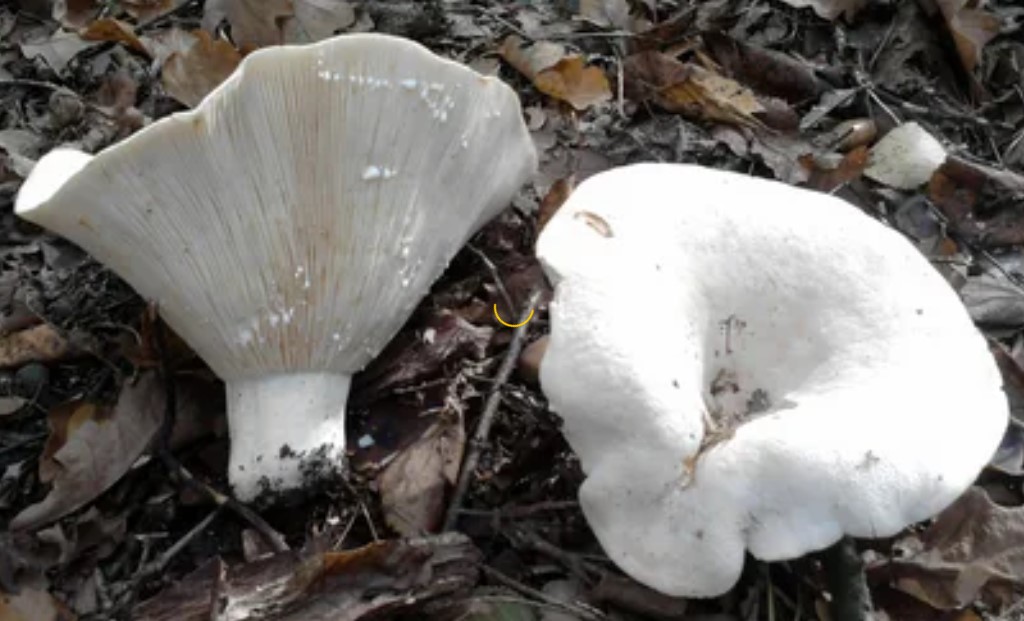
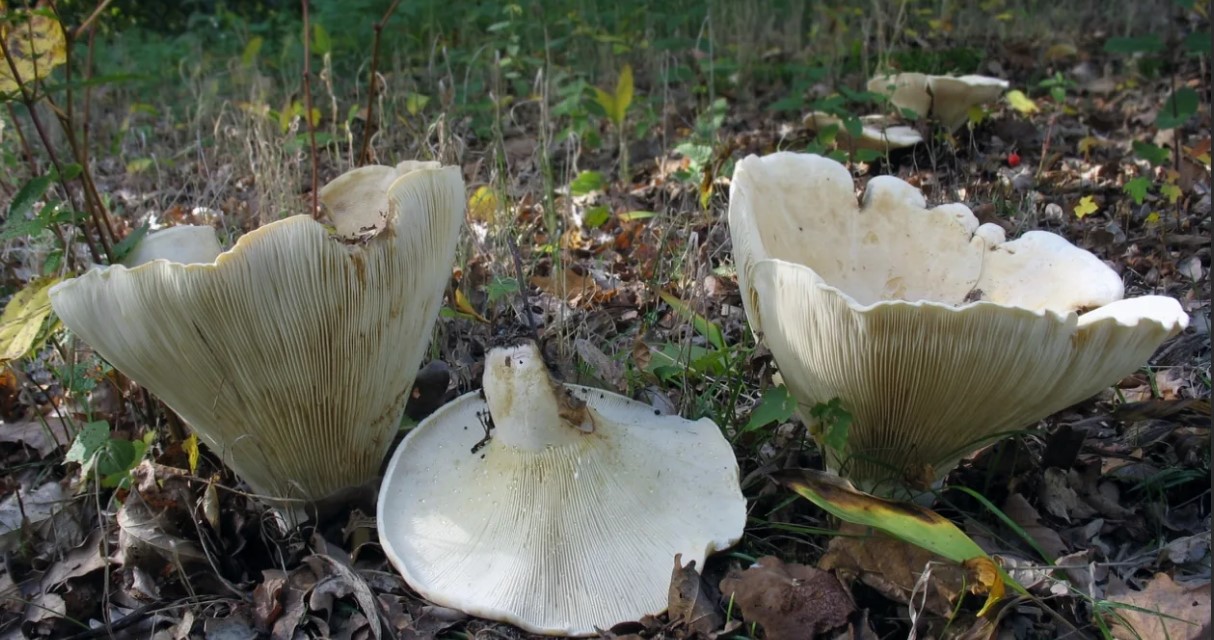
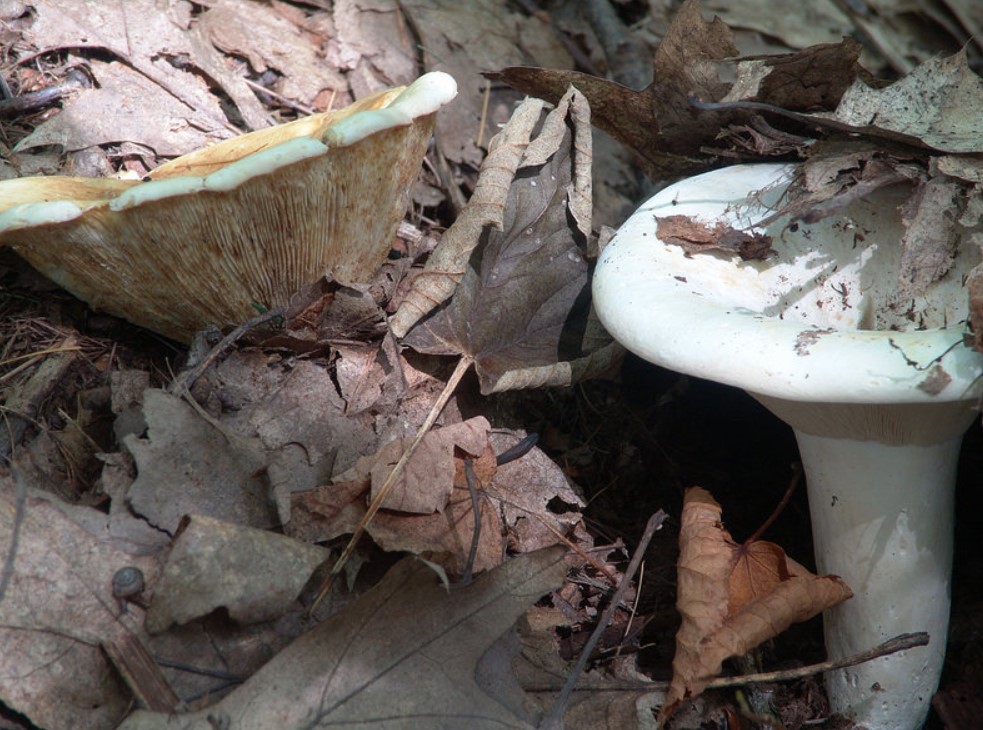
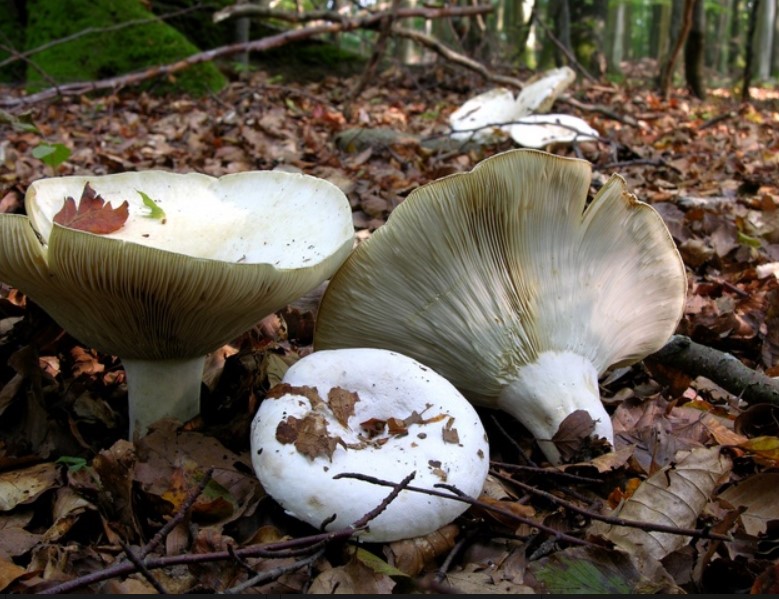
Photo gallery of the Skripitsa milk mushroom (skripun)
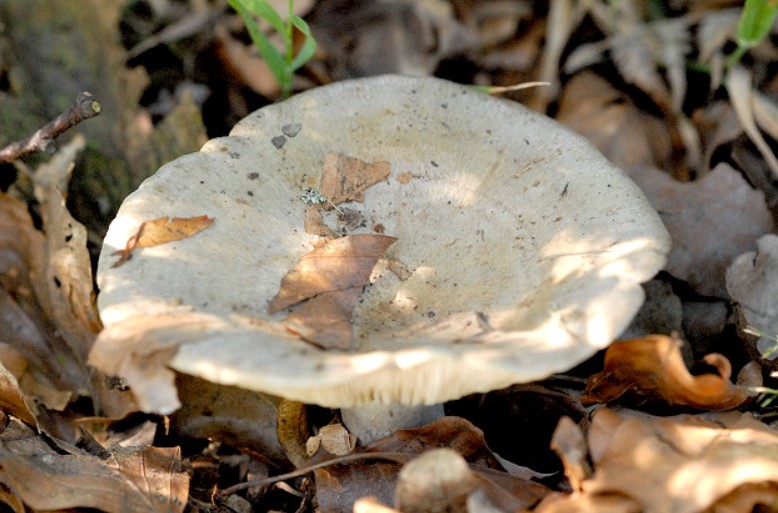
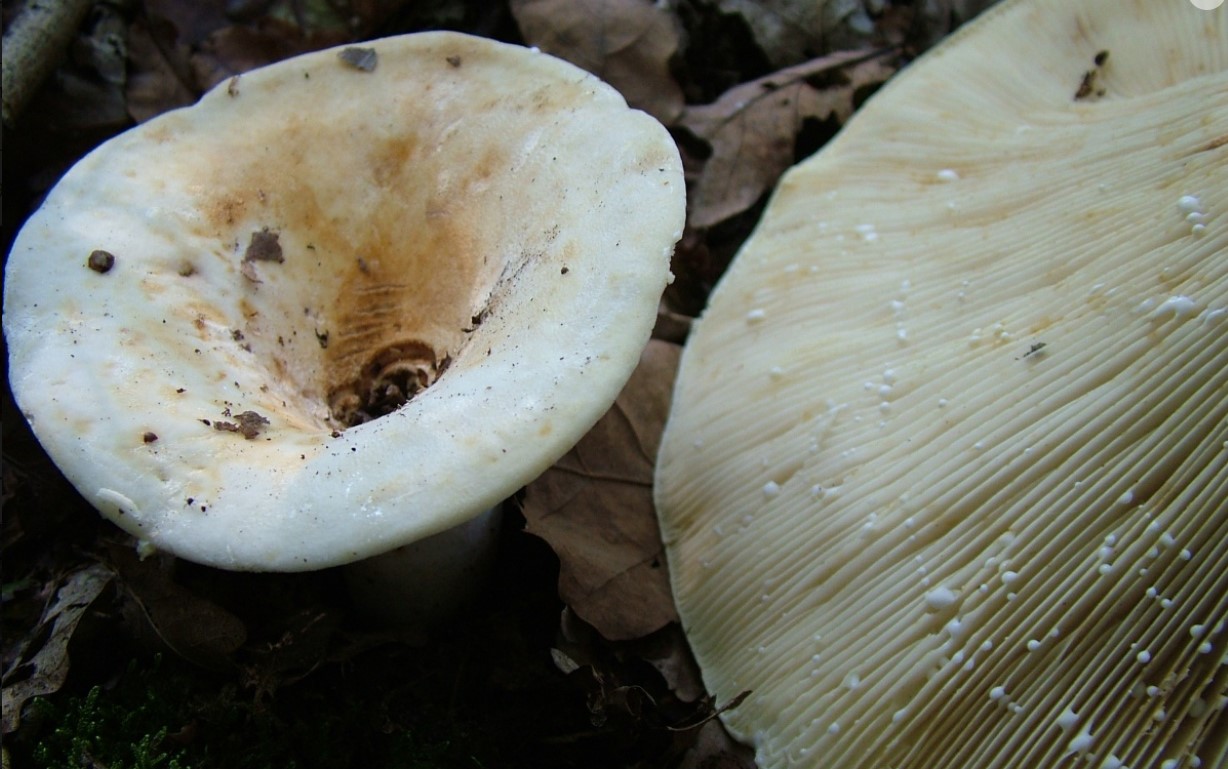
Aspen milk cap (Lactarius controversus)
| View | Description | Edibility | Where to look
Collection deadlines |
Differences |
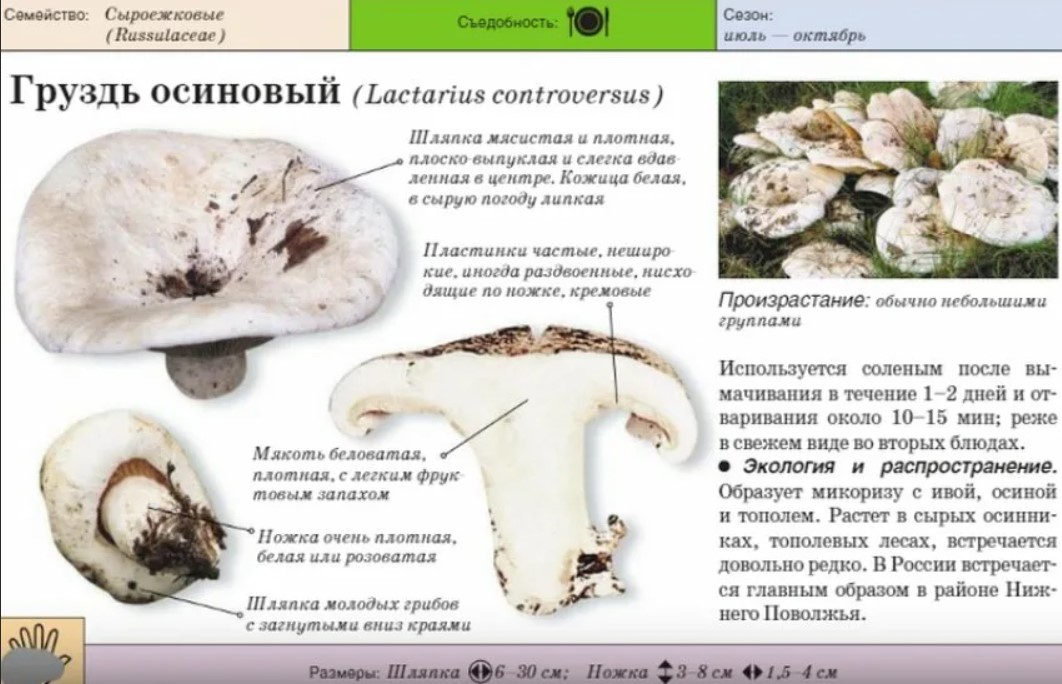
| Aspen milk mushroom
(Lactarius controversus) |
Externally, it resembles other species. The cap is fleshy, with a characteristic pubescence. Initially, it curves, then becomes free-flowing. The stem is shortened, tapering downwards. It often has a pinkish tint and is mealy at the top. The juice is a rich, creamy white, and its hue remains constant. | Conditionally edible. Some sources classify it as a good edible mushroom, meaning it can be used fried or boiled, not just salted. |
In Russia, it is found primarily in the Lower Volga region. It is most often found in damp aspen and poplar forests.
July-October. |
The plates are pinkish in color. |
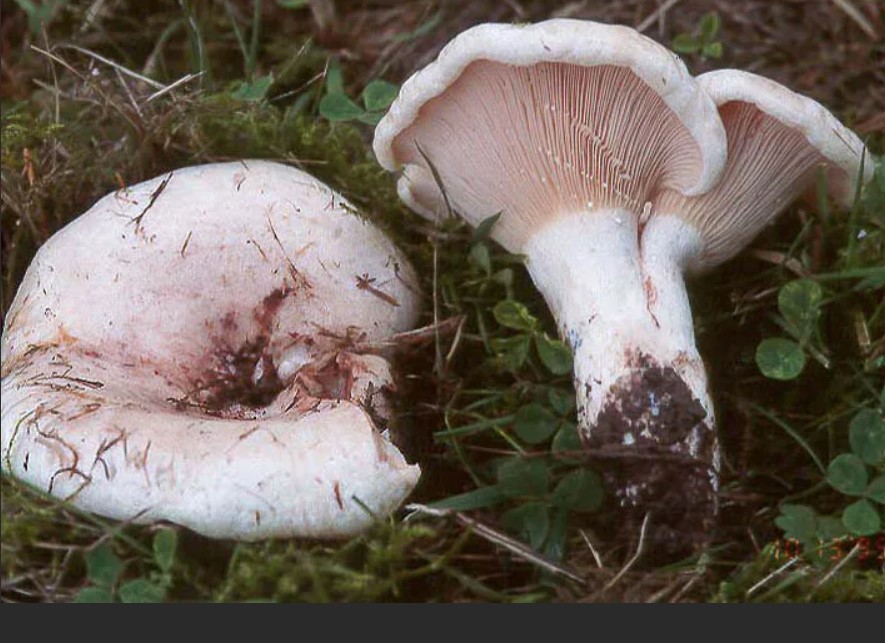
Photo gallery of aspen milk mushrooms
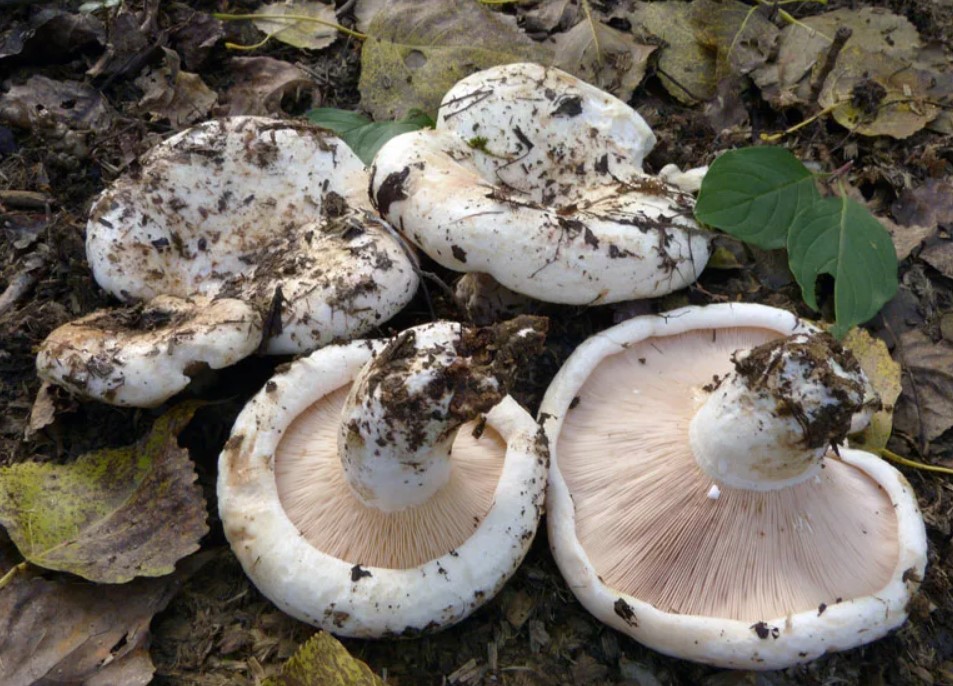
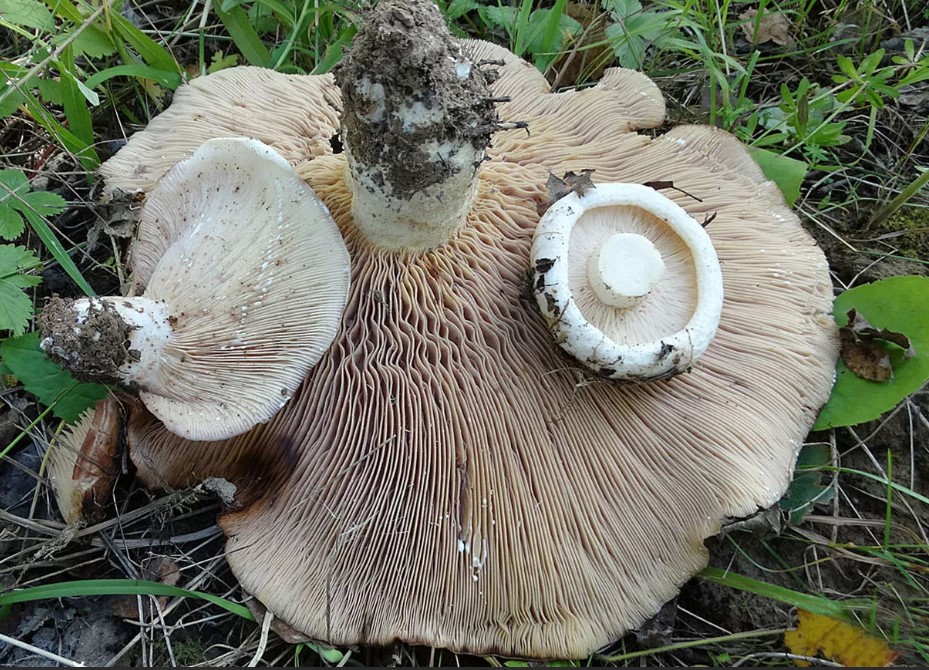
Read more about the Aspen Milk Cap in the articleAspen Milk Cap: Description, 60+ Photos, Edible, 10 Similar Mushrooms.
White milkvetch, white milkvetch (Lactarius pubescens)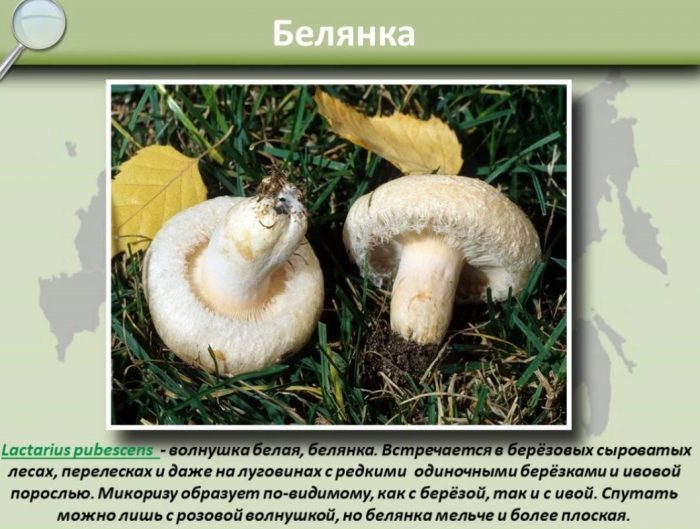
| View | Description | Edibility | Where to look
Collection deadlines |
Differences |
| White volnushka
(Lactarius pubescens) |
The cap is creamy white and heavily pubescent. It produces a creamy white sap that remains unchanged when exposed to oxygen. | Conditionally edible. | Prefers the edges of birch groves and rare young coniferous-birch forests. Beginning of August - end of September. |
|
Photo gallery of the white milk cap
| View | Description | Edibility | Where to look
Collection deadlines |
Differences |
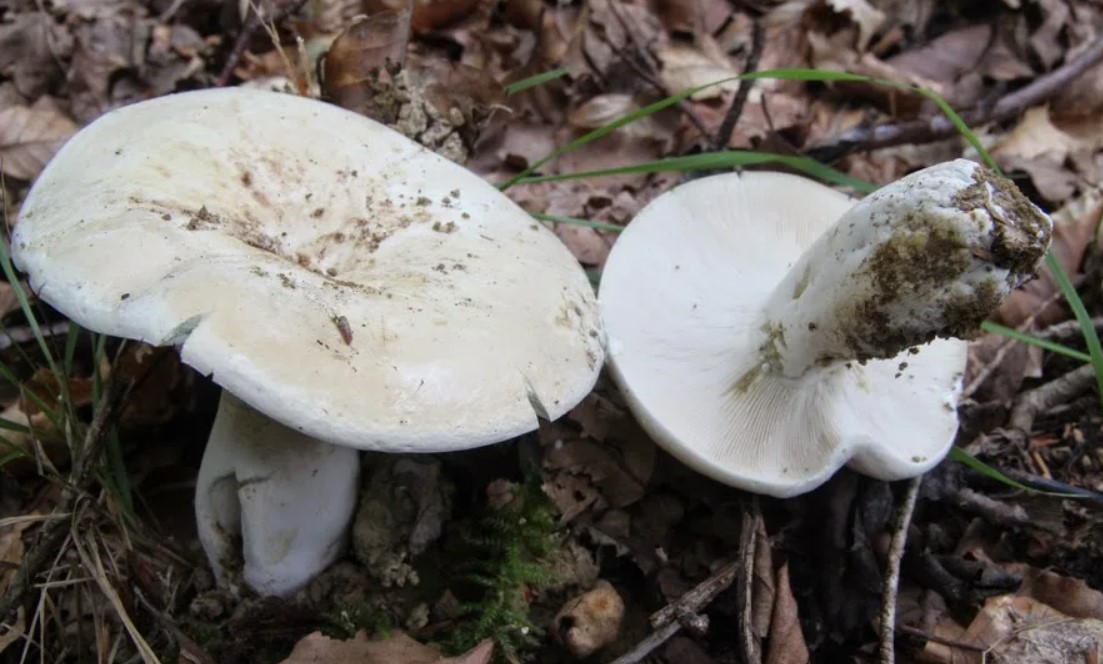
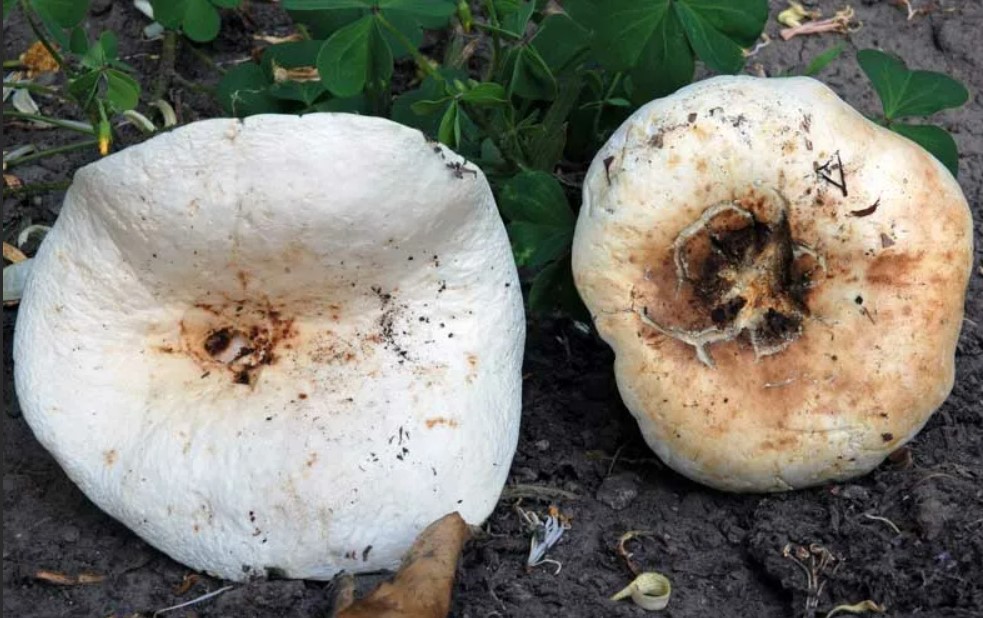
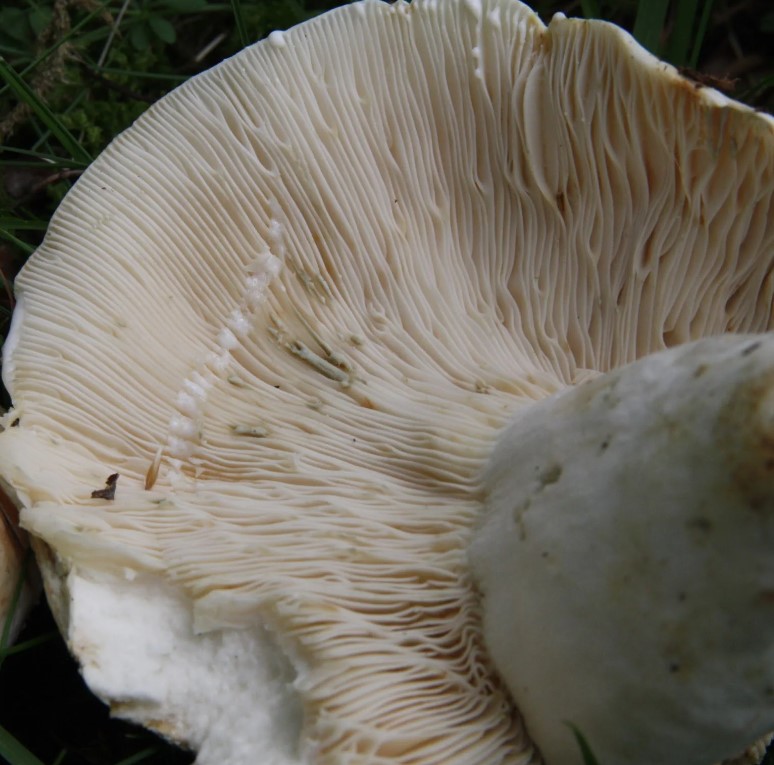
| Parchment milk cap (Lactarius pergamenus) | The cap is white, with a smooth or wrinkled surface. As it ages, it acquires a yellowish tint. The gills are dense. | Conditionally edible. | Deciduous and mixed forests.
2nd decade of August-September. |
Elongated leg. |
Photo gallery of the parchment milk cap
Yellow breast (Lactarius scrobiculatus)
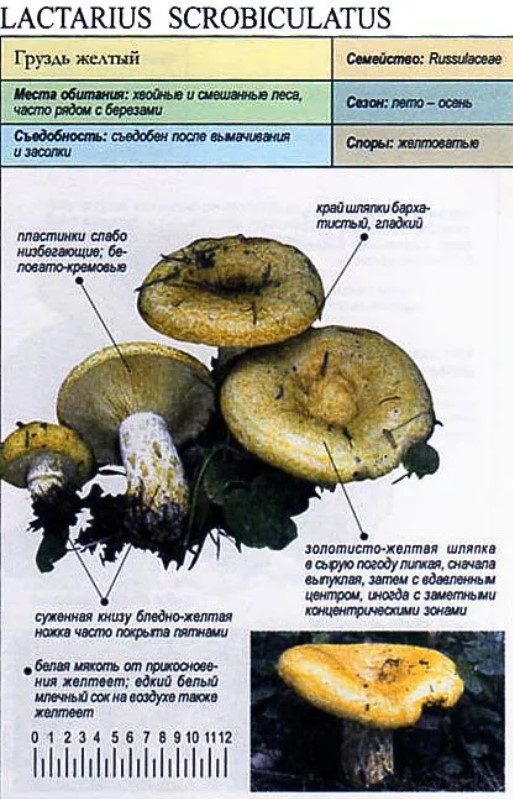
| View | Description | Edibility | Where to look
Collection deadlines |
Differences |
| Yellow breast (Lactarius scrobiculatus) | The cap is golden-yellow, with a felty covering. When pressed, it takes on a brownish tint. When cut, the flesh turns yellowish, and the milky juice turns grayish-yellow. | Conditionally edible, considered edible in some sources. Used salted. | It is most often found near spruce and birch trees. It grows in both deciduous and coniferous forests. July-October. |
|
Photo gallery of yellow milk mushrooms
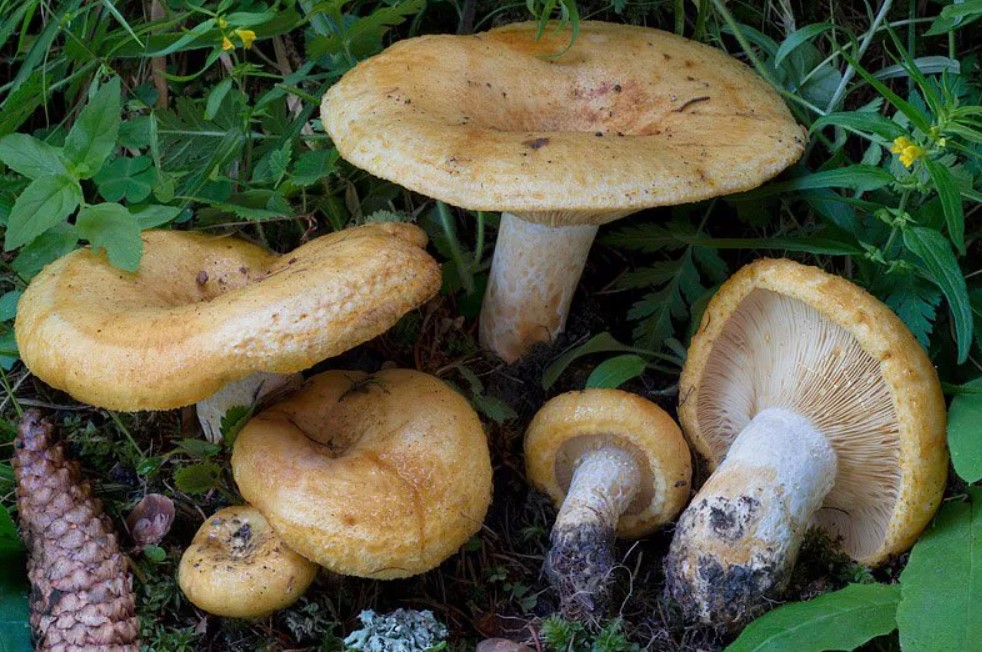
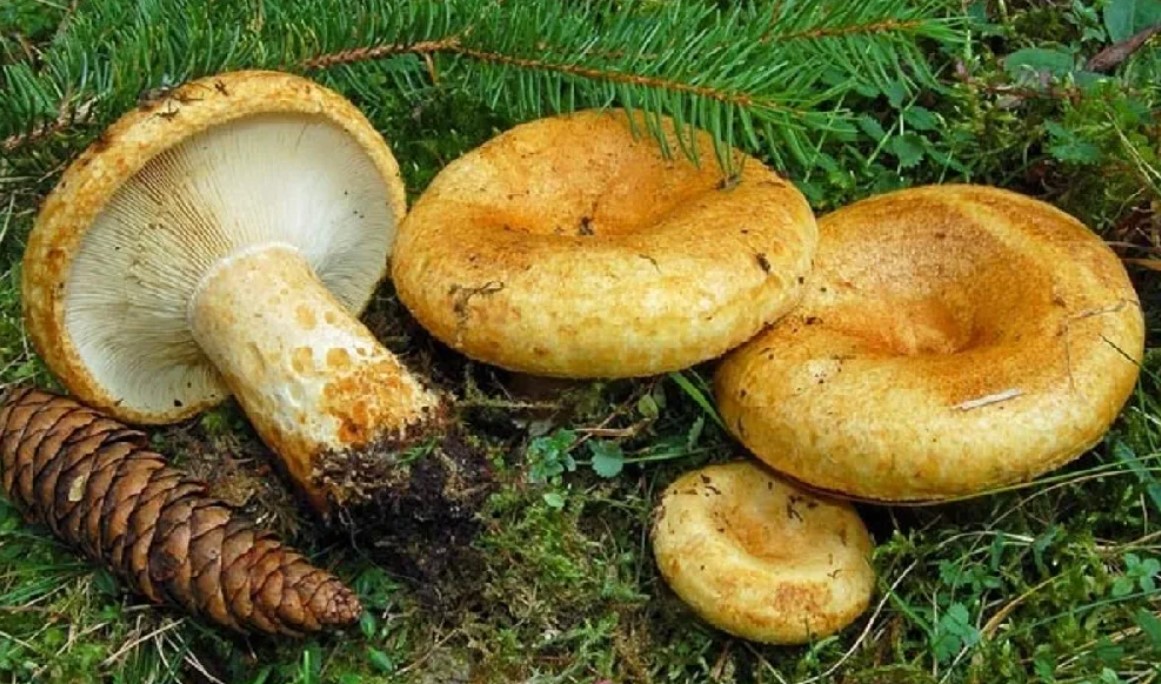
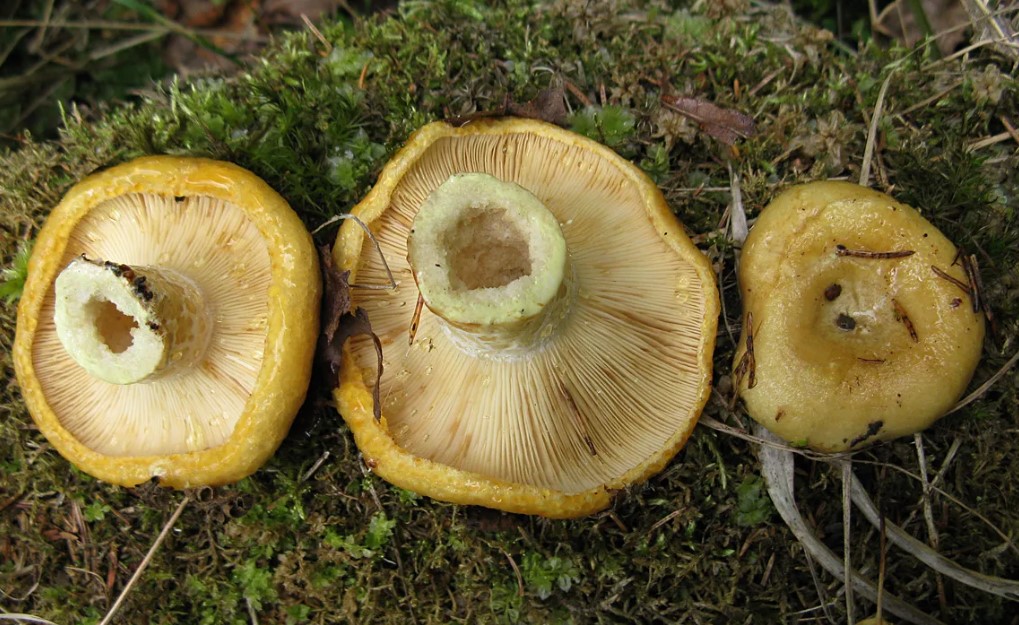
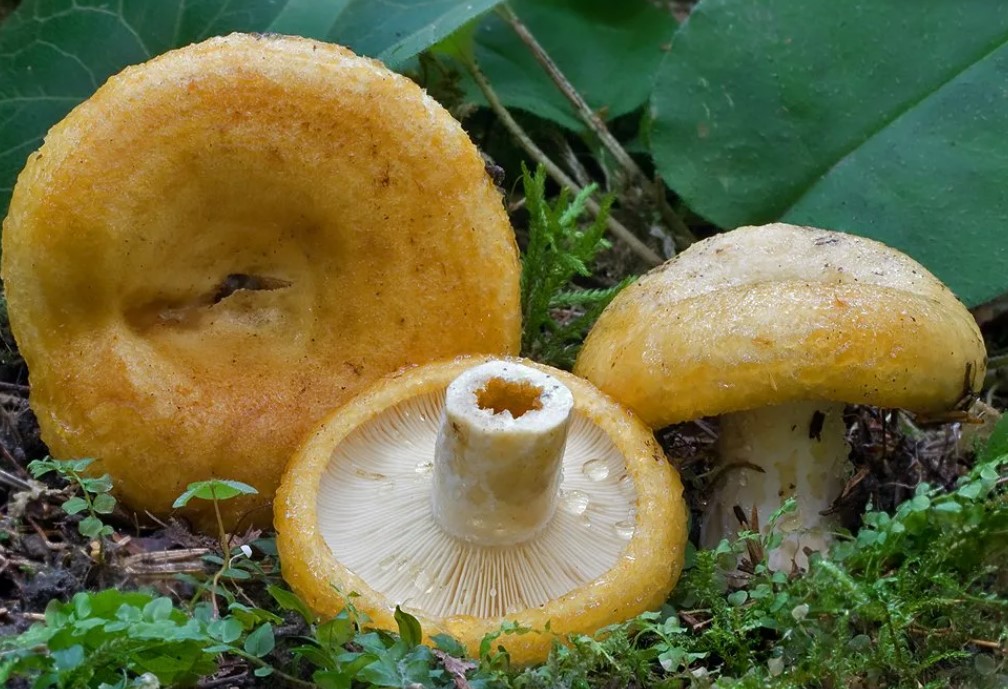
More about the yellow milk mushroomYellow Milk Mushroom: 20+ photos, description, when and where to pick, benefits and harms, recipes.
Blue breast (Lactifluus glaucescens)
| View | Description | Edibility | Where to look
Collection deadlines |
Differences |
| Blue breast (Lactifluus glaucescens) | The cap is white, dryish, and sometimes slightly velvety. The cap is snow-white or cream-colored. The gills are narrowed and dense. The stem is smooth. | In different sources it is mentioned as edible and conditionally edible. | Grows exclusively in deciduous forests.
July-September. |
|
Photo gallery of bluish milk mushroom
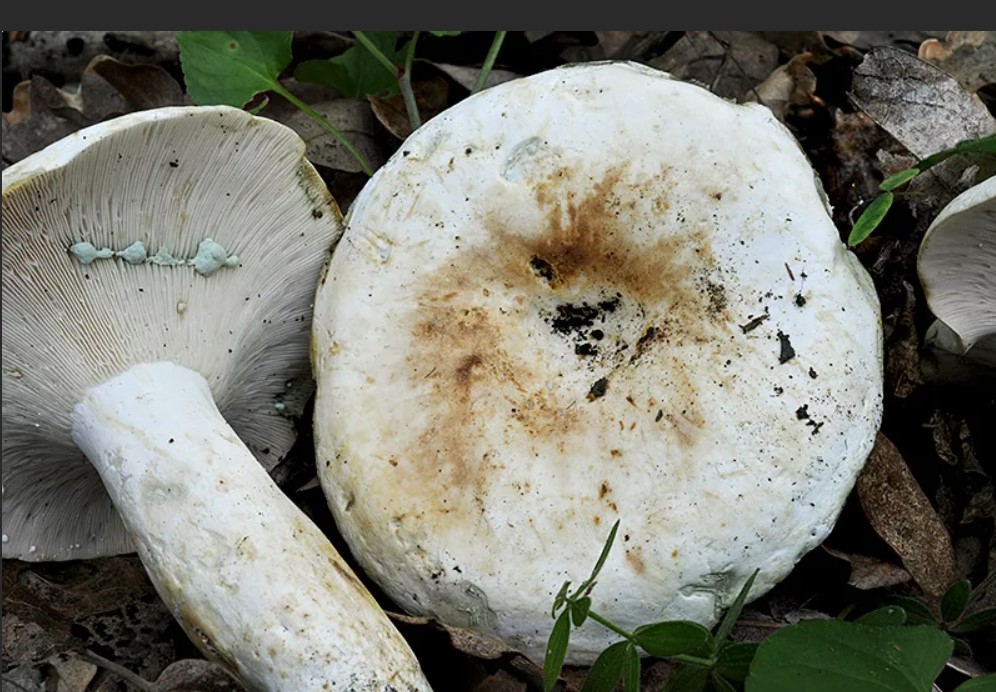
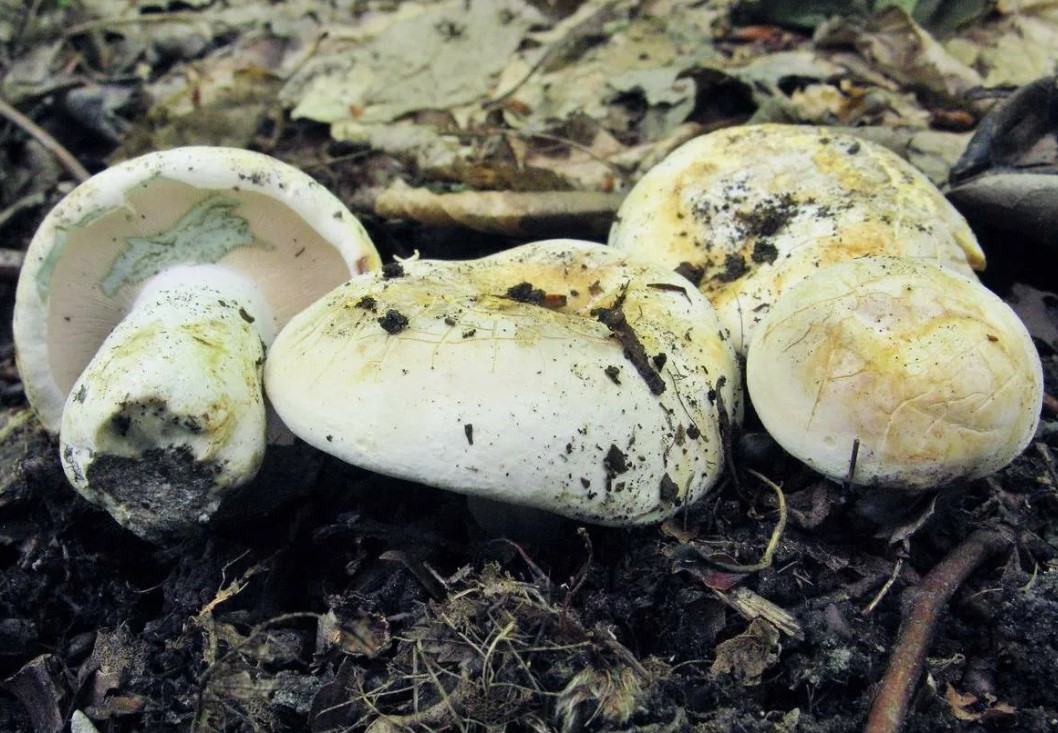
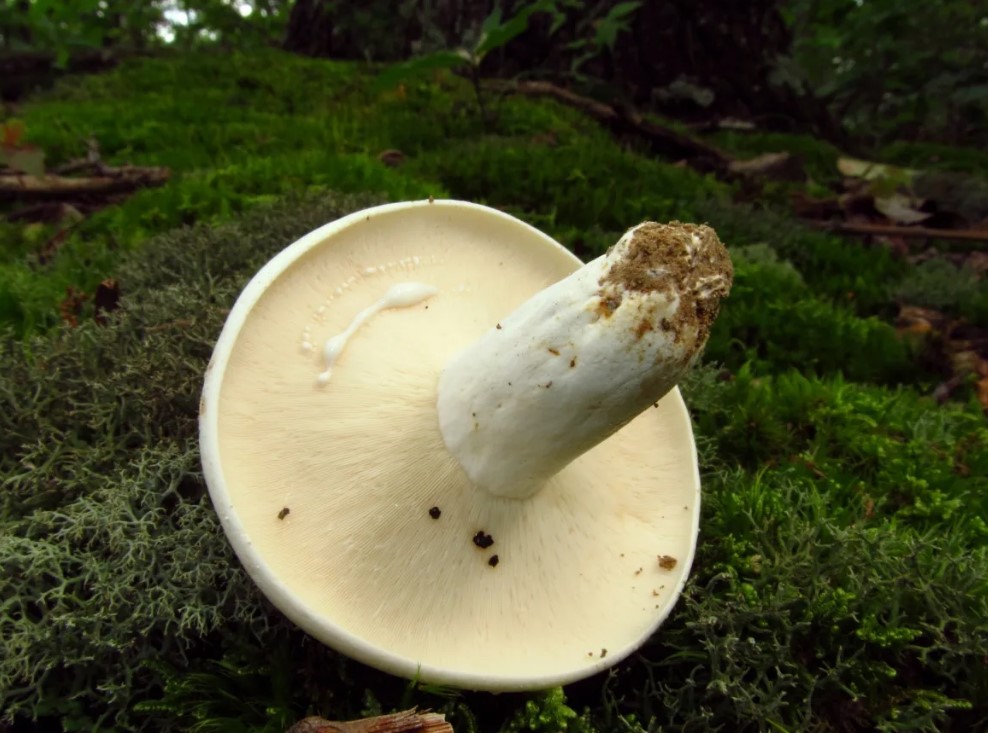
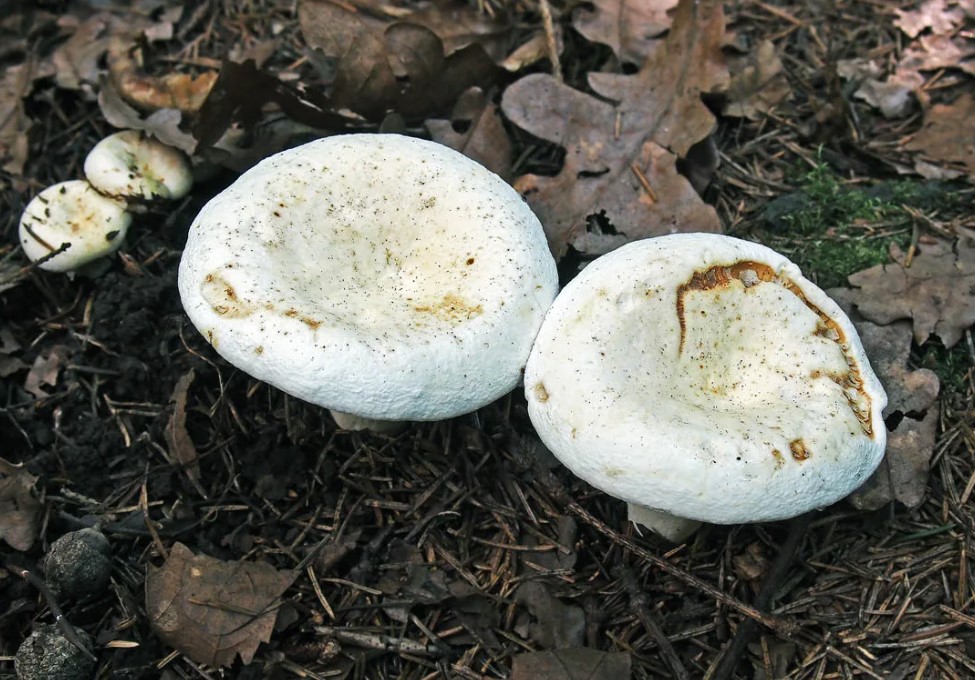
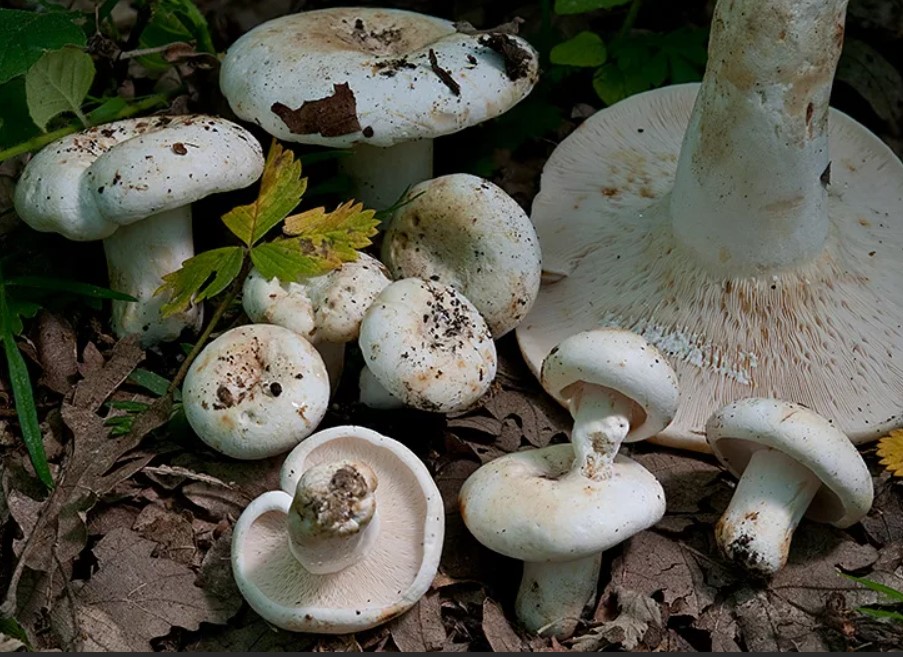
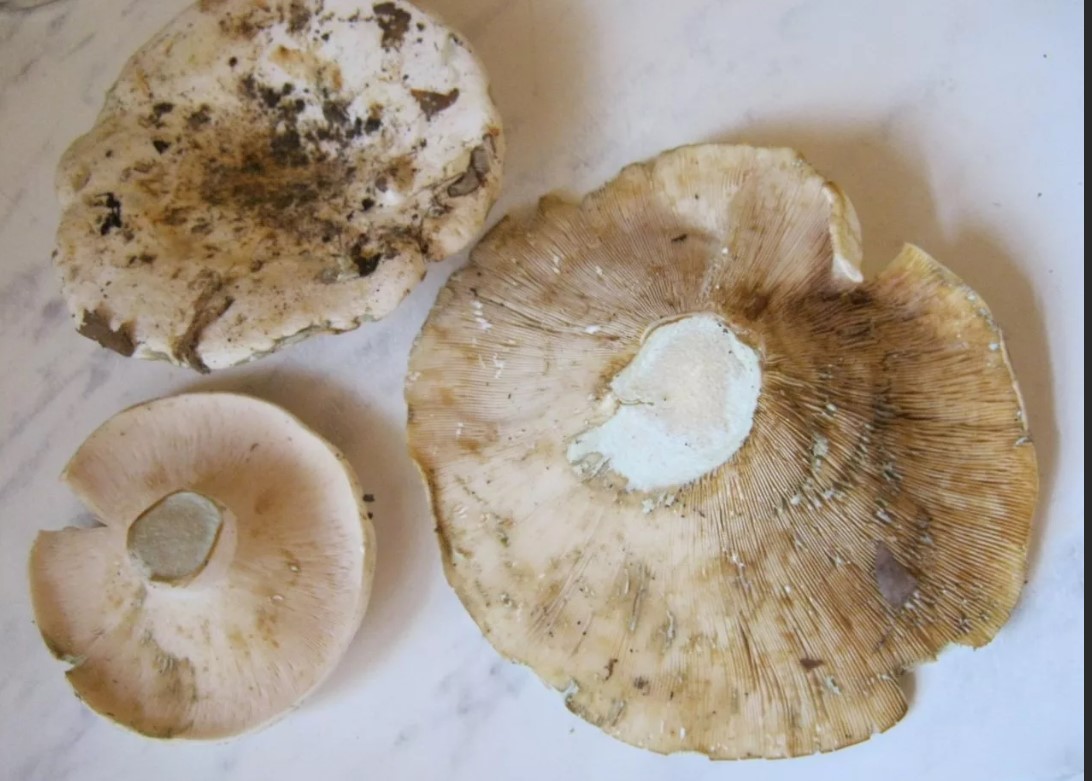
Read about different types of milk mushrooms in the articleMilk mushrooms (milk caps): 67 species, photos, what they look like, when and how to collect them, what forests they grow in.
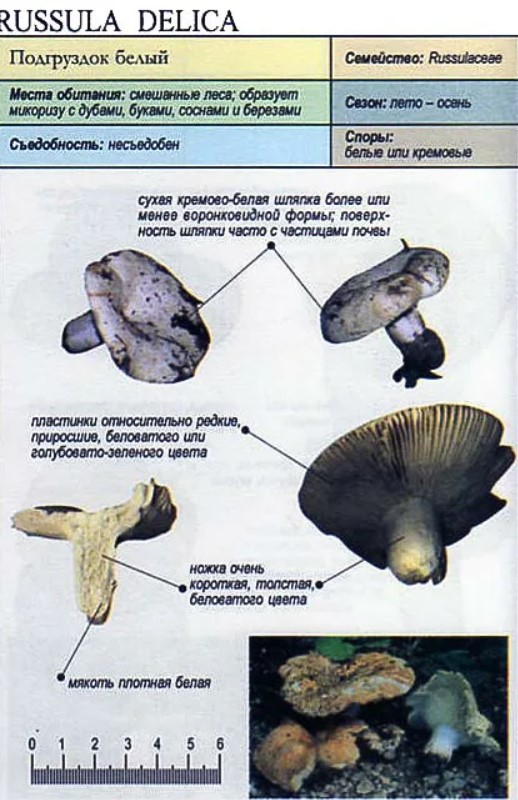
White milk cap (Russula delica)
| View | Description | Edibility | Where to look
Collection deadlines |
Differences |
| White milk cap (Russula delica) | Young mushrooms have a convex cap with recurved edges. It is sparsely pubescent. With age, the surface becomes spotted. Initially, they are slightly yellowish, later turning ochre-rusty. The gills are thin, tapered, and usually white. Less commonly, they are turquoise or greenish-blue. The stem tapers toward the cap. The flesh is juicy, with a distinct mushroom aroma. | Edible. The flesh is very aromatic. | Birch, aspen, oak, and mixed forests. Sometimes found in coniferous forests. Distributed throughout Eurasia.
Mid-summer - early October. |
|
Photo gallery of white milk cap mushrooms
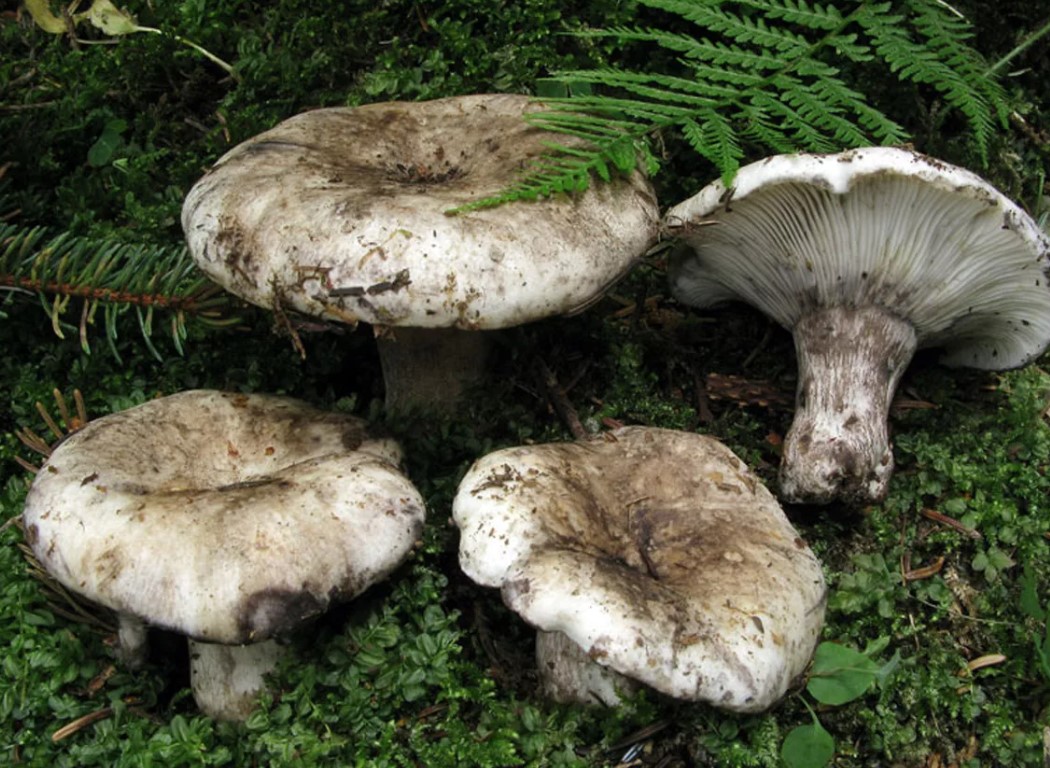
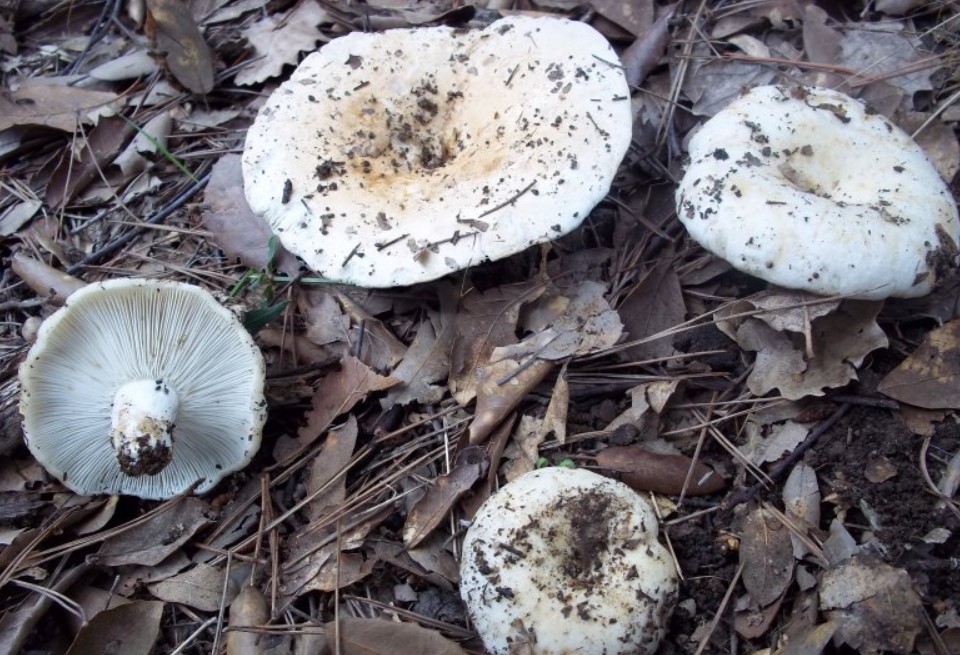
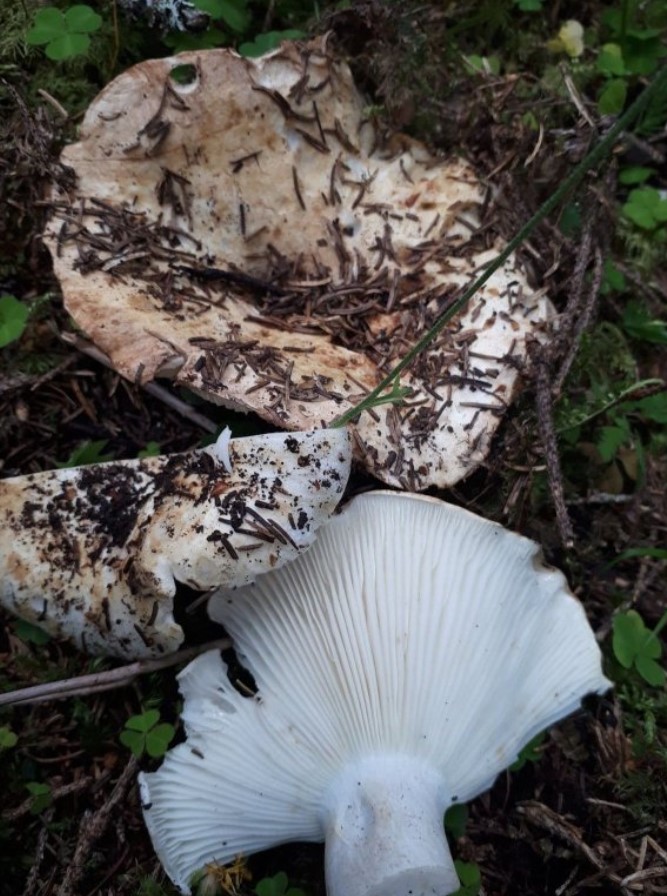
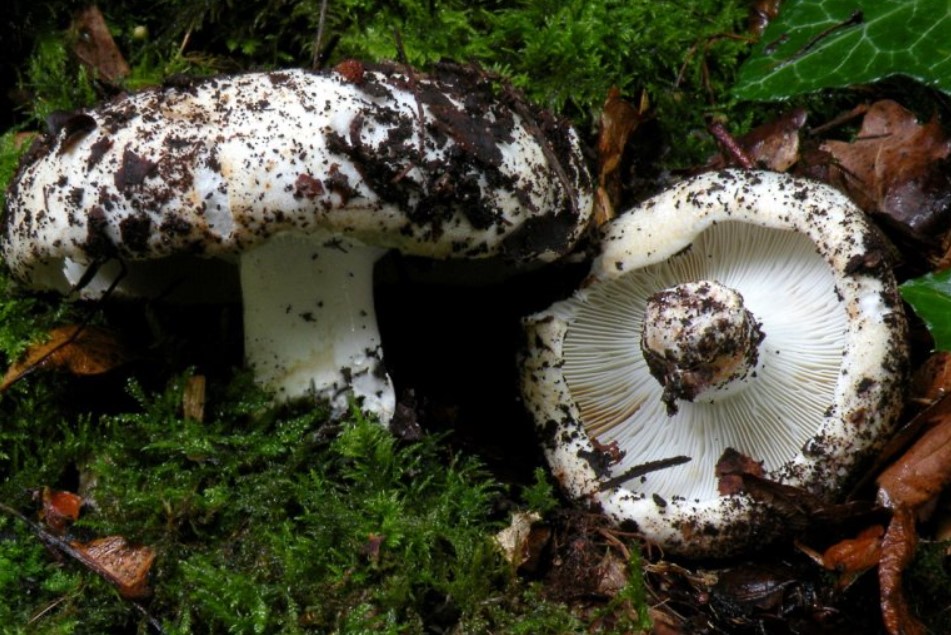
Read more about dried milk mushrooms and white milk mushrooms in the articleDry milk mushroom: 30+ photos, reviews, description, where and when it grows, similar mushrooms, recipes.
Also read about the black milk mushroomBlack Milk Mushroom: 22 Photos, Description, Edible or Not, What It Looks Like, and Where to Find It.
Culinary uses
To fully reveal the mushroom's flavor, it must be prepared correctly:
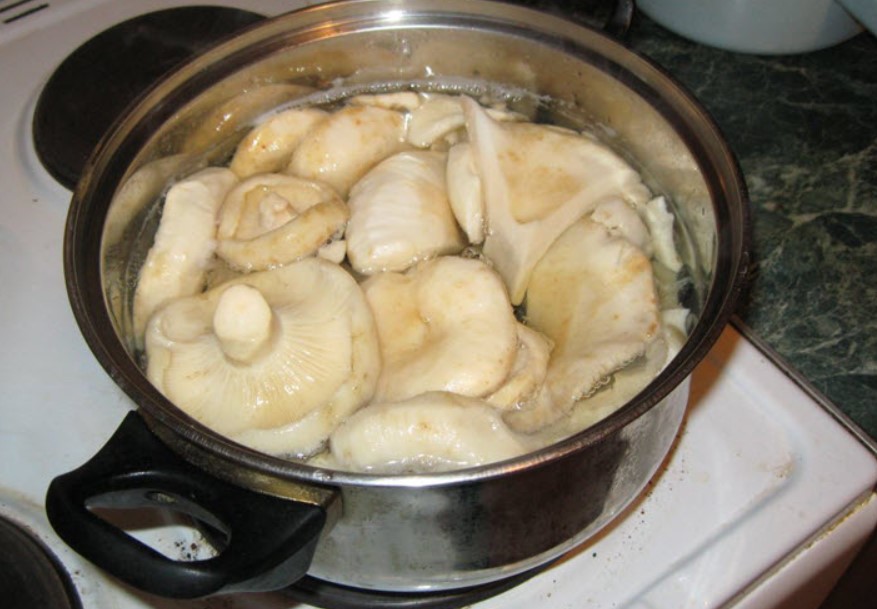
- Rinse thoroughly with water to remove leaves, dirt, and soil from the surface.
- There's no need to peel the skin. If the mushroom is not young, it's best to remove the stem, as it will be tough.
- Soak in cool water for 3 days. Change the water twice a day to remove the pungent milky sap.
- Cook in boiling water for 20 minutes, adding salt. After this time, drain the liquid.
Read the article about soaking milk mushrooms.How to soak milk mushrooms before pickling, how many days, cold method + for different types.
After these steps, you can proceed to further preparation. For example, pickling, frying, and so on. Some mushroom pickers pickle mushrooms raw, that is, without pre-cooking. However, their full flavor is revealed only after preliminary preparation.
Beneficial properties and use in alternative medicine
In addition to their excellent taste, white milk mushrooms also have many beneficial properties. Because of this, they are often used in alternative medicine.
Mushrooms have been used as medicine since ancient times. In alternative medicine, they are used to treat tuberculosis, diabetes, and emphysema.
The mushroom contains a large amount of protein. It can be used as a complete replacement for meat and fish products. Moreover, the product is dietary.
The pulp also contains a lot of vitamins. B, C, and carotene. These substances have a positive effect on the central nervous system, cardiovascular system, and immunity. Mushrooms also contain many trace elements. Moreover, these components are present in an easily digestible form.
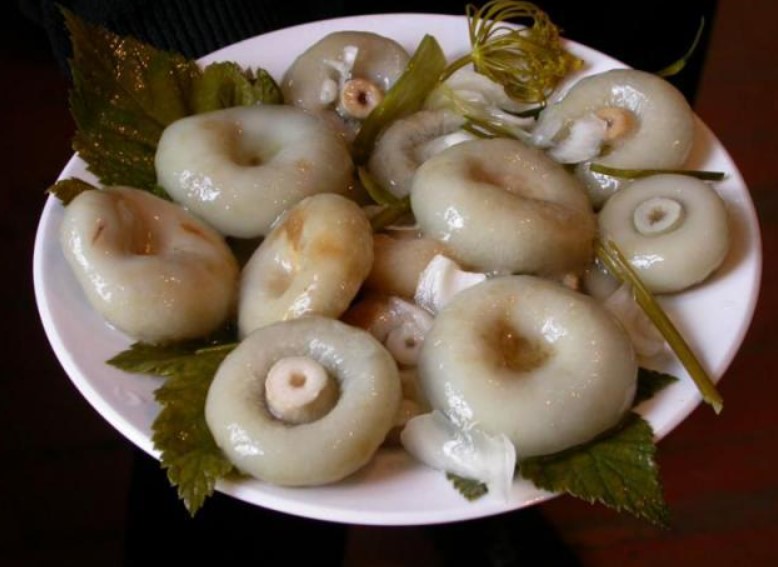
However, mushrooms should be consumed in moderation. They are a fairly heavy food and can cause gastrointestinal problems.
Experienced mushroom pickers' reviews of white milk mushrooms
My acquaintance with mushrooms began with white milk mushrooms. It was fifty years ago on the slopes of the Trans-Ili Ala-Tau above a mountain lake in Almaty (if anyone knows). This is the same lake that repeatedly sent mudflows toward Almaty and Medeo. We would go there as schoolchildren in the middle of summer, climb up before the snow, and collect milk mushrooms in homemade water jugs among the sparse Tien Shan spruce trees on the slopes. Our grandmothers would praise us for our mushroom support and… fry the mushrooms for dinner.
Even though everything was pickled back then (including cucumbers and watermelons), I don't remember pickling milk mushrooms. I tried them for the first time in Riga, when I became a student. It was there that I encountered milk mushrooms again. The abundance of mushrooms I saw in Riga (on collective farm trips) simply overwhelmed me, but I only knew milk mushrooms. I found them in the coniferous forests surrounding potato fields.
Then, realizing that the Latvian land wasn't filled with milk mushrooms alone, I stopped collecting them altogether, because most of them were rare and almost always wormy. In pickles, they were replaced by black milk mushrooms. But encounters did occur. Where? In the most varied, dissimilar places, but almost always in the same ones. I still remember these spots—the vegetable gardens. Somewhere the forest is young, sparse, mixed, and somewhere, on the contrary, it's old, dark, and coniferous.
The year before last was a rare one, with a dry and hot summer. All the midges died. And when the autumn rains came, almost all the mushrooms came out. I also collected many good white milk mushrooms, again in old, familiar places.
Once in the area of the Gremuchy lock (Vuoksa, Losevo) I found about ten of these wonderful mushrooms.
They were quite large (about the size of a standard tea saucer), white-yellowish in color, with a fleshy and thick, hollow stem (I don’t remember, but I think there was water in these cavities) and they were all clean.
We salted them separately. What can I say, they were absolutely delicious, more like a meat jelly than mushrooms. In short, they couldn't be compared to anything else in the mushroom family. And after that, my beloved salted saffron milk caps faded into second place. And unfortunately, no matter how many places I visited afterward, I never saw such white milk caps again.
I would really like to...
I spent my entire childhood collecting aspen mushrooms by the bucketful. You're jealous!
In the Lipetsk region, they grow in poplar plantations along the edges of fields. And they're easy to pick: the plantations consist of two poplar alleys; you walk down one alley in one direction and down the other in the other direction.
By the way, the locals don't pick milk mushrooms; they're probably too bitter. They actually laughed at us when they heard about it: summer residents are stupid, they'll eat anything in sight. They didn't gather them in buckets or baskets, but in huge baskets. Three of them spent half a day cleaning them. They soaked them in the bathtub. They salted them in barrels. It's not hard to imagine that with so many of them, they weren't at all hungry. In the spring, they threw them out.