A composting toilet is a device that eliminates the need for a wastewater treatment system or piping. Besides independence from the central sewer system, its advantages include increased comfort, ease of use, hygiene, and compactness.
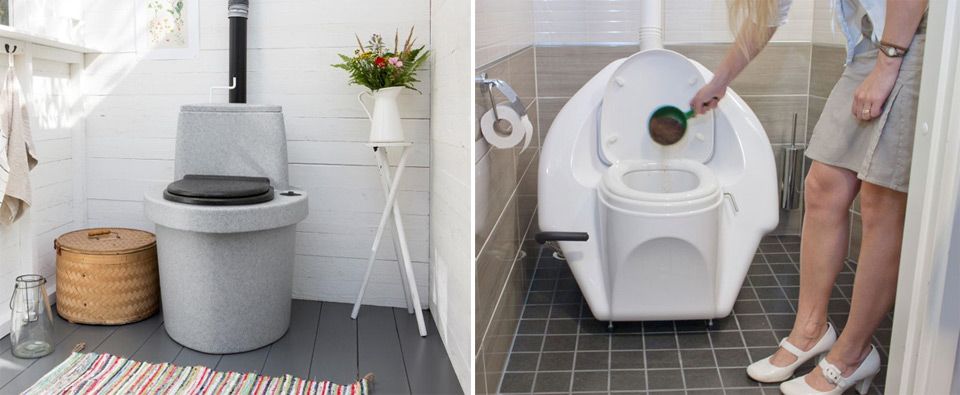
Bio-toilets are especially popular among owners of country houses.
What are bio-toilets for and what are their types?
The devices are classified based on the tank volume and parameters.
Portable composting toilets can be placed anywhere. Stationary ones require a separate stall.
Depending on the processing method, they are divided into the following categories:
- Peat waste disposal is accomplished using peat supplied by a dispenser. The facility must be equipped with a ventilation system.
- Biological – the process involves bacteria, the result of their use is a mixture that can be used as organic fertilizer.
- Chemical – processing requires chemicals that remove odor and kill microorganisms. These are available in granular or liquid form.
- Electric – a distinctive feature is the separation of components by consistency. Electric current is required for normal operation. Solid components are dried and pressed, while liquid components are sent to the drainage system.
Also read about the best portable toilets for a summer house, there you will find a table-review of different models with photos and descriptions.
How to use a portable toilet
Portable composting toilets are quite similar to each other. There are a number of factors to consider when choosing the right model. These include:
- Size – the device can be high or low. The limit value is 40 cm.
- Tank capacity – to determine it, you need to focus on the number of household members and physical capabilities.
- Pump type – there are quite a few options. The device can be equipped with an accordion pump, a piston pump, or an electric device. This factor determines the cost and ease of monitoring the liquid level.
- A full-fill indicator and air vent are included. These can help prevent any potential problems.
- Valve release blocking - without it, it will be quite difficult to prevent the spread of unpleasant odors throughout the room.
- Environmental safety – at the dacha, preference should be given to organic fillers (mixtures containing beneficial bacteria). Chemical decomposers include formaldehyde and ammonium compounds. Waste treated with mixtures from the first group is strictly prohibited from being disposed of in the soil. Safe reagents are sold in green packaging.
For proper operation, a sanitary fluid, peat, or electricity will be required. This depends on the type of device and the complexity of its design. The result is usually the same: a homogeneous, odorless mass. The contents of the tank must be emptied regularly.
It all begins with the preparatory stage. Each portable toilet model has its own preparation stage. This is due to its distinctive characteristics. Both parts are filled and installed in the appropriate order. The manufacturer's instructions must be followed.
These are listed in the instructions included with the composting toilet. After the toilet has been used for its intended purpose, it is flushed and its contents are disposed of. Finally, the waste is placed in the ground or discharged into the sewer system. The composting toilet should be stored disassembled.
Basic and additional elements
Composting toilets consist of a lower and an upper section. The latter is similar in appearance to a regular toilet. Next to it is a tank for peat and water. Its capacity should not exceed 20 liters. The lower section acts as a storage tank. It must be detached for emptying. It is important to note that its contents are safe for others.
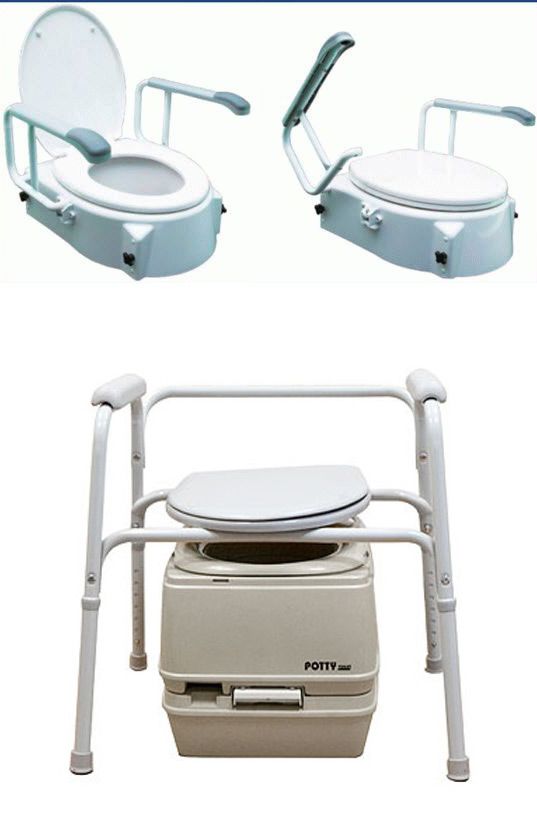
Additional parts include adapters, pumps, hoses, valves, and a full indicator. They also include an electric fan, a heating system, a tray, and small wheels. When purchasing accessories, consider the age of the household members. Grab bars for the elderly, steps, and special seats for small children may be needed.
How does a liquid toilet work?
This type of device can operate both indoors and outdoors. In the latter case, pay attention to the outdoor temperature. If it's below freezing, it's not recommended to leave the device outdoors. It's important to note that you need to purchase special toilet paper for this portable toilet.
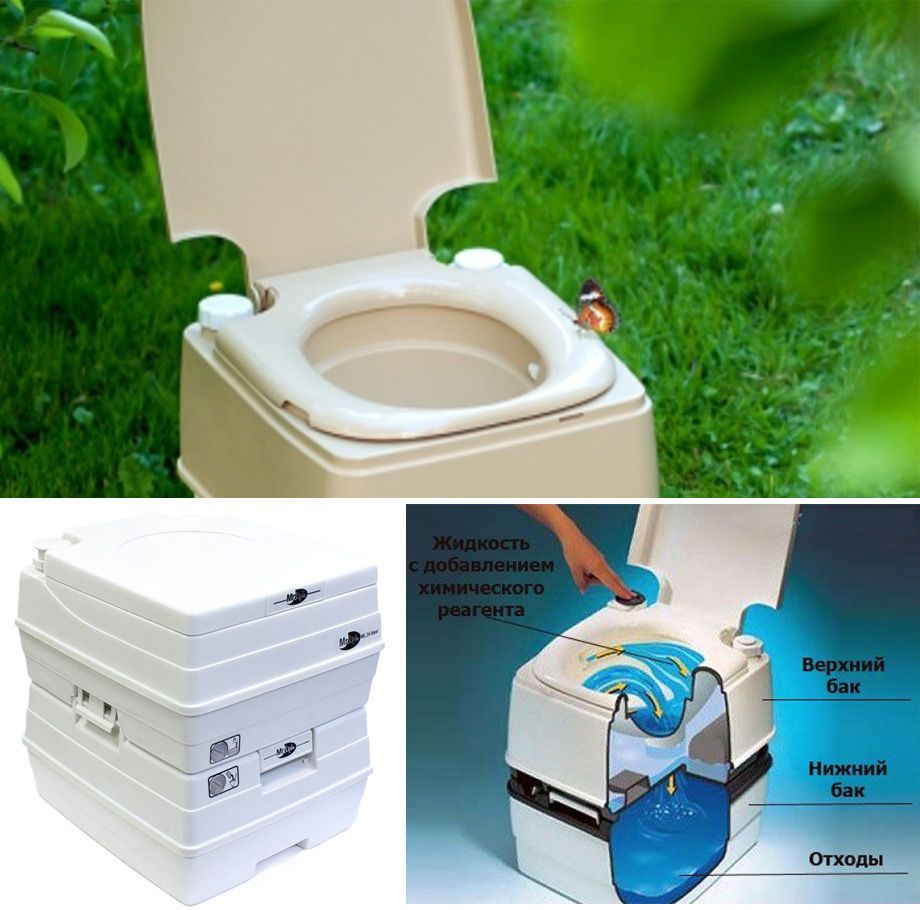
After disconnecting, pour several liters of a solution containing sanitary fluid and clean water into the lower section. A similar mixture is added to the upper section. Instead of the sanitary component, a scented liquid is used. Once both parts are prepared, they are connected. This process activates the system. After using the composting toilet, press the plunger to control the flush. This prevents the formation of a characteristic odor. Cleaning is performed once every 7-10 days.
The design and operating principle of a peat biotoilet
It is used only in a stationary version. Assembly of the structure follows the standard procedure. The only difference is the installation of the ventilation pipe. This step requires couplings, which are included in the general kit.
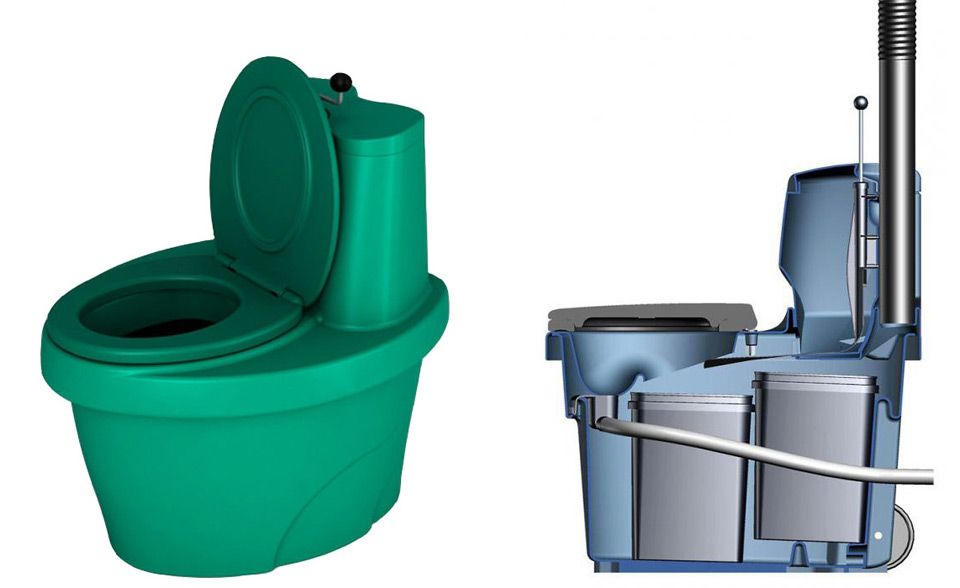
There's no need for liquid at all. It's replaced with specially treated peat. It contains microorganisms that can decompose organic waste. To prepare the device for use, add peat to both the bottom and top sections. A lever is used for flushing, activating special gears.
As the peat moves, it is evenly distributed throughout the receiver. The resulting gaseous substances are released through the ventilation system. Subsequent cleaning is performed manually. Removing the tray containing the processed waste produces a distinctive odor. If the mixture is used as a soil fertilizer, these problems do not arise.
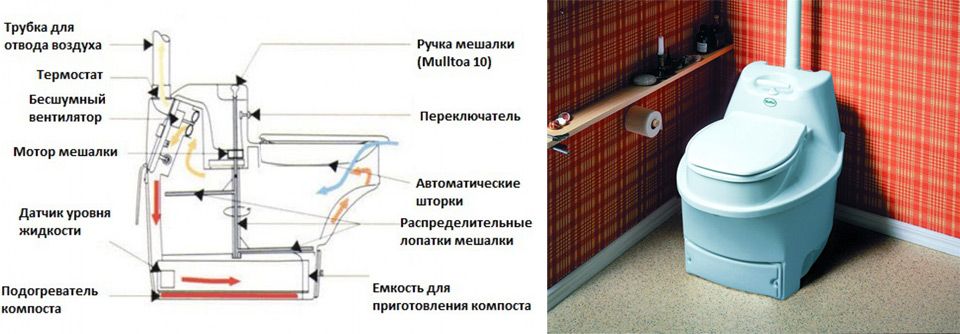
A distinctive feature of a stationary composting toilet is the presence of an external cabin. This design can easily withstand all weather conditions. It's a good choice for a summer cottage where people only visit for short periods of time. The composting toilet is made of high-strength plastic. This material is easy to clean and disinfect. Its portability can be considered both a drawback and an advantage. Once the device is installed, it's important to ensure it isn't stolen.
How do electric portable toilets work?
Devices in this category can be classified into two subgroups:
- Bio-toilets equipped with an incineration chamber differ not only in their reliance on electricity. The design includes a seat and a pedal used to control the type of waste container. The interior of the device is equipped with heating elements designed to incinerate waste. The process takes approximately 1.5 hours and is cleaned once every three months. Electric devices can operate autonomously, thanks to a built-in battery.
- A freezing chamber is expensive. Wastewater collected in the tank is exposed to low temperatures, causing it to freeze. The waste is then disposed of in disposable bags, which must be replaced regularly.
If you plan to install an electric composting toilet indoors, a ventilation system is necessary. The ideal solution is to purchase a unit already equipped with a fan. Options with dual flushing are also helpful.
The following safety precautions must be observed:
- The equipment must be located in close proximity to the socket.
- If the bio-toilet is 90% full, it is strictly forbidden to use it.
- The devices should not be subjected to mechanical impact, as this will cause them to malfunction.
- If the operating instructions indicate that the air temperature should be above zero, the device must not be left outside the home during the cold season.
- The bio-toilet should be installed in a place inaccessible to pets and small children.
How does a liquid-free bio-toilet work?
This device offers the widest range of modifications. Its design can be simple or complex. The type of device determines the set of additional accessories. Waste placed in disposable bags or film is covered with an absorbent material. This is how it is disposed of. A liquid-free composting toilet is the ideal option for a country house or summer cottage. The device will quickly pay for itself.
Top.tomathouse.com recommends: a bio-toilet is simple and convenient
Using stationary and portable devices doesn't require any specialized knowledge. Maintaining composting toilets doesn't take much time. Regularly replacing scented and cleaning solutions will help avoid problems caused by excessive dirt and unpleasant odors. If all instructions are followed, the device can be used for a long time. Don't skimp on purchasing sanitary solutions. The higher the quality, the greater the comfort and the easier the maintenance.
When servicing a bio-toilet, the following nuances must be taken into account:
- The lower containers are cleaned with special products. These disinfect the interior surface and protect the plastic, extending its life.
- Once a year, all moving parts are lubricated with a silicone compound.
- Do not use abrasive powders to clean the device.
The demand for products in this category is driven by their many advantages. Among them are ease of installation, affordability, ease of use, lack of odor, durability, and versatility. Another advantage is their ability to be used even when there are problems with the water supply. Composting toilets operate without the need for plumbing, so installation is usually straightforward.
The disadvantages include the need for regular cleaning and the expense of consumables. Any buyer can find a suitable model. Each manufacturer offers a wide range of composting toilets with a wide range of functions. For summer cottages, people typically buy devices that process waste using peat. They are environmentally friendly, affordable, and versatile. They can also be used to produce organic fertilizer.