Growing calendula is a simple process. It's easy to care for, grows well, and blooms from early summer to late fall. These unassuming flowers create a bright splash of cheerful orange and will brighten up any flowerbed.
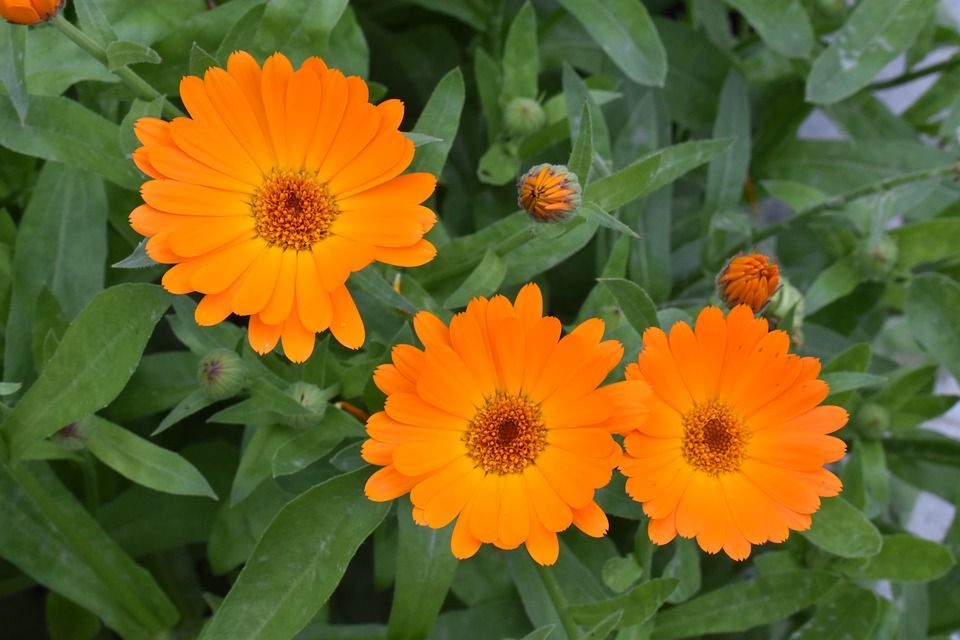
They are used in border design, in annual mixes, and in single plantings.
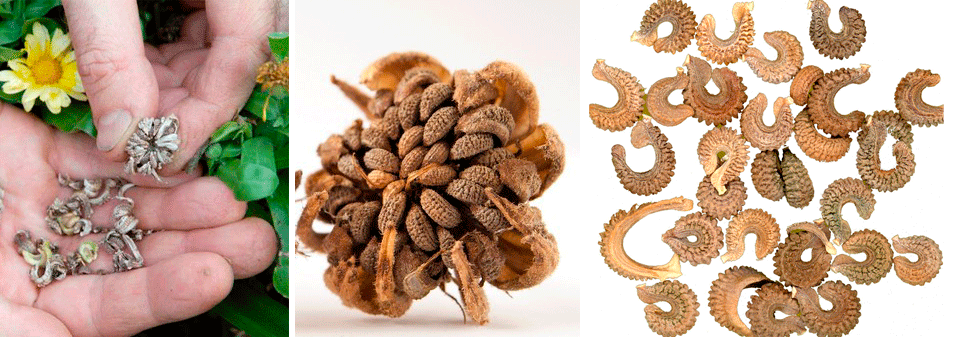
After flowering on the stem calendula Several sickle-shaped achenes form, clustered tightly together. When ripe, the achenes separate, open, and fall to the ground.
Growing calendula from seeds
Calendula is grown exclusively from seeds. They are planted directly in the ground and indoors as seedlings.
Marigolds often self-seed in the most unexpected places. This means the wind or birds have spread the seeds throughout the garden and surrounding area. This fact further proves that calendula is an undemanding flower.
Timing for planting calendula seeds
Marigolds are sown in the spring, as usual, when the soil is ready and warm, or in the fall, before the first frost. The seeds overwinter well in the ground.
For the central European part of Russia, spring sowing time begins in the second half of April. You can check the soil's readiness by throwing in a clod of soil. If it crumbles, the soil is ready for sowing.
In the fall, it's important to seize the moment before the ground freezes. If you sow too early, the seeds will germinate, only to be destroyed by frost.
Experienced gardeners do the following:
- Furrows for sowing are prepared in advance.
- When the ground is covered with frost, the seeds are planted.
- Sprinkle with pre-prepared mulch. This can be regular soil or a nutrient-rich mixture.
And here's another piece of advice from seasoned gardeners: water spring flowerbeds after sowing, but not autumn ones, to prevent the seeds from sprouting prematurely and freezing.
Sowing calendula for seedlings
Calendula seedlings begin to be sown in February. They are planted in regular seedling soil. The seeds are placed in cassettes or regular trays, watered, covered with a transparent material, and placed in a warm, well-lit area.
Caring for calendula seedlings
Seedlings require moderate watering.
The containers are aired daily; as soon as the first sprouts appear, the covering is removed and the boxes are moved to a cooler location, where the temperature does not exceed 15°C. To strengthen and grow, young seedlings should be watered with a well-diluted complex mineralized fertilizer.
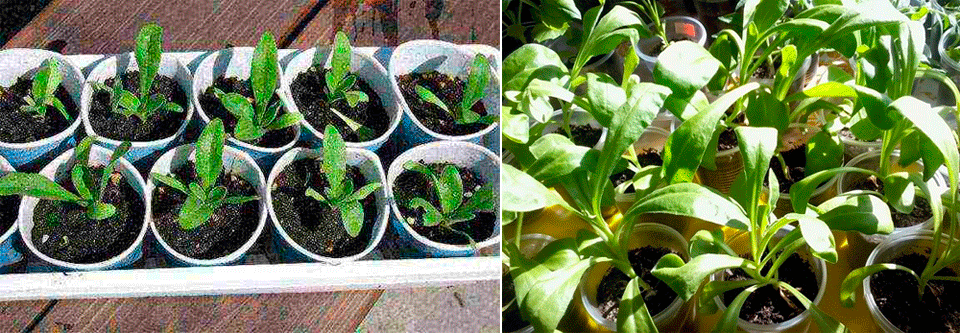
A week before transplanting to the garden, harden the seedlings outdoors, adding time each time, from a few minutes to an hour. This will strengthen the calendula and help it establish itself more quickly. They are planted outdoors when the fifth or sixth leaf has formed.
Sowing calendula seeds in open ground
Even inexperienced gardeners and summer residents can master sowing seeds in open ground. It's so simple that it requires neither specialized knowledge nor much effort. Since the seeds are quite large, planting them shouldn't be difficult. Plant them no more than 3 cm deep. The first shoots will emerge within a week.
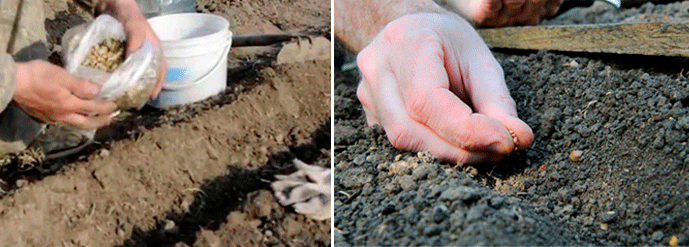
You can plant them in holes, furrows, or simply scatter them randomly. Don't be afraid to overplant. They can and should be thinned out. The released seeds can be used as seedlings—calendulas respond well to transplanting.
Mature plants should be spaced 8-10 cm apart. When planted individually, each plant requires 20-30 cm².
Thickening does not harm the nails and does not affect their flowering.
With dense planting, the strongest will survive; the plants will simply be slightly taller than usual. This is precisely the effect that gardeners sometimes strive for. Calendula plantations are also denser if they are grown for medicinal purposes.
The only thing that can worsen the aesthetic qualities is poor lighting.
It is important to remember that the most important condition for calendula is sunlight.
The plant is undemanding when it comes to soil and fertilizer. Overly fertile soil can negatively impact flowering. All its energy will be focused on growing green mass.
It is worth taking care of the looseness of the soil and adding river sand to the soil when digging before planting.
The plant does not tolerate excessive watering and stagnant moisture, especially if the summer is cold, cloudy and rainy.
Spraying the soil with wood ash will protect marigolds from diseases. Before flowering, spraying calendula with a boron-containing supplement will promote budding and lush blooms.
Top.tomathouse.com informs: collecting calendula seeds and the benefits of growing them
Thanks to their high carotene and flavonoid content, marigolds possess pronounced bactericidal properties. The compounds found in the inflorescences help fight bacteria, such as staphylococci and streptococci, relieve muscle spasms, eliminate toxins, boost immunity, and have many other beneficial properties.
Medicines based on the flower extract are produced that help in the treatment of:
- burns;
- skin ulcers;
- fistulas;
- acne.
A decoction of marigolds is used to gargle for sore throats and colds, and for stomatitis in the mouth.
Marigolds are widely used in cosmetology as an ingredient in alcoholic tinctures and creams. In cooking, they serve as a food coloring, replacing such an expensive spice as saffron.
Calendula is a good green manure and “treats” the soil, for example, from late blight, thanks to its bactericidal properties.
Calendula planted in a garden plot will not only delight the eye but also repel insect pests. To achieve this, plant several plants along the edges of the beds or between rows.
A few bushes planted in a bed of strawberries will protect them from nematodes.
However, when planted next to radishes and basil, marigolds will inhibit their growth – these plants have an individual intolerance to each other.
Calendula is a good honey plant.
Medicinal herbs are harvested as the flowers ripen throughout most of the summer. It's common to harvest twenty flowers from a single flowerbed in a single season, with the calendula blooming even more profusely.
Fully opened buds are at their most potent. They are plucked, pinched, or cut from the stem at a distance of 2 cm. It is important that the flowers are dry.
After the calendula has finished blooming and the seeds have been collected, don't throw away the stems. They can be plowed directly into the soil or used in a compost heap.
The seeds will begin to ripen in late summer. Planting maturity can be determined by the change in color from green to brown.
The achenes are large, curved in the shape of a sickle or the letter “C”.
The fruits are collected in dry weather in September-October in whole inflorescences and dried in a ventilated room on paper or fabric.
Once the stalks are dry, the achenes should separate easily. Carefully separate them by hand, removing any debris if possible.
Store seeds in glass containers, paper bags, or cloth sacks in a dry place. The seeds retain their viability for up to five years.