
Deciduous trees are used in most garden designs. Some are planted for ornamental purposes, while others, fruit-bearing, are used to produce a bountiful harvest.
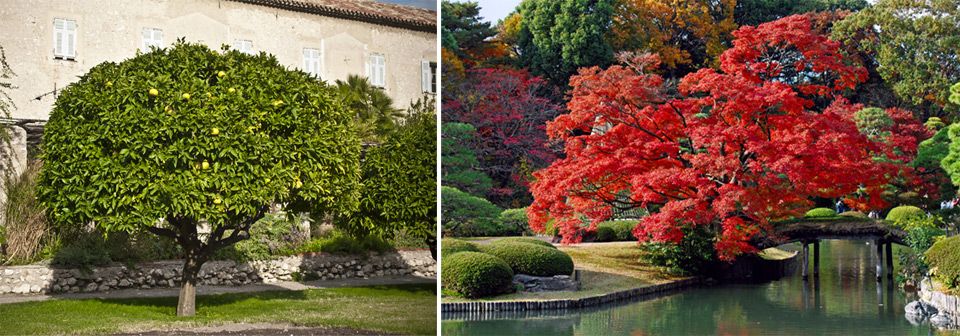
Deciduous garden crops include flowering trees and shrubs. These plants appeared later than conifers. Also read the article about coniferous treesFruits on branches are formed as a result of the development of the ovary.
Deciduous trees vary in foliage type, wood properties, and cultural value. Some species are also used for making spices.
Content
Deciduous trees
Deciduous trees are essential for garden compositions. Their structure differs in winter and summer.
Oak
Oak is a plant found from the north to the subtropics.
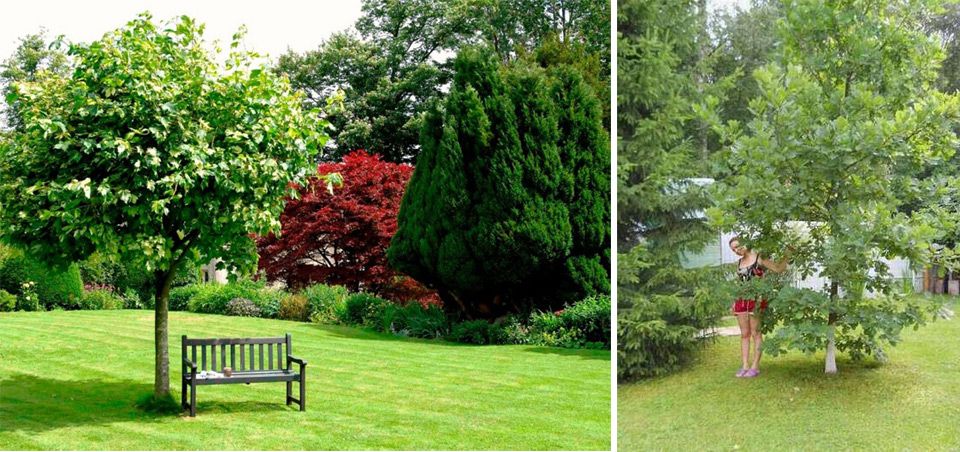
Several varieties also grow in the tropics.
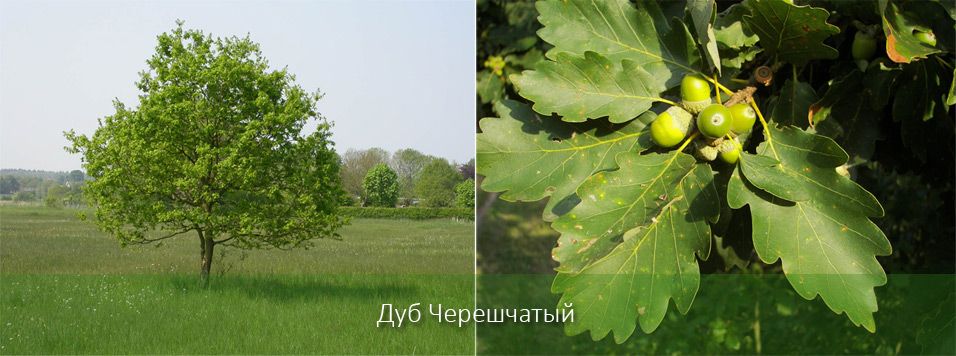
There are about 600 species in total.
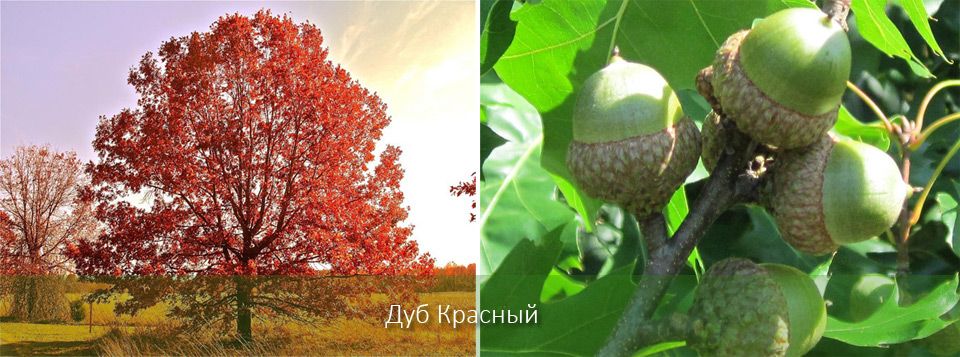
Three types of oak are widespread in Russia: pedunculate oak in the European part, rocky oak in the Caucasus, and Mongolian oak in the Far East.
| View | Description | Leaves |
| Petiolate | It grows throughout Europe, reaching the Urals. It is a long-lived, sun-loving plant, reaching 40 m in height. It prefers moist soil. Planting from acorns is done in the fall or late spring. | Oblong, with small petioles, dense, green in color. |
| Red | A low-growing North American tree (up to 25 m) that prefers sunny sites with moderately moist soil. It lives up to 2,000 years. It is disease-resistant and pest-free. It has a dense, tent-shaped crown. | After blooming, the leaves are red, later turning green. In autumn, they are a rich brown or brown. |
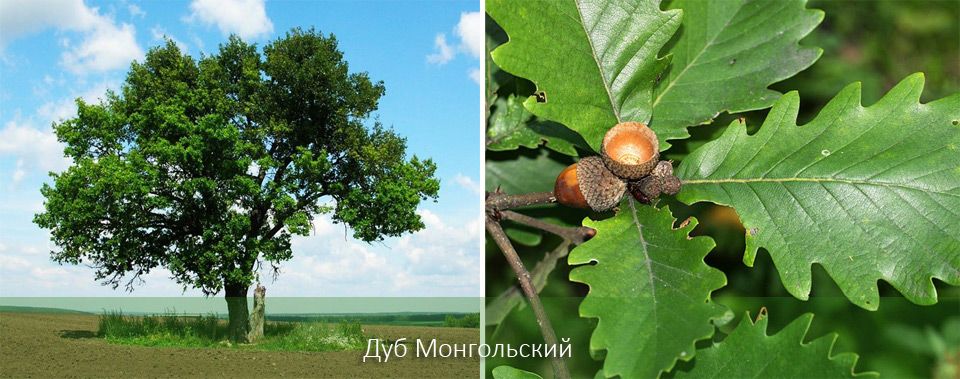
| Mongolian | Grows up to 30 m. In coastal areas, it is low-growing and shrubby. Resistant to cold and strong winds. | Dense, with a small petiole, tapering towards the base. |
Acacia
Acacia originated on the North American continent, but is now widespread throughout the globe.
Height up to 25 m, but shrubby trees are often found.
| View | Description | Leaves |
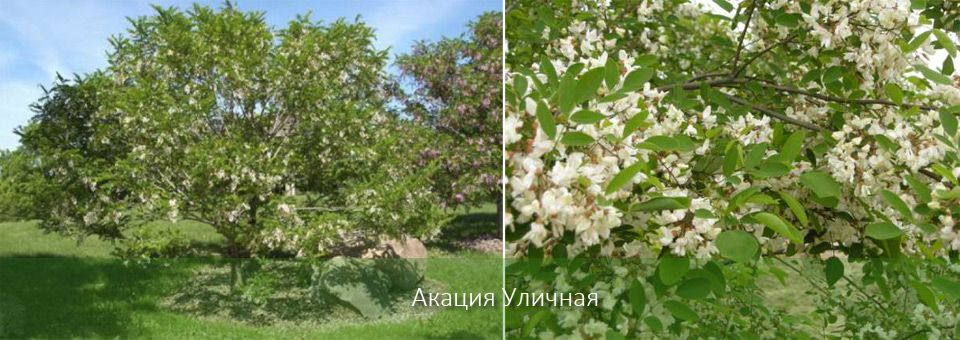
| Street | Heat-loving, it easily tolerates dry summers but does not overwinter well in low temperatures. The flowers are fragrant, white, and up to 20 cm in diameter. | Odd-pinnate, dark green shades. |
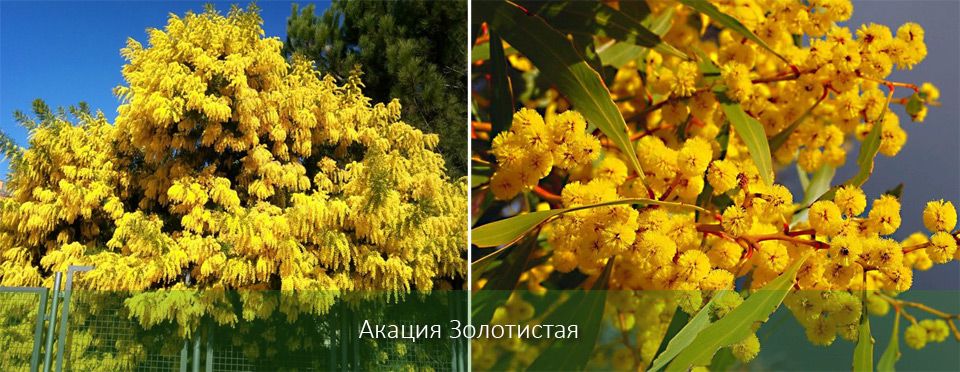
| Golden | Bushy, up to 9-12 m. Inflorescences are white or yellow. Flowering occurs in late spring or the first weeks of summer. | Light green, turns yellow in autumn. |
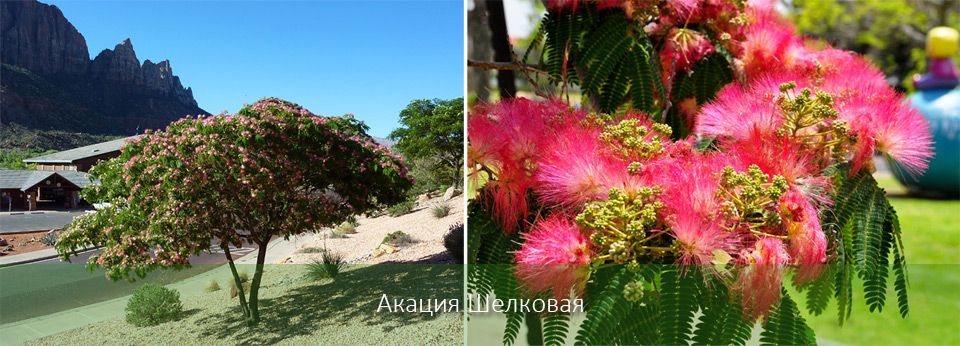
| Silk (Lenkoran) | A low tree (6-9 m) with a spreading crown. It blooms in midsummer, producing white and pink flowers. | Openwork, blooms late and remains on the tree until November. |
Birch
One of the most common trees in Russia is the birch.
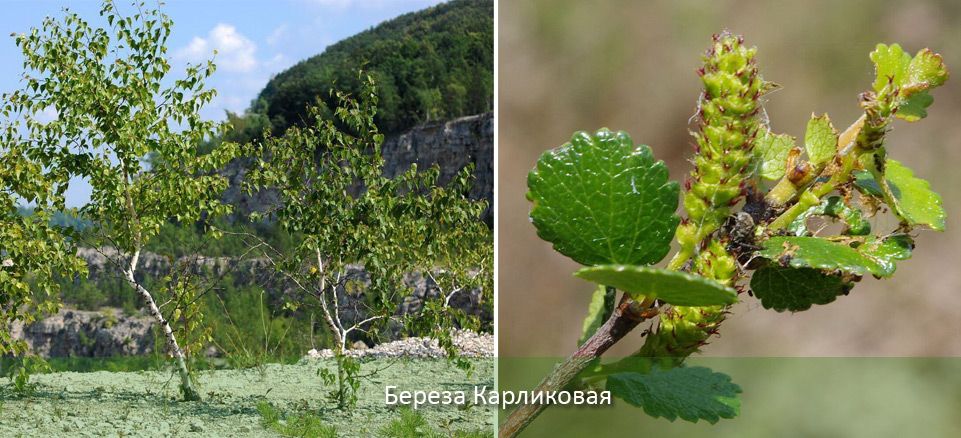
In Slavic culture, items made from this plant were believed to have magical properties. The buds, leaves, and bark of the tree are used in folk and traditional medicine. Birch sap also has healing properties.
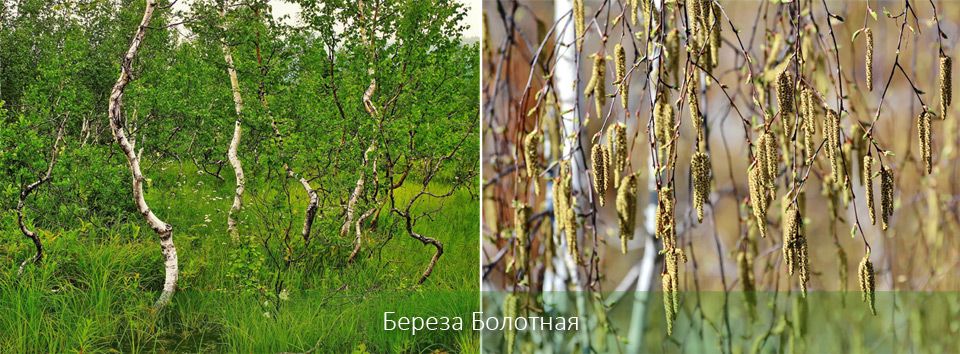
There are approximately 120 species of this tree found in nature. Some are dwarf, while others grow to 20 meters or more. Birch trees can be a beautiful addition to any landscape design.
| View | Description | Leaves |
| Dwarf | A Western European shrub native to the tundra, alpine foothills, and marshy areas. It is hardy and overwinters well in cold weather. | Round, often wider than long. |
| Swamp | The bark is white, turning gray with age. Height up to 20 m. Branches always point upward. Prefers moist areas with low sand content in the soil. | Elliptical, small, bright green. |
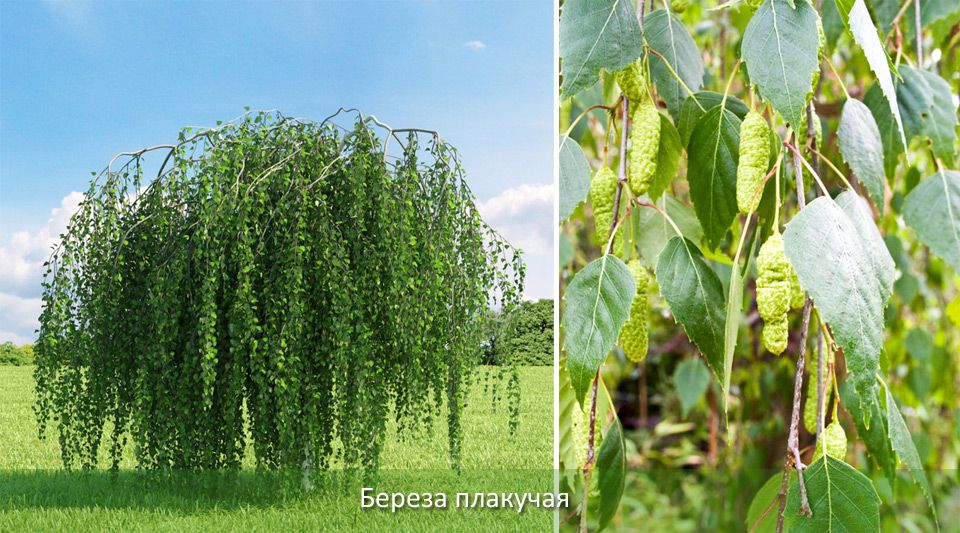
| Weeping | An elegant plant with a dense, umbrella-shaped crown and downward-facing branches. Unpretentious and resistant to cold winters. | Round, dark green, small. |
Maple
The maple is a long-lived tree with beautiful foliage that changes colors dramatically with the onset of autumn. The maple leaf is depicted on the national flag of Canada.
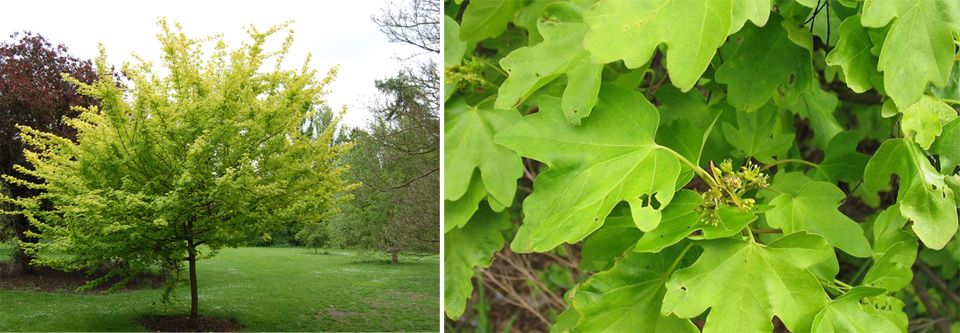
Most species are medium-sized, but shrubby forms also occur. Several varieties of evergreen maples also grow in the Mediterranean region.
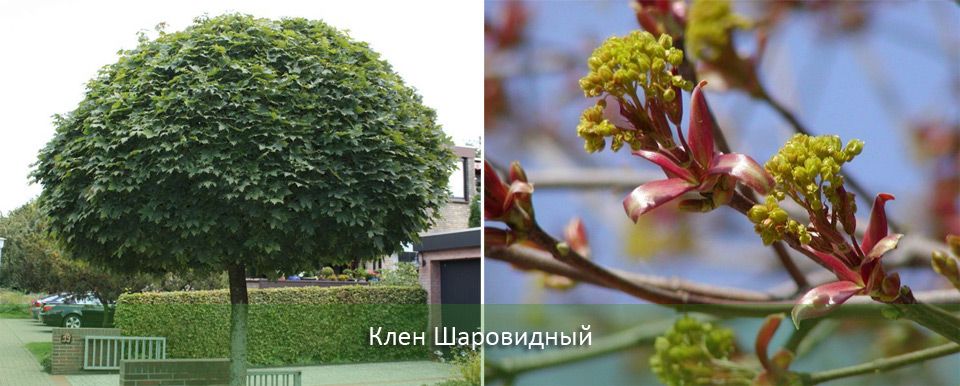
| View | Description | Leaves |
| Field (plain) | A tree with a straight or slightly curved trunk and a well-developed root system. It thrives in urban areas. | Bright green, five-lobed, in autumn the color changes to yellow, orange, brown, reddish. |
| Globular | An ornamental maple variety bred to decorate parks, alleys, and garden areas. Its naturally spherical crown requires no pruning. | Sharp, five-lobed, glossy. |
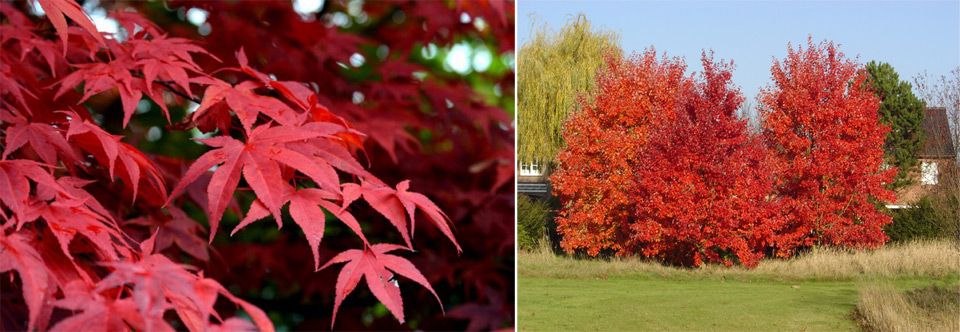
| Red | Popular in Japan, but suitable for growing in the climate of central Russia. | Red, in some species purple or bluish. |
Linden
Linden is a plant of the mallow family, which is often planted in cities.
It thrives in parks and prefers moist soils and temperate and subtropical climates.
| View | Description | Leaves |
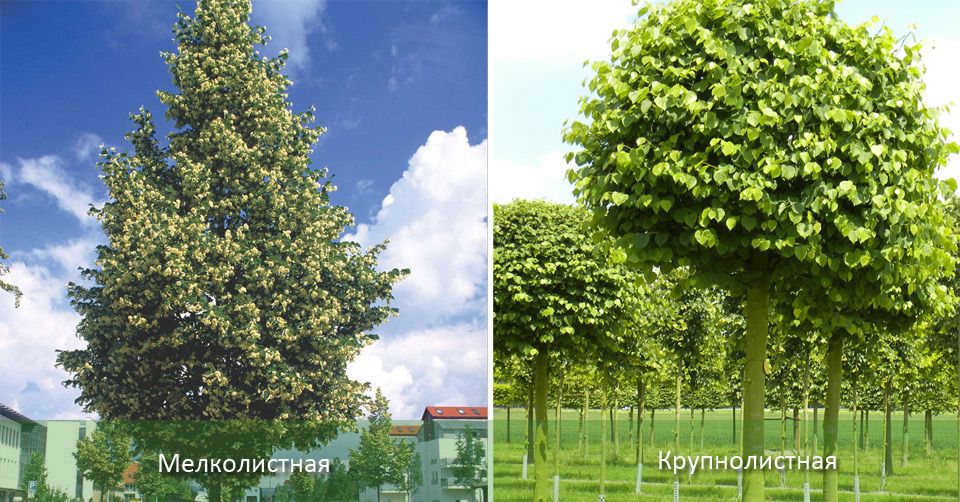
| Large-leaved | Common in Central Russia, it has a broad pyramidal crown and prefers shaded areas. | Oval-shaped, dark green, the underside of the leaf is lighter than the top. |
| Crimean | Suitable for cold regions, undemanding. Small, yellow-white inflorescences. | Heart-shaped, rich green color. |
| Small-leaved | It blooms in July for about a month. It can grow in sun or shade. | Small, heart-shaped, with reddish corners. |
Willow
Imprints of the most ancient willows are found on rocks from the Cretaceous period.
Today, there are over 550 varieties of this plant, some of which grow in the harsh Arctic climate. They are most common in cooler regions.
| View | Description | Leaves |
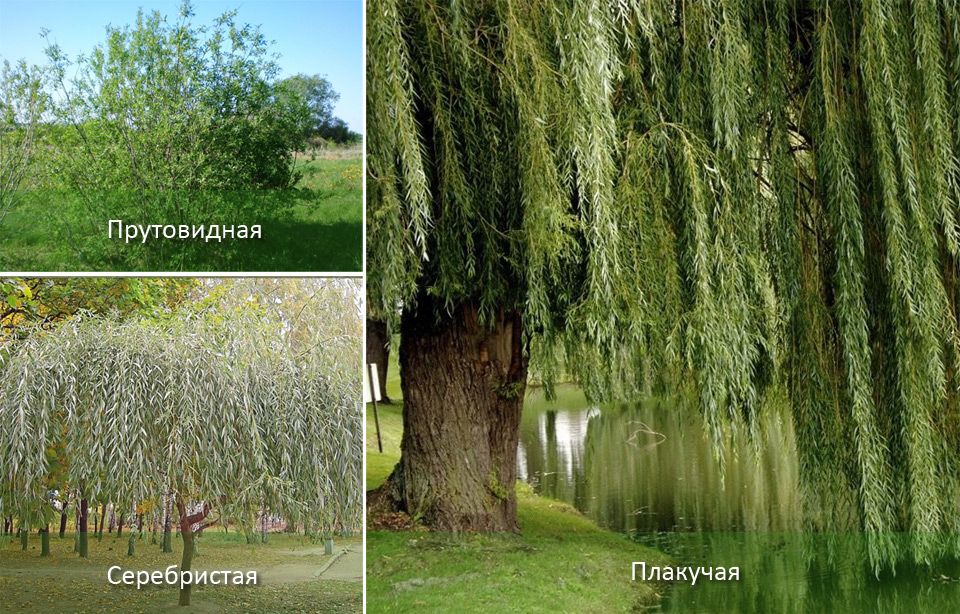
| Rod-shaped | A small tree with thin, long branches. Flowering occurs in early to mid-spring. | Elongated (up to 20 cm), thin, with soft silky hair on the surface. |
| Silvery | A slow-growing shrubby plant. | Pointed oval, small, with a silvery sheen. |
| Weeping | Native to Europe, it has a conical crown with drooping branches. In spring, greenish, slightly silvery catkins form on the trees. It thrives in urban areas and prefers open, bright locations. | Narrow, shiny, bluish. |
Alder
In the myths of the Komi people, the alder was revered as a sacred tree, and in Ireland, cutting down this tree was considered a crime.
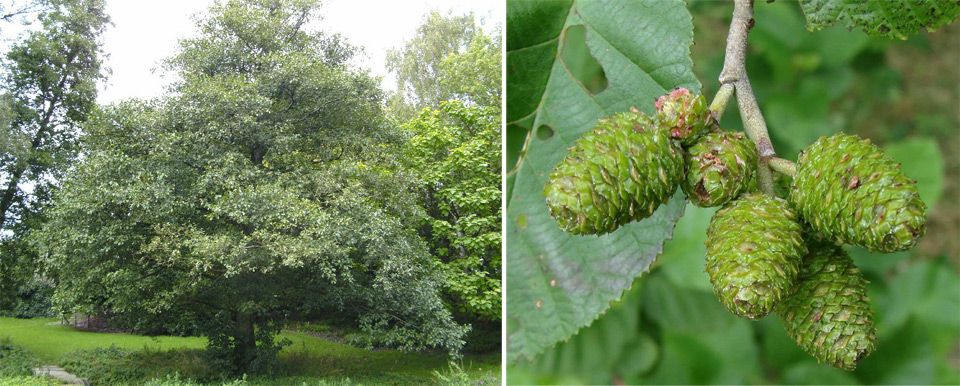
There are up to 40 species of alder found worldwide, most of which grow in temperate climates.
| View | Description | Leaves |
| Green | A bushy plant native to Western Europe and the Carpathian Mountains. It can be grown in gardens with sandy and clay soils. It is suitable for latitudes with cold winters. | Small, ovoid, pointed. |
| Golden | Grows up to 20 m. The crown is rounded, sometimes conical. Does not tolerate dry climates well. | Green-golden, turning yellow in autumn. |
| Siberian | It grows in the Far East, preferring areas near rivers or coniferous forests. It grows as both trees and shrubs. It tolerates severe frosts and does not flower. | Bright green, small, with pointed ends. |
Elm
A tall, spreading tree found in broadleaf forests. Scientists estimate that the first elms appeared on Earth over 40 million years ago.
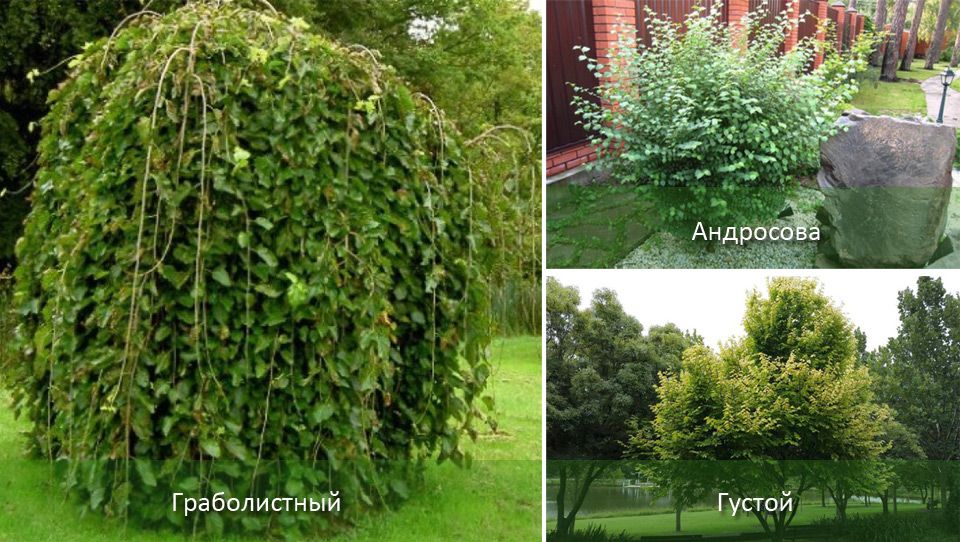
These plants can now be found in southern forests and parks, as well as in temperate climates. They are suitable for growing in gardens.
| View | Description | Leaves |
| Thick | Found in Central Asian forests, some trees grow up to 30 meters. It tolerates drought well, but growth accelerates in moist soil. | Leathery, green, with serrated edges. |
| Hornbeam | It has a spreading crown and prefers the steppe zone. | Dense, swamp-green, uneven, up to 12 cm in length. |
| Androsov's Elm | A hybrid elm variety cultivated in Asian countries. It has a spreading, spherical crown. | Ovoid, asymmetrical, dark green in color. |
Poplar
Poplars are tall, fast-growing trees that adapt well to urban environments. They grow in temperate latitudes of the Americas, Asia, and Europe.
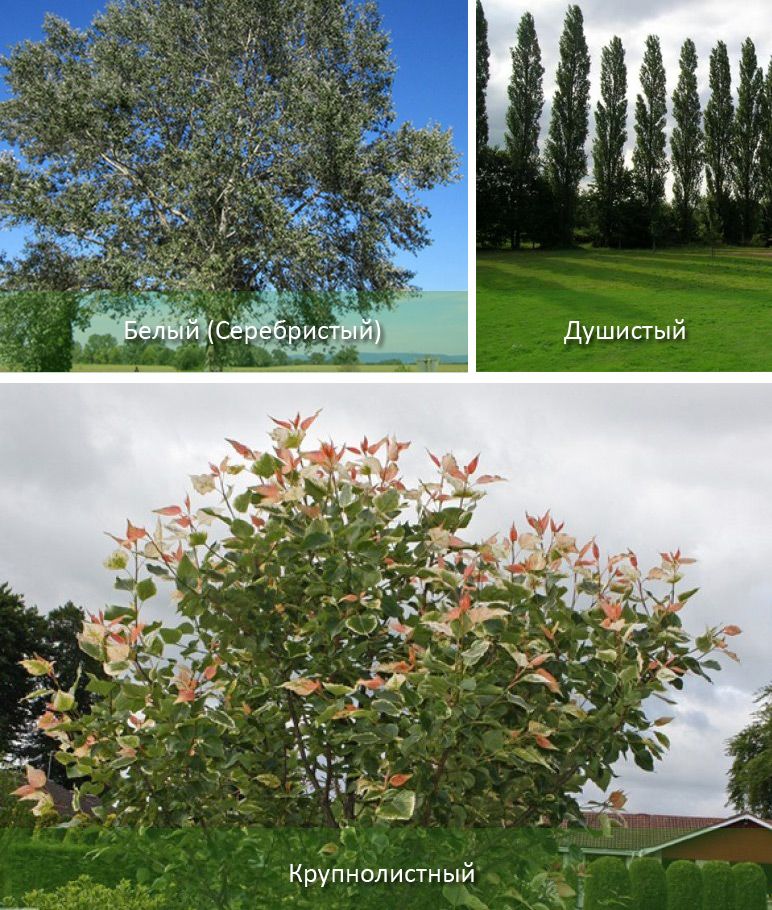
The lifespan of these plants typically does not exceed 150 years. Many people develop allergies to cottonwood fuzz (the soft hairs from the seed pod), so only male trees should be planted in gardens.
| View | Description | Leaves |
| White | Unpretentious, it tolerates both heat and cold well. It has a wide, slightly rounded crown. | Young trees resemble maple trees, later taking on an ovoid shape. They are dense, with long petioles. |
| Fragrant | An Asian tree that is resistant to severe frosts. It does not thrive in cities. | Leathery, oval, up to 10 cm in length. |
| Large-leaved | A sun-loving plant, but prefers moist soil. It easily tolerates frost and dry summers. It is planted for ornamental purposes due to its unusual foliage. | Large (up to 25 cm), hard, glossy, heart-shaped. |
Ash
In ancient times, the ash tree was revered as a male tree, so its wood was often used to make weapons. This wood is also used to make sports equipment, furniture, and musical instruments. The fruits and bark are used in medicine.
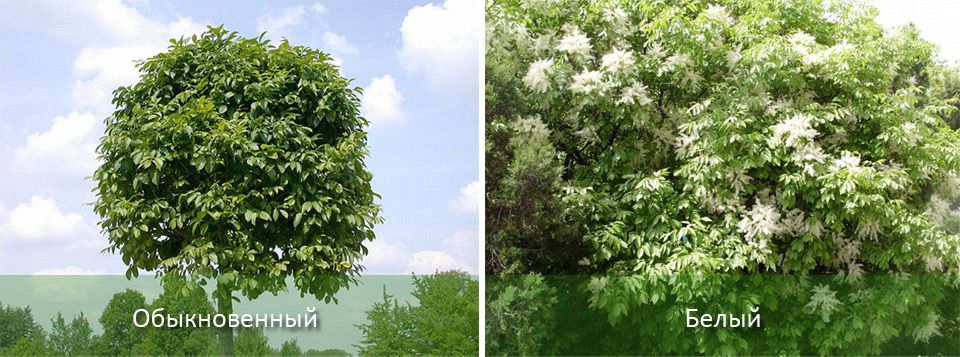
It grows quickly and can reach a height of 60 m. The root system is very wide, going deep underground.
| View | Description | Leaves |
| Ordinary | The inflorescences have no decorative value, but the tree can be used for landscaping parks and boulevards. | Green, five-pointed, and complexly shaped, they don't have time to turn yellow in autumn and fall quickly. |
| White | A small, slow-growing tree with a rounded crown. In spring, it becomes covered in fragrant flowers, making it a striking addition to parks. | Oblong, ovoid, green. |
Hornbeam
A broadleaf tree typical of European and Asian forests.
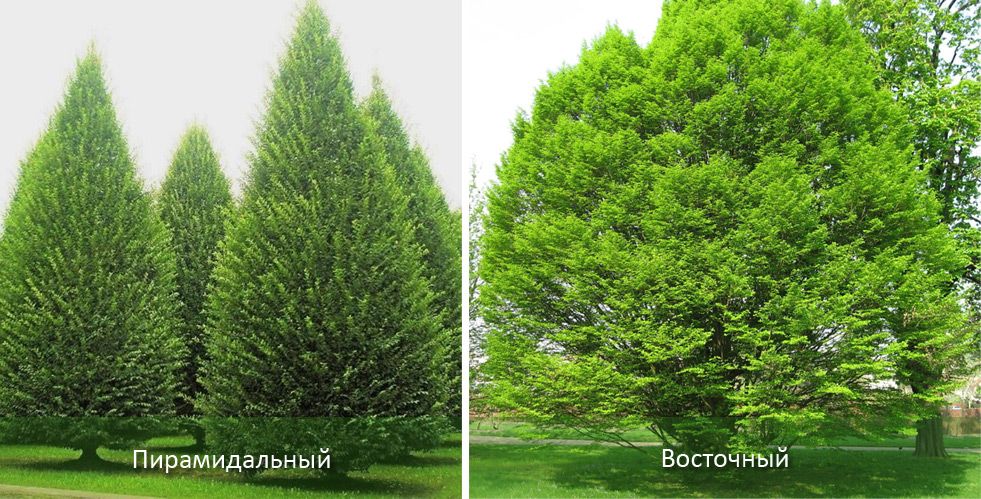
It has a cylindrical crown and fits perfectly into garden plots. It reaches a height of no more than 20 m and lives for approximately 150 years.
| View | Description | Leaves |
| Pyramidal | A conical tree with a spreading crown (up to 8 m), growing up to 20 m. | They are egg-shaped, up to 10 cm long and 6 cm wide. |
| Eastern (hornbeam) | A low-growing, often bushy hornbeam found in Asia and the Caucasus. It loves warmth and is not adapted to cold winters. | Oval, pointed, glossy. In autumn, they change color to lemon. |
| Heart-leaved | Grows in the Far East. Resistant to strong gusts of wind. Unfussy about soil. | Light green, ovoid, changing color to brown or red by September. |
Horse chestnut
Horse chestnut is a tree that grows best in deep, fertile soil. All varieties are excellent honey producers.
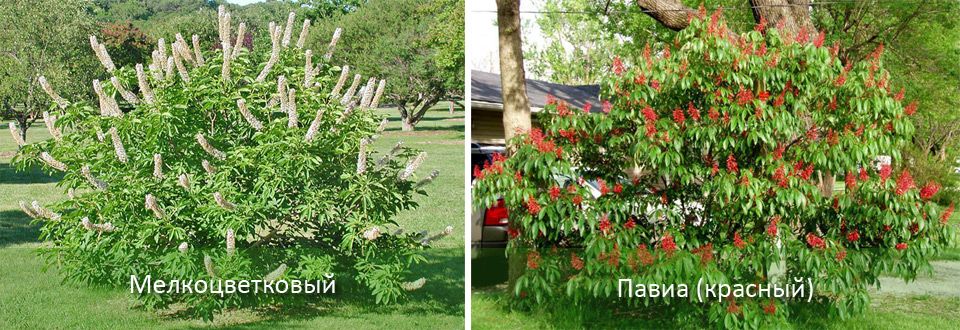
Horse chestnut has also been used in medicine since ancient times.
The most common varieties are tall, which are unsuitable for small garden spaces. However, there are dwarf varieties suitable for landscape design.
| View | Description | Leaves |
| Small-flowered | A shrubby plant native to the United States. Height up to 4 m, width 4-5 m. | Large (up to 22 cm in length), five-lobed, light green, turning yellow in autumn. |
| Pavia (red) | A slow-growing, tall shrub with light-colored bark and a dense crown. It features vibrant, wine-red inflorescences. | Five-lobed, with a serrated edge and distinct veins. |
Fruit
Among fruit plants there are both deciduous trees and shrubs, as well as evergreens.
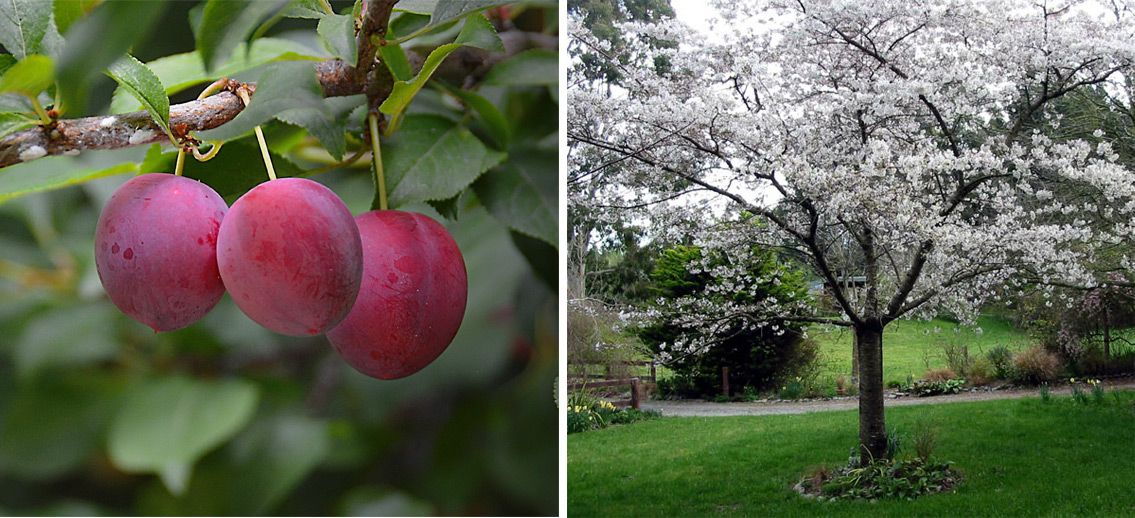
There are hundreds of varieties of fruit plants in the world.
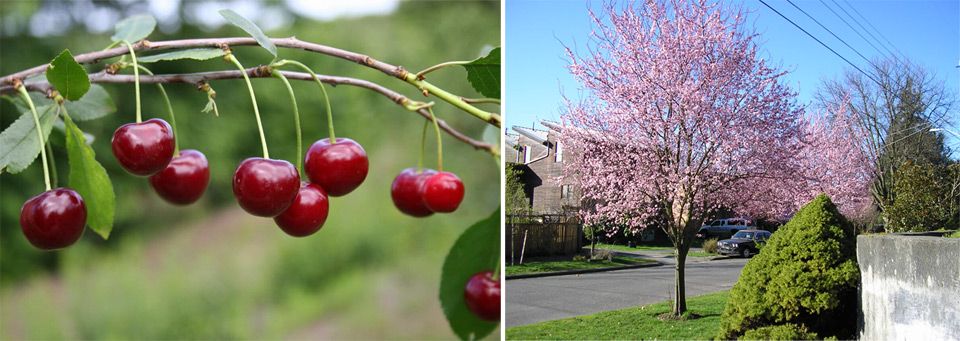
Apple, plum, and cherry trees are traditionally grown in Russian regions, but some other trees are also frost-resistant and thrive in the temperate zone.
Irga
This plant easily tolerates the harsh Siberian winters and requires little maintenance. Serviceberry berries are high in vitamin C, acids, and tannins.
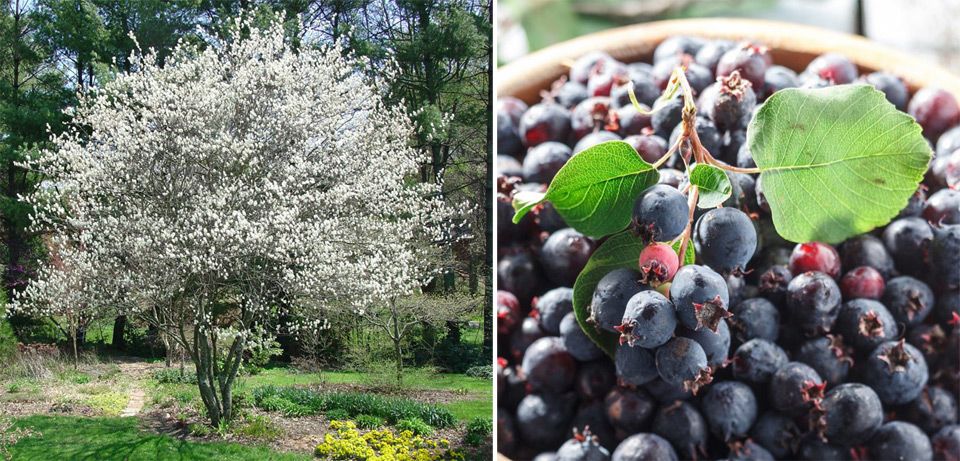
To obtain a rich harvest, irga is planted in an open, sunny place, maintaining a distance of at least 3 m between bushes.
Hazelnut
Hazel is also known as filbert. It's an easy-to-grow, sun-loving shrub that bears fruit in late summer or early fall. The nuts of the common hazel are called filberts.
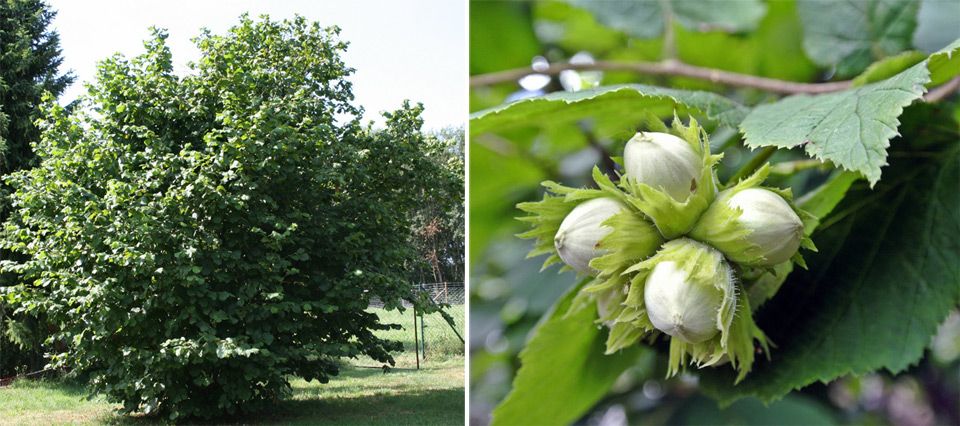
They have high nutritional value, contain valuable oils, and are rich in micronutrients. To increase the yield, they are replanted every two years.
Hawthorn
A deciduous shrub, or less commonly a small tree, hawthorn is often grown for ornamental purposes, but its fruits are widely used medicinally.
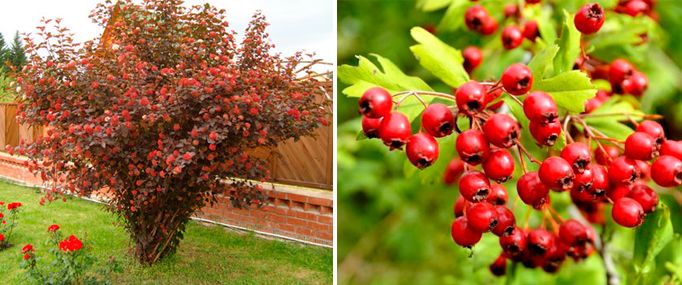
They regulate heart function, help combat shortness of breath, and are beneficial for thyroid diseases.
Honeysuckle
There are over 200 species of honeysuckle worldwide. In the wild, it grows in Asian regions. These plants come in both tree and shrub forms.
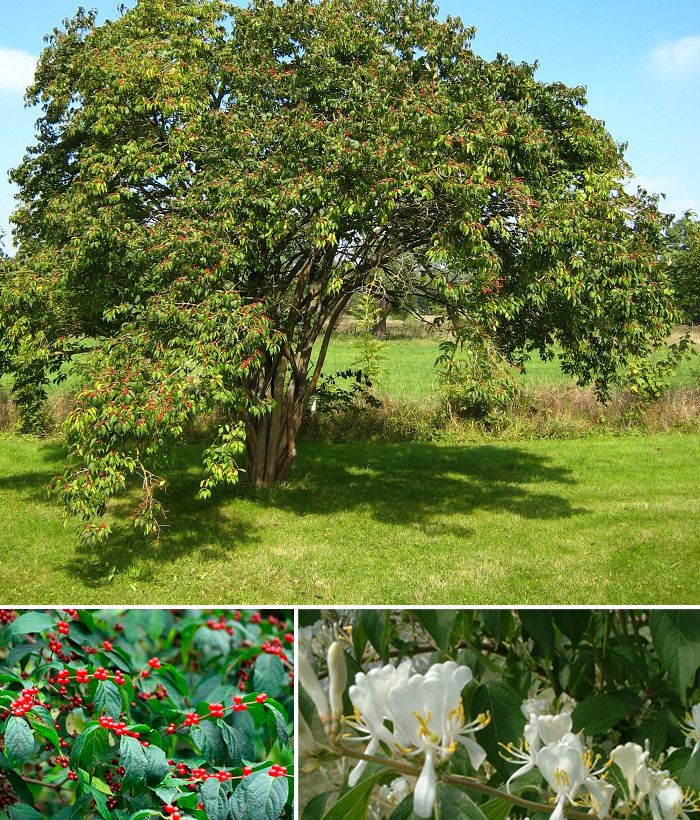
Garden honeysuckle is often used for decorative purposes.
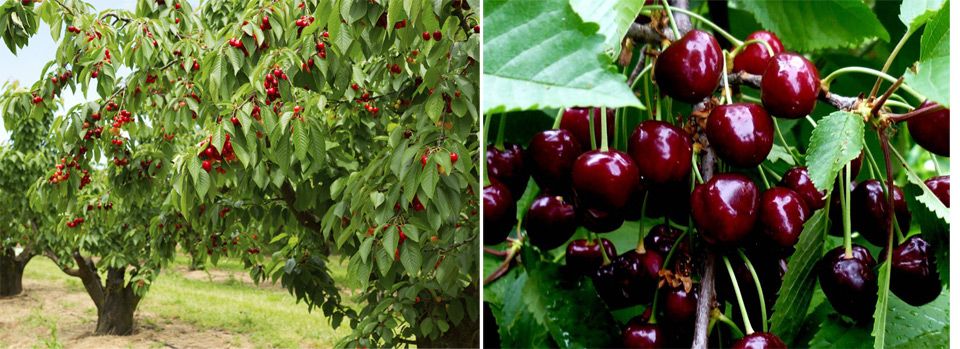
Plum, cherry, bird cherry, sweet cherry
These plants are distinguished by beautiful flowering and white or white-pink flowers.
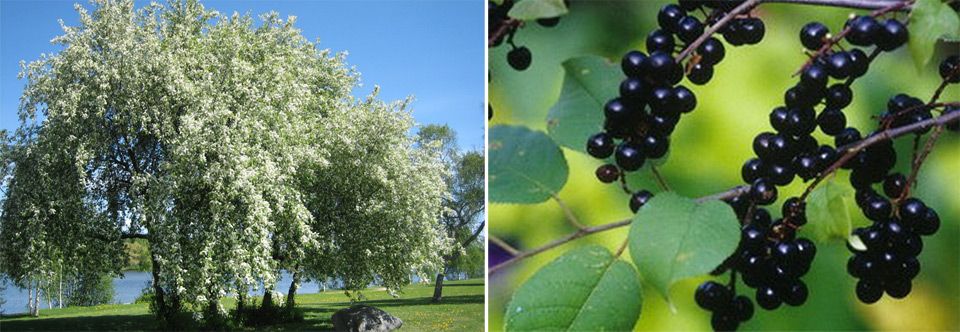
They prefer sunny and open places. In spring they bring sophistication and freshness to the garden, and their fruits are widely used in cooking.
Elder
The most common species is black elderberry, but the Marginata and Aurea varieties are more suitable for garden plots.
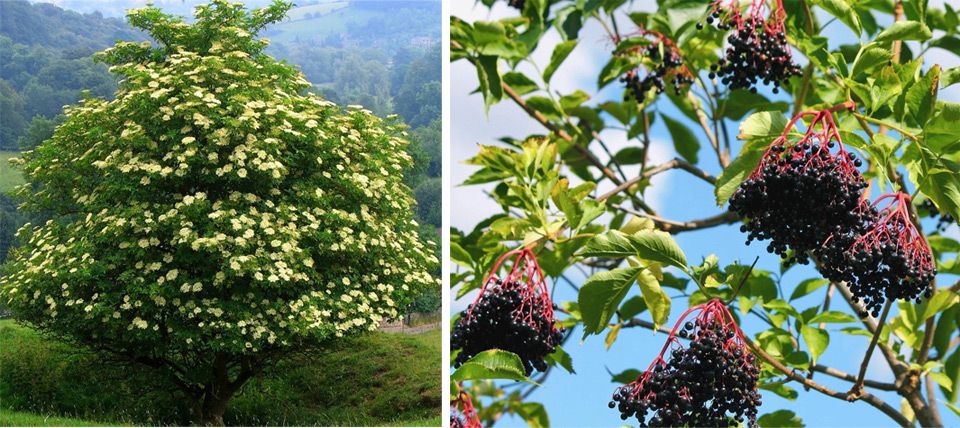
Elderberry is planted in a sunny place or in light partial shade, and propagated by cuttings.
Rowan
Rowan is a low-growing tree in the apple family, native to Europe and North America. There are up to 100 species, but the most common in Russia is the common rowan.
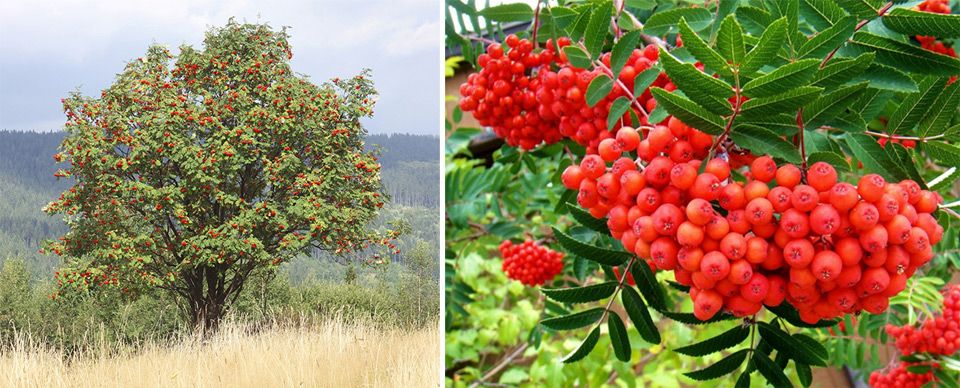
It requires little care and looks spectacular in both summer and fall. The berries contain trace elements (potassium, copper, iron, zinc, magnesium), vitamins, sugars, and amino acids.
Apple
In Russian orchards, you can find various apple tree varieties—with white, red, and pink fruits. The flowering period occurs in April or May.
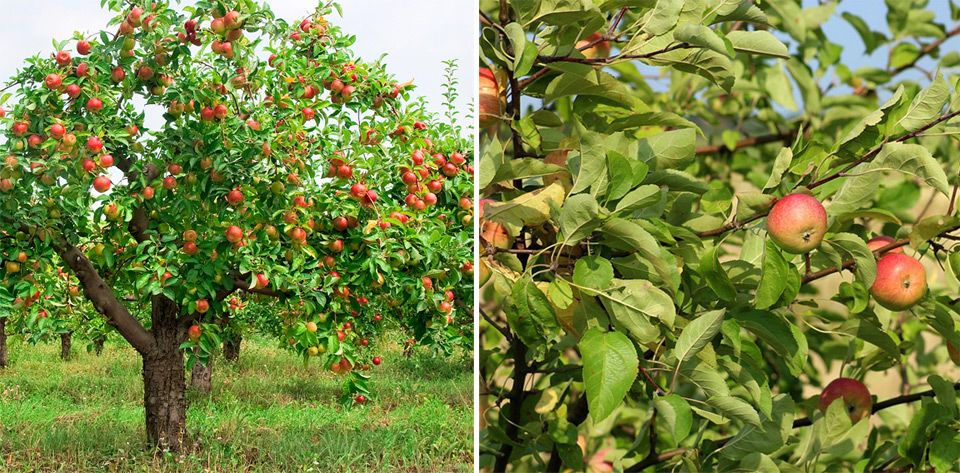
Apple trees are propagated by purchasing new trees, which are planted in an open and sunny place.
Peach
Growing peaches is quite laborious, and the plant's lifespan is short. They are not suitable for the Moscow region or any central region.
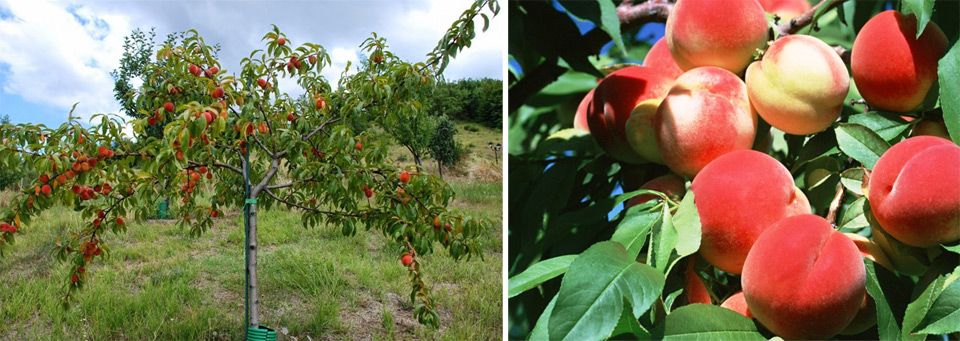
The peach tree grows in warm climates, blooming early in the year—in January or February. The tree begins blooming before the first leaves emerge.
Evergreen deciduous plants
Coniferous or evergreen deciduous trees are also used in landscaping. Today, there are many varieties of trees and shrubs that can adorn a plot with their fresh, vibrant foliage year-round.
Rhododendron
There are over 600 species of rhododendron worldwide, some deciduous and others evergreen. One of the most popular genera is the azalea.
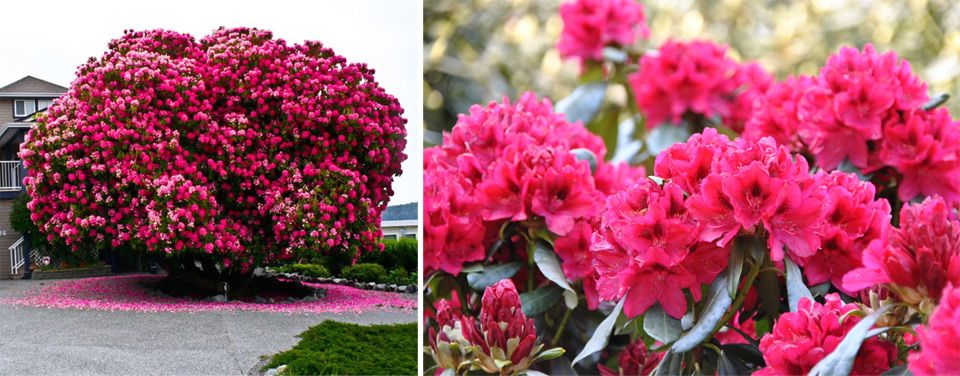
Azaleas are heat-loving and require careful care; they need acidic soil and regular fertilization.
Boxwood
A slow-growing, undemanding plant that grows primarily on the Black Sea coast in Russia.
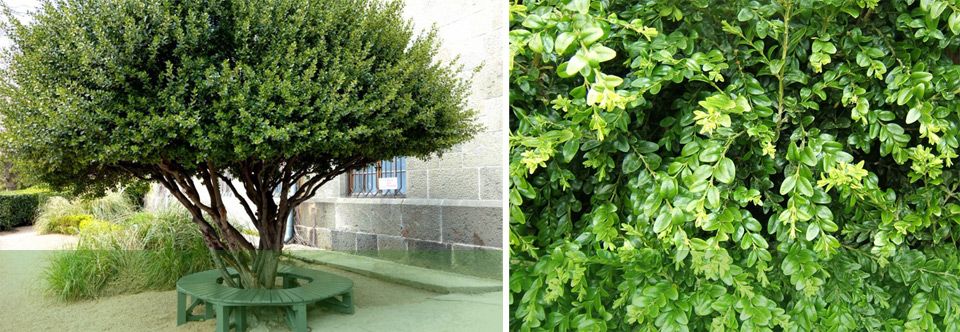
One of the oldest shrubs used for landscaping, boxwood tolerates pruning well, making it ideal for creating hedges and sculptures.
Euonymus
A small tree with an openwork crown and small leaves that turn bright and unusual colors in the fall.
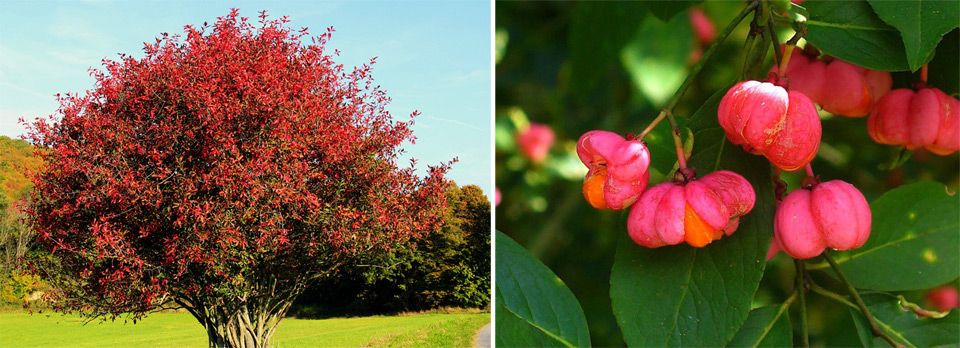
There are also larger varieties, whose crowns can reach 10 meters in width. Dwarf and creeping varieties are often used for landscaping, effectively twining around fences and hedges.
Magnolia
An ancient plant that originated in the Cretaceous period. Its natural habitat is East Asia and North America.
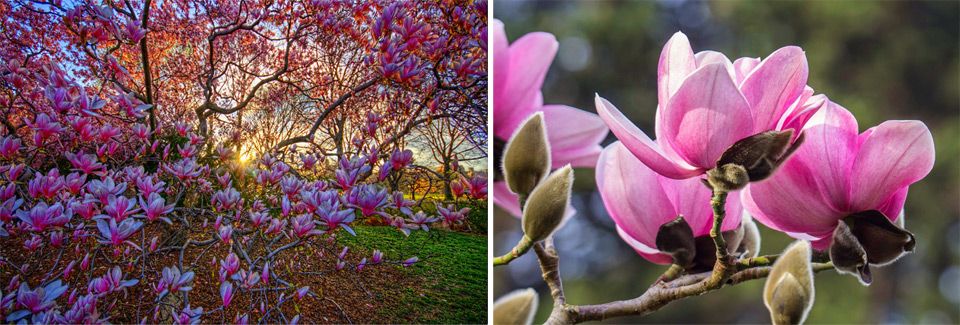
Wild magnolia grows on the Russian island of Kunashir. In the southern regions, it is used for urban landscaping and planted in private gardens.
The difference between deciduous and coniferous trees
Deciduous plants differ from conifers not only in leaf structure and reproduction. There are conifers whose leaves don't resemble needle-like needles, and some (such as larch) are not evergreen, so determining the plant type is not always easy.
Main differences:
- There are many classes of deciduous plants, while conifers are grouped into a single class. Previously, yews were classified in the second group, but scientists have now abandoned this distinction.
- Conifers are much more ancient and lack a flowering stage. They are always either male or female.
- Deciduous trees are more adaptable to various climatic conditions and are capable of growing in the harshest and driest regions.
Despite their differences, both types can coexist, so they are often combined when landscaping. Popular ornamental conifers include cypress, cedar, thuja, and juniper.
Top.tomathouse.com informs: deciduous trees in the landscape
Trees are an integral part of landscape design. An exotic magnolia, as well as a common aspen or alder, can look stunning in a garden.
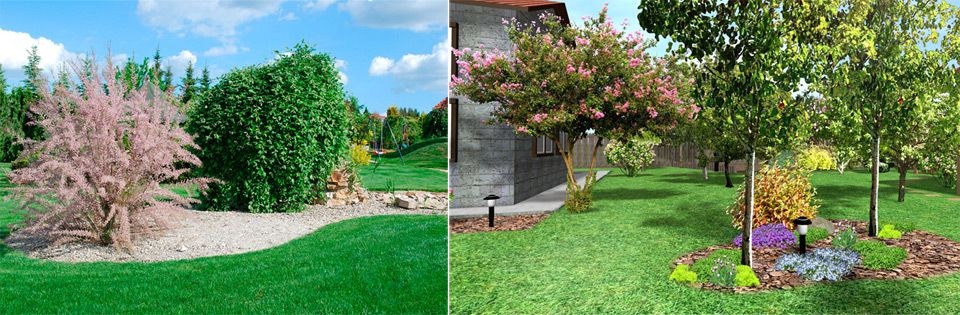
To properly design a site, you should follow simple rules:
- The height of the tree should correspond to the area of the garden.
- Oak, elm and other large species have deep roots and can therefore dry out the soil significantly.
- The shape of a tree's crown can either enhance or detract from the elegance of its architecture. When designing a landscape, the growth patterns of its branches are taken into account.
Most deciduous plants do not require complex care, but they can enliven the garden and make the area elegant and unusual.

Dear authors!
You have confused the photos of hawthorn and honeysuckle fruits.