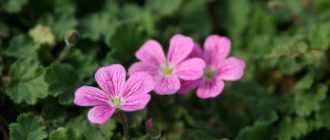
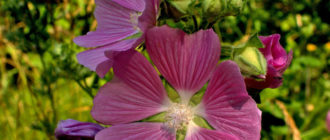
Petunia is a perennial plant in the Solanaceae family. Its native range includes Uruguay, Paraguay, Argentina, and Bolivia. Some species grow in North America.
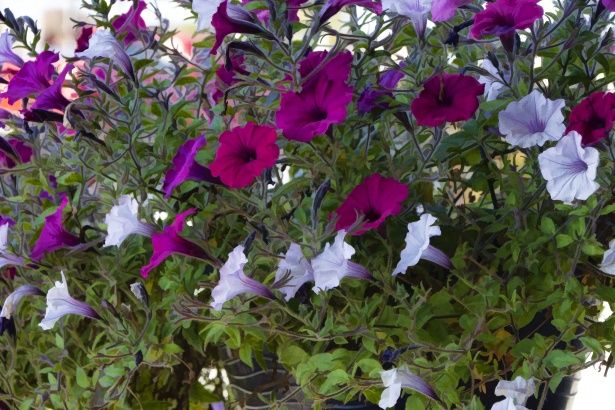
There are approximately 40 varieties of petunia, including both herbaceous and subshrubby plants. The first cultivated varieties were developed in the 18th century.
Content
Description of petunia
Petunias can be annual or perennial. Distinguishing features of the plant include:
- creeping and erect stems. They are characterized by dense branching;
- Shoots vary in size depending on the species. Covered with glandular and simple hairs, they are herbaceous in color and have a rounded shape;
- Variegated dark green leaves. The blades are sessile, pubescent, alternate, and entire. Their length is 5-12 cm;
- Large flowers, usually solitary. Stems bear double or single, funnel-shaped corollas;
- The fruit is a bivalve capsule containing small seeds.
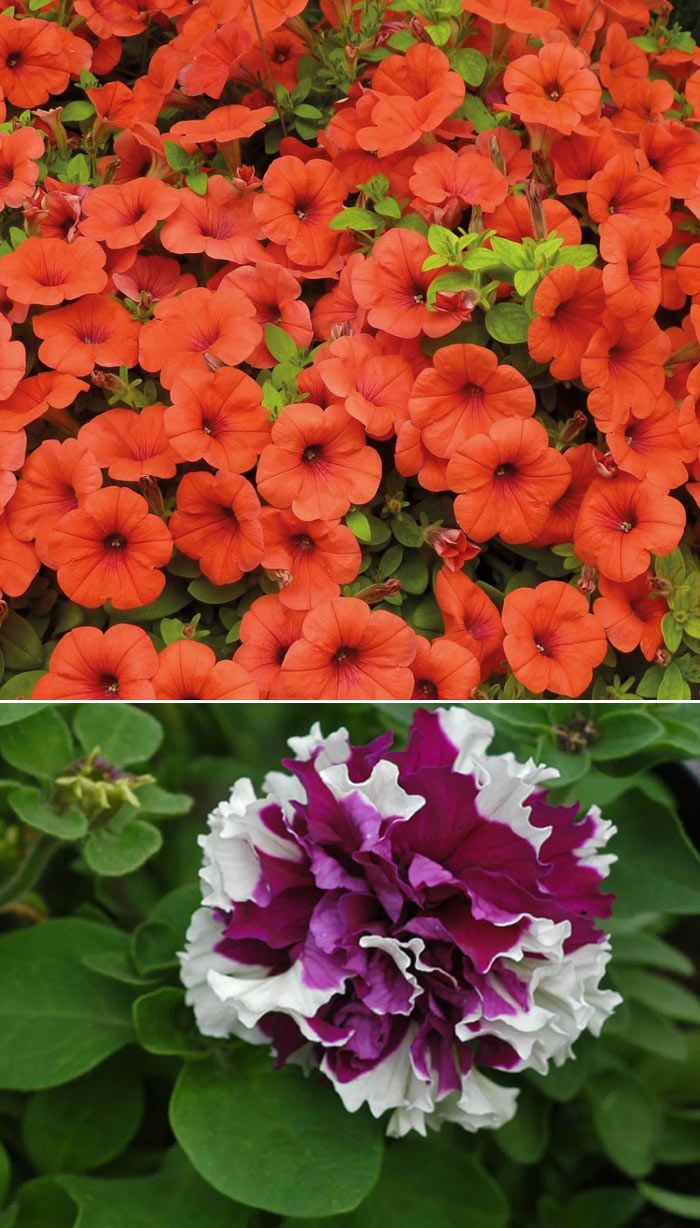
Petunias are classified by height. Bushes range from low (no more than 30 cm) to tall (30-70 cm). Colors can vary: violet, purple, white, pink, pale red, and blue. Flowers can be decorated with dark veins and a bright border of a different hue.
Garden petunias are the result of selective breeding of wild varieties. They bloom from midsummer. With proper care, they will last until the first frost. In temperate climates, perennials are grown as annuals.
Types and varieties of petunias
Petunia has 3 varieties:
- hybrid (bush);
- ampelous;
- cascading.
Bush (hybrid)
Hybrid petunias are bushy, branching plants that reach 70 cm in height. To ensure maximum bushiness, removing side shoots is not recommended.
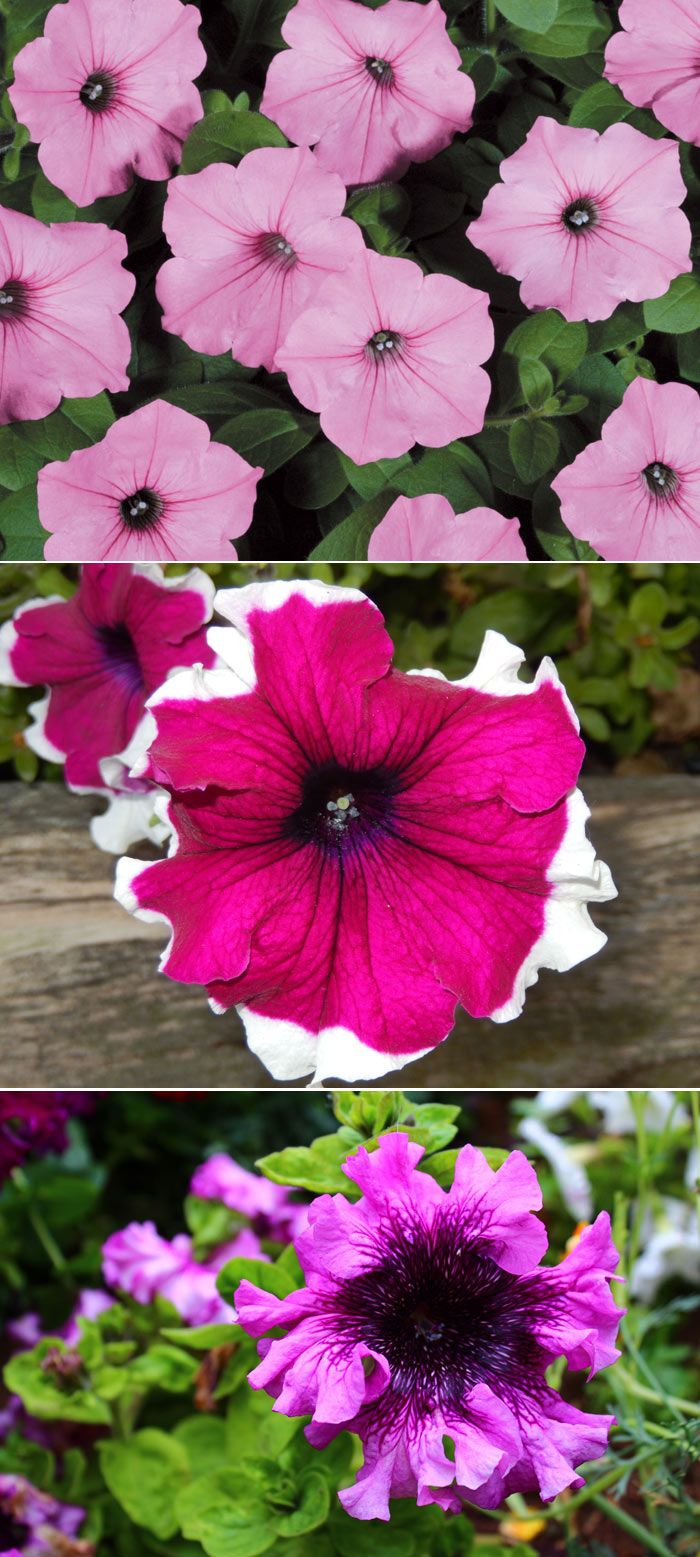
The corolla diameter varies between 12-15 cm. Petunias emit a pleasant aroma during flowering.
| Form | Description | Varieties | Flowers | |
| Color | Diameter (cm) | |||
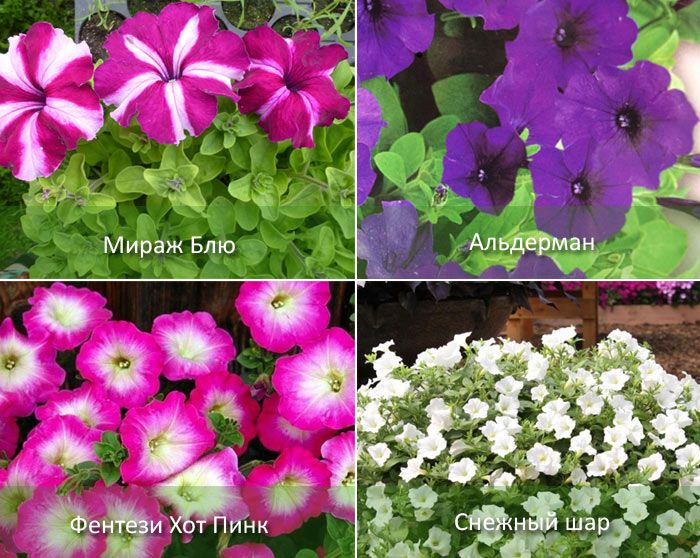
| Multi-flowered | It is characterized by its low maintenance, compact, and lush growth habit. It blooms profusely, with corollas that come in a variety of colors. Height ranges from 30 to 40 cm. | Snow globe | Snow-white, simple. | Up to 5. |
| Alderman | Deep blue. | |||
| Fantasy | Pink, red, white, crimson, blue-violet. | |||
| Mirage | Pink, lilac, crimson, violet. | From 6 to 9. | ||
| Large-flowered | Characterized by their high ornamental value, these plants are more demanding in terms of growing conditions. The flowers are large and showy. These varieties are most often planted in pots, on balconies or terraces. They grow no taller than 30 cm. | Triumph | Diverse. | From 5 to 15. |
| Pink sky | Hot pink. | |||
| Picoti | Blue and white, crimson, red. | |||
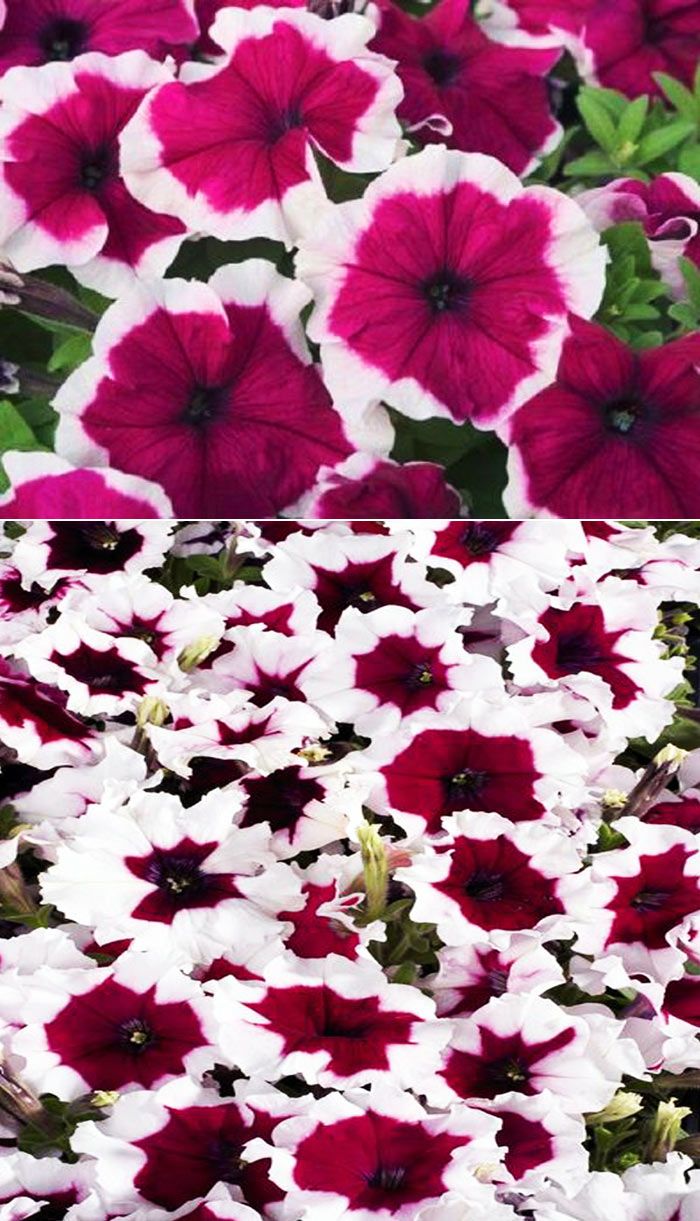
| Floribunda | An intermediate group, characterized by abundant flowering, unpretentiousness and beauty. | Sonia | Raspberry, fiery, burgundy, pale violet, and white colors, adorned with a lighter border and a star. | Does not exceed 15. |
| Celebrity | They can be single-color, two-color or three-color. | |||
Ampelous
Trailing varieties are distinguished by long, downward-growing shoots. These plants require warmth, regular moisture, and nutrition.
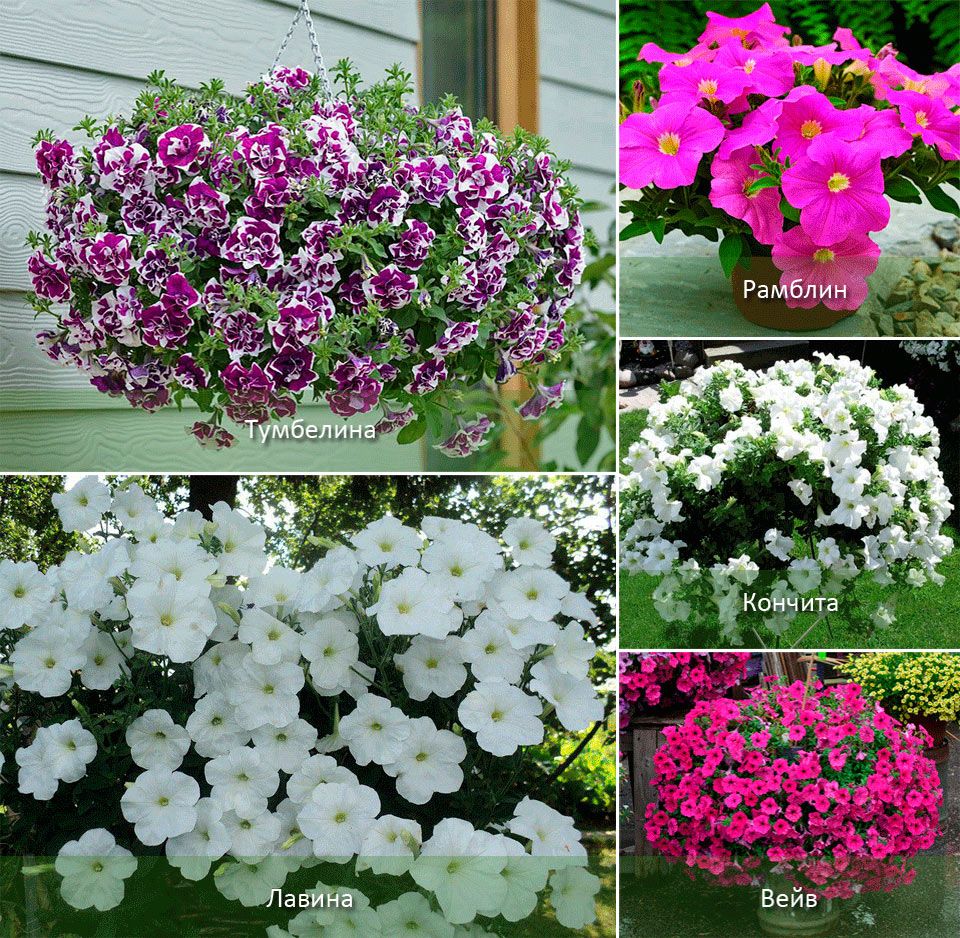
These petunias are used as decorative ornaments for walls and balconies. They are quite resistant to adverse weather conditions.
| Group | Description | Flowers | |
| Coloring | Diameter (cm) | ||
| Ramblin' | Abundant flowering, upright stems. Lateral shoots are no longer than 80-90 cm. | Purple, snow-white, lavender, dark pink, blue, salmon, red, peach. | From 7 to 8. |
| Conchita | In appearance, the corollas resemble calibrachoa. | Various. | Up to 5. |
| Wave | The stems reach 120 cm. | Pink, violet, blue, purple. | No more than 7. |
| Tumbelina | Semi-trailing, double flowers. A rounded cap forms during flowering. The fragrance is strong and pleasant. | The colors are lavender, lilac, deep crimson, with red stripes on a pink background, dark purple, cherry. | From 6 to 7. |
| Avalanche | Branched bushes with a long flowering period. Shoots reach 70 cm in length. | White, blue, orange. | Up to 9. |
| Opera Supreme | A lush bush-like plant, the shoots of which reach 100 cm in length. | Pink, blue, white, crimson. | Does not exceed 5. |
Cascade
Cascade petunias are often confused with trailing petunias. The differences include growth direction, shoot length, and thickness.
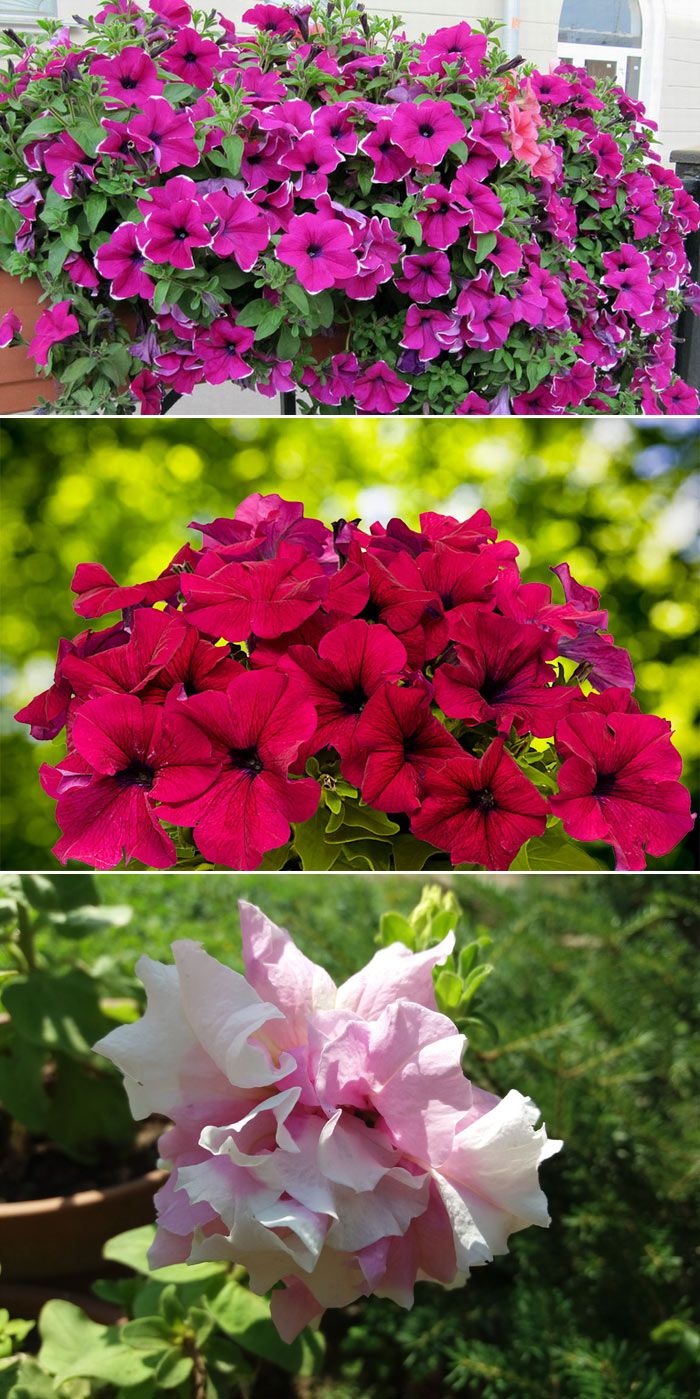
First they grow upwards and then they fall downwards.
| Variety | Description |
| Orchid Mist | Large-flowered, produces white-pink double corollas. |
| Pirouette | Unpretentious, the color of the flowers can be different. |
| Burgundy | During the flowering period, the bushes are covered with dense blue and purple corollas. |
| Mona Lisa | The diameter of the inflorescences does not exceed 6 cm. They can be scarlet, white, orange, pink and purple. |
| Tornado | Long shoots (from 100 cm), bright large flowers. |
Growing petunias
If the gardener follows the correct algorithm, planting and caring for this garden crop will not require much effort.
Petunias are easy-to-grow plants. Their heat tolerance depends largely on the variety. Small-flowered varieties require less frequent watering than large-flowered ones. Water should be applied at the roots, otherwise the delicate corollas and leaf blades will be damaged. Loosening and weeding are recommended only the following day.
To extend the flowering period, petunias need to be fed according to a predetermined schedule.
When compiling it, it is necessary to take into account the initial state of the soil.
- Apply fertilizer for the first time one week after planting.
- The second and all subsequent ones – every 10-14 days.
Petunia requires complex mixtures characterized by a high concentration of potassium.
Among organic fertilizers, preference should be given to mullein infusion and humic compounds.
Timing and features of planting petunias
Most gardeners plant petunias in mid-March. The lack of daylight is compensated for with phytolamps. The amount of seedlings is determined based on the low germination rate.
The soil should be loose and light. It should include turf, well-rotted manure, sand, and peat.
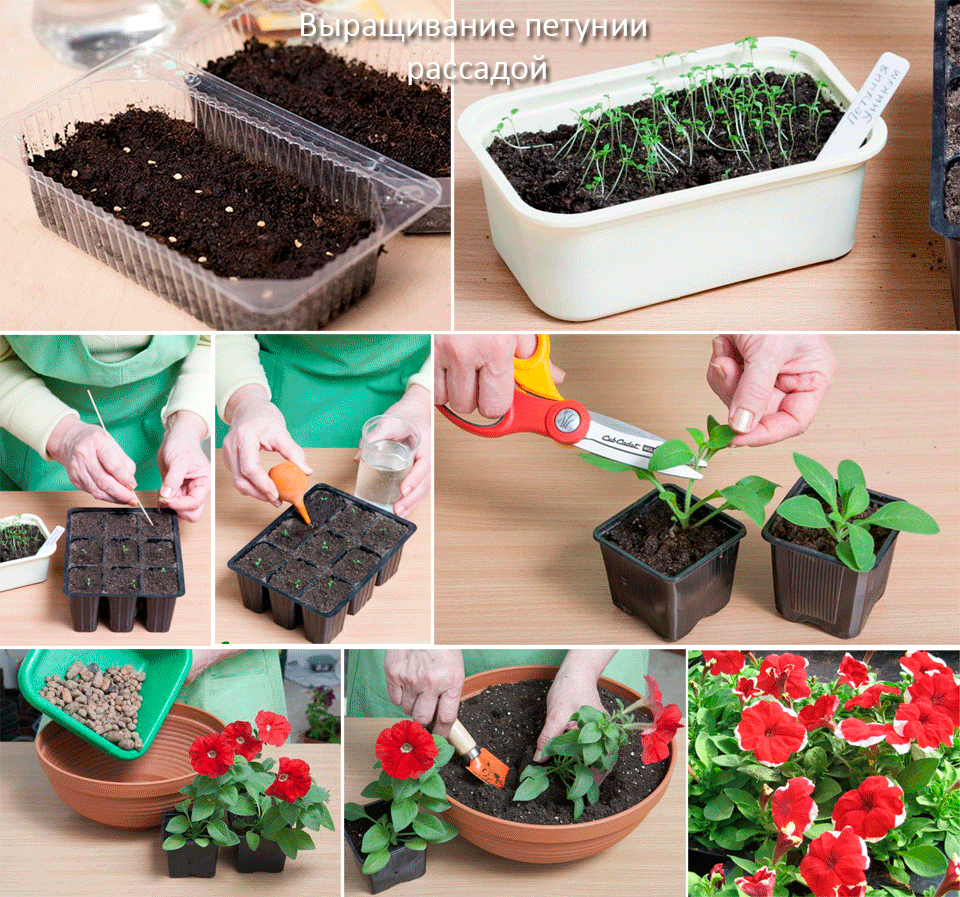
Seedling growing technology
The procedure is quite simple:
- The soil mixture is poured into a pre-prepared container. The substrate is pre-sifted.
- The day before planting, the soil is thoroughly moistened using a spray bottle.
- Plant purchased or self-collected seeds.
- Cover the container with glass or plastic film.
- Place the box and peat pots (depending on where the crop was planted) in a room where the air temperature is at least +20 °C.
- To prevent condensation, seedlings need to be regularly ventilated.
- Mandatory measures include moderate watering and treatment with a disinfectant solution. Potassium permanganate is used for the latter.
- After four true leaves have emerged, transplant the seedlings. The seedlings are most often placed in peat or plastic pots. After this, the plants need to be watered.
- To protect seedlings, lutrasil and paper sheets are used.
- For top dressing, use complex formulations such as Rastvorin, Kemira, and Nitrophoska. Dissolve 25-35 g in 10 liters of water.
Flowering begins 2-3 months after planting seedlings in open ground.
1-2 weeks before this event, hardening of petunias begins.
Location
The area should be sunny and protected from the wind. The flowerbed can be located near a fence or the wall of a building. Petunias will look great next to tall perennials. They will highlight their beauty and prevent damage to delicate petals and leaves.
Soil requirements
Petunias require fertile soil with a slightly acidic or neutral pH. The soil should be rich in humus and have a loose structure. Light loam is ideal. If the soil is too heavy, add sand and compost. Sandy soil requires turf and well-rotted manure.
Using the latter ingredient can lead to the development of fungal diseases. If you plan to plant in pots or flowerpots, be sure to prepare a soil mixture of turf, peat, sand, and humus. To retain moisture, hydrogel is included in the list of ingredients.
Caring for petunias
Garden crops require careful care. The list of agricultural practices is quite extensive. These include watering, loosening the soil, fertilizing, and weeding. The water should be warm and settled.
The soil should be moistened in the evening. Fertilize the plant twice a month. During flowering, fertilize the seedlings with a fertilizer containing potassium and phosphorus. Ready-made fertilizers are available at flower shops.
Petunia propagation
Trailing and double petunias are propagated by cuttings. For this, the plant's apical stems, which have 4 to 6 true leaves, are used. After separating the cuttings, remove the lower leaf blades and trim the upper ones. To ensure rooting, use a potting mix for seedlings.
Seeds are often used for propagation. Seeds can be purchased at a store or collected independently. The final stage is performed only after the seeds have matured. Development takes about eight weeks. Selected plants are marked during flowering. If the gardener follows all the proper growing practices, the seeds will remain viable for up to three to four years.
Read the article about propagation of petunias by seeds.
Pests and diseases
If mistakes were made when growing petunias, the plant may suffer from diseases and parasites.
| Illness | Signs | Factors | Elimination measures |
| Powdery mildew | A whitish coating on stems, leaves and shoots. | Excessive humidity, improper watering, unfavorable weather conditions. |
Remove affected parts, replant bushes that are too densely planted. Preventative treatment with fungicides. |
| Blackleg | The constrictions are black and brown. Subsequently, the bushes dry out. | Failure to comply with temperature conditions, over-watering. | There is no effective treatment. To prevent the disease, the soil should be regularly loosened and sprinkled with wood ash and sand. To enhance the beneficial effects, the plants are treated with a weak solution of potassium permanganate. |
| Late blight | Rotting of the lower part of the shoots and stem. | General weakening of seedlings, sudden cold snap. | Spraying with Ridomil and Profit. Prevention is carried out with whey and garlic infusions. |
The lush foliage and bright corollas of petunias often attract insects.
| Pest | Signs | Methods of control |
| Whitefly | General weakening of the plant, yellowing of green mass. | Spraying with Aktara. |
| Spider mite | The bushes are covered with cobwebs. | Treatment with Apollo and Neoron. |
| Aphid | Blooms on various parts of the plant, buds falling off. Leaf curling and color changes. | Fufanon and Aktara are used. |
| Slugs | Noticeable damage to leaves, stems and shoots. | Sprinkling the soil with Slug Eater, superphosphate, and mustard powder. |
Top.tomathouse.com recommends: How to preserve petunia bushes during winter
It is not recommended to leave this garden plant in the ground during the cold season. The plant is removed from the soil in mid-October. The next step is to remove all shoots. The pot containing the repotted petunia is placed in a cool room. Watering should be infrequent and moderate. Overwatering will cause root rot. In February, the container should be brought into a warm room. The resulting cuttings can then be used for propagation.
Today, these hybrids are planted as balcony and potted plants. These vibrant annuals are often grown in garden plots. Petunias' popularity stems from their decorative qualities and low maintenance. Additional advantages include a long flowering period. Petunias blend well with other garden crops.