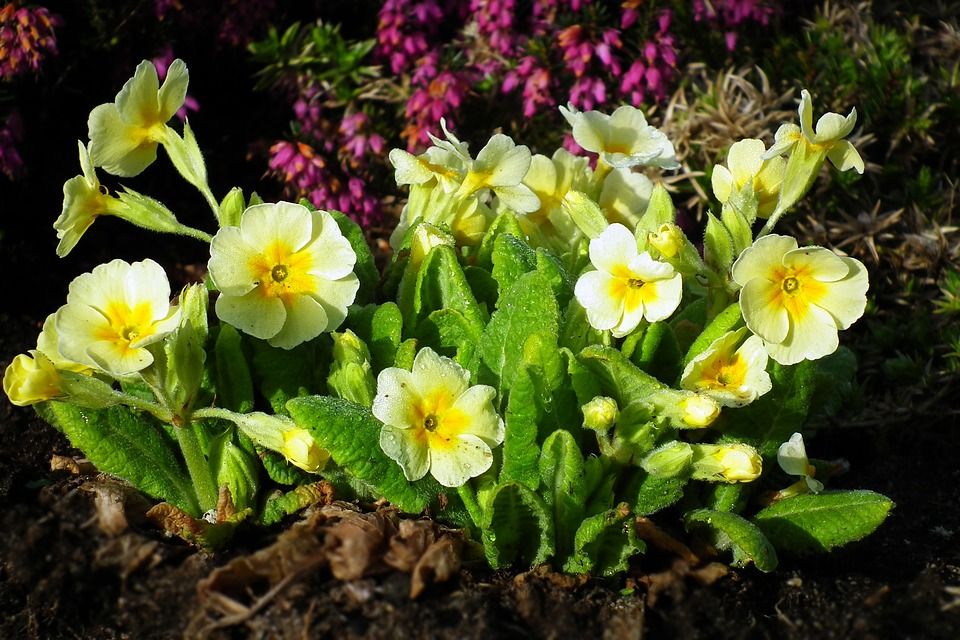
Primrose (spring primrose) is a decorative perennial.
Distribution area: northern regions of America, Central Europe, China.
Content
- 1 Description of perennial primrose
- 2 Garden perennial primrose: evening, stemless and other species
- 3 Planting primrose in open ground
- 4 Caring for primrose in open ground
- 5 Perennial primrose after flowering
- 6 Primrose propagation
- 7 Problems with growing primrose
- 8 Diseases and pests
- 9 Top.tomathouse.com recommends: primrose in the landscape
Description of perennial primrose
A perennial plant variety with a low rhizome. The foliage is lanceolate, rounded, or oval, glossy, and slightly pubescent. The color ranges from deep green to bronze. The edges are completely smooth or may have slight serrations.
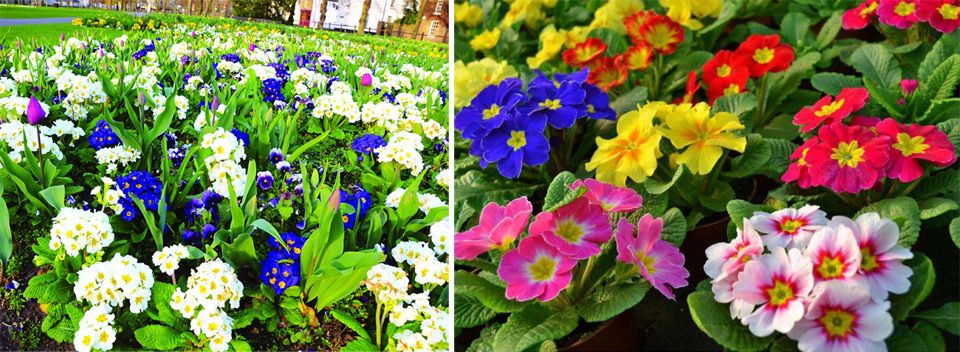
The inflorescences are umbel-shaped or spherical. The buds are white, pink, blue, red, or yellow.
The plant has a distinct aroma, which arises due to the presence of a large amount of essential oils in the leaves.
Garden perennial primrose: evening, stemless and other species
There are 19 varieties of primrose suitable for growing in a garden plot:
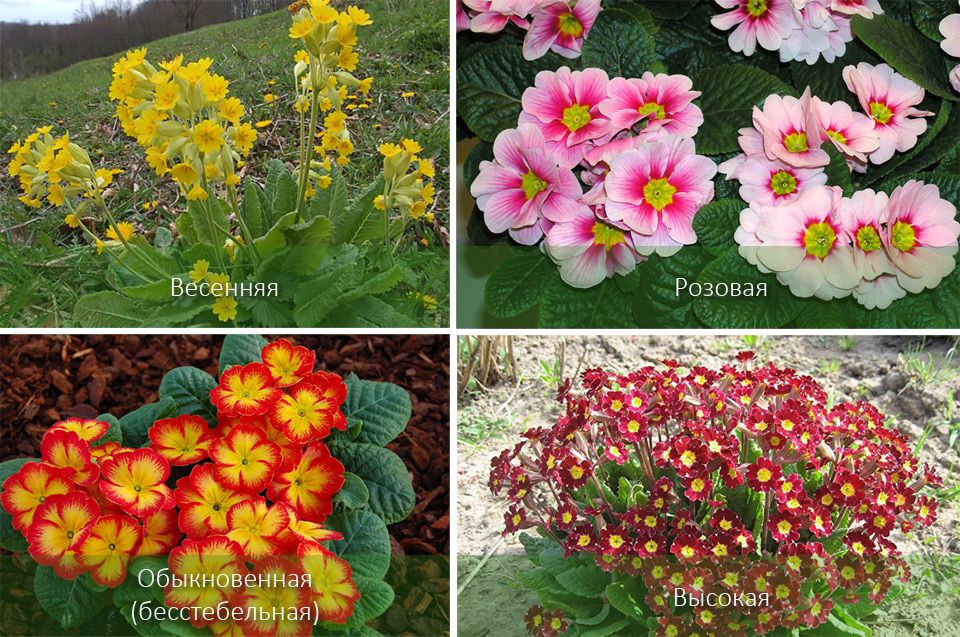
| View | Description | Leaves |
Flowers Bloom |
| Ordinary (stemless) |
The most common species. Repeat flowering is possible. | Rich green, velvety, up to 25 cm long. |
Single, up to 40 mm in diameter. Color: pale yellow or white with purple speckles. Mid-April. |
| High | The most winter-hardy variety. Often grown in arid regions. | Elongated oval, length – 20 cm. |
Umbelliferae. Color: white with dark spots. Mid-April-June. |
| Pink | A moisture-loving plant, grown near ponds and streams. | Oval. Color: from bronze to pale green. |
Bright pink, size up to 10 mm. At the beginning of May. |
| Spring | The variety is practically undemanding in terms of maintenance. | Ovoid, wrinkled. Grow up to 20 cm in length. |
The petals are heart-shaped. The buds range in color from cream to pink. Observed after the snow melts. |
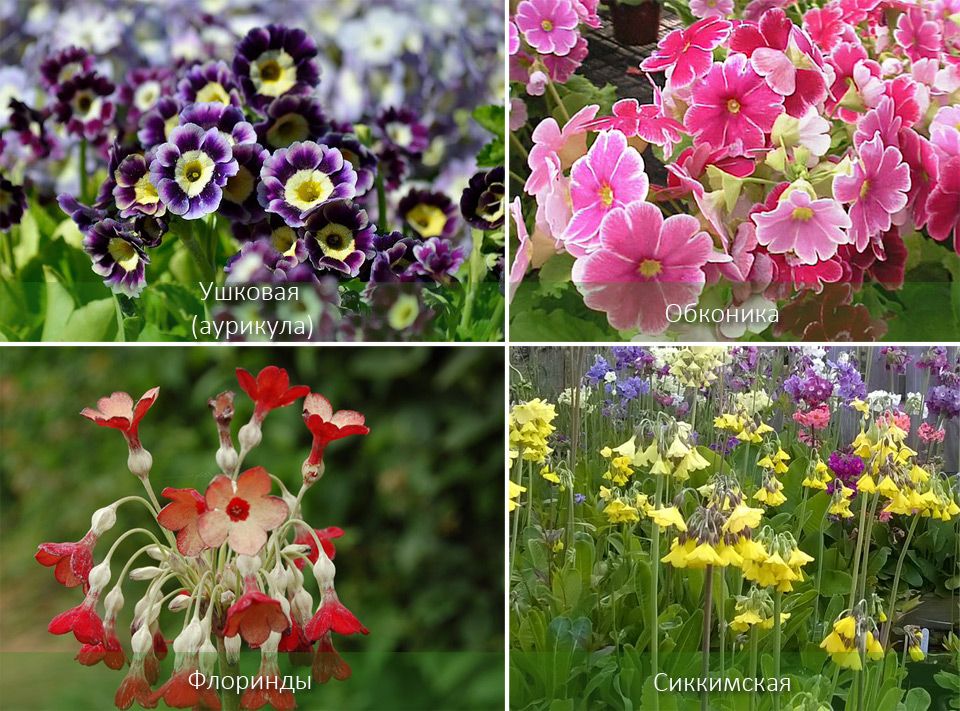
| Auricular (auricular) | Recognized as the most beautiful species. The aroma is honey-like. | Oval, with finely serrated edges. Length – up to 10 cm. |
Light yellow or lilac flowers with a purple center. The buds are up to 40 mm in diameter. June-July. |
| Sikkimese | The plant is not pubescent. Flowering period is midsummer. | Spatulate-lanceolate. |
Bell-shaped. Color – light yellow. Flowering period: mid-summer. |
| Florinda | Late flowering species. | Large, bright green. |
Small, sunny, bell-shaped. At the end of summer. |
| Capitate | A powdery coating is scattered all over the flower. | Elongated. | The inflorescence is spherical. The buds are purple. June-August. |
| Fine-toothed | The height of the flower stalks is up to 40 cm. They are widely used to decorate flower beds and borders. | Large, about 40 cm long. Bright green. |
Spherical. Color – all shades from white to purple. After the snow melts, one and a half months. |
| Bulleya | Often grown as a biennial, the flowering period is June-July. | Length and width – about 40 cm. In cold weather – they die off. |
Yellow-orange, diameter – 20 mm. May-July. |
| Vialya (orchid) | A herbaceous perennial. Blooms in late May. | Lanceolate. Color: light blue. |
Red-lilac, size – up to 70 mm. June-July. |
| Japanese | It has an unusual flowering, which is observed only in June. | Large, lanceolate-oval. |
Raspberry and white. Up to 2 cm in diameter. May-July. |
| Voronova | A small bush with basal leaves and one inflorescence. | Wrinkled. |
Light lilac, core - rich yellow. The first buds appear immediately after the snow melts. |
| Julia | An early-flowering variety. Unpretentious and shade-tolerant. | Ovoid, light green. |
Large, up to 3 cm in diameter. Color – from white to purple. April. |
| Powdery mildew | This variety is short-lived, but it retains its foliage until the beginning of winter. | Small, up to 5 cm in length. |
Pink-lilac, white center. May. |
| Evening | Taproot about 15 cm long. Height from 50 to 80 cm. Medicinal plant. | Large, green. |
Yellow. June-September. |
| Obkonika | Grows up to 25-30 cm. Grown as a houseplant. |
Rounded. |
The color ranges from yellow to red. The buds are about 8 cm in diameter. Beginning of March - May. |
| Siebold | The trunk reaches 30 cm. | Oblong-oval, pubescent. |
Pink. Size – up to 2.5 cm. May-June. |
Planting primrose in open ground
When planting a flower in open ground, it is necessary to observe the timing and follow the technology.
Planting dates
Biennial plants are planted in the ground; the optimal time is late spring or September.
Choose a shaded area; flowers will die in direct sunlight. Choose light, loose, well-drained soil. Clay soil is suitable.
Technology of planting primrose in open ground
Leave a distance of 10-30 cm between the bushes; the larger the variety, the greater the distance. These plants prefer open spaces, so plant them so that the flowers become closed as they grow.
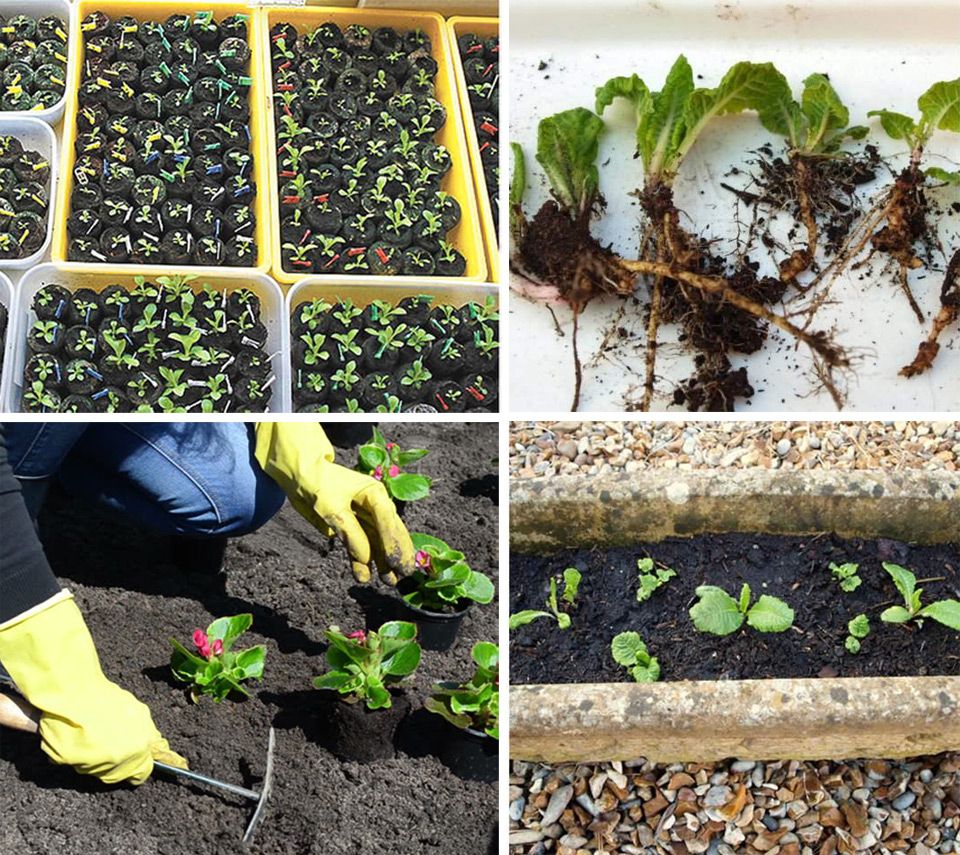
Before planting, dig a hole in the ground and place a drainage layer of brick chips at the bottom. Add a little soil on top and place the seedling, which is then dug in and watered.
Caring for primrose in open ground
The plant is not difficult to plant and care for, but requires timely watering, loosening and the use of fertilizers.
Watering
In spring and summer, water generously, but avoid stagnant water. The soil around the shrubs should always be slightly moist.
Water is applied directly to the roots, avoiding contact with flowers and leaves. After flowering, reduce the frequency of watering. Use warm, soft water.
Top dressing
During the growing season, fertilize every two weeks. Before flowering, use nitrogen fertilizers and manure-based infusions (1000 g per 1 liter of water). These substances promote foliage growth. After the buds fall, apply phosphorus-potassium fertilizers.
Trimming
This is done in March, immediately after the snow melts. Autumn pruning is prohibited, as the foliage acts as a source of nutrition for the weak rhizome. During flowering, dried buds are removed.
Perennial primrose after flowering
Since primrose is a perennial, it requires some attention after flowering.
Autumn time
Loosen the soil and remove all weeds. The rosette of leaves is preserved until late autumn, as it shelters the root system.
Wintering
During severe frosts, cover the shrubs with pre-dried straw, leaves, or spruce branches. The thickness of the covering should be 7-10 cm. This is not necessary in relatively warm weather. When the snow melts, check to ensure that no ice forms on the shrubs, as this can cause the flowers to rot.
Primrose propagation
It is performed in several ways:
- seeds (before sowing into the soil, stratification is mandatory);
- leaf-type cuttings;
- dividing the bush.
Repotting is done every 4-5 years, in early September. A heavily overgrown bush is thoroughly watered and dug up. Remove all soil from the rhizome and then wash it in a container of water. Use a sharp knife to cut the cuttings into sections, leaving at least one growing point on each section. Treat the cut areas with wood ash, and then move the plant to its new location.
If the root system is weakened or only one rosette is present, axillary shoots are used for propagation. To do this, separate a leaf with a bud, a section of the stem, and a petiole. This is cut back by half and planted in soil. The cutting is then moved to a bright location, with an optimal temperature of 16 to 18°C. In the spring, it is transplanted into open soil.
Problems with growing primrose
If the plant is not properly cared for, various problems arise:
| Symptoms | Reasons | Correction |
| Withering and drying of leaves. | Lack of moisture, exposure to direct sunlight. | Adjust the watering regime and provide additional shading during hot weather. |
| Rhizome rot. | Watering with cold water. | For moisturizing, use only soft and warm liquid. |
|
Poor flowering. |
Lack of nutritional components. | Regulate the frequency of fertilization. |
Diseases and pests
Primroses are susceptible to many diseases.
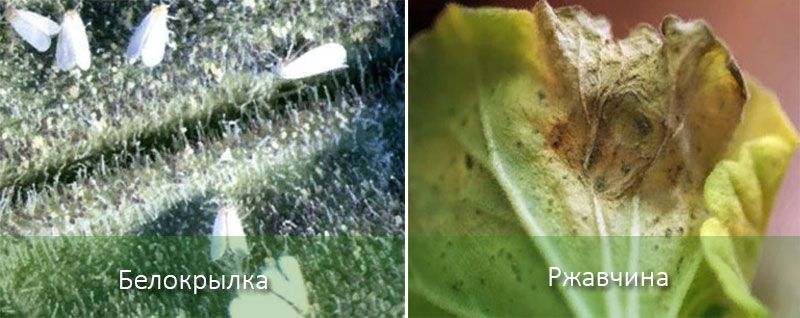
| Disease/pest | Symptoms | Elimination measures |
| Microplasmosis | Greening of flower petals, carried by insects that pollinate plants. | They are destroying. |
| Late blight | Spots on leaves, root collar rot, stems droop. | At the initial stage, spray with a soda or vinegar solution. Remove any advanced ones. |
| Root rot | The leaves quickly turn yellow, there are red threads on the roots, and the root collar dies. | Infected plants are discarded, the rest are transplanted to a new location, and the soil is treated. |
| Leaf rust | Spots on leaves, bush rotting | Treated with a copper-containing preparation. |
| Powdery mildew | White coating on the leaves, they lag behind in development | Spray with fungicides. |
| Nematodes | The roots rot, the leaves turn brown. | Dig up the entire plant and discard it. Treat it with insecticides. Conduct preventative treatments before planting. The scent of marigolds repels nematodes. |
| Caterpillars | Eaten leaves. | The plants are inspected and insects are collected. They are then burned. For prevention, they are sprayed with butterfly control products. |
| Root aphid | The primrose stops growing and turns yellow. | Affected parts are removed by digging them out of the ground, the bushes are divided, and a solution against pests is used. |
| Spider mite | The leaves first turn yellow, then brown, and become speckled. A fine webbing appears on the underside. | Treat with a solution of laundry soap and Fitoverm or Iskra preparations. |
| Crane fly larvae | Roots and lower stems are eaten away. | They weed and hill the soil, collecting pests. The plants are covered with covering material to prevent adult pests from flying in. |
| Leaf miner | The pupae pierce the leaves. | Insects are removed before they mature into adults. Inspections are carried out weekly. |
| Thrips | Small, light spots appear on the petals. The flowers gradually turn brown and die. | Preventative treatment against pests is carried out in advance, but if an infestation occurs, the diseased primroses are destroyed. |
| Slugs and snails | Eaten plant leaves. | Pests are collected or a slug repellent is scattered around the bush. Ash is a good preventative. |
| Aphid | Buds and flowers are affected. When infected, they form entire colonies, which can lead to the death of the plant. | They are sprayed with special preparations, after first washing off the insects with a large stream of water. |
| Weevil | The leaves are slightly eaten along the edges. The larvae are destroying the roots. | Insecticides are used, the soil temperature should not fall below +10 degrees, and the plants are watered. |
| Whitefly | The appearance of sticky secretions, the leaves turn yellow | They are treated with insecticides. |
Top.tomathouse.com recommends: primrose in the landscape
Primrose can decorate any green corner if you choose the right partners for it.
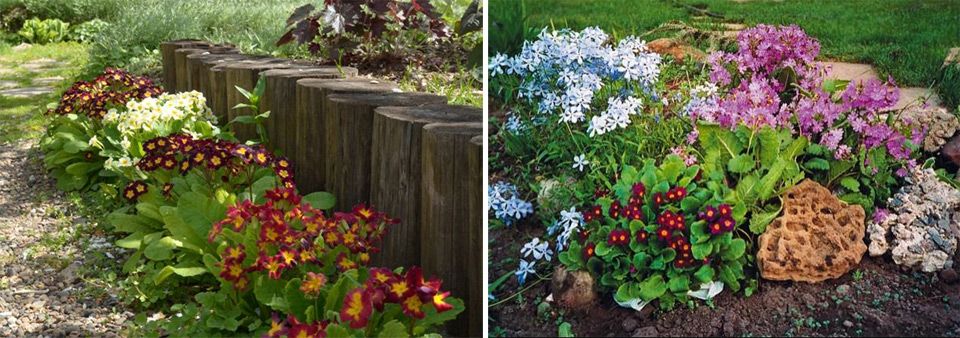
Ideal companions include low-maintenance bulbous plants (such as daffodils and muscari). Perennials include grasses, irises, and ferns.