Gardeners are always confused about the Yantarny tomato variety. Many order seeds expecting ultra-fast ripening, only to receive products with completely different characteristics. This isn't a seller's error or a counterfeit. Indeed, two tomatoes with the same name exist in nature. The late-ripening variety with indeterminate bushes was added to the register in 1999. Recently, another Yantarny variety, considered ultra-early, has gained popularity. It is not included in the register.
Content
- 1 2 tomato varieties Yantarny 530 (Registry and SeDeK): characteristics and comparison in the table
- 2 The history of the early tomato variety Amber 530
- 3 A detailed description of the early tomato variety Amber 530
- 4 Advantages and disadvantages of the early tomato variety Amber 530
- 5 Growing the early-ripening tomato variety Yantarny 530
- 6 Harvesting, using and storing the Yantarny 530 tomato variety
- 7 5 more tomato varieties named Amber
- 8 Comparison of 2 tomato varieties Yantarny 530 with other varieties in the table
- 9 Gardener reviews of the Yantarny 530 tomato variety
2 tomato varieties Yantarny 530 (Registry and SeDeK): characteristics and comparison in the table
Let's look at the characteristics of these varieties in the table.
| Characteristic | Description of the Amber 530 (register) | Description of Amber 530 (SeDeK) |
| Description | An indeterminate variety with a mid-late ripening period. Suitable for outdoor cultivation. | A determinate variety with an ultra-fast ripening period. Suitable for both open ground and plastic shelters. |
| Ripening period | 110-125 days | 90-95 days |
| Fruit weight | 83-140 g | 45-70 g, up to 90 g |
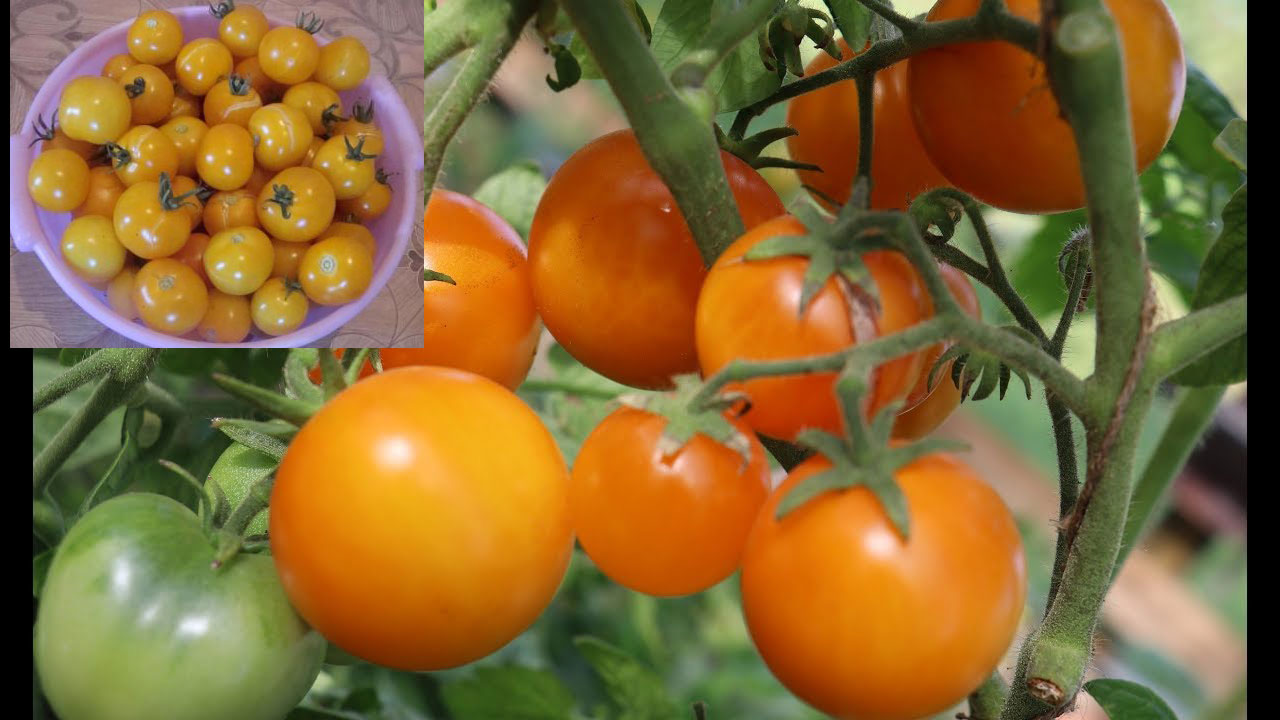
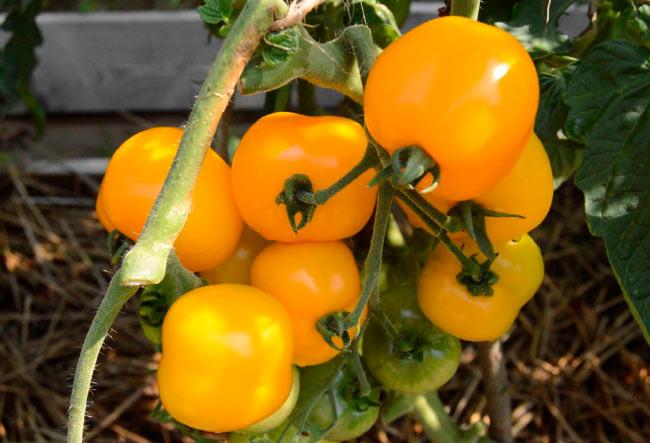
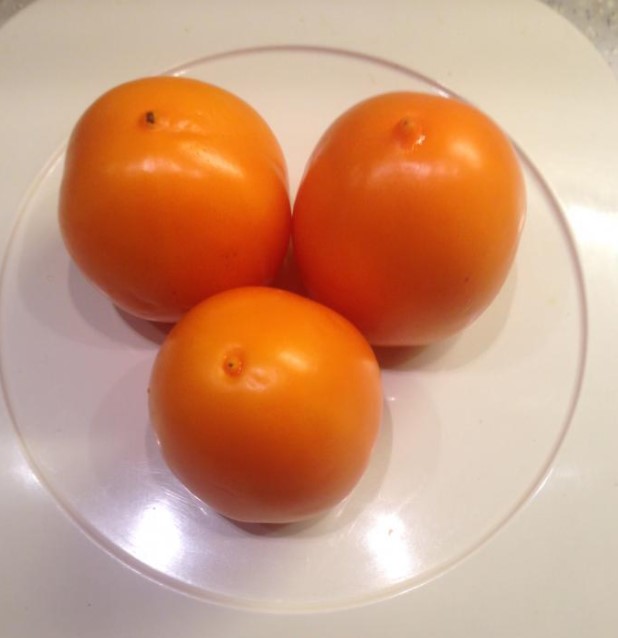
| Description of the fruit | The fruits are round, slightly flattened, and orange. The flesh is juicy, containing four seed chambers. The skin is thick. | The tomatoes are round, small, and yellow-orange. The flesh is juicy and sweet, containing 3-4 seed chambers. The skin is smooth, even, holds its shape well, and resists cracking. |
| Productivity | 2.0-2.7 kg per sq. m | 7-11 kg per square meter |
| Usage | Used for canning and fresh eating. | Used for canning, pickling, and fresh eating. |
| Preferred growing regions | Suitable for all regions, even the North and Far East. | It bears fruit well in all regions if the cultivation method is chosen correctly. It can be grown on balconies and loggias. |
| Disease resistance | It has a strong immunity, but can be affected by late blight if overwatered or in cool weather. | It's not susceptible to common tomato diseases. Due to its rapid ripening, it's almost never affected by late blight. |
| Agricultural technology | Requires pinching and tying, bushes are formed into 2-3 stems. | The bushes do not require tying or support and are formed into 1-3 shoots. |
| 1999 | Not included | |
| Originator | Federal State Budgetary Scientific Institution "Federal Research Center All-Russian Institute of Plant Genetic Resources named after N.I. Vavilov" | SeDeK |
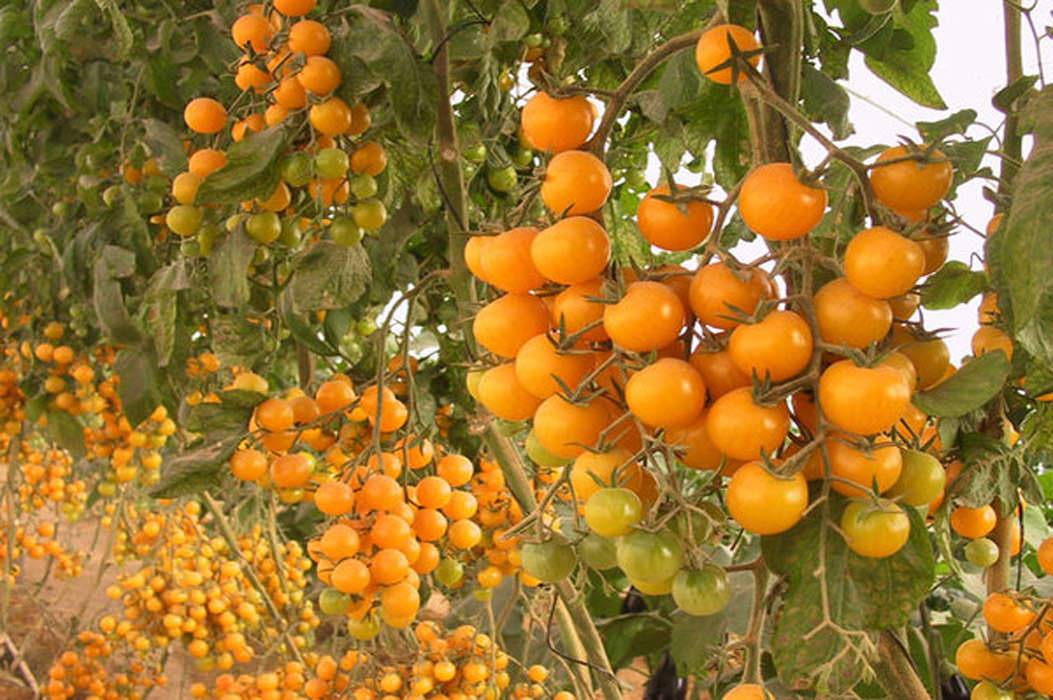
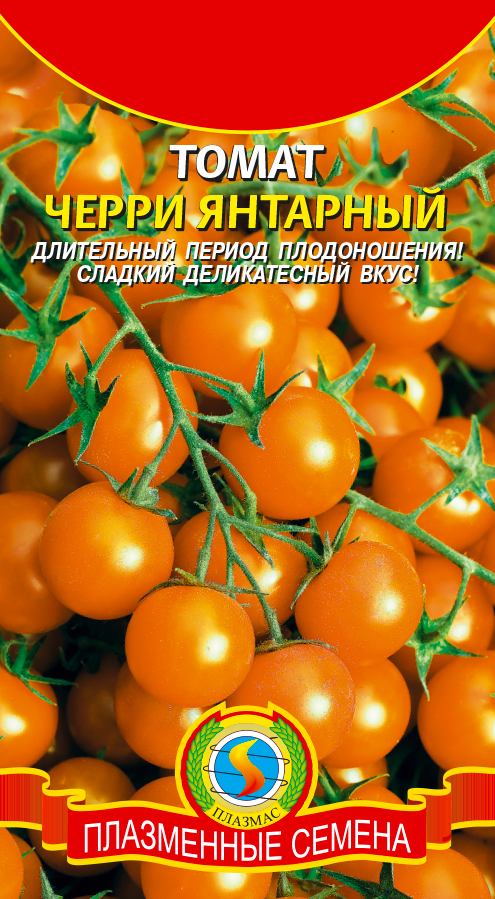
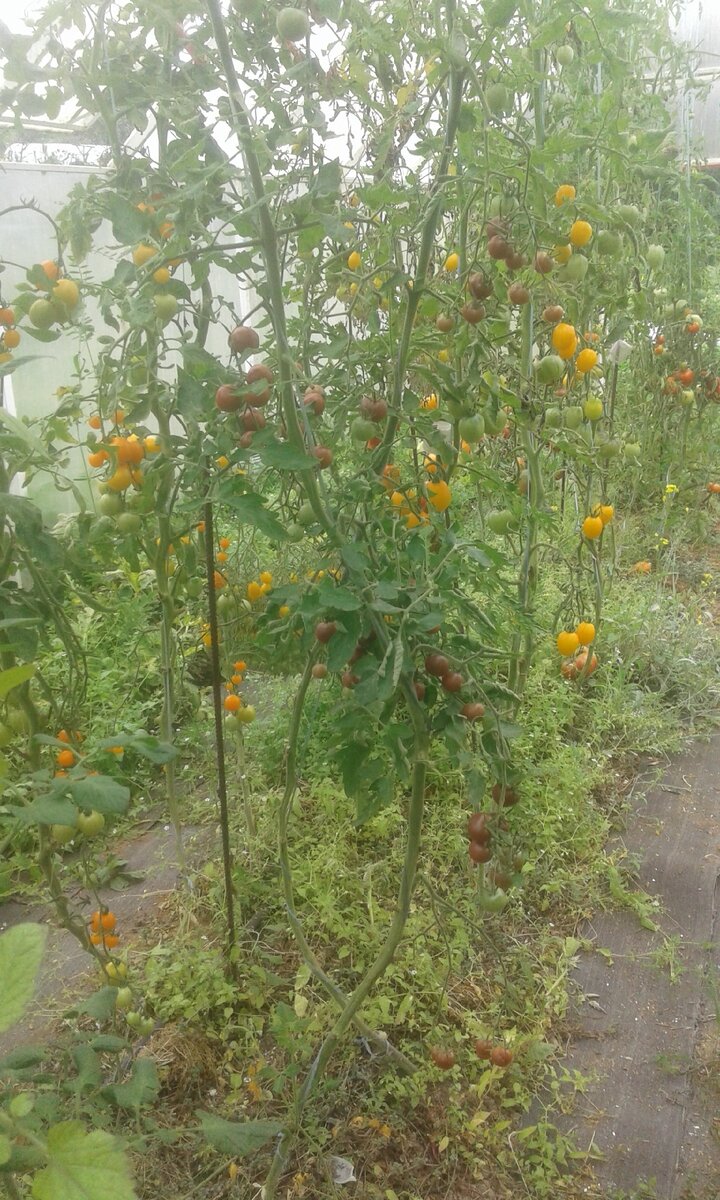
Photo gallery of tomato varieties Amber 530 (register) and Amber 530 (SeDeK)

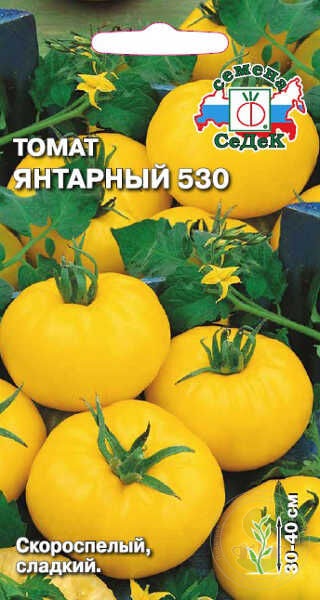
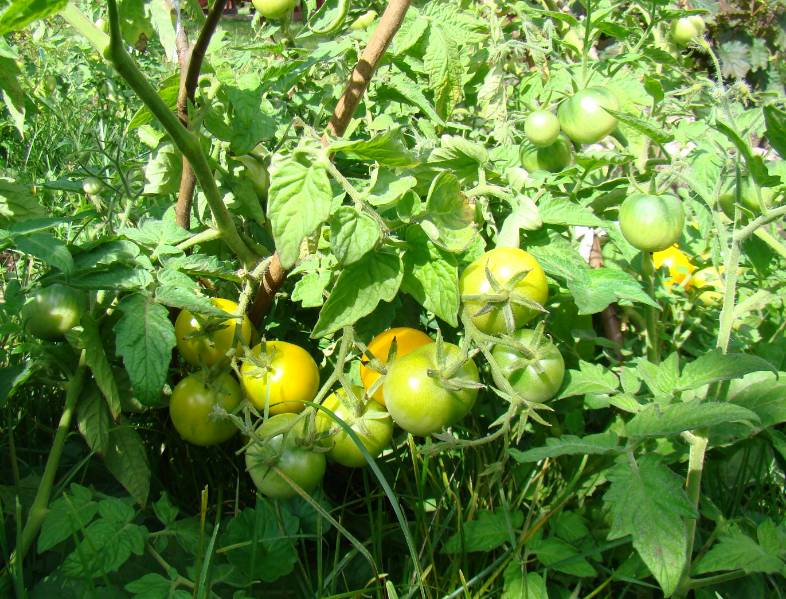
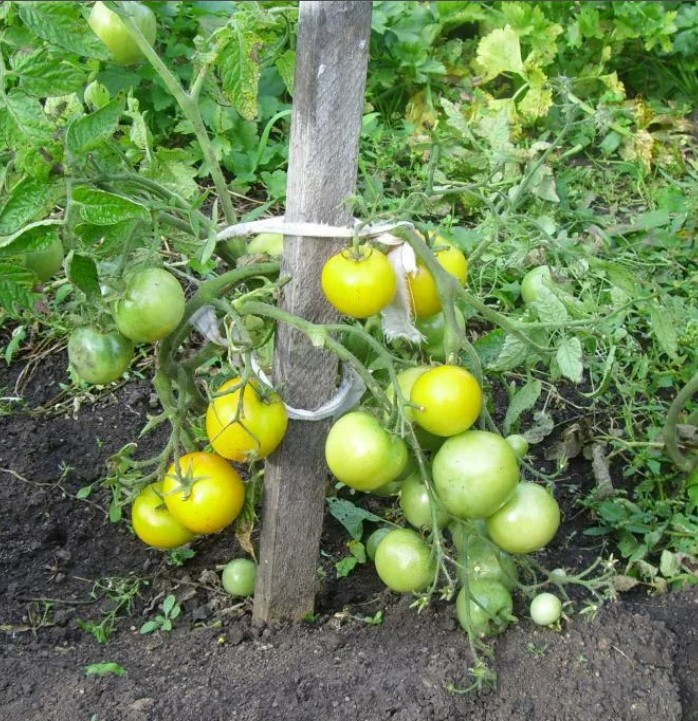
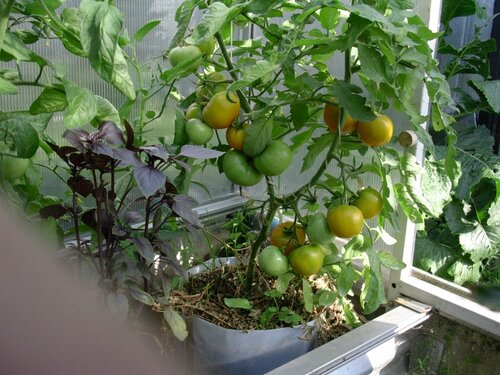
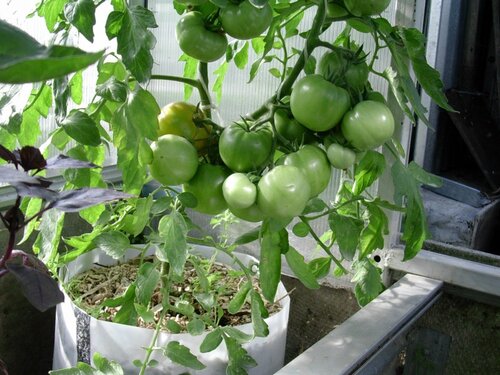
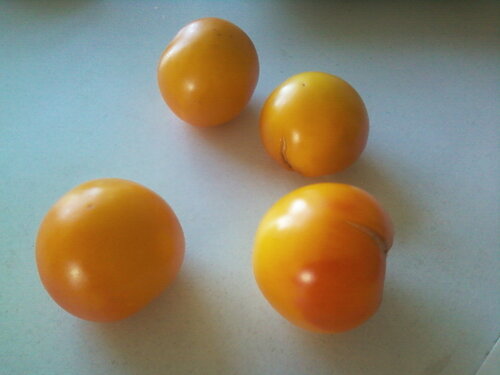

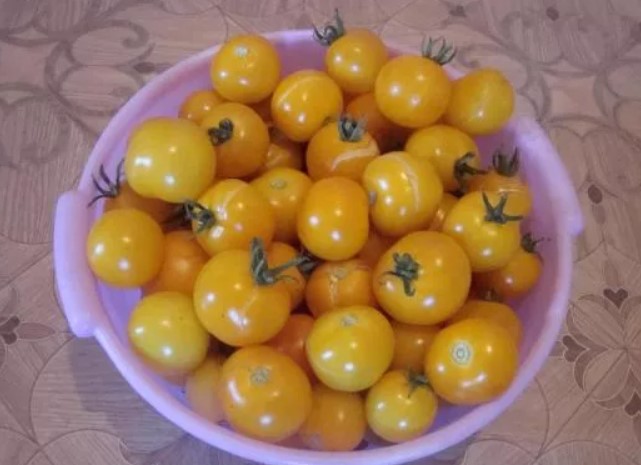
In this article, we will take a closer look at the early-ripening determinate variety Yantarny 530.
The history of the early tomato variety Amber 530
The Yantarny 530 variety, presented by SeDeK, is very similar to its officially registered counterpart. However, it was developed not by research institutes or other specialized organizations, but by amateur breeders. Their tomatoes are not developed for large-scale industrial production, but for private gardeners. Therefore, the variety combines the most important and desirable qualities: from ease of cultivation to uniform, mass ripening.
A detailed description of the early tomato variety Amber 530
The Amber tomato is every gardener's dream. When planted correctly, it produces an excellent harvest in a short time.
Characteristics of the bush
The main feature of this tomato is its compact bushes, up to 35 cm tall. Due to this modest size, the stems require no support or tying; they are quite strong and maintain their vertical position well. Determinate shoots allow for denser planting – up to 6-8 bushes per square meter.
The foliage is average; experienced gardeners recommend removing leaves from the lower tiers, but no more than 1-2 at a time. The bush itself develops into 1-3 shoots.
Fruit characteristics
The Yantarny variety produces small fruits. Their weight ranges from 45 to 100 grams, depending on planting density and the number of shoots. The more shoots, the smaller the tomatoes.
The tomatoes are a vibrant yellow-orange color. Their thick, glossy skin prevents them from cracking on the vine, allowing them to be stored for a long time without losing quality, and also withstands transportation well.
The flesh is sweet, juicy, and aromatic, but not overly fleshy. Inside are up to four seed chambers.
Ripening time
The Yantarny tomato is distinguished by its ultra-early ripening period. From germination to harvest, approximately 90 days pass. Ripening occurs evenly. In regions with warm summers, a second harvest can be expected. To achieve this, the tomato plants from which the tomatoes have already been harvested are not discarded but left in the garden. The shoots that appear at the bottom of the shoots are left on, and new fruits will set on them fairly quickly. However, these will be much smaller in size than those from the first harvest.
Productivity
Determinate tomatoes allow for a denser planting pattern, resulting in a fairly high yield per square metre – up to 11 kg.
Advantages and disadvantages of the early tomato variety Amber 530
The Yantarny variety, like all other vegetable crops, has a number of advantages and disadvantages. These are listed in the table below.
| Advantages | Flaws |
|
|
Growing the early-ripening tomato variety Yantarny 530
The Amber tomato can be grown in a variety of ways, but experienced gardeners recommend using the seedling method.
Sowing seeds and growing seedlings
Since tomatoes aren't hybrids, you can harvest the seeds yourself. However, this isn't particularly convenient, as they're relatively small. Home-grown seeds undergo several stages of preparation:
- DisinfectionThe seeds are immersed in a weak solution of potassium permanganate (1 g per 100 ml) and left there for 20 minutes. Afterwards, they are removed and rinsed under running water.
- HardeningThe seeds are wrapped in a cloth and placed in the refrigerator overnight, then taken out during the day and left on the windowsill. This continues for two days.
- SoakBefore planting, it is recommended to soak the seeds in any stimulating solution for the time indicated in the instructions.
- GerminationThis stage accelerates the process of tomato germination.
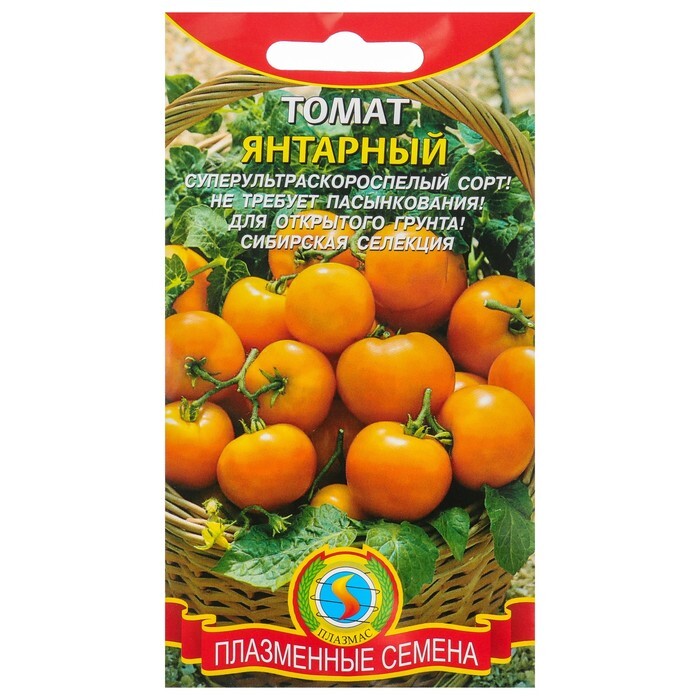
If you bought tomatoes at a store, carefully read the packaging. Manufacturers typically prepare the seeds before selling them, so soaking them is not only unnecessary but also prohibited, as they are coated with a special protective or nutritious coating.
The seeds are sown 60 days before transplanting into the open ground. First, use a pre-prepared and disinfected container filled 2/3 full with potting soil. You can buy a ready-made potting soil, but it's better to make your own by combining equal parts soil, sand, peat, and humus. To control moisture levels, it's recommended to add 10% vermiculite to the total volume.
Furrows are made in the soil, spaced 2-2.5 cm apart. Seeds are dropped into the furrows at intervals of 1.5-2 cm to a depth of no more than 8-10 mm. They are then covered with soil and watered with a spray bottle.
Cover the container with glass or film and place it in a warm place for several days. As soon as sprouts begin to emerge from the soil, remove the cover and move the seedlings to a cooler location with adequate supplemental lighting.
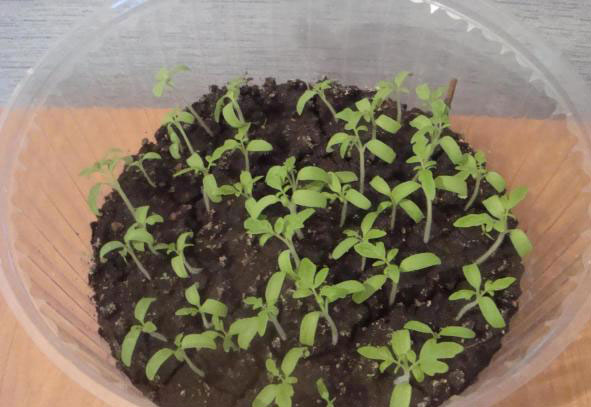
After two true leaves appear, the tomatoes are transplanted into separate containers.
Planting in the ground
Before planting in the ground, experienced gardeners recommend hardening off seedlings by alternately taking them outside for a few hours and bringing them indoors at night. It's believed that hardening off these plants will help them adapt more quickly to their new location.
The soil in the garden bed is prepared in the fall, and in the spring, it is dug again and holes are made. Amber tomatoes can be planted slightly closer together than indeterminate tomato plants. Holes are spaced 50-60 cm apart, with a recommended distance of about 60 cm between rows.
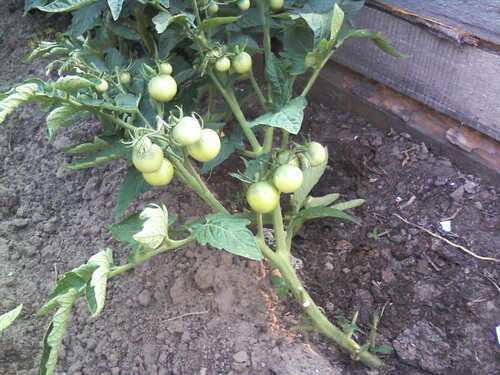
After digging the hole, add 10 grams of superphosphate. The soil in the bed should be light, nutritious, and slightly acidic.
After transplanting, the bushes are buried up to the root collar, and the soil is watered. To protect the roots and retain soil moisture, the surface of the bed is mulched with straw or bark.
Care
The Yantarny tomato appreciates fertilizing, but doesn't require any special care. The first fertilizers should be added to the soil only after two weeks. A complex, specialized fertilizer, such as Kristalon Tomato Fertilizer, works well for this purpose. Dilute it according to the instructions, then water the strongest plants. Weaker plants can be watered later, adding a little mullein or weed infusion to the solution.
You can mix your own fertilizer. To do this, dissolve 40 g of superphosphate, 25 g of ammonium nitrate, and 15 g of potassium sulfate in a bucket of water. Water each bush with this solution at a rate of 700 ml per plant.
During flowering, it is advisable to fertilize tomatoes with preparations containing boron, for example, spraying with a solution of boric acid at a rate of 1 g per 1 liter.
Tomatoes are also watered only after 14 days, approximately once every 5-7 days. If the weather is extremely hot, watering frequency increases.
Important! All fertilizers should be applied to the soil only after it has been moistened!
Periodically, it is necessary to weed and loosen the soil to improve aeration and remove weeds.
Resistance of the Yantarny 530 tomato variety to diseases and pests
The Amber tomato is very rarely susceptible to common diseases. Its immunity declines only in poor soil and adverse weather conditions.
To prevent the occurrence of diseases, it is recommended to spray the bushes with a solution of phytosporin or Bordeaux mixture 3 times per season.
Harvesting, using and storing the Yantarny 530 tomato variety
Tomatoes ripen very evenly. Sometimes, a second crop can be harvested if weather conditions permit.
It takes about 90 days from sowing to germination. Tomatoes are considered a dessert variety due to their flavor. They enhance any dish or salad, and are also suitable for whole-fruit canning and pickling.
5 more tomato varieties named Amber
Let's look at the characteristics of other tomato varieties named Amber.
Tomato variety Amber King
| Characteristic | Description |
| Description | An early-ripening indeterminate tomato variety. Suitable for both greenhouse and open-field cultivation. |
| Ripening period | 100-110 days |
| Fruit weight | Up to 360 g |
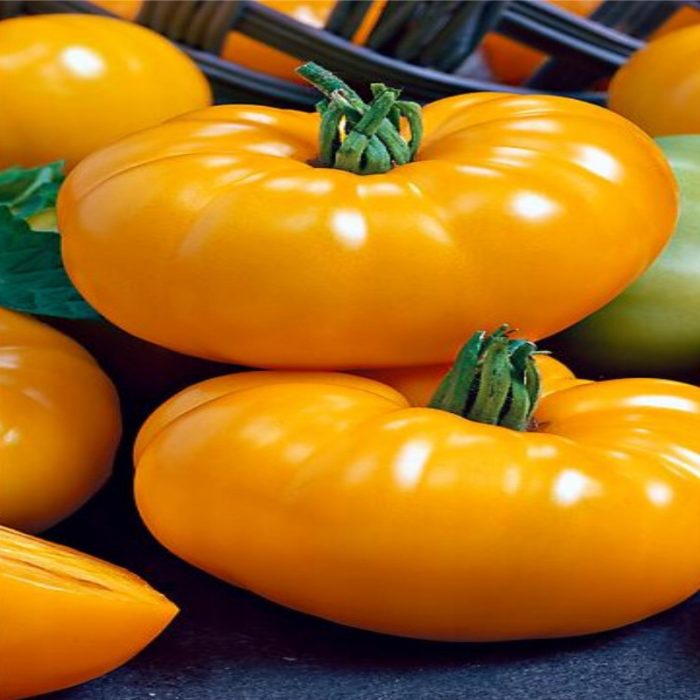
| Description of the fruit | The tomatoes are flat-round, medium-ribbed, and bright orange. The skin is dense and glossy. |
| Productivity | In greenhouses, yields can reach 10.9 kg/sq.m. |
| Usage | Suitable for fresh eating, processing into sauces, pastes, ketchup, lecho. |
| Preferred growing regions | Can be grown in all regions. |
| Disease resistance | The tomato is resistant to fusarium, TMV, and verticillium wilt. |
| Agricultural technology | The shoots are tied up and the bush is formed into 1-3 stems. |
| 2021 | |
| Originator | LLC Agrotechnological firm "Agros" |
Photo of a tomato variety Amber King
Tomato variety Amber Cup
| Characteristic | Description |
| Description | An indeterminate tomato variety with bushes up to 170 cm. Mid-season, suitable for growing in greenhouses and open ground. |
| Ripening period | 105-110 days |
| Fruit weight | 85-125 g |
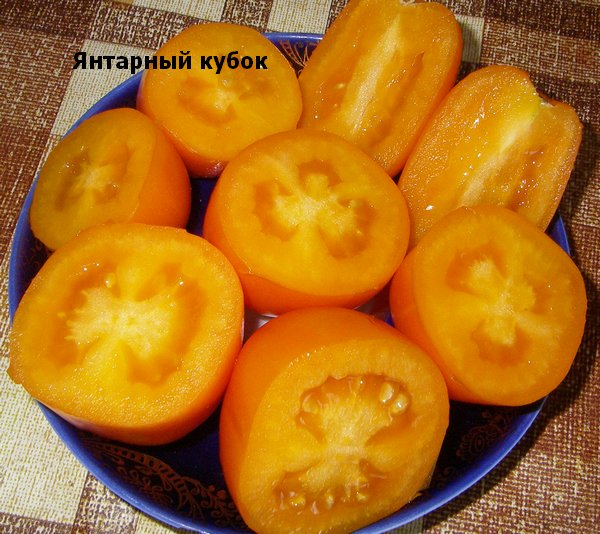
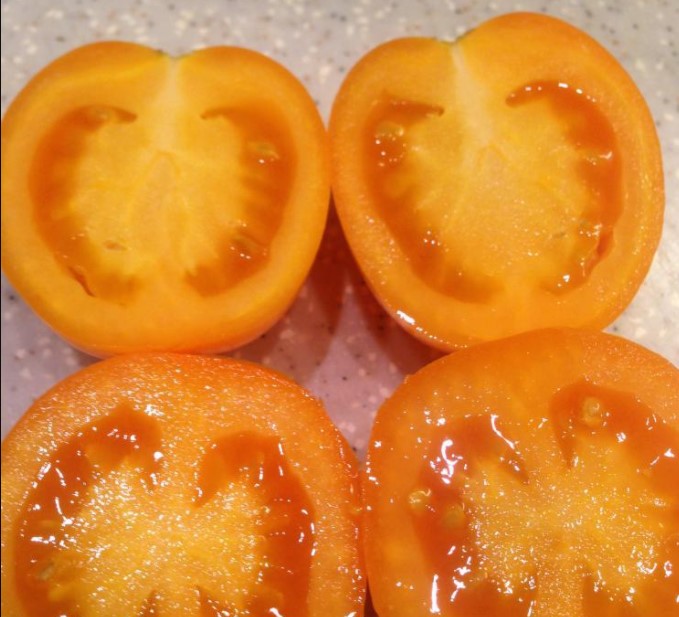
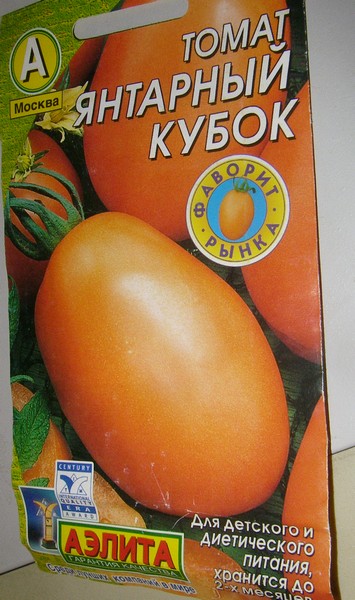
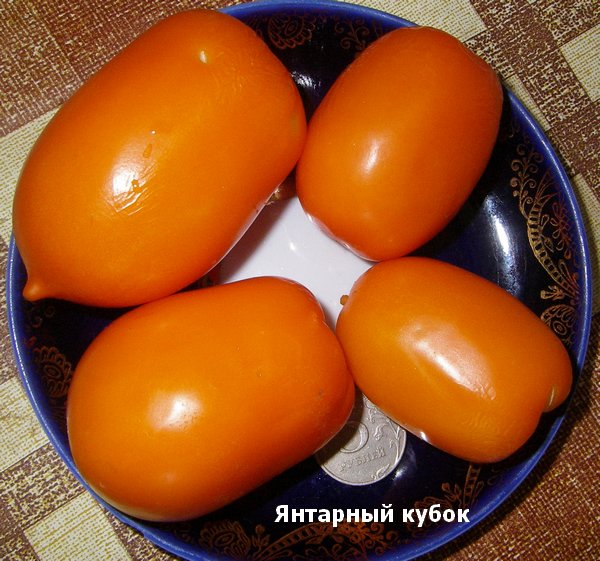
| Description of the fruit | Cylindrical tomatoes are orange in color. The skin is dense and smooth. Ribbles are not pronounced. |
| Productivity | Up to 3.6 kg/sq.m |
| Usage | Tomatoes are suitable for whole-fruit canning and fresh eating. They can be stored for long periods without losing their quality and can be transported over long distances. |
| Preferred growing regions | All regions |
| Disease resistance | Tomatoes are resistant to fusarium wilt, TMV, and verticillium wilt. |
| Agricultural technology | The bushes are formed into 1-2 shoots and tied up. |
| 2008 | |
| Originator | Agrofirma Aelita LLC |
Photo gallery of tomato varieties Amber Cup
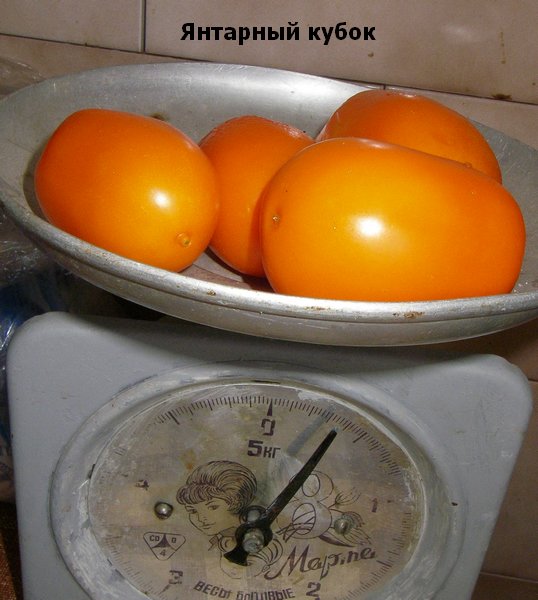
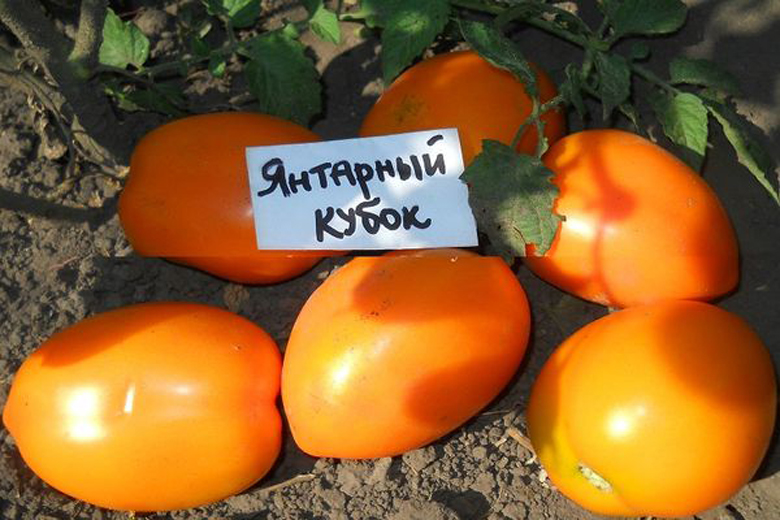
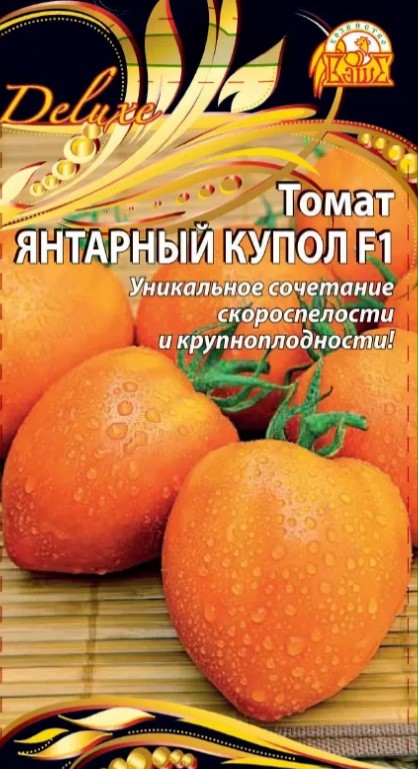
Tomato variety Amber Dome
| Characteristic | Description |
| Description | A hybrid determinate tomato variety intended for cultivation in open ground or under temporary shelter. |
| Ripening period | 97-100 days |
| Fruit weight | 180-200 g |
| Description of the fruit | The tomatoes are heart-shaped. They are bright orange in color and have a jointed stem. Ribbing is subtle. The skin and flesh are firm. |
| Productivity | 14-15 kg/sq.m |
| Usage | Salad variety. Tomatoes are processed into tomato products; small specimens are pickled and canned. |
| Preferred growing regions | All regions of Russia, in the Northern part, should be planted in a greenhouse. |
| Disease resistance | Resistant to major tomato diseases |
| Agricultural technology | The bush is 100-120 cm tall and requires staking and support. I train the bush into 1-2 stems. |
| 2021 | |
| Originator | LLC "Your Farm" |
Photo gallery of tomato varieties Amber Dome

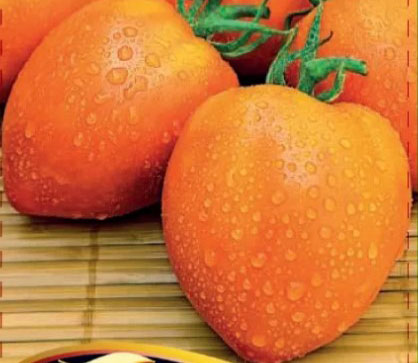
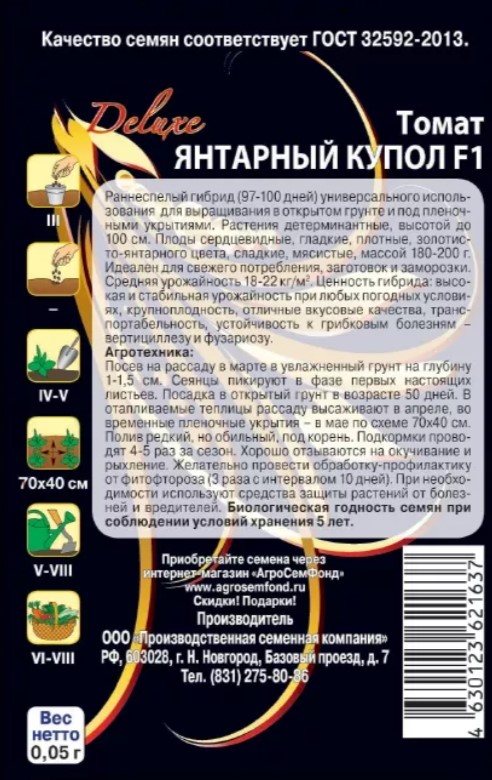
Tomato variety Amber Honey
| Characteristic | Description |
| Description | Indeterminate variety intended for greenhouse cultivation. |
| Ripening period | 105-115 days |
| Fruit weight | 150-450 g |
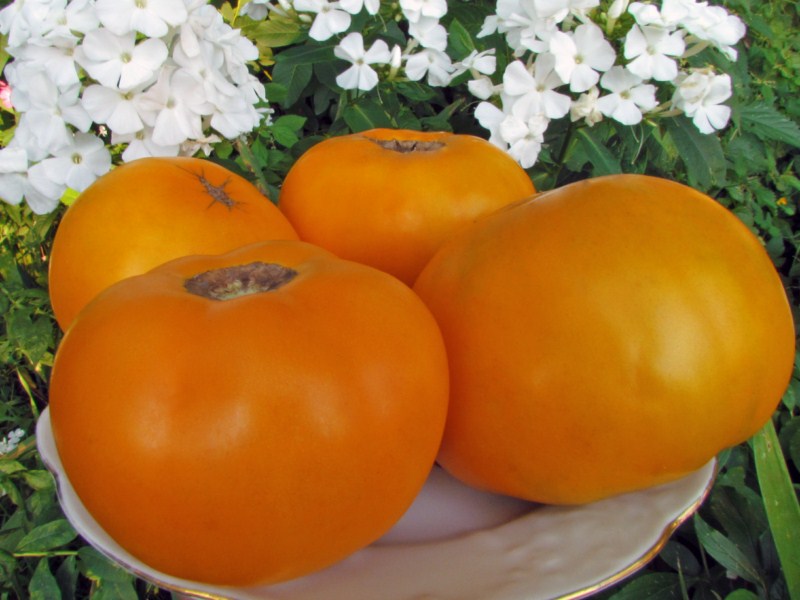
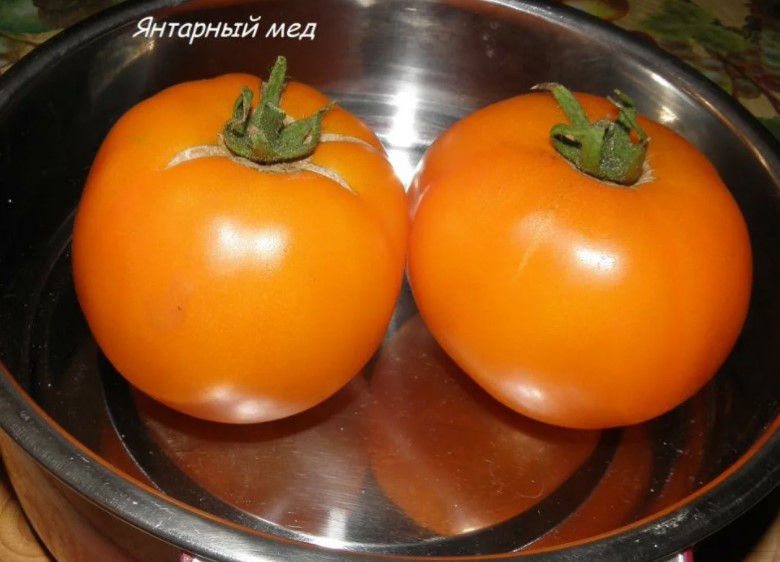
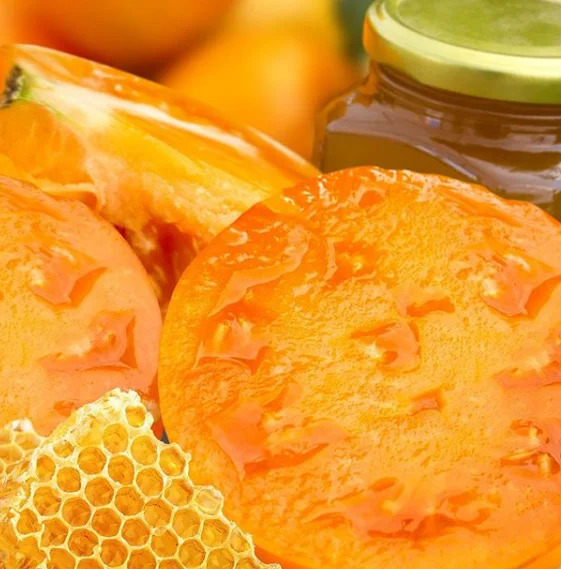
| Description of the fruit | The tomatoes are round, yellow-orange in color. The skin is thin but fairly firm. The flesh is juicy, meaty, and sweet-sour in taste, containing up to six seed chambers. |
| Productivity | 4.8-4.9 kg/sq.m |
| Usage | Tomatoes are eaten fresh, and are also used for canning and processing. |
| Preferred growing regions | All regions |
| Disease resistance | Tomato is resistant to tobacco mosaic virus |
| Agricultural technology | The shoots grow up to 150 cm, so they need to be supported. The bush is formed into 1-2 stems. |
| 2021 | |
| Originator | LLC "Heterosis Selection", LLC "Fleur" |
Photo gallery of tomato varieties Amber honey
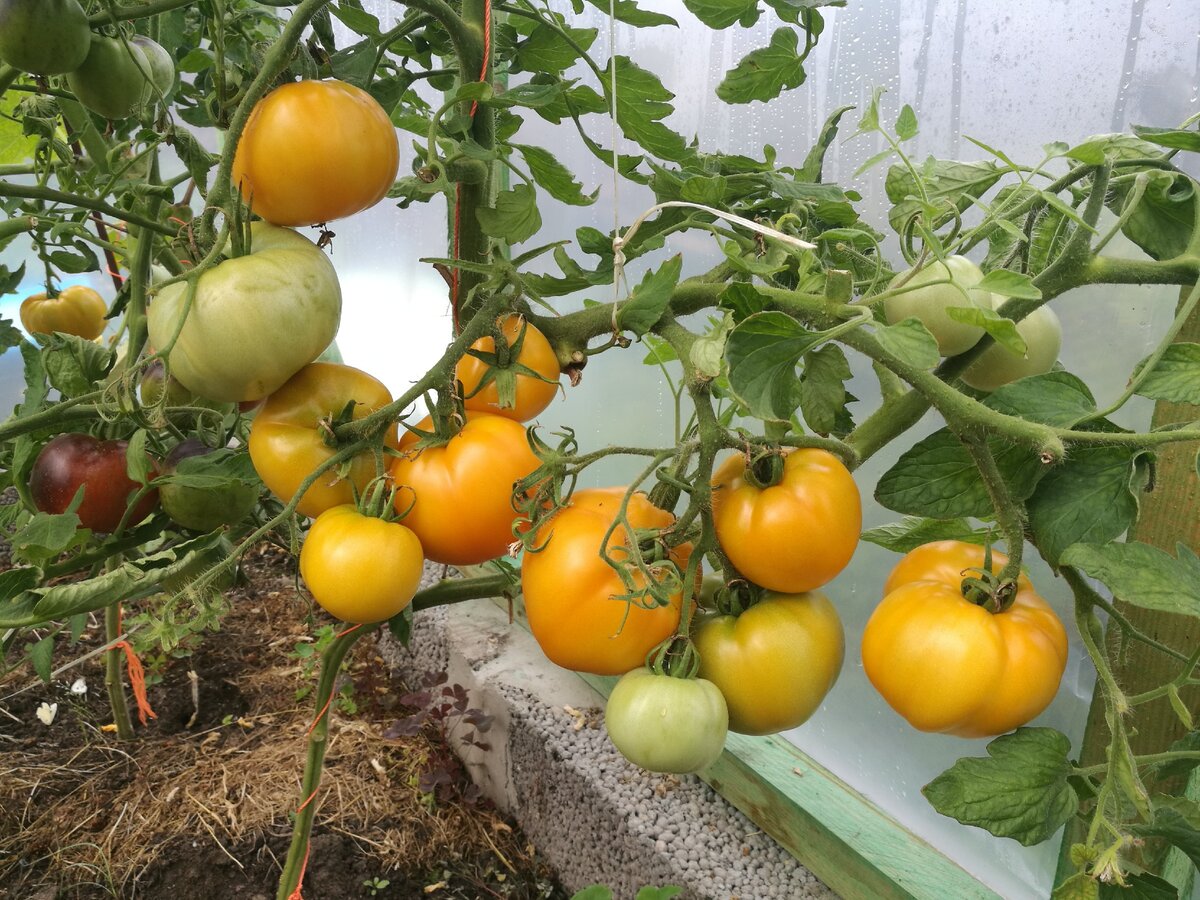
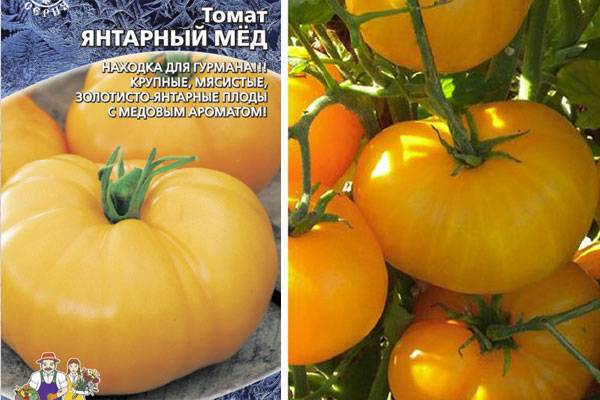
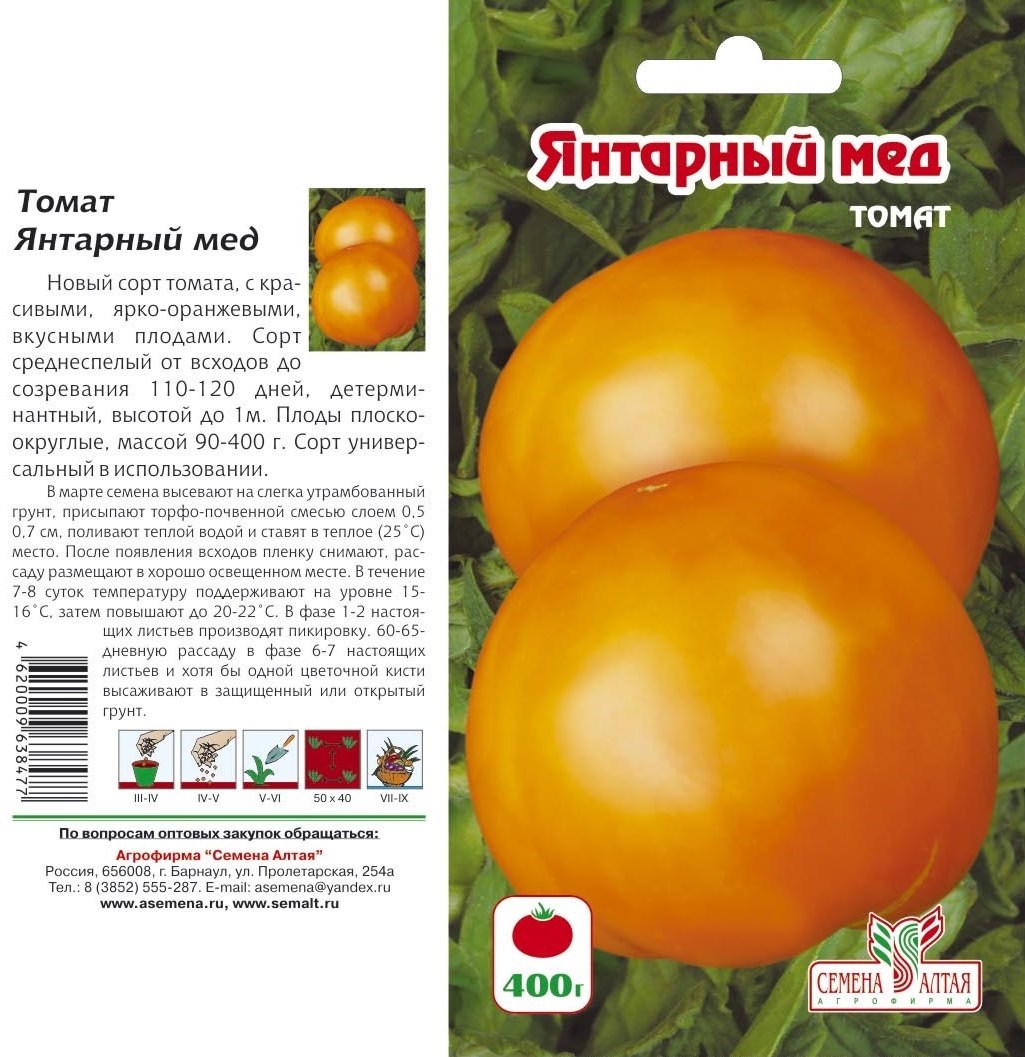
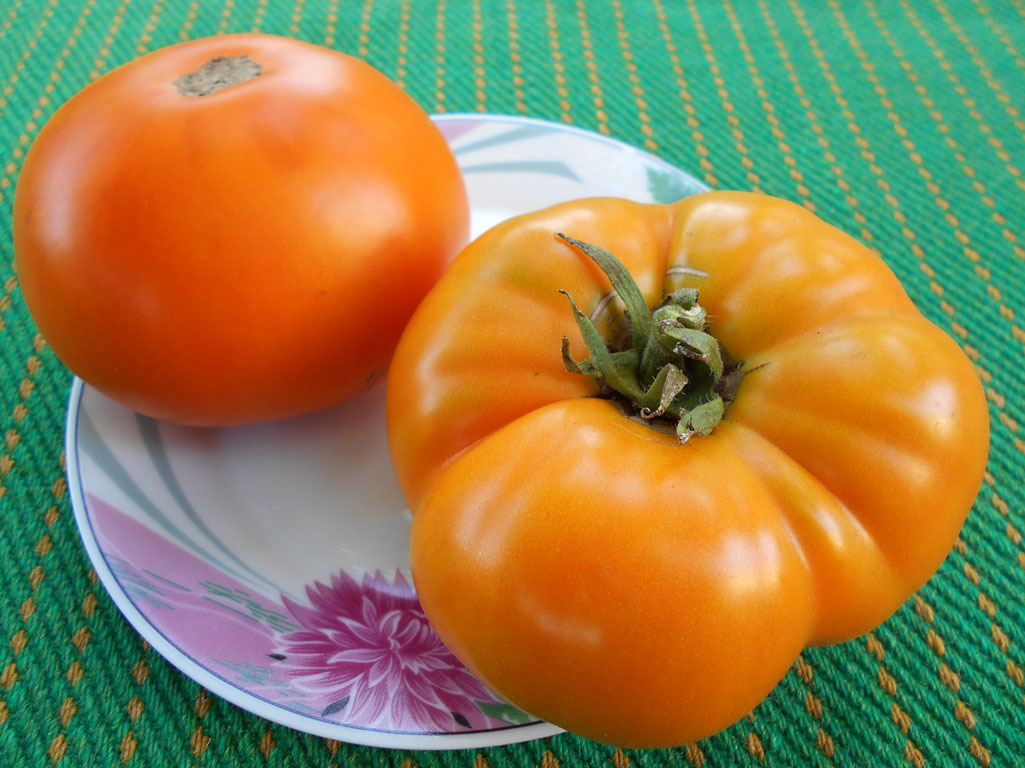
Amber Cherry tomato variety
| Characteristic | Description |
| Description | An indeterminate tomato variety used for growing in greenhouses and film shelters. |
| Ripening period | 105-110 days |
| Fruit weight | 20-25 g |
| Description of the fruit | The fruits are round, bright yellow, and very sweet in flavor. The skin is firm and the flesh is juicy. There are 2-3 pods. |
| Productivity | 7.9-8.5 kg/sq.m |
| Usage | A salad variety, used for fresh eating and suitable for canning. |
| Preferred growing regions | Suitable for all regions. |
| Disease resistance | Resistant to fusarium and tobacco mosaic. |
| Agricultural technology | The bushes grow up to 200 cm and require support. The clusters can be cut before frost sets in, as the tomatoes don't split on the vine. |
| 2015 | |
| Originator | LLC "Gavrish Breeding Firm" |
Photo gallery of tomato varieties Amber cherry
Comparison of 2 tomato varieties Yantarny 530 with other varieties in the table
Please note! How can you easily convert centners/ha to kg/sq.m? Simply divide by 100! For example, the Abakansky Pink tomato yields 400 centners of marketable fruit per hectare. This equals 4 kg per square meter. It's that simple! Also, keep in mind that typically no more than 3-4 plants are planted per square meter. This way, you can calculate the yield per bush. In the case of the Abakansky Pink, it's about 1 kg.
| Variety | Ripening period (number of days from full germination to ripening)
Yield of commercial fruits |
Brief description | Fetus |
| Amber 530 (registry) | 110-125 days 200-270 c/ha |
A late-ripening indeterminate variety for open ground. Requires staking. Suitable for salads and processing into tomato products. | Flat-round, smooth, dense, orange, 83 g (up to 140 g). Good taste. |
| Amber 530 (Zedek) | 90-95 days
700-1100 c/ha |
A determinate variety with an ultra-fast ripening period. Suitable for both open ground and plastic shelters. Suitable for canning, pickling, and fresh eating. | The tomatoes are small, round, and yellow-orange. The flesh is juicy and sweet, containing 3-4 seed chambers. The skin is smooth and even, holds its shape well, and resists cracking. They weigh 45-70 g (up to 90 g). The flavor is good. |
| Altai orange | 110-115 days
up to 1000 c/ha (under film) |
A mid-season indeterminate variety for open ground and greenhouses. Requires staking and shaping. Suitable for salads. | Flat-round, slightly ribbed, medium density, orange, 250-350 g. Good taste. |
| King of Siberia | 110-120 days
900-1115 c/ha |
A mid-season indeterminate variety for greenhouses. Requires shaping and support. Suitable for salads and canning. | Heart-shaped, slightly ribbed, orange, 400-800 g. Good to excellent taste. |
| Heart of Gold | 93-95 days up to 700 c/ha |
An early-ripening, determinate variety for open ground cultivation. Suitable for salads, whole-fruit canning, and processing into tomato products (dietary juices). | Heart-shaped, slightly ribbed, orange, 90-107 g. Good flavor. The fruits contain increased amounts of carotene. |
| Striped ox heart | 110-120 days
700 c/ha |
A semi-determinate, mid-season variety for greenhouses. Requires staking and training. Suitable for fresh consumption, juice, and paste production. Preferred for cultivation in southern Russia. | Heart-shaped, round, pink with yellow-orange stripes. 150-200 g. Sweet, pleasant taste. |
| Gift of the Trans-Volga Region | 103-109 days
308-472 c/ha (Lower Volga region) |
A mid-early determinate variety for open ground and greenhouses. Suitable for salads. | Round, smooth, orange-red, 75-102 g. The taste is good to excellent. |
| Honey Giant | 110-115 days
750-800 c/ha (greenhouse and under film) |
An early-ripening indeterminate variety for open ground and greenhouses. Requires staking and shaping. Suitable for salads. | Flat-round, ribbed, medium density, orange, 250-300 g. Good taste. |
| Mikado Yellow (Gold) | 110-120 days
600-800 c/ha |
A mid-early standard indeterminate variety for greenhouses. Suitable for salads and juice. | Round, flattened, slightly ribbed, yellow, 500 g. Good taste. |
| Mikado Orange | 85-100 days
600-700 c/ha |
An early indeterminate variety. Outdoor cultivation is acceptable in warmer regions. In central Russia, greenhouse planting is recommended. Suitable for salads. | Round, ribbed, orange, up to 300 g. Excellent taste. |
| Orange Farmer | 85-90 days
940-1000 c/ha |
An early-ripening determinate variety for greenhouses. Suitable for salads. | Round, dense, slightly ribbed, cocktail, orange, 45 g. Good taste. |
| Orange giant | 110-115 days
630-660 c/ha |
A mid-season indeterminate variety for open ground. Requires staking and shaping. Suitable for salads. | Flat-round to round, strongly ribbed, orange, 350 g. Excellent taste. |
| Orange Heart | 125-135 days
620 c/ha |
A mid-season indeterminate variety for open ground and greenhouses. Requires staking and training. Suitable for salads. Long-lasting flavor and shelf life. | Heart-shaped, slightly ribbed, medium density, orange, 120-125 g. Excellent taste. |
| Orange Fountain | 100-105 days
500-550 c/ha (greenhouse and under film) |
An early-ripening indeterminate variety for greenhouses. Suitable for salads. | Cylindrical, medium density, slightly ribbed, orange, 11-18 g. Good taste. |
| Abakan pink | 120 days or more
400 c/ha |
A late-ripening determinate variety for open ground and greenhouses. Requires staking and training. Suitable for salads and processing into tomato products. | Flat-round, slightly ribbed, medium density and pink in color, 200-500 g. Good taste. |
| Sweet cherry | 75-83 days
900-1200 c/ha |
An ultra-early indeterminate variety for greenhouses. Suitable for salads, first and second courses, and canning. | Spherical, smooth, red, yellow or orange, 20-30 g. Excellent taste. |
| Treasure of the Incas | 95 days
Up to 1400 c/ha in open ground, 1800-2000 c/ha in protected ground. |
An early-ripening indeterminate variety for greenhouses and open ground. Requires staking and training into 1-2 stems in a greenhouse, and 3 in the open ground. A versatile variety, suitable for salads, processing into tomato products, and canning. | Conical, large, fleshy, yellow-orange with a raspberry star on top, 250 g. High sugar content. |
| King of the Giants | 120 days
800-1400 c/ha depending on the region |
A mid-late indeterminate variety for open ground and greenhouses. Suitable for salads, appetizers, and processing into tomato products. | Flat-round, slightly ribbed near the stem, red, rarely yellow and pink, 400 g (up to 800 g). Good to excellent flavor. |
Gardener reviews of the Yantarny 530 tomato variety
Gardeners love the Yantarny 530 tomato for its distinct flavor. However, despite its resistance to other diseases, some note that it is susceptible to late blight.
In this review, I would like to describe the advantages and disadvantages that I noticed when growing the tomato "Amber 530".
So, let's start with the seeds. There were a large number of them in the packet. After planting half of them, we waited for the sprouts to emerge. There was no need to worry, as the first shoots appeared very quickly and uniformly.
By the way, I planted two early maturing varieties at the same time, and this one turned out to be the clear favorite in terms of germination and growth.
The manufacturer states that this tomato is suitable for growing without seedlings. Although I haven't tried it, I'm sure it is. Because the variety really does ripen early. I planted it quite late, and my friends shrugged their shoulders, doubting they'd be able to harvest it.
But the plant turned out to be very easy-to-care-for. The seedlings tolerated transplantation to their permanent location perfectly and quickly caught up with their counterparts, planted much earlier. Soon, yellow-orange balls appeared on the bushes. And this was with minimal care. It was literally plant and forget.However, this variety also has its drawbacks.
The first, and most annoying for me, is that tomatoes are prone to cracking. Perhaps the weather is to blame. But you can't stop rain. So, we have what we have.
The tomato cracks before it reaches full ripeness. This affects the taste of the vegetable. Instead of the promised sweetness, a slight bitterness is noticeable.
And finally, the tomato size seemed a bit small. Mine clearly don't reach the 90 grams listed in parentheses.
Despite the minor drawbacks, I'll continue to plant this variety. Besides, I still have some seeds left.
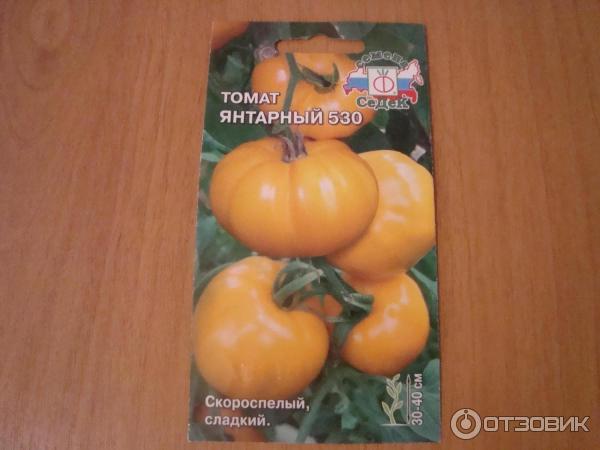
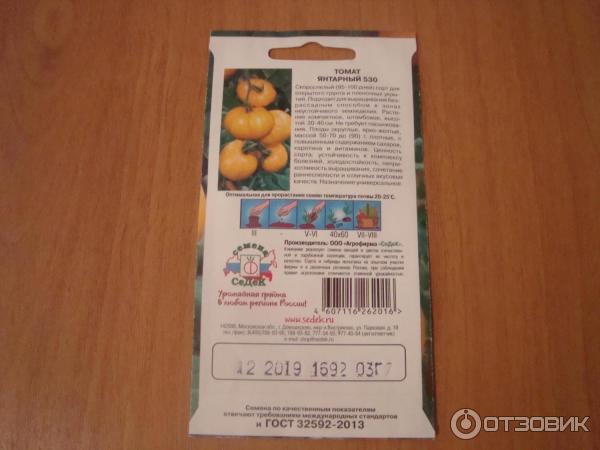
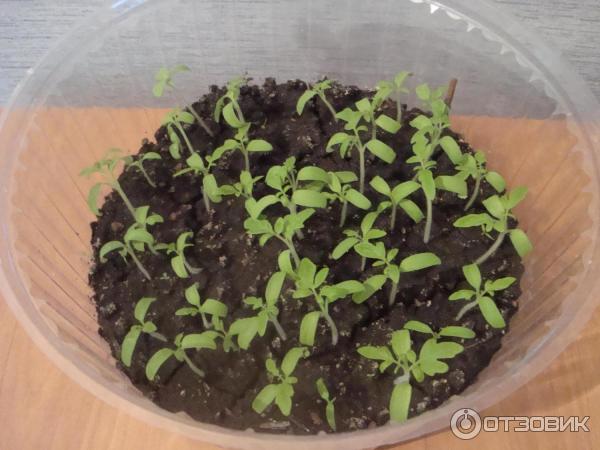
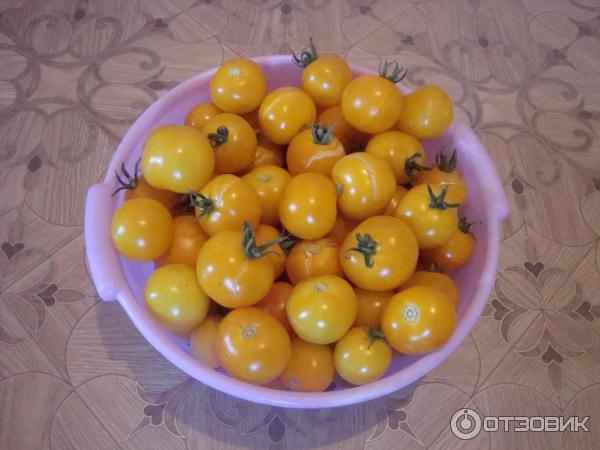
Hello, dear readers. I'm continuing my discussion of tomato seeds. Today I'd like to tell you about the "Yantarny 530" tomato seeds. I've been planting these tomatoes in my garden every season for over seven years now; I can't imagine my garden without them. I buy these seeds at specialty stores.
Seed germination is always excellent. The tomatoes are not very tall, don't require staking or pinching, are easy to care for, are disease-resistant, and produce a high yield. The fruits are small, smooth, round, shiny, and don't crack easily. They are very sweet and ripen first among all my tomatoes. They are excellent both fresh and for canning. I recommend them to anyone who enjoys early, small tomatoes, especially those that are very sweet.
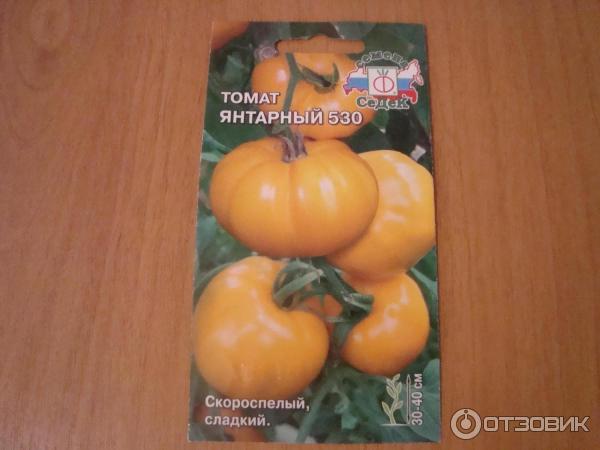
In my review of the "Boni MM" tomato, I wrote that we don't have a greenhouse, so the tomatoes grow in the open ground without any cover. Summers in the Tver region are usually quite mild, but you have to choose tomato varieties that are easy to grow. Yantarny turned out to be an excellent variety—easy to grow, produces fruit even in cold summers, the fruits are small, ripen quickly, and are disease-resistant (though here, tomatoes never get sick, for some reason). It's short and doesn't require pinching. Plus, the yellow clusters look beautiful on the branches. The fruits are sweet and delicious. They can be pickled and salted, but I prefer them in salads. I grow them every year.
This tomato variety is one of my favorites, and I plant it every year without fail. Its advantages include early maturity—85-100 days—its small bush (40-50 centimeters) and the fact that it doesn't require pinching. It produces abundant, very sweet fruits, yet at the same time, the fruits are firm and suitable for canning. They look very beautiful in a jar next to their red counterparts. I bought the seeds at a seed store for 8 rubles a few years ago, and now I have my own seeds; it's not a hybrid variety. It's a wonderful variety for beginner gardeners, and it's also suitable for experienced gardeners.
I'll add my two cents.
I don't remember the manufacturer now, I'll write later, but:Tomato Amber 530. Simply awful.
Raised in the open ground (childhood). Matches the description. But.
Okay, there are a lot of fruits (medium-sized, translucent).
Well, first of all, out of all the plants in a bed with several varieties, all two bushes, despite being sprayed with HOM, caught late blight—not just the leaves, but the fruit. All at once!
And besides, any push made the tomatoes fall off.
To top it all off, the tomatoes were a bit sour.In the end, I threw everything out.
No other variety has ever tormented me like this this year...
:(
I read and am amazed :ogo:
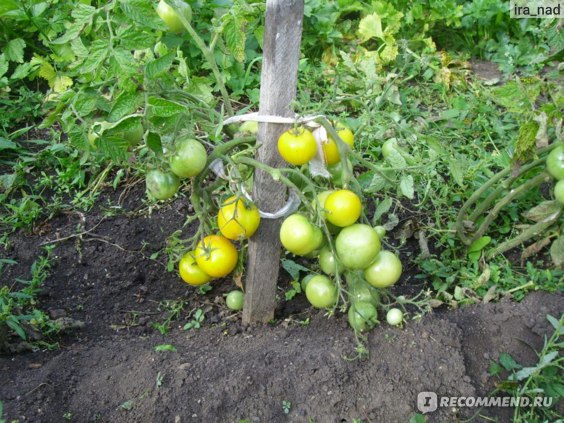
I have the complete opposite! I have lots of tomatoes, early, tasty, and juicy. They keep for a long time and are great for canning.
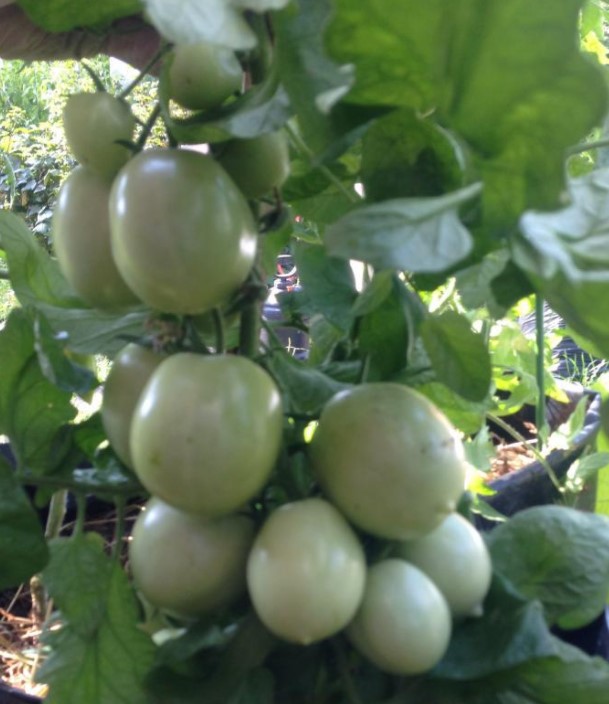
This is one brush
And this is one bush
The variety is probably sensitive to the sun (mine grew in full sun)


I know small tomatoes don't get many fans. But I'm one of them. I love easy-to-grow bushes with tasty, juicy tomatoes. I've been growing Yantarny for four years now. For two years, it was just a yellow, juicy, tasty tomato. Very early. And last year, it gave me such a pink side. The bush is standard and doesn't need side shoots. But as I already mentioned, I side shoot everything before the first cluster.
My Yantarny looked like this in 2010:
Grew in a greenhouse, yielded 3.5 kg per bush, maximum fruit weight 180! g.
In subsequent years, it was grown in open ground in buckets, yield 1.5 kg/bush, maximum fruit weight 106 g.This has always been my earliest variety. The flavor is a B-, very good for an early variety. The clusters are after each leaf, so I don't pinch off any side shoots.
One day, a stepson from underground, that is, after one of the first leaves, transplanted into a bucket, yielded 1.5 kg.
I really like this variety. Juicy, sweet, and abundant. I love it for canning, both alone and especially mixed with appropriately sized reds. The bush is compact.
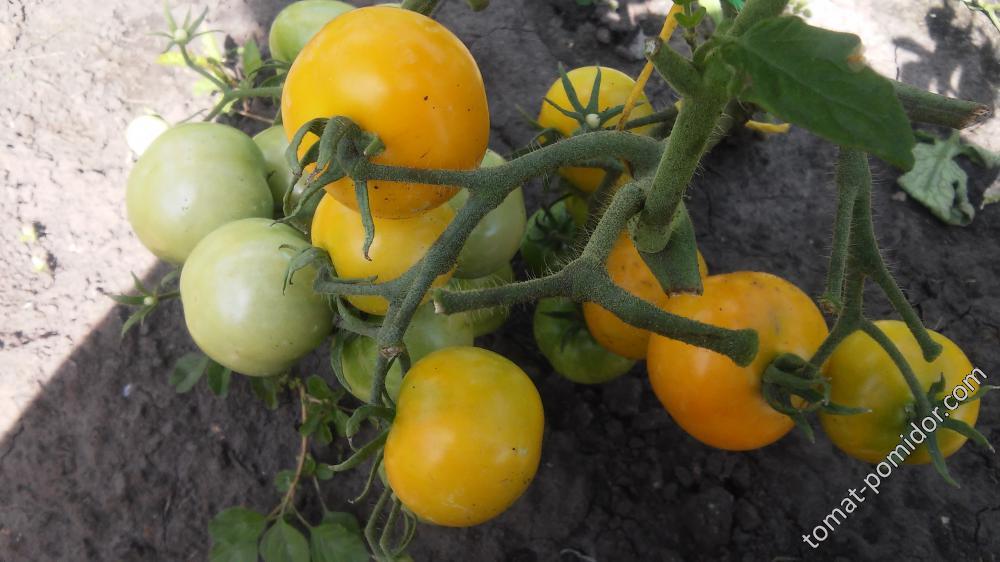
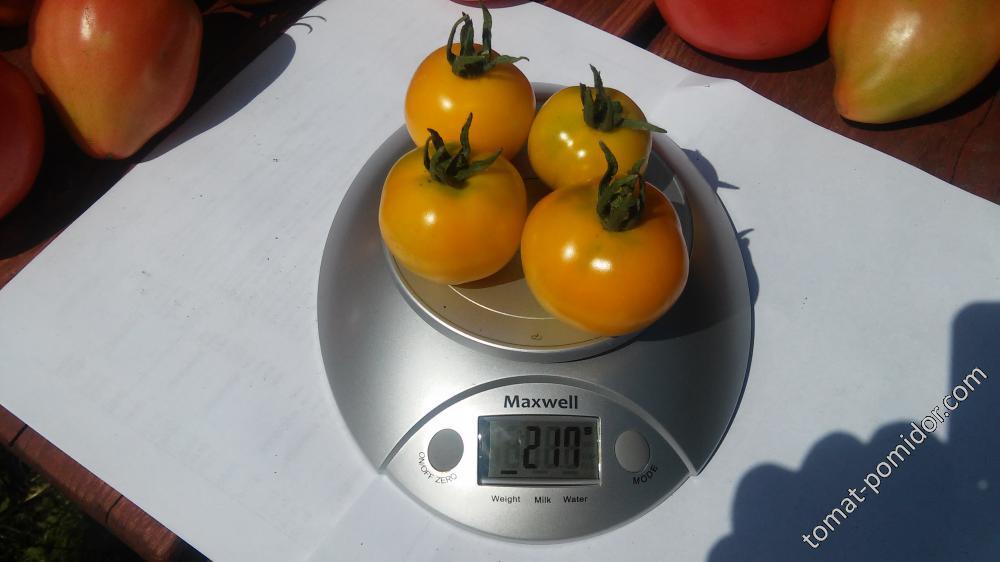
My Yantarny is in the main picture. My grandchildren voted it the most delicious of the first ones, but I personally had other favorites.