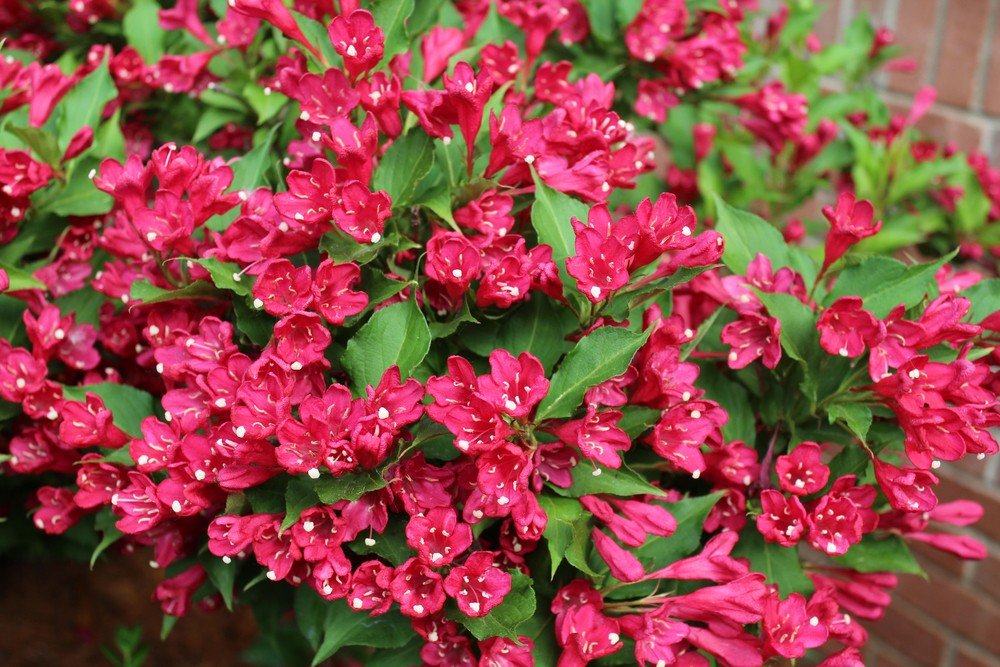
Weigela is a perennial deciduous shrub closely related to honeysuckle. These plants are very similar in appearance. It belongs to the Caprifoliaceae family. Weigela received its name from the German botanist Christian Ehrenfried von Weigel, who studied the variety.
In the wild, weigela can be seen in eastern and southeastern Asia, and is found on the island of Java and even in the Far East.
While 15 species of Weigela have been discovered in the wild, only seven have been successfully cultivated. Despite its highly decorative qualities and profuse flowering, the shrub is relatively low-maintenance. Excellent frost resistance has been achieved, allowing Weigela to thrive even in harsh Russian winters.
Content
- 1 Botanical description of the weigela shrub
- 2 Features of Weigela flowering
- 3 Winter-hardy weigela varieties for the Moscow region and beyond
- 3.1 Weigela florida + 19 varieties with photos and descriptions
- 3.2 Hybrid Weigela (Weigela hybrida) + 3 varieties with photos and descriptions
- 3.3 Early Weigela (Weigela praecox) + 3 photos
- 3.4 Weigela suavis + 3 photos
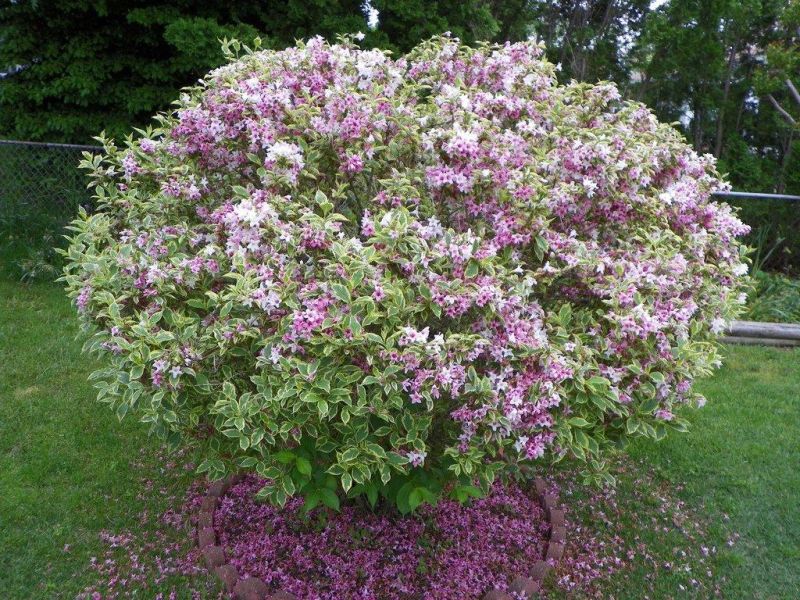
- 3.5 Variegated Weigela (Weigela variegata) + 3 photos
- 3.6 Weigela middendorffiana + 3 photos
- 3.7 New winter-hardy weigela varieties for central Russia
- 4 Planting Weigela in Spring Step by Step
- 5 Caring for Weigela
- 6 How to propagate Weigela
- 7 Diseases and pests of Weigela
- 8 Top.tomathouse.com warns: problems with growing weigela and their solutions
- 9 Weigela in landscape design + 18 photos
Botanical description of the weigela shrub
Weigela is a deciduous shrub. Its shoots are erect, ranging from 50 to 200 cm in height, though some varieties reach up to 3 meters. It does not form stolons during growth. The leaves grow opposite each other. The shape is slightly elongated, elliptical, and the edges are slightly serrated. The petiole is small.
Depending on the species and growing conditions, flowers can be solitary or clustered in inflorescences of 2-6 buds. Colors vary: white, pink, red, purple. Pedicels are moderately developed. Sometimes, the sepals fuse into a single peduncle. The flower itself is slightly elongated and has five petals. It is very similar in appearance to a bell. There are also five stamens, smaller than the corolla.
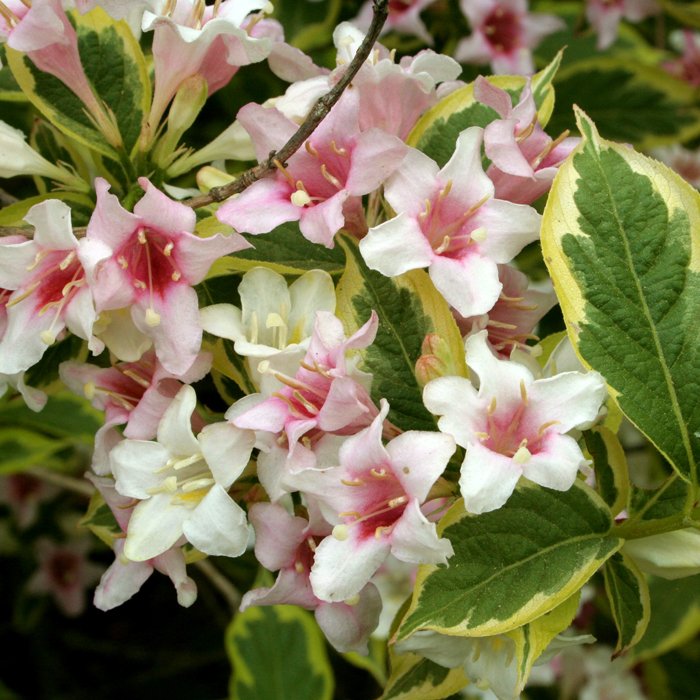
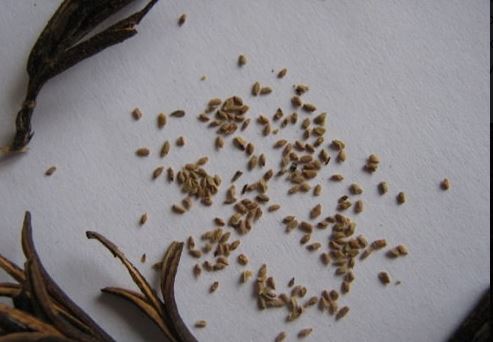
After flowering, a hard capsule, cylindrical or oval in shape, forms on the bushes. Inside, small, angular seeds with winged parts ripen.
Features of Weigela flowering
Weigela is loved by gardeners not only for its compact size and decorative qualities, but also for the opportunity to enjoy its flowering twice a season.
The first blooming period occurs in late spring and early summer. Under favorable conditions, flowering resumes in early September. However, the number of inflorescences is not as large as in summer. The buds that appear on the bushes are initially very pale. But as they unfold, the flowers begin to infuse with color, eventually becoming vibrant.
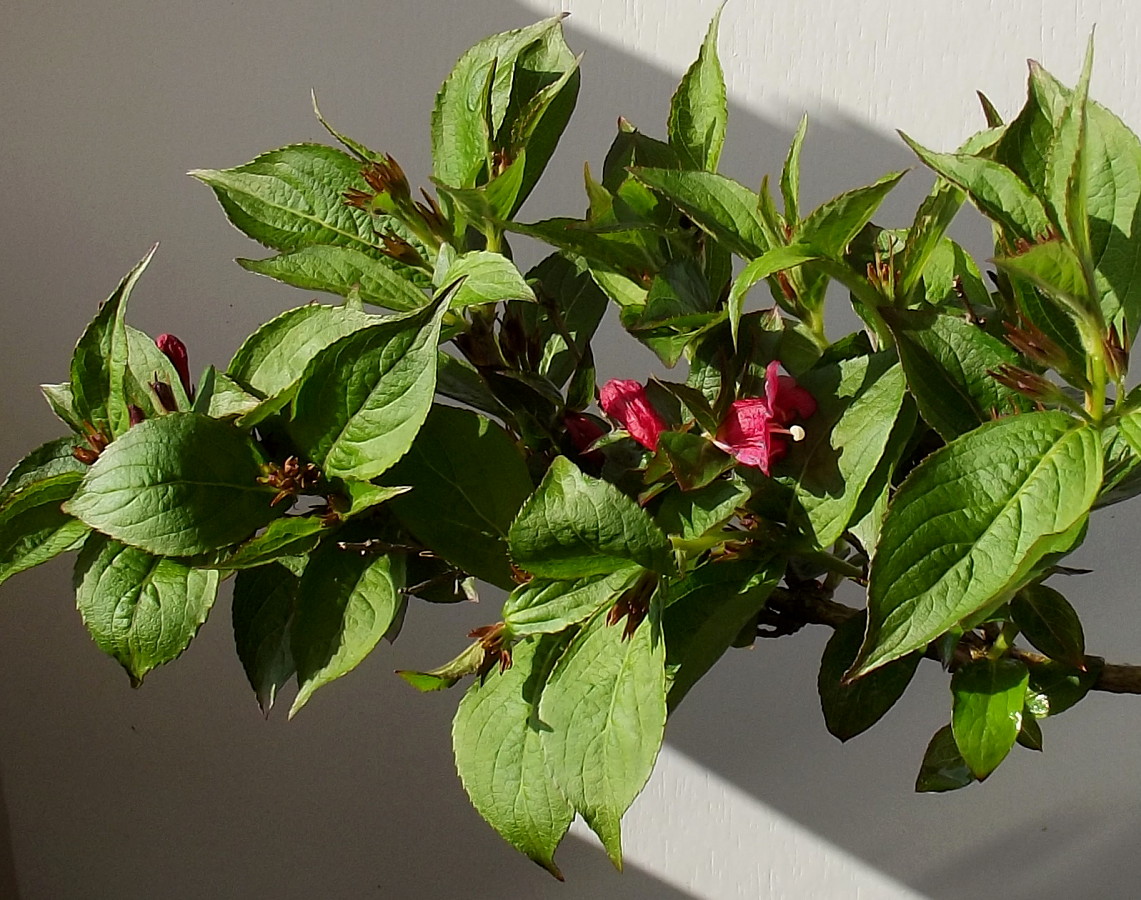
The aroma is weak and unlikely to be detected in a garden, but it is quite sufficient for pollinating insects.
Currently, there is a wide range of Weigela colors to choose from: you can choose a bush with pink, white, yellow, red, cream, and even speckled flowers.
Winter-hardy weigela varieties for the Moscow region and beyond
Thanks to the efforts of breeders, weigela varieties have been developed that overwinter well in the central part of our country. Below, we'll look at the species and varieties suitable for cultivation in the Moscow region and other areas.
Please note that the following varieties of Weigela florida are excellent for Siberia and the Urals: Alba, Nana Purpurea, and Nana Variegata.
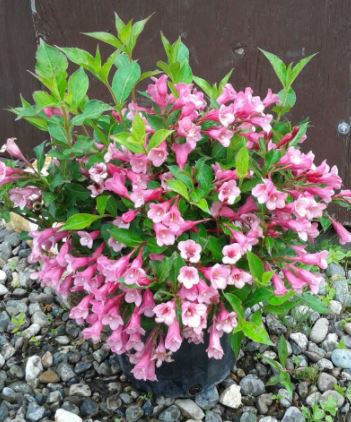
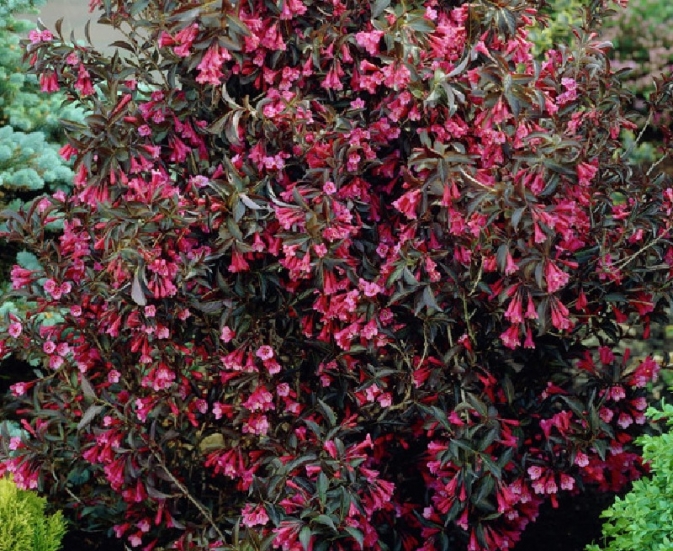
Weigela florida + 19 varieties with photos and descriptions
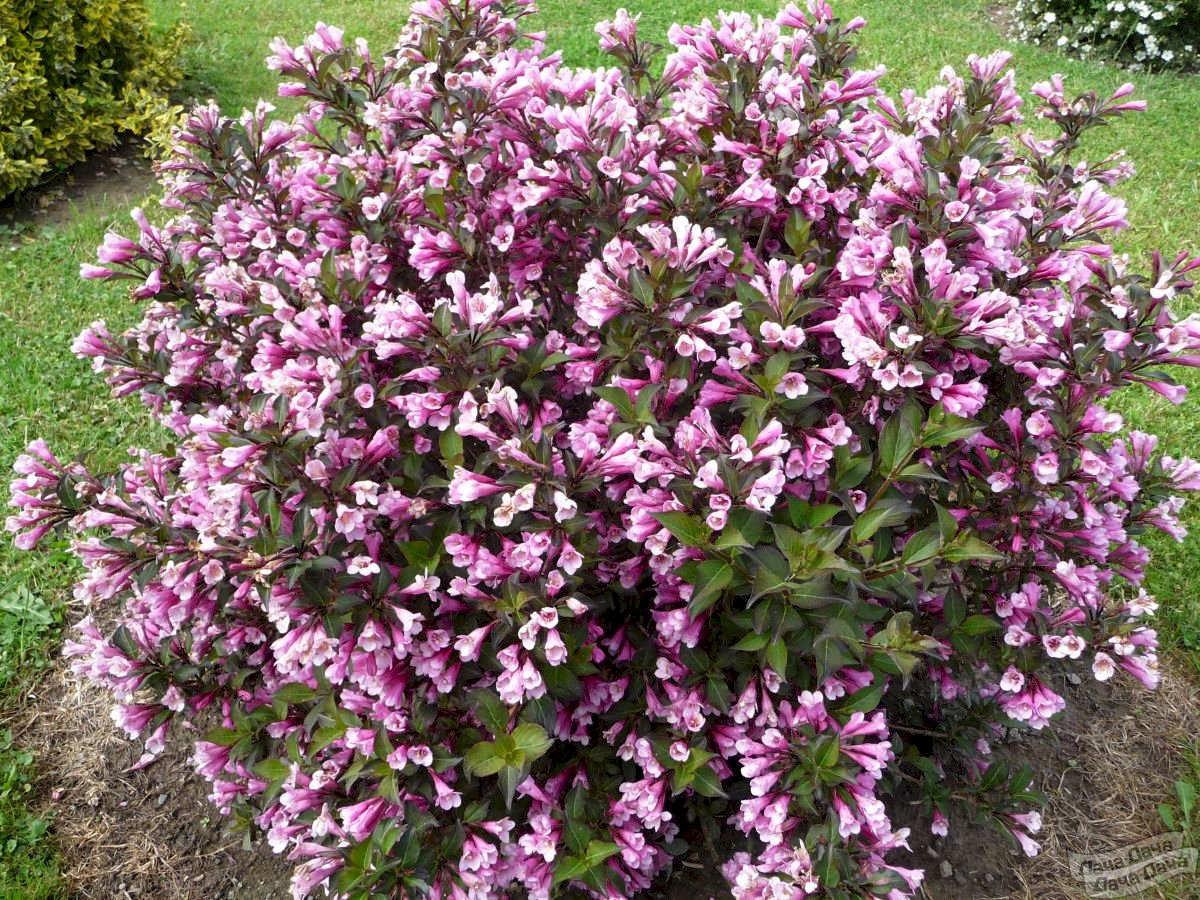
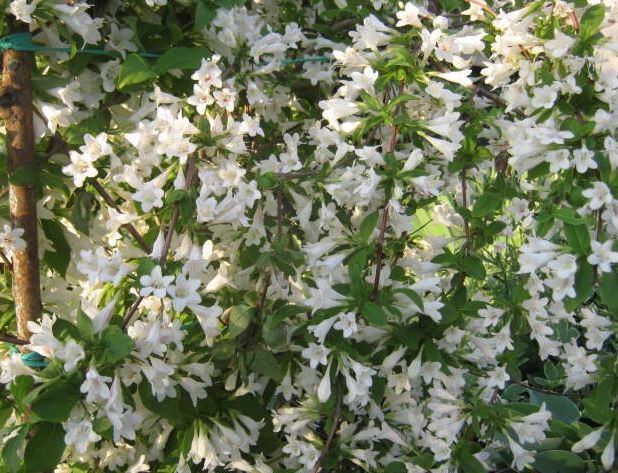
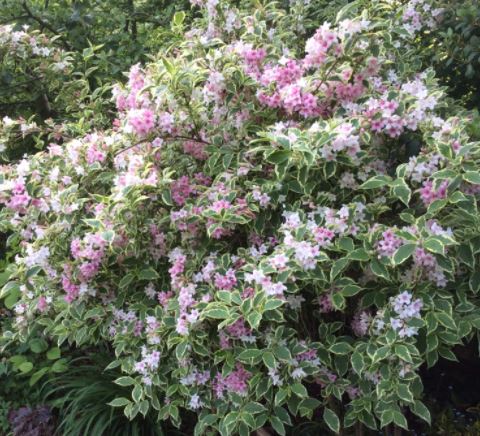
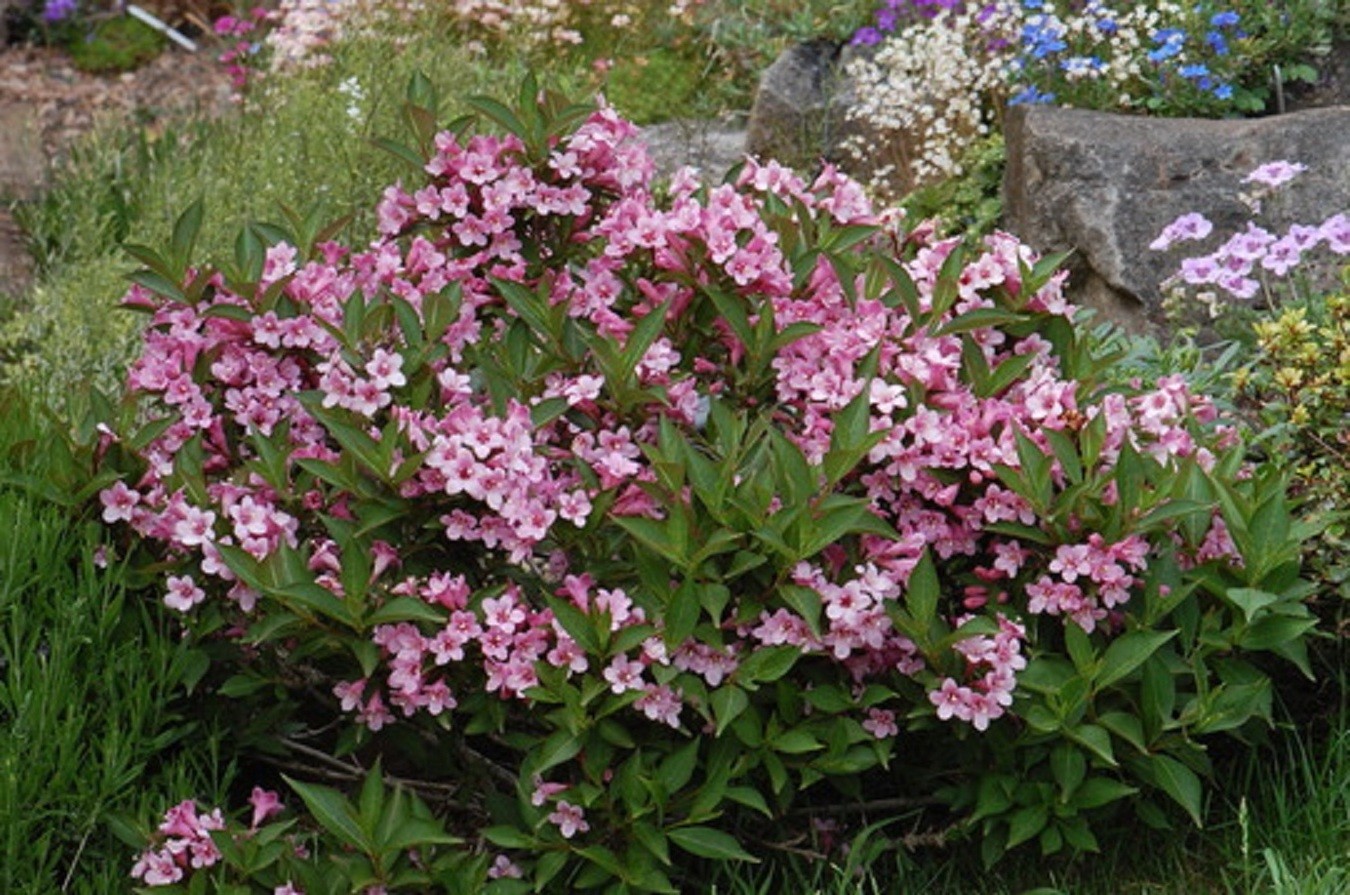
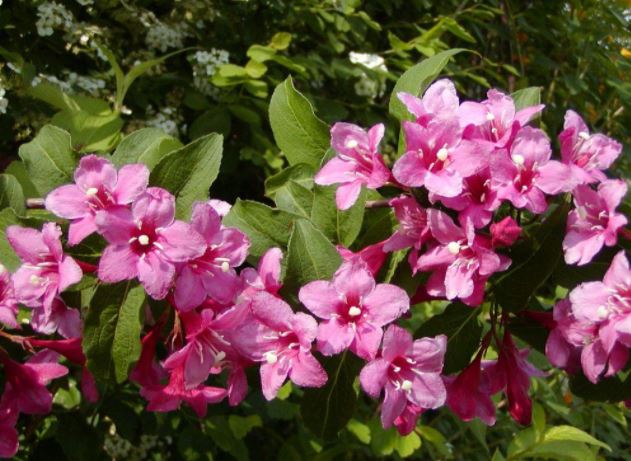
It grows up to 3 meters. The shoots are covered in two rows of fine hairs, and the leaf blade is pubescent along the midrib. Flowering begins in late May and lasts no more than three weeks. During this time, the bush is covered in pink flowers, gathered in inflorescences of 3-4.
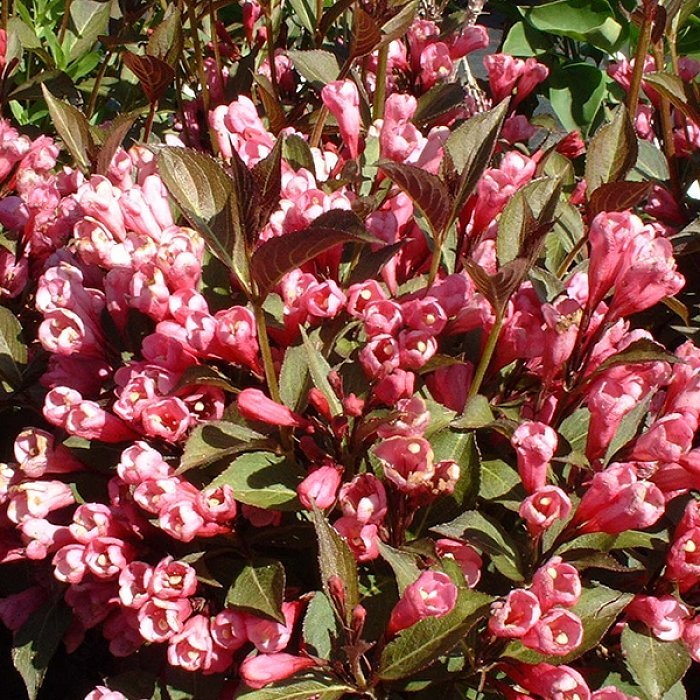
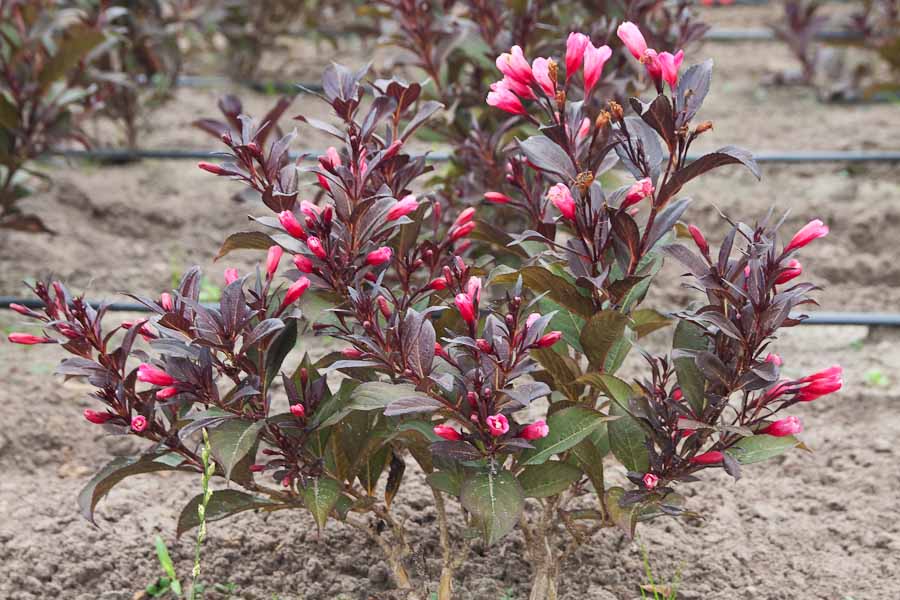
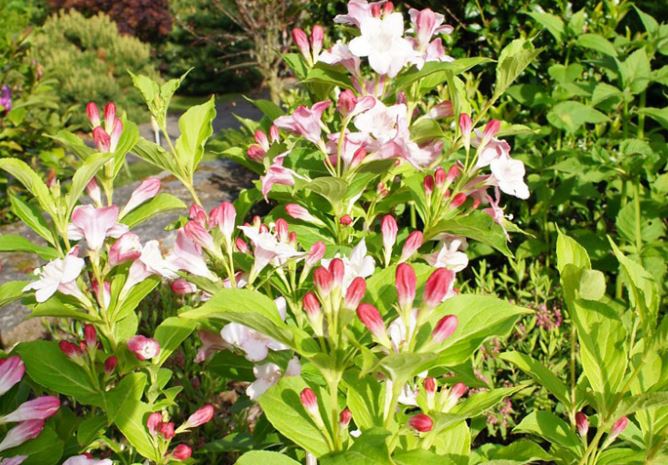
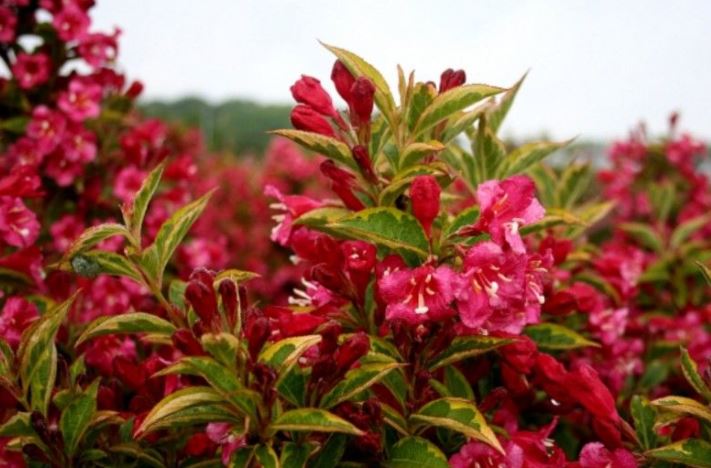
This species is represented by several varieties, let's look at them in the table:
| Variety | Characteristic |
| Rosea
|
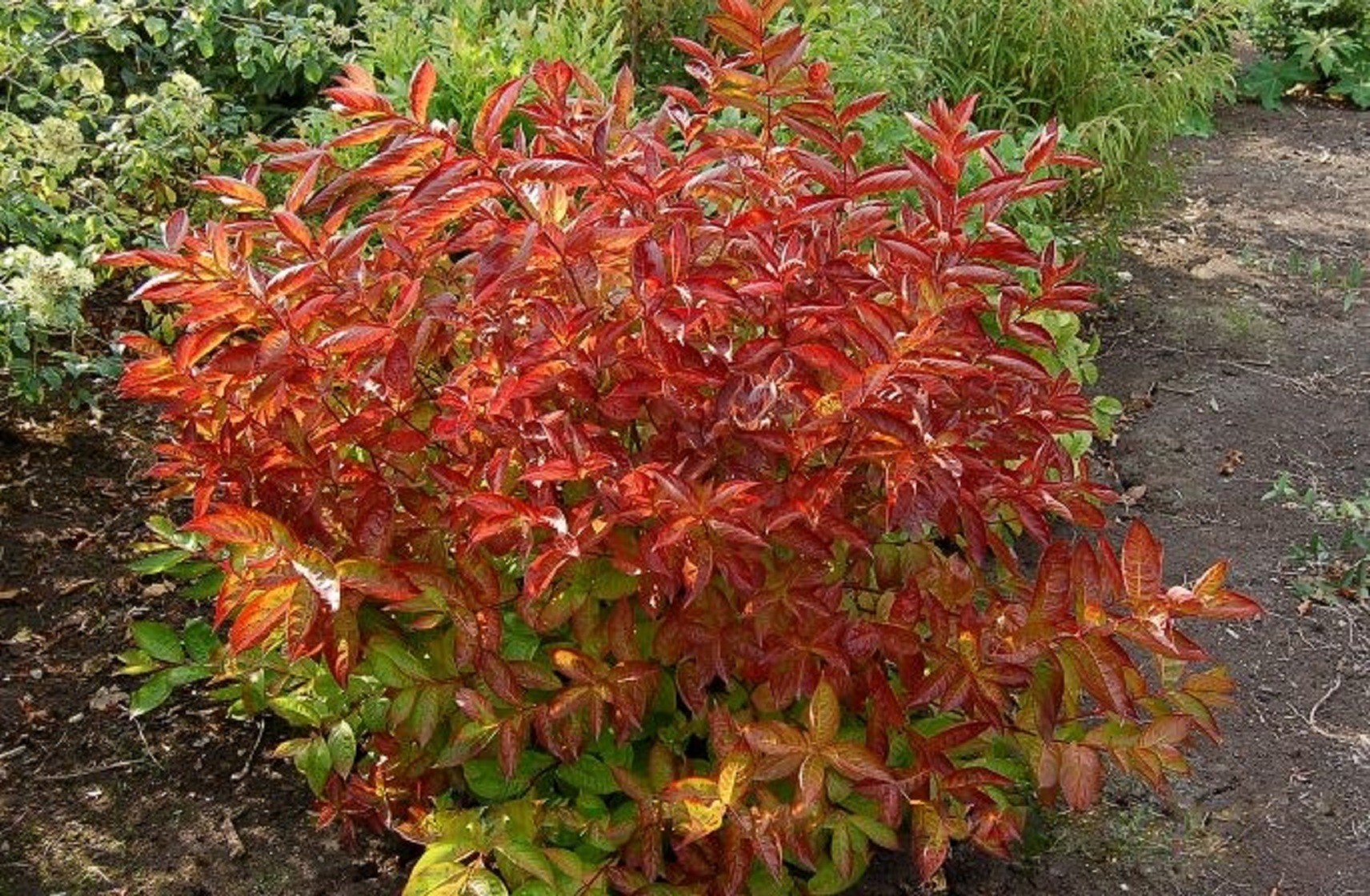
A large bush up to 2 m tall and 2.5 m wide. Large, pink flowers with a spike-shaped limb, lightly variegated with white. Light green leaves turn red in autumn. Blooms in June. This variety is distinguished by excellent winter hardiness. |
| Candida
|
The bush grows to 2-2.5 m. The flowers are large, white, and gathered in loose panicles. The leaves are light green. |
| Purple, red or Nana Purpurea
|
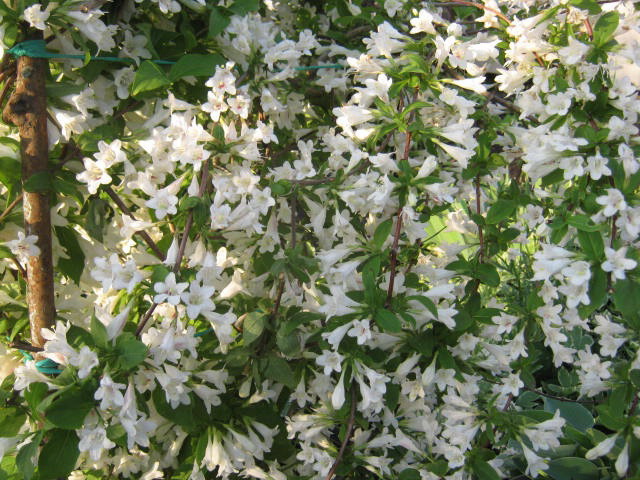
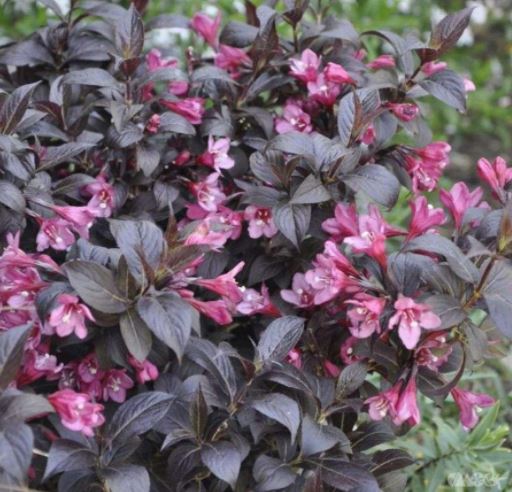
The shrub grows to 1.5 m tall and has a lush crown. Flowering begins no earlier than mid-June and continues until July. The flowers are a rich, dark pink, and the leaves have a reddish tint. It's perfect for a small garden. |
| Alba
|
A low-growing shrub about 50 cm tall. It blooms with white flowers that turn pink as they fade. |
| Nana Variegata
|
Considered the most frost-resistant weigela, it grows up to 1.5 m tall. The leaves are small, green, and edged in cream. The flowers are very beautiful, bell-shaped, white and pink. It blooms in June and July. |
| Pink Poppet
|
A dwarf shrub with a spherical crown. Height 0.8 m. Leaves are oblong, pointed, and serrated, a pleasant green color. Flowers are a delicate pink. |
| Pink (Bunge)
|
This variety features large, bell-shaped pink flowers (4 cm in diameter). The bush grows 1.5 m tall, with a spreading, lush crown. |
| Victoria
|
The height of the bush does not exceed 1 meter, the leaf blades have a brown-red hue, and the flowers are purple-red, light pink inside. |
| Alexandra
|
The bush grows up to 2 m. The leaves have a unique purple color, and the flowers are deep pink. |
| Marjorie
|
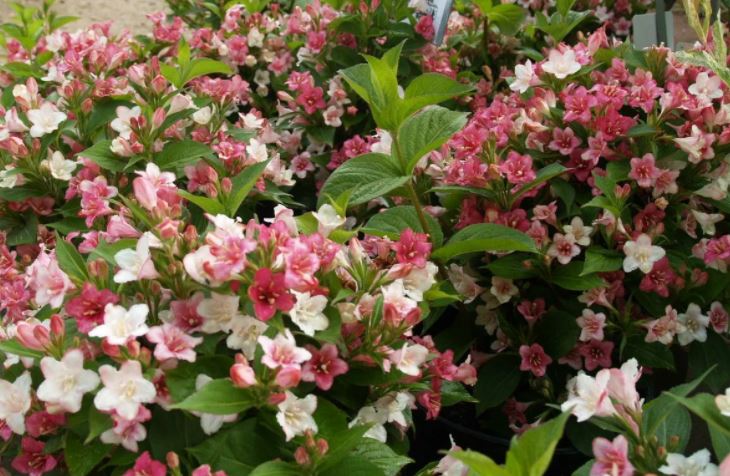
Height: 1.2 m. This variety is distinguished by the fact that a single inflorescence can contain white, pink, and purple flowers simultaneously. The flowers are 2-6 cm in diameter. It blooms in May-June. The leaves are green and teardrop-shaped. |
| Briguela or Brighella
|
The bush grows up to 2.5 meters, with slightly drooping shoots. The leaves are light green with yellowish veins. The flowers are ruby red. |
| Ebony and Ivory
|
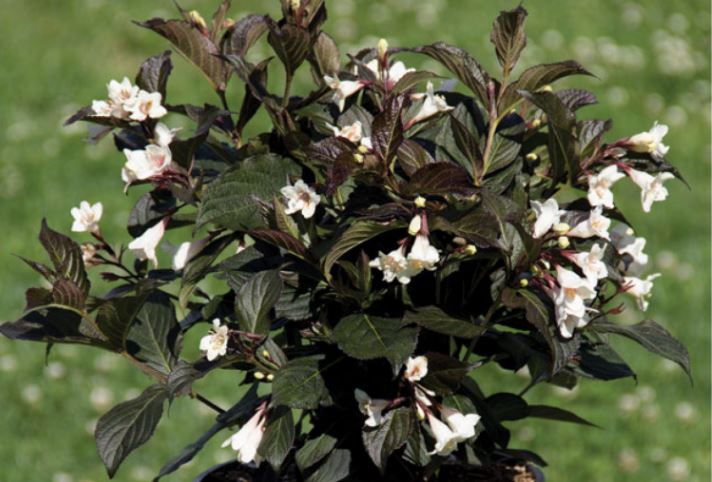
An ornamental shrub, no more than 0.9 m tall and 0.9-1.2 m wide. The leaves are a deep purple, appearing black from a distance. They are especially strikingly offset by the snow-white flowers that appear in early summer. Frost-hardy to -29°C. |
| Black and White or Black and White (Black and White)
|
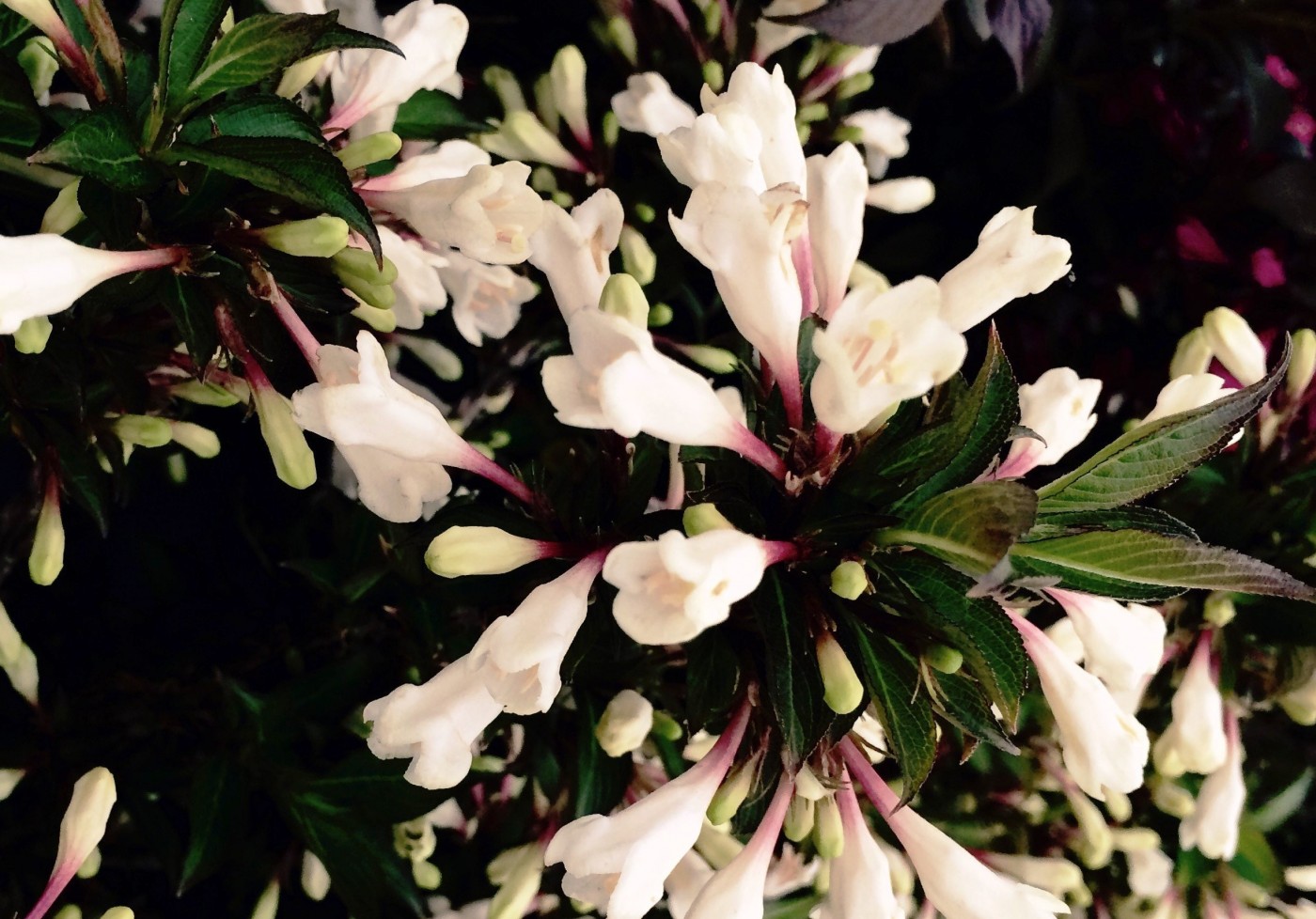
A dwarf shrub with a rounded crown, 0.3-0.4 m tall and 0.6-0.8 m wide. The flowers are white with a carmine-red throat, bell-shaped, and numerous. This variety blooms in June. The leaves are initially dark green, gradually turning plum-purple, contrasting beautifully with the flowers. |
| Carnival
|
The plant grows up to 0.7 m tall. Flowers are white, pink, and red (on the same bush). Flowering occurs in June-July. |
| Naomi Campbell
|
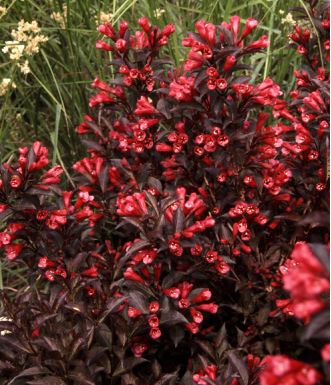
A compact shrub with a dense crown up to 0.9 m high. The flowers are purple-red, the leaves are dark purple-bronze. |
| Pink Princess
|
The cultivar grows to 1.5 m tall with a spreading crown. Flowers are a pleasant light pink. It blooms in May and June, sometimes reblooming in August. |
| Ruby Queen
|
Height up to 0.8 m. The crown is very dense and branched. The leaves are reddish or copper-colored in early summer, gradually turning brownish-red, but without a purple tint. In hot weather, they partially turn dark olive-green, but new leaves at the tops of the shoots still grow brownish-red. In autumn, they turn bronze shades. Bell-shaped flowers appear in June. They are dark pink, becoming darker as they fade. |
| Wings of Fire
|
The height typically does not exceed 0.9 m, but by the age of 10, it can reach 1.2 m. The leaves are green-brown with a reddish or copper tint in spring, turning light green in summer, and then returning to purple-red hues in July. The flowers are pinkish-lilac. Flowering occurs in June-July. |
| Elvira or Elvera
|
The shrub grows up to 0.9 m tall. The crown is dense and compact. The leaves are dark purple. The flowers are pink. Flowering begins in June, but may recur in August or September. |
Hybrid Weigela (Weigela hybrida) + 3 varieties with photos and descriptions
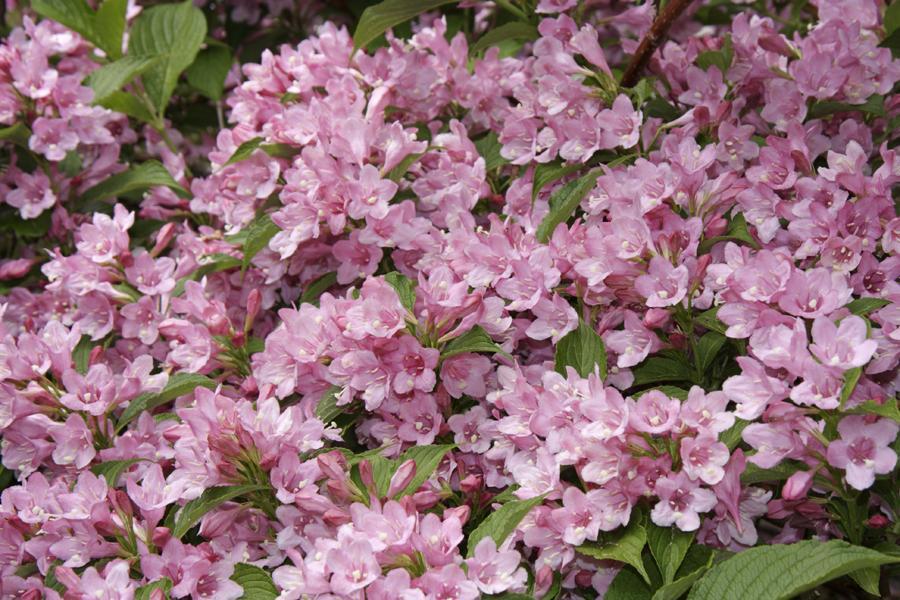
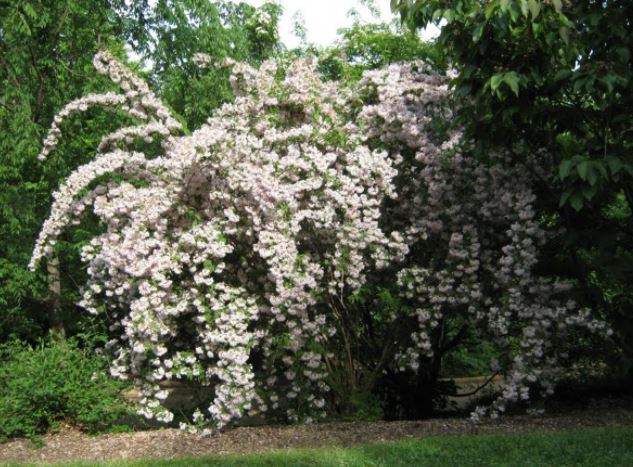
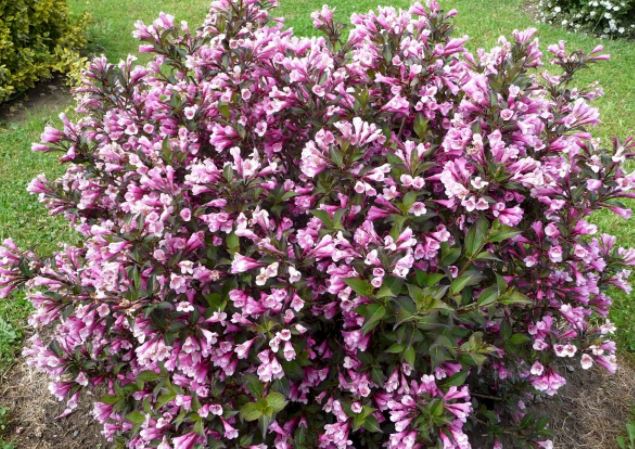
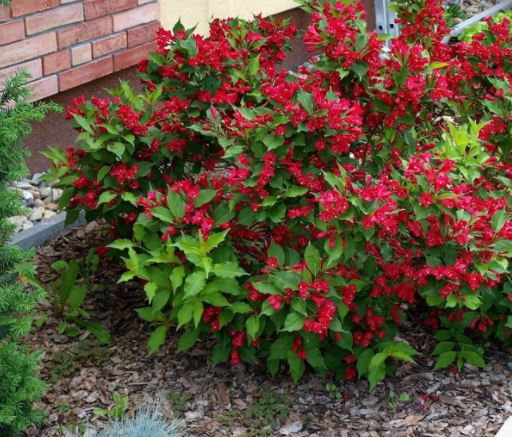
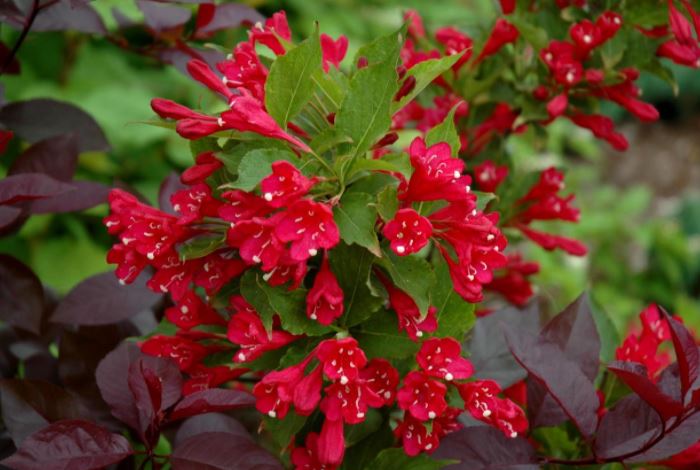
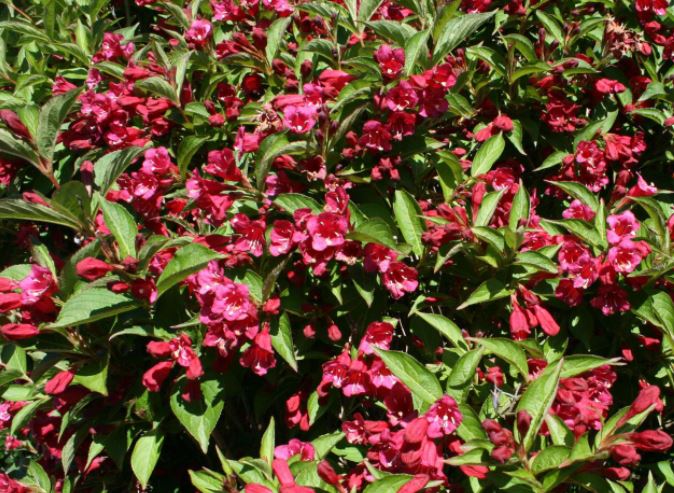
It grows up to 1.5 meters in height. The crown is spreading. Blooms are abundant and lush, with petal color varying depending on the variety. The following varieties are considered hybrid weigela, and we'll also discuss them in the table:
| Variety | Characteristic |
| Bristol Ruby (Bristol Ruby)
|
This variety was developed in the USA. It is a tall shrub that grows up to 2-3 meters. The crown is very lush. The leaves are bright green. Flowering begins in May or June; the petals are red with ruby edges, and buds with orange centers are sometimes present. The inflorescences cover the shoots abundantly. This variety can be used as a hedge, a centerpiece in a flowerbed, or a vibrant backdrop. Even with the arrival of autumn, the shrub retains its beautiful green foliage for a long time. |
| Red or Red Prince (Red Prince)
|
Another American variety. It grows up to 1.5 meters tall, with slightly drooping shoots and a lush crown, producing bright red flowers. The leaves are green and attractive. This variety can bloom twice a season (in May and August). The leaves do not fall until late autumn. It can withstand temperatures down to -20°C. |
| Eva Rathke
|
A hybrid between Weigela coraeensis and Weigela floribunda. The bush is compact, up to 1.5 m tall, with a spreading crown (up to 3 m in diameter). The leaves are light green. The bell-shaped flowers are 4 cm in diameter, blood-red on the outside and lighter inside. Blooms from June to August. |
Early Weigela (Weigela praecox) + 3 photos
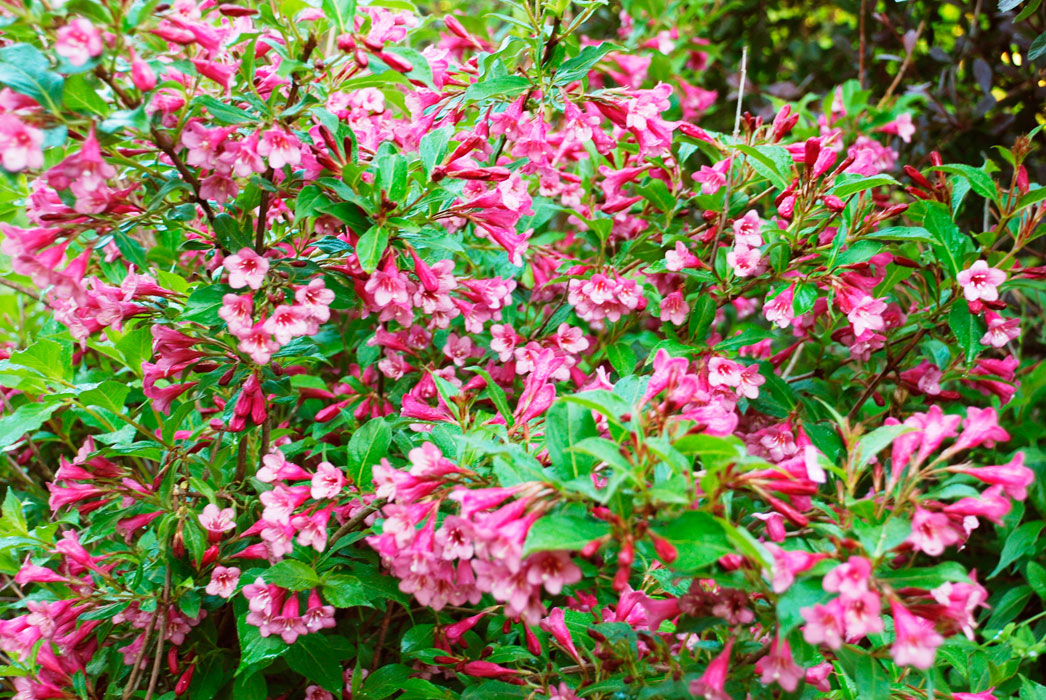
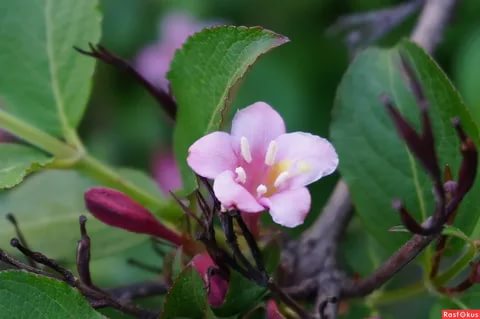
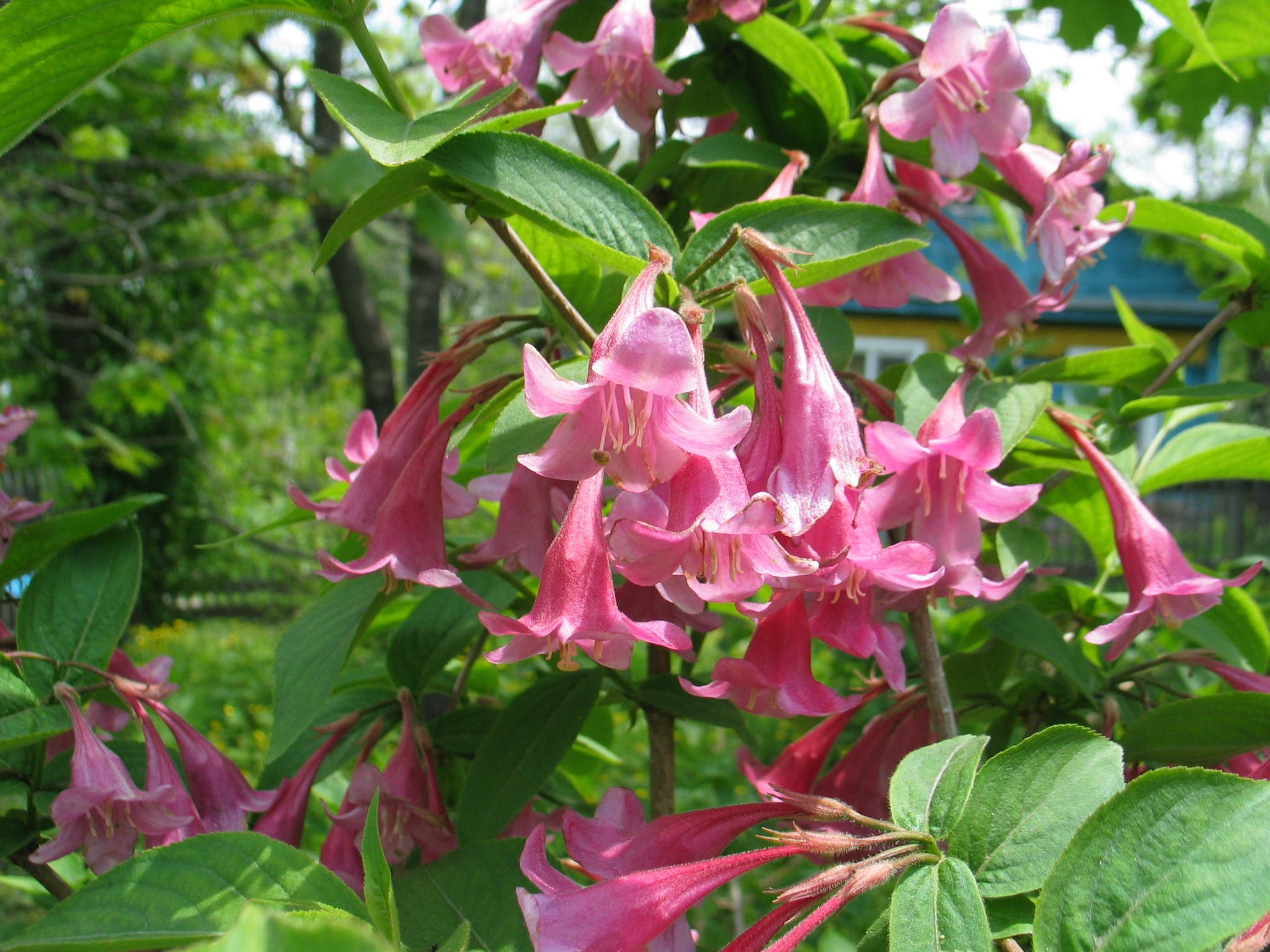
In the wild, this species is most often found in the Far East. Shoots can reach 2 meters in height. The upper surface of the leaf blade is covered with fine hairs and yellow specks, which turn creamy in the sun. Inflorescences form on the lateral shoots of the current year and consist of 2-3 flowers. Their color is usually pink, but sometimes the throat can have a light yellow tint.
The buds begin to bloom in the last week of May, flowering lasts from 1 to 4 weeks.
Weigela suavis + 3 photos
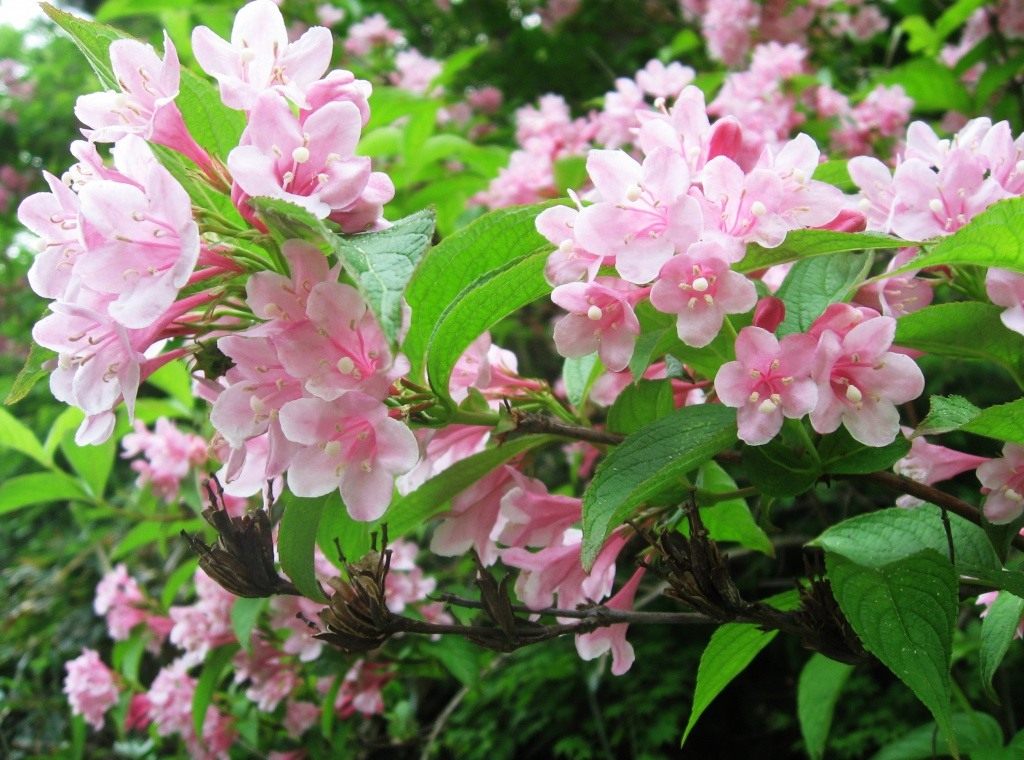
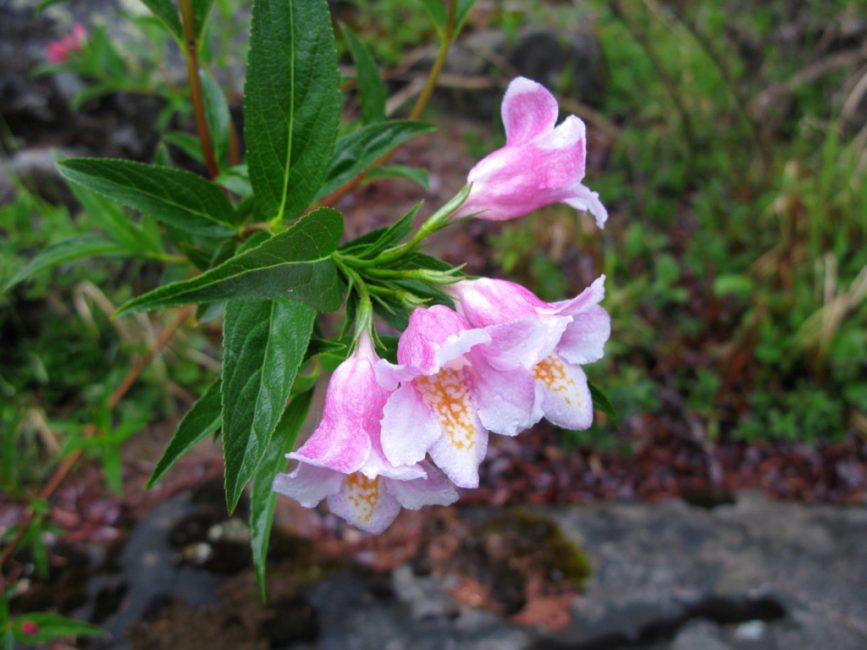
This shrub grows up to 1.5 m tall. The leaves are green, glabrous, pointed, pubescent on the underside, and up to 6 cm long. The flowers are pinkish-purple or lilac-pink, with a pale pink interior. This species blooms from late May to June, sometimes longer. A second bloom is possible in late August.
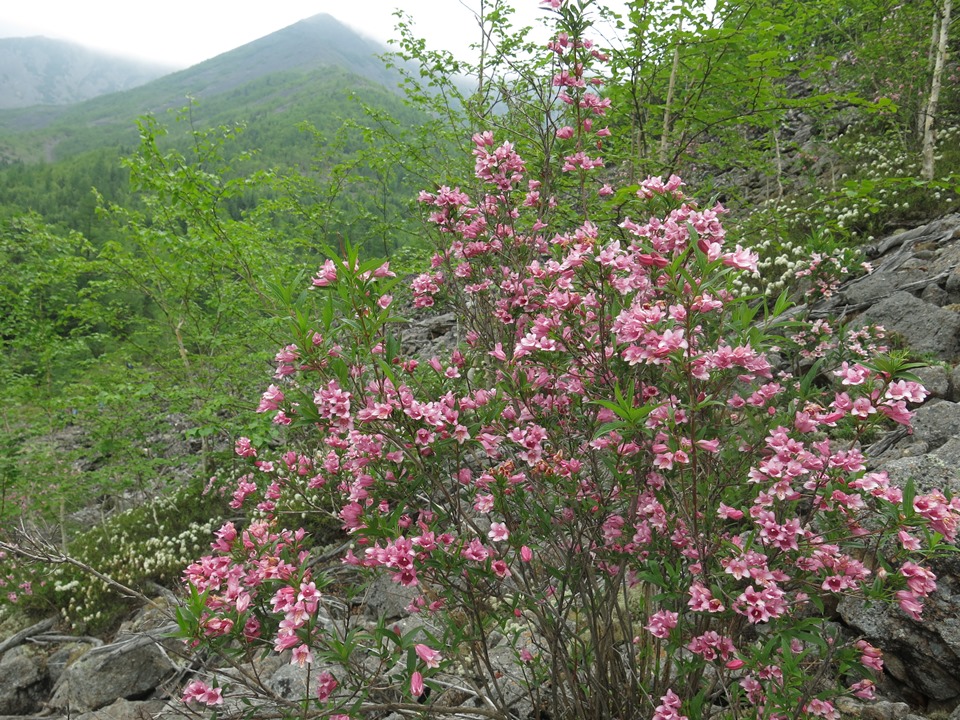
Variegated Weigela (Weigela variegata) + 3 photos
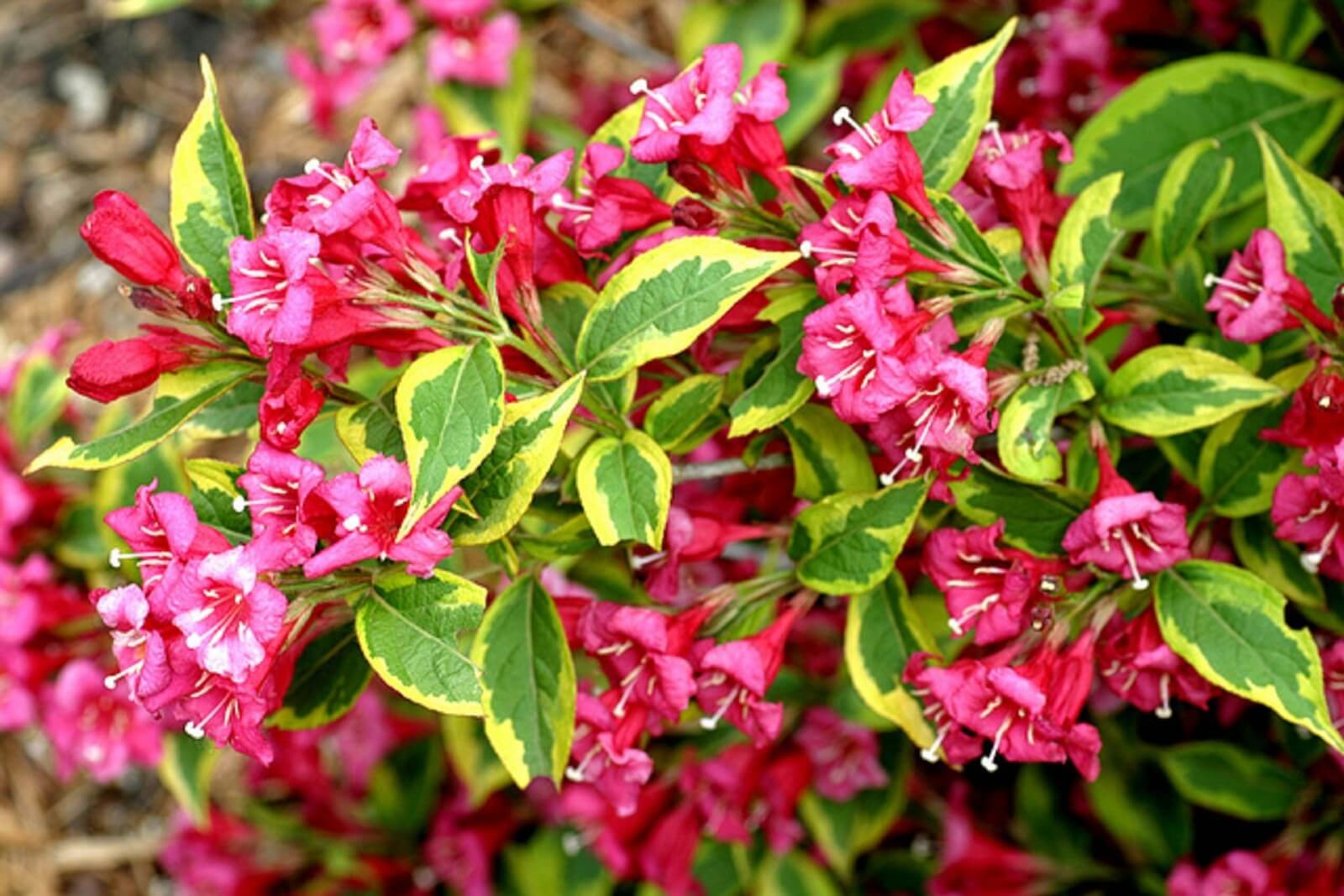
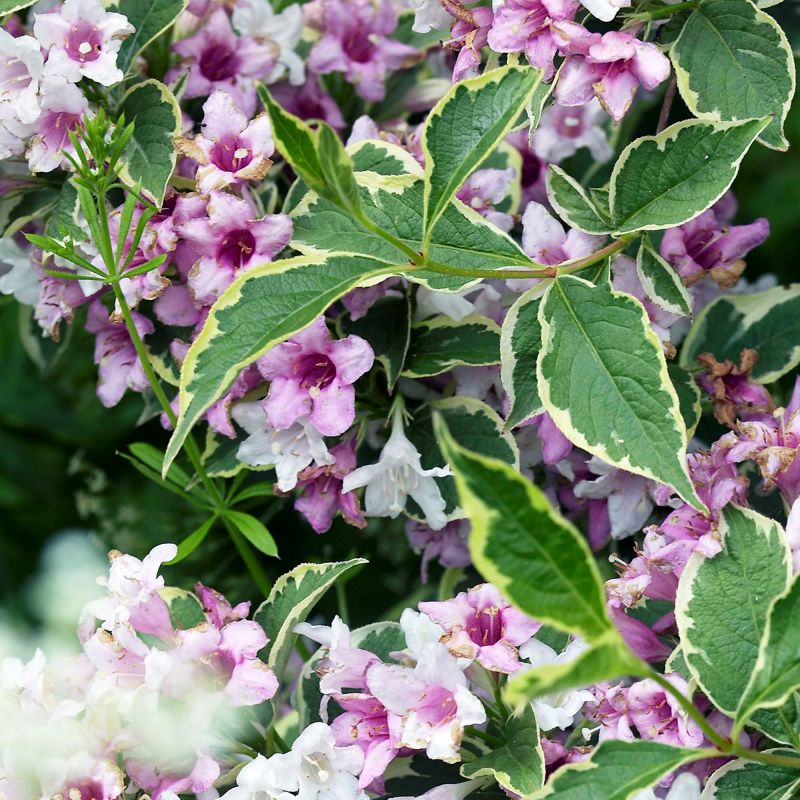
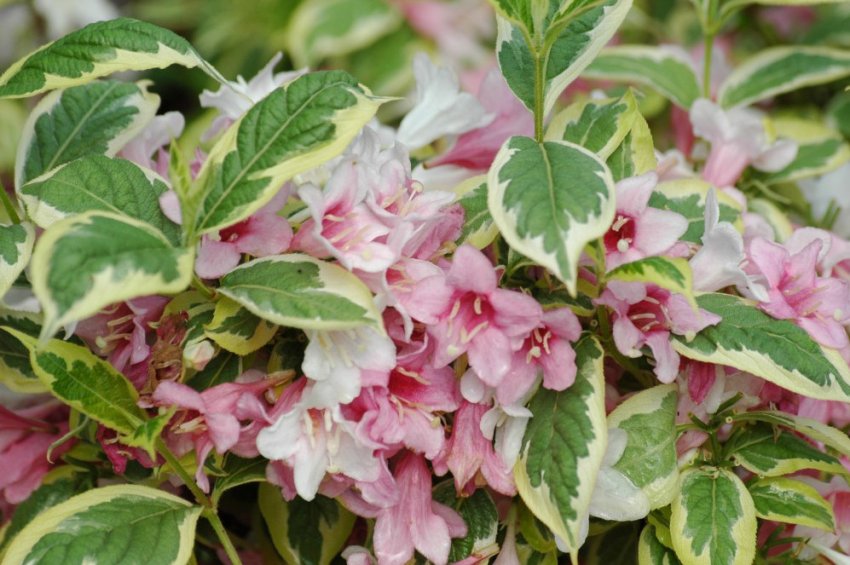
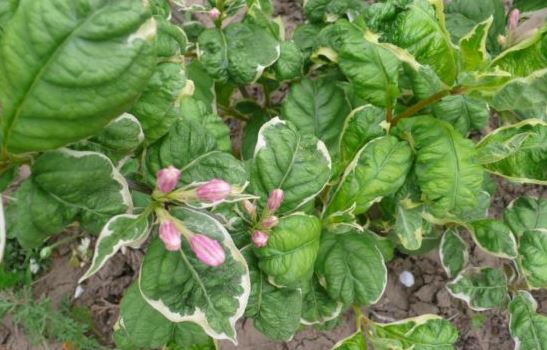
The bush grows 1.5 m tall. The flowers are pinkish-red, growing singly or in groups of 2-6. The leaves are green with a white border. It blooms from May to July, sometimes reblooming in late summer.
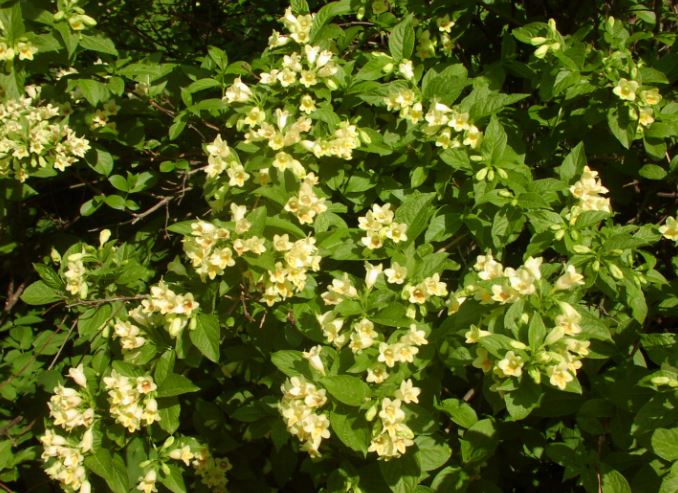
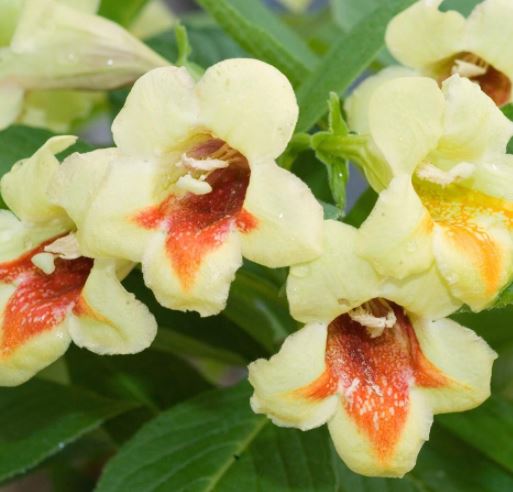
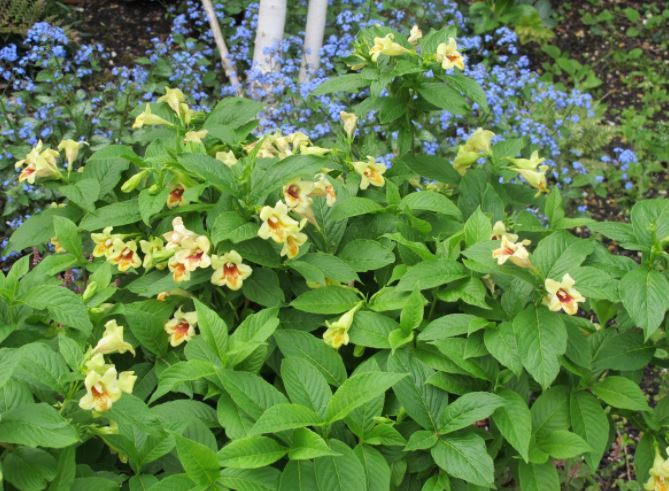
Weigela middendorffiana + 3 photos
The height is 1-1.5 m, with erect, ascending shoots. The flowers are large, bright yellow, 3.5-4 cm in diameter. They can be solitary, but are most often gathered in an inflorescence of 3-4. Under favorable conditions, flowering occurs twice per season. The leaves are large, light green, finely toothed, oval, and pointed at the tip.
New winter-hardy weigela varieties for central Russia
Breeders are constantly working on new Weigela varieties that can be grown in areas with frosty winters. Some examples of such new varieties include:
- All Summer Peach. This is the most compact of all flowering weigela varieties, growing no more than 40 cm in length and width. The leaves are bright green, and peach-white tubular inflorescences bloom in May and June. It repeats blooming in August and September, making it a winter-hardy variety.
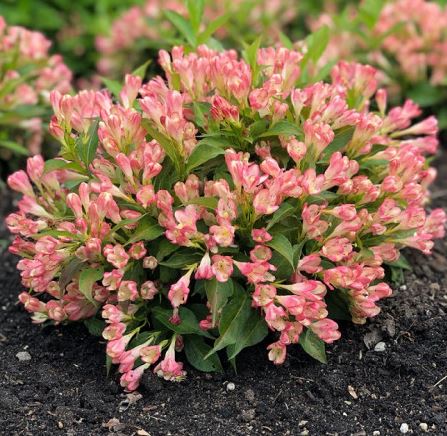
- The Caricature variety, also low-growing, is ideal for green borders. It has very unusual, thick, large, twisted leaves, similar in shape to basil leaves, with a light edge. Pink flowers appear in May-June and August-September. It is winter-hardy.
Planting Weigela in Spring Step by Step
This shrub with Asian roots has long been adapted to our growing conditions, so when planting weigela, it is enough to follow simple agricultural rules.
Choosing a Weigela Seedling
The most important step in growing Weigela is choosing the right healthy and viable seedling. These days, you can buy one almost anywhere, from reputable nurseries to lesser-known online stores. Of course, it's best to buy from reputable growers and in person to assess the plant's condition firsthand.
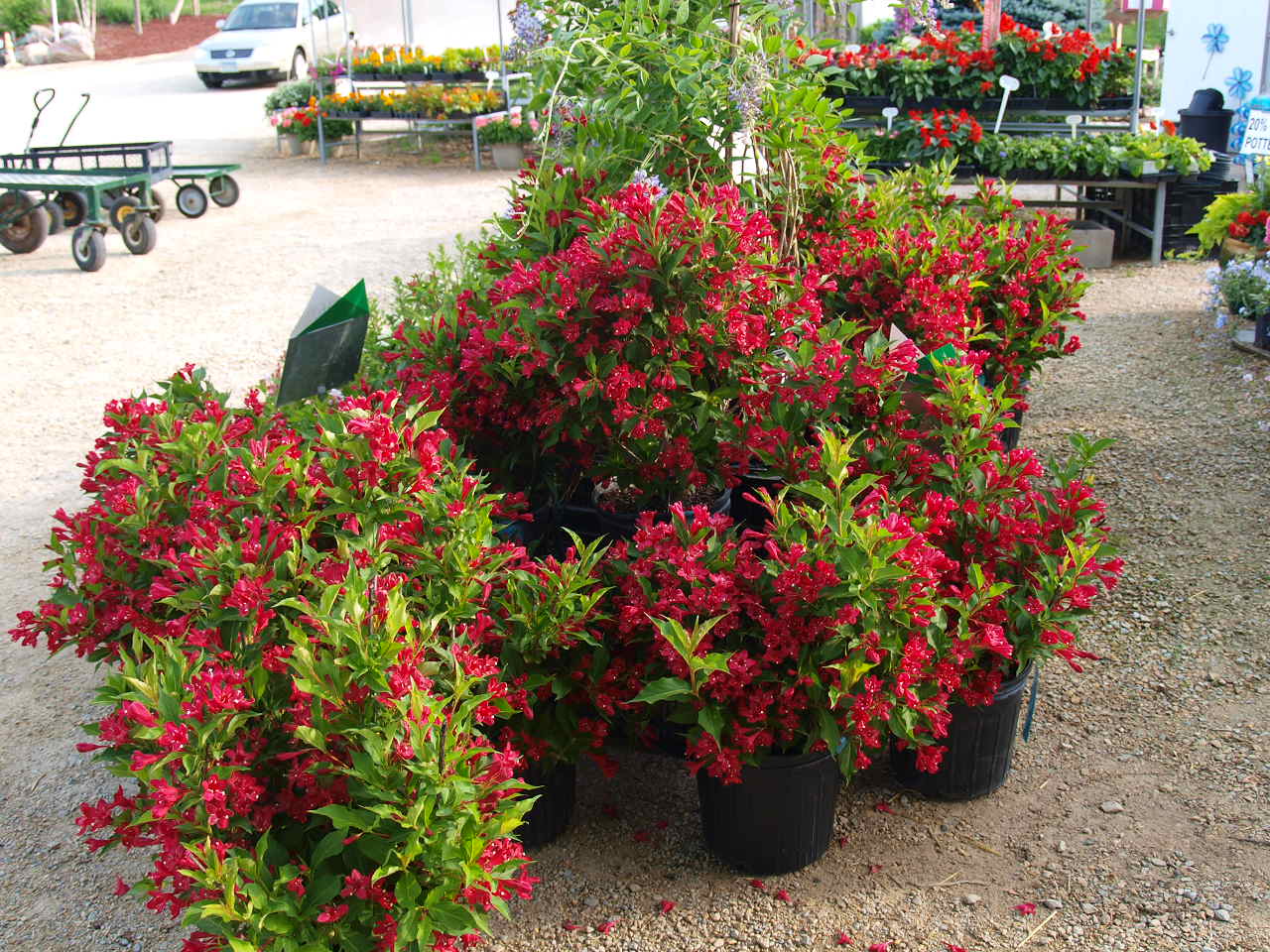
When choosing, you need to pay attention to the following parameters:
- A Weigela should be approximately three years old. If it's much younger, it will have difficulty adapting to the new conditions. A mature Weigela may also resent being repotted, as it's already accustomed to its current conditions and may simply not tolerate the stress.
- The root system should be closed if you plan to plant it some time after purchase. If the roots are exposed, the weigela won't survive long without soil and water. In this case, prepare the bed in advance and plant the bare-rooted plant directly from the nursery.
- Choose plants with healthy roots, free of pests and damage. If you purchase bare-root seedlings, slight root drying is acceptable. To prevent them from drying out completely, for example, during transportation, place them in a clay slurry beforehand, remove them, and allow them to dry.
- The shoots should not be wilted, and there should be no signs of damage, cuts, or lesions on their surface.
Choosing a location for planting weigela
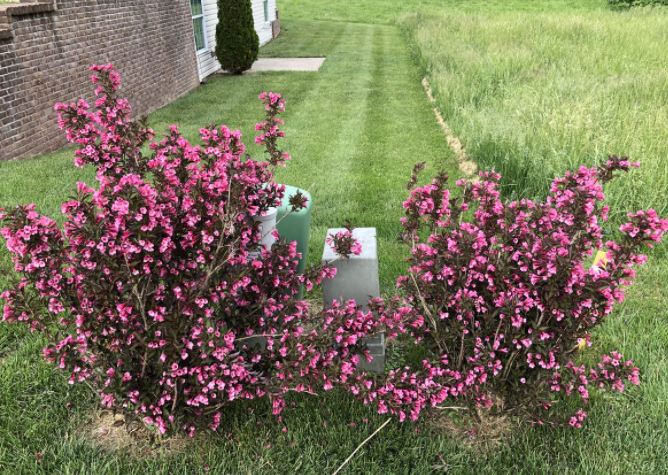
Weigela grows well in both sun and shade. However, it's important to note that it prefers sunny locations, and the most vibrant and lush blooms can only be achieved with sufficient light. Otherwise, the leaves and petals will be pale, and the crown will be less lush.
It is best to plant Weigela in a well-lit part of the garden, protected from wind and drafts by a fence or nearby plantings.
Avoid planting Weigela in low-lying areas where water drains poorly or where it accumulates after snowmelt. If water stagnates around the roots, there's a risk of developing various rot diseases.
The best soil for weigela
Weigela grows well in loamy or super-sandy soil. It must contain humus and some sand. When planting the shrub, it's important to consider a drainage system to prevent water stagnation at the roots.
Soil acidity can be neutral or slightly elevated.
Timing for planting weigela
In the central regions, it's not worth risking planting weigela in the fall. It won't survive the winter and will die.
The best time to plant shrubs is considered to be April to early May. In southern regions, work can begin a few weeks earlier. The key is for the soil to warm up to 13°C, and for the weather forecast for the coming days to avoid overnight frosts. Seedlings with closed root systems can be planted at any stage of growth, even during flowering.
It is better to work with young seedlings before their buds swell.
Step-by-step instructions for planting Weigela
The instructions for planting Weigela are quite simple. They include several steps:
- Soil treatmentIt's advisable to fertilize the planting site beforehand. Ideally, do this in the fall by tilling the soil with manure, humus, and compost. If this hasn't been done, add organic matter and mineral fertilizers immediately before planting.
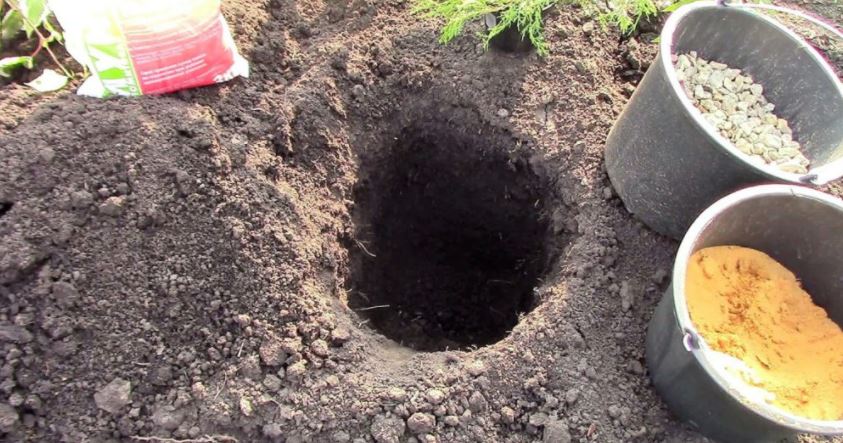
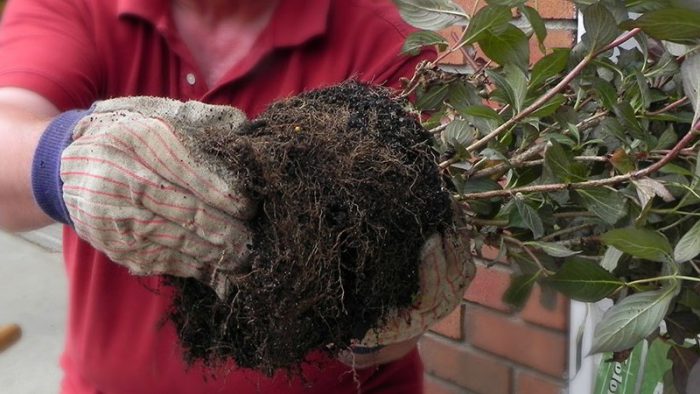
- Preparing the holeThe hole dug should be twice the size of the rhizome and its root ball. The bottom of the hole should be filled with gravel or expanded clay, which will act as a drainage cushion. However, if the soil is sufficiently loose and light, this step can be skipped.
- Inspection and preparation of seedlingsPurchased seedlings should be carefully inspected for root damage and signs of insect pests. Any dry or rotted roots should be removed before planting. If the Weigela is growing in a pot, it should be thoroughly watered before placing it in the garden bed. Seedlings with closed root systems should be soaked in water for 4-6 hours to ensure the root ball is saturated. If bare-root plants have been treated with a clay slurry, all clay should be washed off the roots before planting—it inhibits normal growth and development. Weigela takes root and adapts well to a new location without any additional intervention, but if you are concerned about the seedling, you can soak the roots in a special solution containing a growth stimulant, such as Kornevin.
- Landing distanceIf you don't plan to include Weigela in your landscape, it's recommended to plant it at least 2 meters away from neighboring plants. When creating a hedge, space the plants 1-1.5 meters apart.
- Watering and mulchingThe seedling is carefully placed in the hole. If the roots are exposed, they should be spread out within the hole. Then, the hole is filled with soil and watered. To retain water, mulch the top layer of soil around the plant. Sawdust or bark can be used for this purpose.
Caring for Weigela
Weigela is quite unpretentious in care; it requires adherence to simple agricultural rules.
Watering
Plants in pots (for example, when grown indoors) require frequent watering because the soil dries out much faster in confined spaces. In open ground, weigela should be watered as the soil dries out. Two to four buckets of settled water should be poured under each plant.
To retain moisture in the garden bed, it's advisable to mulch it. This can be sawdust, bark, or fallen leaves pre-treated with a disinfectant solution.

How to feed Weigela
Weigelas, like many other flowering plants, require sufficient nutrients to promote the formation of new buds. Initially, seedlings should be planted in prepared soil, enriched with organic matter and humus. To stimulate flowering, a complex fertilizer containing potassium and nitrogen can be applied in mid-May.

Loosening
Weigela roots are quite sensitive, so loosening the soil should be done with extreme care. The area around the trunk should be worked to a depth of approximately 10-15 cm. This procedure should not be repeated frequently; to improve aeration and drainage, mulching the bed is recommended.
Transfer
Repotting a Weigela is possible, but the process is quite complex and painstaking. Sometimes the shrub begins to interfere with a site redesign, or it was initially planted in an overly shaded area where flowering is minimal. In this case, relocating the plant is acceptable. This is done in the first weeks of April, and the Weigela, complete with its root ball, is transferred to the new location. However, it's important to remember that this puts significant stress on the plant, so repotting should only be done in extreme cases.
Preparing Weigela for Winter
Mature plants that have been growing in the same area for several years don't require special cover, especially if winter temperatures don't drop below 25°C to 28°C. However, newly planted or transplanted shrubs need to be insulated during the first few years. Covering should begin with the first frost.
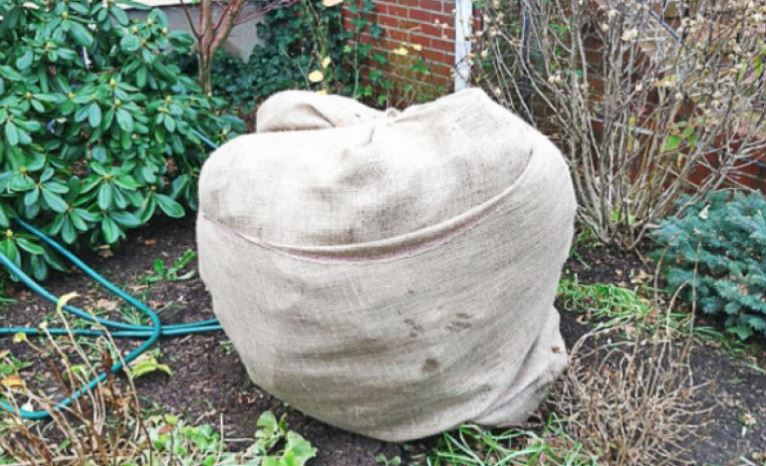
First, wrap the branches in burlap and carefully secure them to the ground. Otherwise, they could break under the weight of the snow. Spruce branches or straw are laid on top, and a special covering material is placed around the entire perimeter of the bush, the edges of which are pressed to the ground with blocks or bricks at the bottom. You can build a wooden frame or place arches above the bushes, then the covering material will run along the top of the structure.
How to propagate Weigela
There are several methods for propagating Weigela, all of which are listed below.
Seeds
When the flowers fall, seed pods form in their place. In late autumn, you can collect the seeds and begin growing Weigela. For this, use special containers filled with potting soil. Sow the seeds in the usual way. Water with a spray bottle. The seedlings can be thinned out, leaving as many sprouts as needed. If the work was done before winter, the young plants can be planted outdoors as early as May.
Cuttings
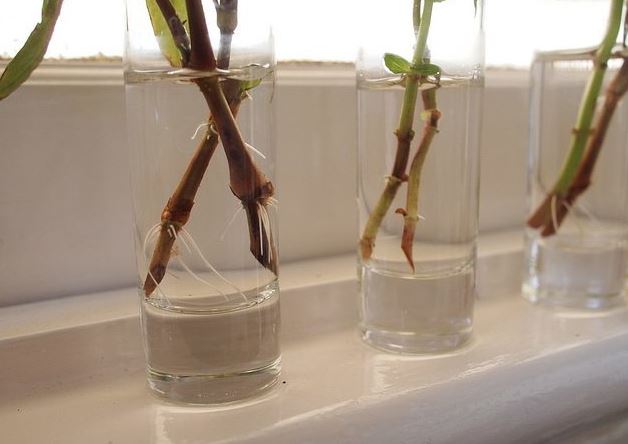
To propagate by cuttings, prepare cuttings in November and store them in a cool, well-ventilated place over the winter. The cuttings should be 25-30 cm tall. The top cut is made a millimeter above the outermost bud, and the bottom cut is made under the last bud from the bottom. It's best to make the latter cut at an angle to increase the surface area through which rooting will occur. The cuttings should also be placed in the soil at a slight angle. At least four buds should remain above the soil surface. The root system develops within two to three weeks of planting.
Layering
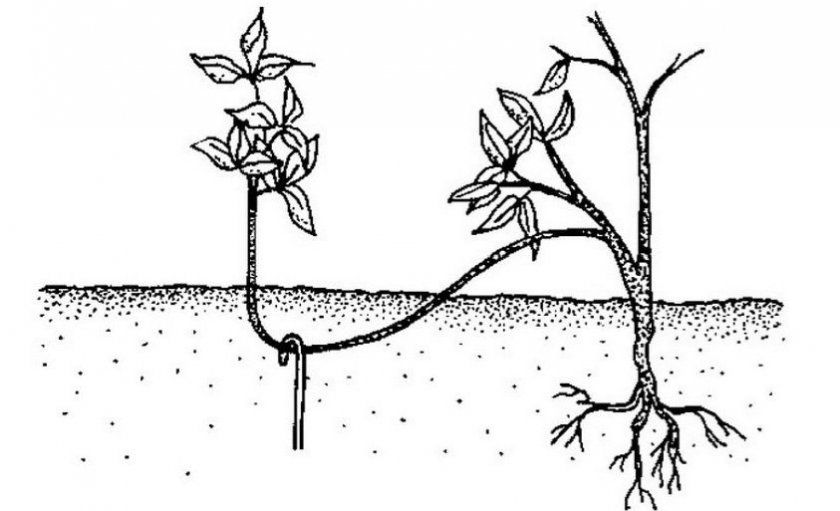
This method of Weigela propagation is highly effective because rooting occurs naturally. To do this, select the strongest lower shoots from the bush, those growing almost at the ground level. Make several cuts down to the leaf node. Use only a very sharp and well-disinfected knife. The cuts are treated with any suitable growth stimulant, after which the shoot is pressed into the bed with a strong wire staple and lightly covered with potting soil. For greater effectiveness, you can additionally cover the rooting site with a layer of mulch. The first roots will appear within a couple of months, but the cuttings can only be separated from the main bush the following season. Repotting is not done until three years later, and flowering is expected only in the fifth or sixth year.
By dividing the bush
This method is used when weigela needs to be rejuvenated or relocated. The bush is dug out of the ground, and the roots are washed to remove any soil. Next, the sections of the bush, including the roots, are separated with sharp pruning shears. The cut areas must be dusted with crushed charcoal. After this, all above-ground parts are trimmed off, and the bushes are replanted. This procedure can only be performed during the weigela's dormant period, which begins in October and lasts until April. The mature plant must be at least four years old for division.
Pruning Weigela
The crown of the weigela is quite lush and tolerates shaping well, allowing the plant to be given any shape.
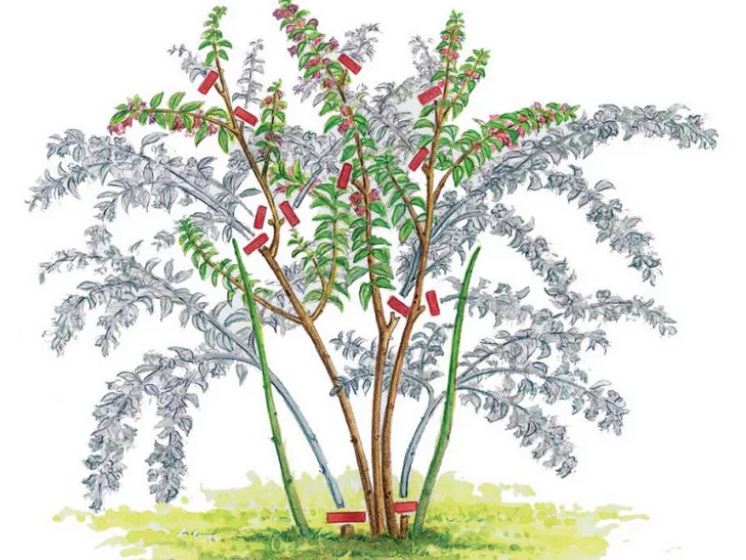
- To stimulate new growth, prune 2-3 secondary shoots at the base of the bush. Use well-sharpened pruning shears, cutting the branches at a 45-degree angle as close to the ground as possible.
- To ensure lush flowering, always prune the seed heads that appear where fallen flowers once were. This will allow the plant to conserve energy and devote it to developing new buds rather than seed production.
- Always prune diseased or dead branches to prevent them from damaging the main shoots. Prune them at a 45-degree angle as close to the main stem as possible.
- Sometimes weigela plants develop branches that appear very weak or rub against the main stem, risking damage. These should also be trimmed at the base.
- To rejuvenate the planting, prune the branches by a third each time over the course of three seasons. This will help the plant restart its development program and produce new shoots.
Weigela Pruning Tips
- Pruning is best done in late fall or early spring. To maximize blooms, prune before the bush blooms.
- After the second half of July, it is strictly not recommended to touch the weigela.
- The maximum permissible pruning length per season is one third of the shoot.
- To maintain the decorative shape of the bush, prune it annually.
- Always use only sharp and disinfected instruments.
- Carry out shaping only under the upward-facing bud, so that the new shoot does not begin to grow downwards.
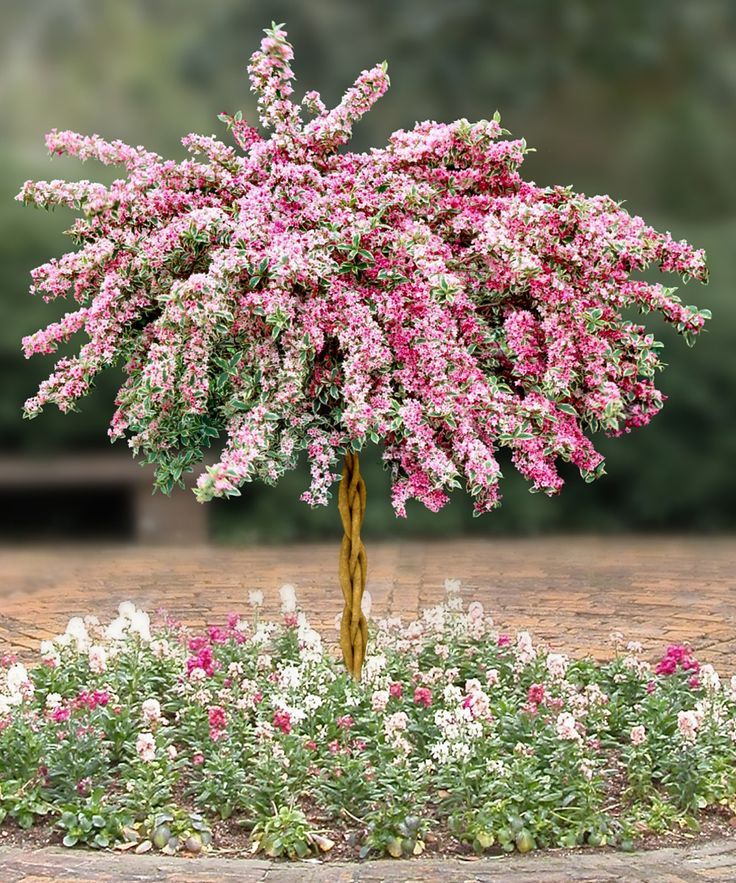
Weigela responds very gratefully to formative pruning, which allows you to create unusual shapes for an original garden design.
Diseases and pests of Weigela
Weigela most often falls prey to caterpillars and aphids. As a preventative measure, infusions of garlic, red pepper, or wormwood can be used. These can be sprayed on the plantings. However, if the pest infestation is large, a comprehensive treatment will be required. Kelthane, Nitrafen, or Rogor can help eliminate them. These should be used with extreme caution due to the toxicity of their ingredients.
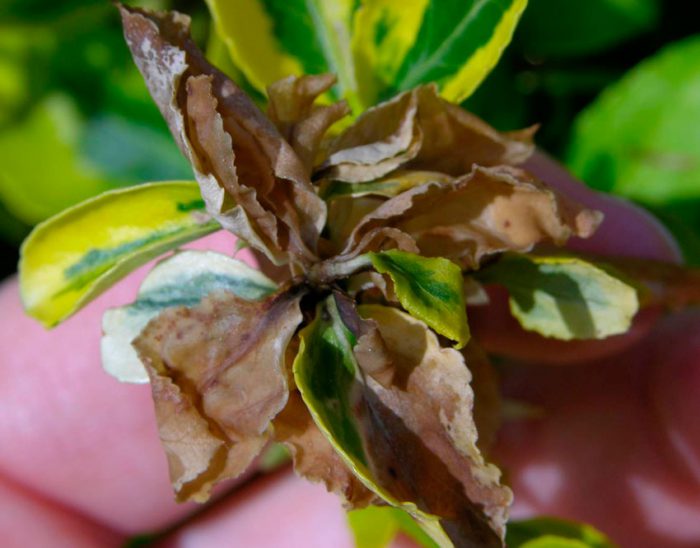
Yellowing leaves can be caused by May beetle or mole cricket larvae, which destroy the roots of plants. Treating the soil with a solution of Karbofos or Aktara will help combat this.
A solution of Bordeaux mixture will help combat gray mold, rust, and spotting. If signs of disease have already appeared on the bush, spray with Topsin.
Top.tomathouse.com warns: problems with growing weigela and their solutions
In the spring, weigela grows poorly and fails to gain vegetative mass. This may be due to the plant freezing in the winter, which has reduced its vigor. Treatment with Epin and special fertilizers can solve the problem. If the weigela hasn't turned green even by mid-June, the plant can be uprooted—it's dead.
After repotting, the plant wilts and dries out. This can be due to stress and exposure to sunlight. Weigela should be covered to protect it from the sun for 2-3 weeks until the adaptation period is complete and the roots take root.
Weigela in landscape design + 18 photos
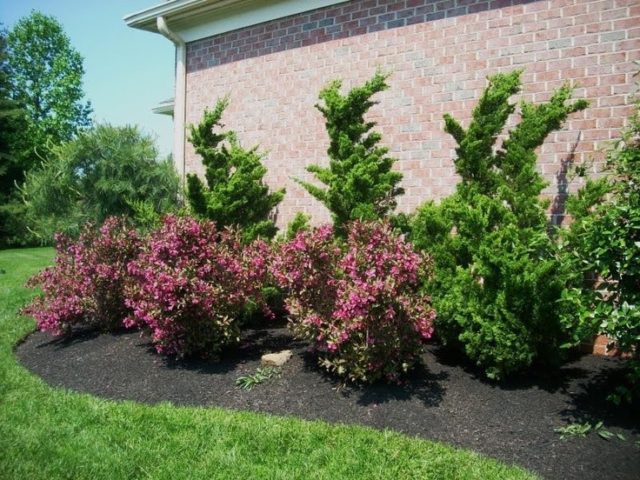
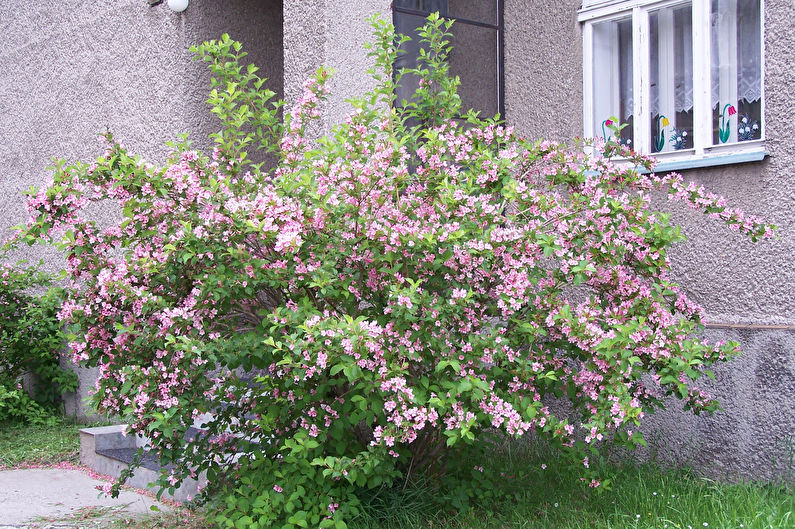
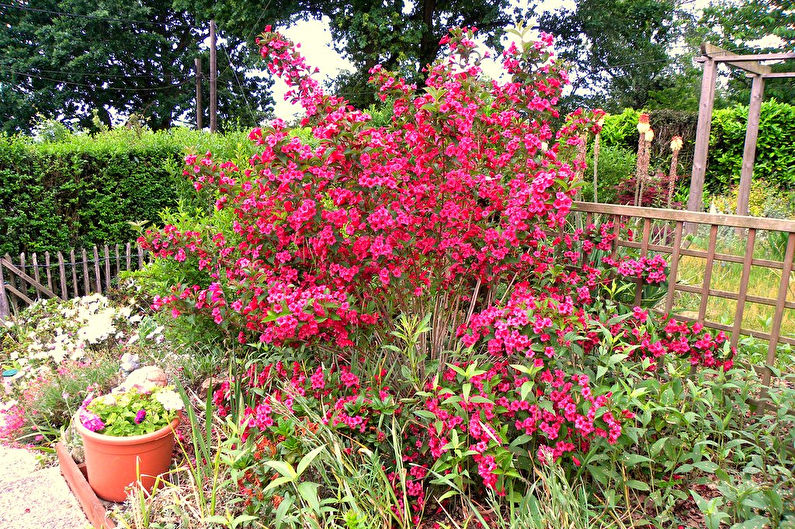
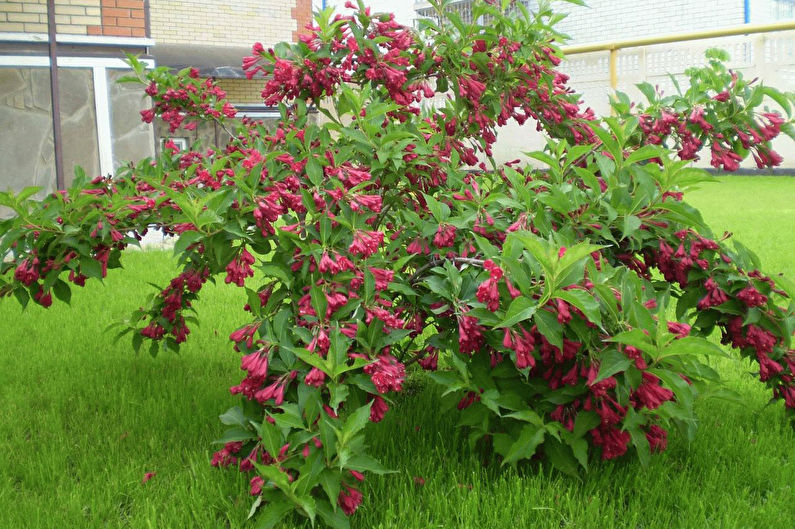
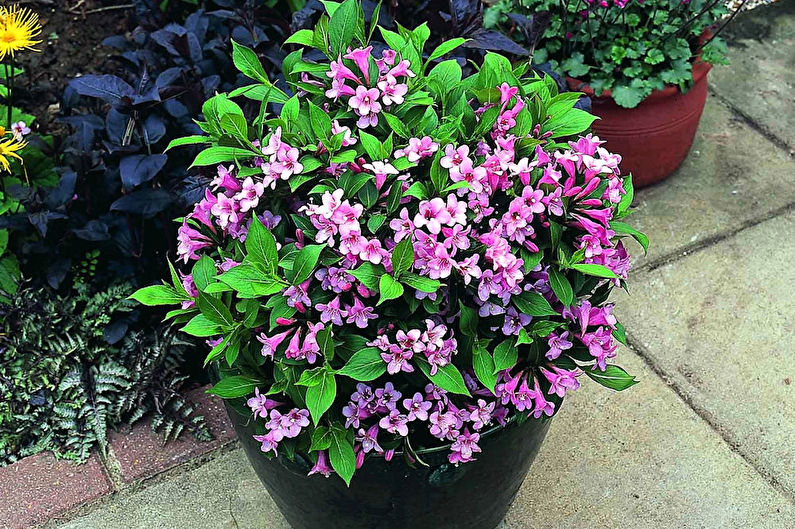
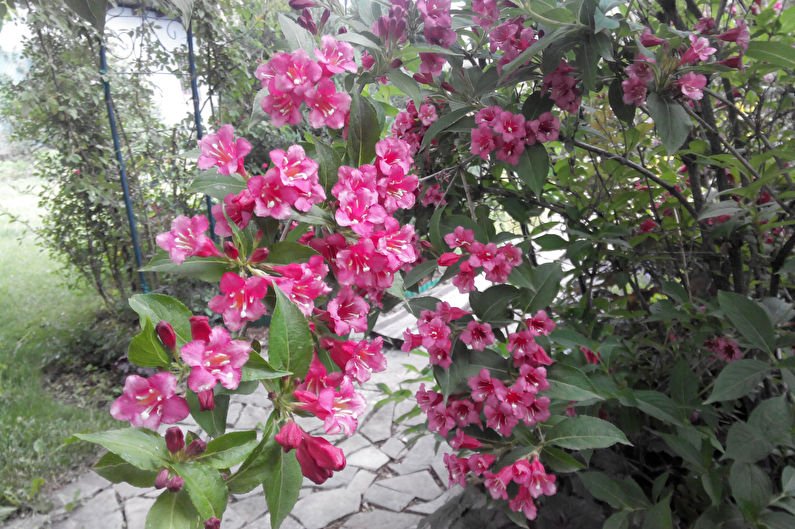
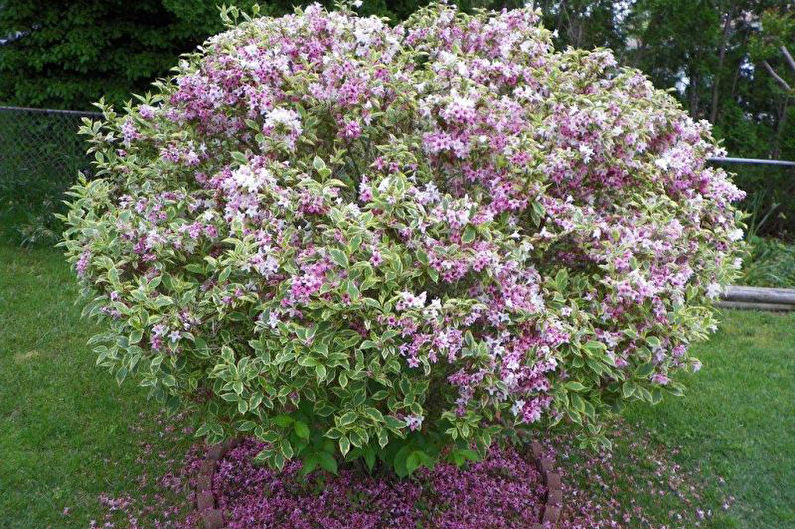
Weigela can be used as a stand-alone plant in a garden, but its beautiful blooms also make it look harmonious when planted alone. Its shoots respond well to pruning, allowing you to shape the crown to your desired shape.
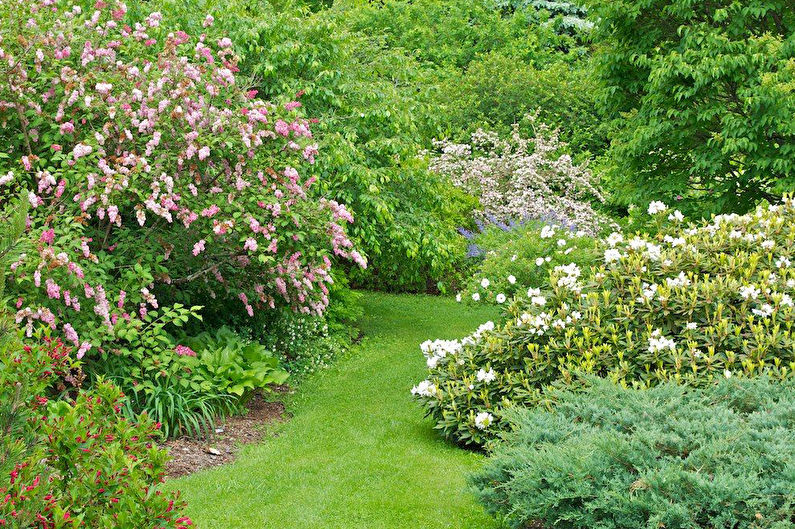
Landscape design experts recommend using weigela in compositions as a smooth transition from grasses to trees.
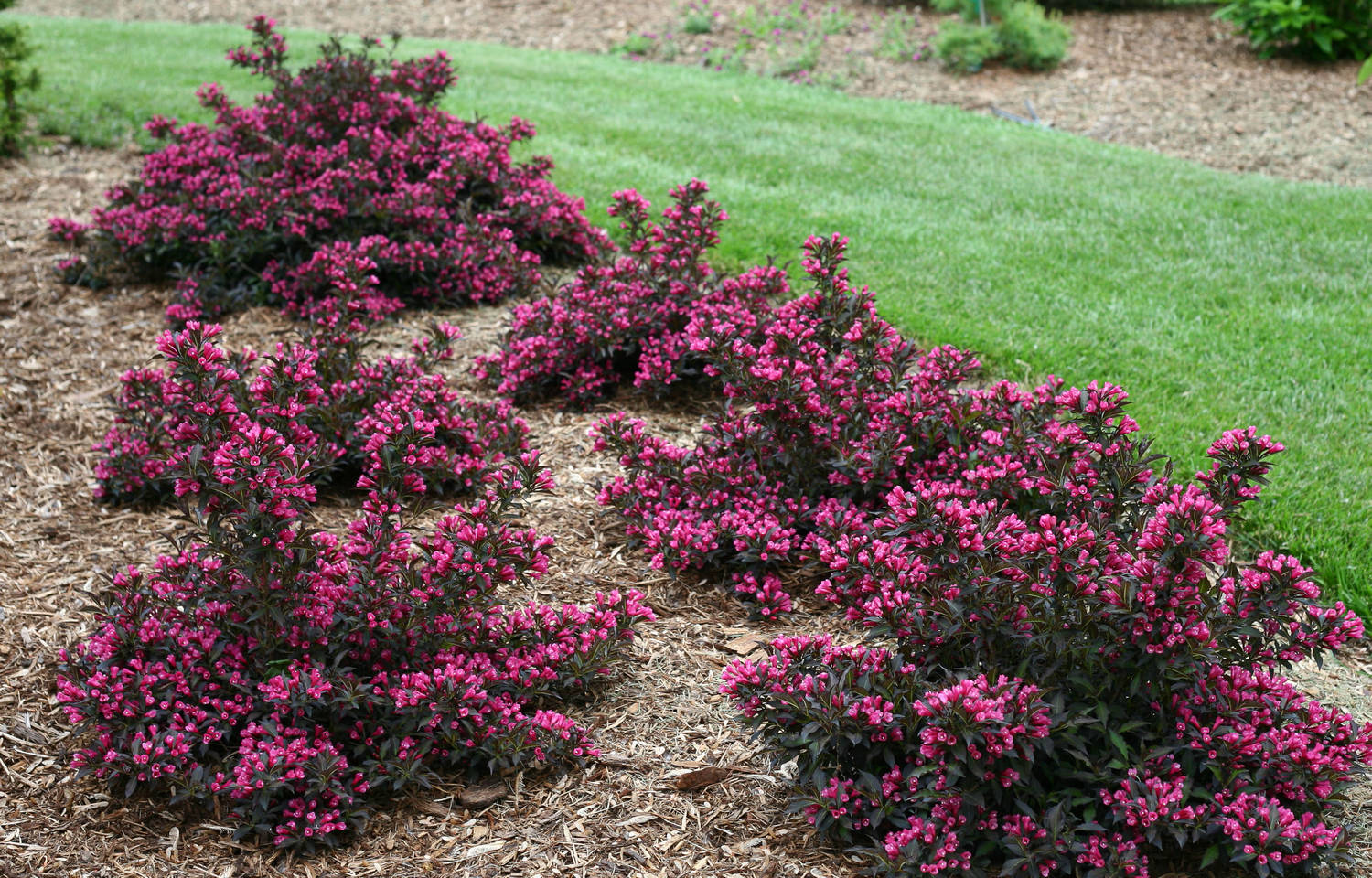
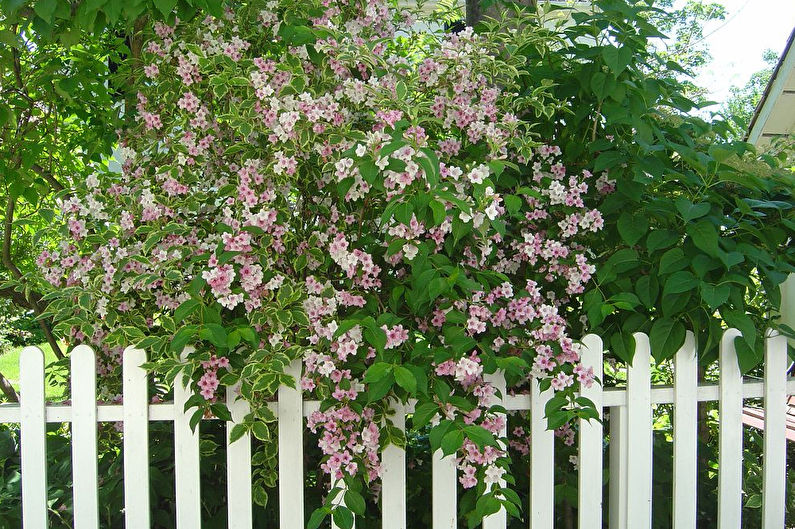
This shrub is ideal for creating hedges. They can line the edges of paths, highlighting them against the lawn, or beautifully define a plot. The height of the hedge can be easily adjusted with pruning.
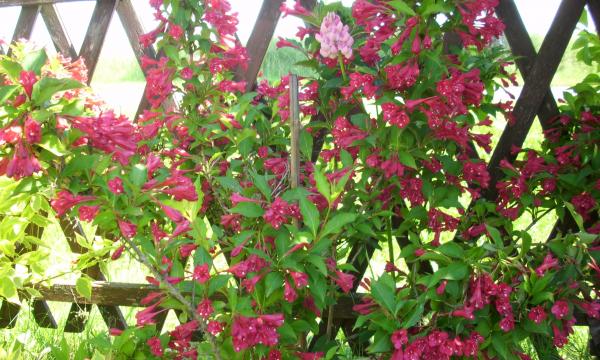
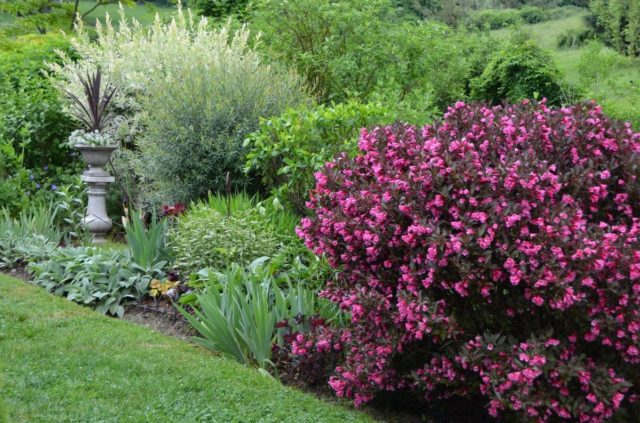
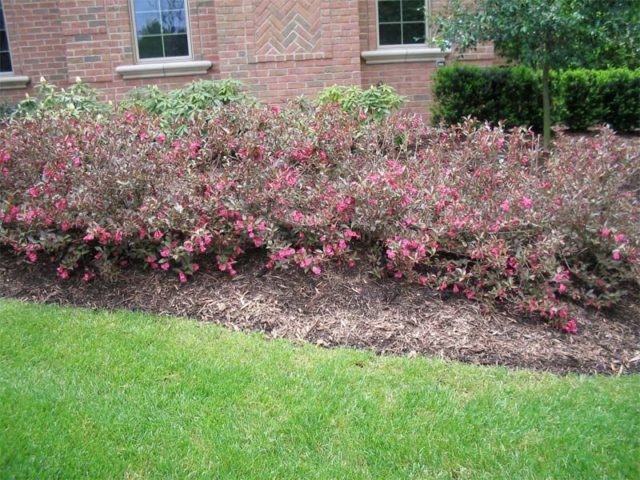
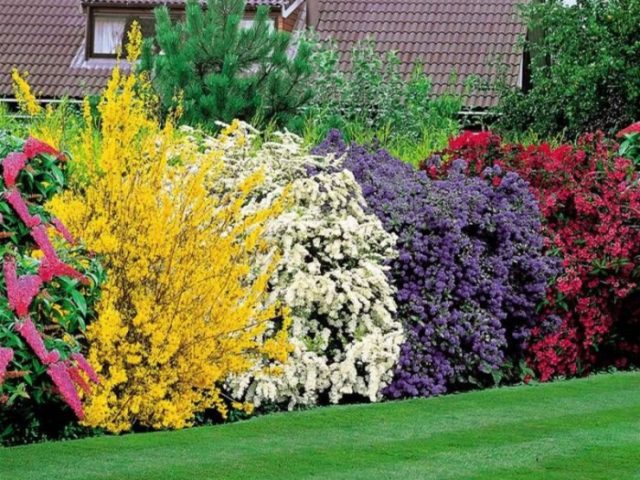
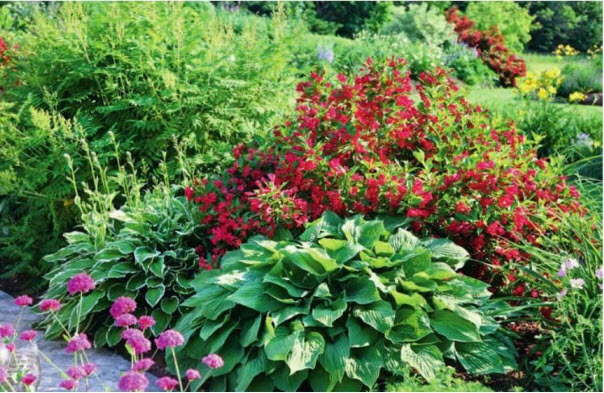
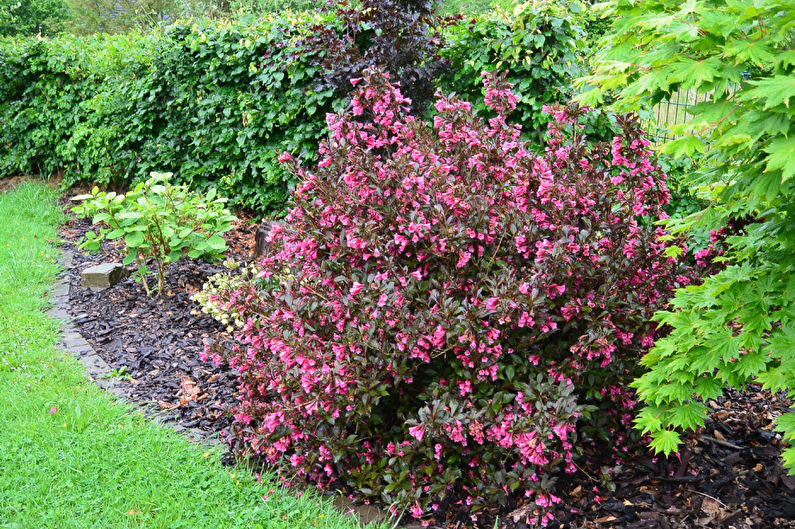
Photo gallery of the use of the Weigela shrub in landscape design (18 photos):
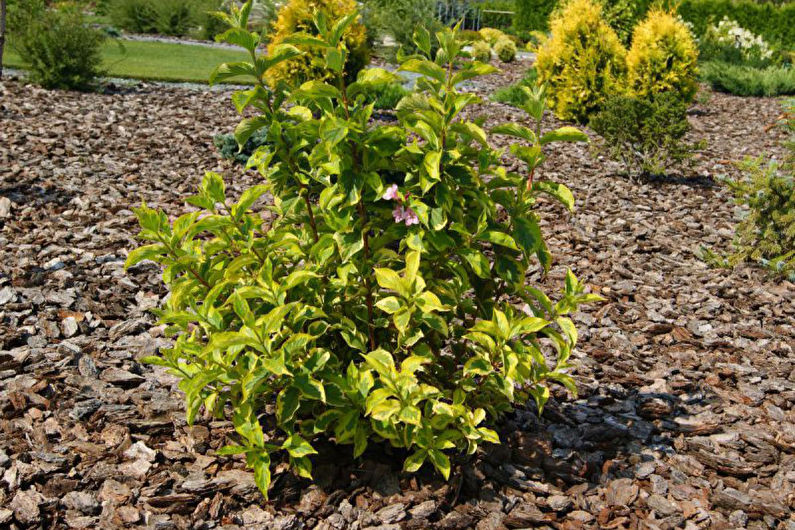
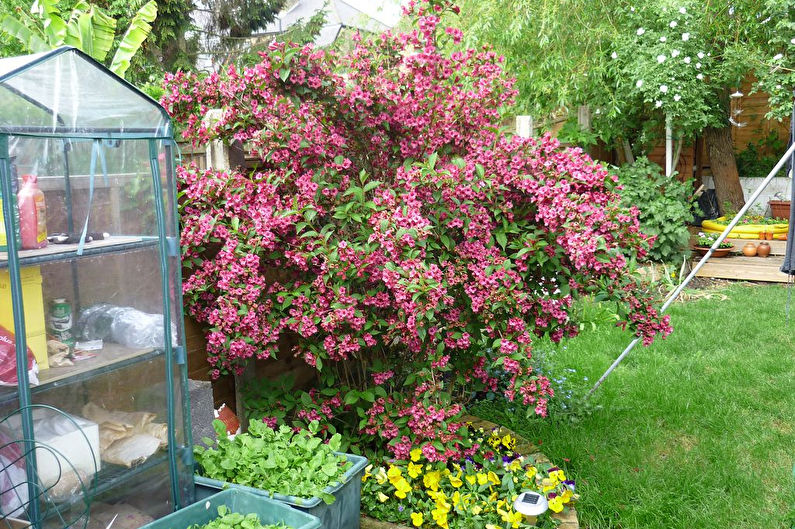
Combining Weigela with other plants
Weigela looks stunning when combined with conifers. It's an ideal addition to rock gardens and looks great alongside junipers, rhododendrons, and dogwoods.