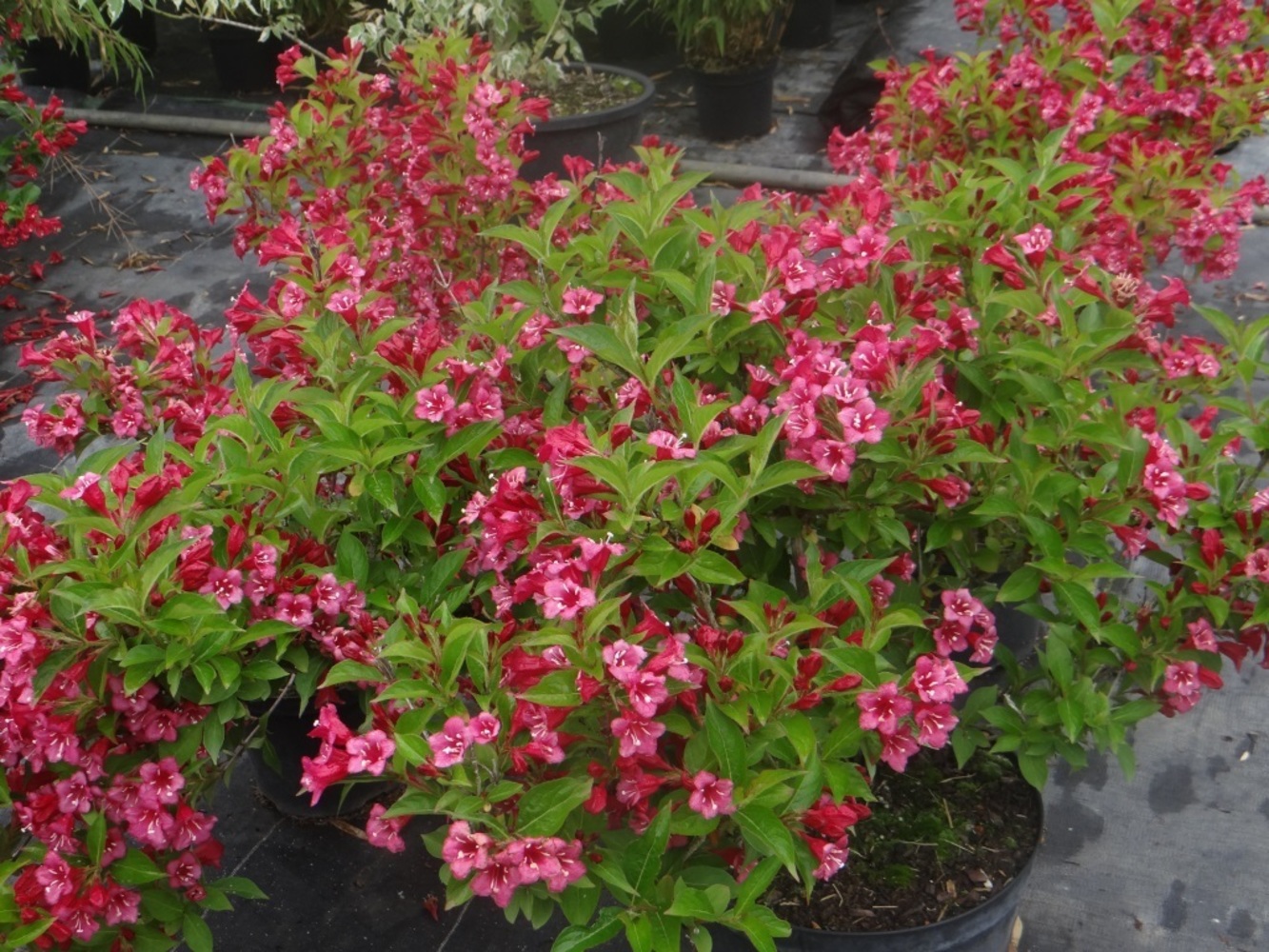
Weigela hybrid Bristol Ruby (Bristol Ruby) is an ornamental flowering shrub. It was developed quite a long time ago, back in 1941, through selective breeding. Specimens of Korean, garden, and flowering weigela were used. The plant is planted in Russian gardens and looks beautiful in landscape designs. It is also frost-resistant and has a long flowering season.
Content
Botanical description of Weigela Bristol Ruby
According to the description, this shrub reaches 2.5-3 m in height and can grow up to 300 cm in width. The branches hang naturally to the ground. In the wild, it grows in southeast Asia.
The leaf blades are long, light green with a yellow edge. Veins are clearly visible on the surface. The foliage remains on the bushes until late autumn, but eventually falls off in winter.
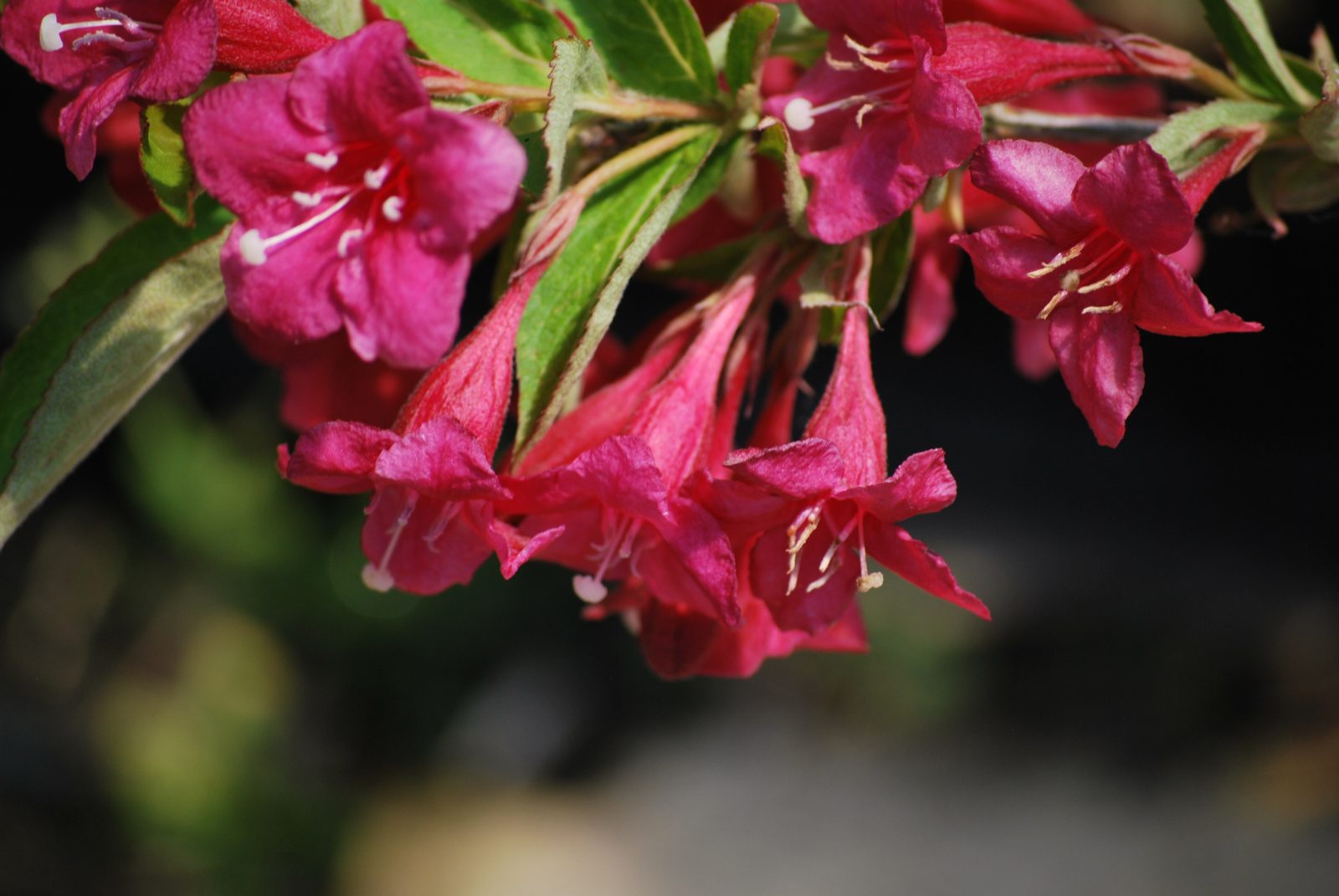
The flowers resemble bells, gathered in clusters of 3-6. Each bud can reach 5 cm in diameter. The petals are crimson, with an orange hue in the center. This hue becomes more pronounced as the flowers open. You can see what it looks like in the photo.
Please note! If proper cultivation and care guidelines are followed, flowering may occur twice during the growing season. The first bloom occurs in June-July, and the second bloom occurs in late summer-early fall.
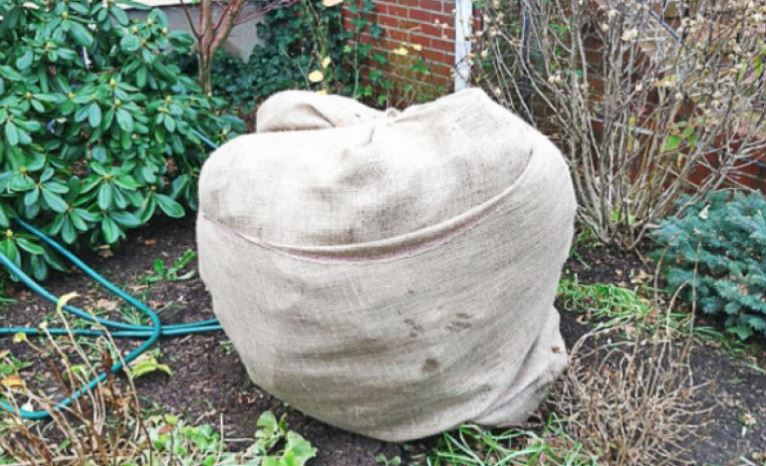
As the shrub matures, it becomes frost-resistant. It can withstand temperatures as low as -30°C. Young bushes should be mulched and covered with non-woven material for the first few years after planting. The same applies to another variety, Weigela Bristol Snowflake. With proper cultivation, the plant lives for about 50 years.
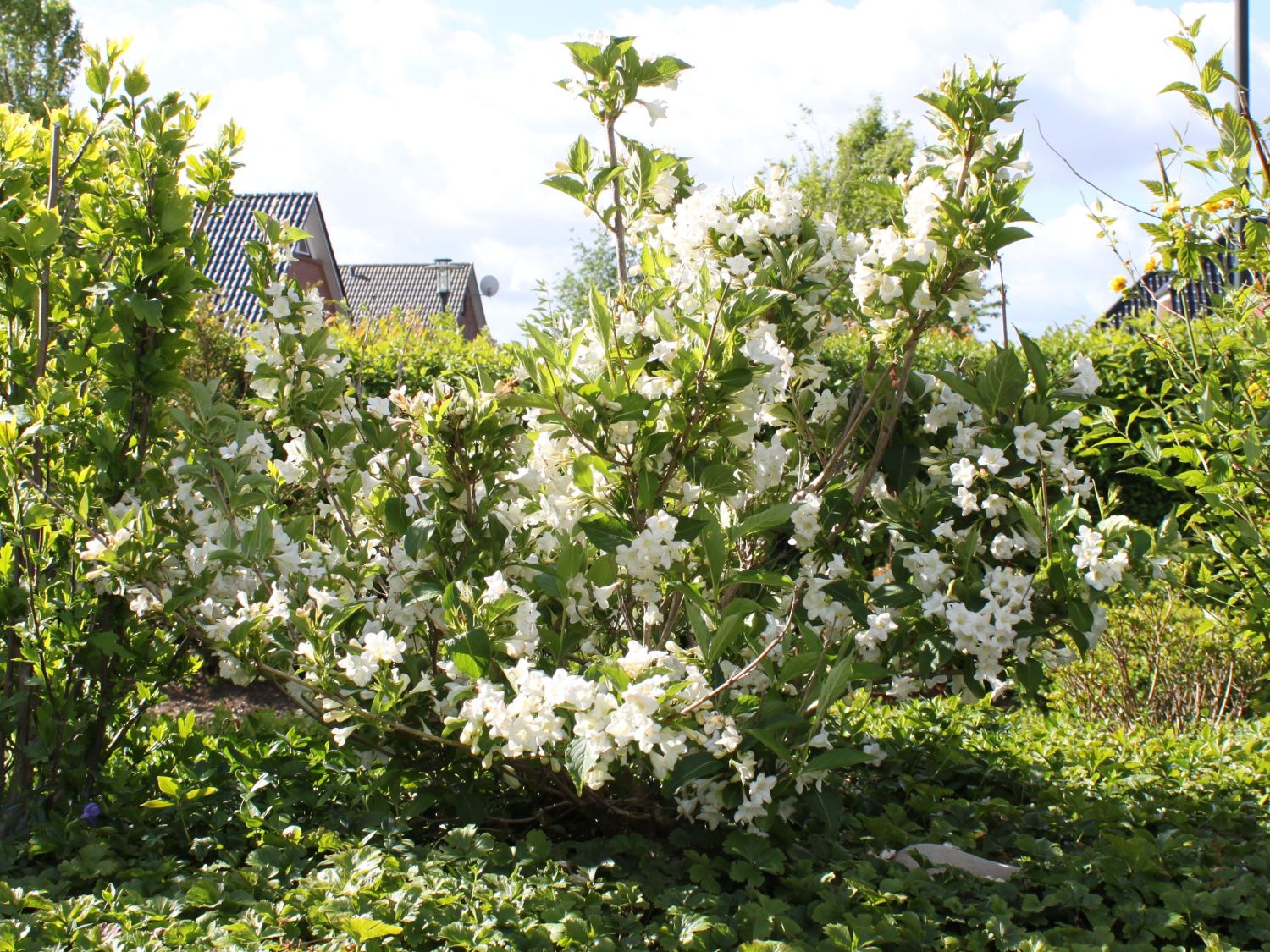
Using Weigela Bristol Ruby in landscape design
Weigela Bristol Ruby can be used as a hedge in landscape design. The bushes are tall enough to screen the area from prying eyes. When planting, maintain a distance of 1.5 meters from other plants, otherwise the weigela will begin to wilt.
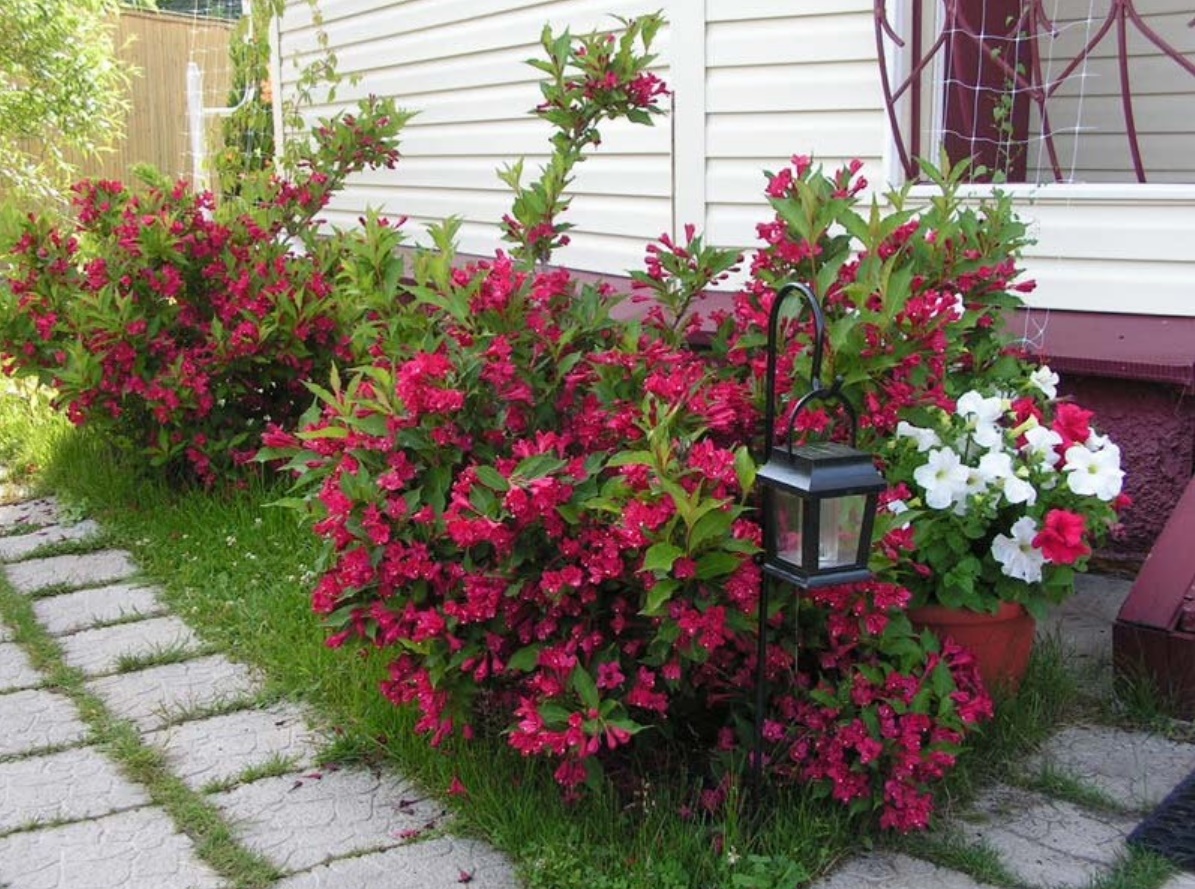
The shrub also looks great with other low-growing plants. It can be used to create a border near the house. Weigela also pairs well with taller specimens of other species in group plantings.
Photo gallery of ideas for how to place Weigela Bristol Ruby in the garden (landscape design):
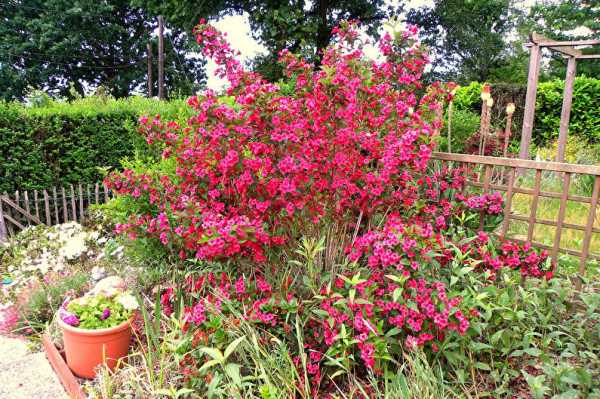
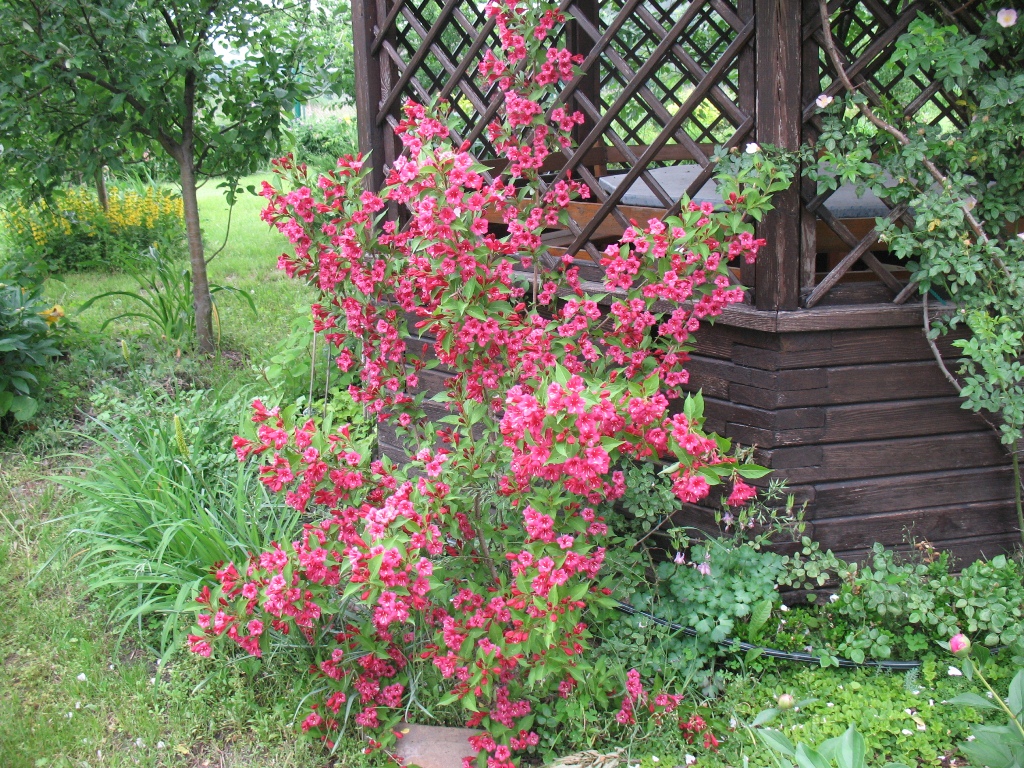
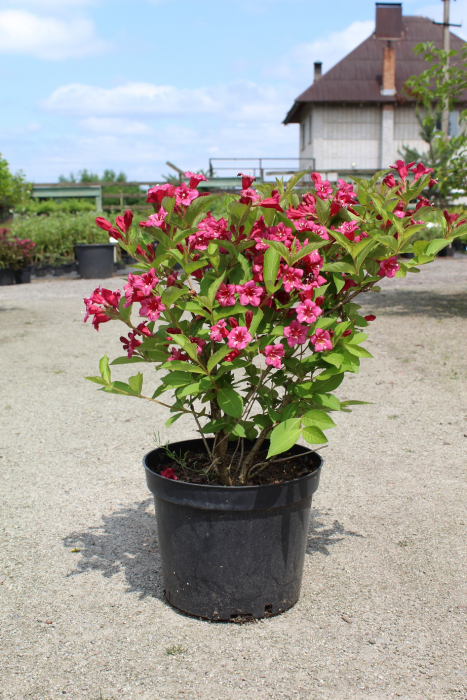
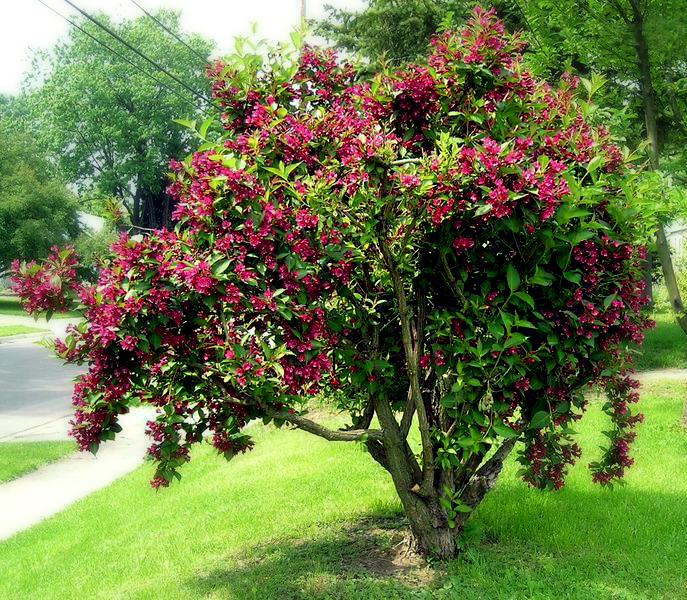
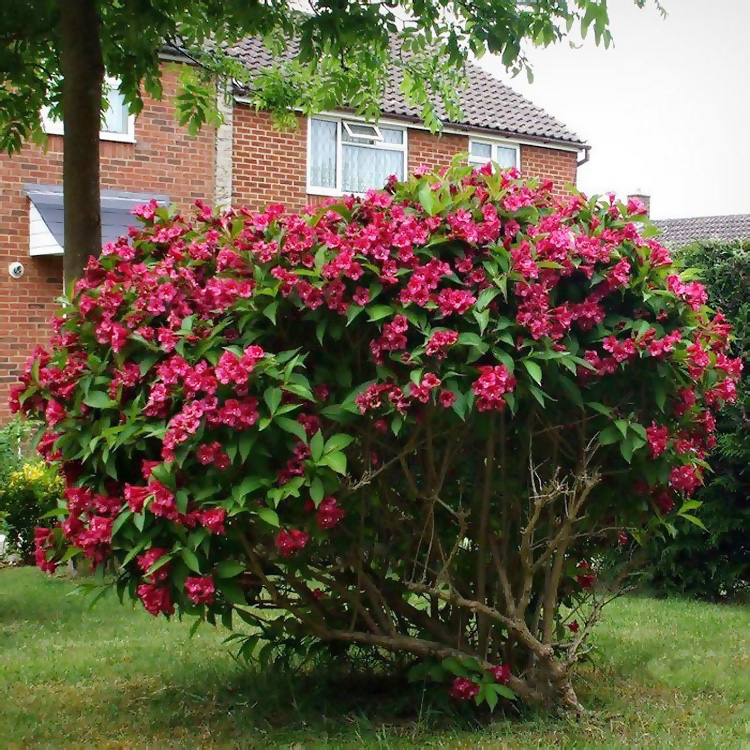
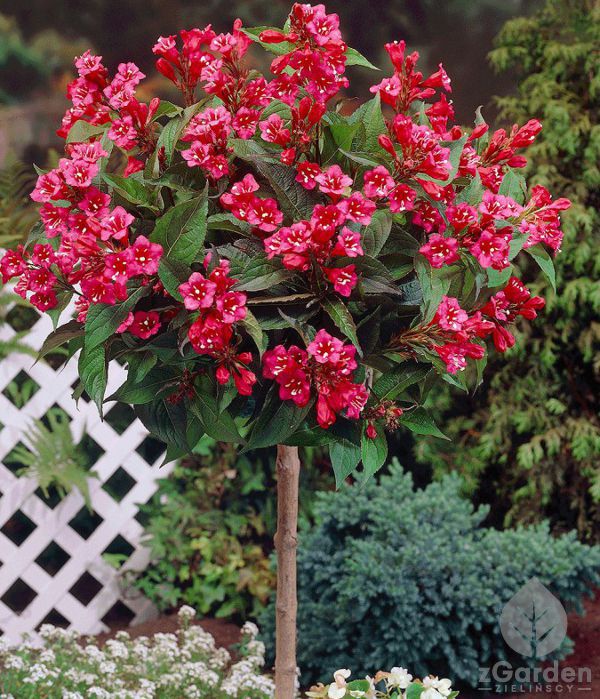
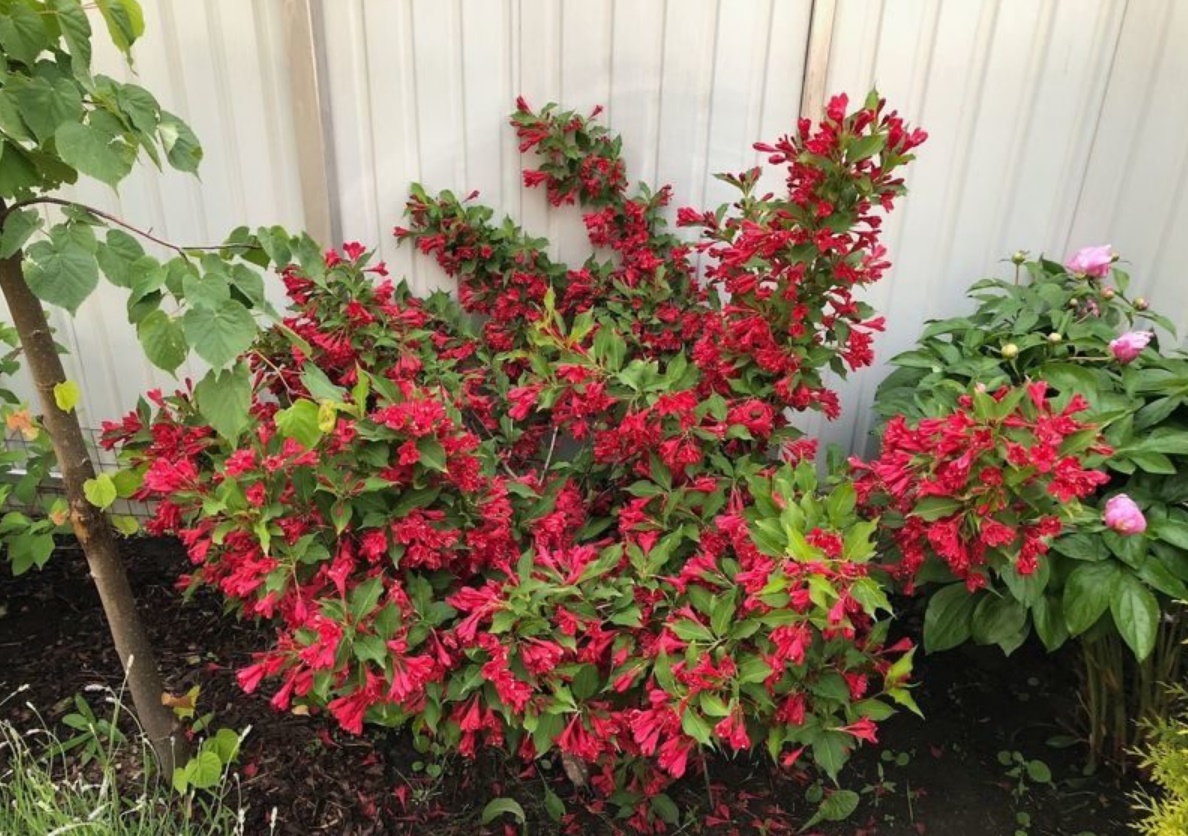
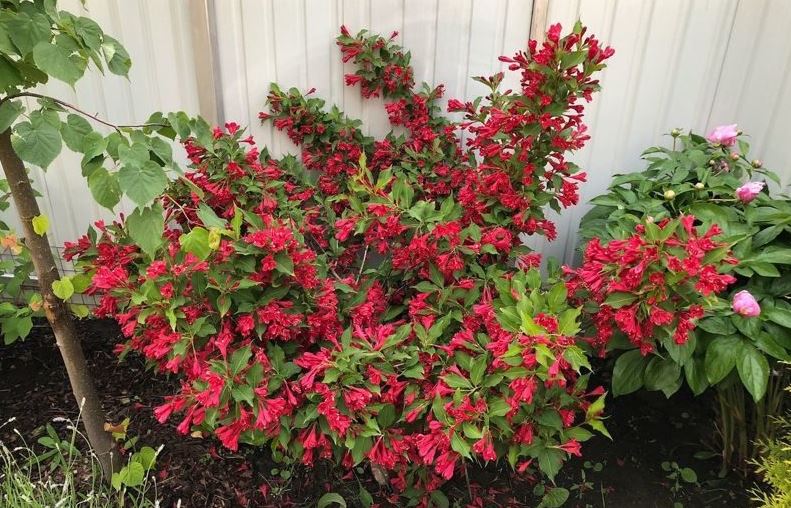
If space is limited, the bush can be planted singly. Since it's quite lush, it will look beautiful and luxurious.
Planting Features of the Hybrid Weigela Bristol Ruby
Weigela is quite undemanding in terms of growing conditions, but some rules still need to be followed.
Selecting and preparing a site
The shrub grows best in sunny areas protected from drafts and wind. In southern regions, it can be planted in partial shade to prevent sunburn from UV rays. When planting, it's also important to keep the bush at least 1.5 meters away from other plants and structures.
Weigela prefers nutritious, loose soil. If possible, it's best to prepare it from humus, leaf mold, and sand in a 2:2:1 ratio.
Planting dates
It's recommended to plant the seedlings in open ground between March and April, before flowering begins. Of course, in emergency cases, this can be done in the fall, but in that case, you'll need to bury the seedling at an angle and cover most of it with soil to prevent it from dying over the winter.
How to plant correctly
Planting of the Bristol Ruby variety is carried out as follows:
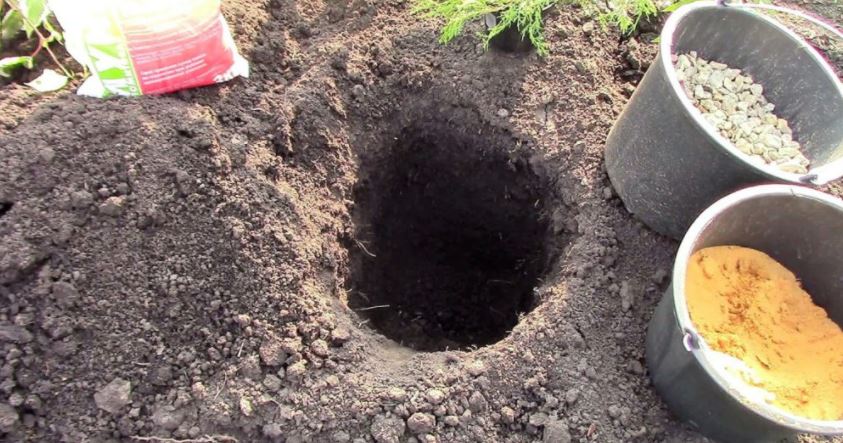
- A couple of days before planting the seedling (it is advisable to choose a three-year-old bush, it should not show signs of diseases and pests), dig a hole 50-60 cm wide and deep.
- At the bottom, create a 10-15 cm drainage layer of expanded clay, gravel or broken brick.
- Fill the hole with nutrient substrate up to the middle.
- Place the seedling in the center.
- Fill it with the remaining soil mixture up to the top of the hole, filling the voids between the roots.
- Water the bush and mulch it with sawdust to retain moisture.
Please note! After planting, the root collar must remain above ground, otherwise rot will begin and the bush will die.
Weigela Bristol Ruby Care Instructions
To successfully grow Weigela, you need to follow standard agricultural practices for ornamental shrubs.
Watering
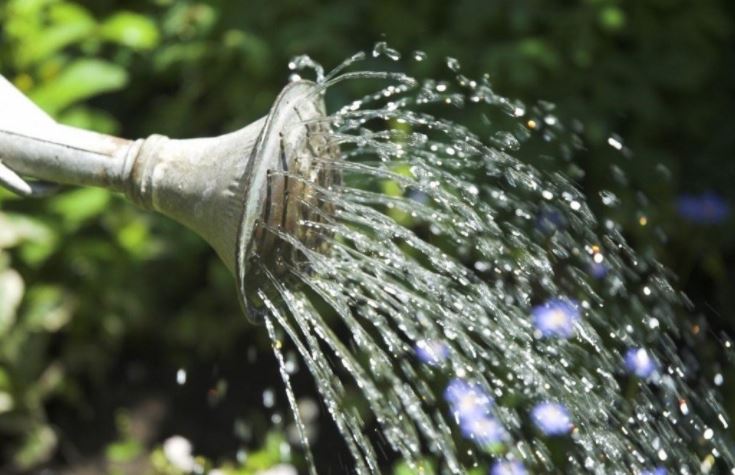
During the first few days after planting, water the bush daily. If the weather is extremely hot, water twice a day. As the bush gains strength, reduce the frequency of watering. The key is to keep the soil slightly moist at all times. Typically, mature plants require watering 2-3 times a week, at a rate of 20-30 liters of water per bush.
Top dressing
The feeding schedule is as follows:
- application of complex mineral mixtures for ornamental shrubs during planting;
- use of potassium-phosphorus fertilizers during the budding period;
- application of organic matter until mid-June;
- use of potash compounds in October.
This will help the bush to develop better and bloom more abundantly.

Trimming
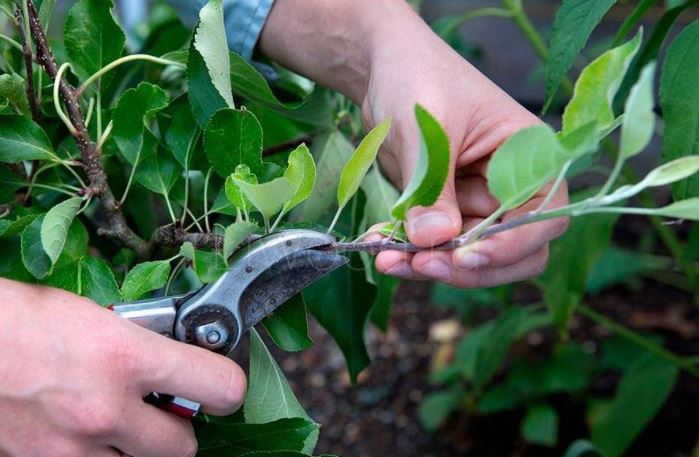
Formative pruning of the crown is necessary every season. After flowering, cut back old branches by approximately 1/2.
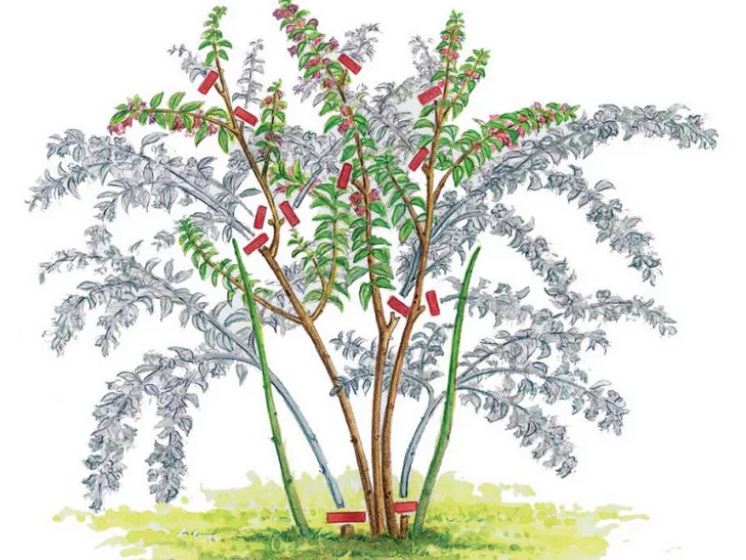
If the new growth has become very elongated, it needs to be pruned as well. About a quarter of the shoots should be removed annually. This will ensure the crown remains dense and beautifully shaped.
Loosening and mulching
Loosening should be done after each watering to a depth of 5-8 cm. To keep the soil moist for a long time, it is advisable to mulch the bushes.
Preparing for winter
Despite good winter hardiness indicators, the bushes need to be prepared for winter:
- Tie the crown with twine.
- Press the branches to the ground and fix them in this position.
- Cover them with dry leaves or spruce branches.
Please note: When growing Weigela in northern regions, it is recommended to construct a frame for young plants and cover it with non-woven material.
Propagation of Weigela Bristol Ruby
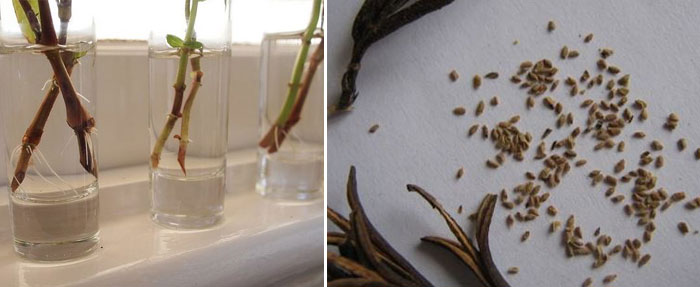
Weigela is most often propagated by cuttings, as this is the most effective and simple method:
- In early June, cut green branches from the mother plant before they become woody. They should be 10 cm long, with at least two leaves on each.
- Remove all greenery. Place the cuttings in a growth stimulant (such as Heteroauxin) for 2-3 hours. It is recommended to do this in a dark room at a temperature of +20°C.
- Fill the container with a mixture of turf and humus. Place the cutting 2 cm deep in the mixture.
- Sprinkle with sand.
- Cover with glass or plastic to create a greenhouse effect.
- Water the seedlings morning and evening. Treat them with a light pink solution of potassium permanganate every three days.
- Once the greenery appears, the glass or plastic can be removed during the day. It's okay to remove them completely when the seedlings reach 5 cm. After this, transplant the shoots into separate containers.
- The bushes can be planted outdoors no earlier than the following season, but preferably after three years. In summer, they can be brought outside in pots, but in winter they should be moved to a cooler room.
Please note! This shrub cannot be propagated by seed, as it will lose its varietal characteristics. Furthermore, this is quite labor-intensive. If this method of propagation is chosen, the seeds should be collected no more than 12 months before sowing. After this time, they will lose their viability.
Diseases and pests of Weigela Bristol Ruby
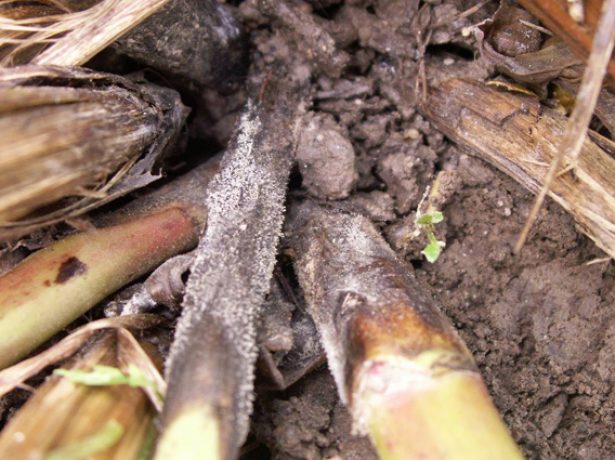
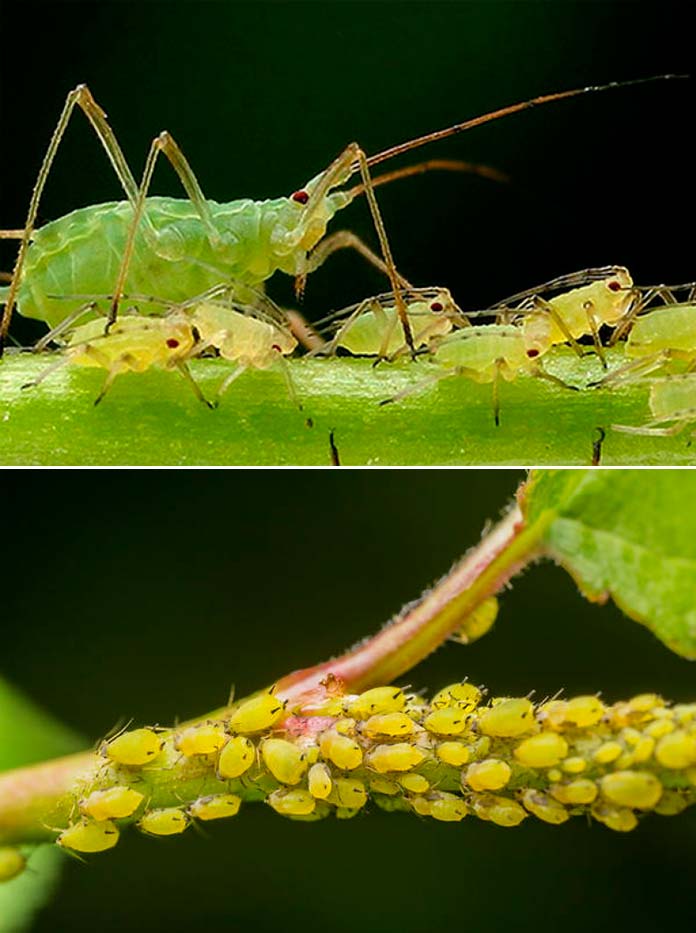
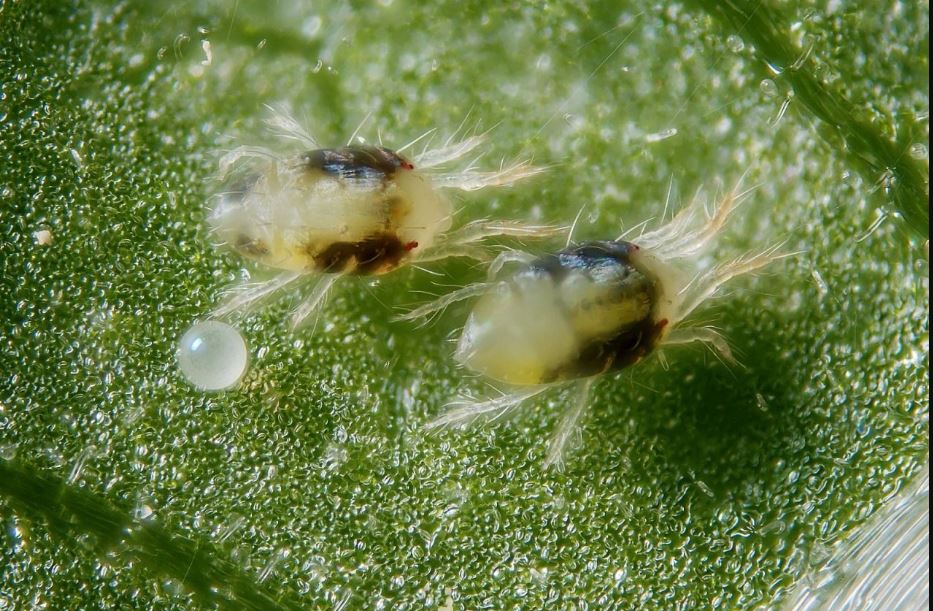
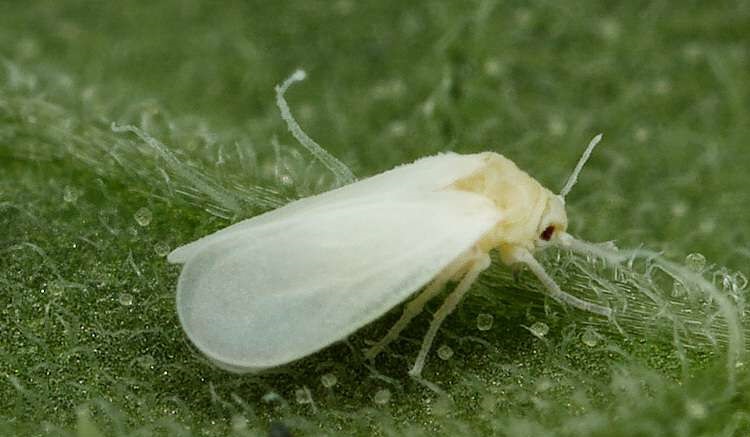
The shrub is resistant to most diseases. However, if agricultural practices are not followed, it may become susceptible to rot, aphids, whiteflies, or spider mites. Prevention and control measures are listed in the table below.
| Disease/Pest | Preventive measures | Control measures |
| Rot
|
|
Use of drugs:
|
| Aphid
|
|
|
| Spider mite
|
|
Use of drugs:
|
| Whitefly
|
|
|
By following these recommendations, you won't have any problems growing Weigela Bristol Ruby. The plant tolerates Russian winters well and delights with its long-lasting blooms. It looks equally beautiful in a hedge, as a single plant, or in a group.